
9e - OPÉRA
Arrondissements
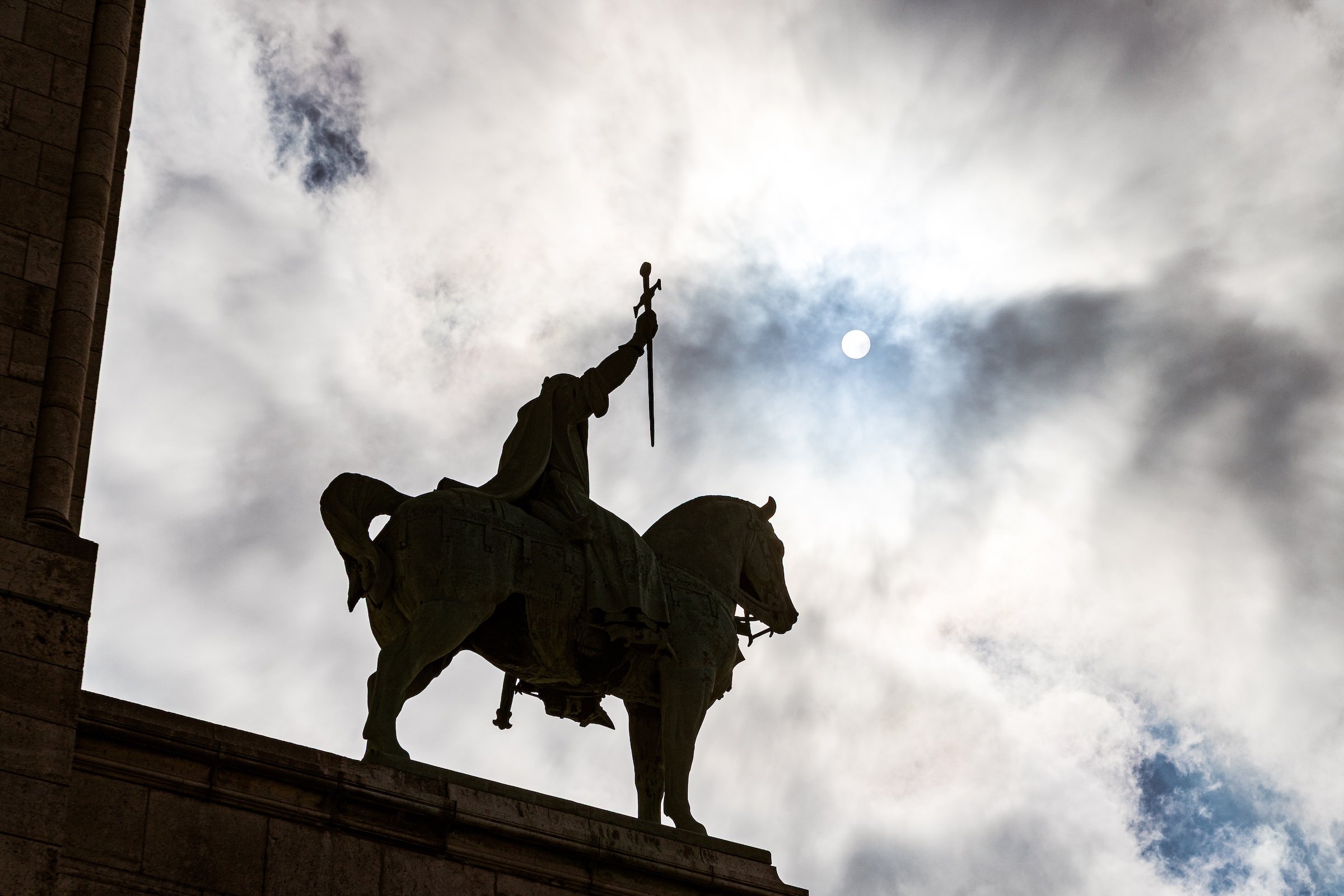
Part of an ongoing project to walk and photograph every neighborhood in Paris, this page explores the 9th Arrondissement: Opéra through maps, district identity, history, and photography.
The Map
Download the Paris Arrondissements Map
Geographic Setting
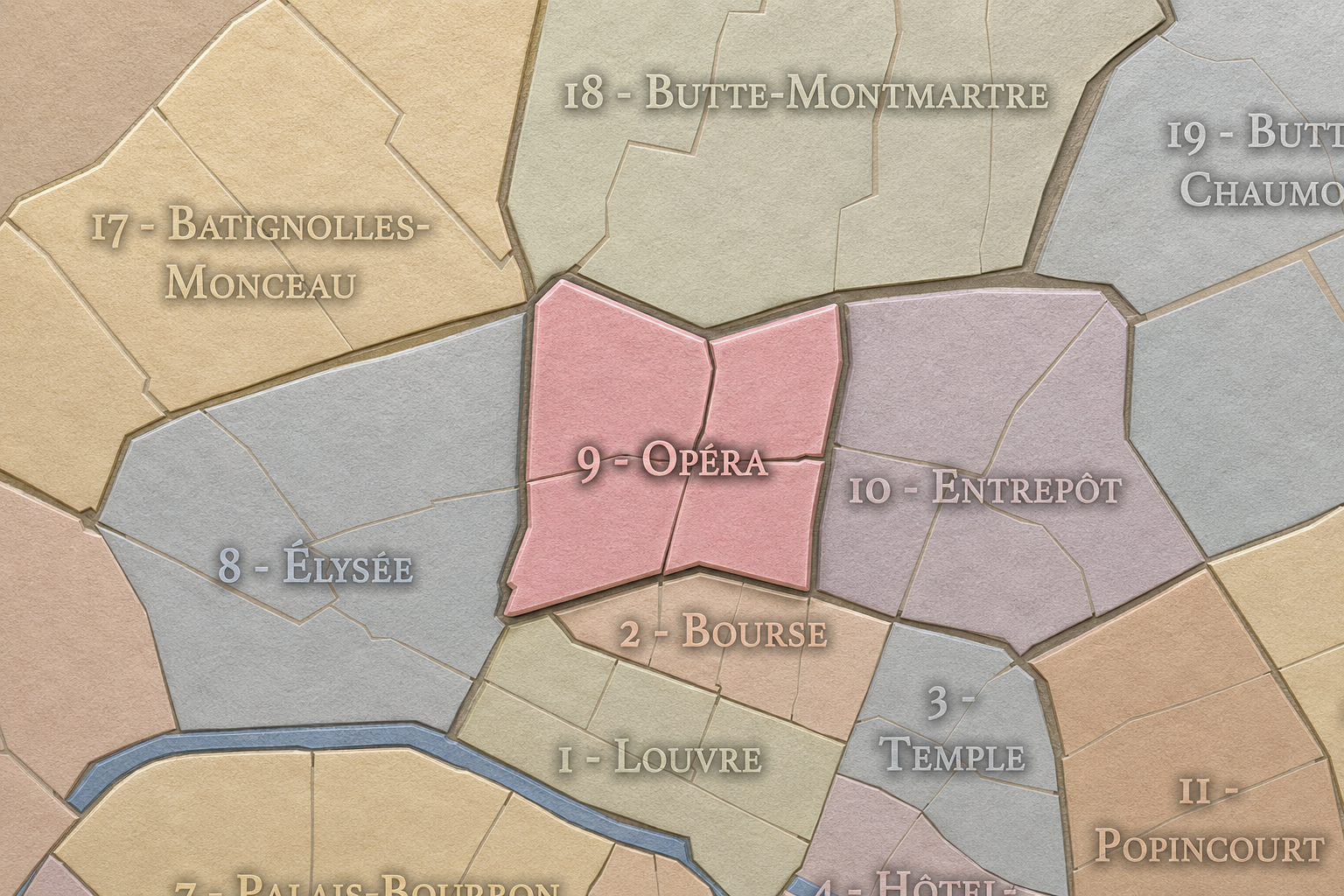
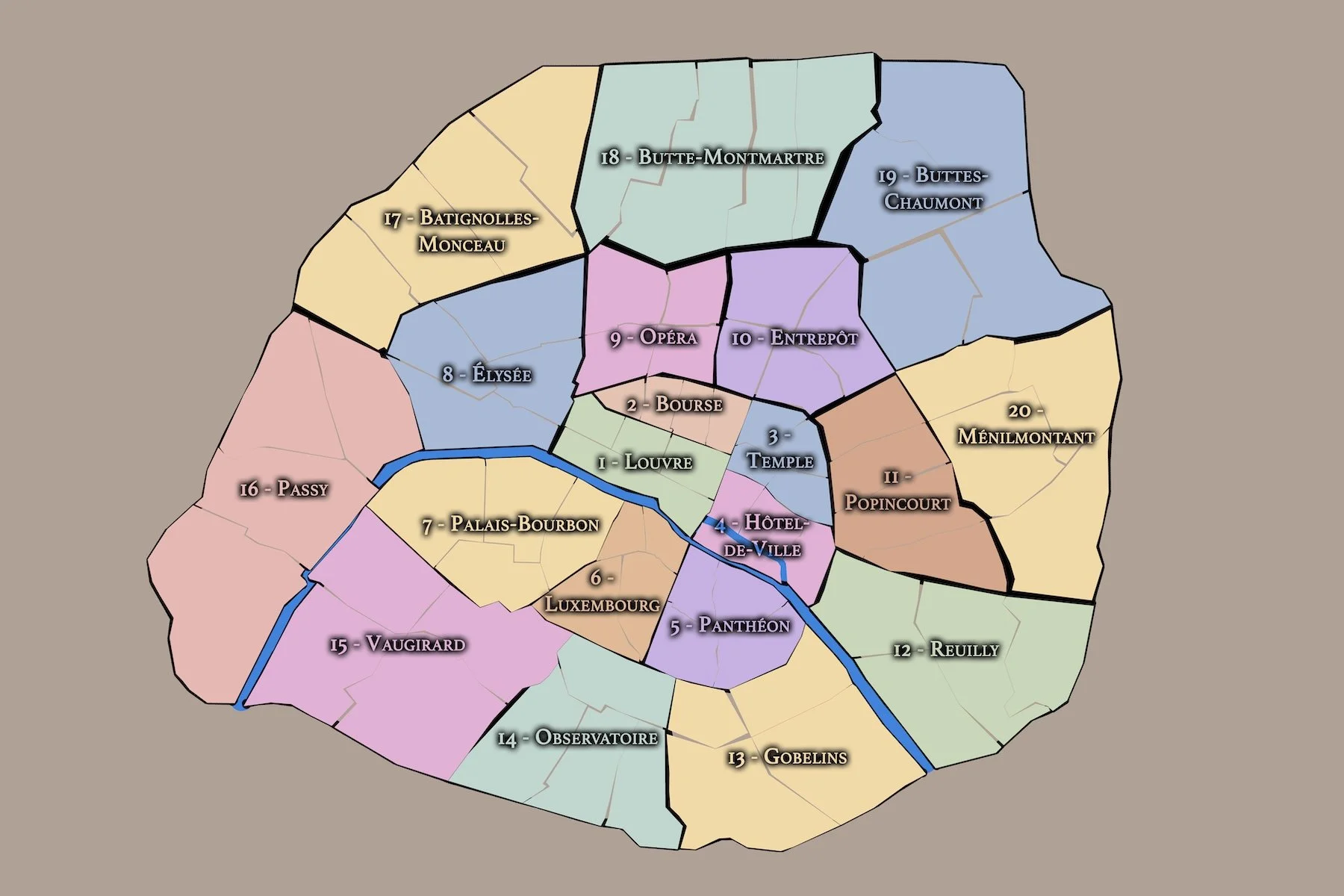
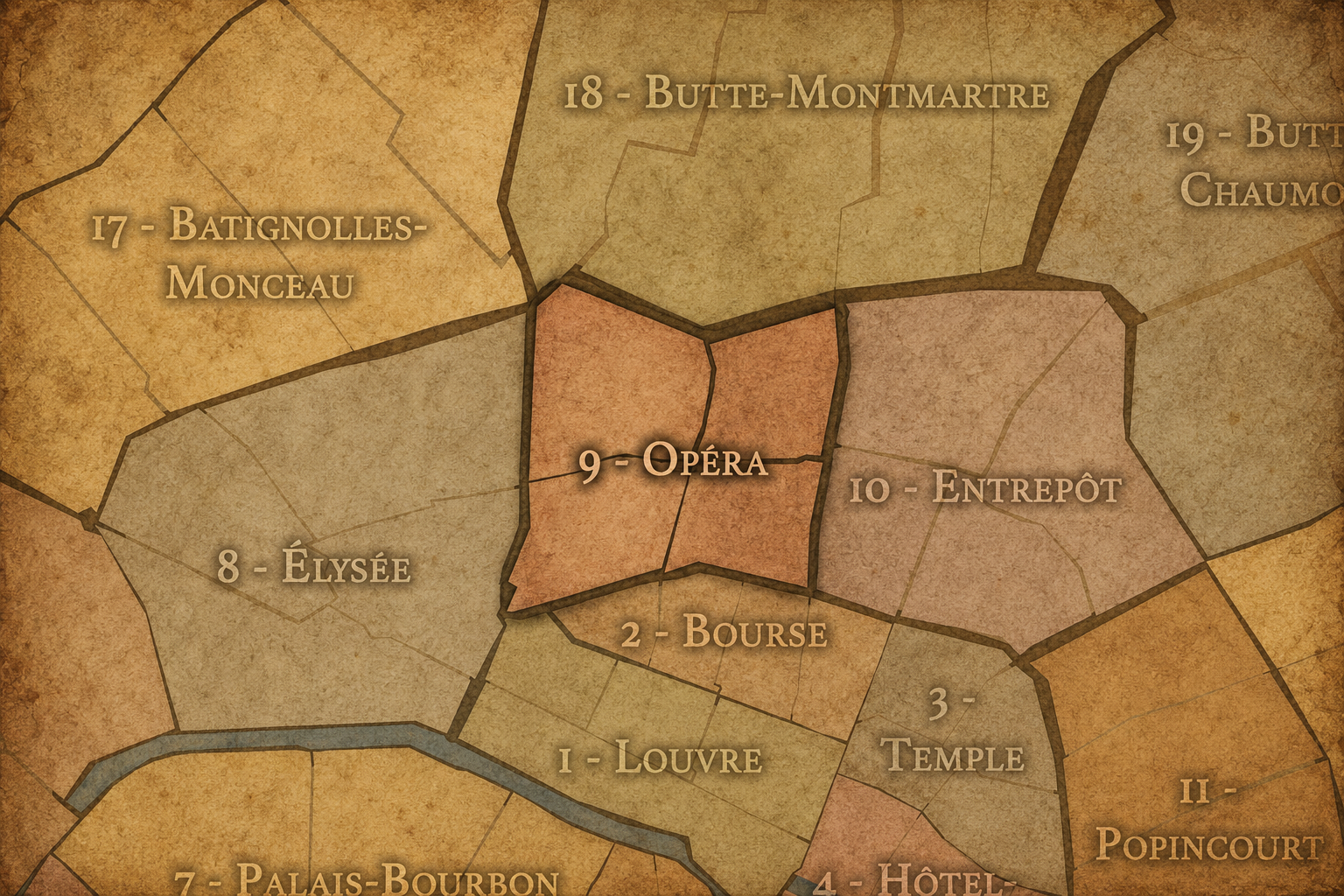
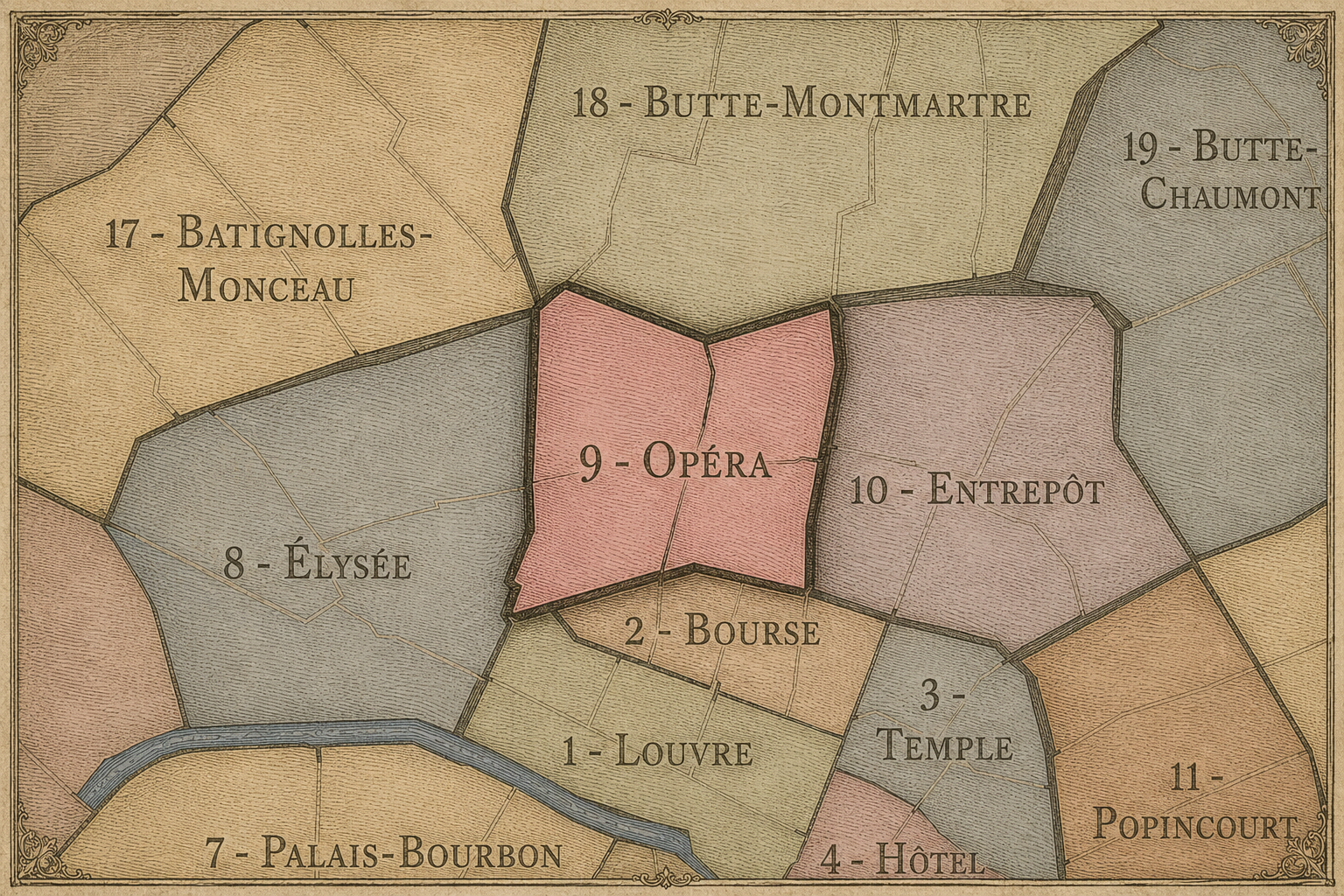
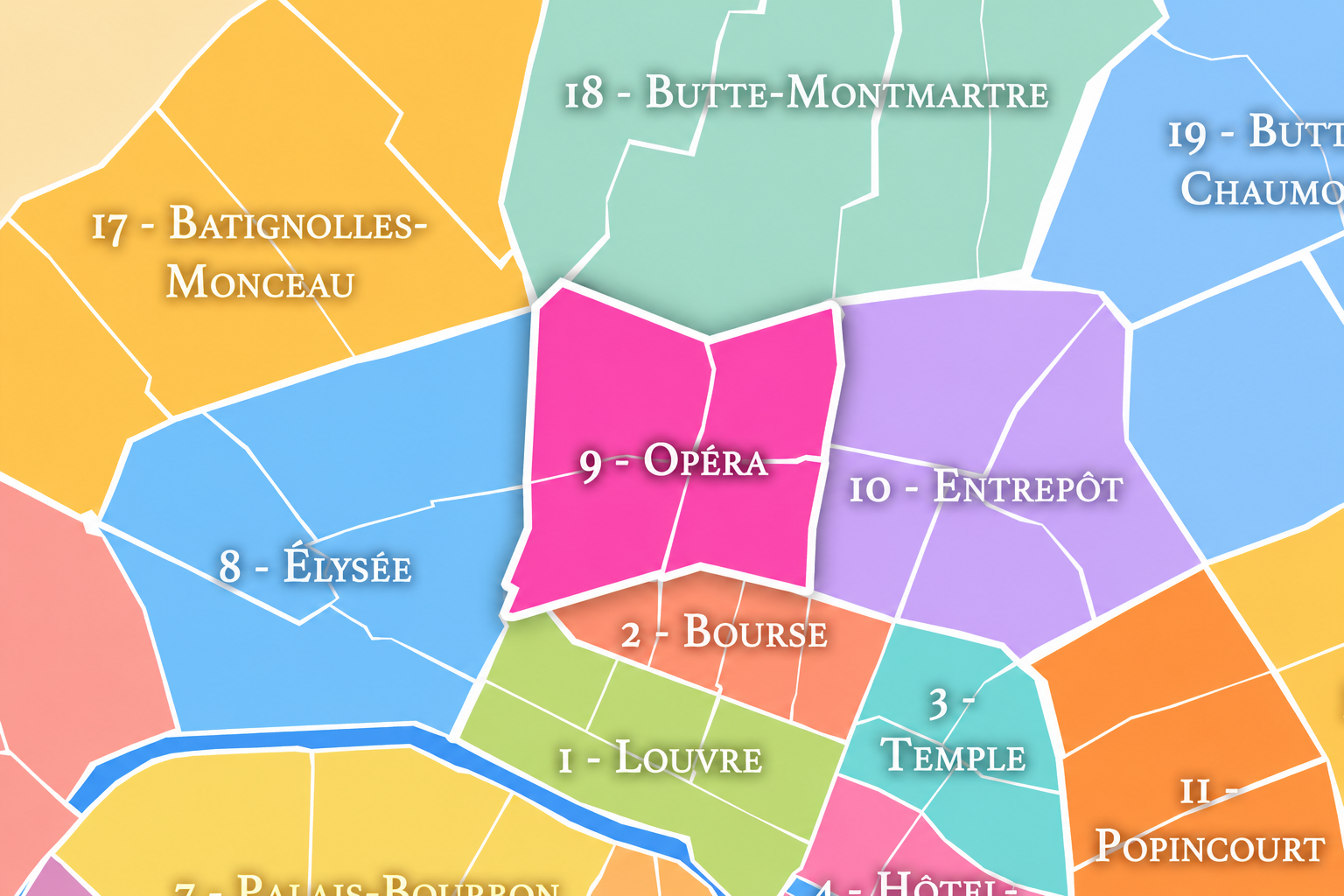
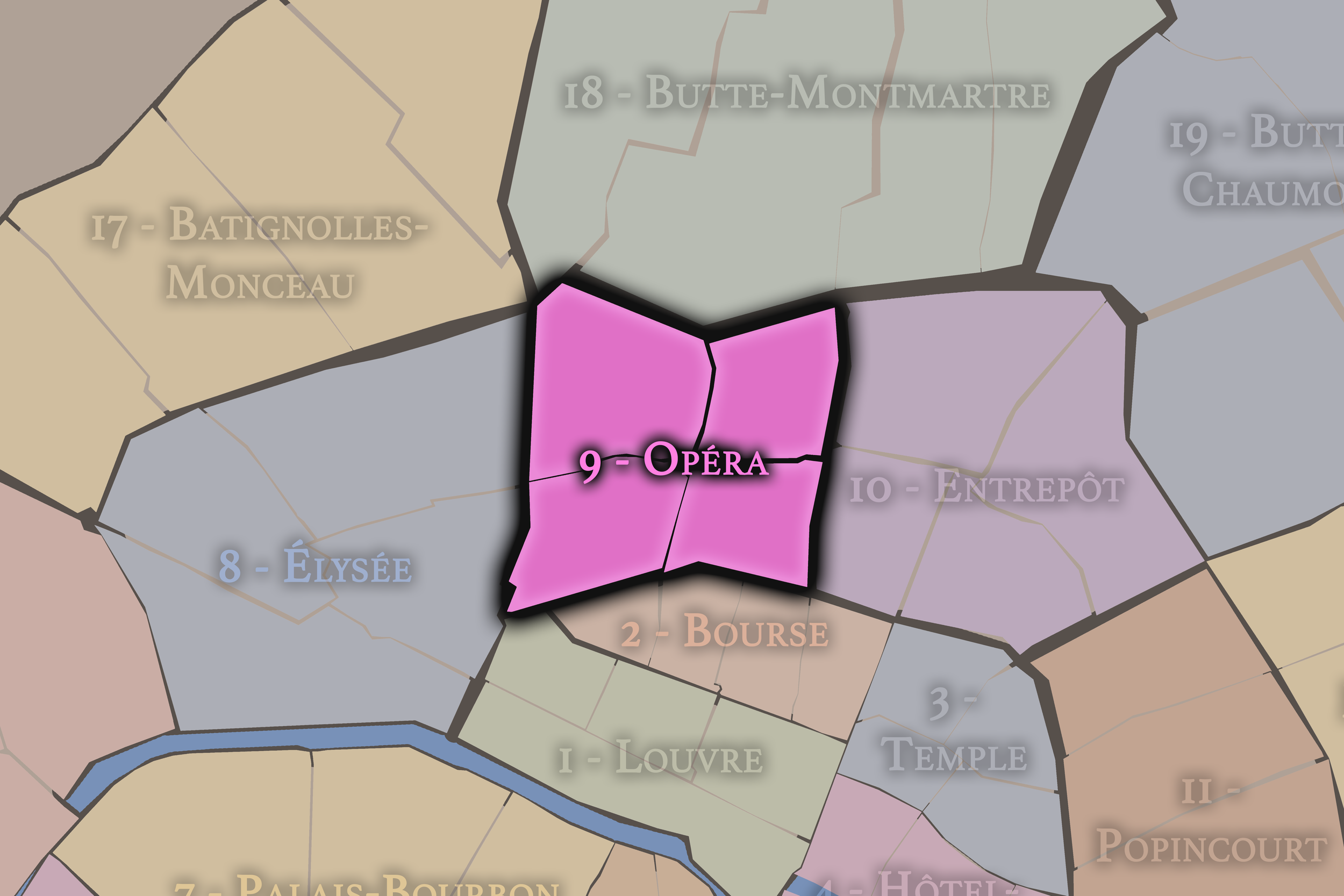
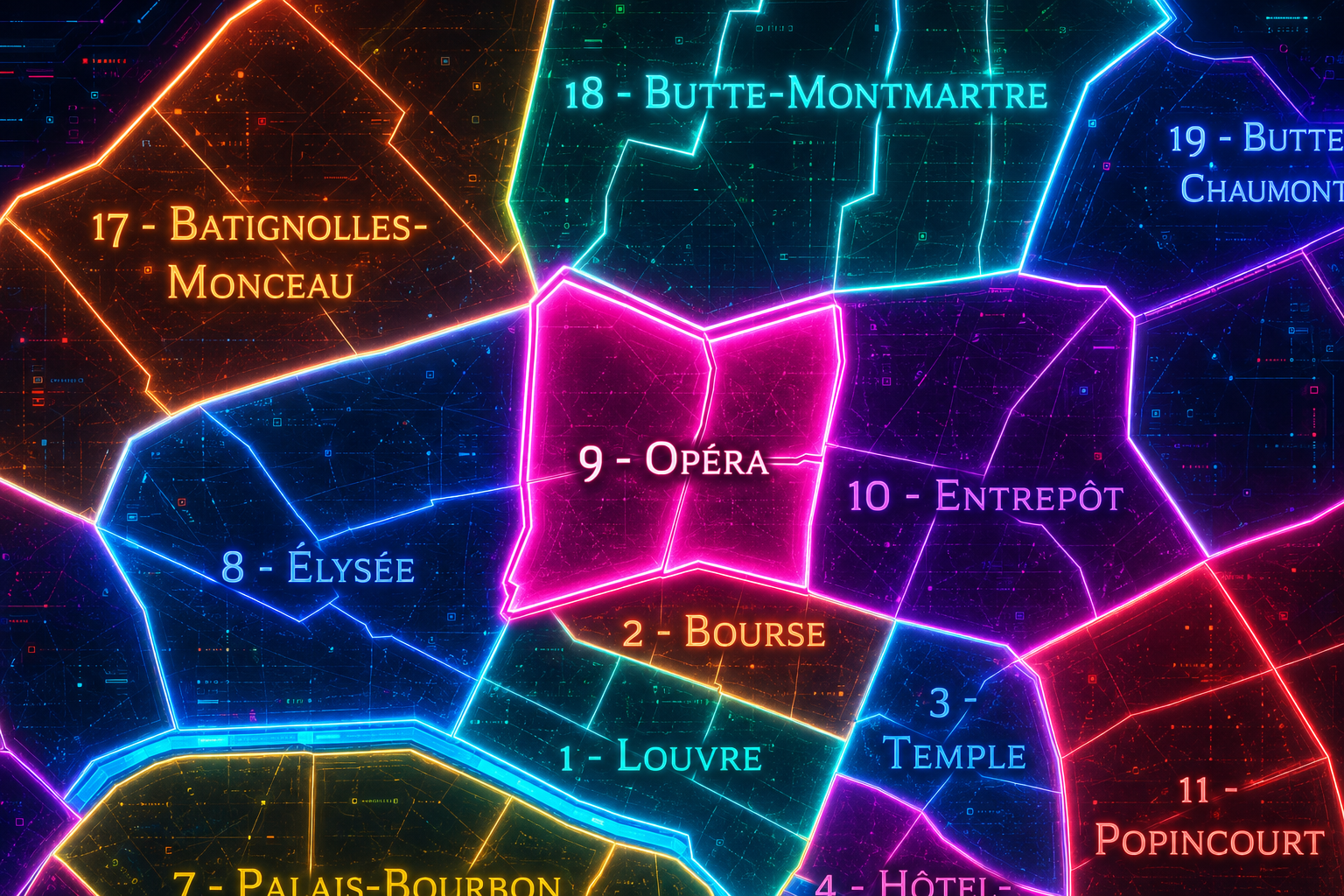
The 9e arrondissement occupies a central position on the Right Bank of Paris, north of the 2e arrondissement, east of the 8e, west of the 10e, and south of the 18e. It sits between the grand commercial and ceremonial landscapes of the Grands Boulevards and Opéra, the rail-oriented world of Saint-Lazare to the west, and the rising slopes toward Montmartre to the north. This position gives the arrondissement a strong transitional identity: central but not purely monumental, commercial but not only a business district, theatrical but also residential, elegant in places and workaday in others.
The arrondissement’s geography is shaped by movement. Major boulevards, theaters, shopping streets, former industrial and commercial corridors, rail connections, and sloping streets all pass through or define it. The southern edge connects to the Grands Boulevards and the historic entertainment district; the western side approaches the Palais Garnier and the department-store landscape around Boulevard Haussmann; the northern part rises toward Pigalle, Nouvelle-Athènes, and the foot of Montmartre; the eastern side turns toward Faubourg Poissonnière and the 10e.
The 9e arrondissement is divided into four administrative quarters: Saint-Georges, Chaussée-d’Antin, Faubourg-Montmartre, and Rochechouart. Together, these quarters form one of Paris’s richest districts of urban spectacle and cultural production. Saint-Georges carries the memory of Nouvelle-Athènes, Romantic-era artists, theaters, and refined residential streets. Chaussée-d’Antin connects the arrondissement to Opéra, department stores, banking, offices, and grand commercial Paris. Faubourg-Montmartre holds the boulevard world of theaters, passages, publishing, restaurants, and popular entertainment. Rochechouart rises toward the northern edge, connecting the arrondissement to Pigalle, music halls, immigrant and working-class histories, and the approach to Montmartre.
The 9e is therefore an arrondissement of thresholds: between old boulevard Paris and modern commercial Paris, between the polished Opera district and the more bohemian north, between theaters and offices, between department stores and residential streets, between central Paris and the slopes that lead toward Montmartre.
Arrondissement Identity
Etymology and Origins
The arrondissement’s administrative name, Opéra, comes from the Palais Garnier, the great opera house that defines the western edge of the district and gives the arrondissement one of its most recognizable symbols. Although the Palais Garnier itself stands at the intersection of several urban identities — Opéra, Chaussée-d’Antin, the Grands Boulevards, and the commercial landscapes of western central Paris — its architectural presence is strong enough to name the arrondissement as a whole.
The name points to the 9e as a district of performance, spectacle, and urban display. Opéra is not only a building but a larger Parisian idea: grand staircases, orchestral culture, ornament, theater crowds, cafés, boulevards, evening light, department-store windows, and the city as public performance. The arrondissement’s name therefore captures one of its core identities: Paris as stage.
Yet the origins of the 9e are broader than the opera house. Much of the area developed north of the older Right Bank core, in the zone between the former city walls, the faubourgs, the routes toward Montmartre, and the expanding commercial districts around the boulevards. Its history includes religious houses, suburban estates, market streets, theaters, artistic communities, speculative housing, banking, journalism, retail, and entertainment. The name Opéra gives the arrondissement its monumental symbol, but the district’s deeper identity comes from the many forms of urban performance that gathered around it.
The 9e arrondissement is one of the twenty municipal arrondissements of Paris and remains a distinct local civic unit with its own mairie. It is not part of Paris Centre, which groups only the 1er, 2e, 3e, and 4e arrondissements. Its civic identity is grounded in its own arrondissement administration and in the four administrative quarters that organize its internal geography.
Those quarters — Saint-Georges, Chaussée-d’Antin, Faubourg-Montmartre, and Rochechouart — are especially important because the 9e is often understood through broad cultural shorthand: Opéra, Pigalle, the Grands Boulevards, department stores, theaters, or the lower slopes of Montmartre. The official quarters help separate these overlapping identities and show how varied the arrondissement really is.
For this project, the 9e is treated as both an official geographic layer and a cultural-historical district. Its civic framework helps distinguish the arrondissement from adjacent identities such as the 2e’s Bourse and passages, the 8e’s ceremonial western axis, the 10e’s rail and canal corridors, and the 18e’s Montmartre. The 9e is the connective tissue between them: a district of commercial expansion, theatrical life, artistic memory, and urban transition.
Civic Framework
Parisian Identity
The 9e arrondissement holds a distinctive place in Paris as a district of spectacle, commerce, music, theater, and modern urban life. It is one of the clearest places where Paris became a city of evenings: lit boulevards, opera crowds, café terraces, theater entrances, department-store windows, cabarets, restaurants, publishing offices, and streets animated by performance and consumption.
Its Parisian identity is closely tied to the 19th century, when the arrondissement became one of the great landscapes of modern entertainment and commercial display. The Palais Garnier gave the district monumental grandeur. The Grands Boulevards supported theaters, cafés, newspapers, and public sociability. The department stores around Boulevard Haussmann transformed shopping into spectacle. Nouvelle-Athènes and Saint-Georges drew artists, writers, musicians, and performers into a neighborhood where residence and culture overlapped.
The 9e also represents Paris as a city of transitions. It has the elegance of Opéra and Chaussée-d’Antin, the popular entertainment of Faubourg-Montmartre, the artistic memory of Saint-Georges, and the more mixed northern energy of Rochechouart and Pigalle. It is refined and commercial, theatrical and residential, bourgeois and bohemian, polished and nocturnal. Its identity lies in that multiplicity.
The 9e arrondissement is distinguished by its combination of cultural performance and commercial modernity. Unlike the 8e, which often stages power and prestige through grand avenues and state symbolism, the 9e stages the city through theaters, music, department stores, boulevards, and nightlife. Its architecture and street life are shaped less by national ceremony than by urban spectatorship.
Its four administrative quarters express this range. Saint-Georges gives the arrondissement a refined and artistic identity, with Nouvelle-Athènes, private mansions, Romantic-era associations, and streets leading toward Pigalle and Montmartre. Chaussée-d’Antin is more commercial and institutional, tied to Opéra, Boulevard Haussmann, banks, offices, and the great department stores. Faubourg-Montmartre carries the dense boulevard identity of theaters, passages, restaurants, cafés, and old entertainment corridors. Rochechouart forms the northern slope of the arrondissement, connecting toward Pigalle, music halls, immigrant histories, and the livelier edge between central Paris and Montmartre.
The arrondissement’s distinction also comes from its rhythm. The 9e changes dramatically from south to north and from west to east. Around Opéra and Boulevard Haussmann, it feels grand, commercial, and metropolitan. Around Saint-Georges, it becomes more residential, artistic, and quietly elegant. Around Faubourg-Montmartre, it is dense, theatrical, and boulevard-driven. Near Rochechouart and Pigalle, it grows more kinetic, nocturnal, and transitional. The 9e is not one mood; it is a sequence of Parisian stages.
Neighborhood Distinction
Les Quartiers Administratifs
Administrative Quarters
The Four Administrative Quarters
Each Paris arrondissement is divided into four official administrative quarters. These smaller districts reveal older place-names, local histories, civic boundaries, and neighborhood identities.
-
Chaussée-d’Antin
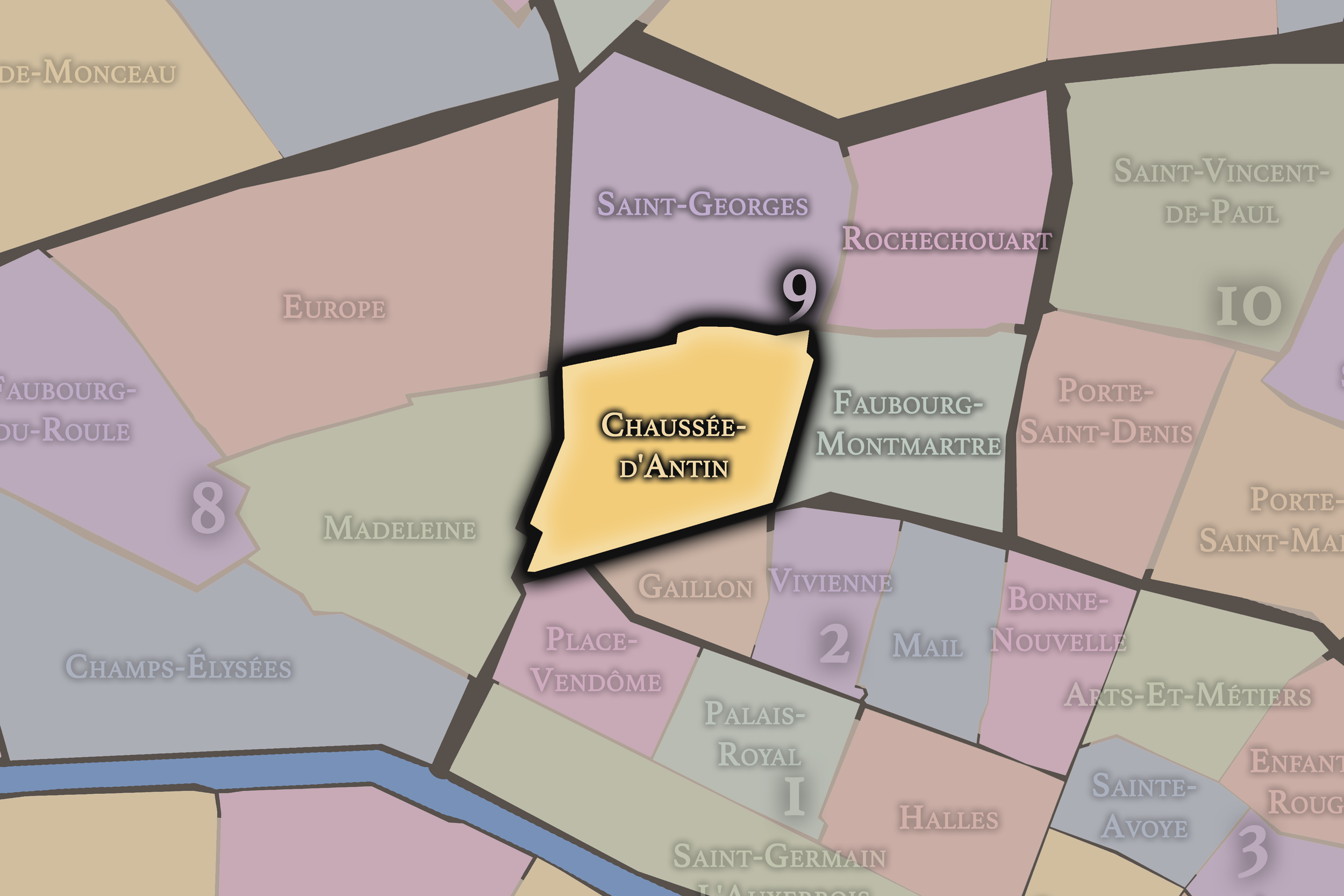
Chaussée-d’Antin occupies the southwestern portion of the 9e arrondissement and forms one of the district’s strongest links to Opéra, Boulevard Haussmann, department stores, banking, and commercial Paris. Its name recalls the old road or chaussée associated with the Antin area, and over time it became one of the key spaces of western Right Bank expansion.
This quarter gives the 9e much of its metropolitan and commercial identity. Around the Palais Garnier, Galeries Lafayette, Printemps, offices, hotels, cafés, and broad shopping corridors, Chaussée-d’Antin shows Paris as a city of display, retail, architecture, and movement. It is one of the places where modern shopping and urban spectacle became inseparable from the image of Paris.
-
Faubourg-Montmartre
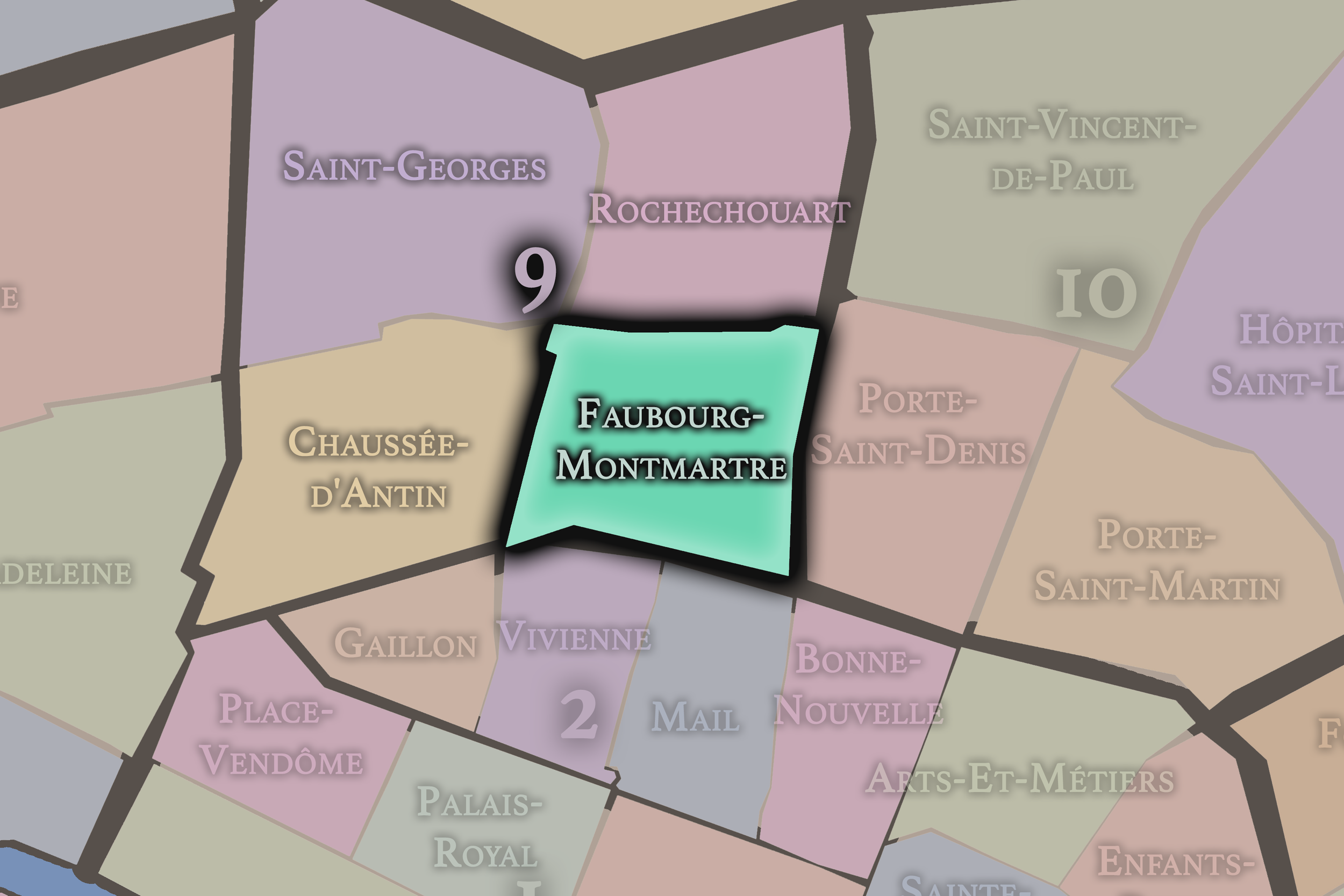
Faubourg-Montmartre occupies the southeastern portion of the 9e arrondissement, along the historic corridor between the Grands Boulevards and the approaches toward Montmartre. Its name recalls the old faubourg leading toward Montmartre, and its identity is closely tied to theaters, cafés, restaurants, passages, newspapers, publishing, and popular entertainment.
This quarter gives the 9e its strongest boulevard character. It belongs to the world of illuminated signs, theater façades, old restaurants, covered passages, lively sidewalks, and public sociability. Faubourg-Montmartre is less monumental than Opéra and less residential than Saint-Georges; it is a district of movement, performance, commerce, and evening life.
-
Rochechouart
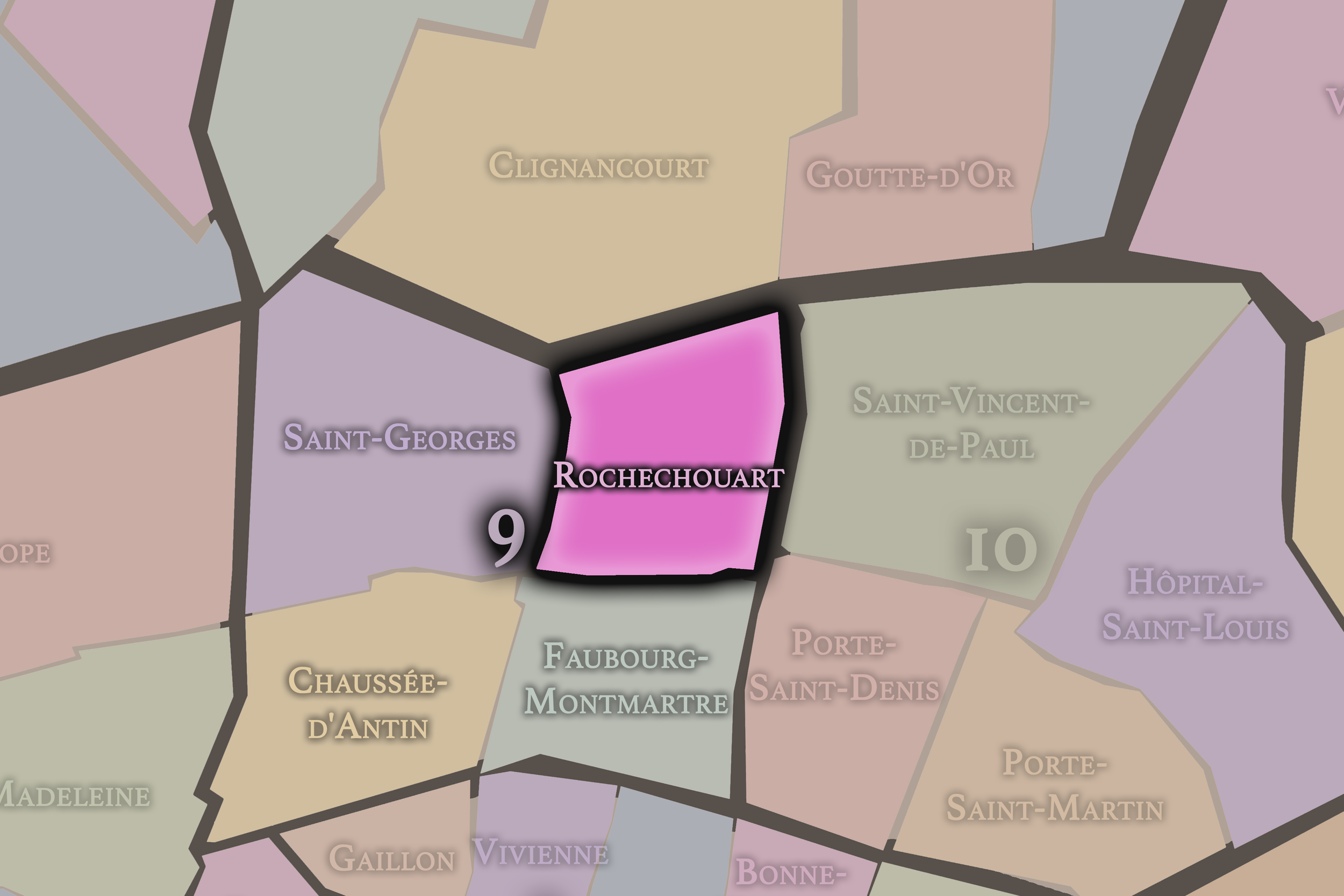
Rochechouart occupies the northern portion of the 9e arrondissement, near the boundary with the 18e and the lower slopes leading toward Montmartre. Its name is associated with the Boulevard de Rochechouart and the northern edge of the arrondissement, where the atmosphere begins to shift from central commercial Paris toward the more mixed and bohemian world of Pigalle and Montmartre.
This quarter gives the 9e a more transitional and kinetic identity. It connects theaters, music halls, cafés, residential streets, immigrant histories, nightlife, and the approach to Montmartre. Rochechouart is where the arrondissement feels least polished and most porous: a threshold between bourgeois Right Bank Paris, popular entertainment, and the cultural mythology of the northern hills.
-
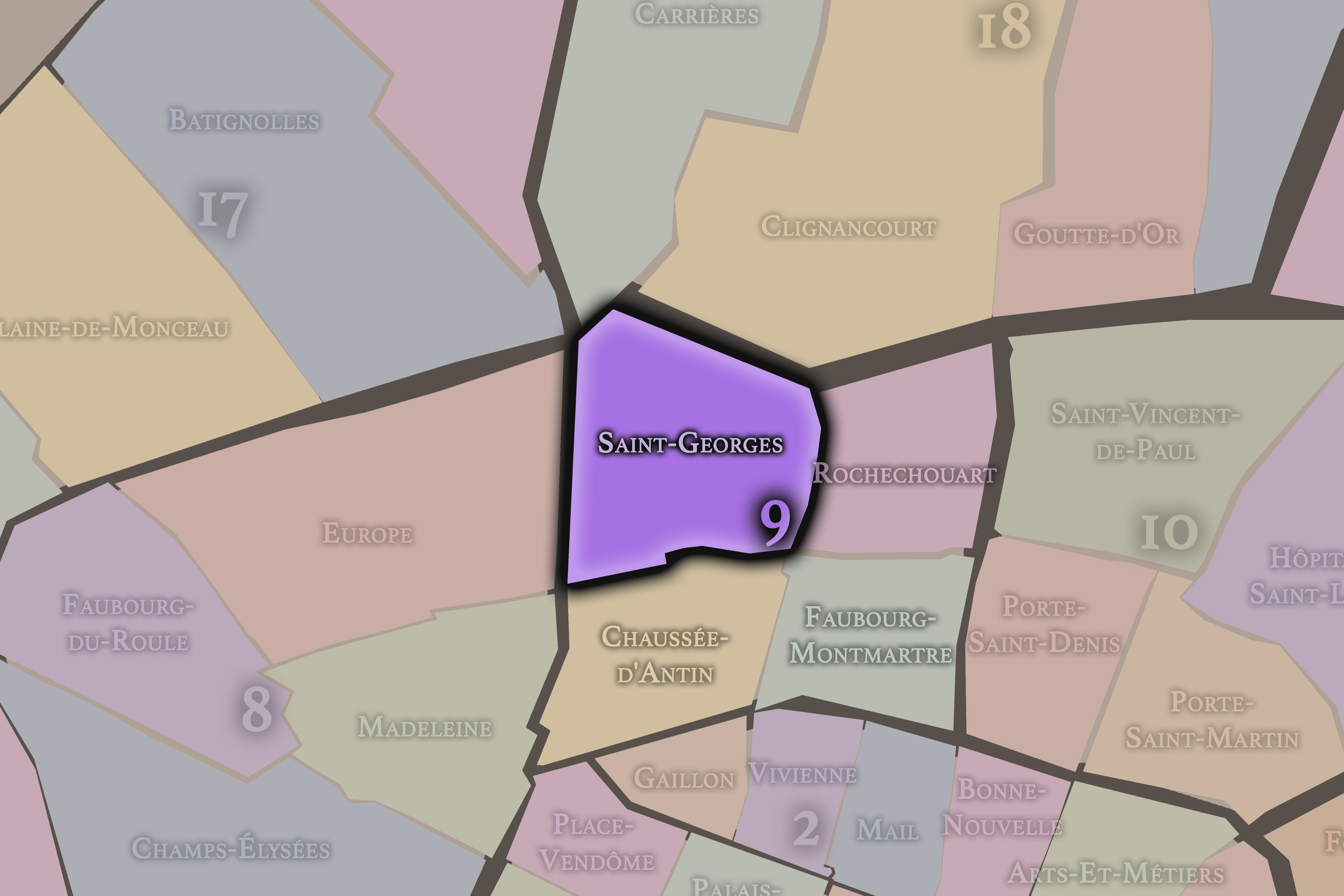
Saint-Georges
Saint-Georges occupies the northwestern portion of the 9e arrondissement and is one of the district’s most historically refined and artistic quarters. Its name comes from the church and square of Saint-Georges, but its identity is closely associated with Nouvelle-Athènes, a 19th-century residential and cultural quarter linked to artists, writers, musicians, composers, and the Romantic imagination of Paris.
This quarter gives the 9e a softer and more residential cultural identity. Its streets contain private mansions, theaters, museums, old studios, sloping approaches toward Montmartre, and an atmosphere that differs from the heavier commercial energy around Opéra and Haussmann. Saint-Georges is where the arrondissement becomes intimate and artistic: less about spectacle on the grand boulevard, more about the people and homes that helped produce the city’s cultural life.
The History
The origins of the 9e arrondissement lie in the northern expansion of Paris beyond the older Right Bank core. For much of its early history, this area was less densely urbanized than the city center, shaped by roads leading toward Montmartre, religious lands, gardens, scattered residences, and the gradual outward growth of the capital.
Its geography was defined by edges and approaches. The future arrondissement stood between the city’s central commercial districts and the hill of Montmartre, between former defensive lines and emerging faubourgs, between cultivated land and the increasingly urbanized Right Bank. This transitional position would remain one of its defining characteristics.
Before the Palais Garnier, the department stores, the theaters, and the boulevards, the future 9e was a district of movement toward the north. Its early identity came from routes, slopes, estates, and the gradual transformation of peripheral land into urban fabric.
Origins
16th–17th Century
During the 16th and 17th centuries, the territory of the future 9e arrondissement remained partly suburban in character, though increasingly connected to the growth of Paris. Roads toward Montmartre and the northern faubourgs helped shape settlement patterns, while religious communities, gardens, and residences occupied parts of the area.
The district’s relationship to the city’s defensive edges was important. As Paris expanded and older walls lost importance, land near the former boundaries became available for new forms of circulation, building, and public life. This process would later help create the boulevard landscape that became central to the arrondissement’s identity.
By the end of the 17th century, the future 9e had not yet acquired its modern identity as a district of theaters, opera, department stores, and artistic life. But the conditions were forming: roads, open land, expanding faubourgs, and proximity to the central Right Bank created a territory ready to absorb the city’s northward and westward growth.
In the 18th century, the future 9e arrondissement became increasingly urbanized as Paris expanded beyond its older core. Estates, gardens, religious lands, and suburban properties gradually gave way to streets, residences, commercial activity, and new forms of public sociability. The area between the boulevards and Montmartre became more closely tied to the life of the growing capital.
The boulevard culture that would later define the arrondissement began to develop more strongly during this period. Former defensive edges were transformed into promenades and public corridors, making the southern part of the future 9e increasingly important as a place of walking, entertainment, and urban display. The Grands Boulevards became a stage for cafés, theaters, and popular gathering.
The district also began to attract more residential and cultural development. Its position near both the expanding fashionable west and the lively boulevard world gave it a flexible identity. By the end of the 18th century, the future 9e was no longer merely a northern edge; it was becoming a district of leisure, residence, and urban performance.
18th Century
19th Century
The 19th century was the defining era of the 9e arrondissement. During this period, the district became one of the great landscapes of modern Parisian culture: opera, theater, cafés, department stores, banking, journalism, artistic residence, and boulevard life all converged within its streets.
The construction of the Palais Garnier gave the arrondissement its monumental symbol. The opera house embodied the grandeur, ornament, and social choreography of the Second Empire and late 19th-century Paris. Around it, new avenues and commercial corridors reshaped movement through the district, linking Opéra to the broader network of boulevards and shopping streets.
The rise of the department stores around Boulevard Haussmann transformed the western part of the arrondissement into a center of modern retail spectacle. Shopping became architectural, theatrical, and metropolitan. At the same time, the Grands Boulevards sustained theaters, cafés, restaurants, newspapers, and nightlife, while Saint-Georges and Nouvelle-Athènes attracted artists, composers, writers, and performers.
By the end of the 19th century, the 9e had become one of the clearest expressions of modern urban Paris: a district where commerce, art, performance, technology, and public life were inseparable.
In the early and mid 20th century, the 9e arrondissement continued to function as a district of entertainment, commerce, and cultural production. The opera, theaters, music halls, cafés, department stores, cinemas, and restaurants kept the district active across day and evening rhythms. It remained one of the places where Paris was experienced as spectacle and sociability.
The department stores around Boulevard Haussmann became major institutions of modern consumer culture, drawing Parisians and visitors into a district where shopping, architecture, display windows, fashion, and urban movement worked together. The 9e’s commercial identity therefore remained closely tied to spectacle, not simply transaction.
At the same time, the northern parts of the arrondissement carried connections to Pigalle, popular entertainment, and the approach to Montmartre. This gave the 9e a more varied cultural identity than the polished Opéra district alone might suggest. It was both bourgeois and bohemian, commercial and artistic, respectable and nocturnal.
The arrondissement also passed through the wider shocks of the 20th century: war, occupation, economic change, changing entertainment forms, and the gradual modernization of offices, retail, and transport. Yet its identity as a district of performance and commerce remained remarkably durable.
Early–Mid 20th Century
Late 20th Century
The late 20th century brought changes to the 9e arrondissement’s commercial, cultural, and social life. The department stores remained major anchors, but retail patterns evolved as tourism, global brands, and changing consumer habits reshaped the area around Boulevard Haussmann and Opéra. The district became increasingly international in its visitor base while still functioning as a central Parisian shopping and office zone.
The theatrical and entertainment identity of the arrondissement also shifted. Some older performance venues adapted, while others declined, changed use, or were absorbed into new nightlife and cultural patterns. The district’s historical association with boulevard entertainment remained visible, but the forms of entertainment changed with cinema, tourism, popular music, restaurants, and later digital-era cultural economies.
Saint-Georges and Nouvelle-Athènes gained renewed appreciation as historic and architectural landscapes. Former private mansions, artists’ houses, museums, and elegant residential streets helped preserve the memory of Romantic and artistic Paris. The 9e entered the late 20th century as both a working commercial district and a heritage landscape of modern cultural life.
In the 21st century, the 9e arrondissement remains one of the most active and varied districts in central Paris. Opéra and Boulevard Haussmann continue to attract shoppers, office workers, tourists, theatergoers, and commuters. The department stores remain major landmarks of commercial Paris, while the Palais Garnier continues to anchor the district’s symbolic and architectural identity.
The arrondissement has also become increasingly attractive as a residential and cultural district, especially in areas such as Saint-Georges and the northern streets near South Pigalle. Restaurants, cafés, galleries, small hotels, creative offices, and renewed interest in neighborhood-scale urban life have added new layers to older artistic and entertainment traditions.
At the same time, the 9e faces the pressures of centrality: tourism, retail transformation, office demand, rising property values, nightlife, transport congestion, and the challenge of preserving historic atmosphere within a heavily used urban district. Its strength lies in its flexibility. The 9e has always been a district of adaptation — from faubourg to boulevard, from theater quarter to department-store capital, from Romantic neighborhood to contemporary mixed-use arrondissement.
Today, the 9e remains Paris in motion: shopping, performing, commuting, dining, working, and reinventing itself under the shadow of the Opéra and the lights of the boulevards.
21st Century
Spirit and Legacy
The 9e arrondissement is Paris as performance. It is a district where the city learned to stage modern life through opera houses, theaters, cafés, boulevards, department stores, music halls, shop windows, and illuminated streets. Its legacy is not only artistic or commercial; it is urban choreography.
The arrondissement’s great contribution to Paris lies in the way it joined culture and consumption, architecture and spectacle, residence and performance. The Palais Garnier gave it a monumental symbol. The Grands Boulevards gave it public life. The department stores gave it commercial theater. Saint-Georges and Nouvelle-Athènes gave it artistic memory. Rochechouart and Pigalle gave it edge, music, and nocturnal energy.
The 9e is a district of curtains and crossings: between the polished and the popular, the bourgeois and the bohemian, the office and the stage, the shop window and the street. To understand the 9e is to understand Paris not only as a city to admire, but as a city that performs — every evening, every boulevard, every lit façade, every passing crowd.
The Photography
The arrondissements do not share a single visual identity. Instead, they organize Paris into twenty broad visual fields, each gathering its own combination of landmarks, streetscapes, institutions, residential districts, commercial corridors, parks, rail stations, markets, cemeteries, and riverfront edges.
Some arrondissements are defined by monumental scale: royal palaces, ceremonial avenues, government buildings, museums, formal gardens, and internationally recognized landmarks. Others are shaped by hills, canals, rail gateways, apartment-lined boulevards, neighborhood markets, former village streets, industrial remnants, parks, or the quieter rhythms of residential Paris. The arrondissement system gives these varied landscapes a civic frame, allowing the city to be read not as one visual language, but as a sequence of overlapping Parisian atmospheres.
Visual Identity
Through The Lens
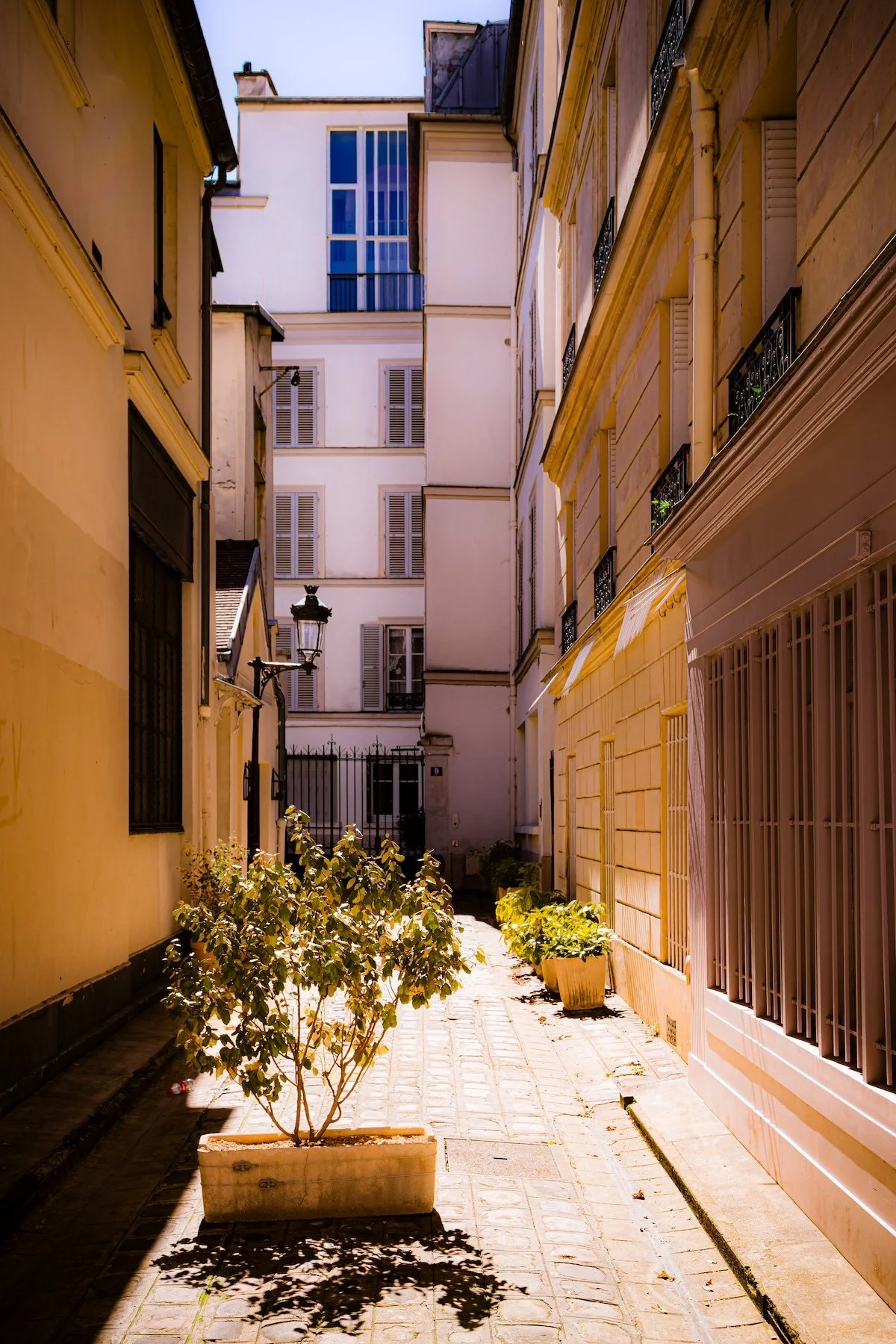
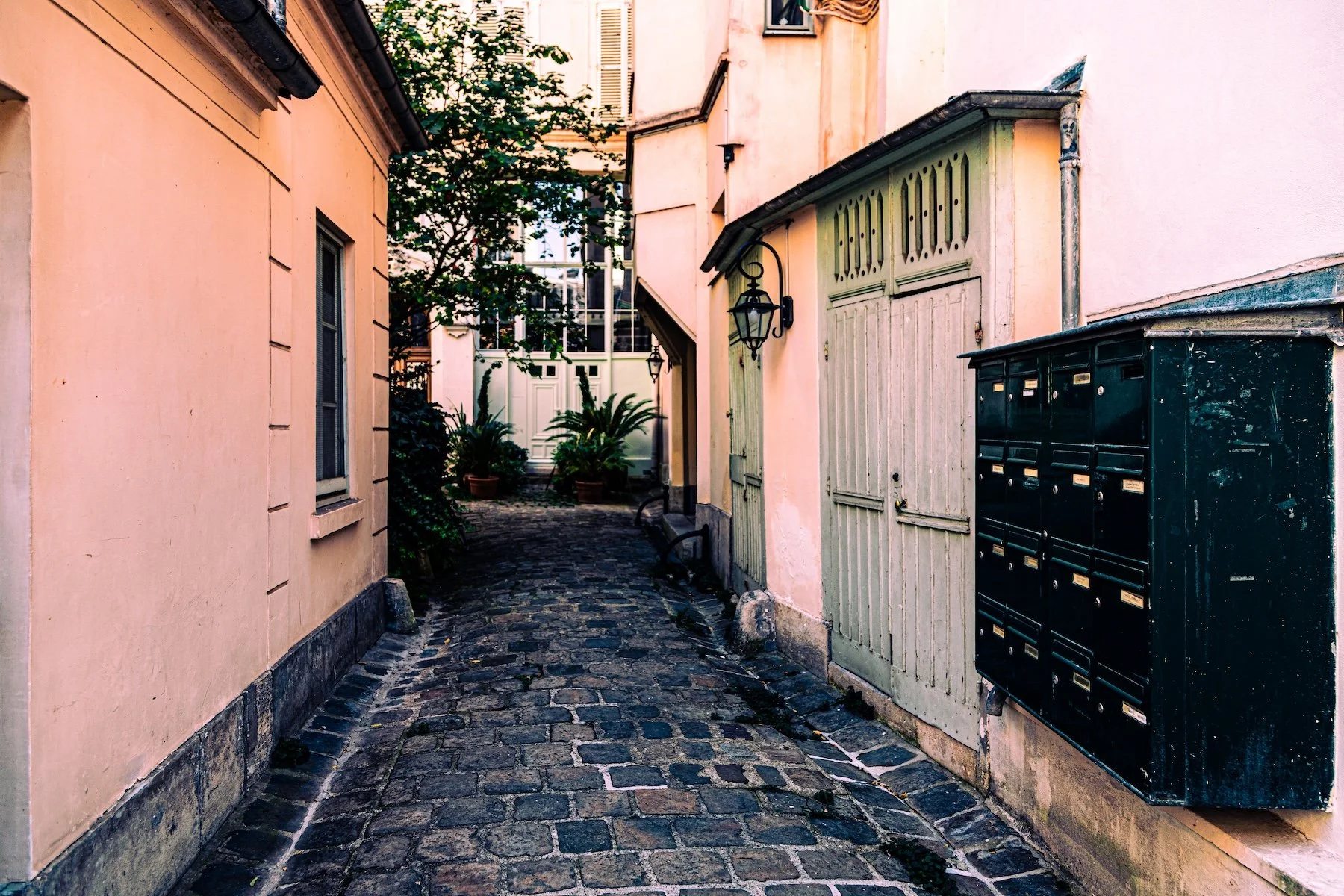
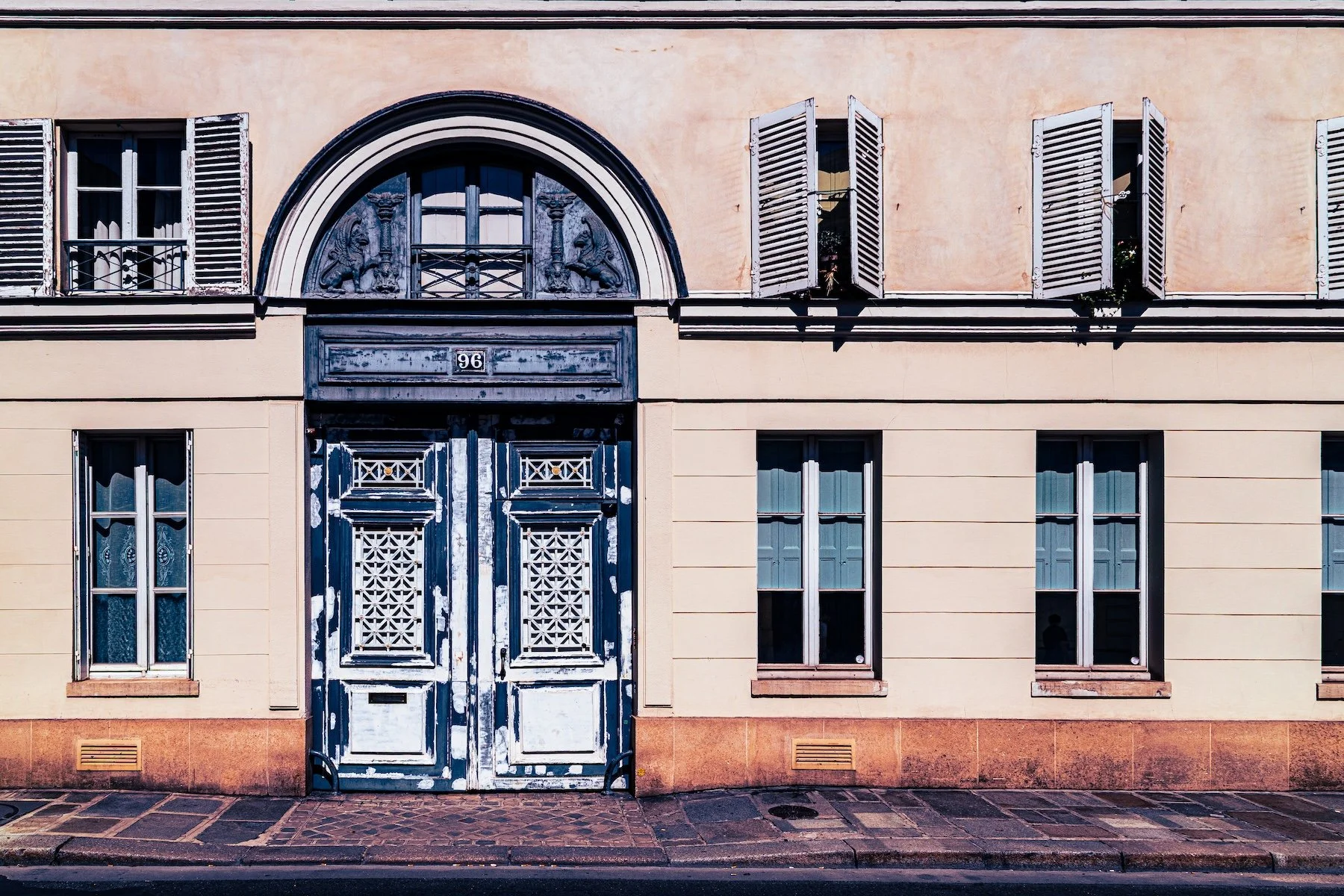
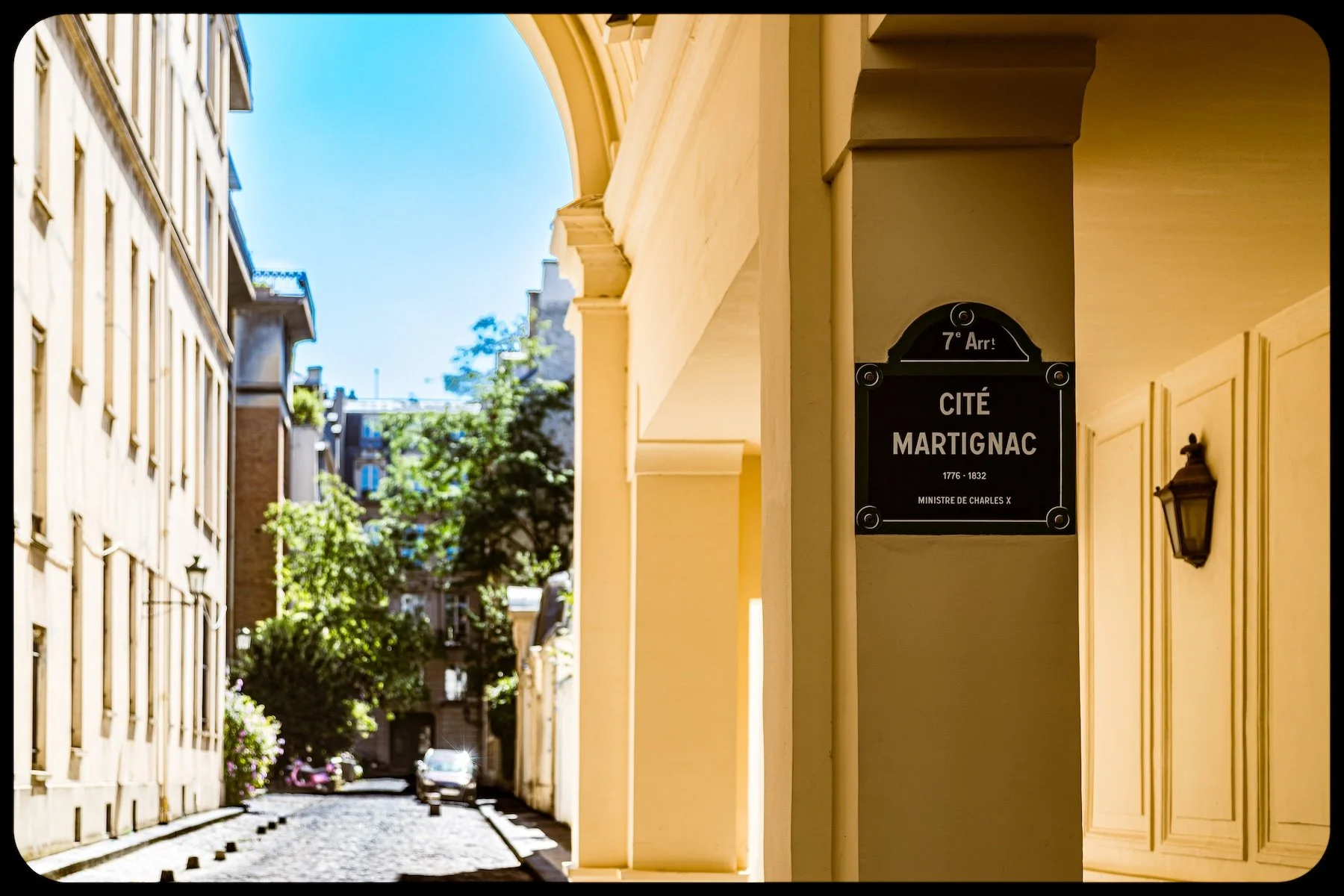
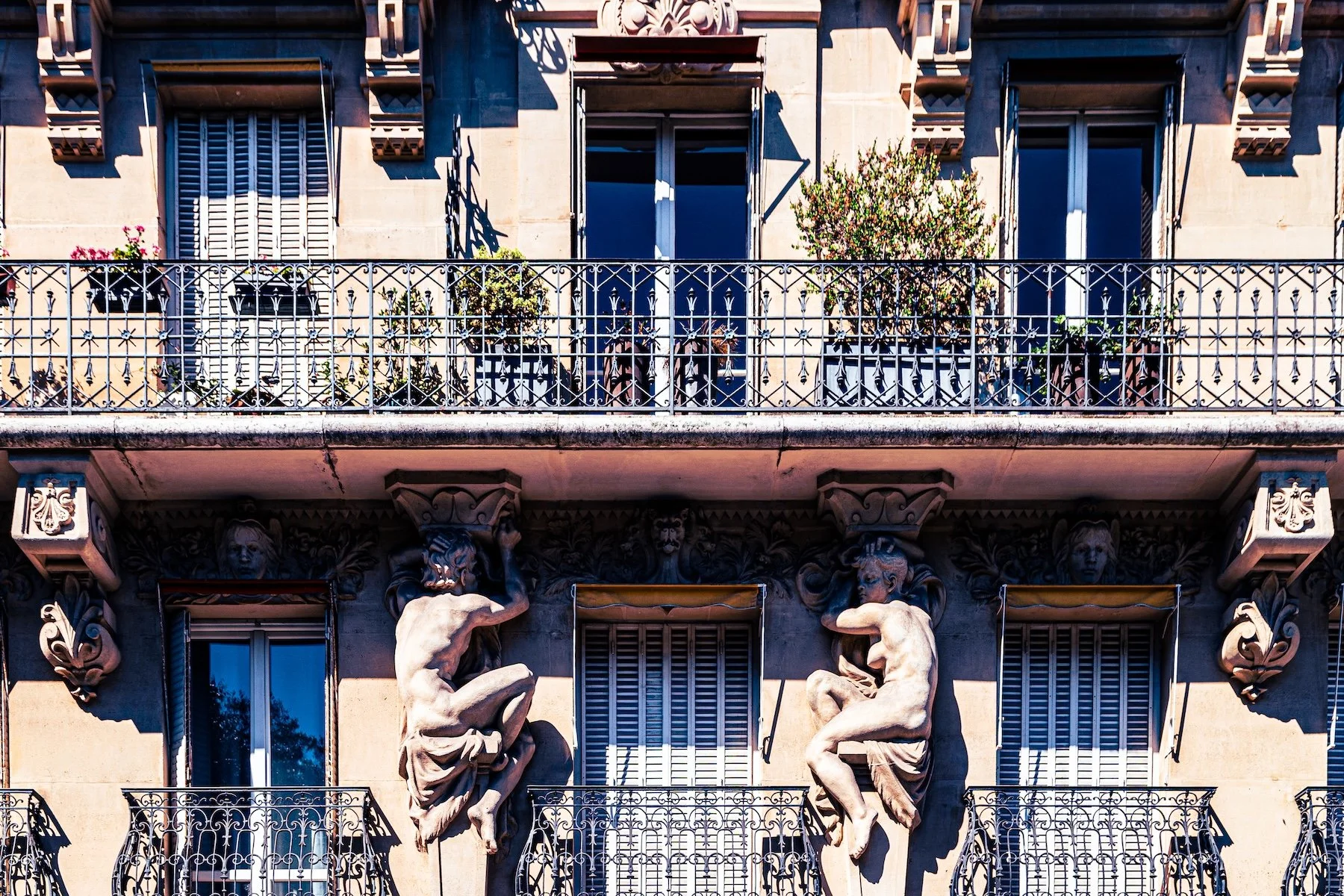
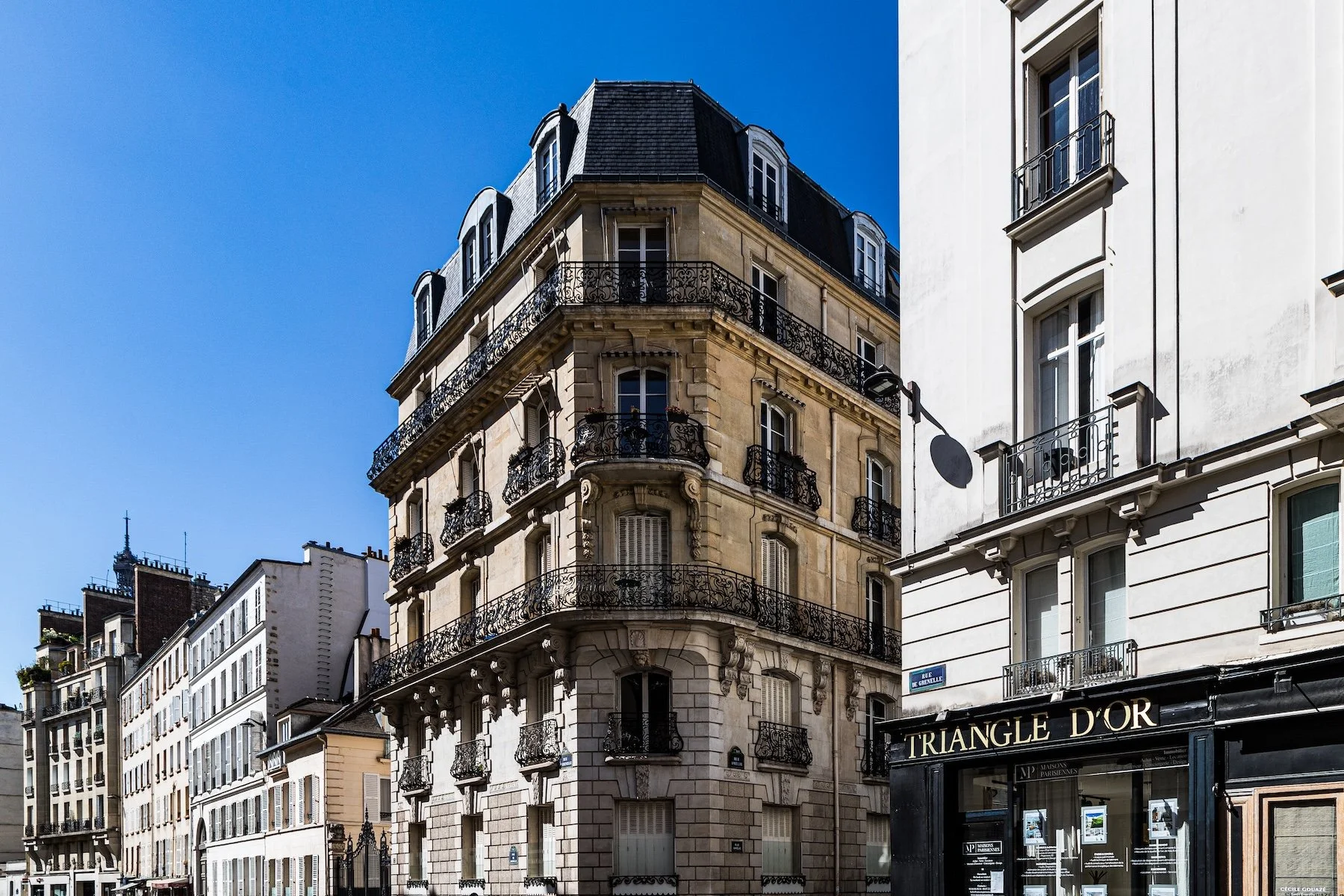
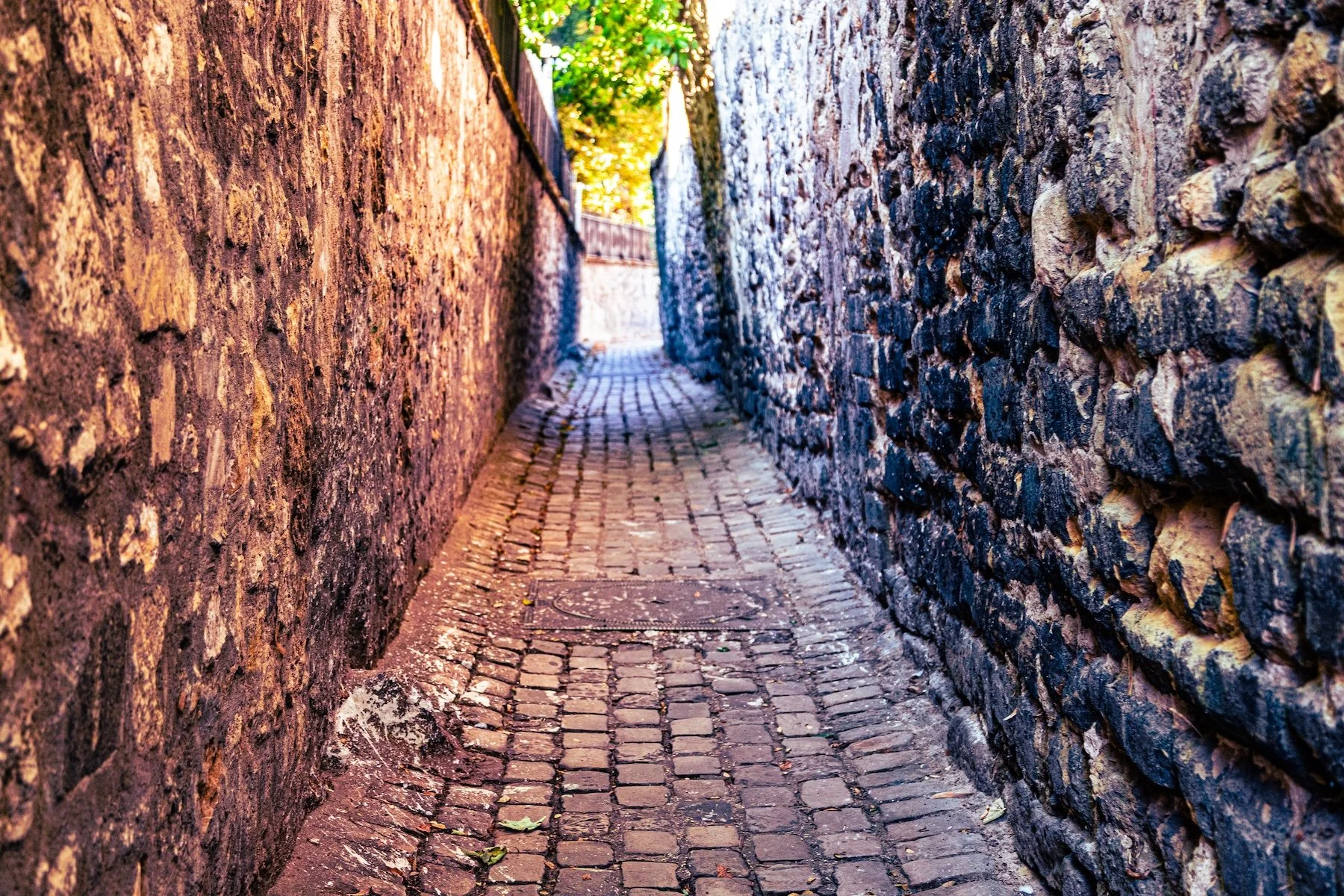
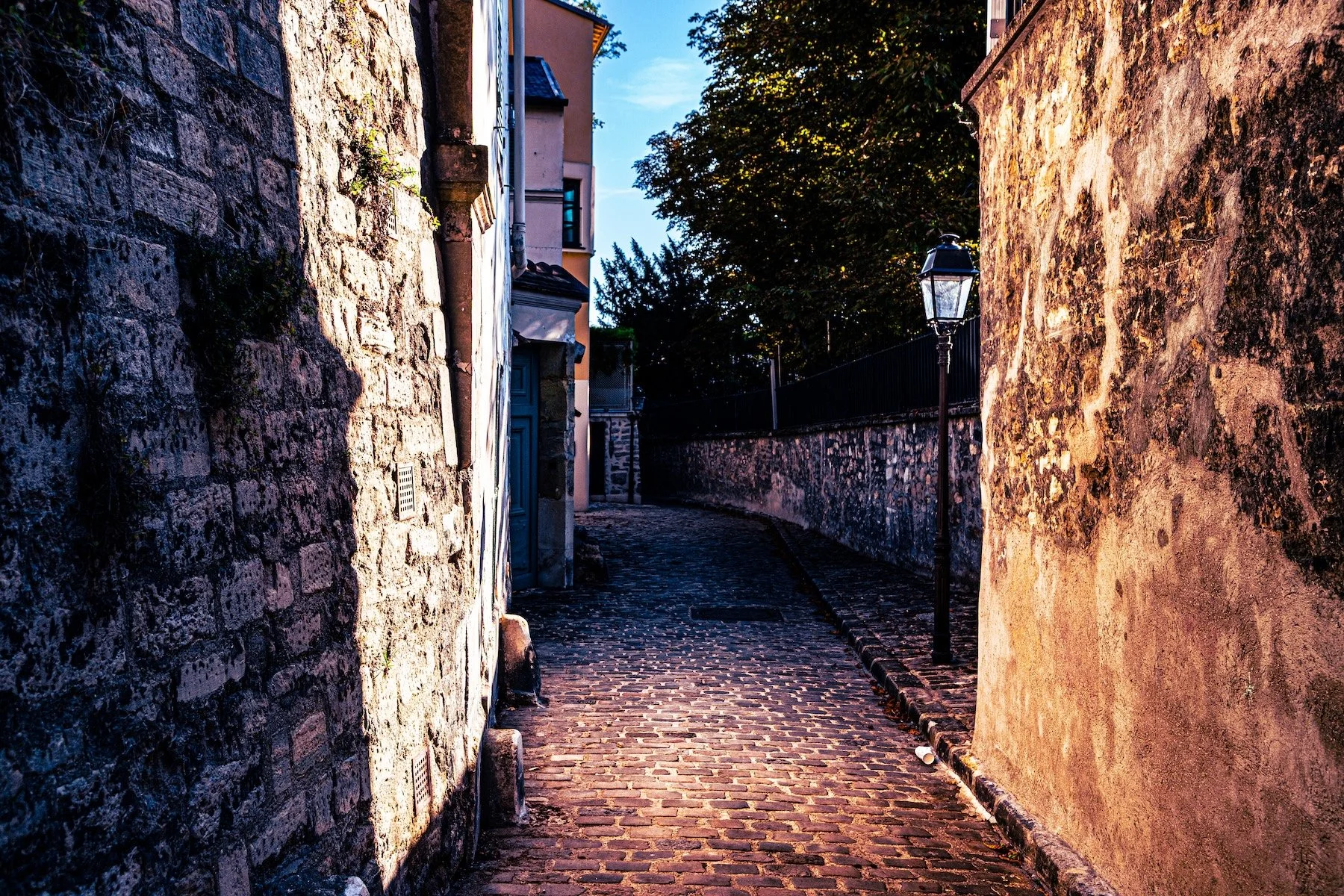
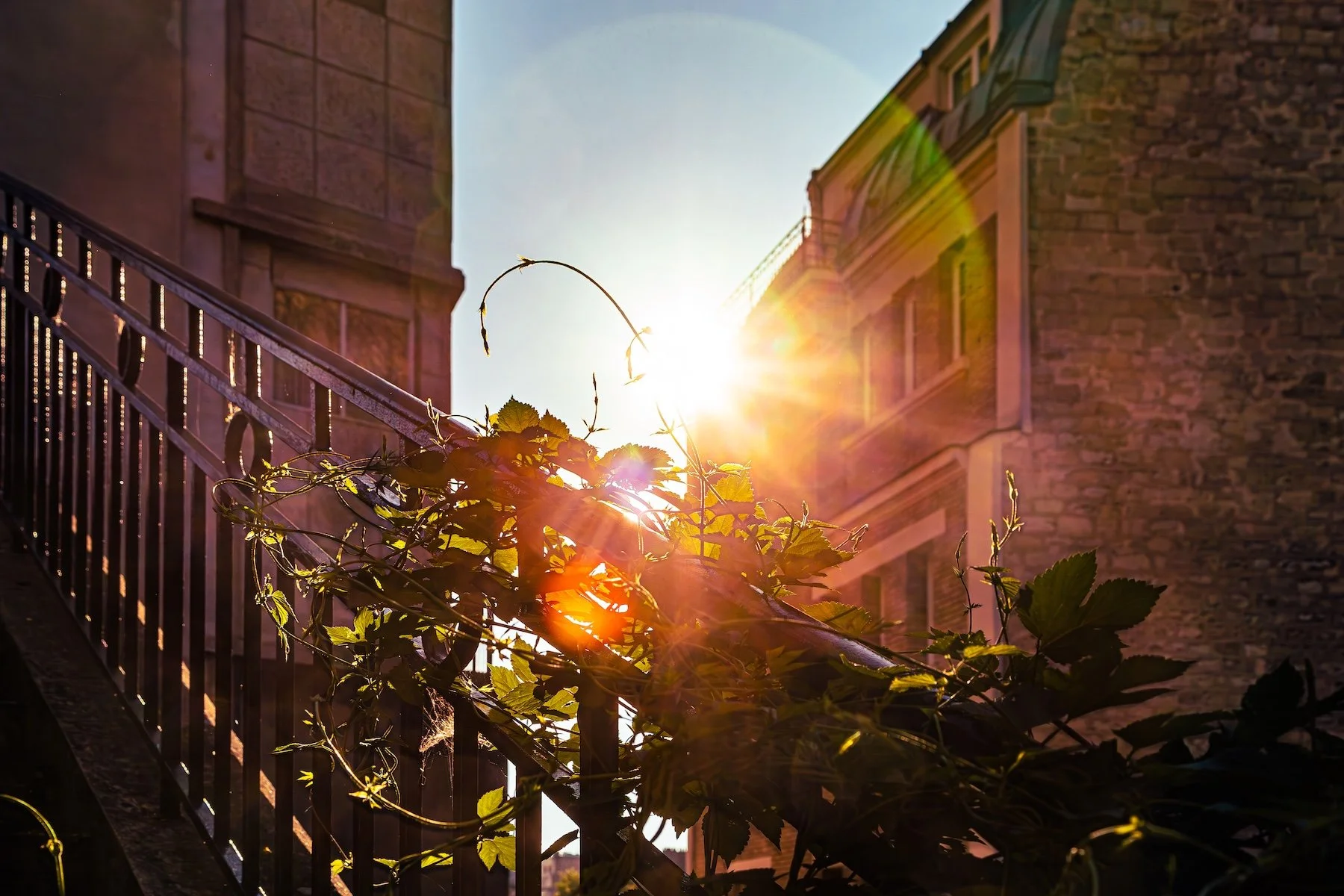
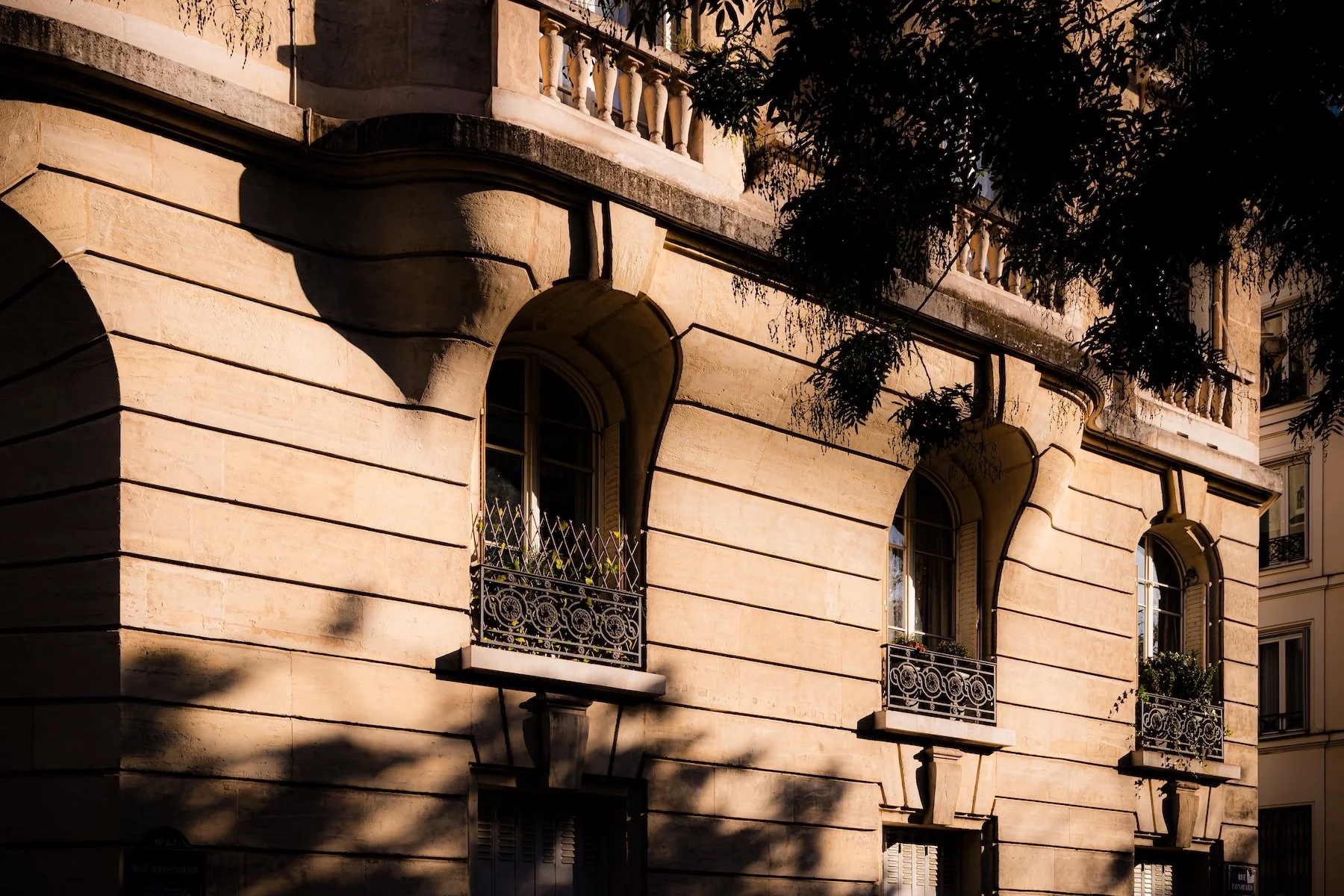
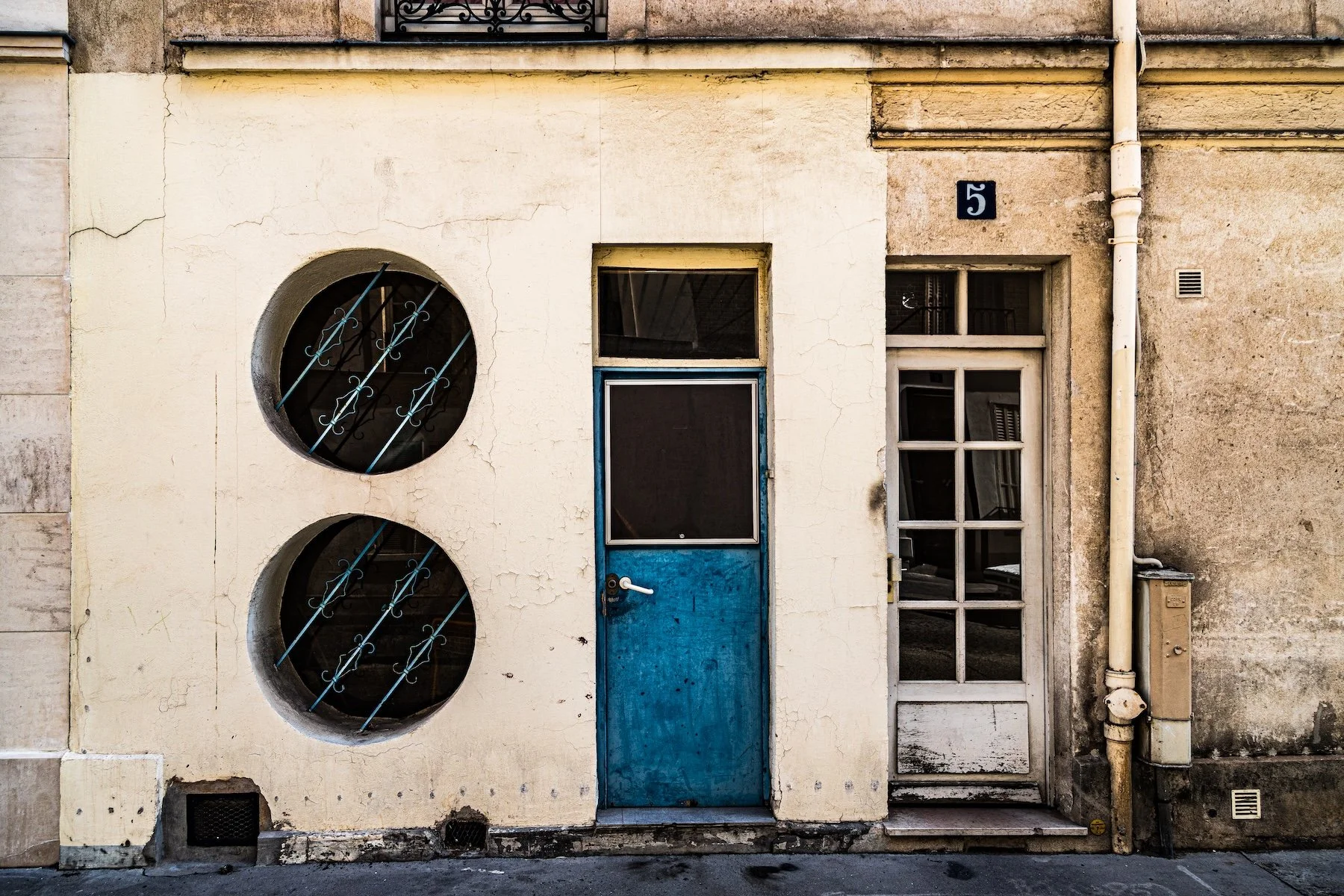
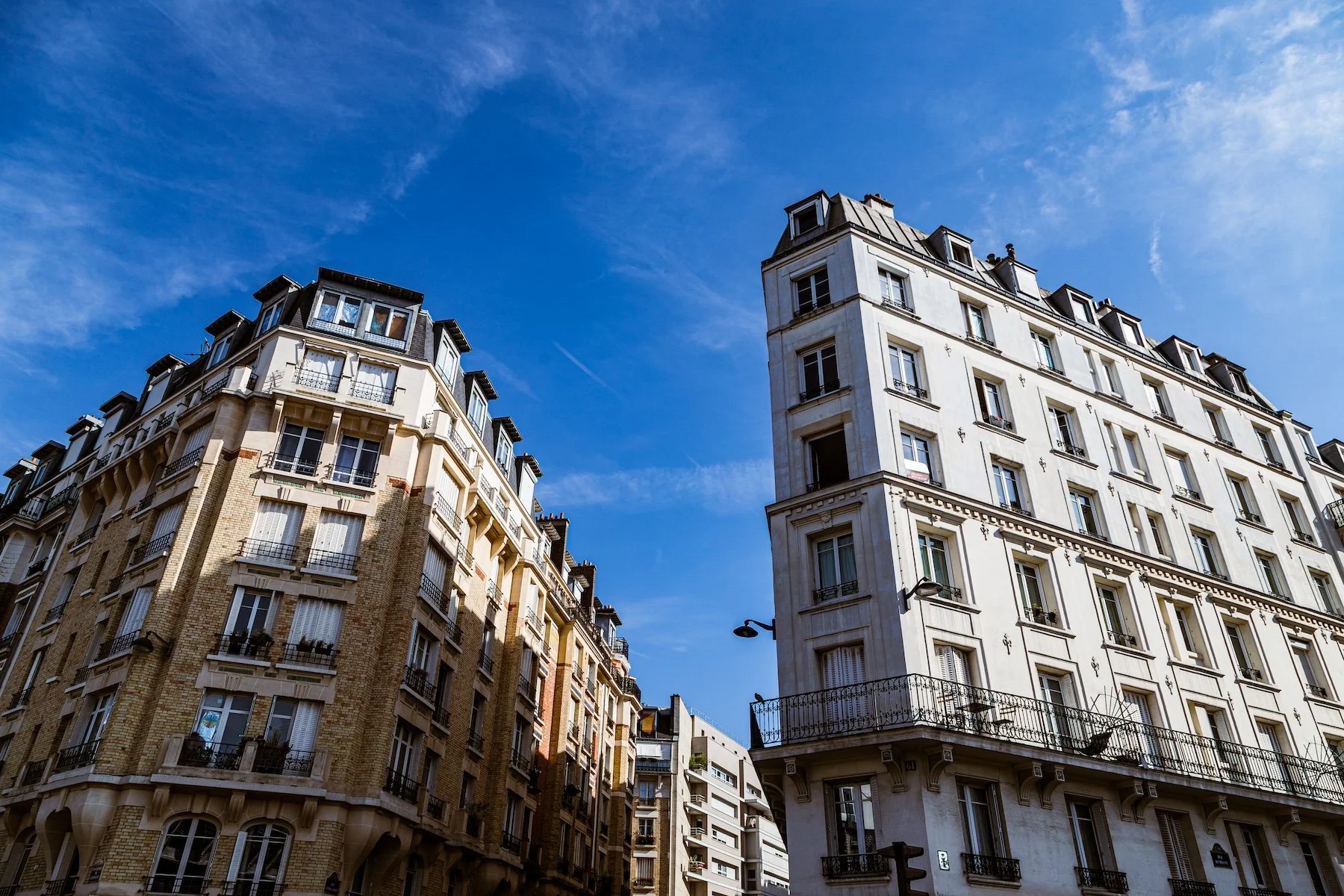
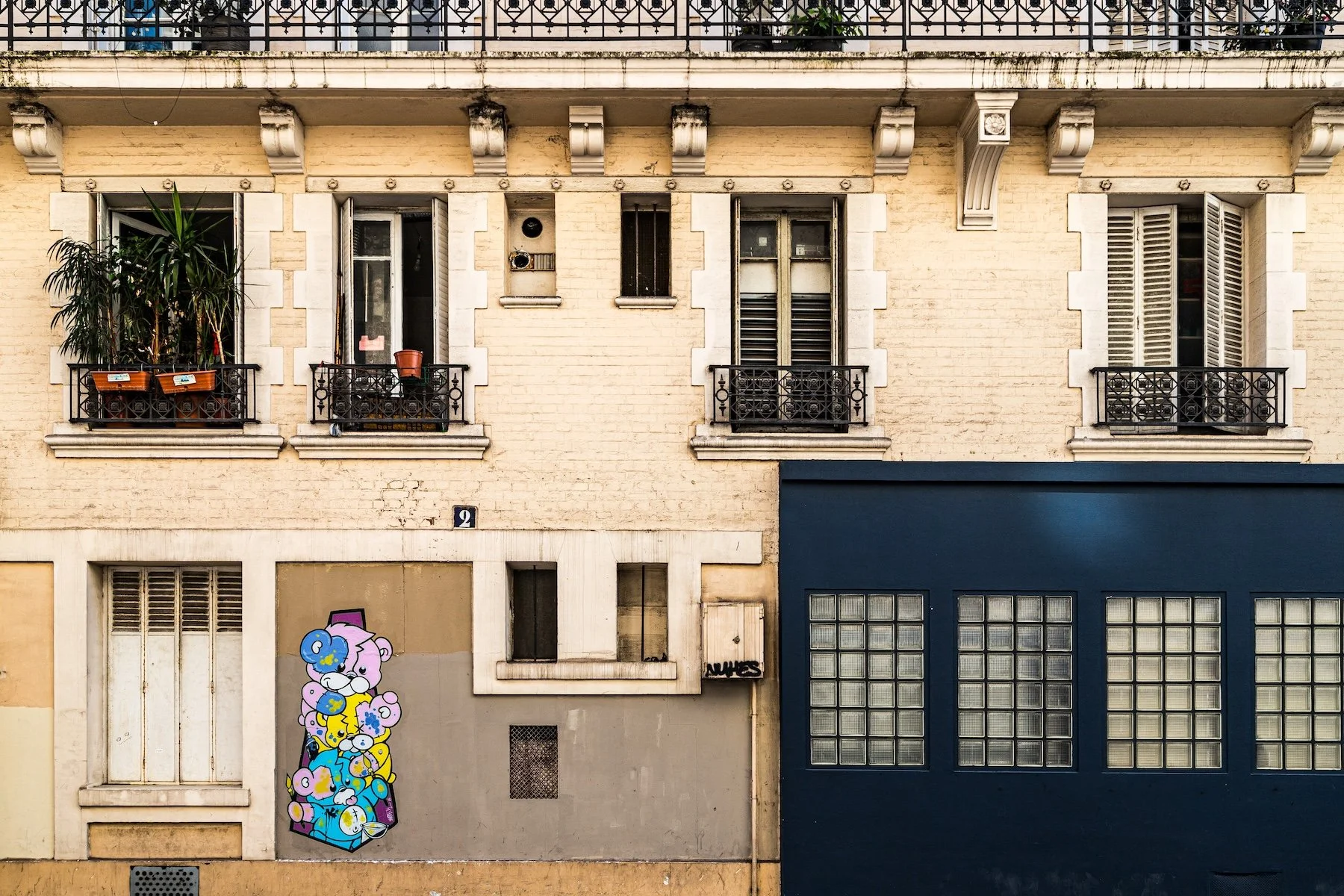
Photographing the arrondissements means moving between the official map and the street-level experience. The camera does not treat each arrondissement as visually uniform. Instead, it looks for the recurring forms, textures, transitions, and contrasts that make each district legible: the geometry of boulevards, the shade of plane trees, the repetition of balconies, the rise of stairways, the curve of canals, the presence of rail stations, the opening of parks, the weight of monuments, and the intimacy of side streets.
On CityNeighborhoods, the arrondissement provides the frame, but the photograph comes from the encounter between map, movement, light, and observation. As the Paris photography is processed, this section will connect each arrondissement more directly to the project’s Photographic Lexicon: the visual strategies, recurring motifs, and compositional patterns that shape how the city is seen through the lens.
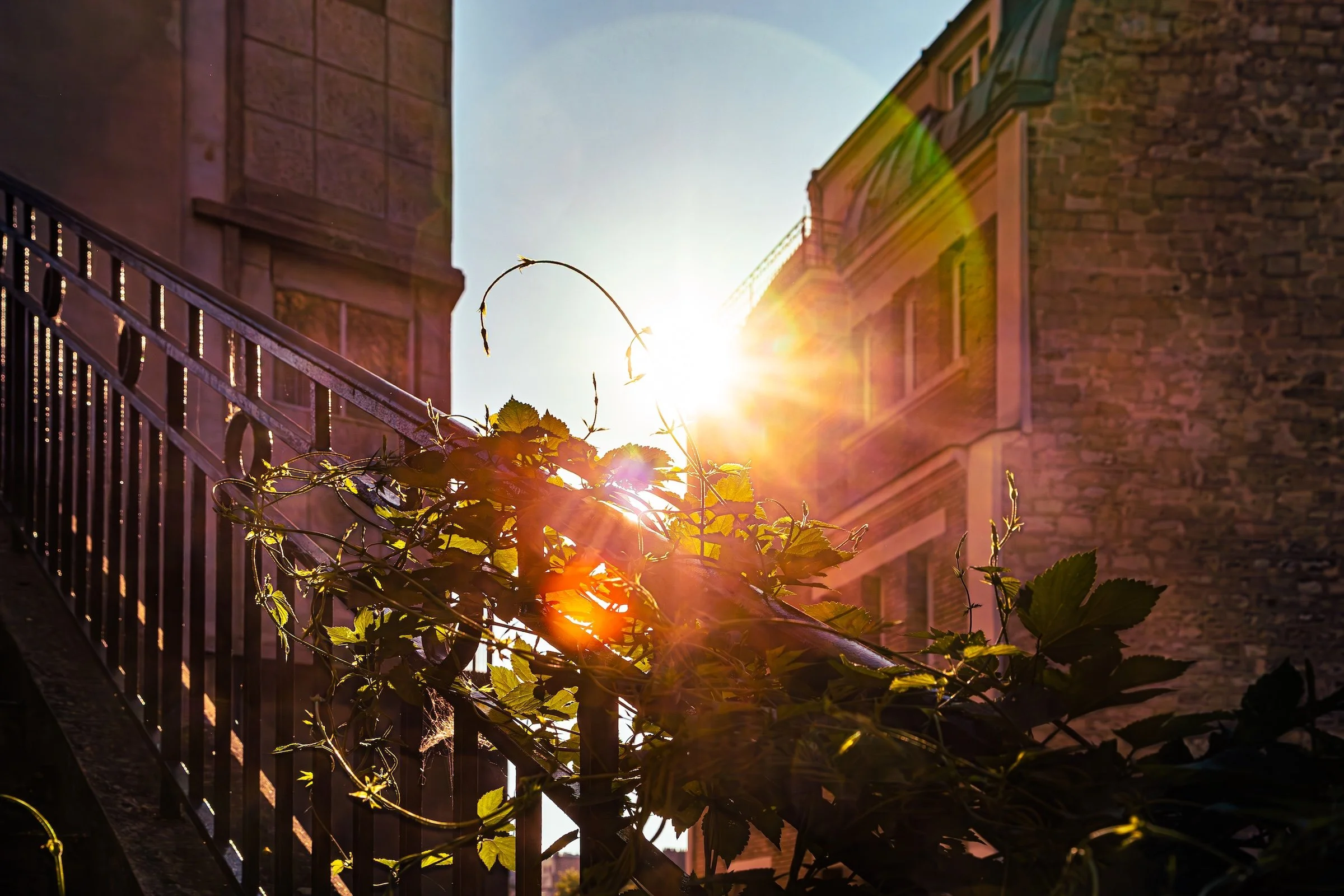
If you visit Paris, these ideas can help inspire your own photography.
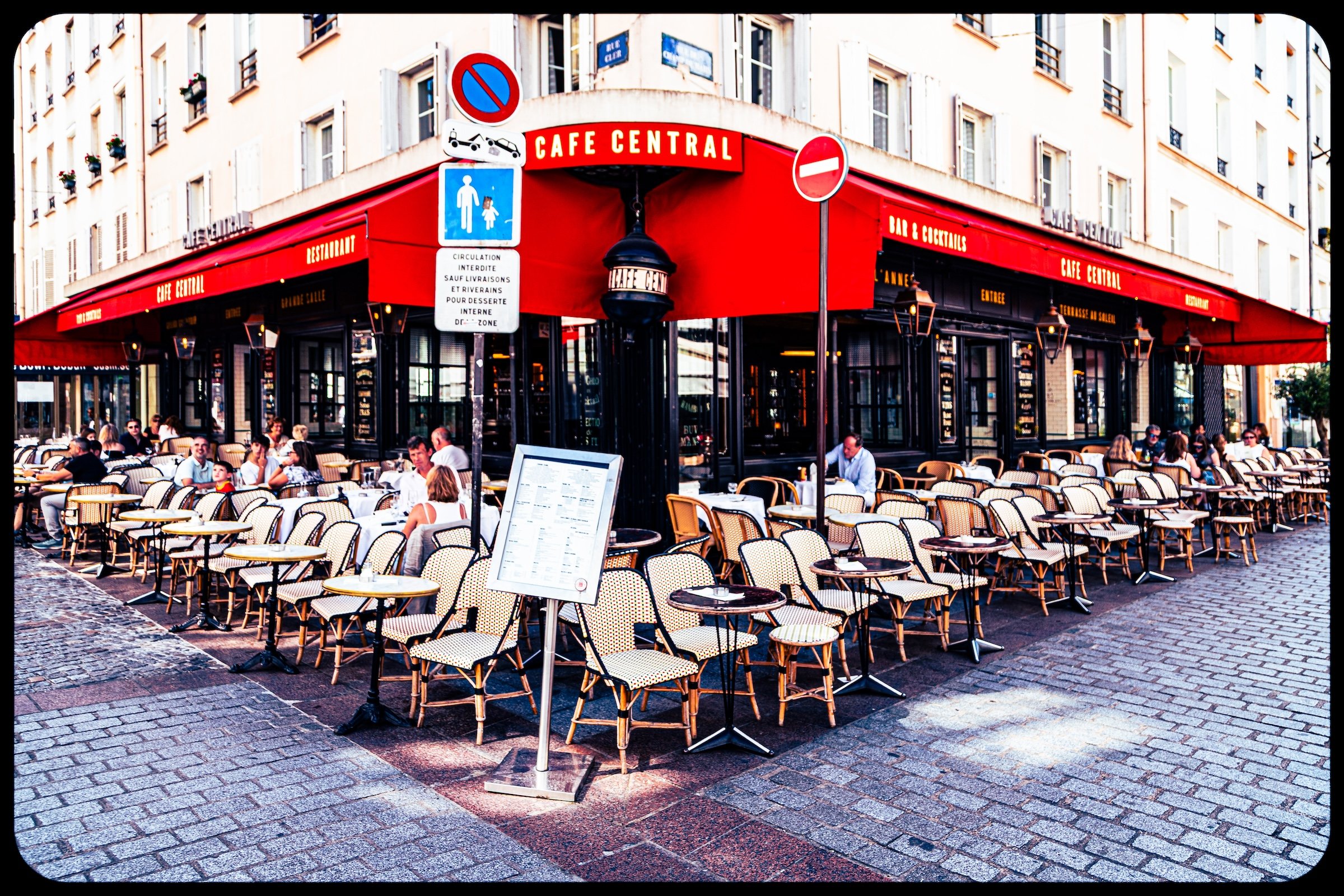
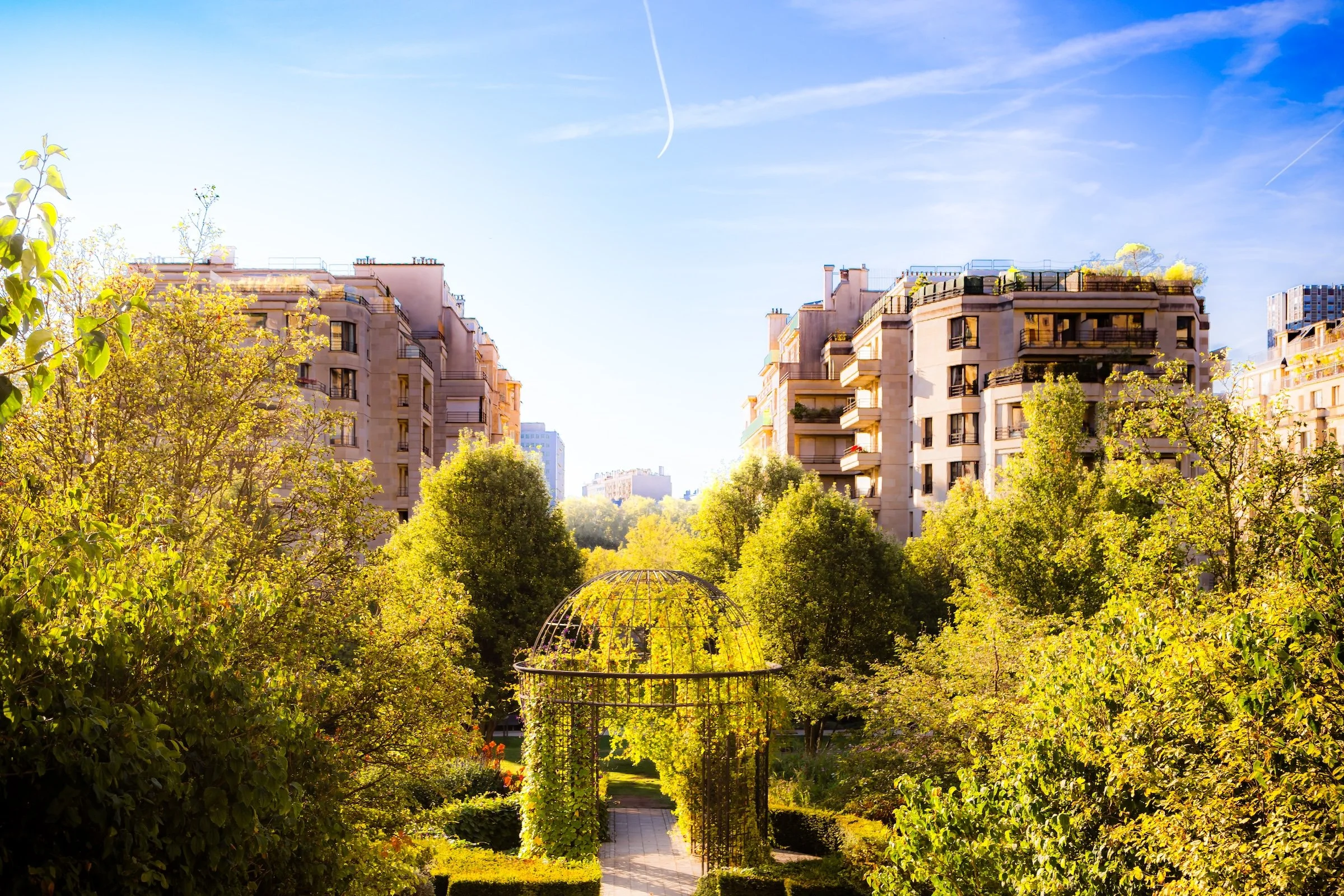
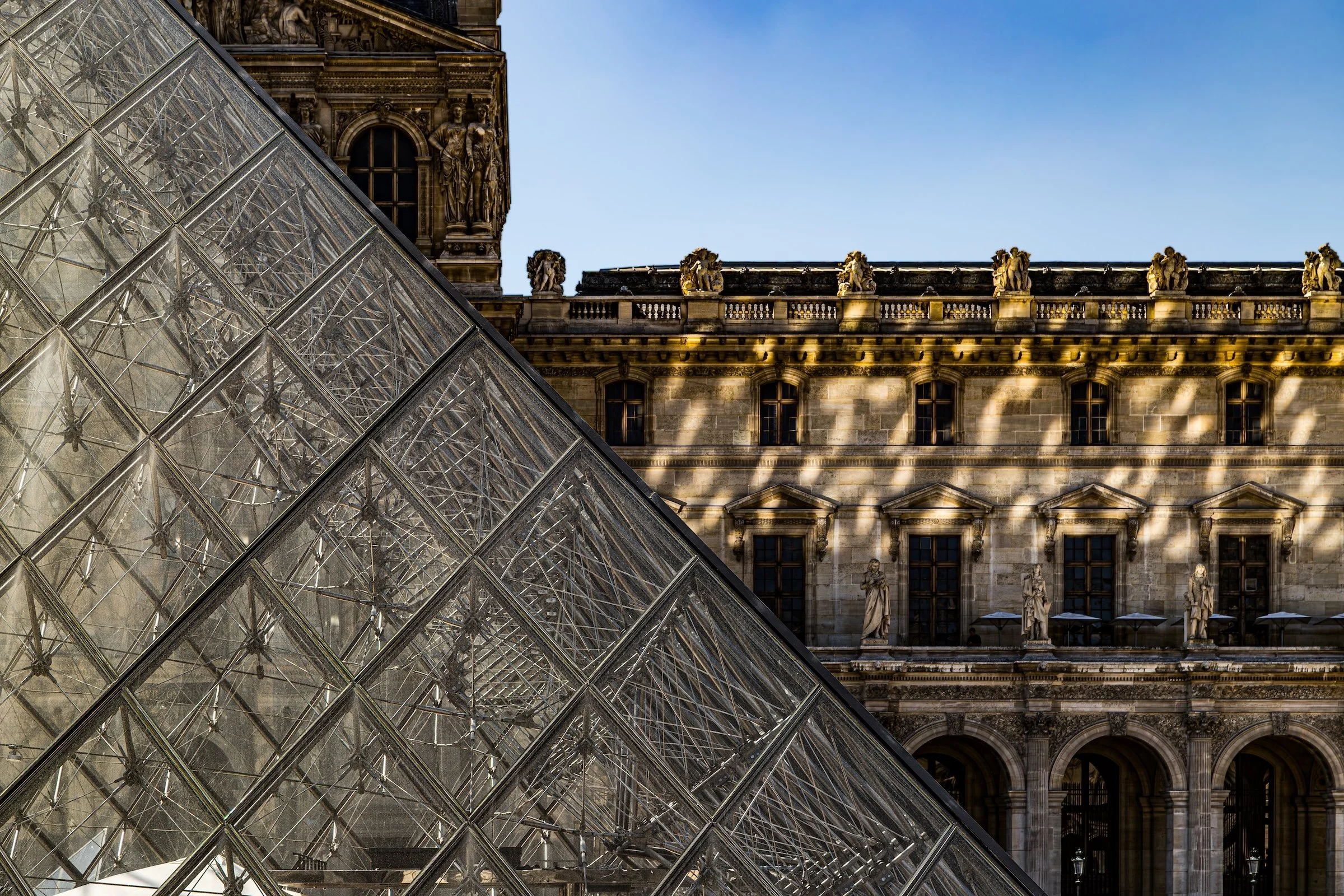
Paris: J’Espere, Je Rêve, Je Vive
Paris Photo Gallery
Paris Field Notes
-
Field Note: August 18, 2025 | 07:58 AM
Conditions: 73°F | Humidity: 72%.
Within the park's interior, the glacial kettle ponds acted as humidity traps, creating a soft, hazy light that filtered through the old-growth oaks. The transition from the park's dense shade to the sun-drenched edges of Oakland Gardens highlighted the day's exceptional "picture-perfect" clarity.
There is a fleeting window in Queens where the humidity of August hasn't yet heavy-set, and the morning sun hits the canopy of Alley Pond Park at a perfect oblique angle. Arriving just before 8:00 AM, I watched the light break through the oaks and tulip trees, casting long, dramatic shadows across the wet grass. It’s in these quiet, golden moments that the park feels less like a city escape and more like the ancient glacial valley it actually is.
Other neighborhoods visited:
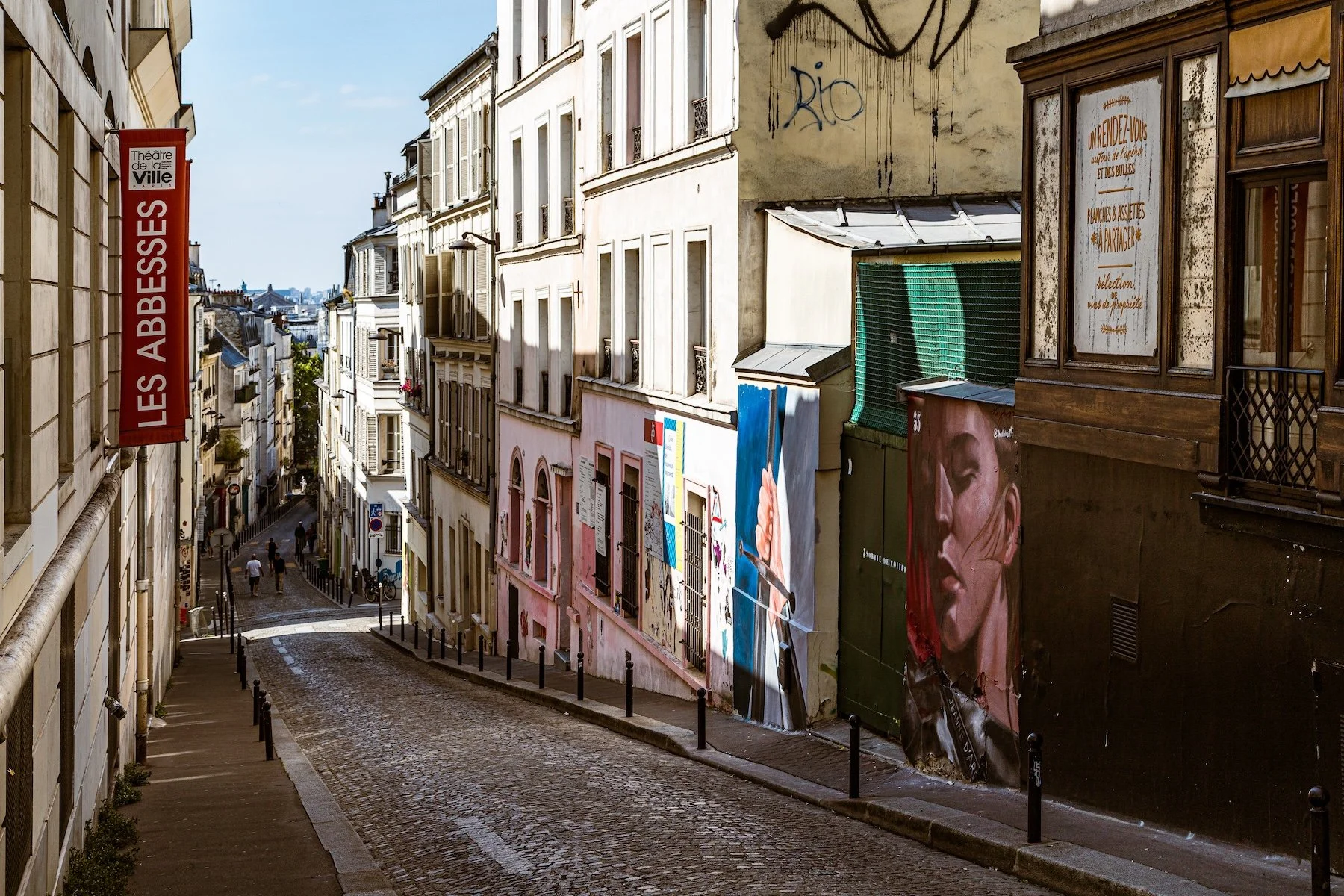
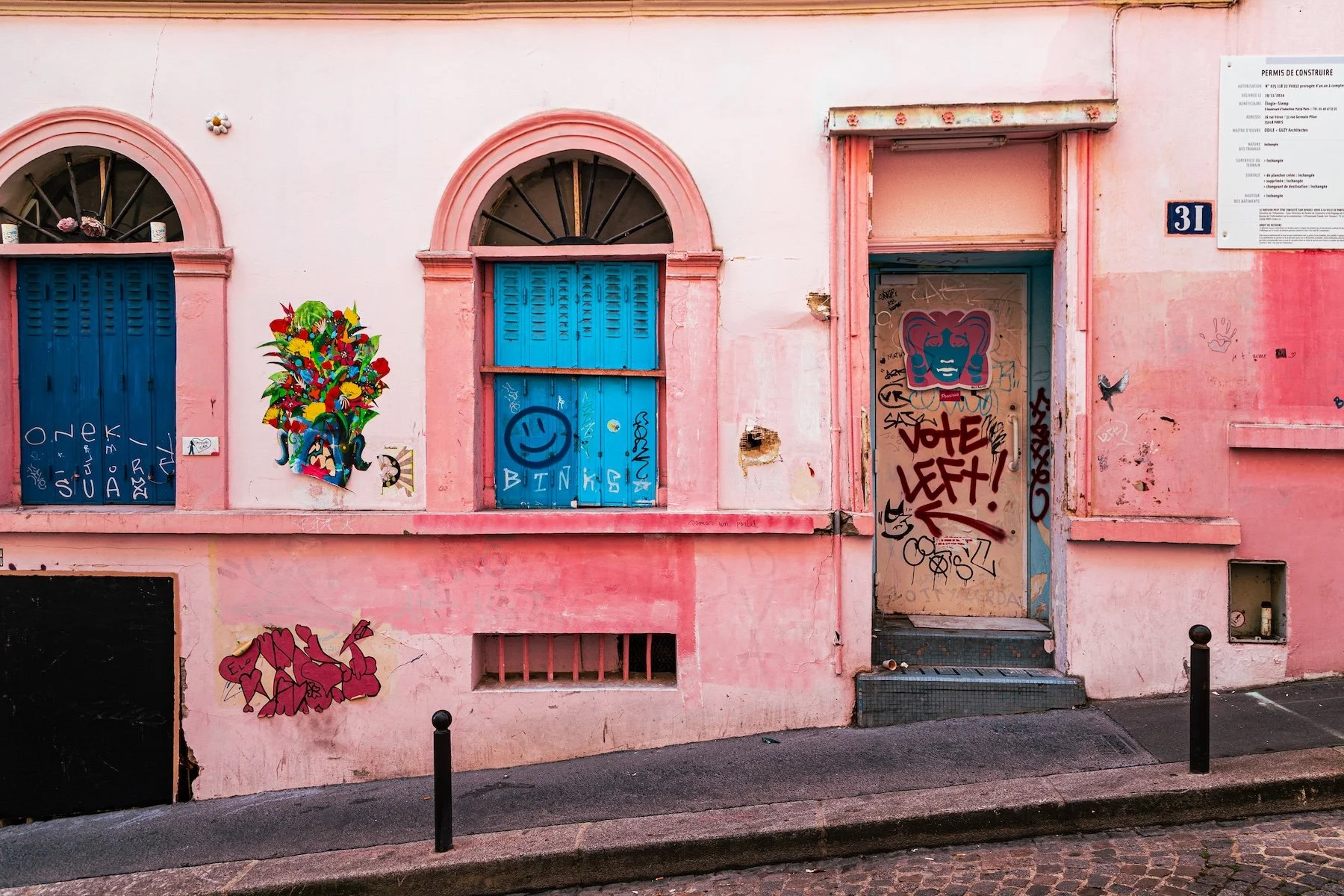
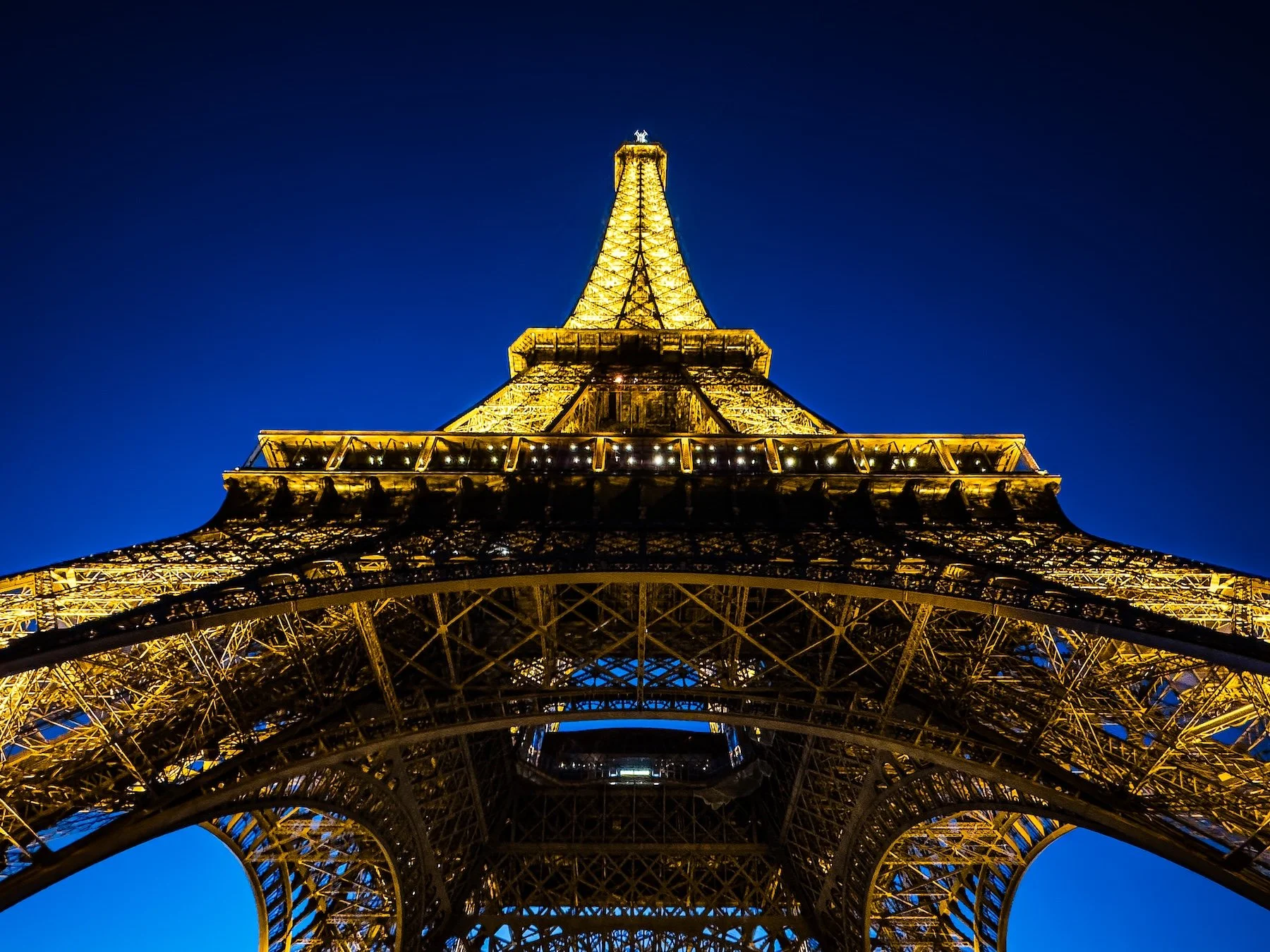
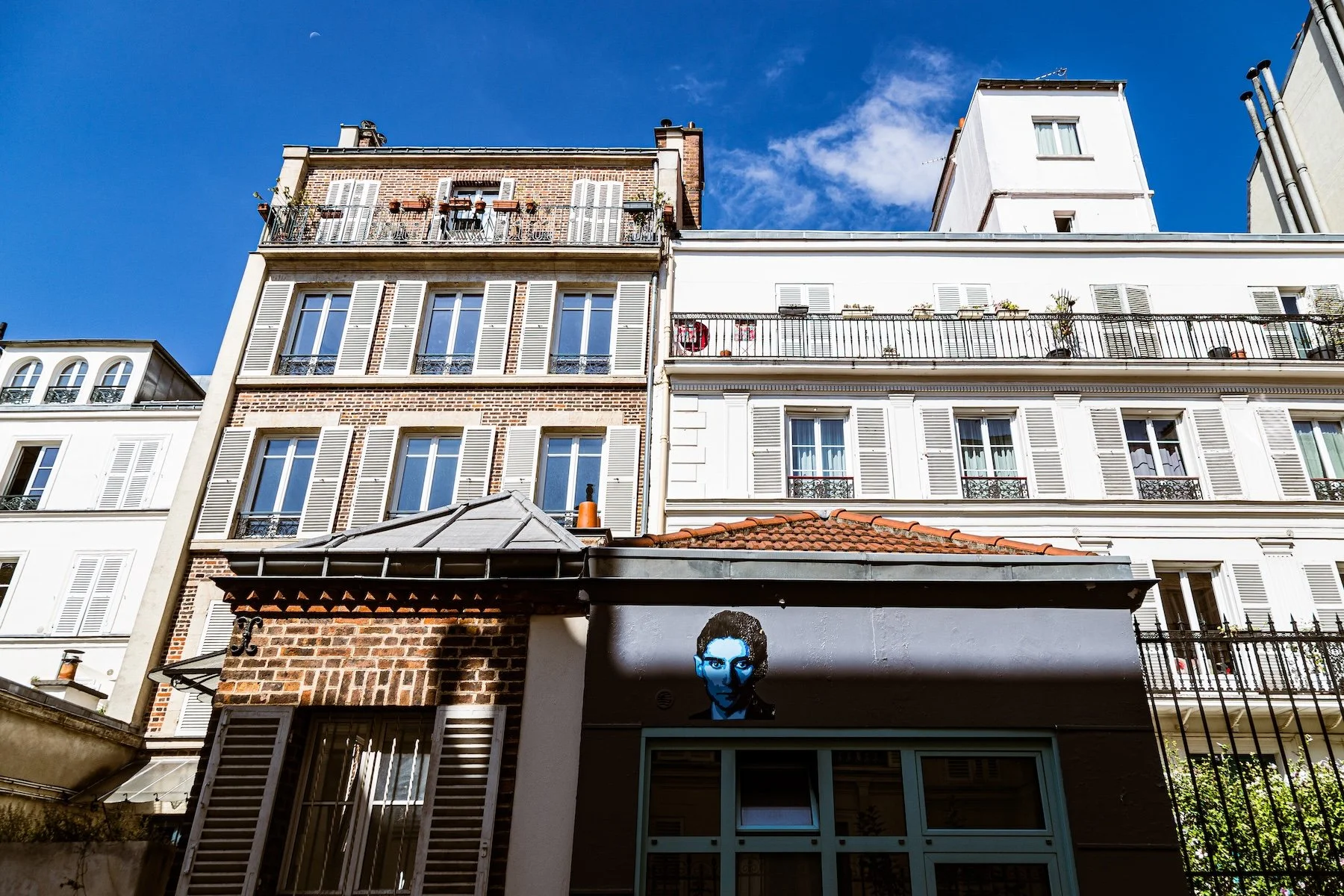
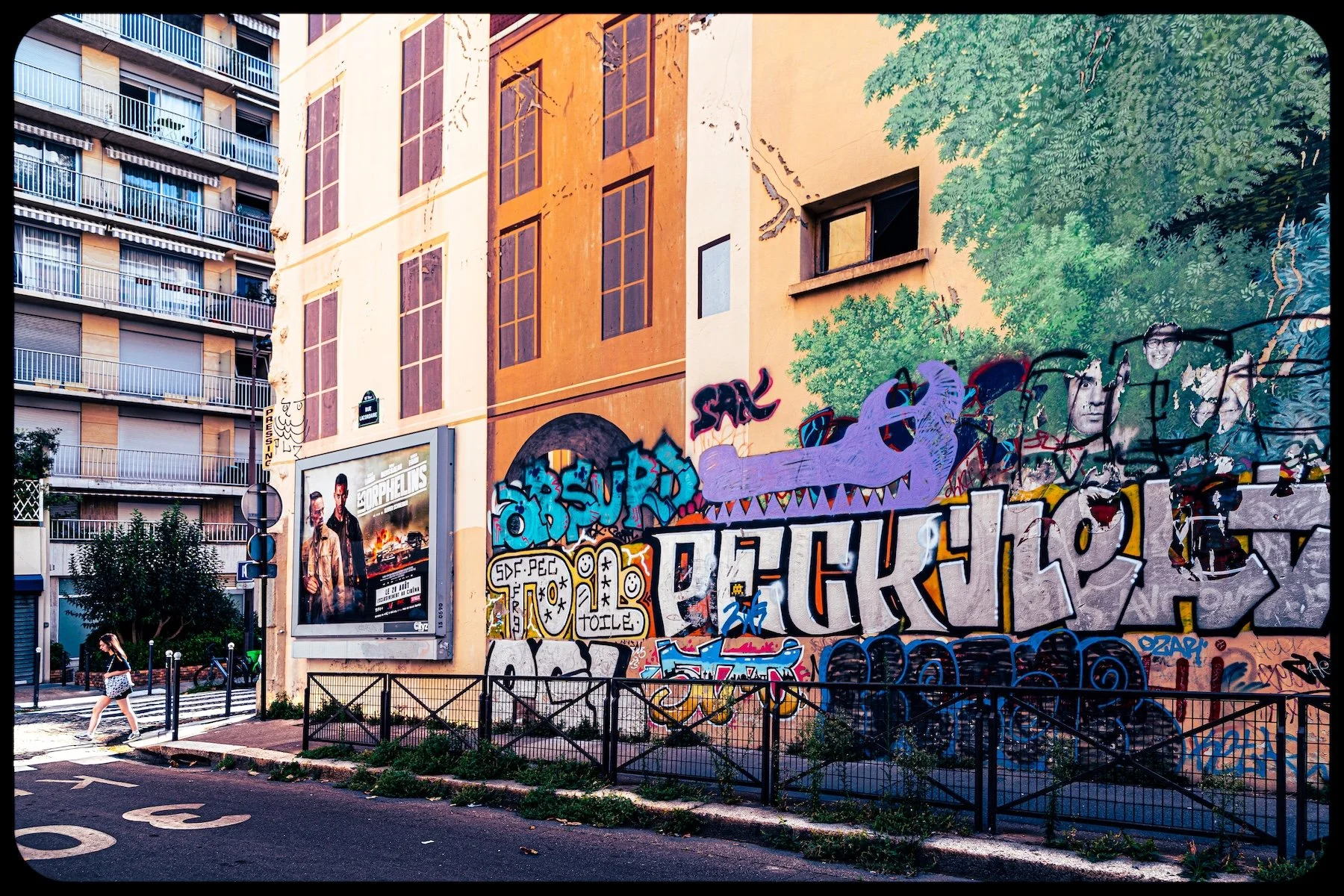
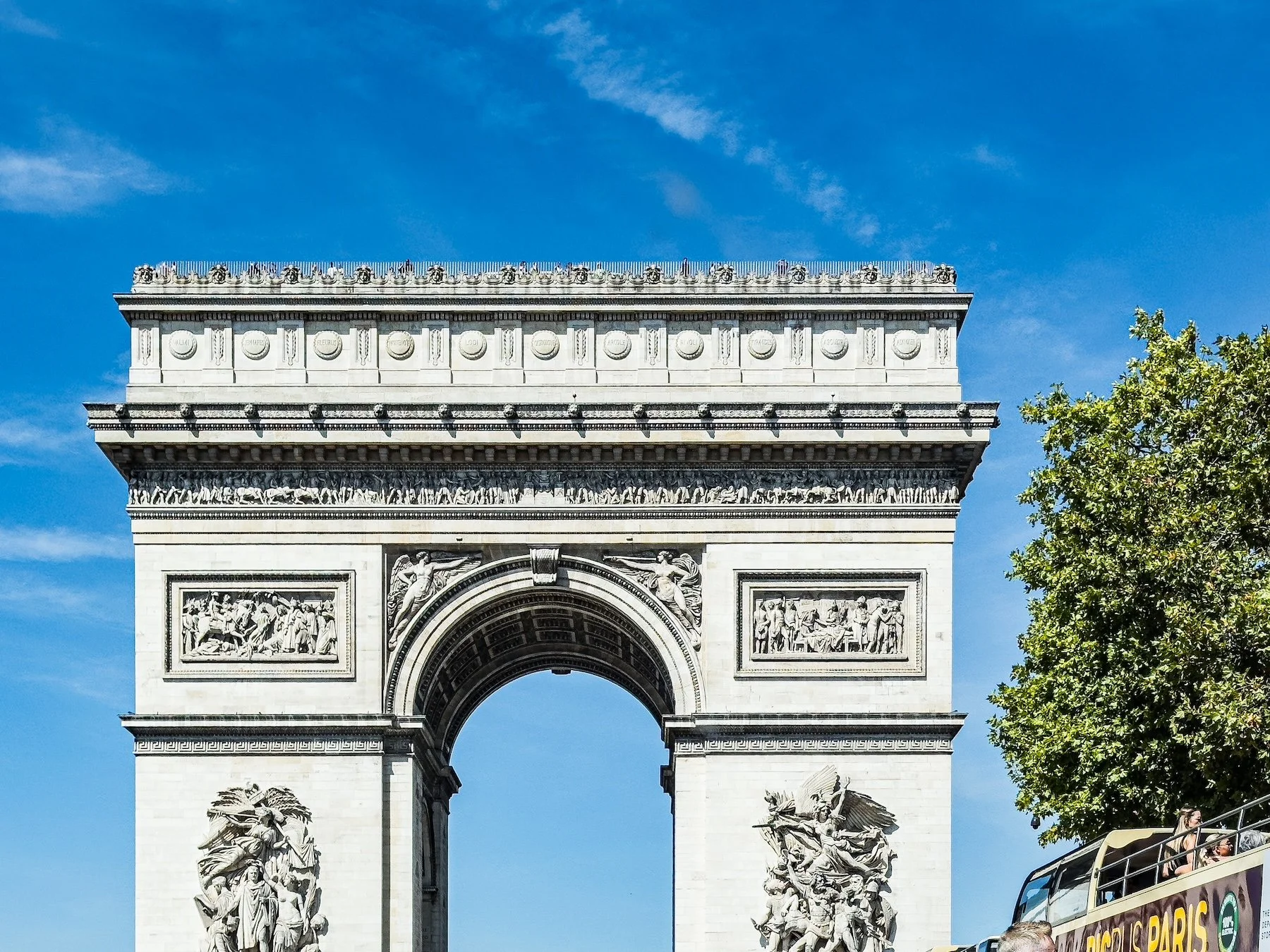
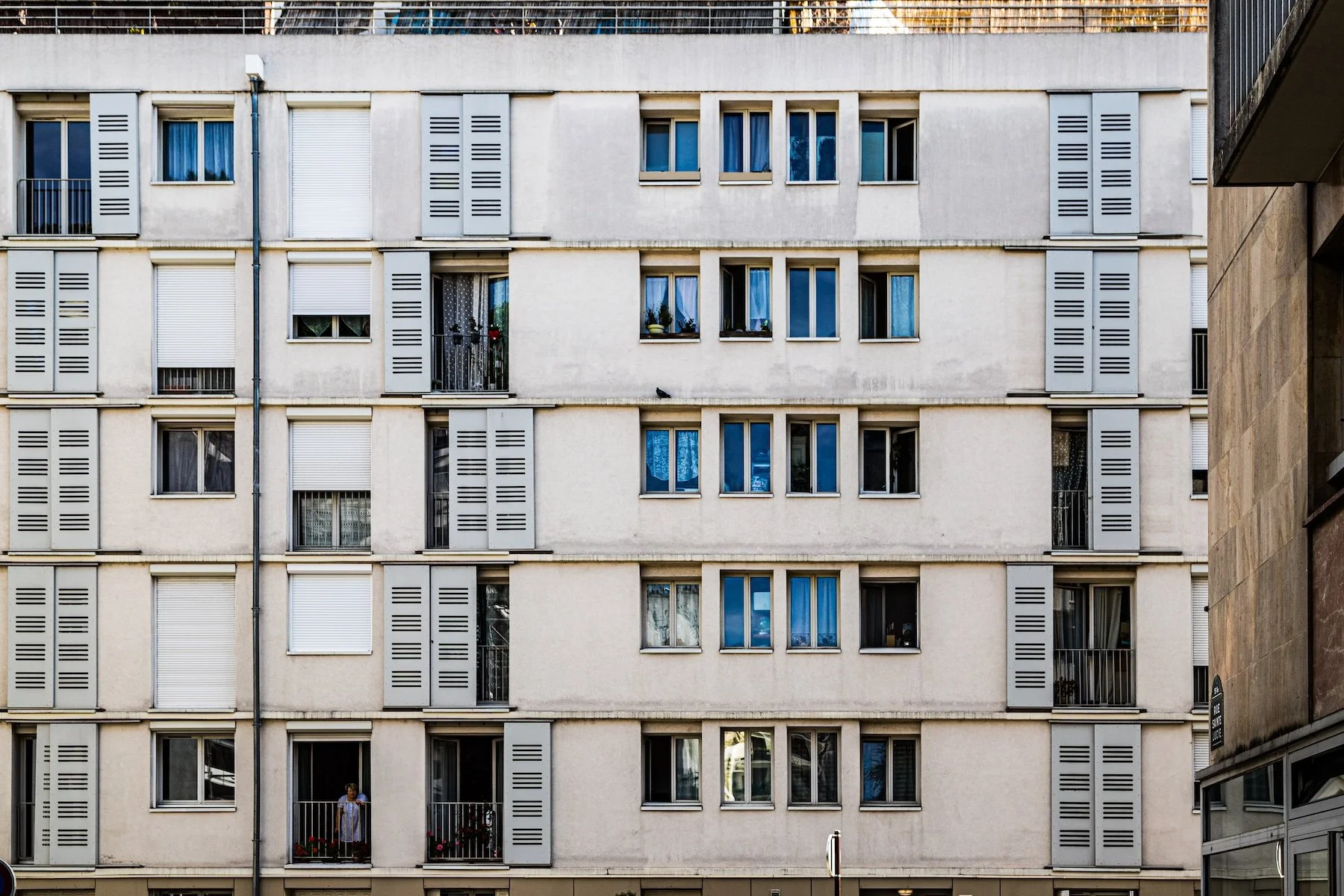
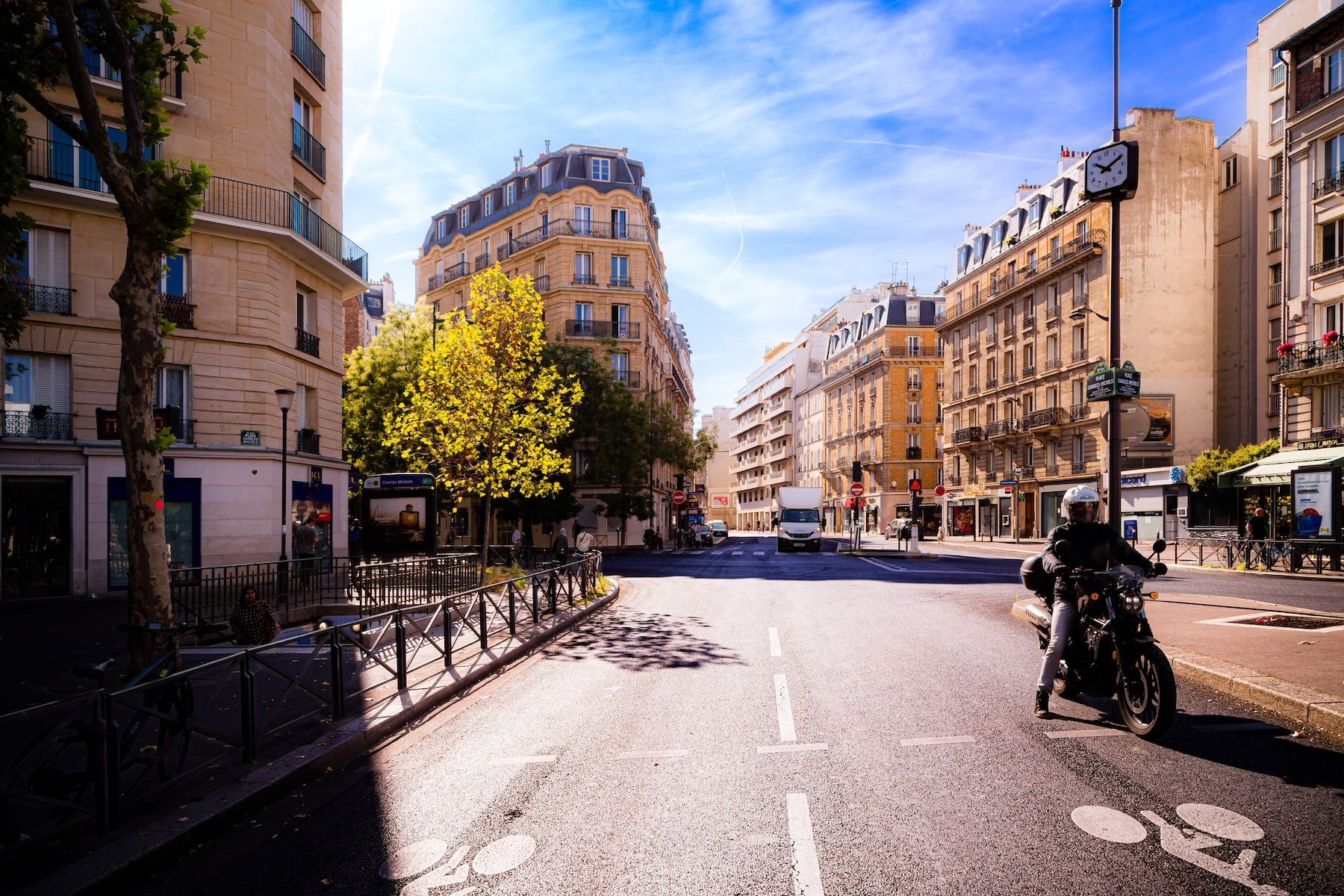
Explore Paris
-

The twenty arrondissements form the civic spiral of Paris, organizing the city into its broad local districts of government, identity, and daily life.
-

Each arrondissement is divided into four official administrative quarters, giving Paris a more precise civic and geographic framework.
-

The conseils de quartier bring participation to street level, giving residents a voice in neighborhood needs, public space, and local civic life.
-

Les Deux Rives trace Paris through the Seine’s two banks, revealing how the Rive Droite and Rive Gauche shaped the city’s civic power, commerce, learning, art, and cultural identity.
-
Cultural neighborhoods reveal the Paris people recognize through history, cafés, architecture, memory, atmosphere, and local belonging.