
THE LATIN QUARTER
Milieux Culturels
Part of an ongoing project to walk and photograph every neighborhood in Paris, this page explores the Cultural Neighborhood: The Latin Quarter through maps, district identity, history, and photography.
The Map
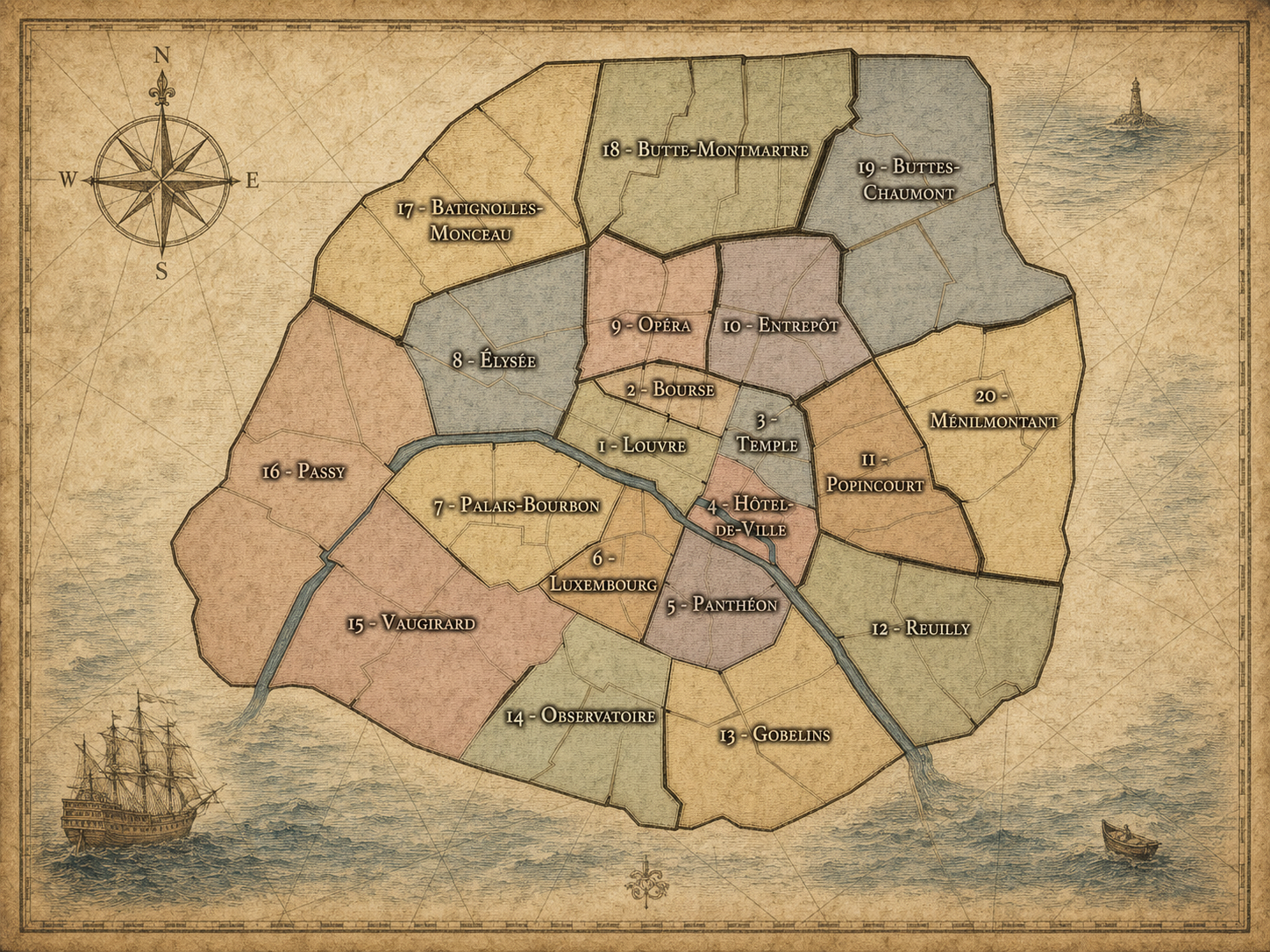
Download the Paris Arrondissements Map
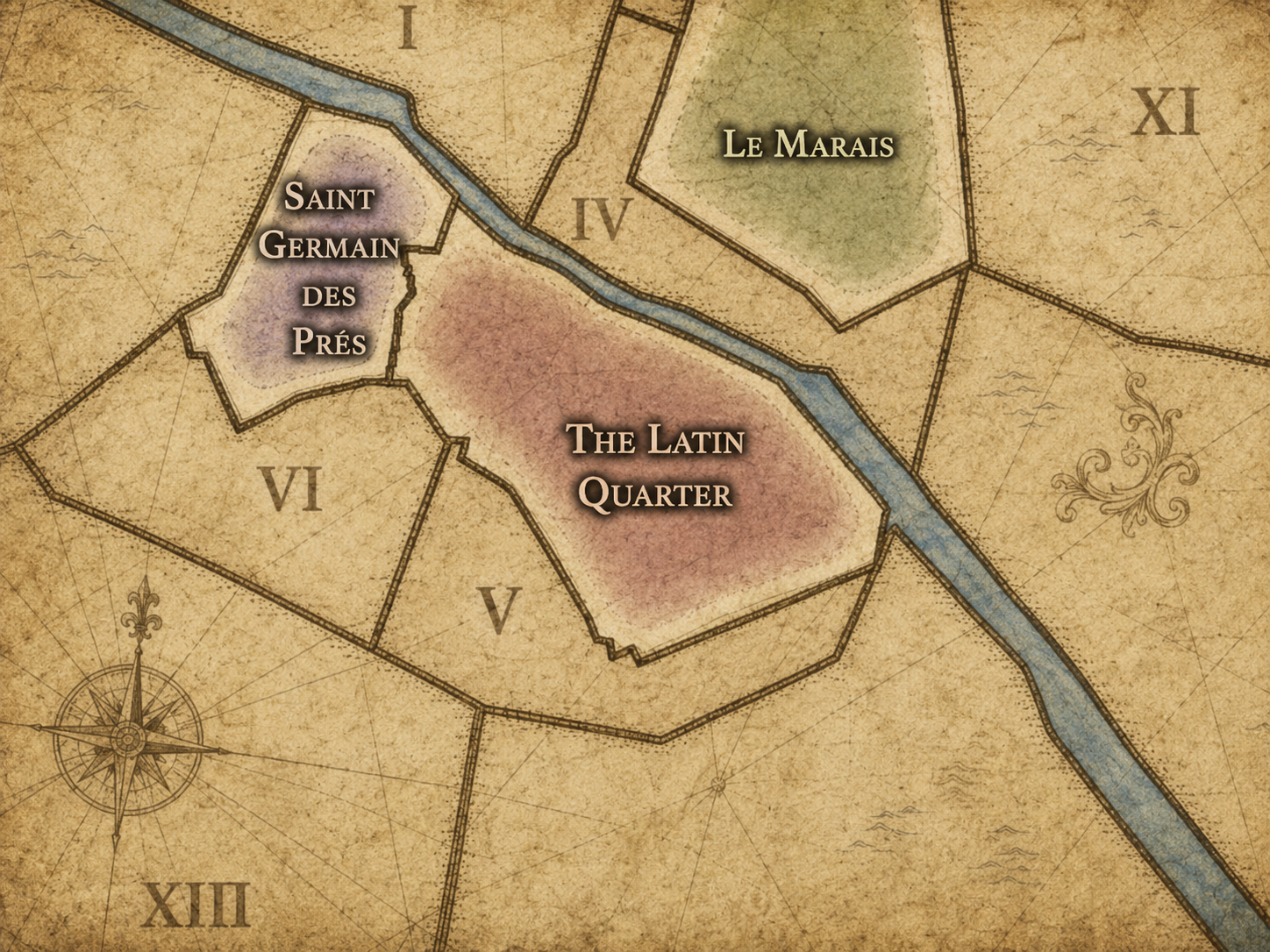
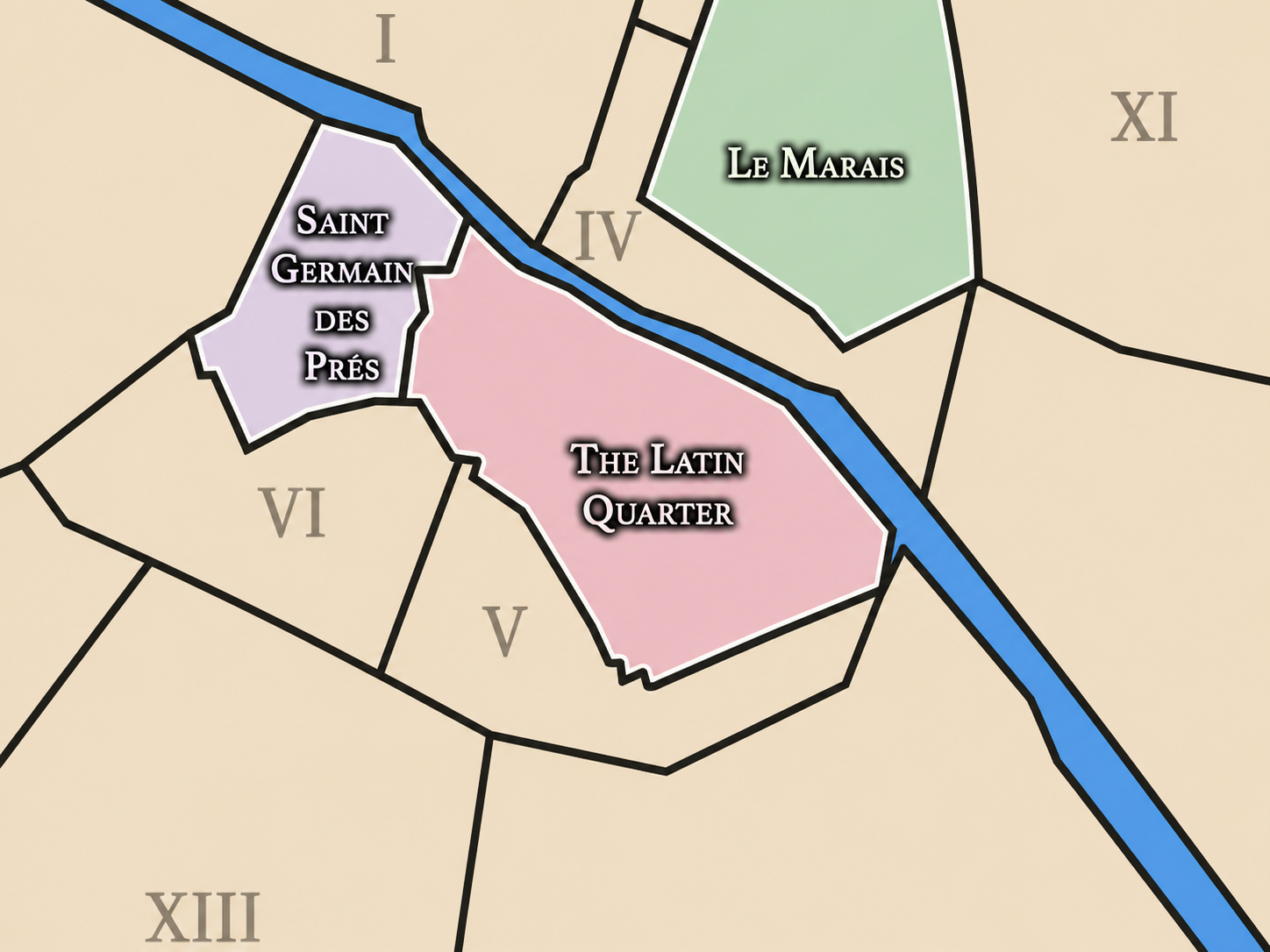
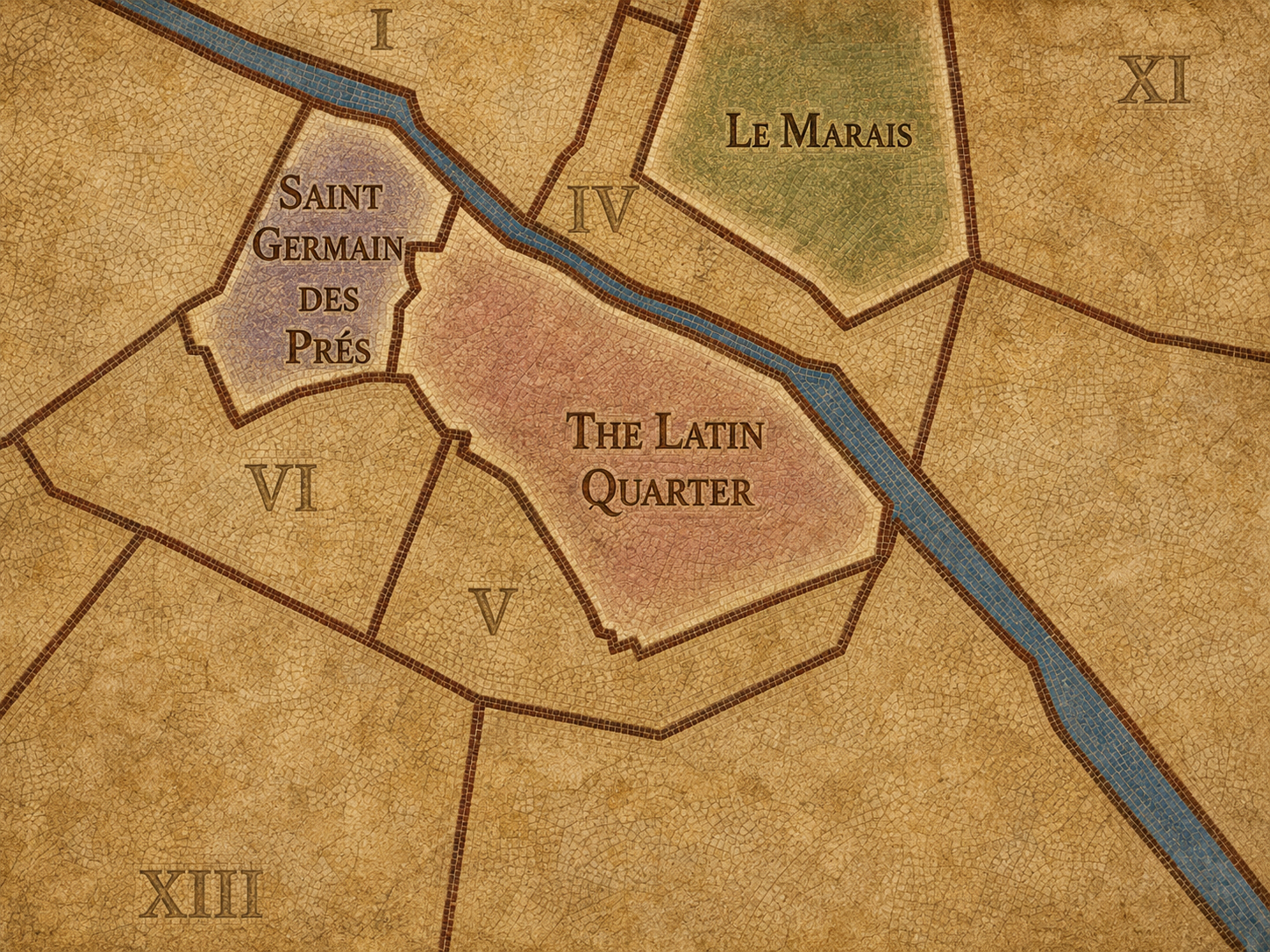
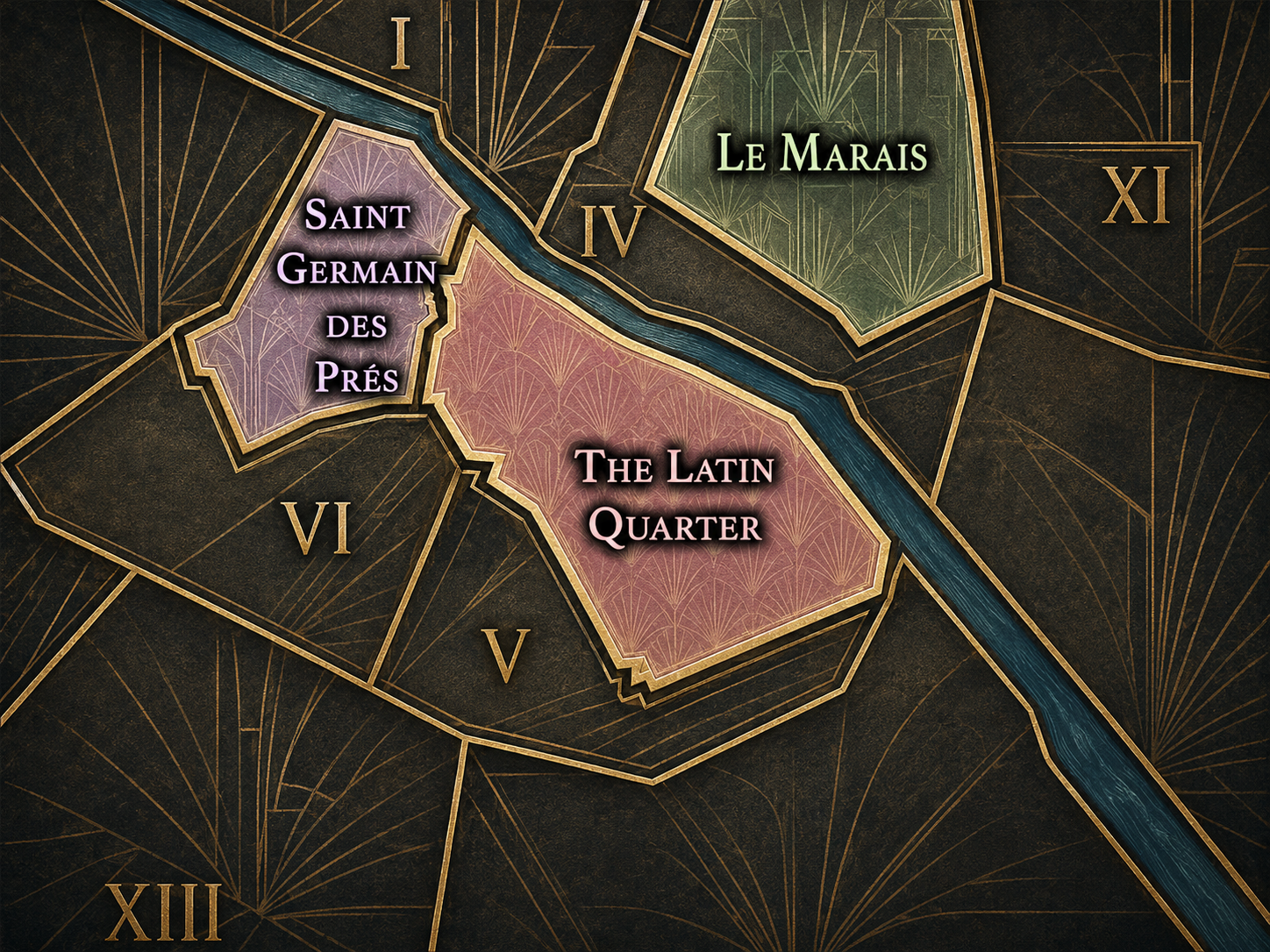
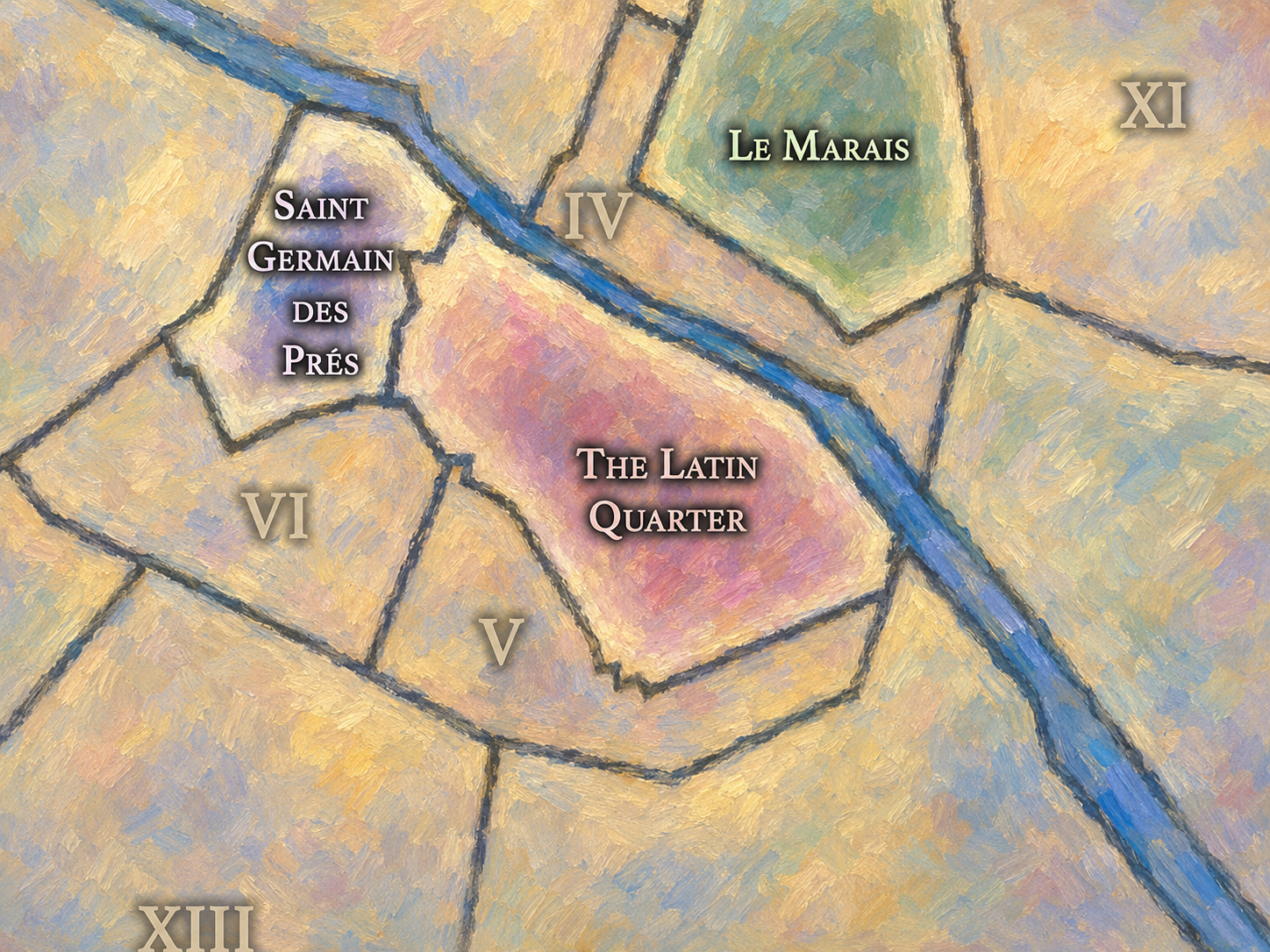
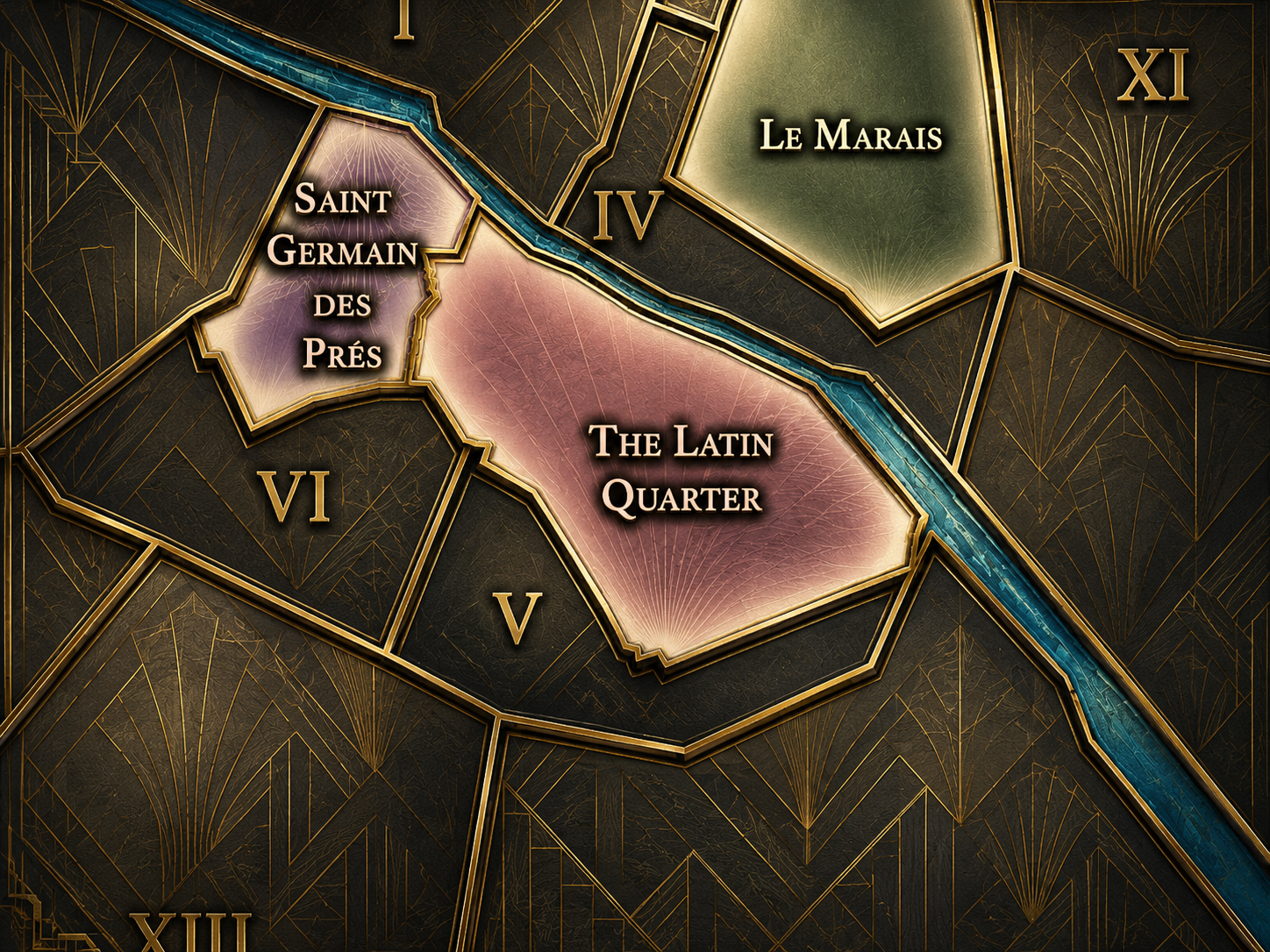
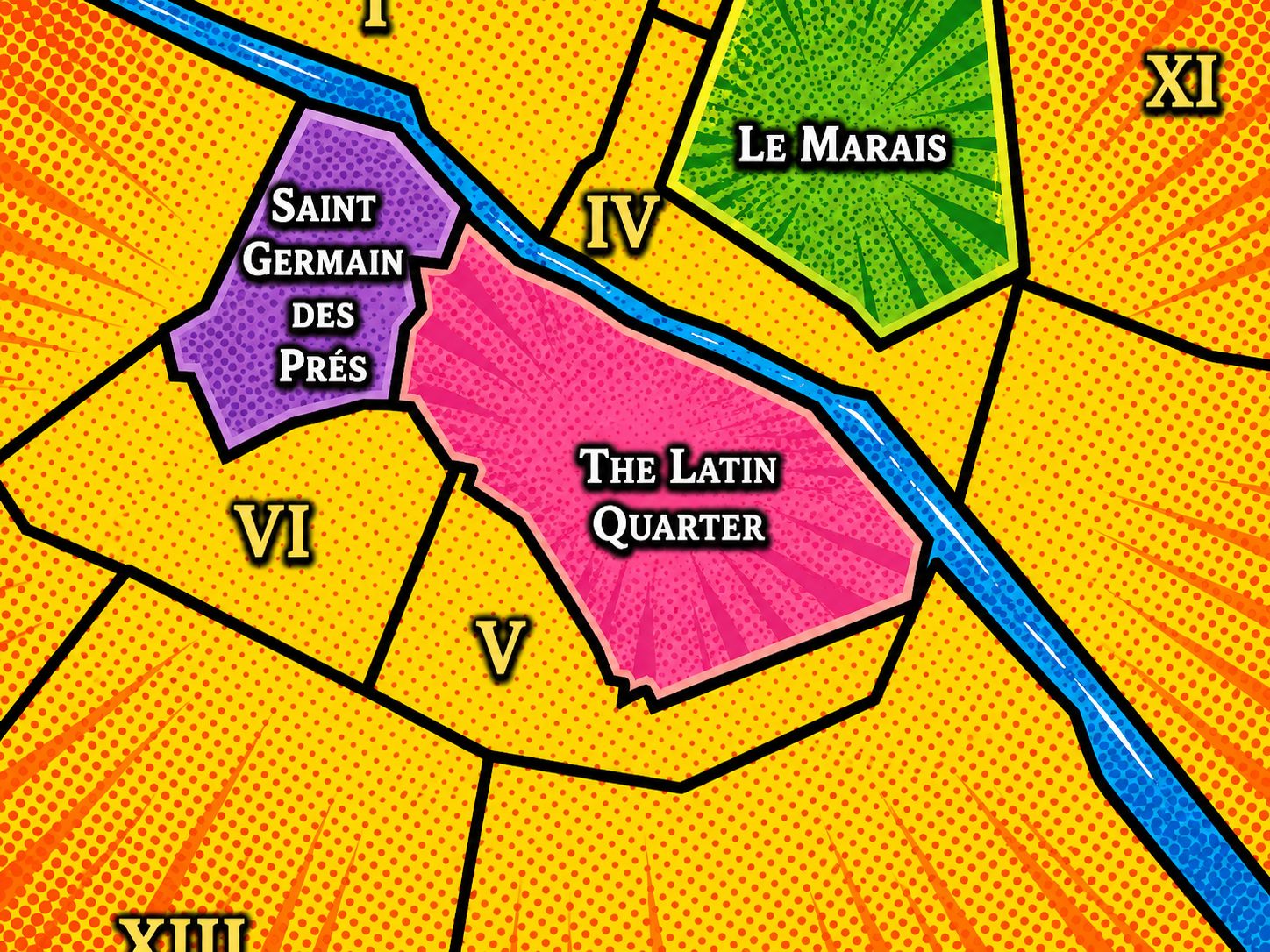
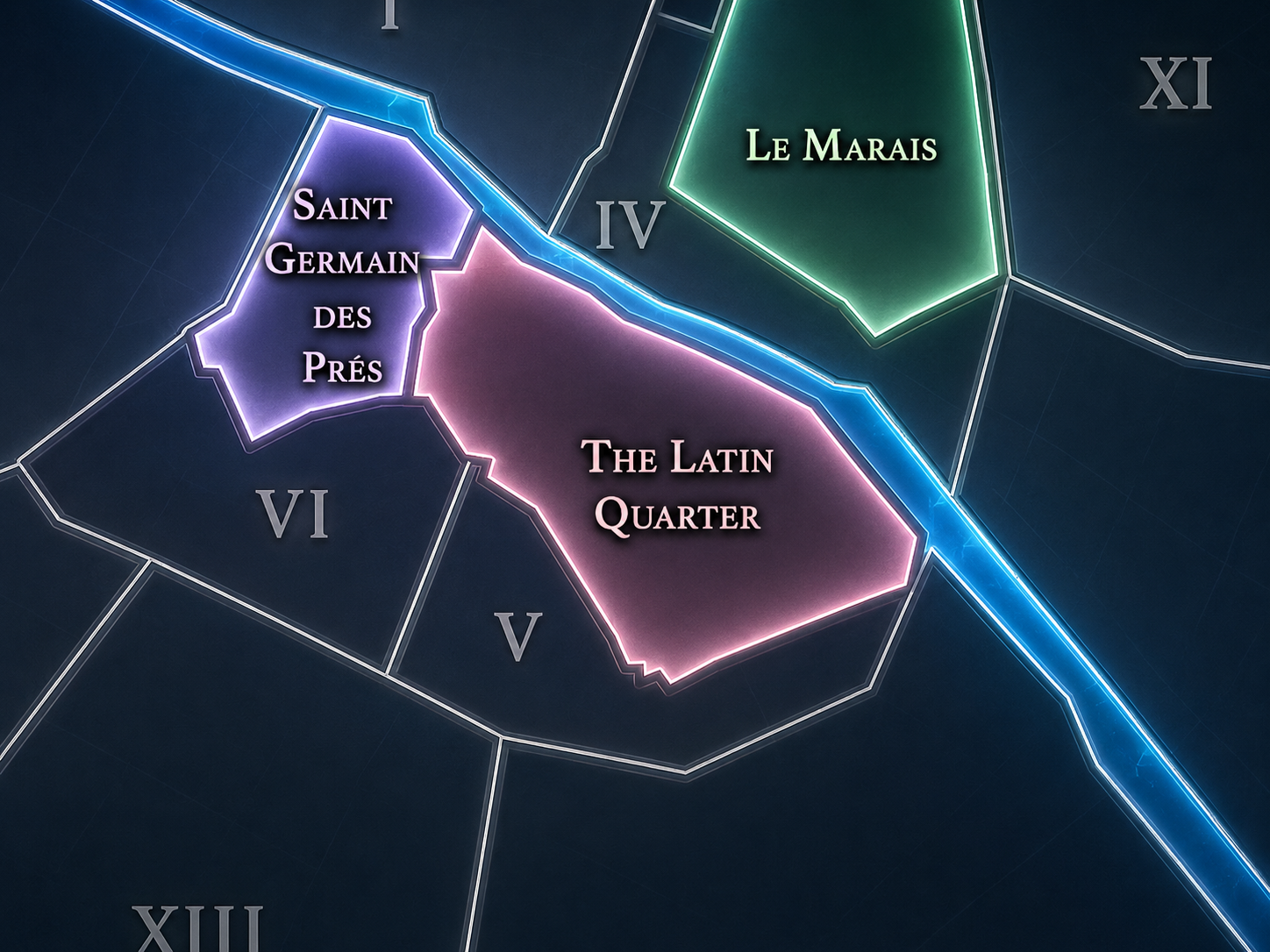
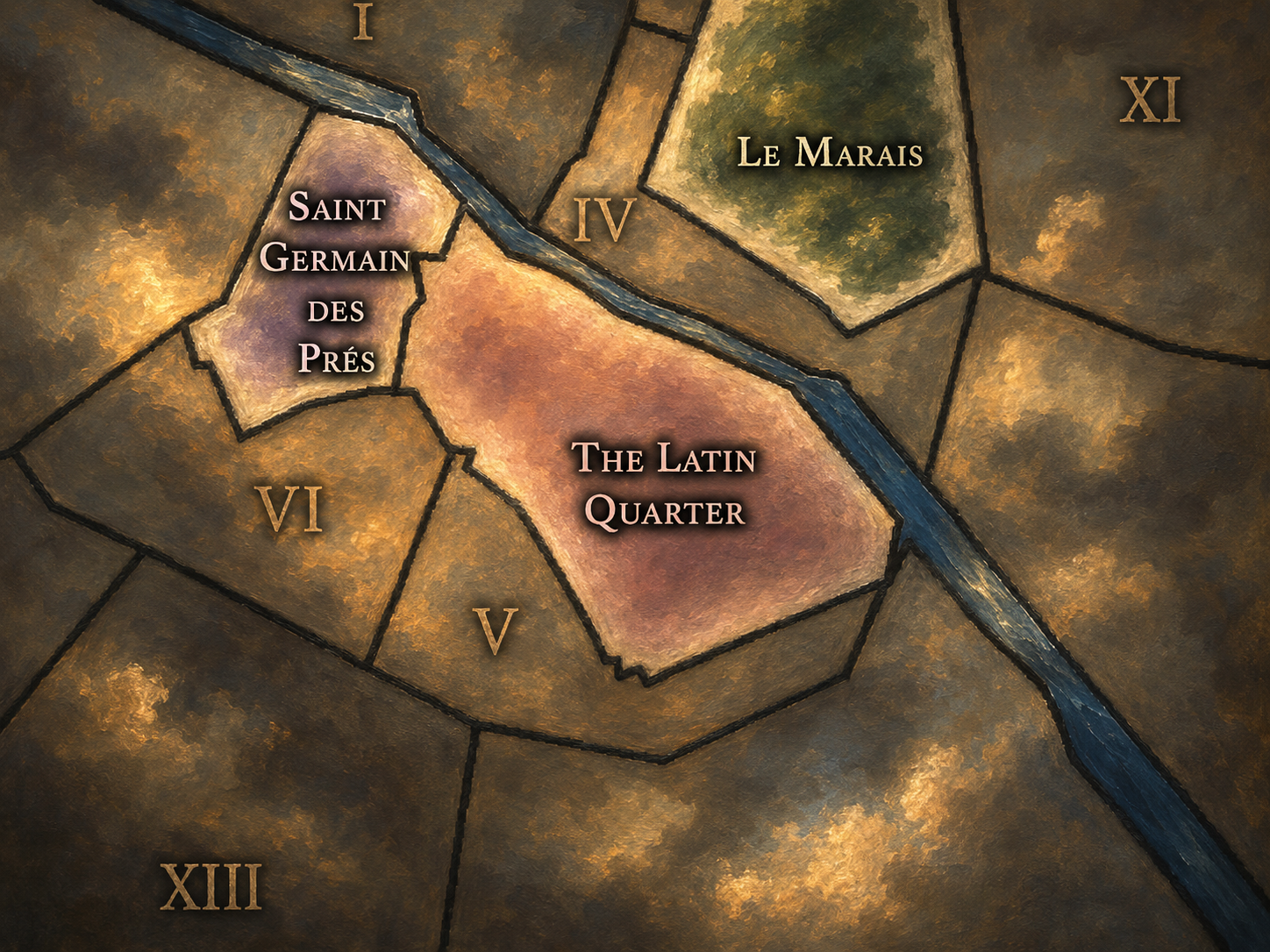
Cultural Boundaries
Le Marais occupies one of the most layered cultural geographies of central Paris, stretching across parts of the 3rd and 4th arrondissements on the Right Bank. Its core is generally understood to lie between the area around the Hôtel de Ville and the streets northward toward the historic mansions, museums, synagogues, galleries, boutiques, and older commercial lanes that give the neighborhood its dense cultural identity. The Place des Vosges, rue des Francs-Bourgeois, rue des Rosiers, the Hôtel de Sully, the Musée Carnavalet, and the Musée Picasso all sit within the larger Marais imagination.
Its boundaries, however, are not as fixed as those of an arrondissement or administrative quarter. The Marais overlaps several official quartiers and shifts depending on whether one is speaking historically, architecturally, socially, commercially, Jewishly, queerly, aristocratically, or touristically. At times, it is imagined narrowly around the old Jewish quarter and the rue des Rosiers; at others, more broadly as the preserved early-modern district between Beaubourg, République, Bastille, and the Seine.
For CityNeighborhoods, Le Marais is best understood as a Cultural Neighborhood rather than a single administrative unit: a historically recognizable urban world whose borders are meaningful, but not absolute. Its edges are porous because its identity is built from accumulated layers — marshland, monastery lands, aristocratic hôtels particuliers, Jewish memory, preservation politics, queer life, fashion, museums, cafés, galleries, and the everyday density of central Paris.
Cultural Neighborhood Identity
Etymology and Origins
The name Latin Quarter comes from the language of medieval scholarship. In the Middle Ages, Latin was the common language of church, university, theology, philosophy, and learned exchange. Students and teachers from many regions could gather in Paris and communicate through Latin, making the area around the schools of the Left Bank a distinct intellectual environment.
The French name, Quartier Latin, therefore does not refer to Roman Paris in the most direct sense, although the area also contains some of the city’s most important ancient traces. Rather, it refers to the scholastic culture that developed around the University of Paris and its associated colleges. The neighborhood’s name preserves the sound of a learned city: lectures, disputations, sermons, manuscripts, and later printed books circulating through narrow streets.
Its origins are therefore both institutional and atmospheric. The Latin Quarter began as a place of learning, but became a neighborhood because learning shaped its streets, residents, businesses, rhythms, and reputation.
The Latin Quarter is Paris’s great neighborhood of study. Its cultural framework rests on the long relationship between education, religion, language, books, politics, and youth. From medieval colleges to modern universities, from monastic schools to cafés and cinemas, the neighborhood has repeatedly gathered people seeking instruction, argument, reform, faith, discovery, or freedom.
It is one of the clearest examples of a Cultural Neighborhood because its identity comes not only from landmarks, but from a social ecosystem. Schools required lodging. Lodging brought taverns, cafés, copyists, printers, publishers, bookshops, libraries, churches, lecture halls, and public squares. Students brought energy, instability, ambition, poverty, curiosity, and dissent. The result was not merely an academic district, but a lived intellectual quarter.
The Latin Quarter is also a place where knowledge often became political. Its students and thinkers did not remain enclosed within institutions. They entered the streets. The neighborhood became associated with argument, protest, republicanism, anti-authoritarianism, and cultural experimentation. It is a place where Paris learned to think aloud.
Cultural Framework
The Latin Quarter helps define Paris as a city of intellect and public debate. It gives physical form to the idea of Paris as a capital of learning: not only through universities and schools, but through the streets around them, where education spills into cafés, bookshops, cinemas, churches, gardens, and conversations.
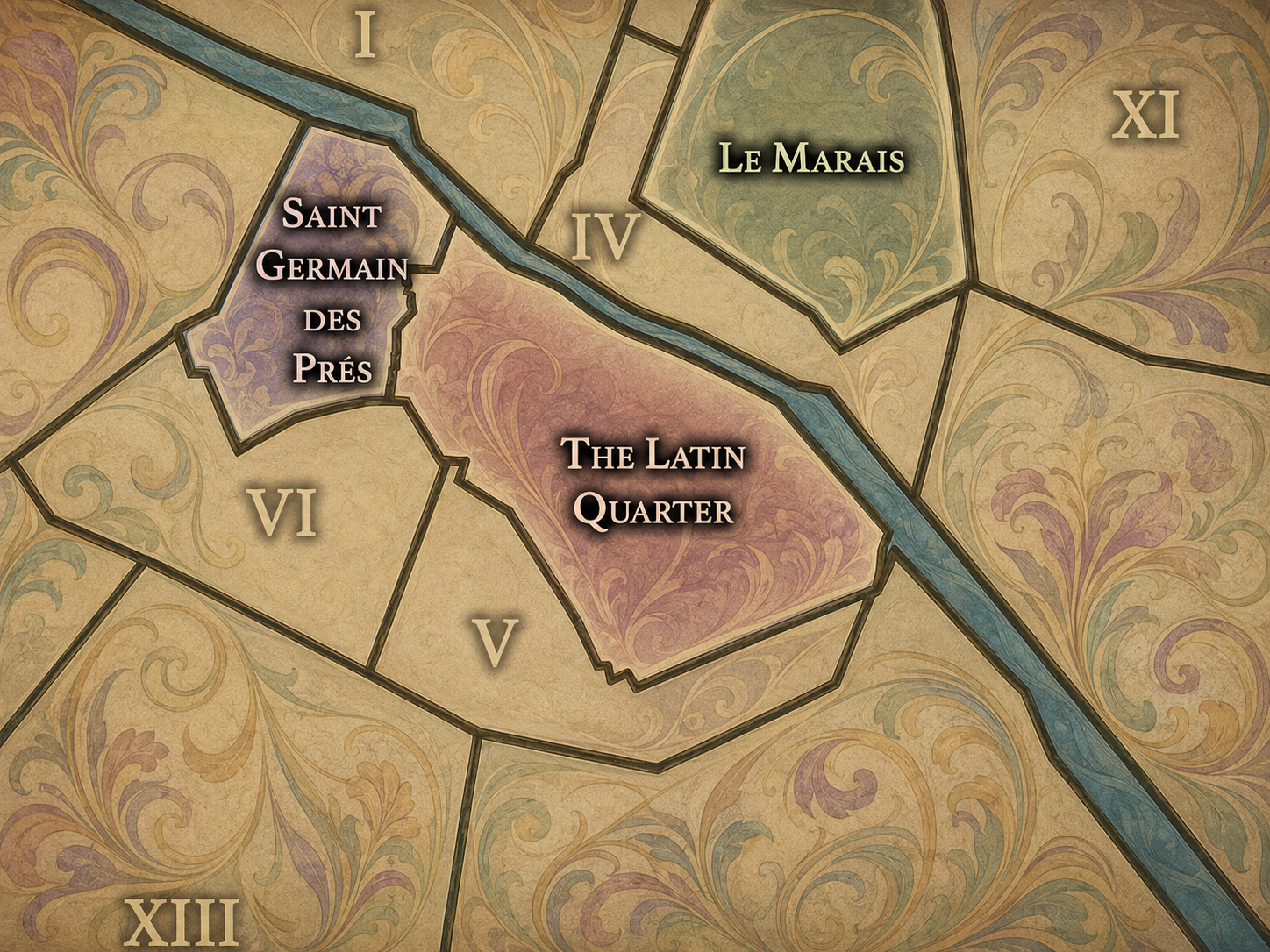
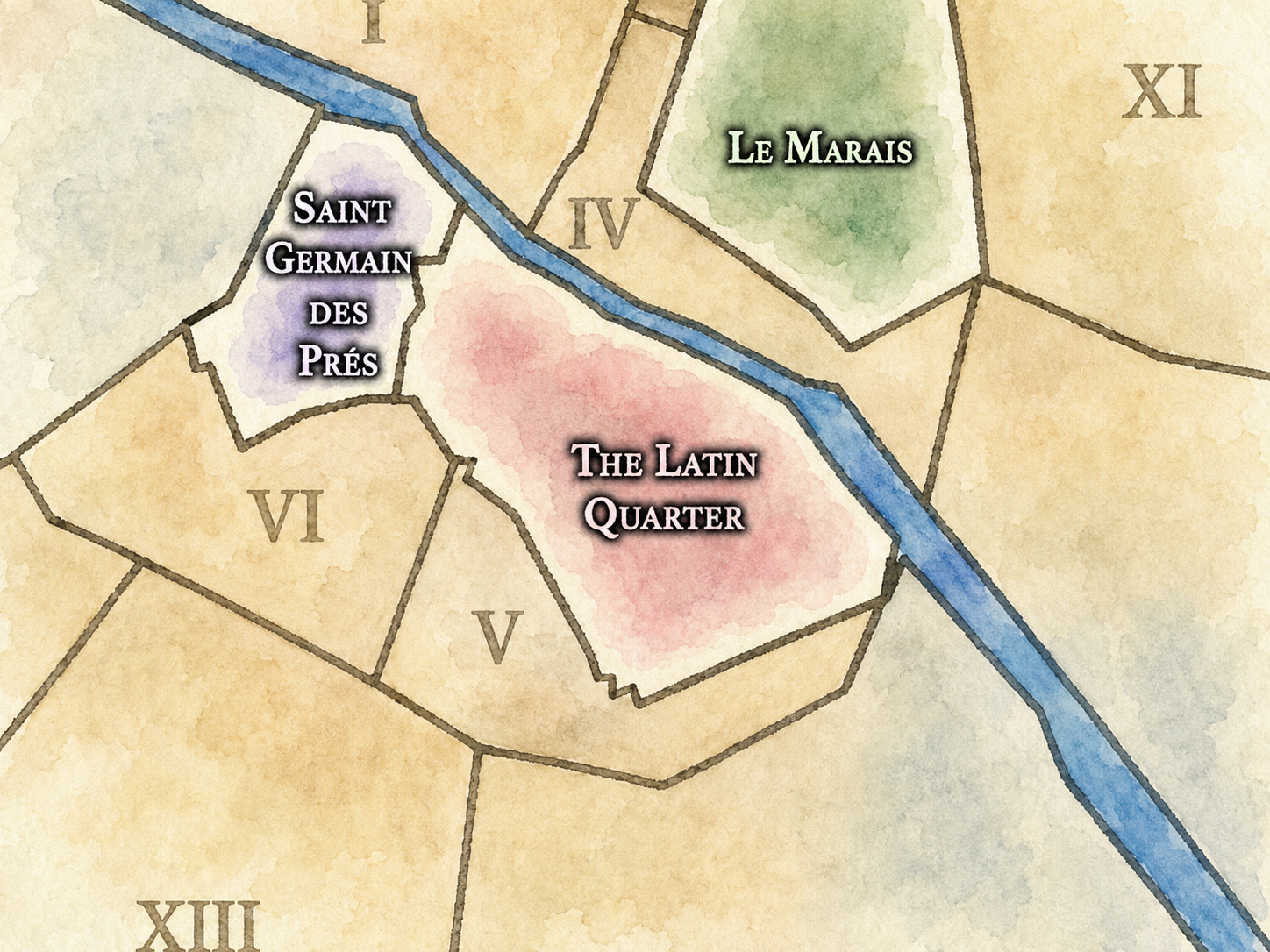
It also anchors the Left Bank’s broader identity. While Saint-Germain-des-Prés is often associated with literary cafés and postwar intellectual style, the Latin Quarter carries the deeper academic and scholastic inheritance of the Left Bank. It is older, more institutional, more student-driven, and more closely tied to the medieval foundations of Parisian learning.
Through the Latin Quarter, Paris presents itself as a city where ideas are not abstract. They are walked, argued, printed, taught, sung, shouted, and remembered. The neighborhood’s Parisian identity lies in this union of mind and street.
Parisian Identity
Neighborhood Distinction
The Latin Quarter is distinct because it combines ancient memory, medieval scholarship, institutional prestige, student life, religious history, political unrest, and everyday urban density in a compact geography. Few neighborhoods in Paris have such a long continuity of intellectual purpose.
Its distinction is not only in the fame of the Sorbonne or the Panthéon, but in the way the surrounding streets continue to feel shaped by learning. Bookshops, schools, lecture halls, cinemas, libraries, churches, and cafés form a dense cultural texture. Even where tourism has softened or commercialized parts of the neighborhood, the Latin Quarter retains a recognizable academic atmosphere.
It is also distinct because it is both old and young. Its institutions are ancient, but its population has long been renewed by students. This gives the neighborhood one of its defining tensions: it is a place of tradition animated by youth, a historic district repeatedly unsettled by each new generation.
Neighborhood Connections
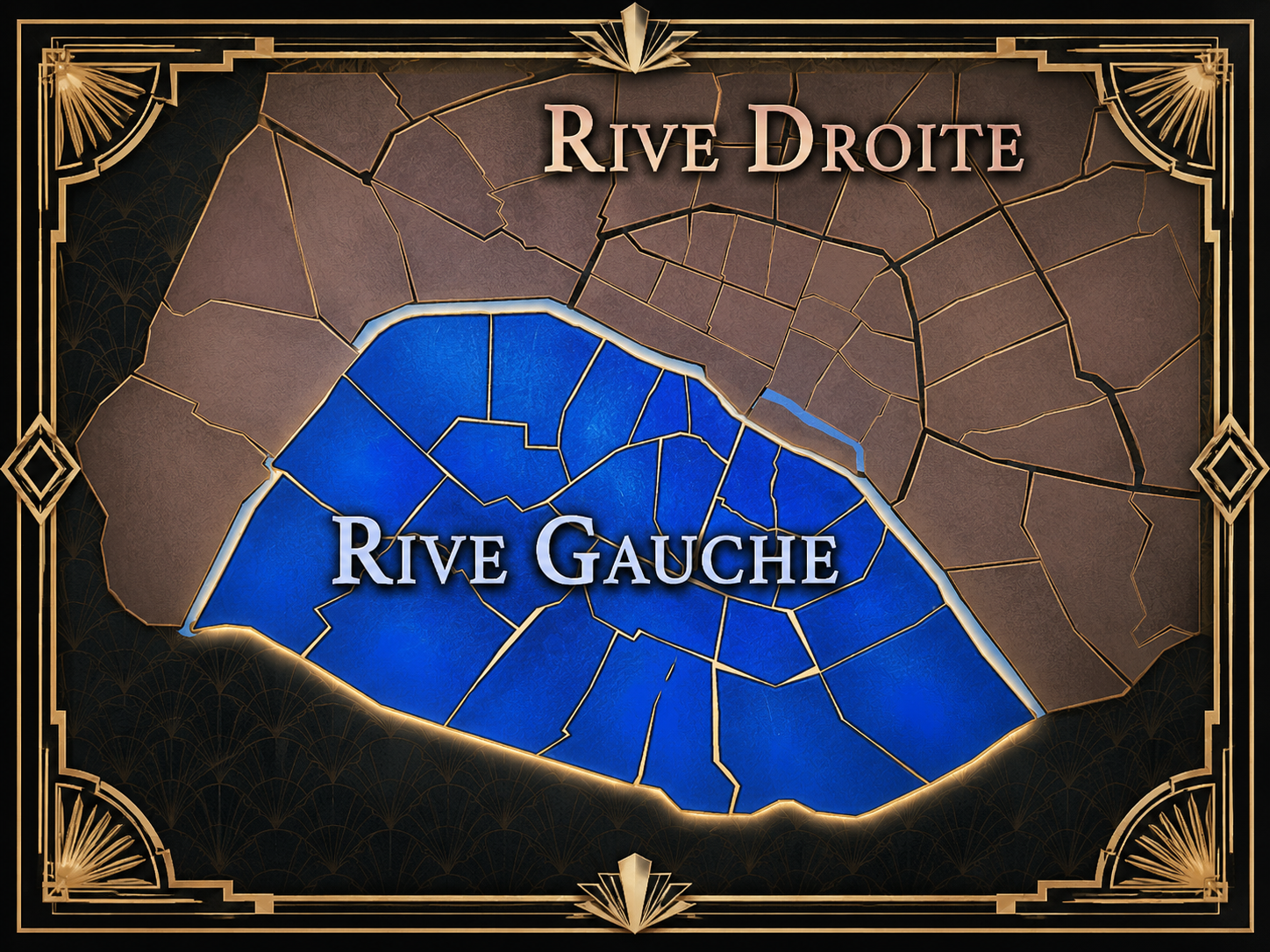
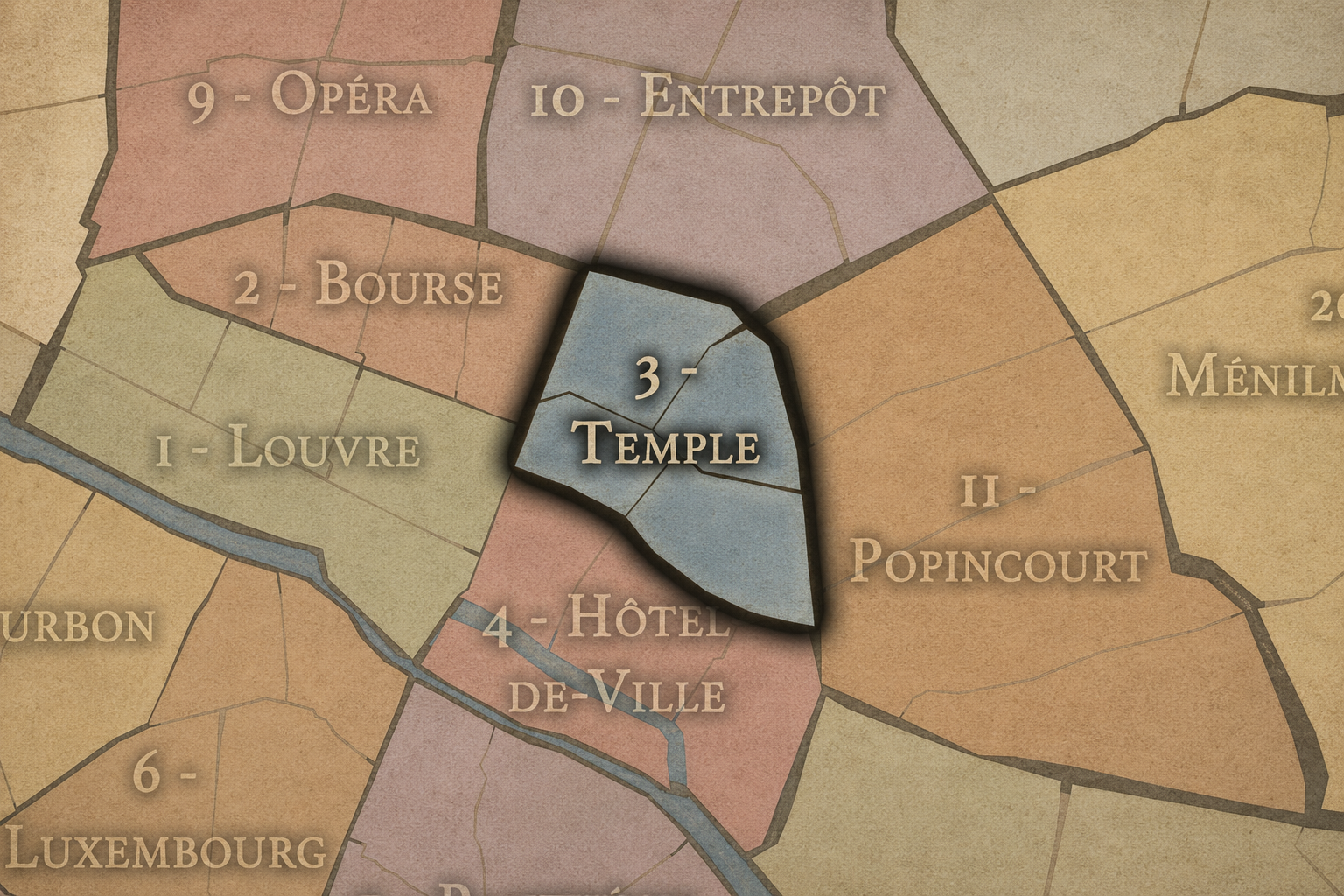
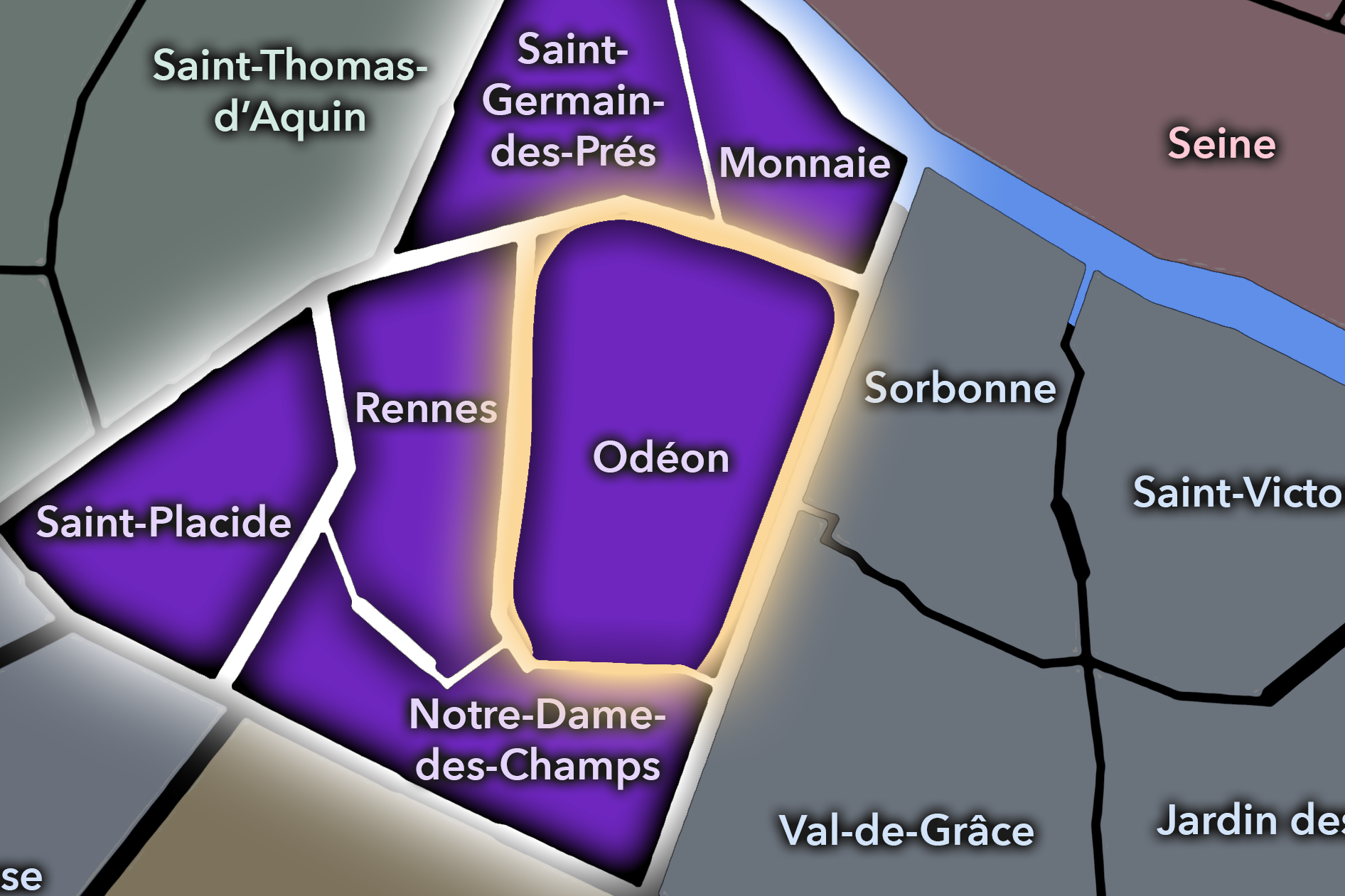
Paris neighborhoods are shaped by overlapping layers. This section shows how The Latin Quarter district connects to the broader CityNeighborhoodsParis map — through its rive, arrondissement, administrative quarters, conseils de quartier, and related Cultural Neighborhoods.
Civic & Cultural Foundations
-
Rive Gauche
-
5e — Panthéon
-
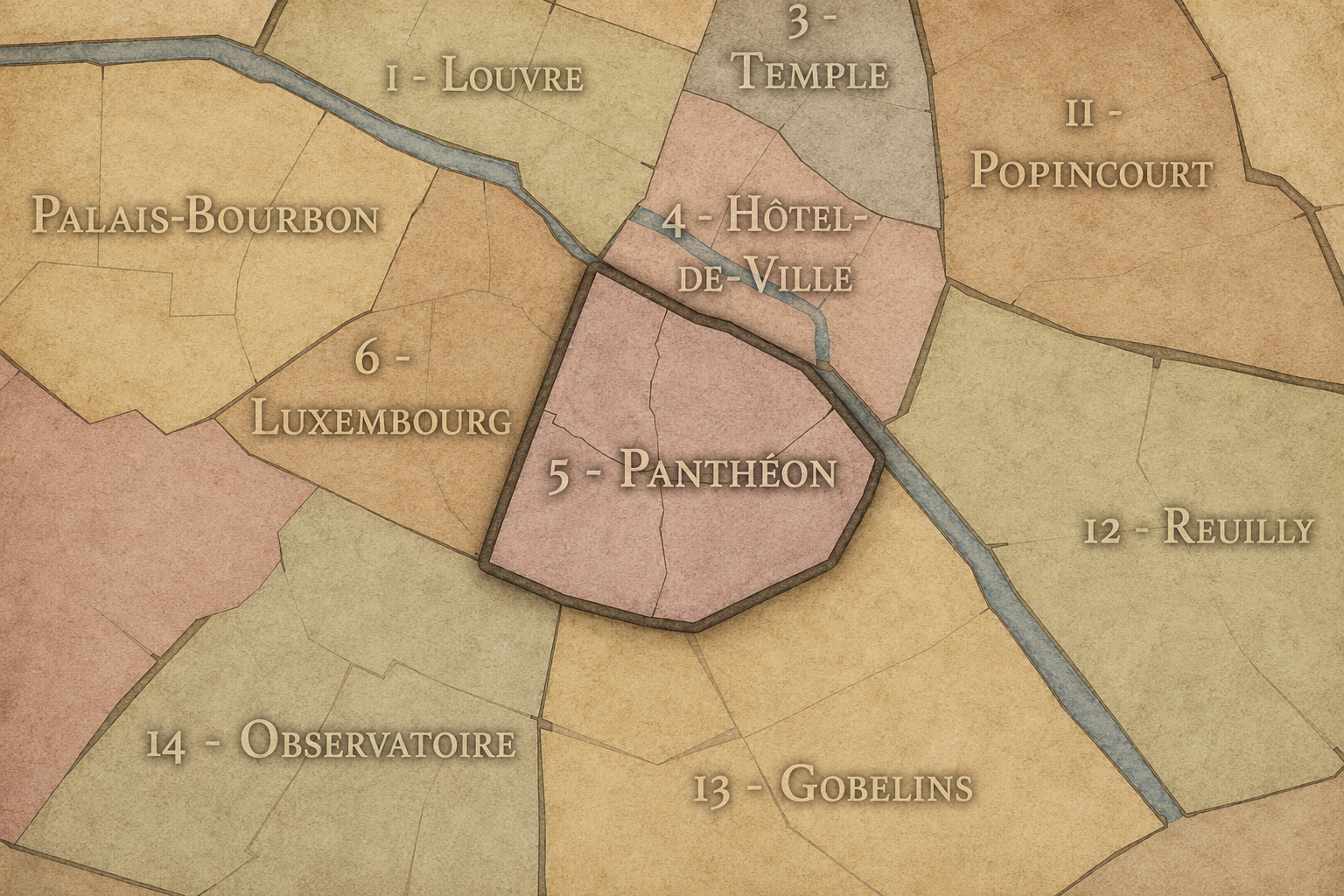
6e — Luxembourg
Administrative Quarters
-
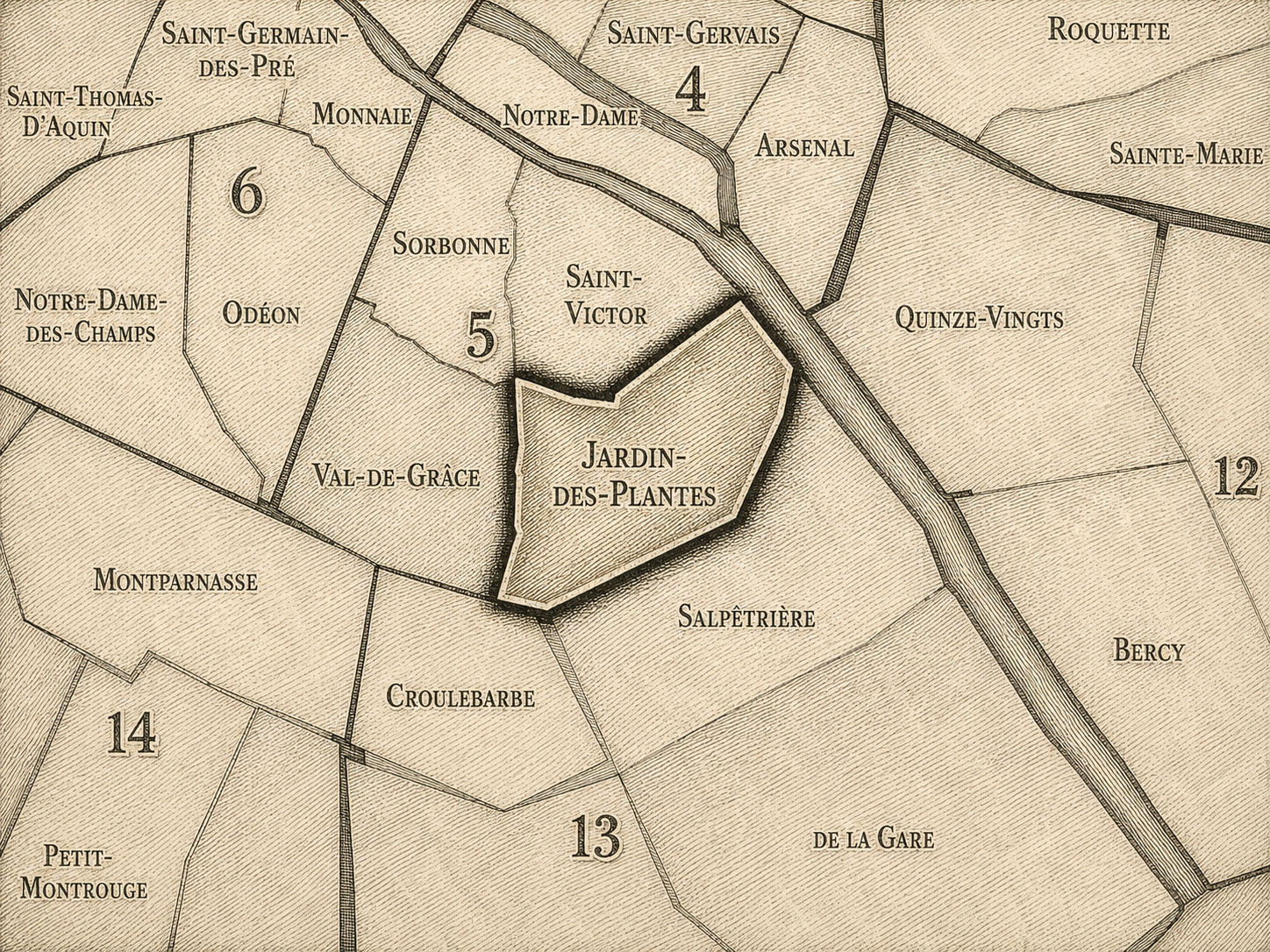
5e - Jardin-des-Plantes
-
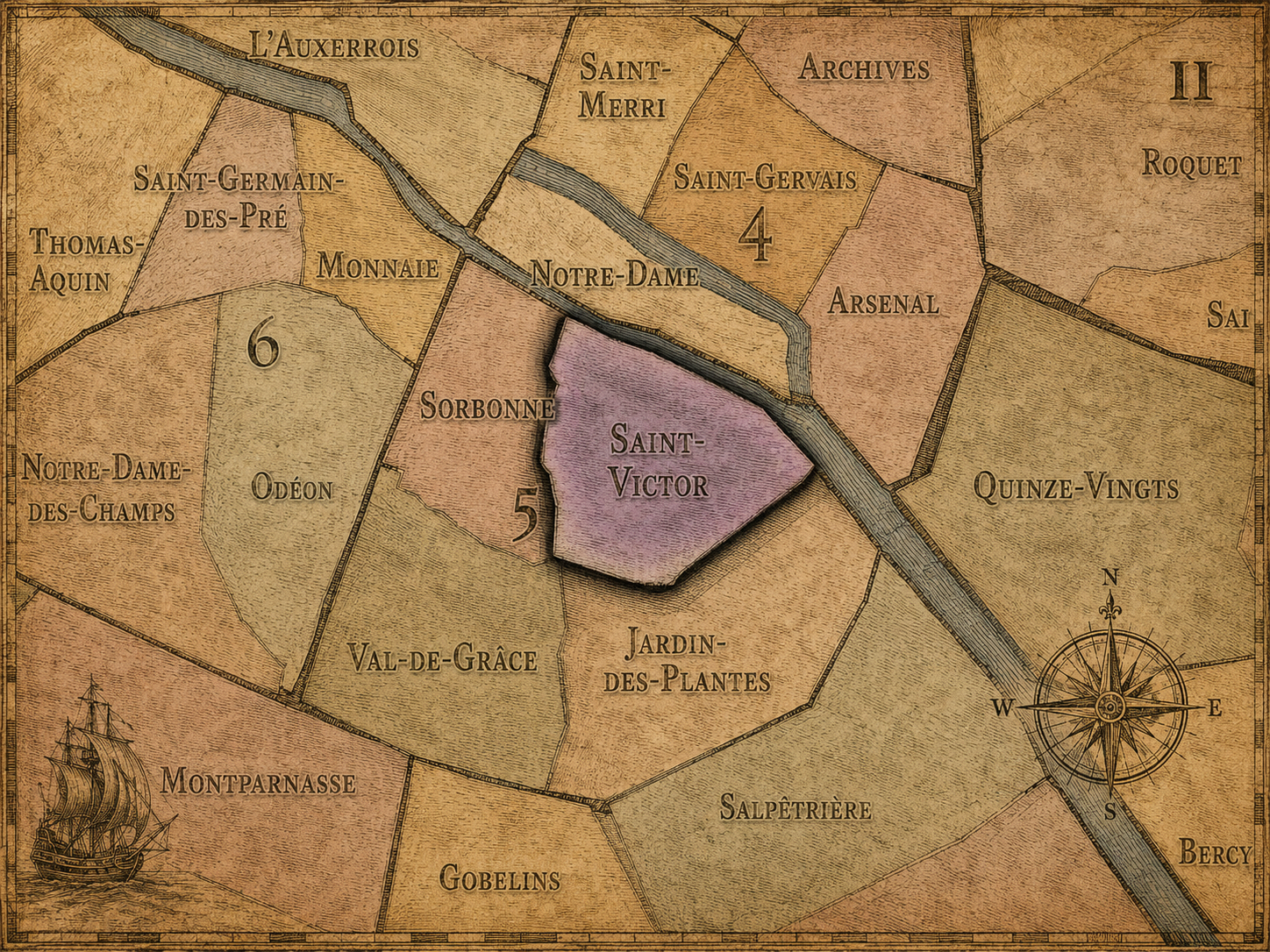
5e - Saint-Victor
-
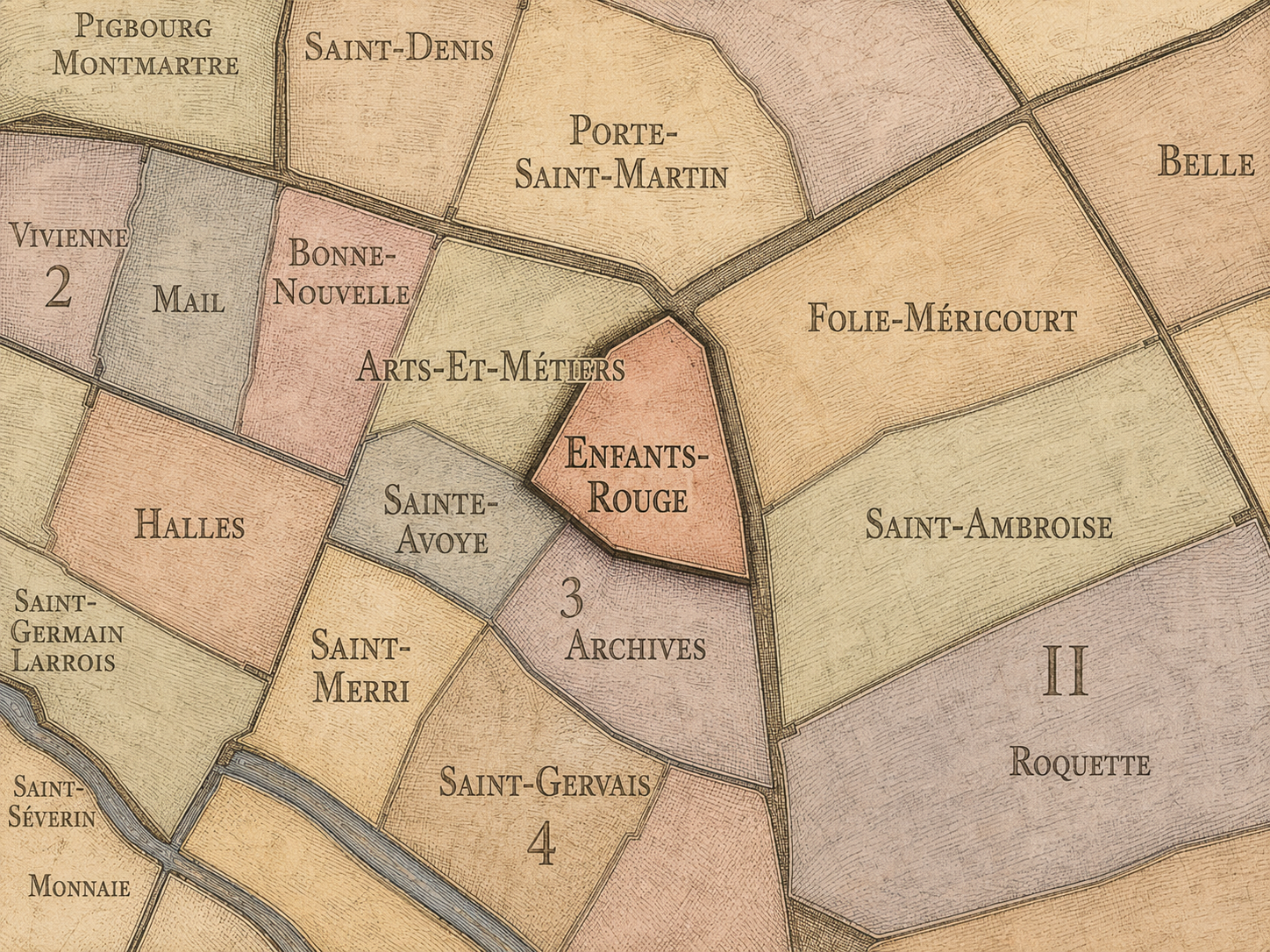
5e - Sorbonne
-
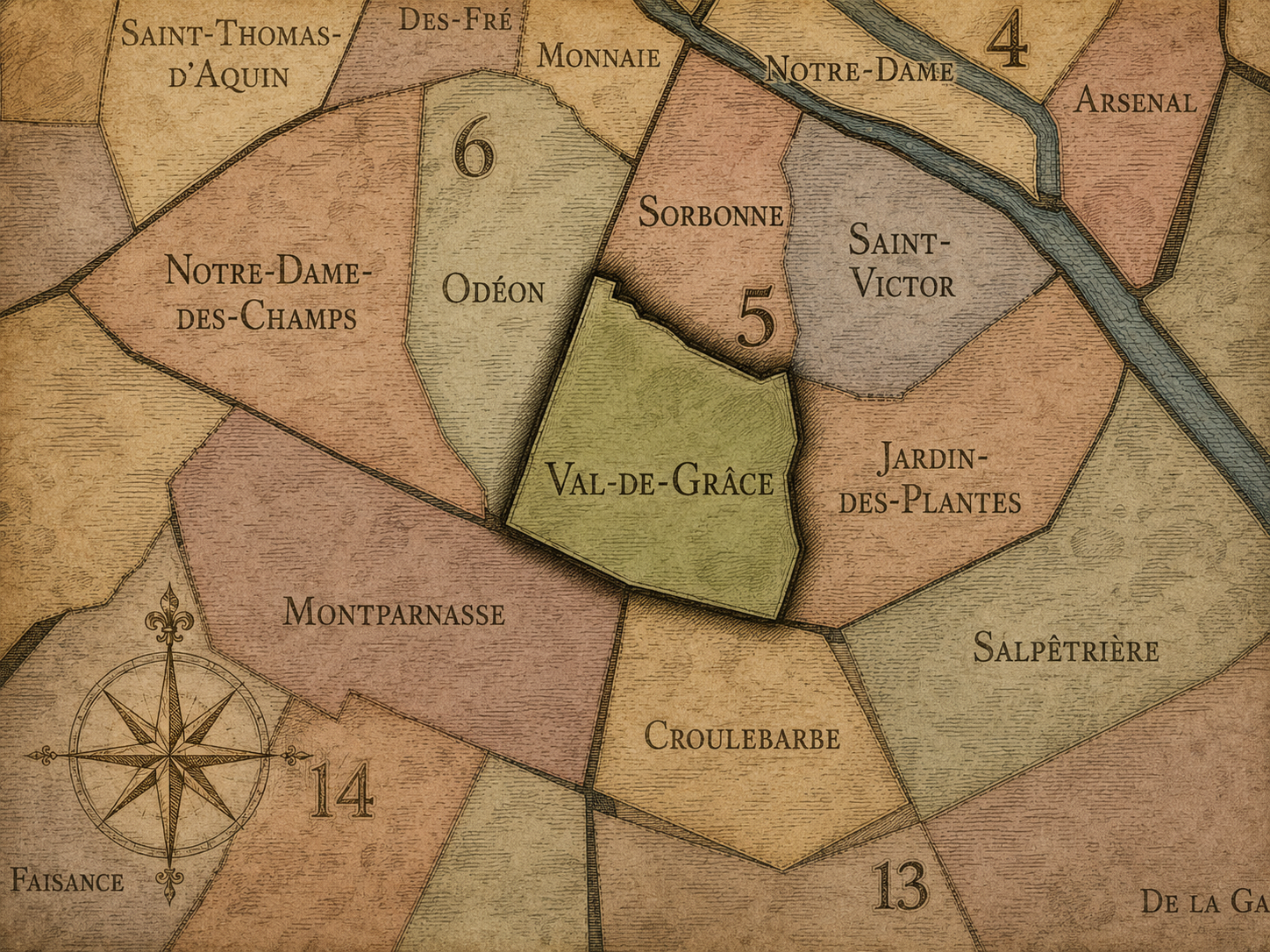
5e - Val-de-Grâce
-
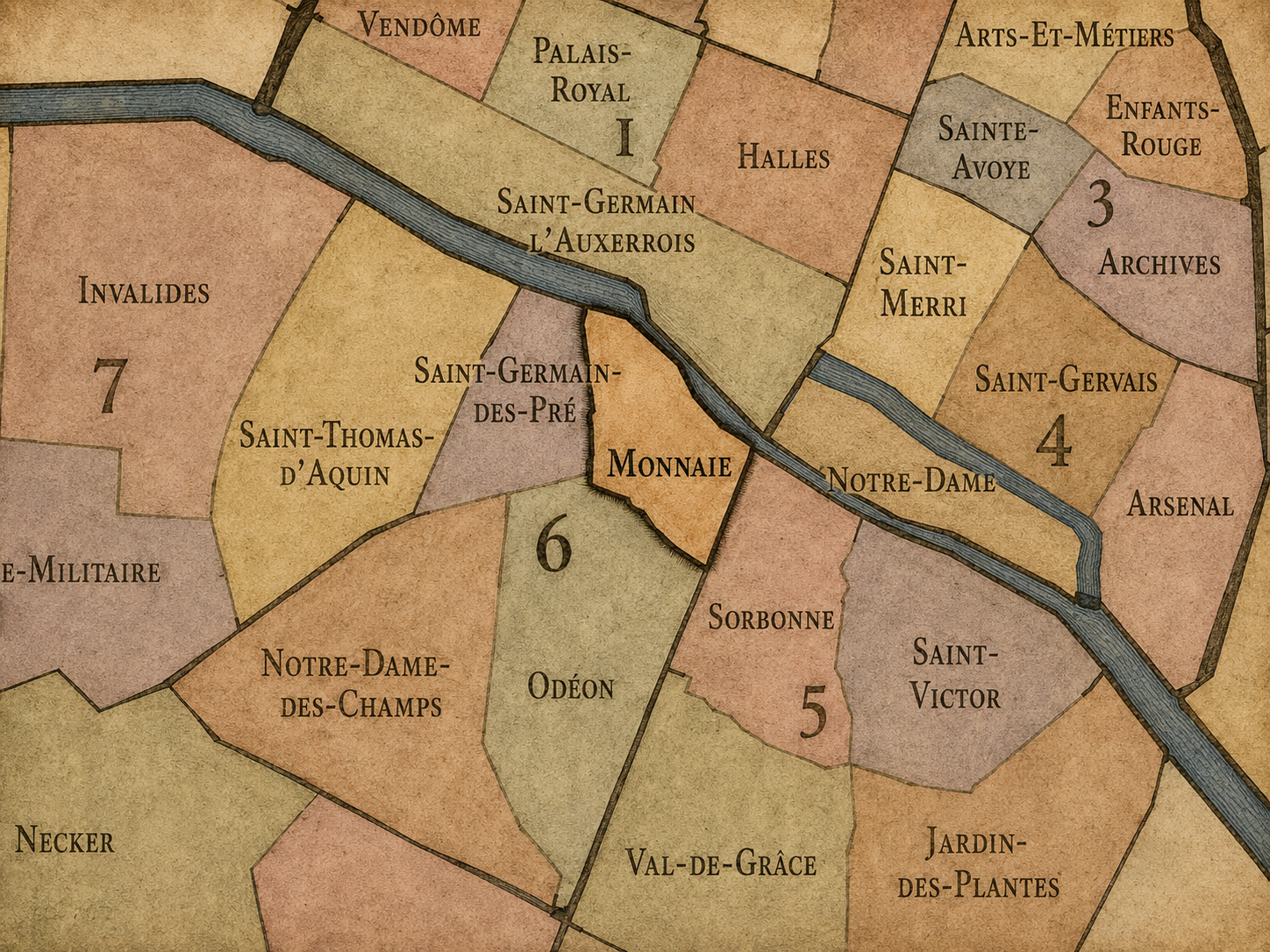
6e - Monnaie
-
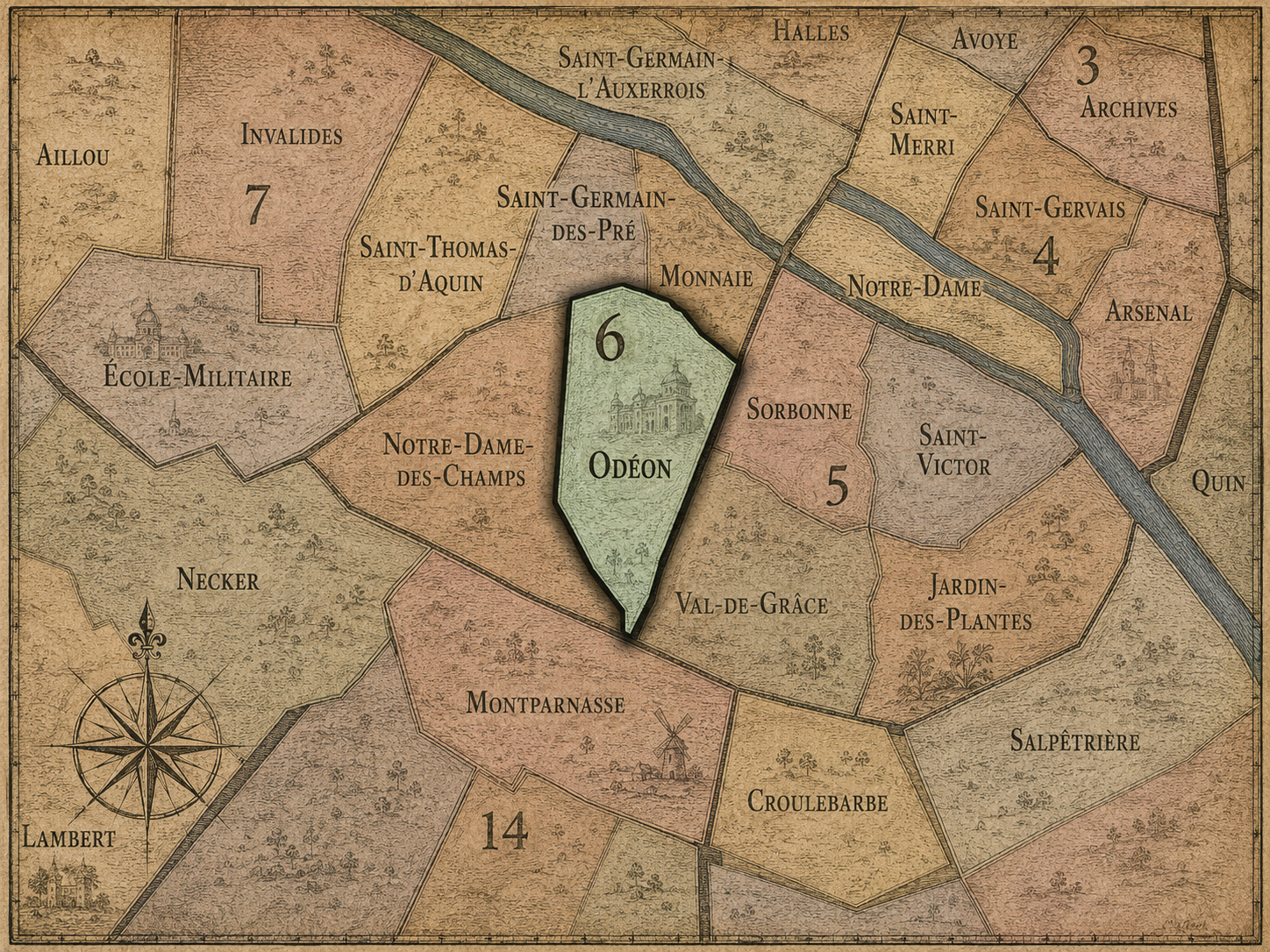
6e - Odéon
Conseils de Quartier
-
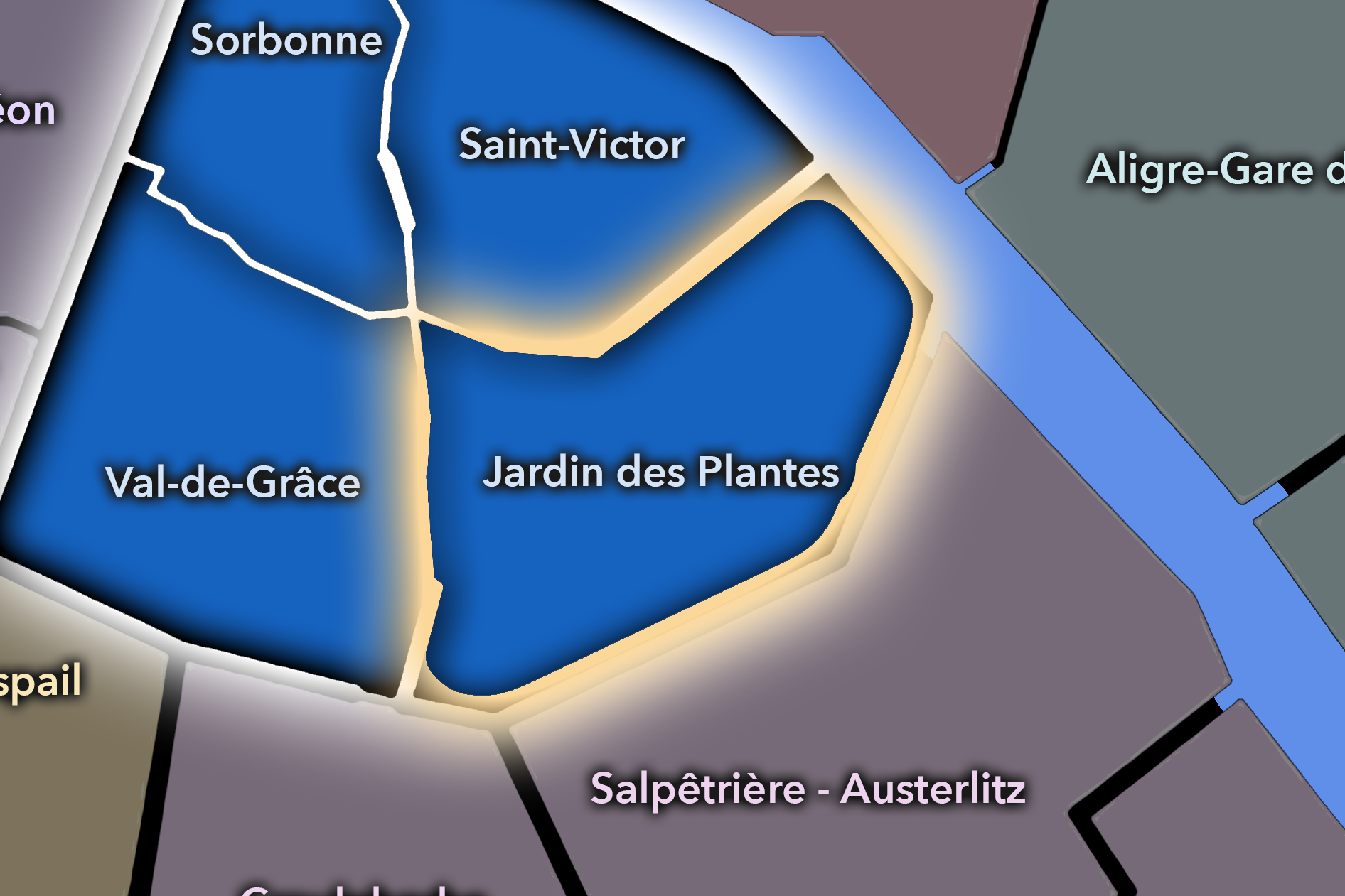
5e - Jardin-Des-Plantes
-
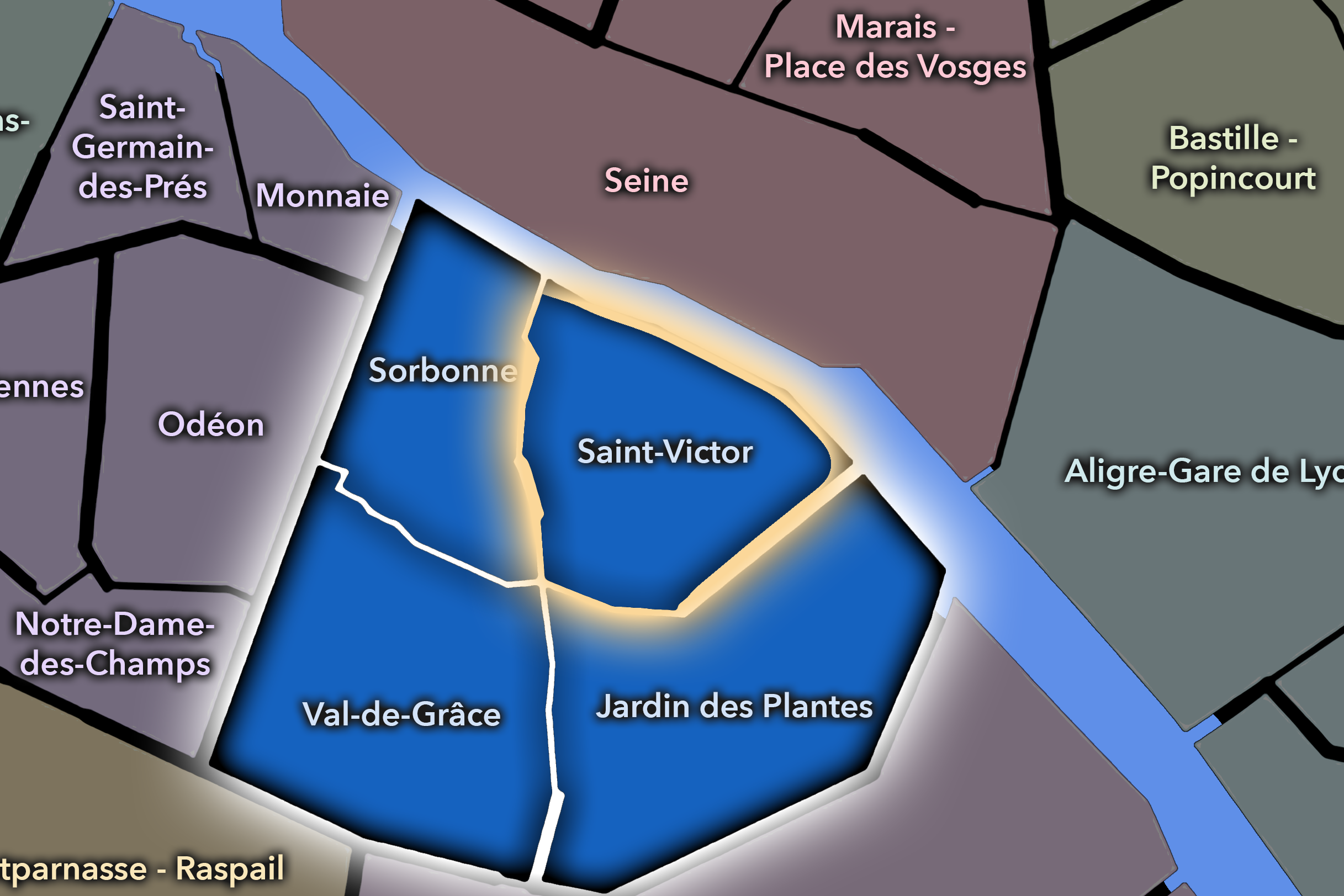
5e - Saint-Victor
-
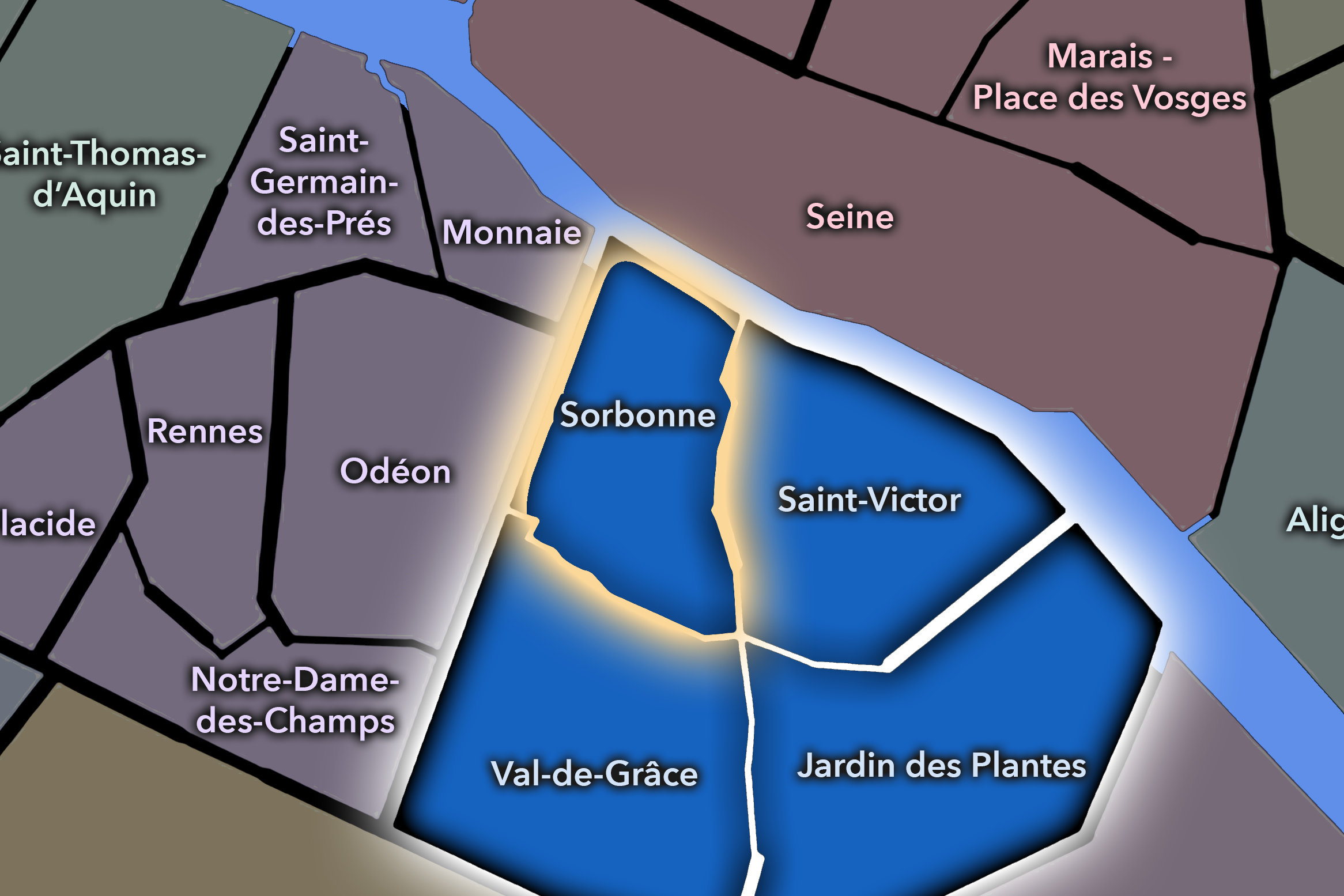
5e - Sorbonne
-
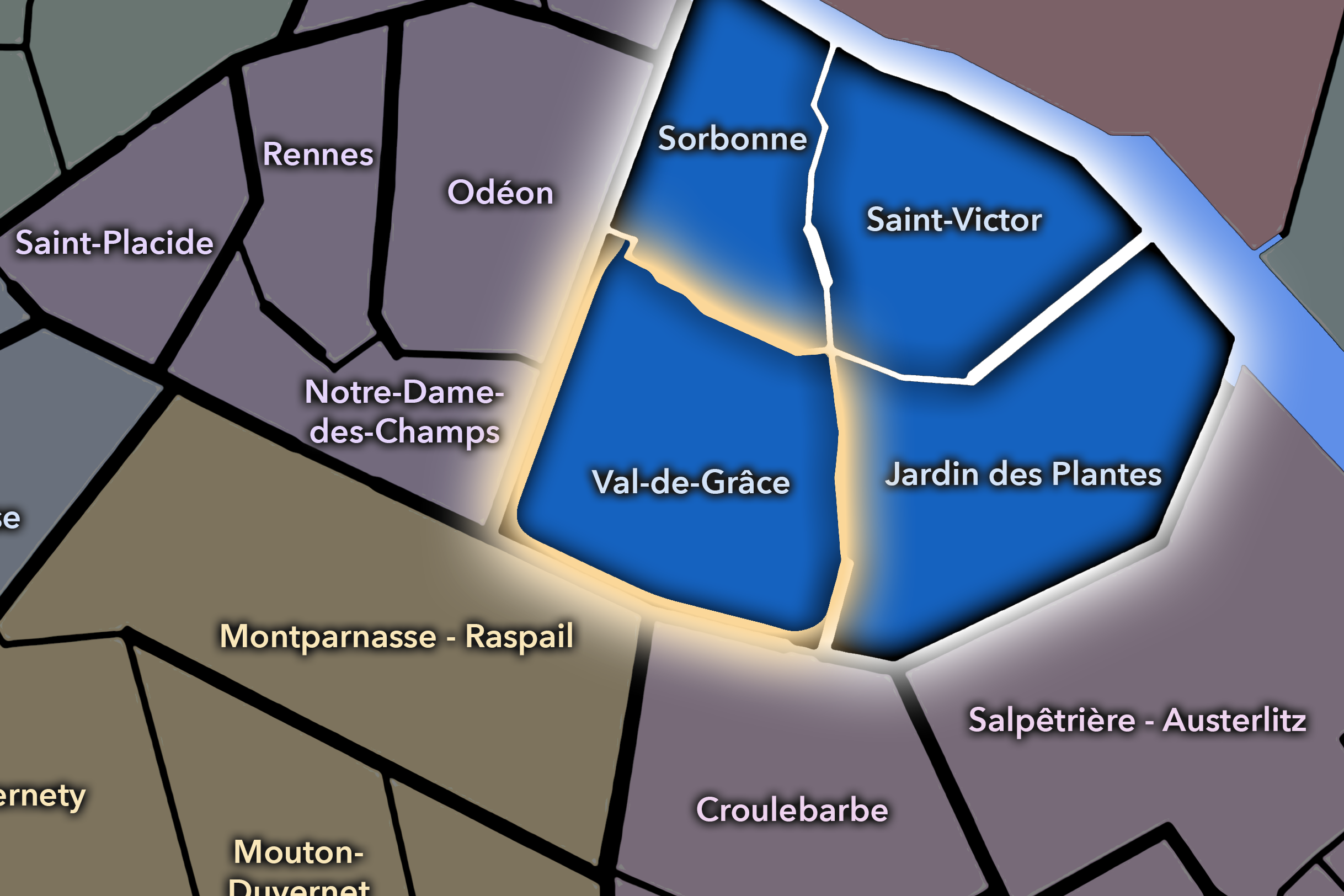
5e - Val-de-Grâce
-
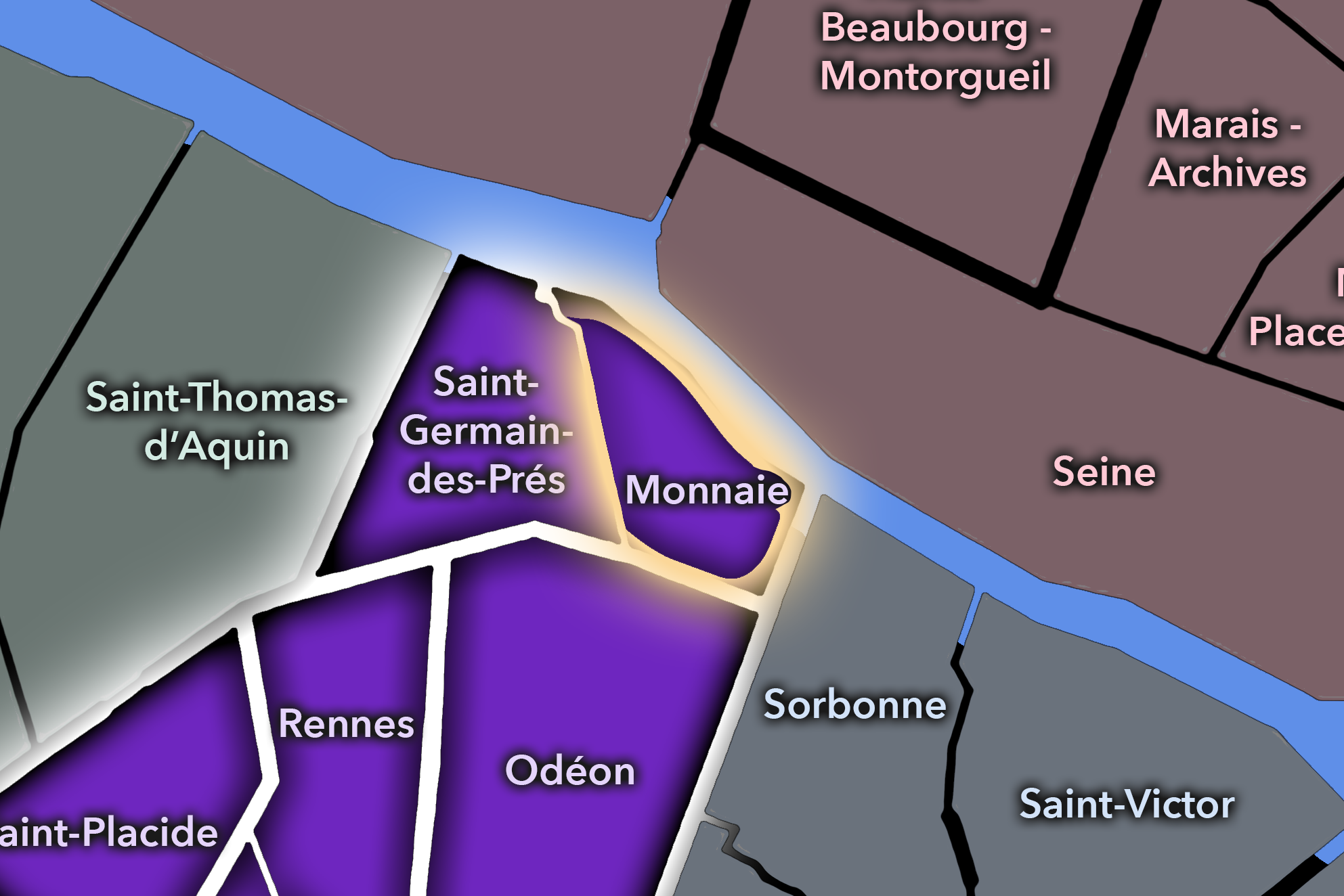
6e - Monnaie
-
6e - Odéon
The History
The origins of the Latin Quarter reach back to the earliest geography of Paris. Long before the medieval university gave the area its name, the Left Bank was an important part of ancient Lutetia. Roman streets, baths, and civic structures gave the area an early urban presence, and the route of what became rue Saint-Jacques followed one of the city’s important ancient axes.
This early layer matters because the Latin Quarter’s later identity was built on terrain already marked by movement, settlement, and connection. The Left Bank rose from the Seine toward the Montagne Sainte-Geneviève, creating a landscape that would later gather religious, educational, and civic institutions. The neighborhood’s later scholastic identity did not appear in empty space; it emerged from one of the oldest inhabited parts of Paris.
Origins
Medieval / Early Formation
The medieval period formed the Latin Quarter’s essential identity. Schools associated with the cathedral, monasteries, and religious houses helped make Paris one of Europe’s great centers of learning. By the 12th and 13th centuries, the University of Paris had become a major intellectual institution, attracting students and masters from across Europe.
Latin gave the neighborhood both its name and its atmosphere. It was the language of instruction, theology, philosophy, and scholarly exchange. Around the schools grew colleges, lodgings, churches, taverns, scribal trades, and book culture. The neighborhood became a city within the city, populated by clerics and students whose privileges, poverty, disputes, and independence sometimes set them apart from ordinary civic life.
The Montagne Sainte-Geneviève became especially important. With its schools, abbeys, and colleges, it helped define the upper Latin Quarter as a landscape of learning and devotion. The medieval Latin Quarter was therefore both intellectual and religious, shaped by the close relationship between church and university.
In the early modern period, the Latin Quarter remained a major center of education, theology, and institutional life, but the intellectual world around it changed. Humanism, printing, religious conflict, royal authority, and new forms of scholarship altered the culture of learning. Colleges and religious institutions continued to structure the neighborhood, while booksellers, printers, and scholars reinforced its role in the circulation of ideas.
The foundation and development of major institutions such as the Collège Royal, later the Collège de France, expanded the neighborhood’s intellectual range. Learning was no longer contained only within older scholastic forms. New languages, sciences, and humanist fields helped broaden the district’s cultural identity.
At the same time, the Latin Quarter remained physically dense and socially mixed. Students, clergy, teachers, servants, artisans, printers, and residents shared streets that were often narrow, crowded, and lively. The neighborhood’s reputation for both learning and disorder continued to grow.
Early Modern Paris
18th Century
The 18th century brought the Latin Quarter into the age of Enlightenment, reform, and intellectual public life. Parisian learning was increasingly connected to print culture, scientific inquiry, philosophical debate, and new political ideas. While salons and publishing networks extended across the city, the Latin Quarter remained one of the places where education and inquiry had deep institutional roots.
The neighborhood’s religious and academic landscape also faced pressure from broader changes in French society. Debates over church authority, education, monarchy, reason, and reform all touched the institutions of the Left Bank. The district remained tied to older structures of learning, but the intellectual climate around it was becoming more secular, critical, and politically charged.
By the end of the century, the Revolution would dramatically alter the relationship between religion, education, state power, and public space. The Latin Quarter’s historic institutions entered a new era, and the neighborhood’s symbolic role as a place of ideas took on increasingly political meaning.
The 19th century reshaped the Latin Quarter physically, intellectually, and politically. The neighborhood remained a student district, but its streets and institutions were altered by modernization, new educational structures, and the broader transformation of Paris. The Panthéon, formerly the church of Sainte-Geneviève, became one of the great symbolic monuments of the nation, linking the area to republican memory and civic commemoration.
Haussmann’s reconstruction cut broad new routes through the city, including boulevard Saint-Michel, changing the spatial experience of the neighborhood while preserving much of its intellectual identity. The Latin Quarter became more legible to modern Paris, but also more exposed to the political and social currents of the capital.
Students played an important role in the neighborhood’s 19th-century identity. The Latin Quarter became associated with republicanism, bohemian life, literary ambition, political agitation, cheap lodging, cafés, and youthful intensity. It was a place where education mixed with poverty, romance, rebellion, and public life.
19th Century
Early–Mid 20th Century
In the early and mid 20th century, the Latin Quarter remained one of Paris’s great student and intellectual districts. Its schools, universities, libraries, cafés, cinemas, and bookshops continued to draw students, writers, scholars, and political thinkers. The neighborhood’s relationship to youth culture and debate remained central.
The two World Wars affected the district as they did the rest of Paris, bringing occupation, resistance, scarcity, surveillance, and political tension. The Latin Quarter’s institutions and students were not outside history; they were part of the city’s intellectual and moral struggles. After the Liberation, the neighborhood resumed its role as a center of student life, publishing, cinema, philosophy, and political engagement.
The Latin Quarter of this period also overlapped with the wider Left Bank’s postwar intellectual identity. Yet it retained a character distinct from Saint-Germain-des-Prés: more academic, more student-centered, more connected to the long history of schools and universities than to literary café mythology alone.
The late 20th century gave the Latin Quarter one of its defining modern moments: the student and worker upheavals of May 1968. Streets such as boulevard Saint-Michel and the area around the Sorbonne became central to the image of protest, barricades, slogans, and generational revolt. The neighborhood’s long history of student dissent reappeared in dramatic form.
Afterward, the Latin Quarter continued to change. Some university functions dispersed, tourism increased, and parts of the neighborhood became more commercialized. Bookshops, cinemas, student cafés, and independent businesses faced pressure from rising rents and changing urban habits. Yet the district’s association with learning, debate, youth, and intellectual life remained powerful.
The late 20th century also intensified the neighborhood’s role as a heritage landscape. Its ancient, medieval, academic, and revolutionary associations became part of the way Paris presented itself to visitors and residents alike. The Latin Quarter became both a living student neighborhood and a curated memory of intellectual Paris.
Late 20th Century
21st Century
In the 21st century, the Latin Quarter remains one of Paris’s most recognizable Cultural Neighborhoods, though its identity continues to evolve. The Sorbonne, the Panthéon, the Collège de France, historic lycées, bookshops, cinemas, churches, museums, and student streets still give the area a strong intellectual character. At the same time, tourism, commercialization, institutional change, and the pressures of central Paris have altered parts of its everyday life.
The neighborhood is no longer the sole center of Parisian learning, and its student culture is less concentrated than in earlier centuries. Yet the Latin Quarter’s symbolic power remains extraordinary. It continues to represent the idea of Paris as a city of study, language, books, protest, and restless thought.
For CityNeighborhoods, the Latin Quarter shows how a Cultural Neighborhood can survive through continuity and reinvention. Its medieval Latin has long since faded from daily speech, but the cultural geography it created remains legible. The neighborhood still feels like a place where the city thinks.
The spirit of the Latin Quarter lies in the meeting of learning and street life. It is a neighborhood of schools, but not only schools; of books, but not only books; of monuments, but not only monuments. Its identity comes from the way intellectual life has repeatedly become public, social, youthful, political, and urban.
Its legacy is one of continuity across change. Roman traces, medieval colleges, religious foundations, Enlightenment inquiry, republican symbolism, student cafés, protest movements, cinemas, and bookshops all remain part of its cultural memory. The Latin Quarter proves that a neighborhood can be both ancient and perpetually renewed.
To walk the Latin Quarter is to move through one of the great intellectual landscapes of Paris. Its streets carry the memory of Latin-speaking scholars, restless students, teachers, writers, revolutionaries, and readers. It is not simply a historic academic district. It is one of the essential Cultural Neighborhoods of Paris: a place where knowledge became a way of inhabiting the city.
Spirit & Legacy
The Photography
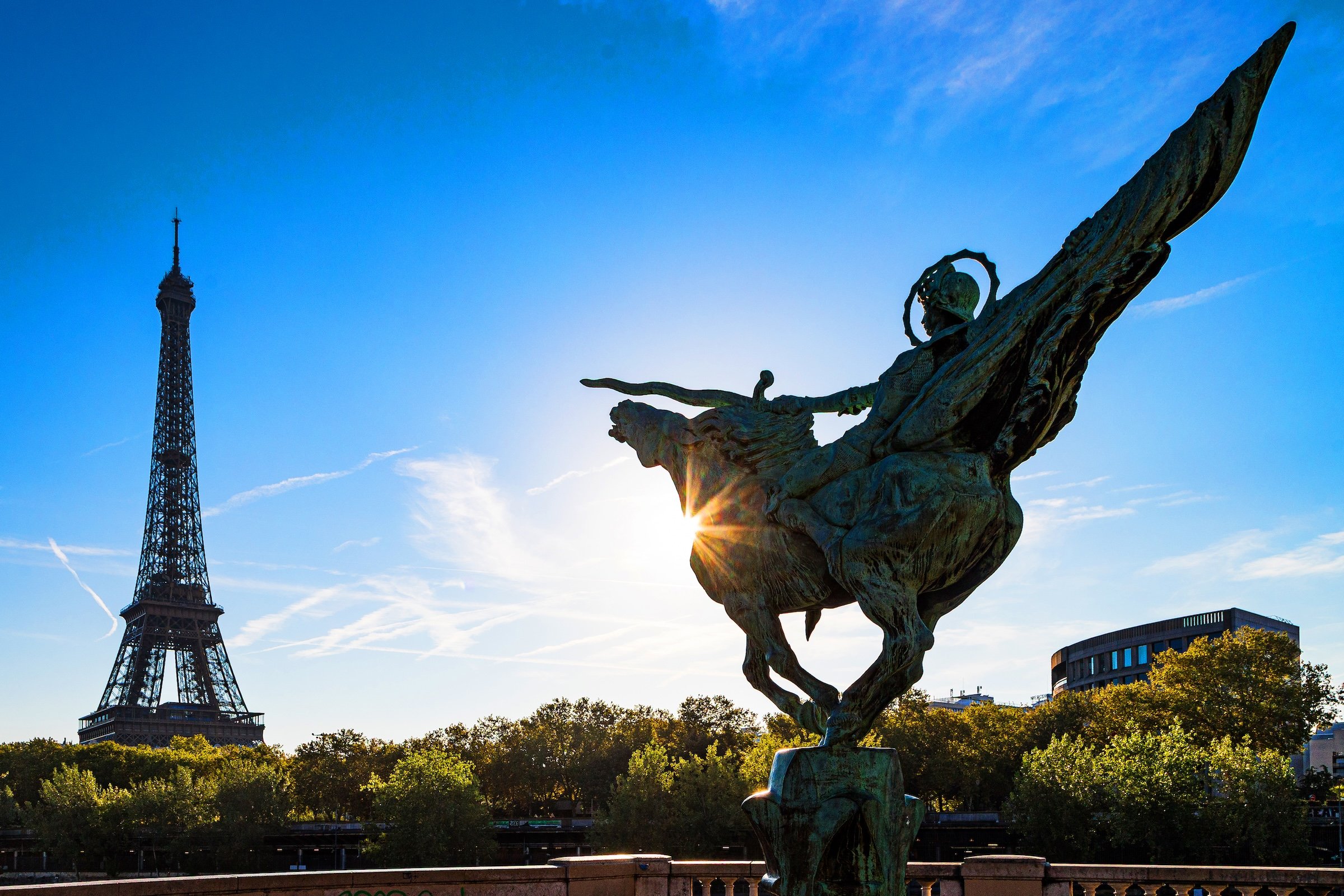
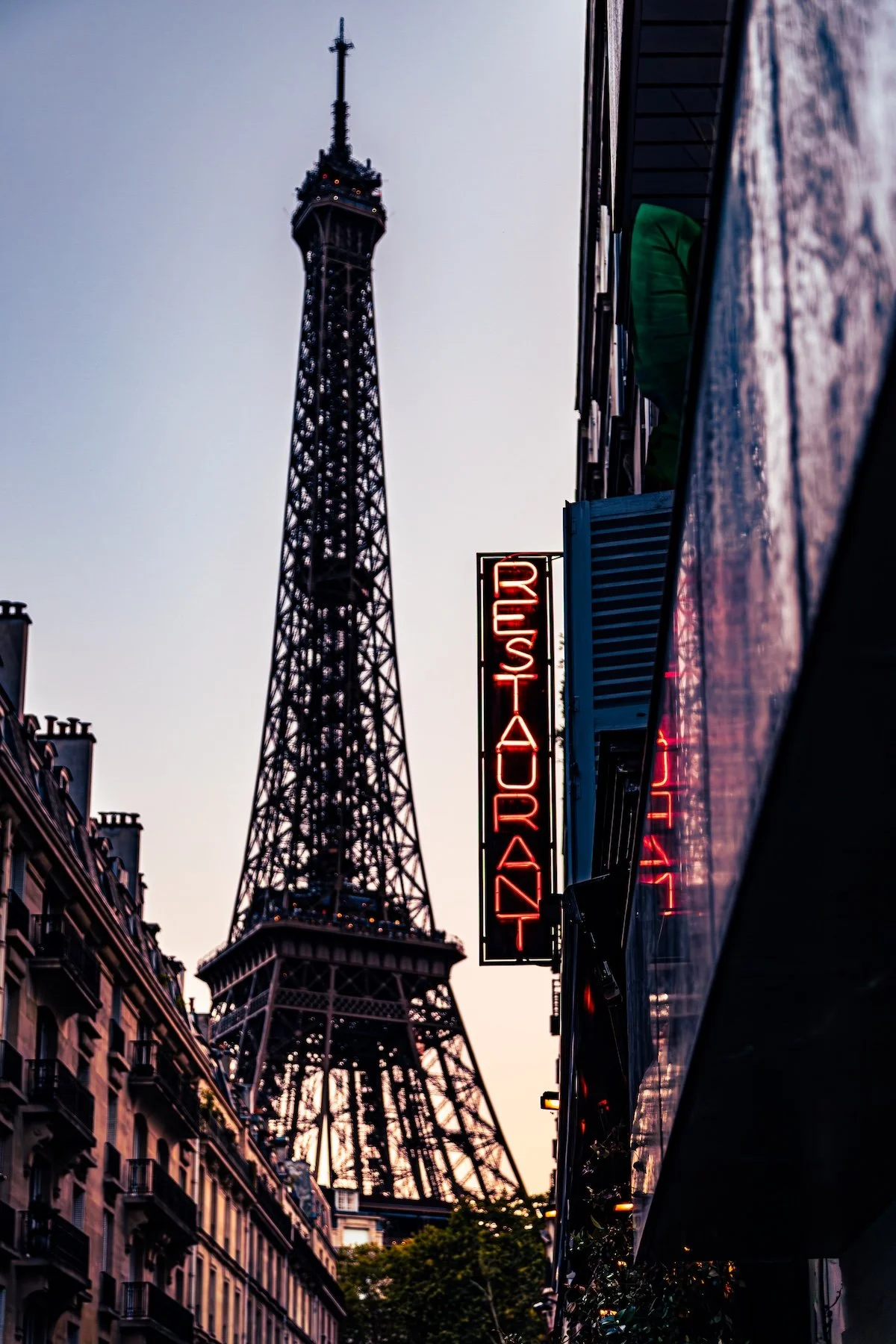
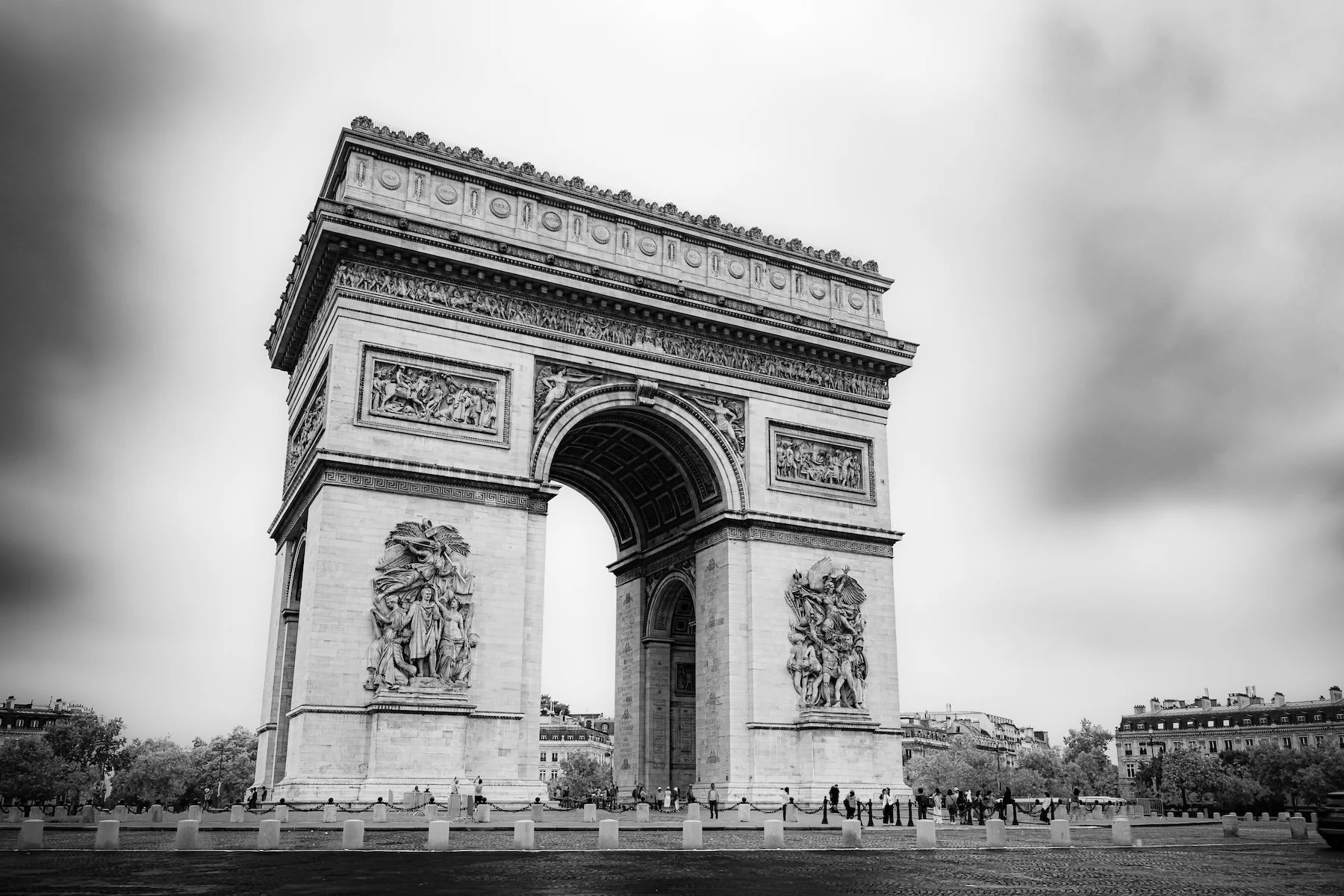
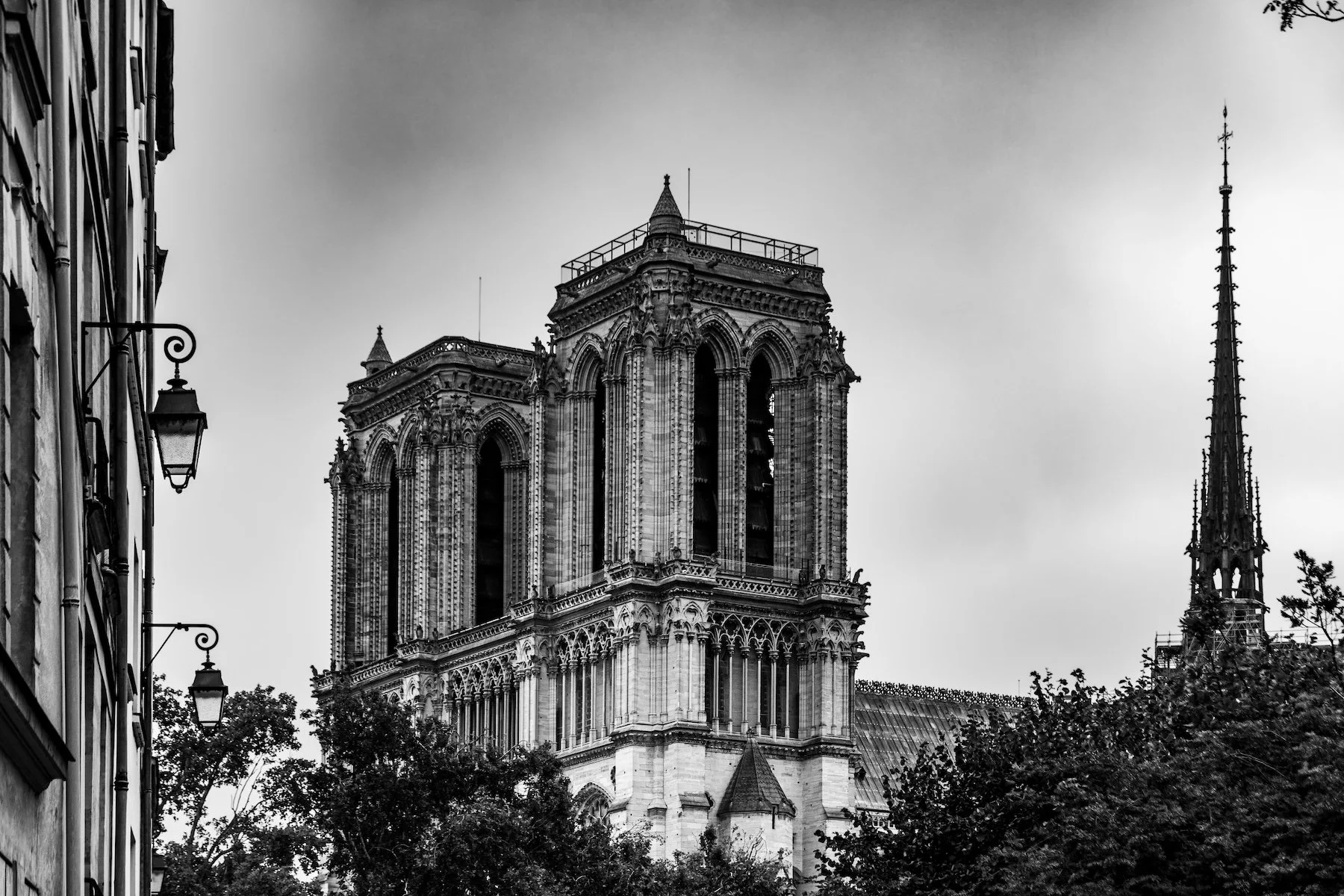
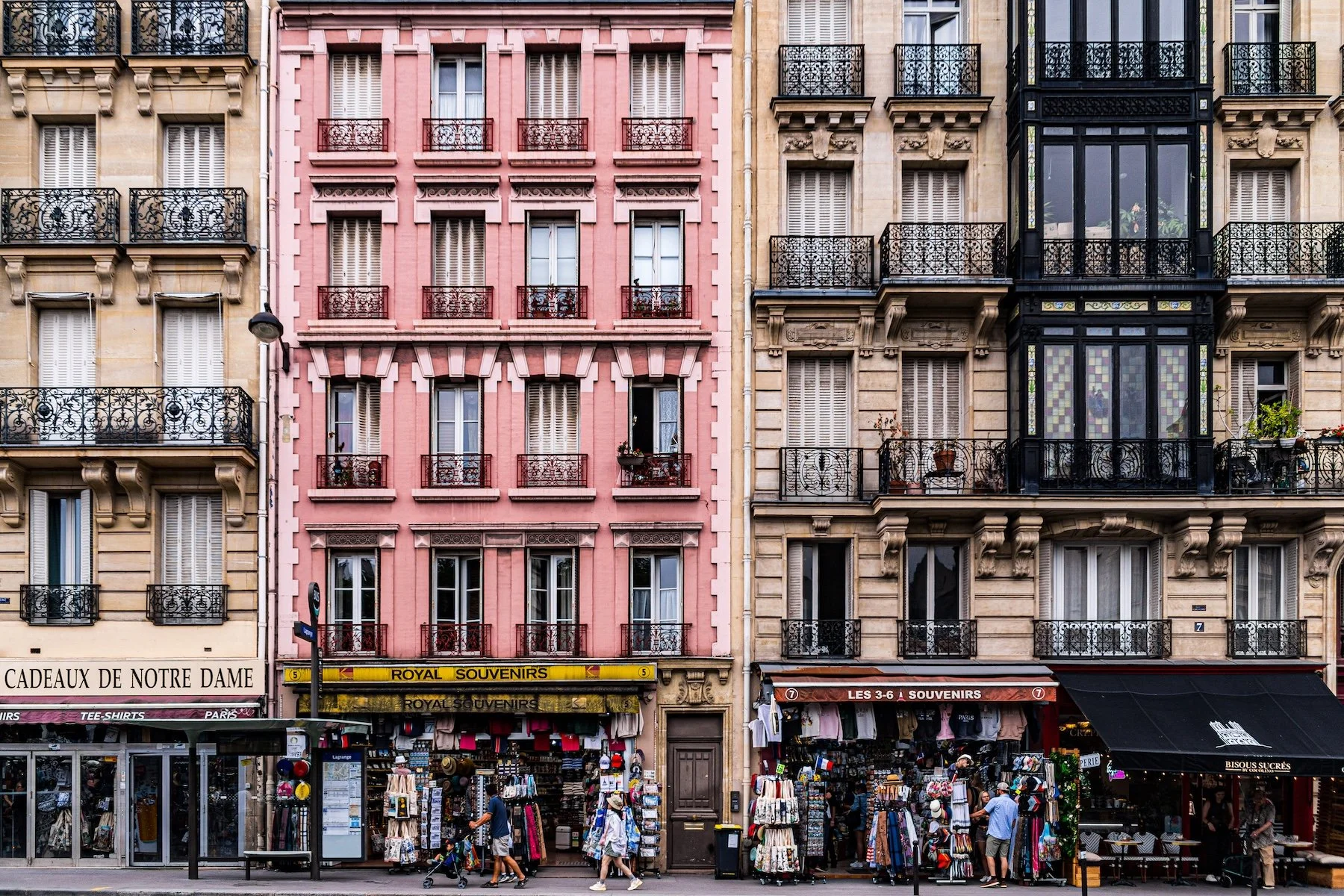
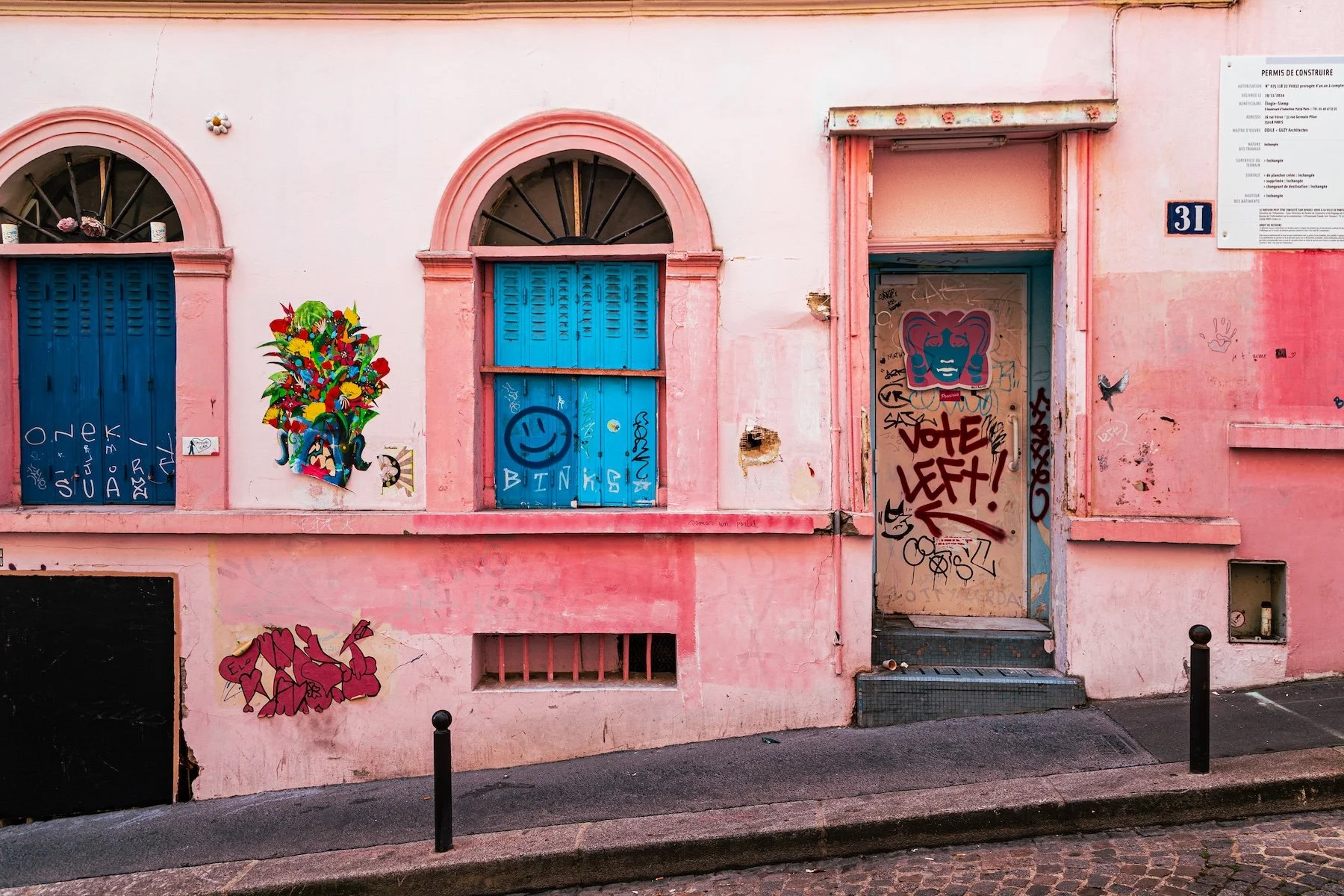
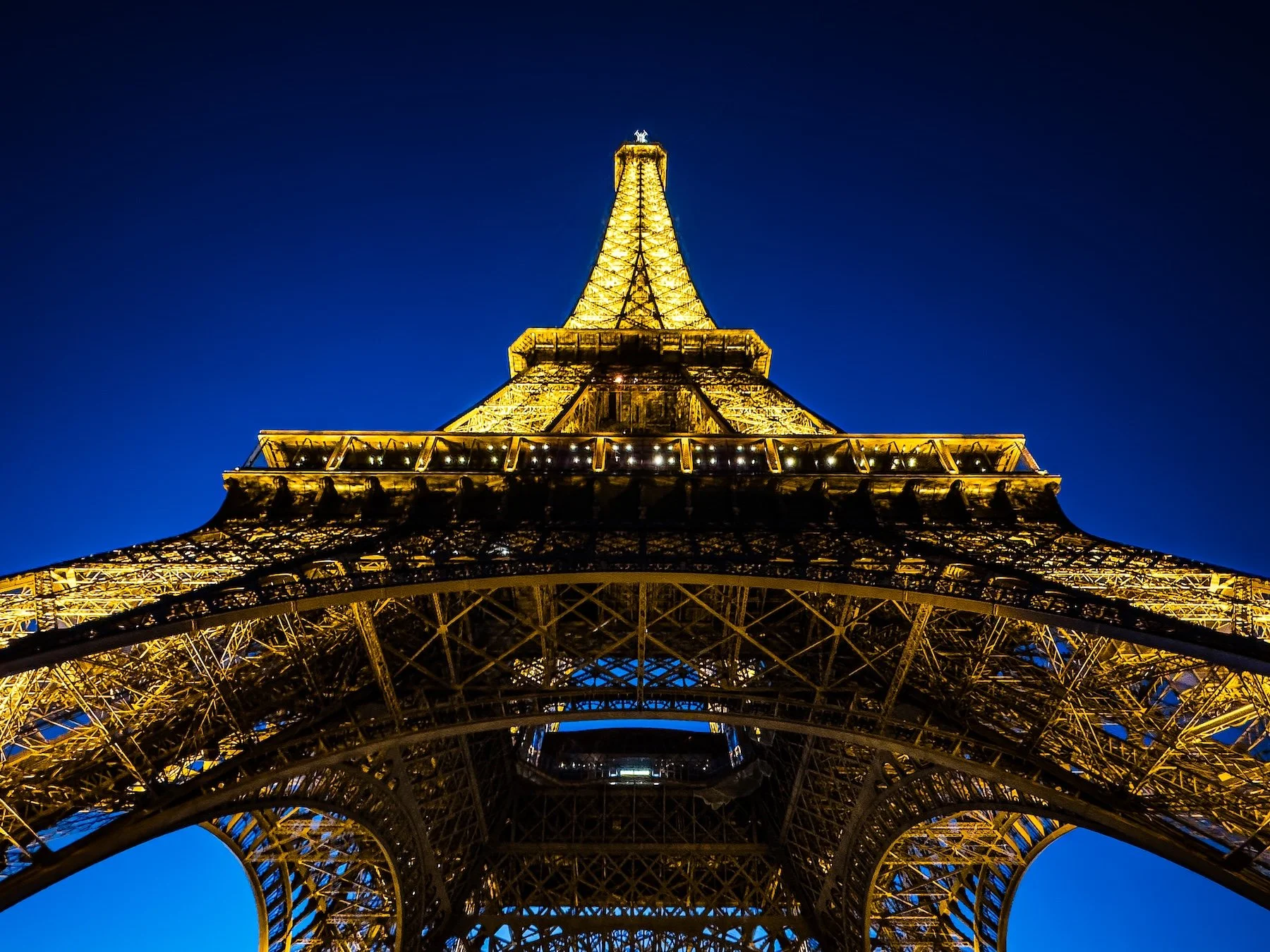
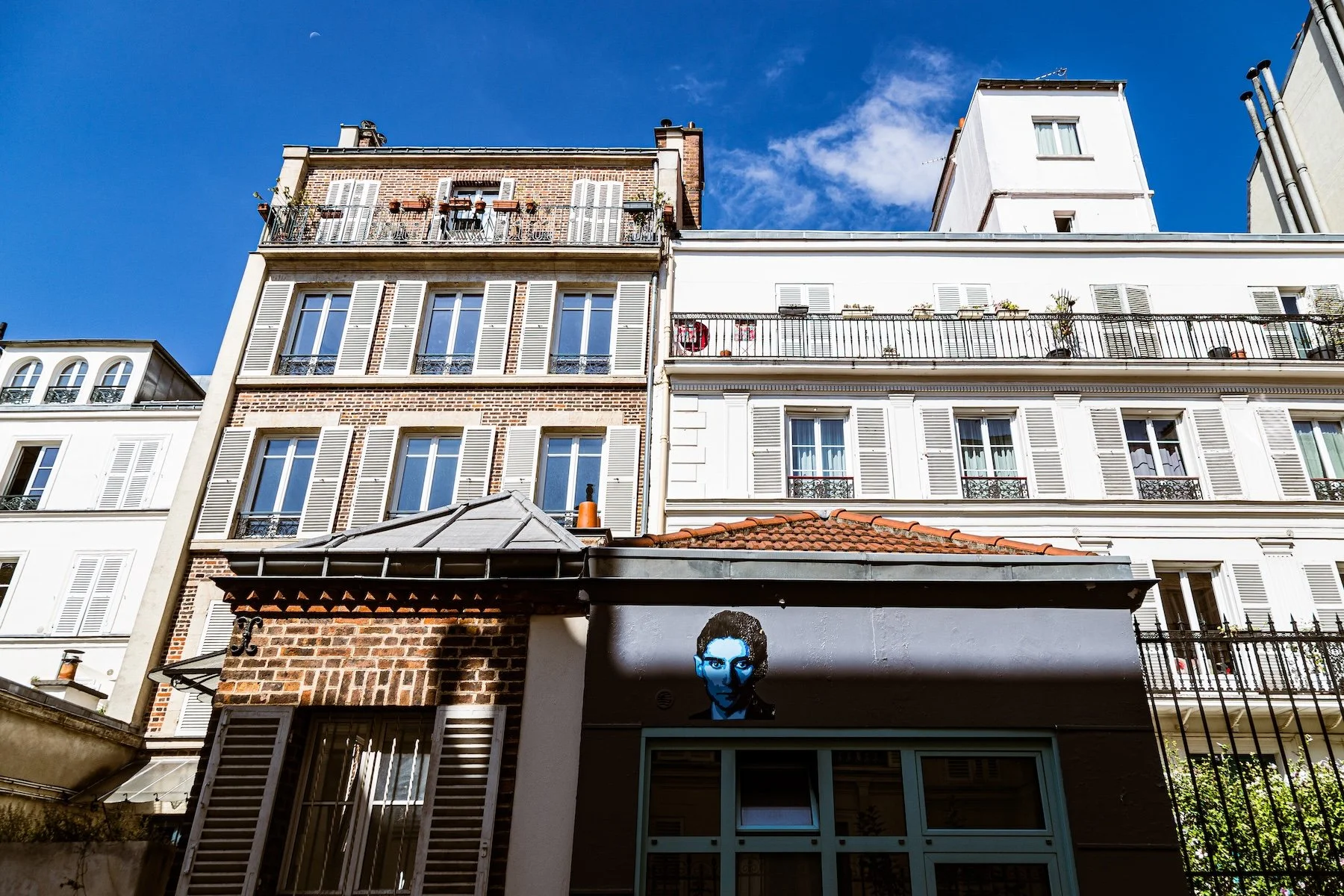
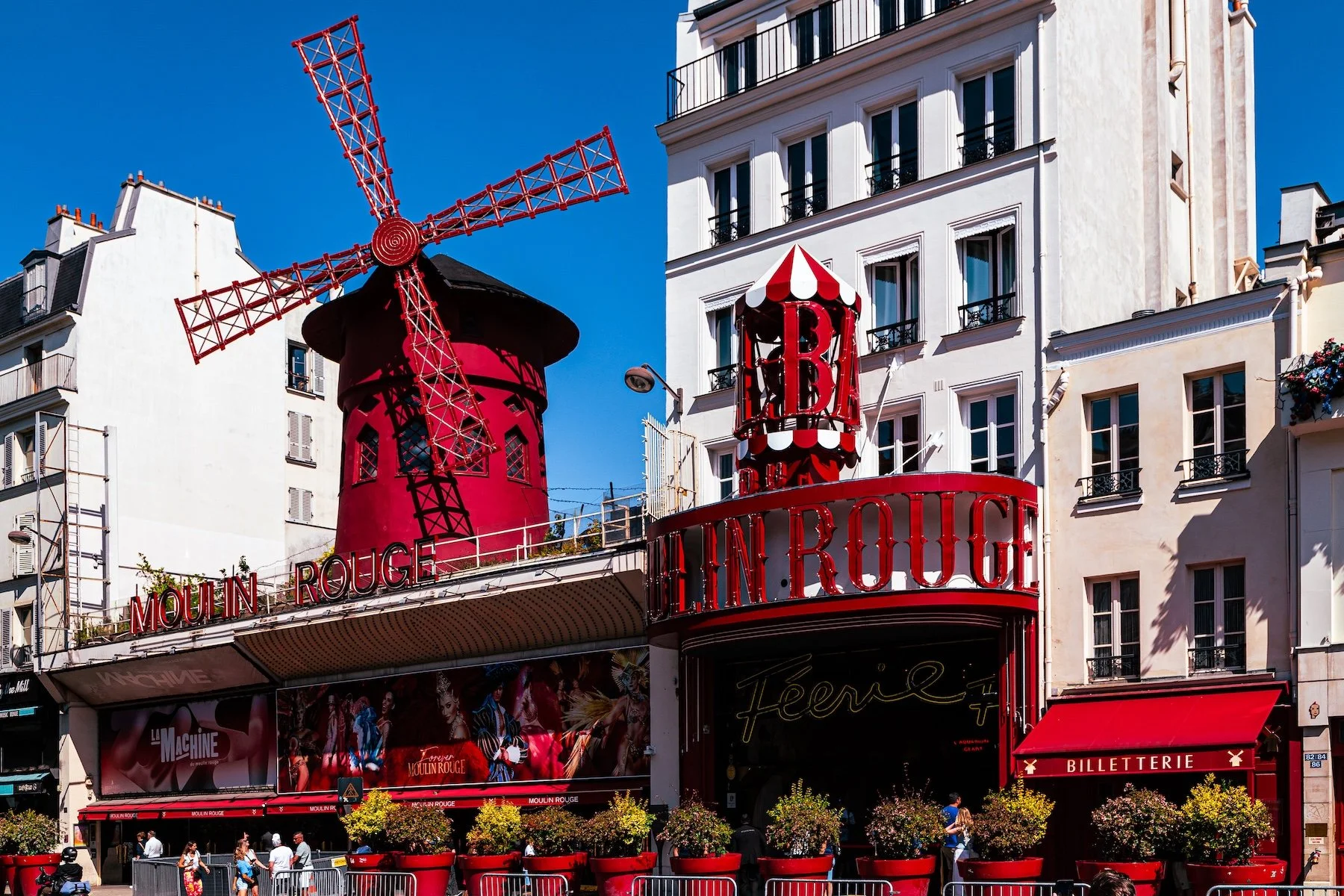
The arrondissements do not share a single visual identity. Instead, they organize Paris into twenty broad visual fields, each gathering its own combination of landmarks, streetscapes, institutions, residential districts, commercial corridors, parks, rail stations, markets, cemeteries, and riverfront edges.
Some arrondissements are defined by monumental scale: royal palaces, ceremonial avenues, government buildings, museums, formal gardens, and internationally recognized landmarks. Others are shaped by hills, canals, rail gateways, apartment-lined boulevards, neighborhood markets, former village streets, industrial remnants, parks, or the quieter rhythms of residential Paris. The arrondissement system gives these varied landscapes a civic frame, allowing the city to be read not as one visual language, but as a sequence of overlapping Parisian atmospheres.
Visual Identity
Through The Lens
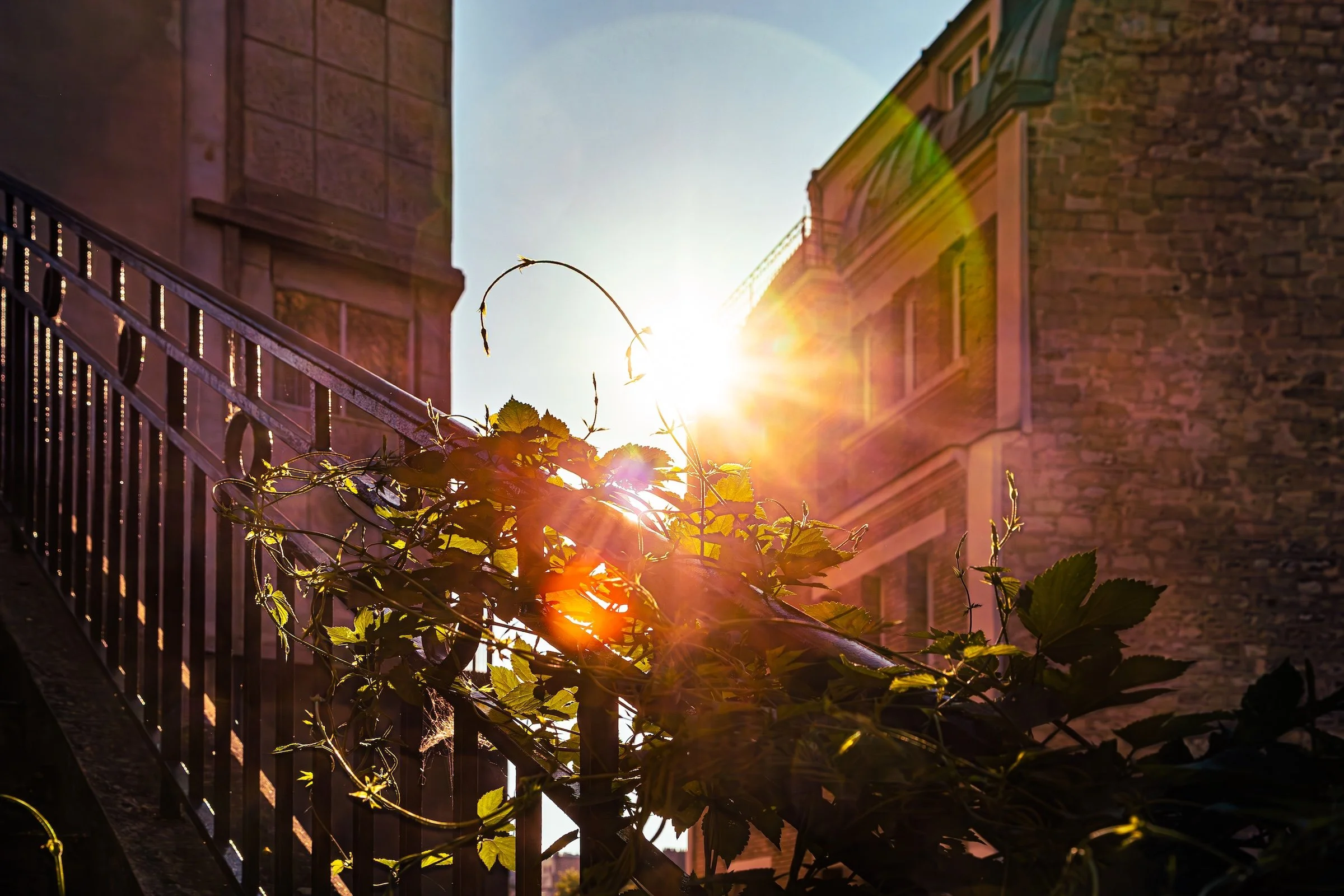
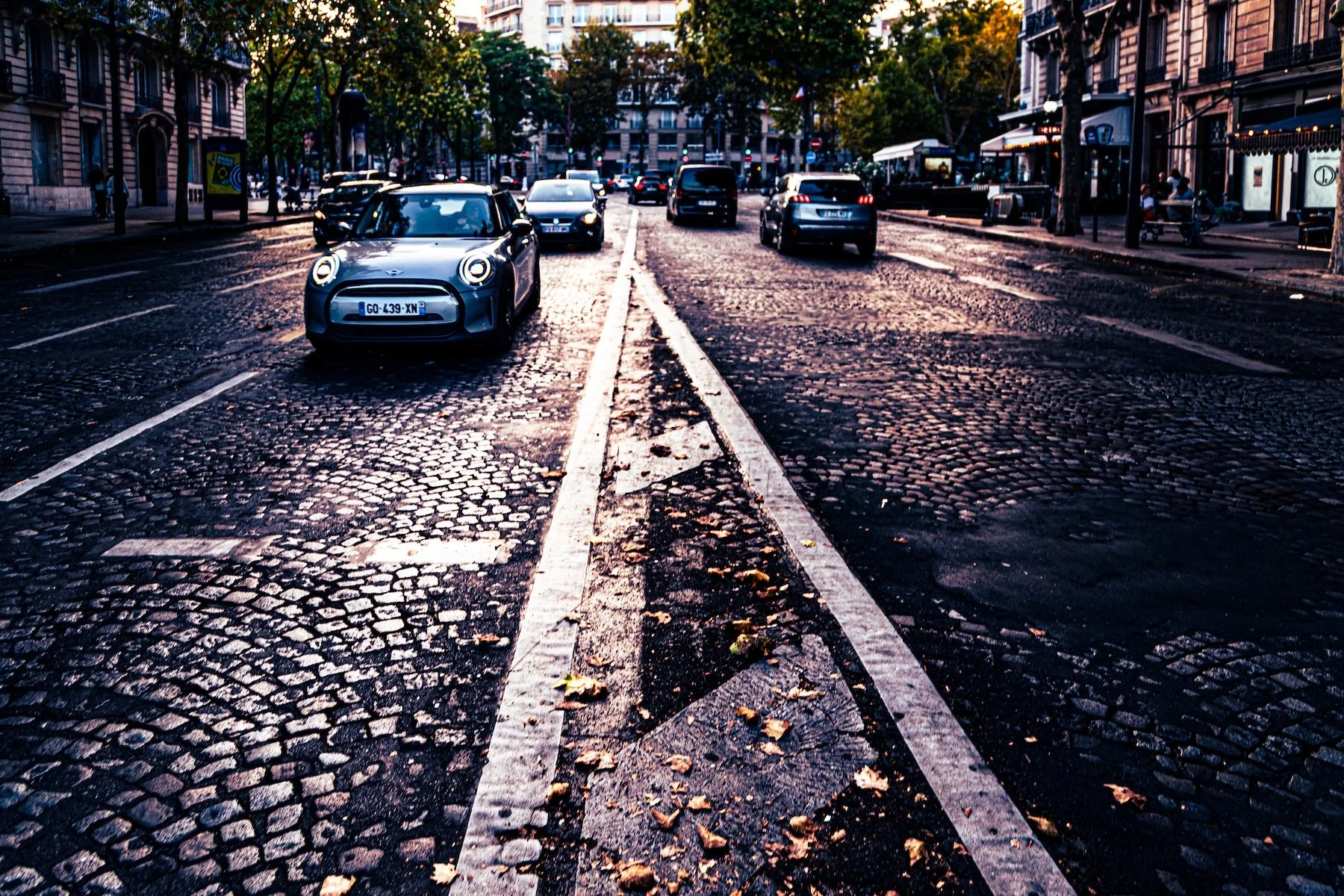
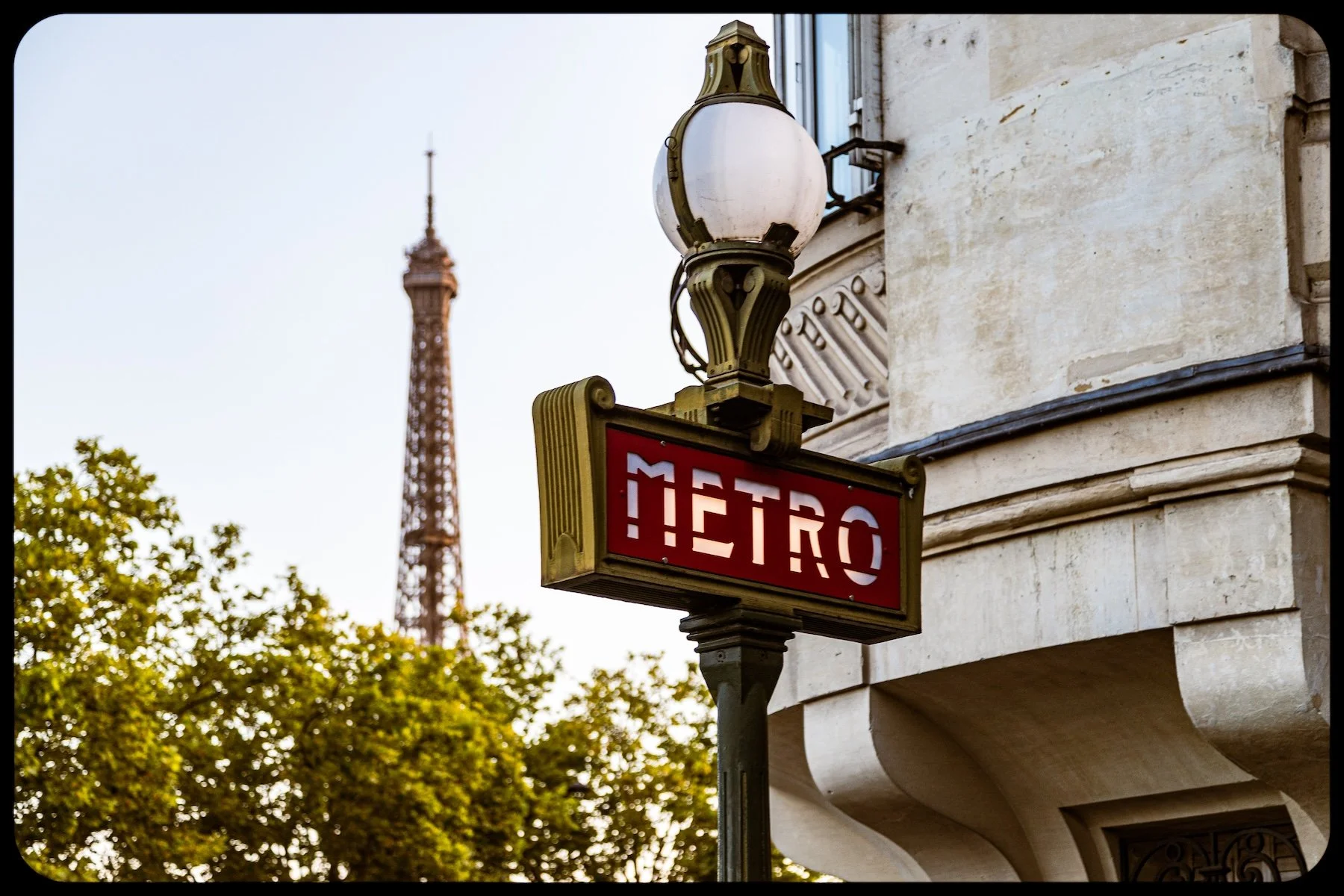
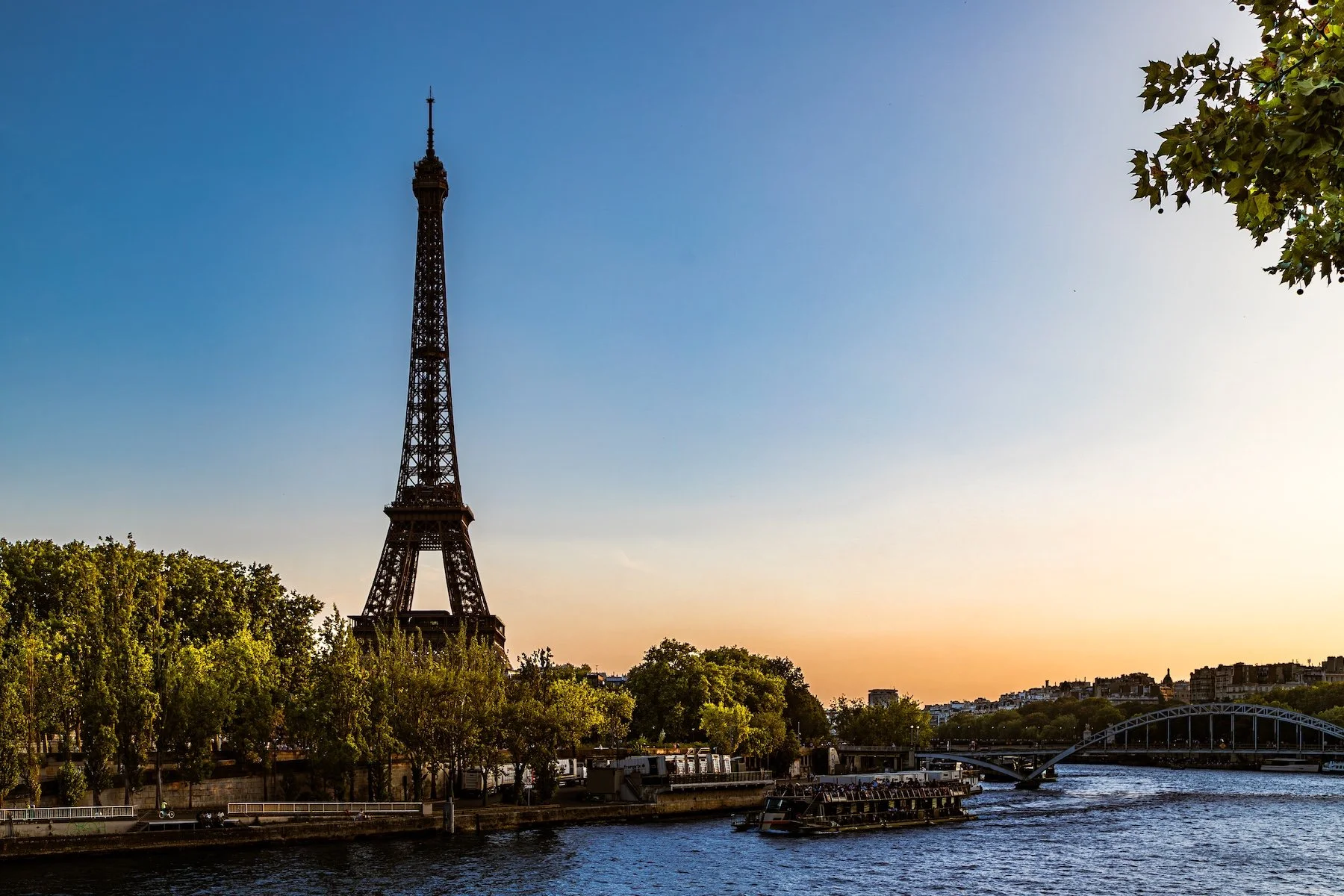
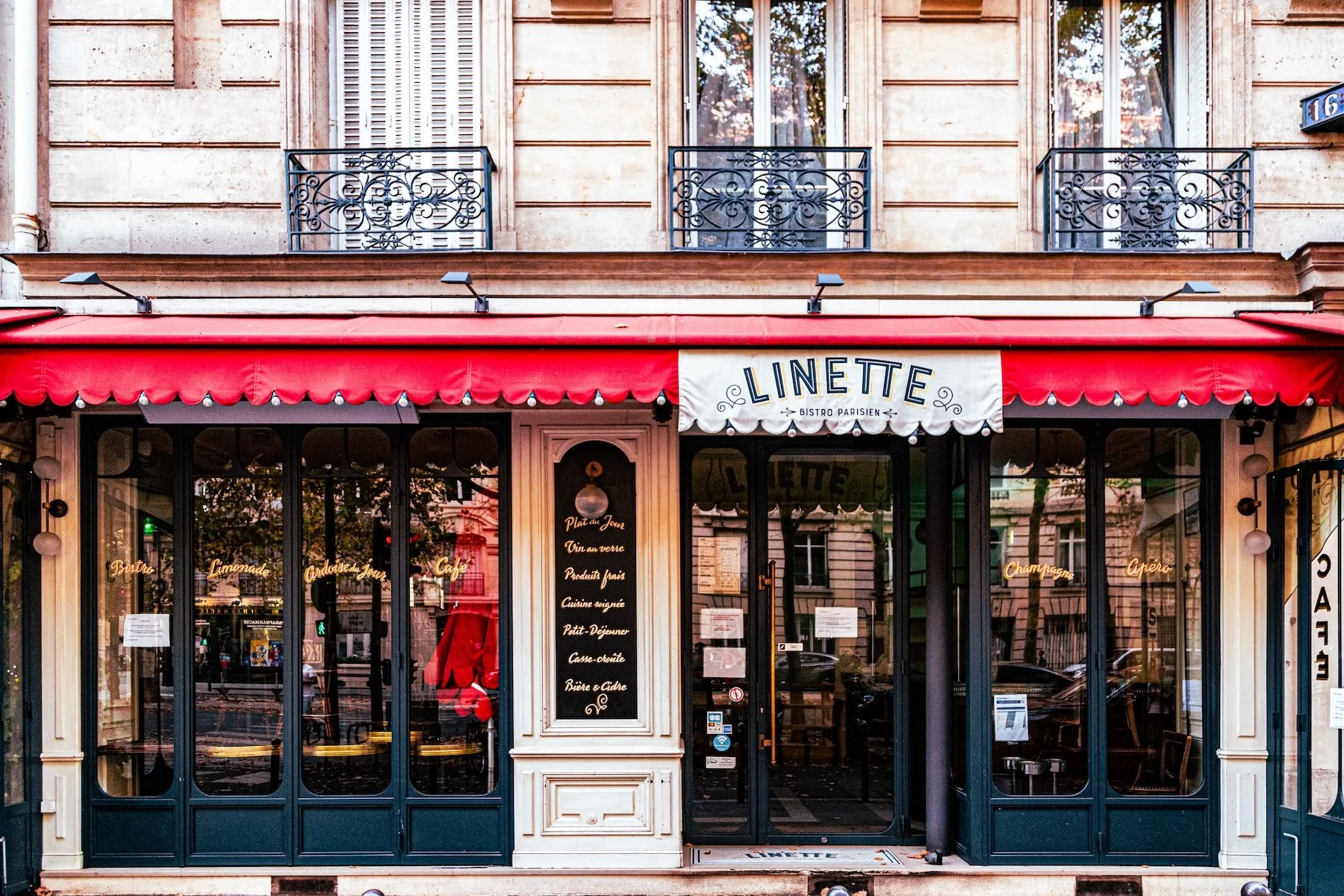
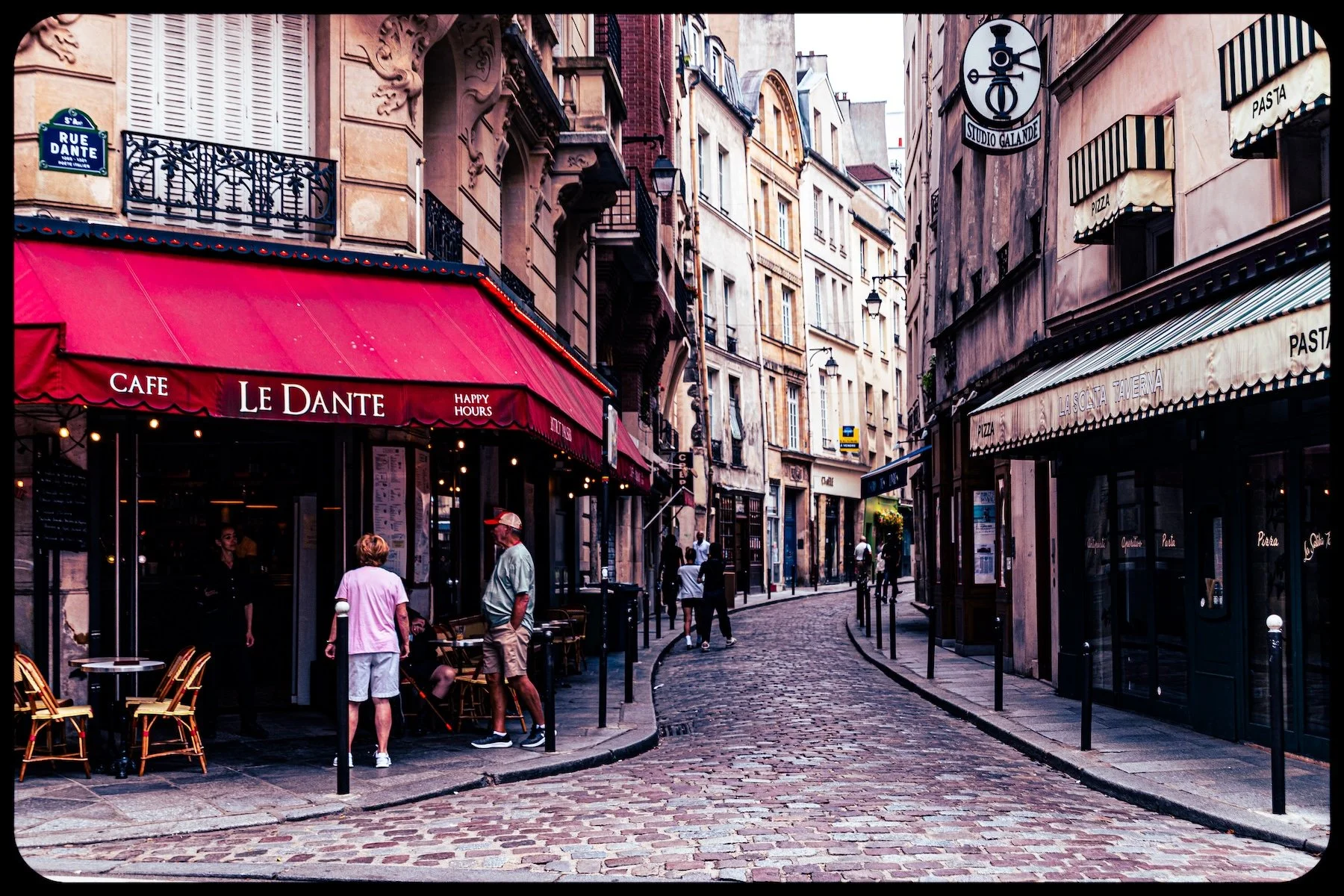
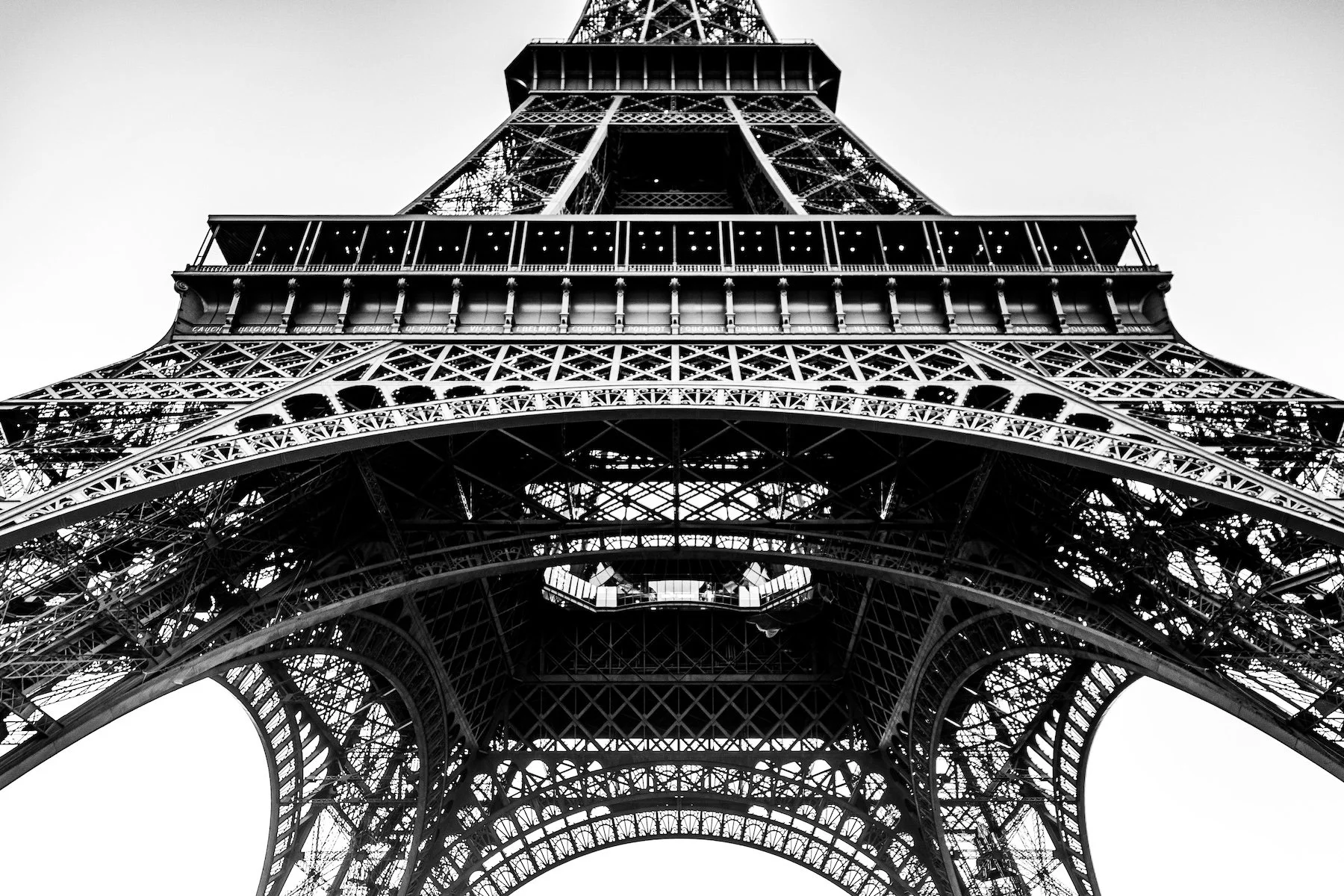
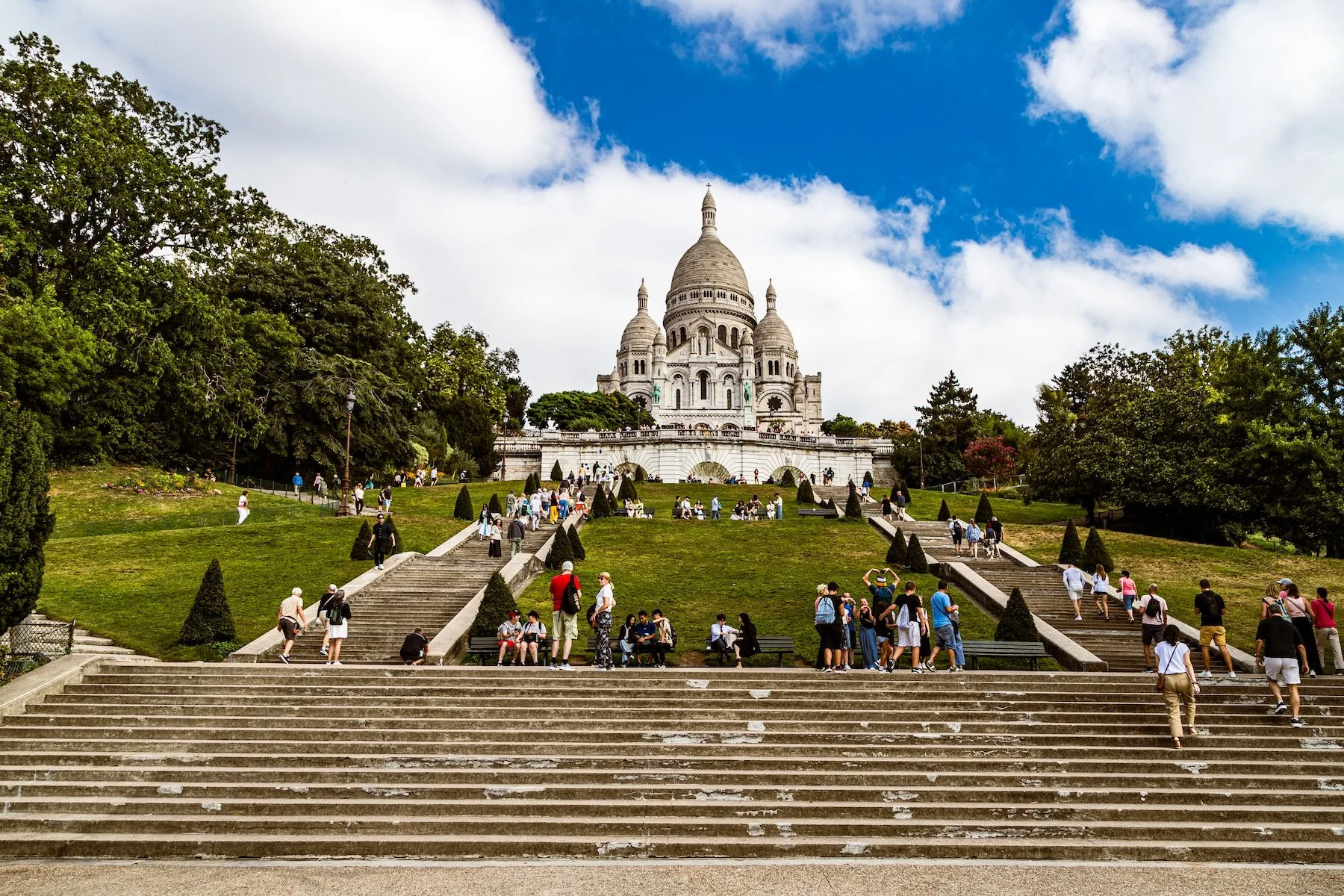
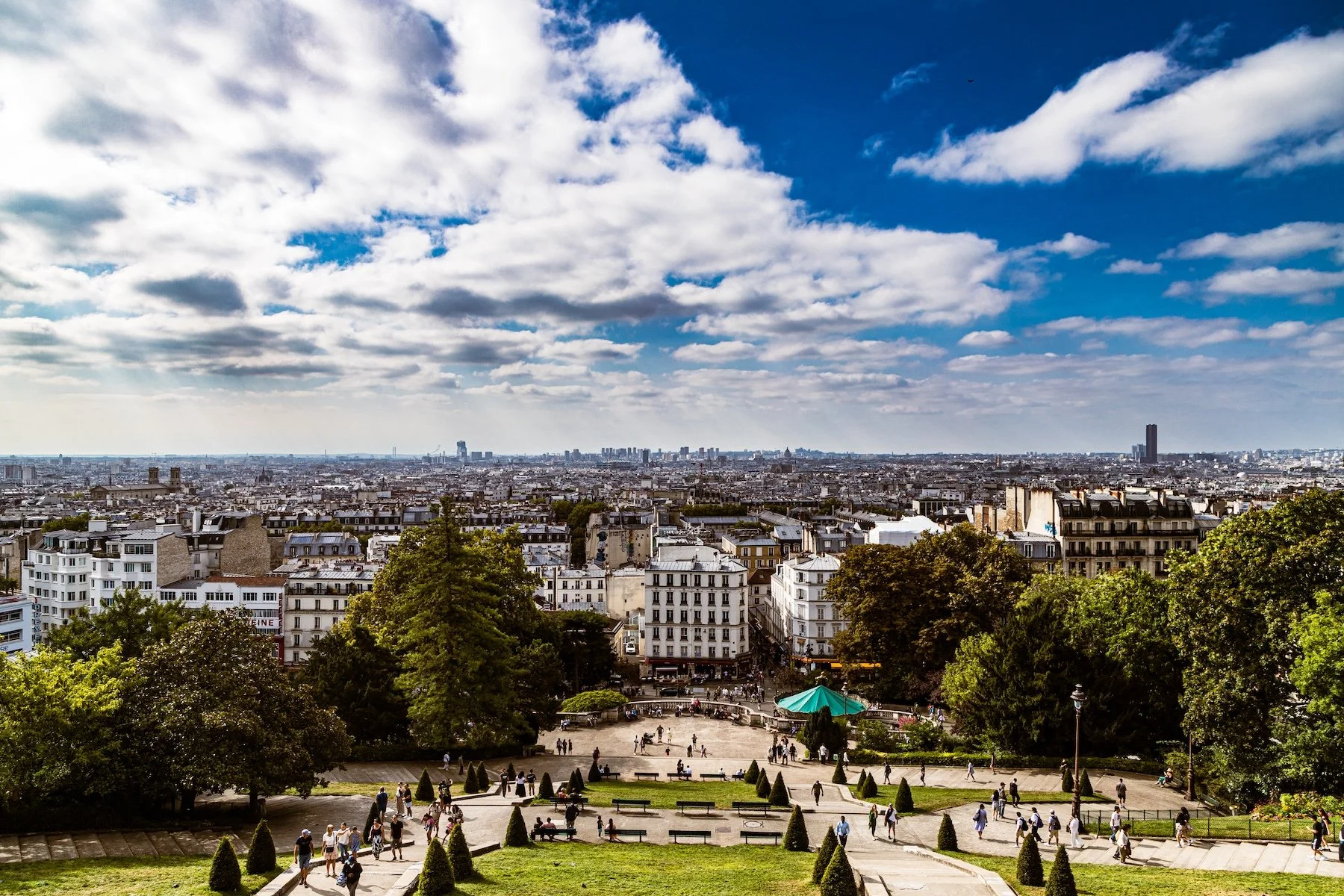
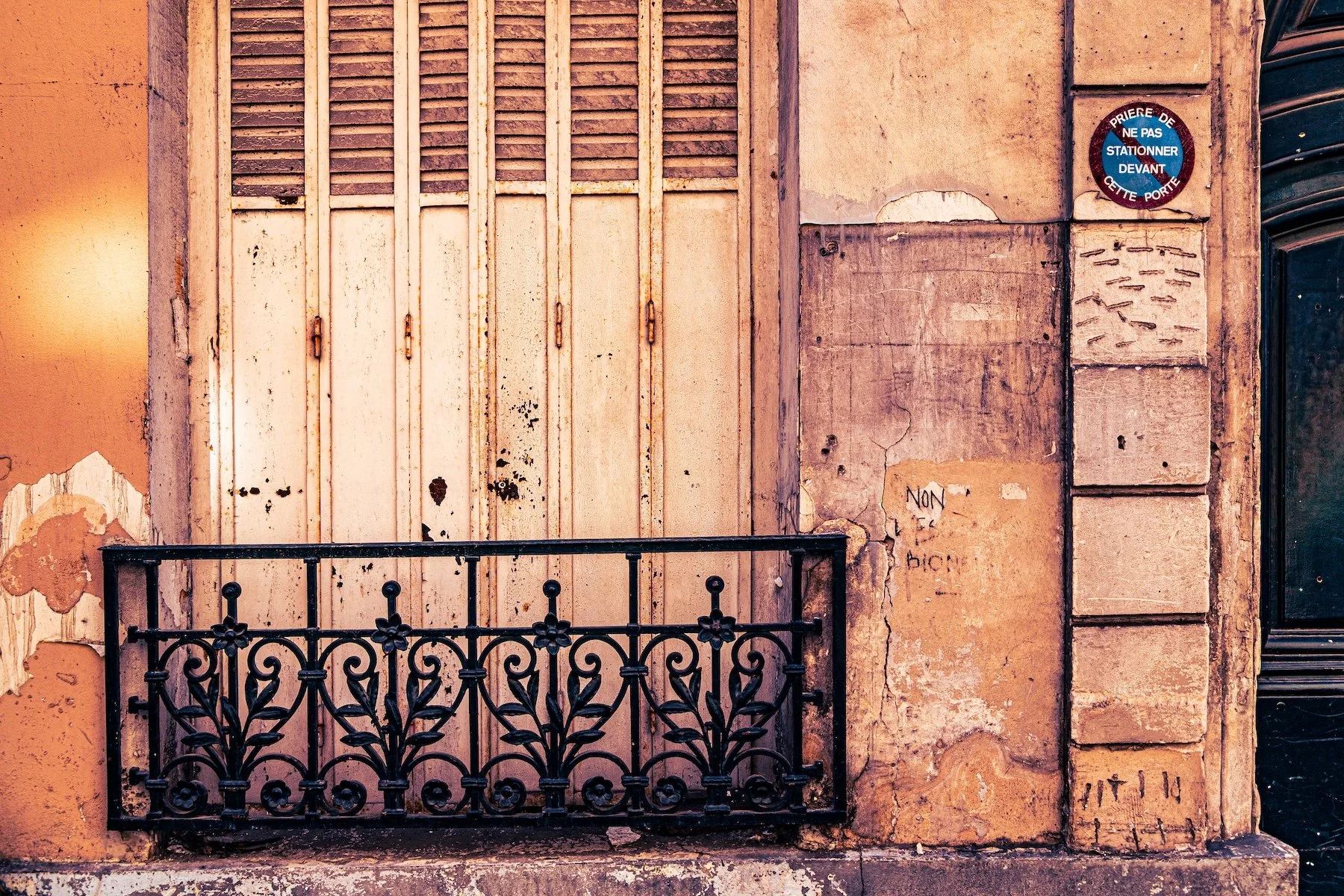
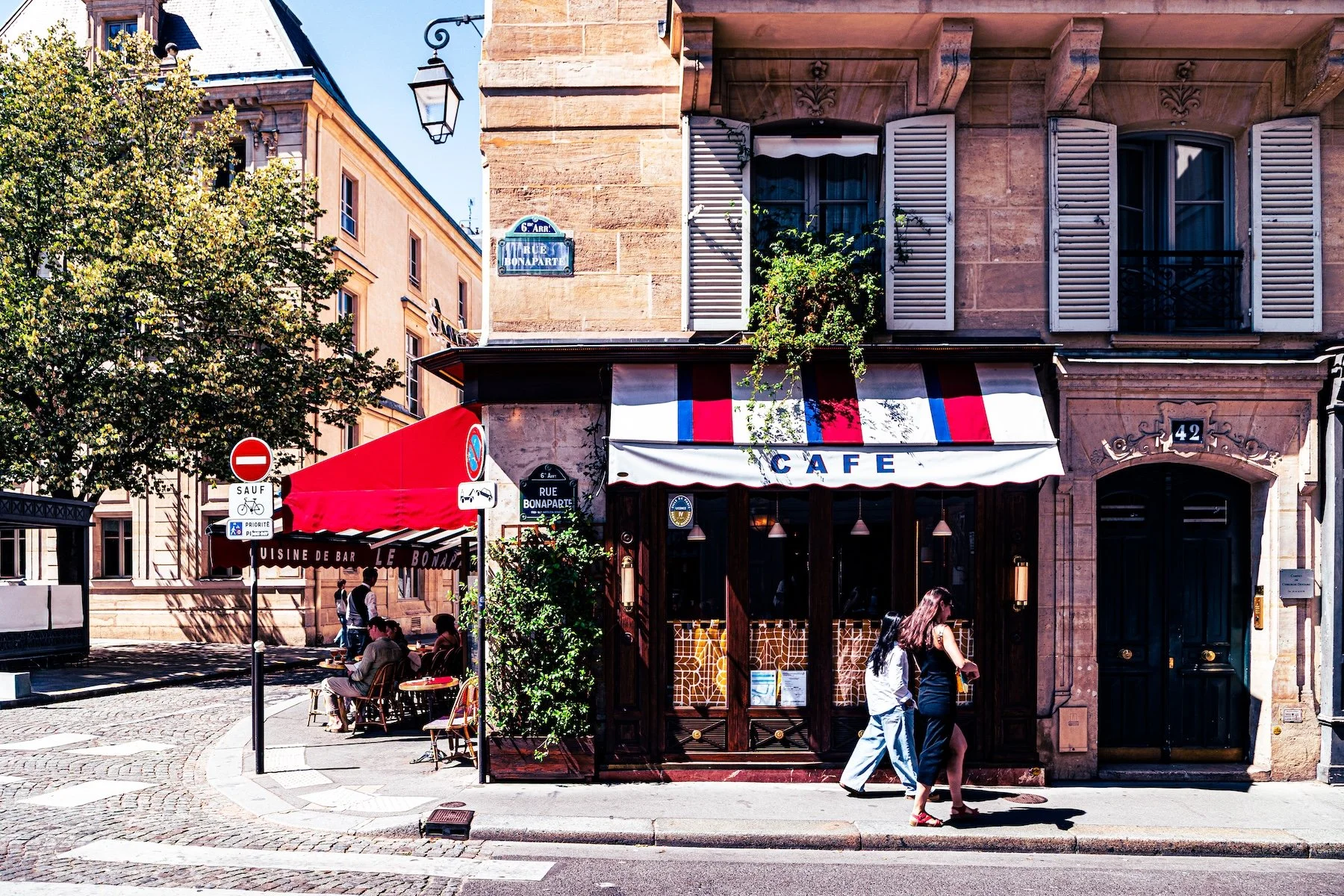
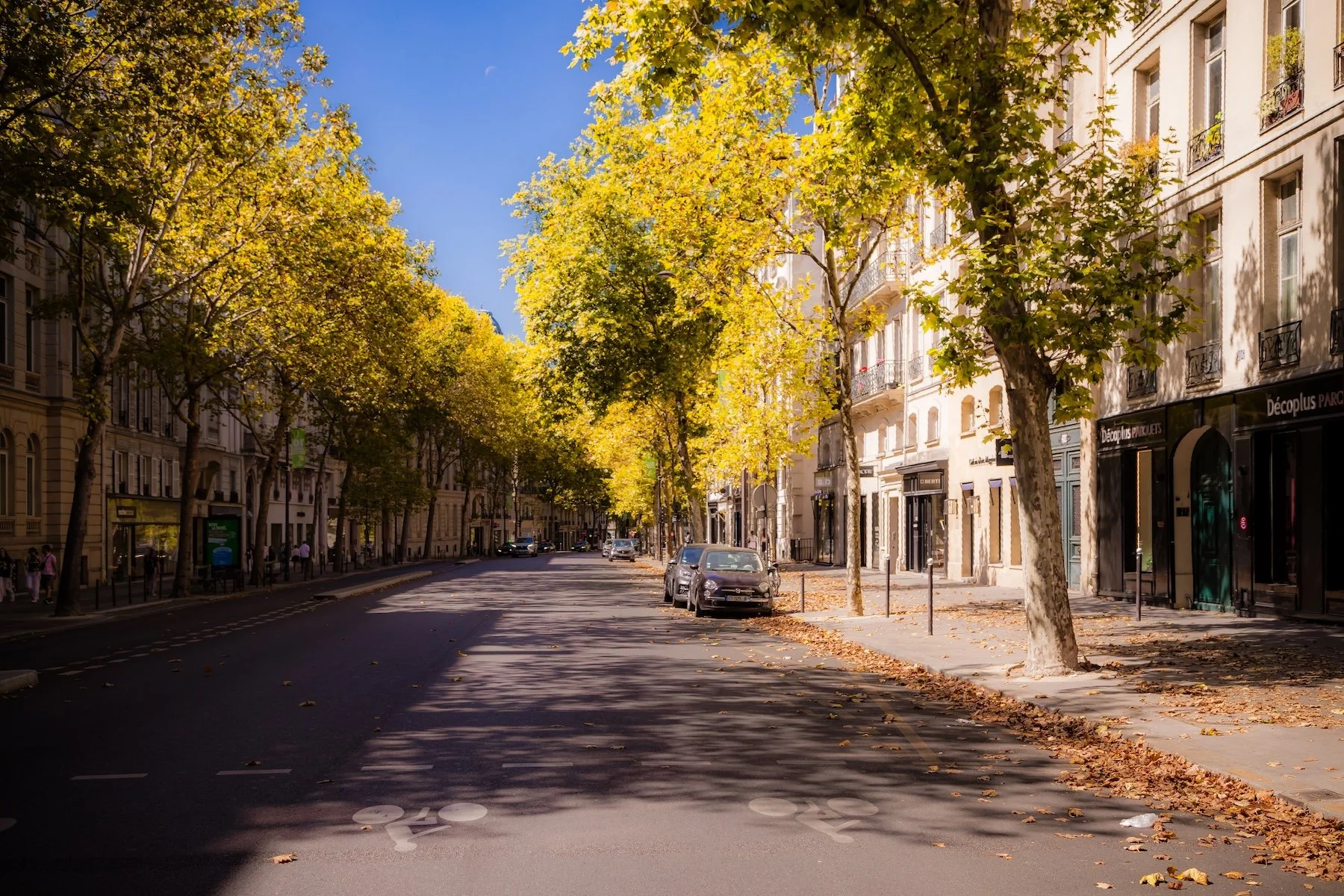
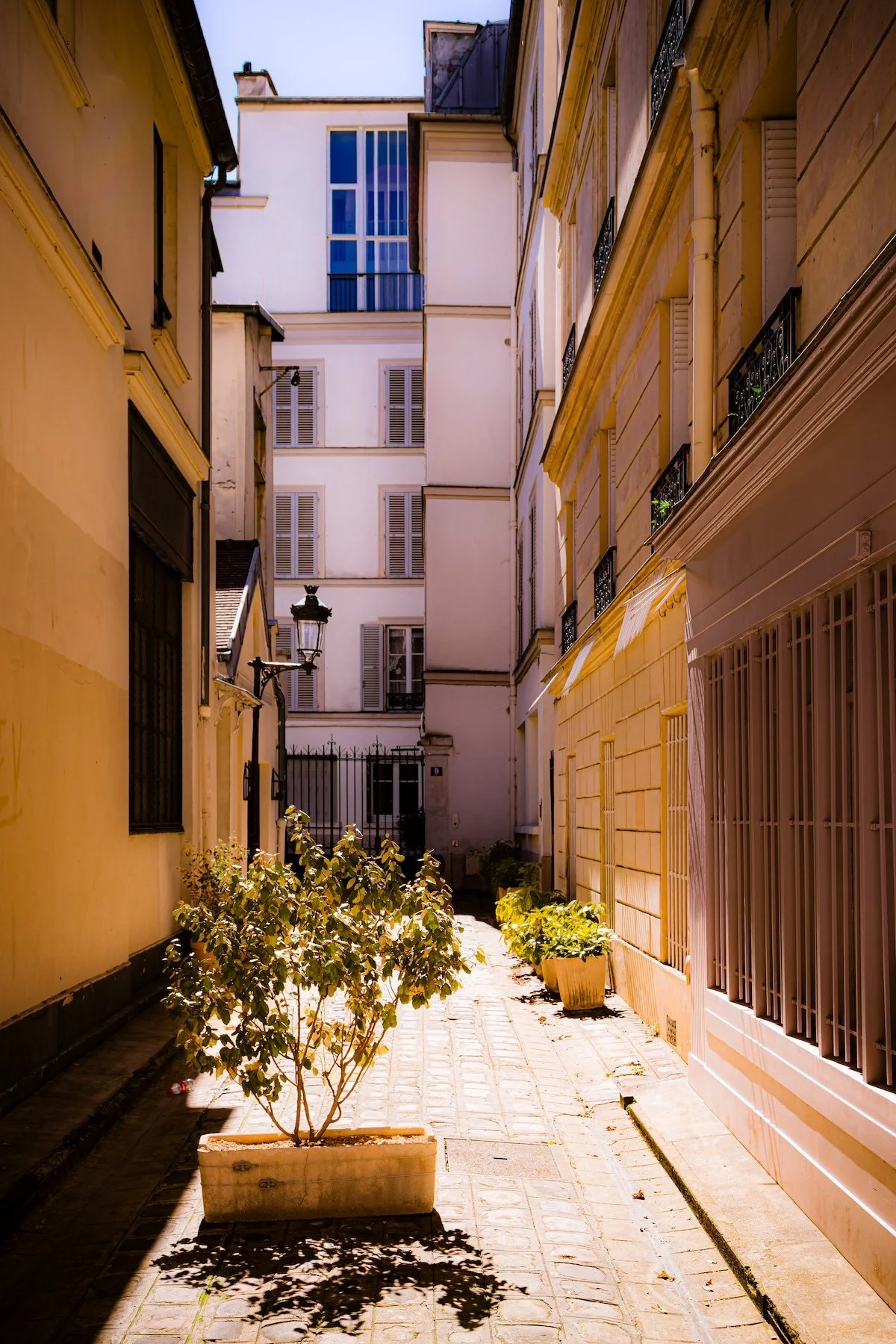
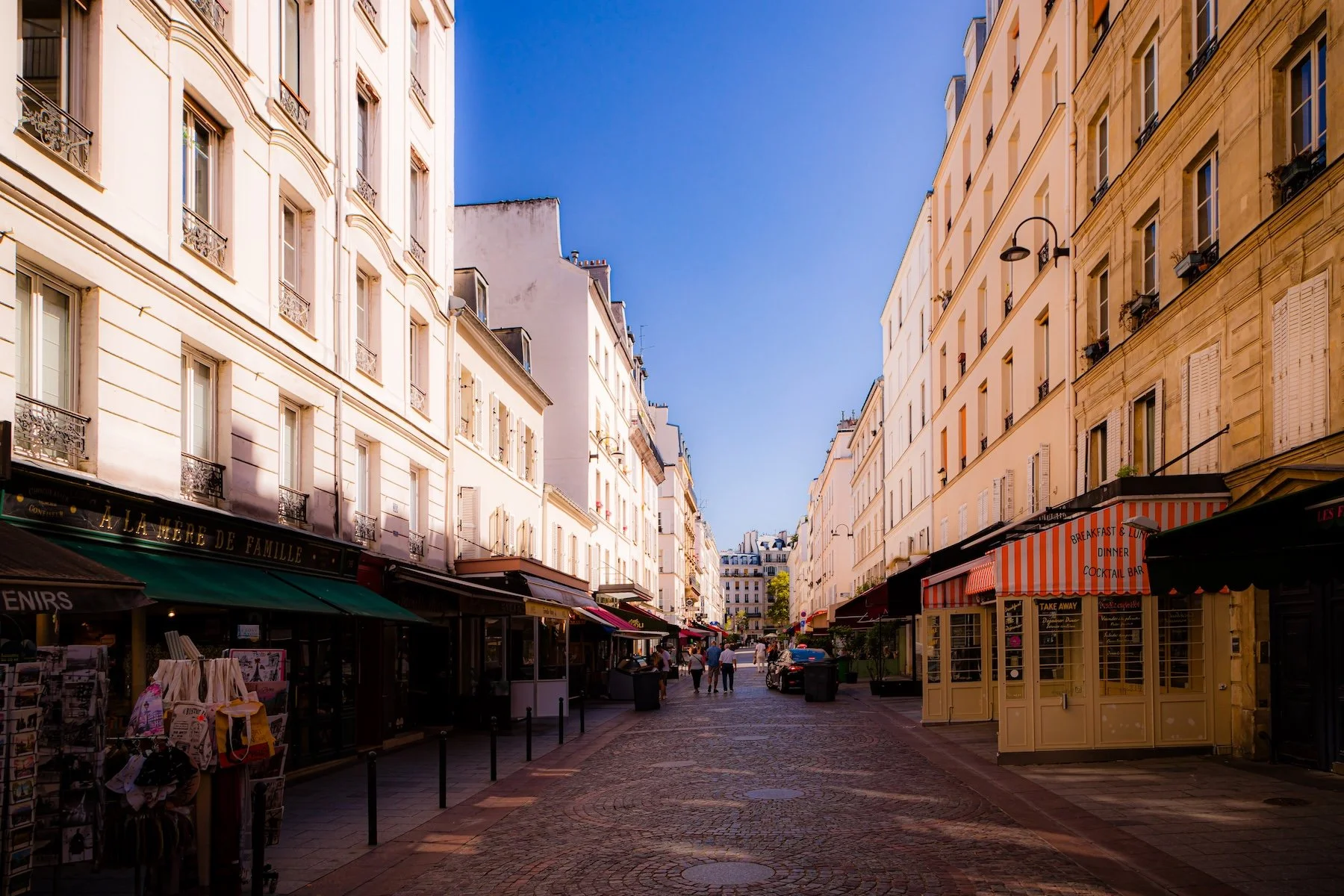
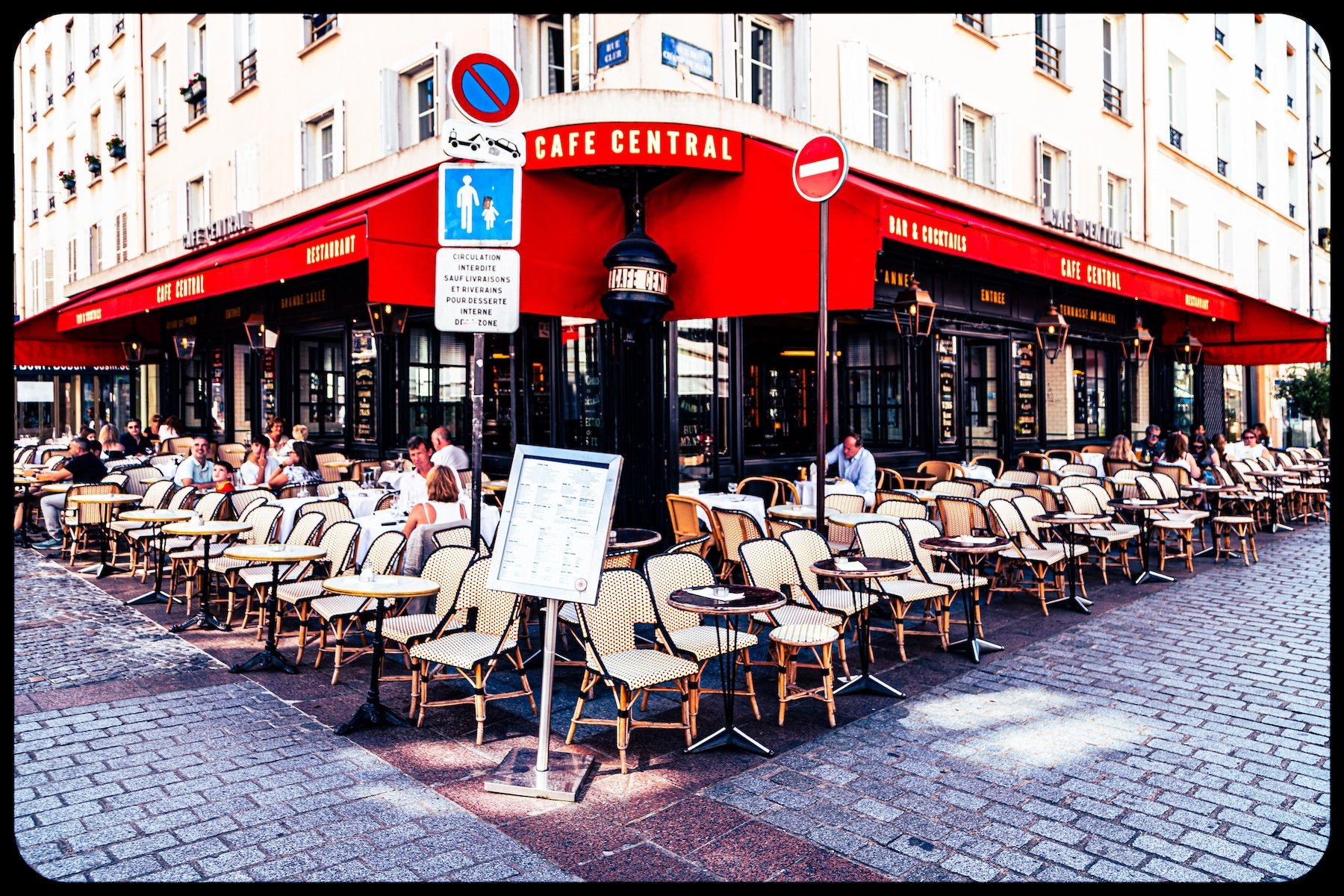
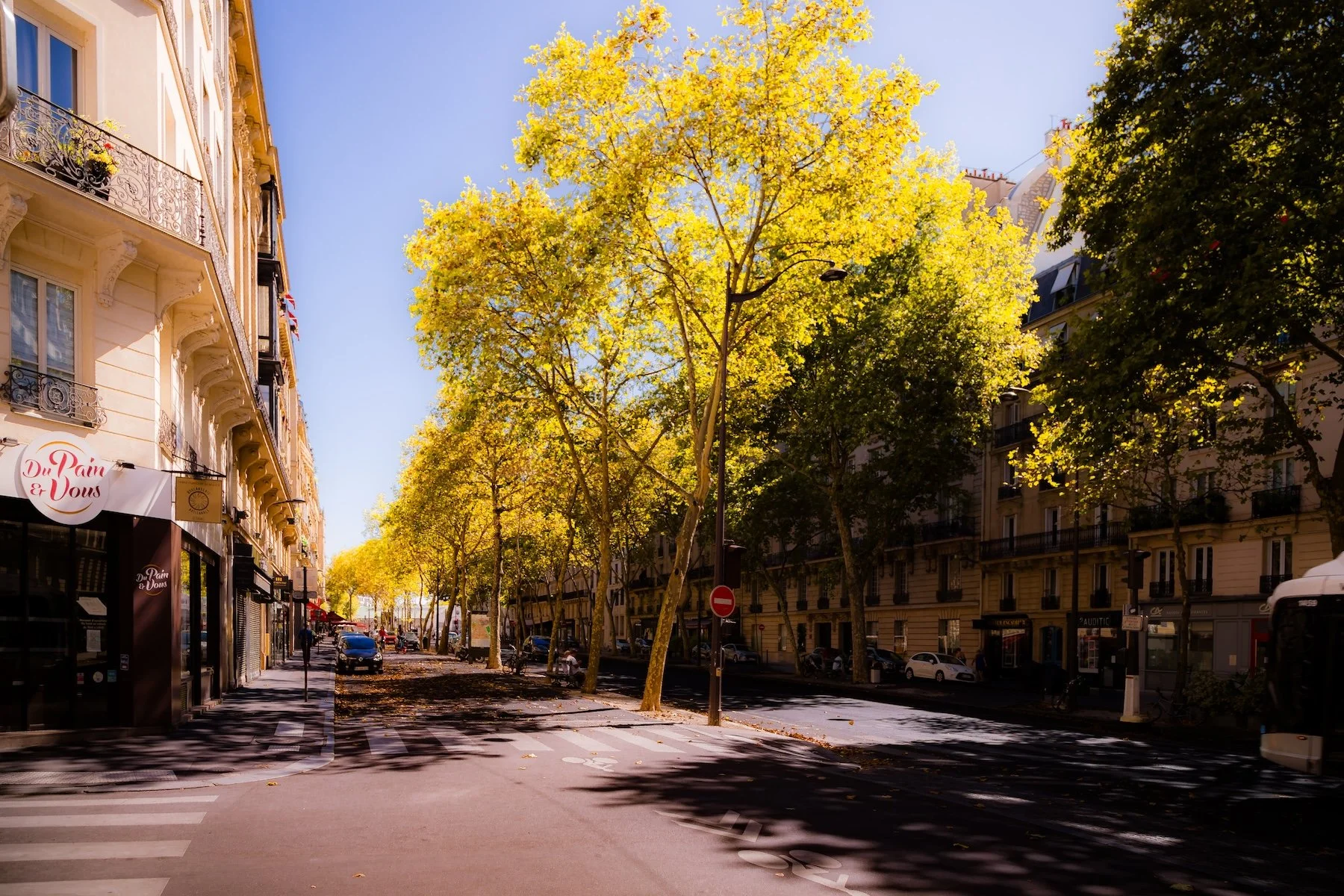
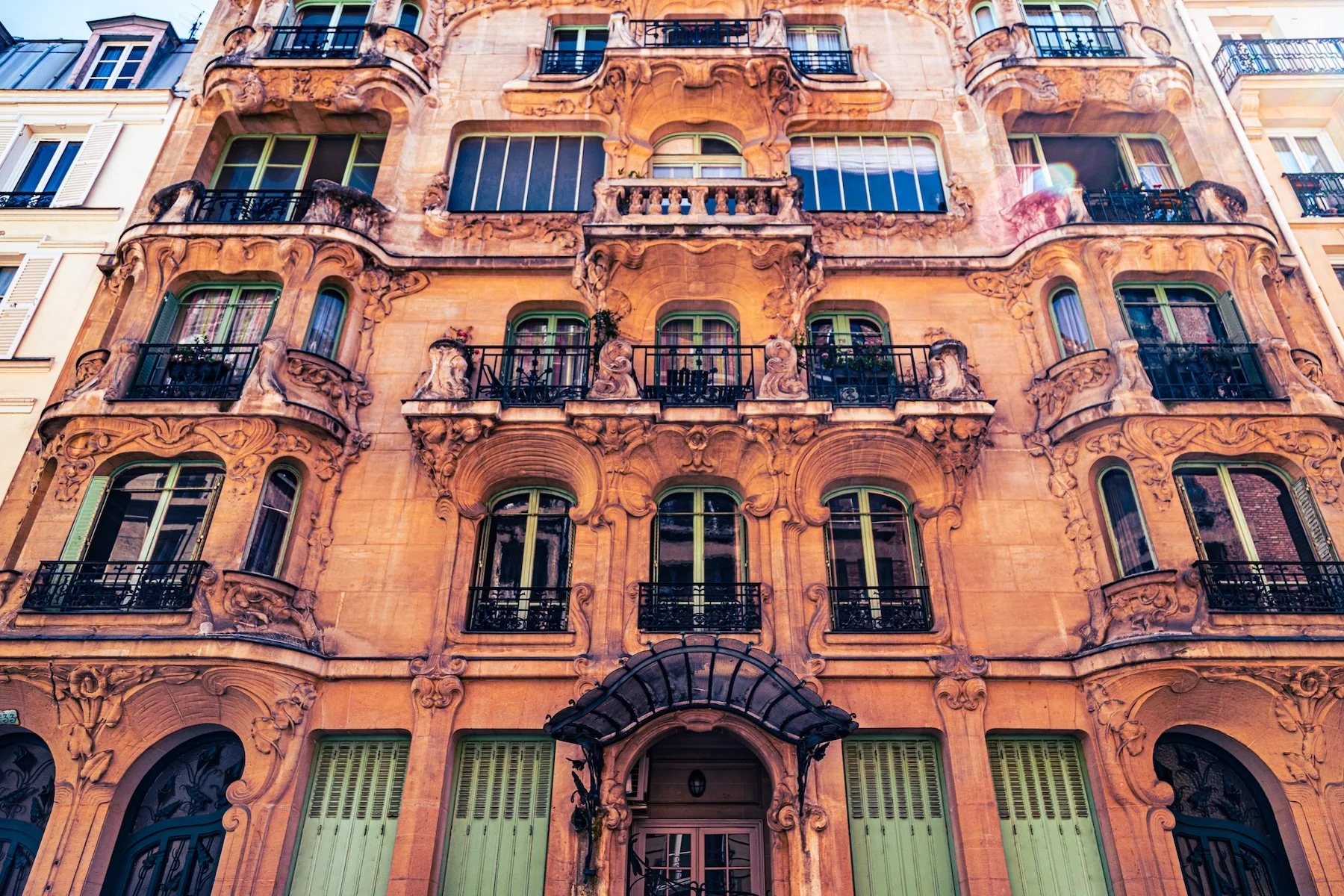
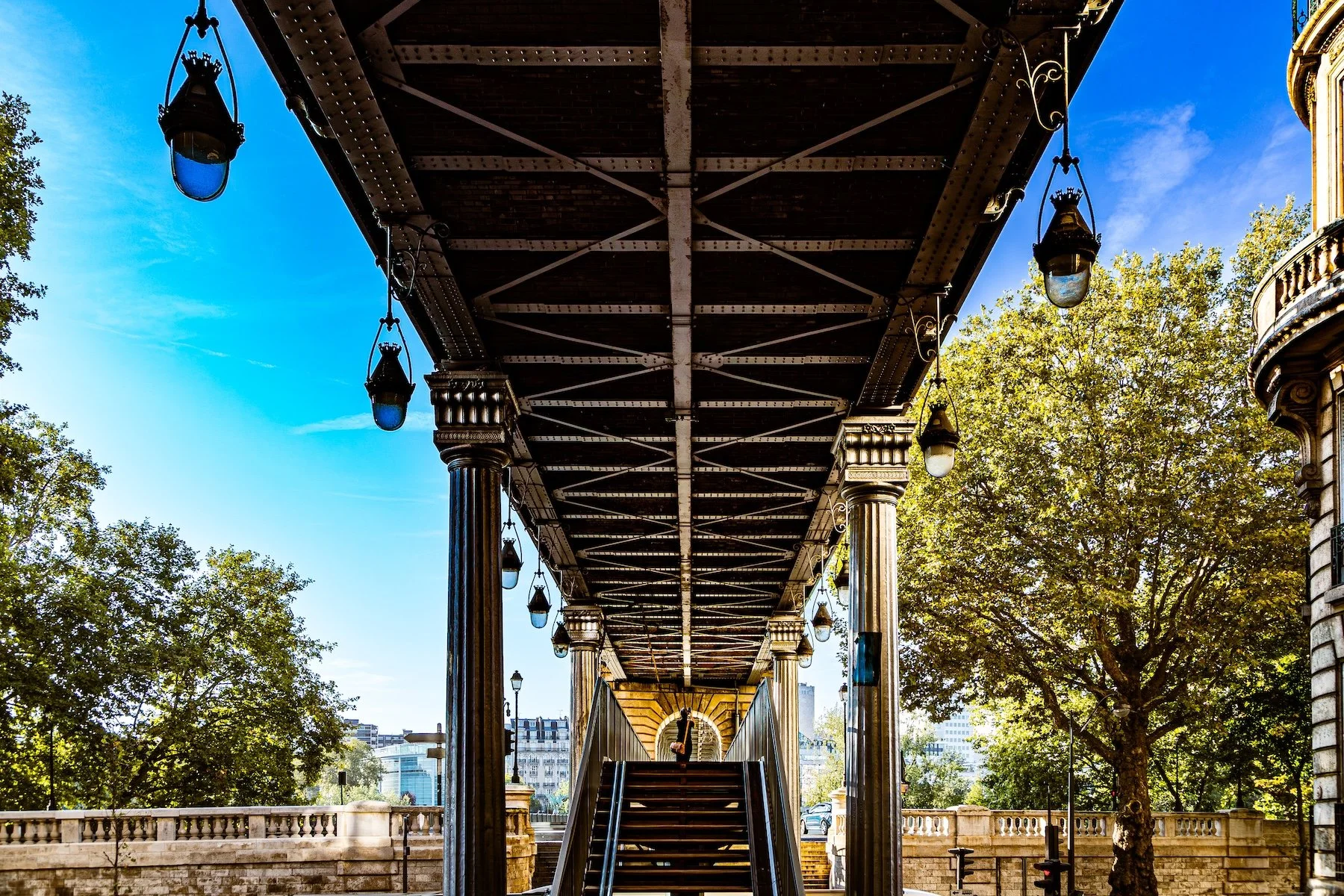
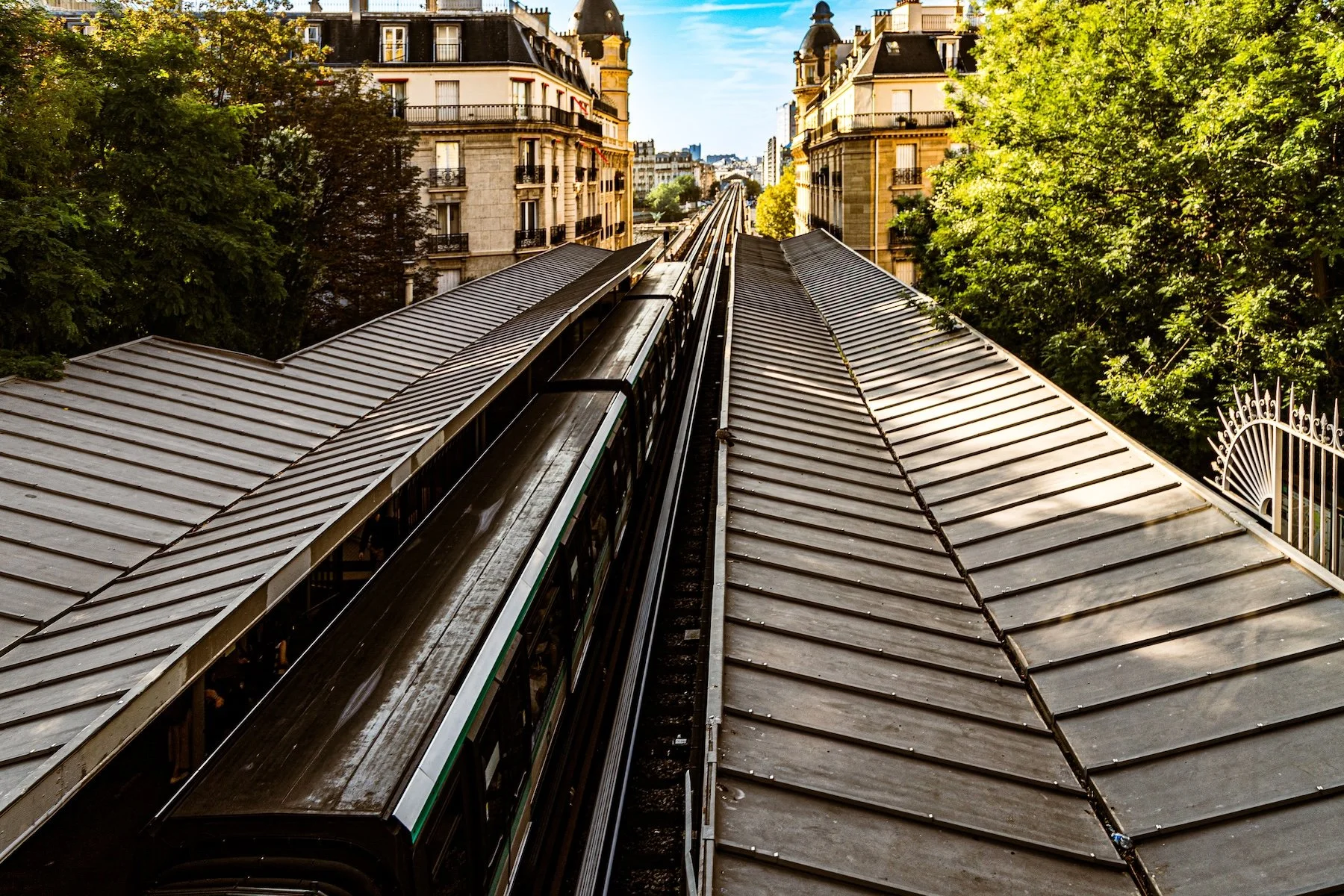
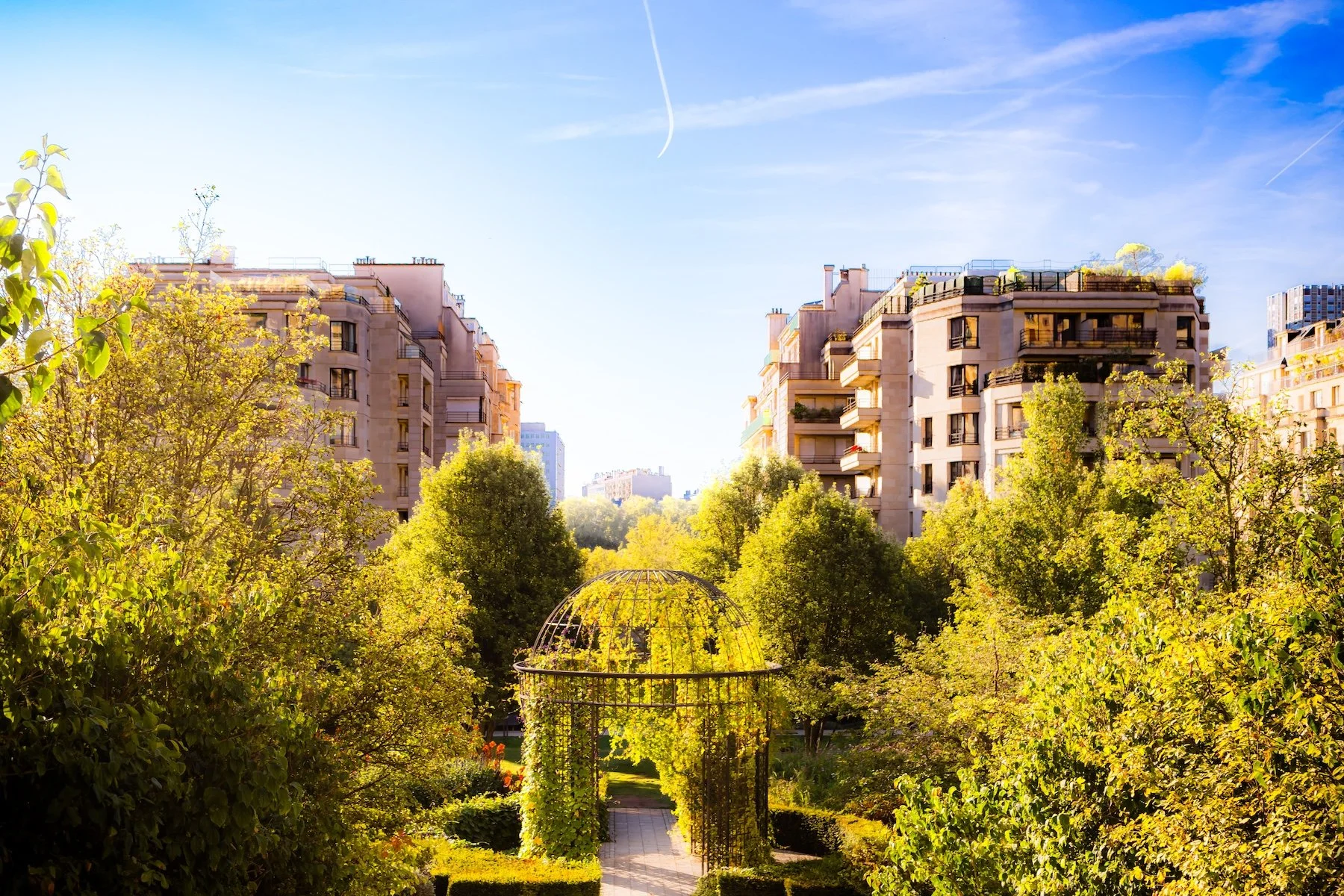
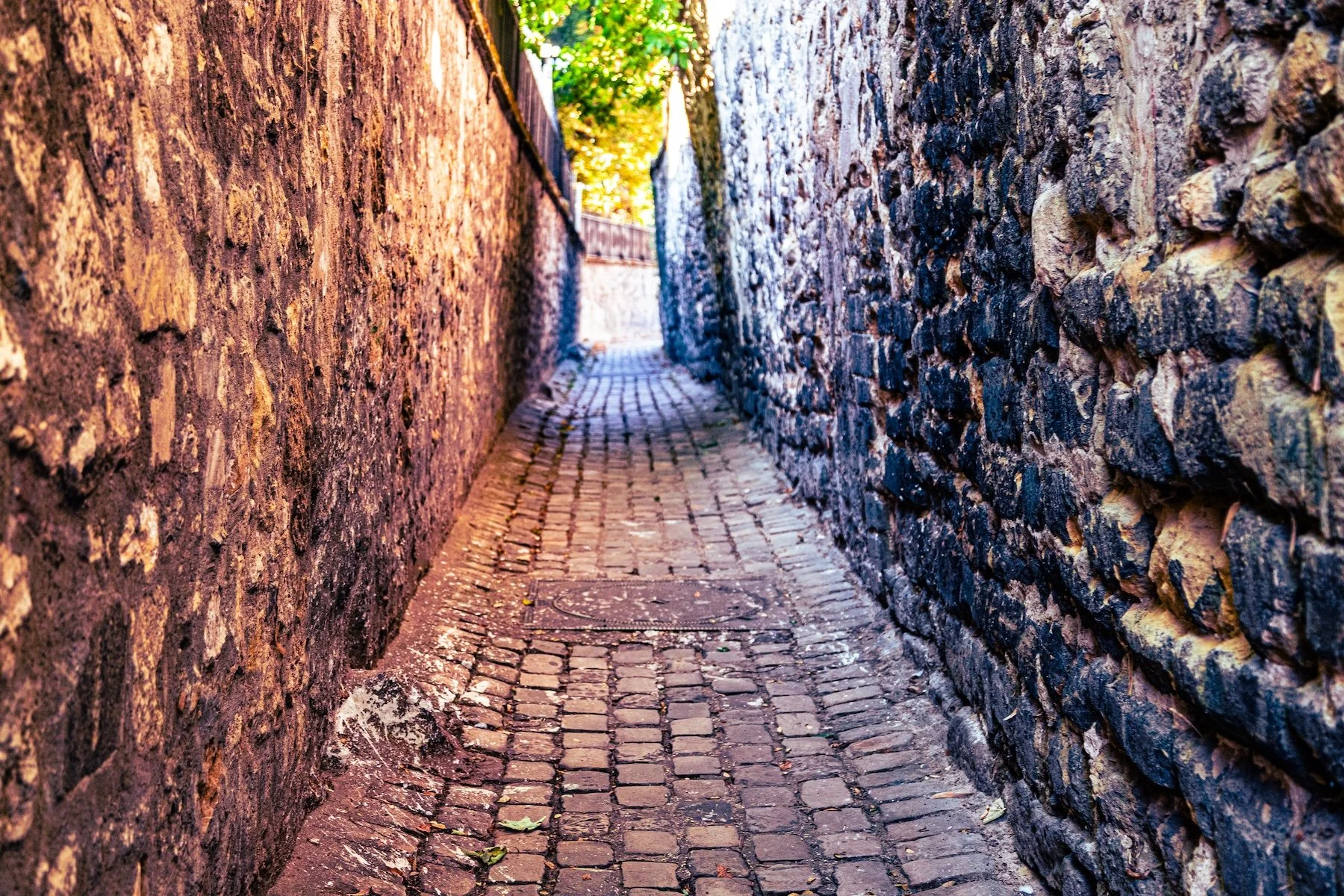
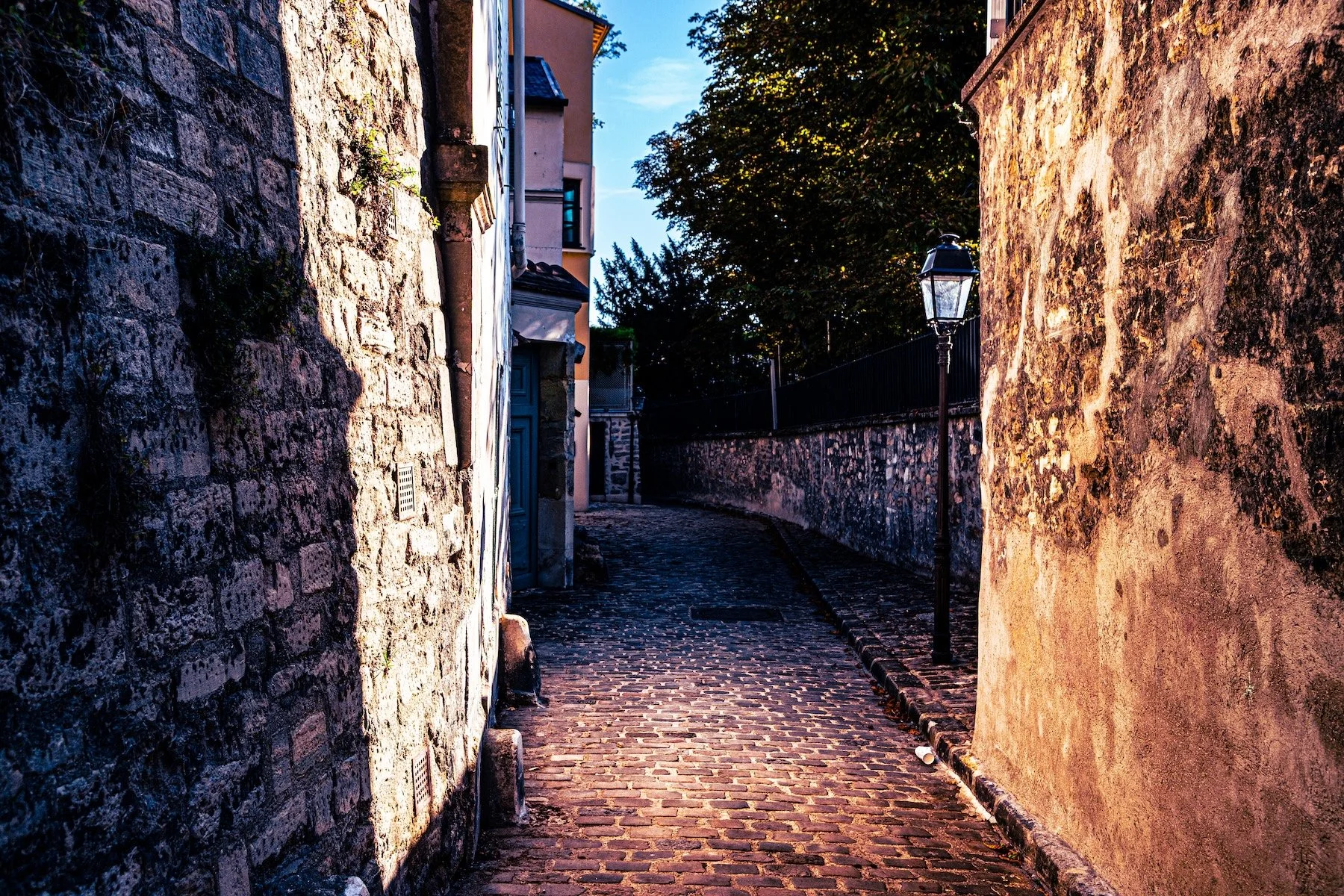
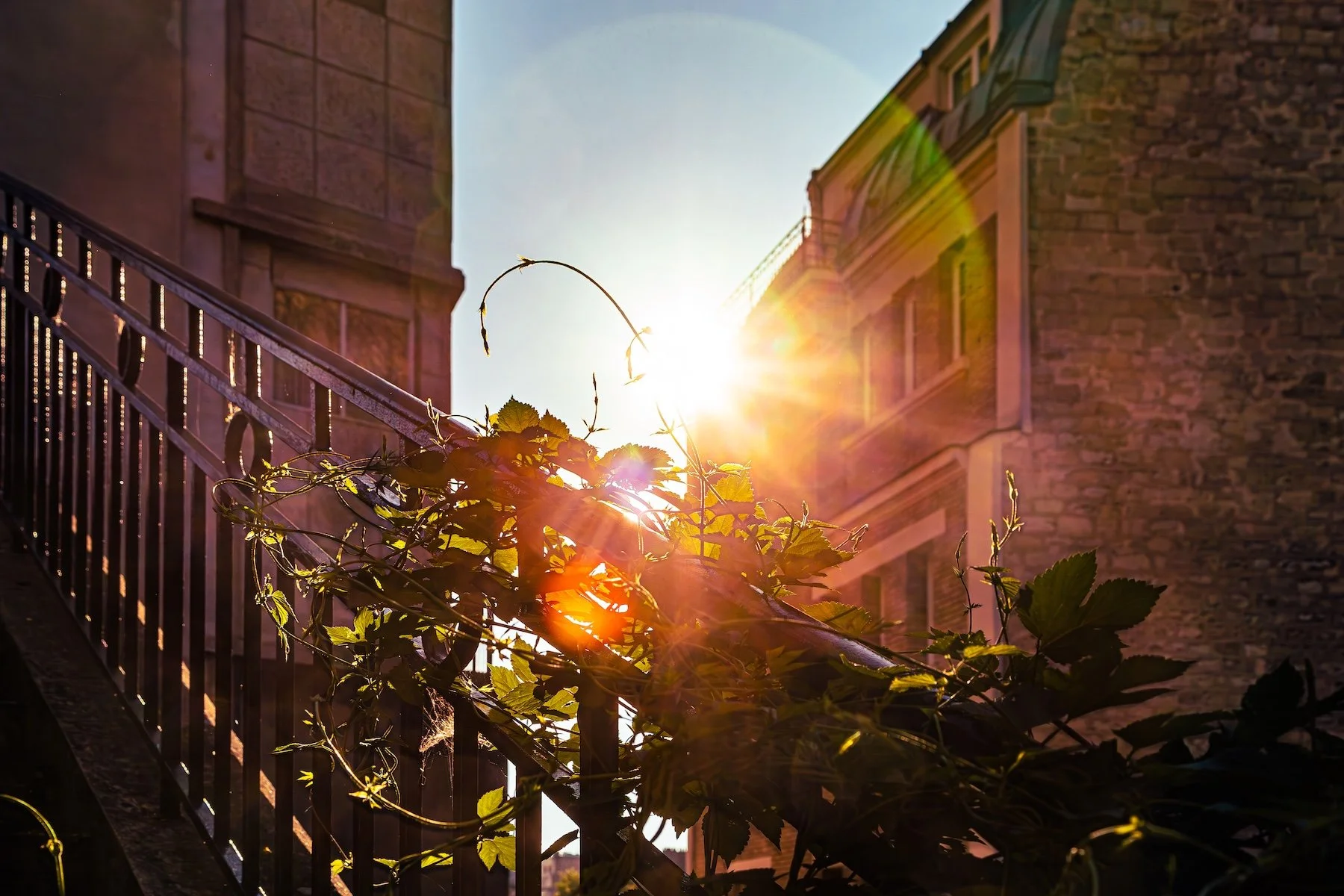
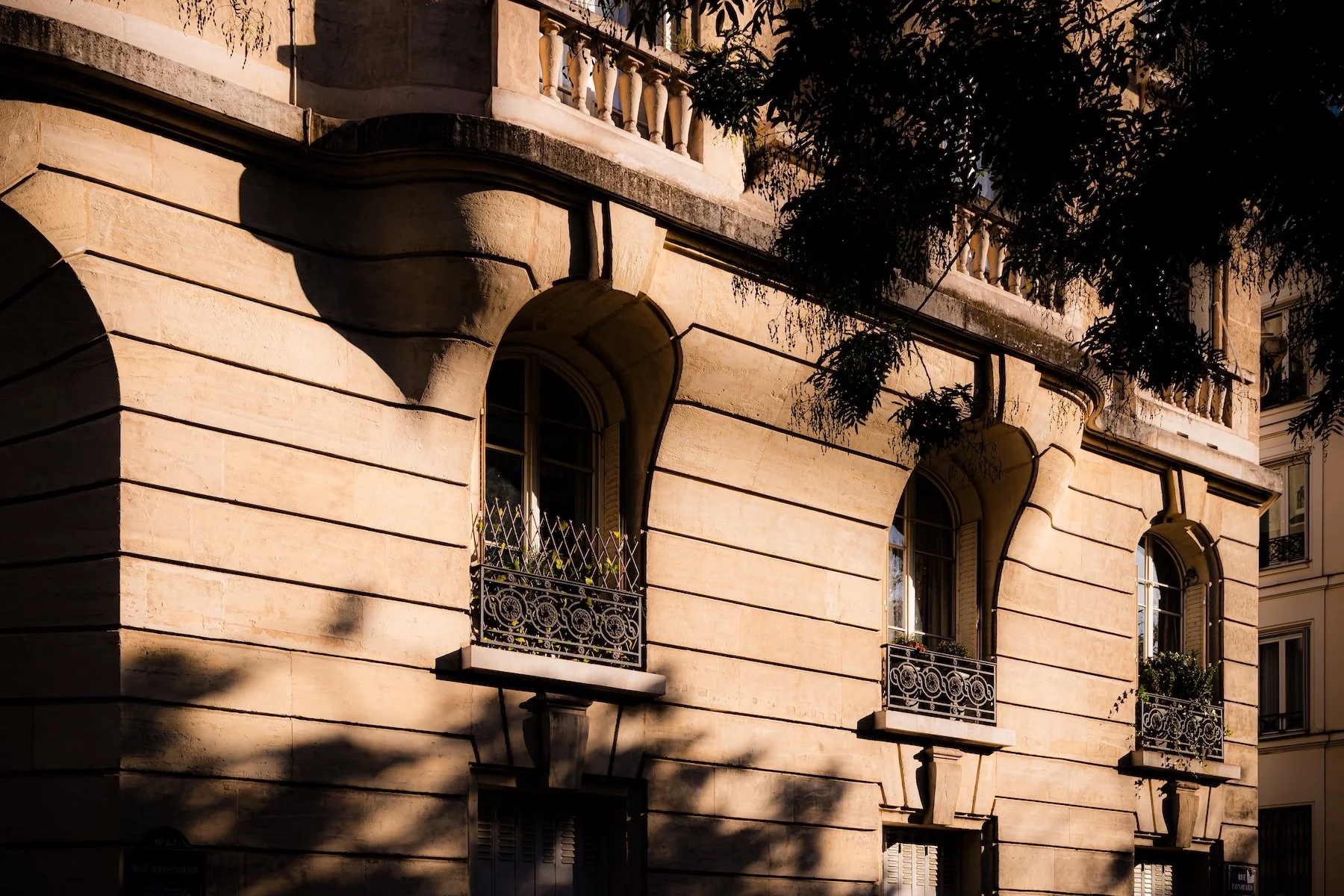
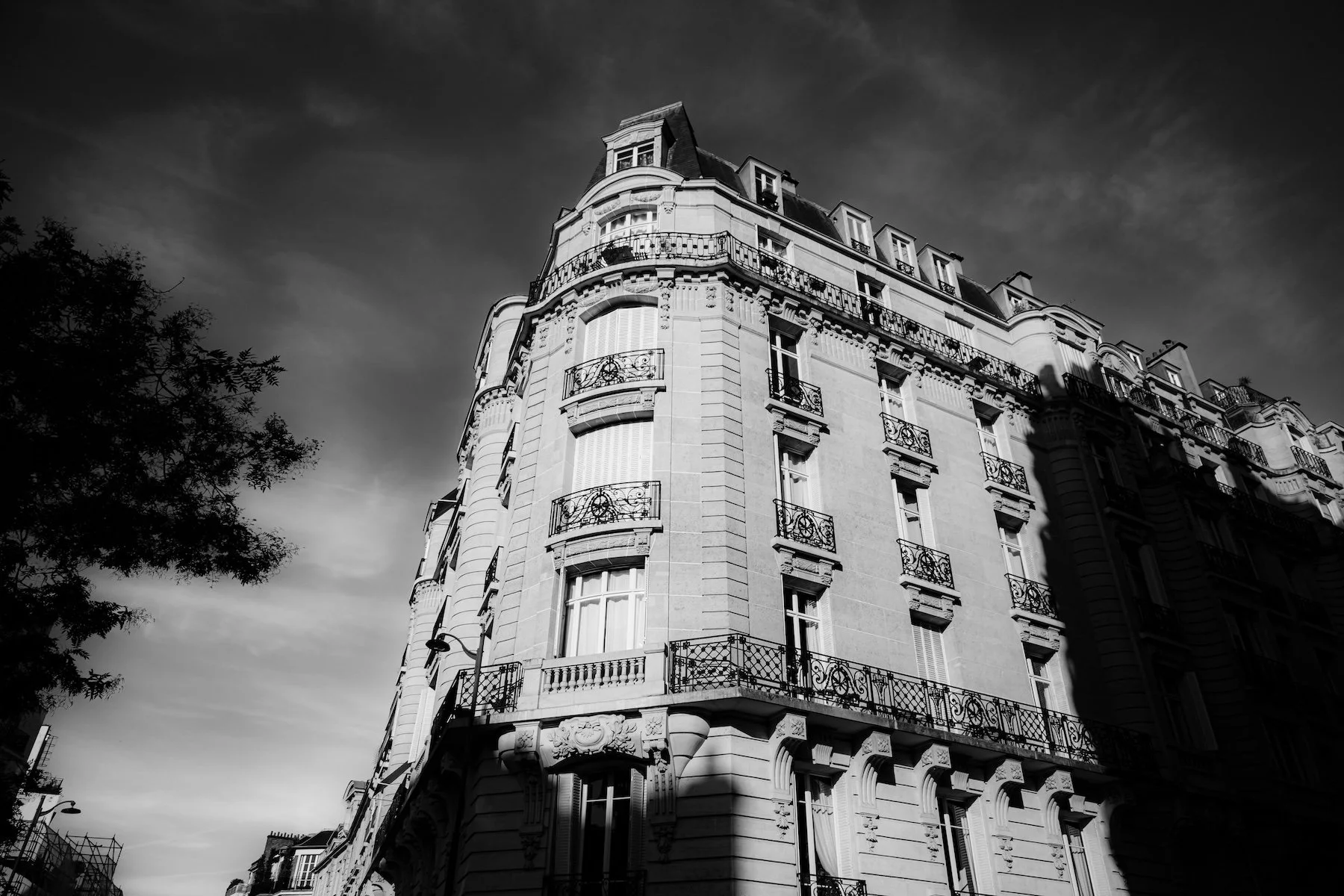
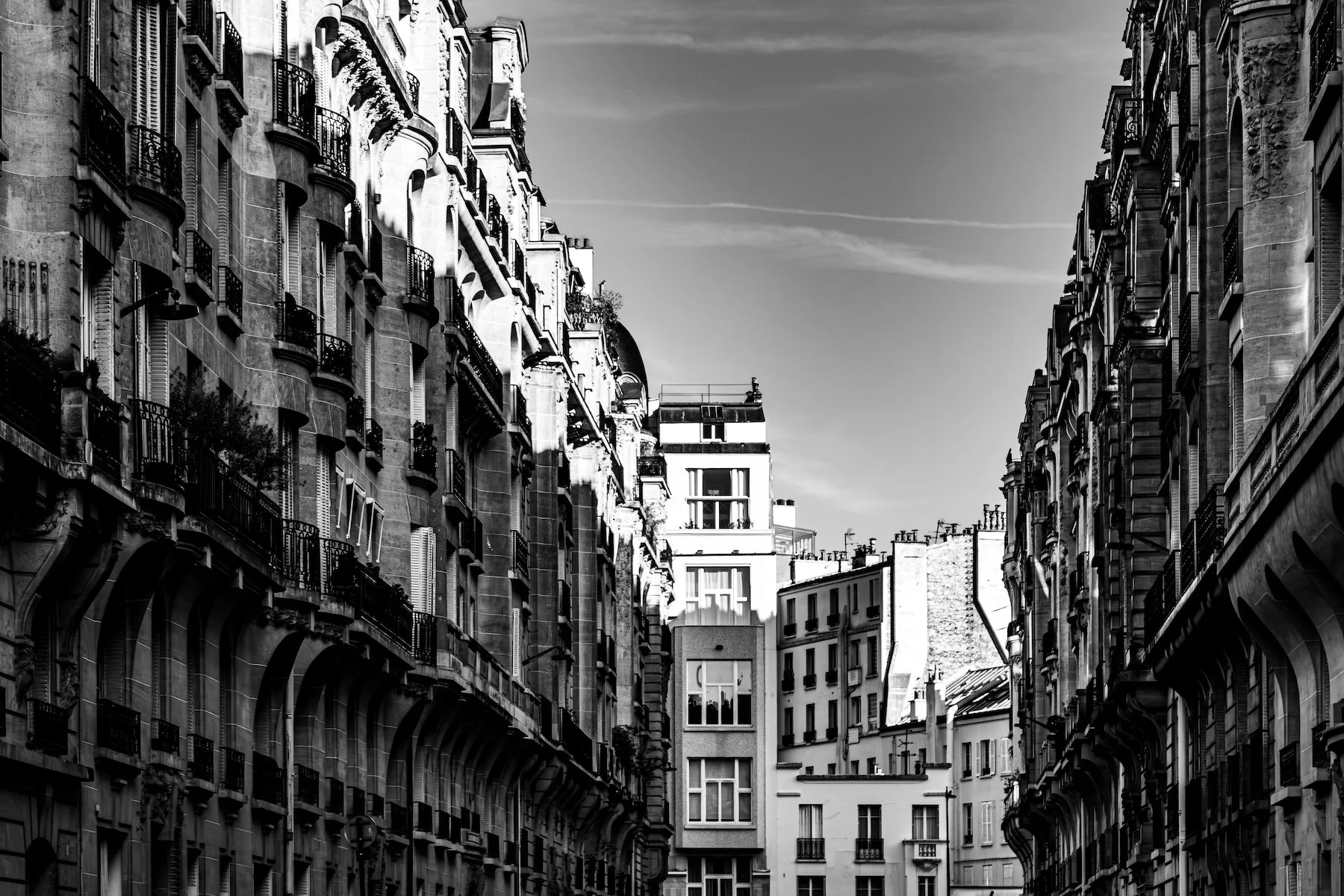
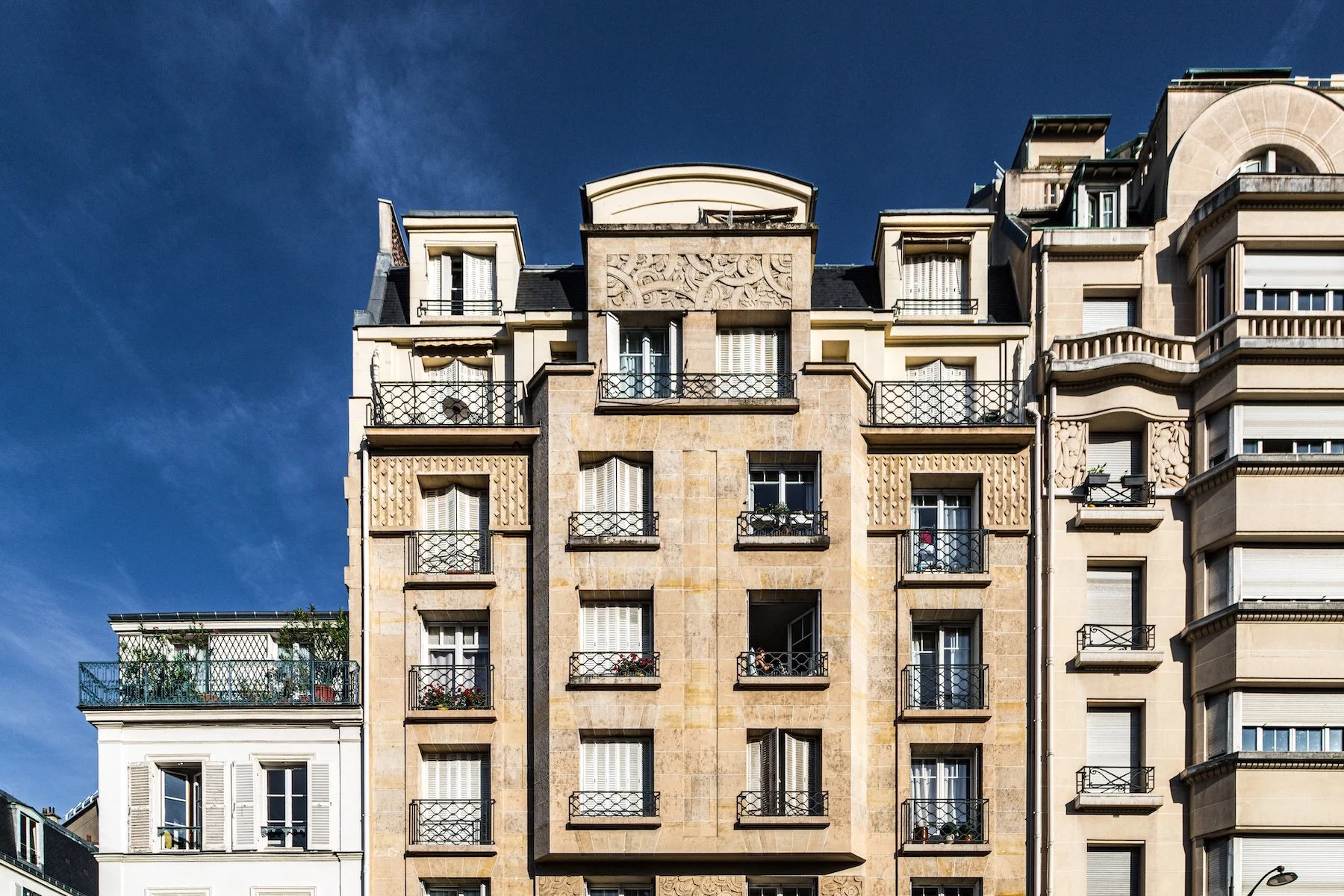
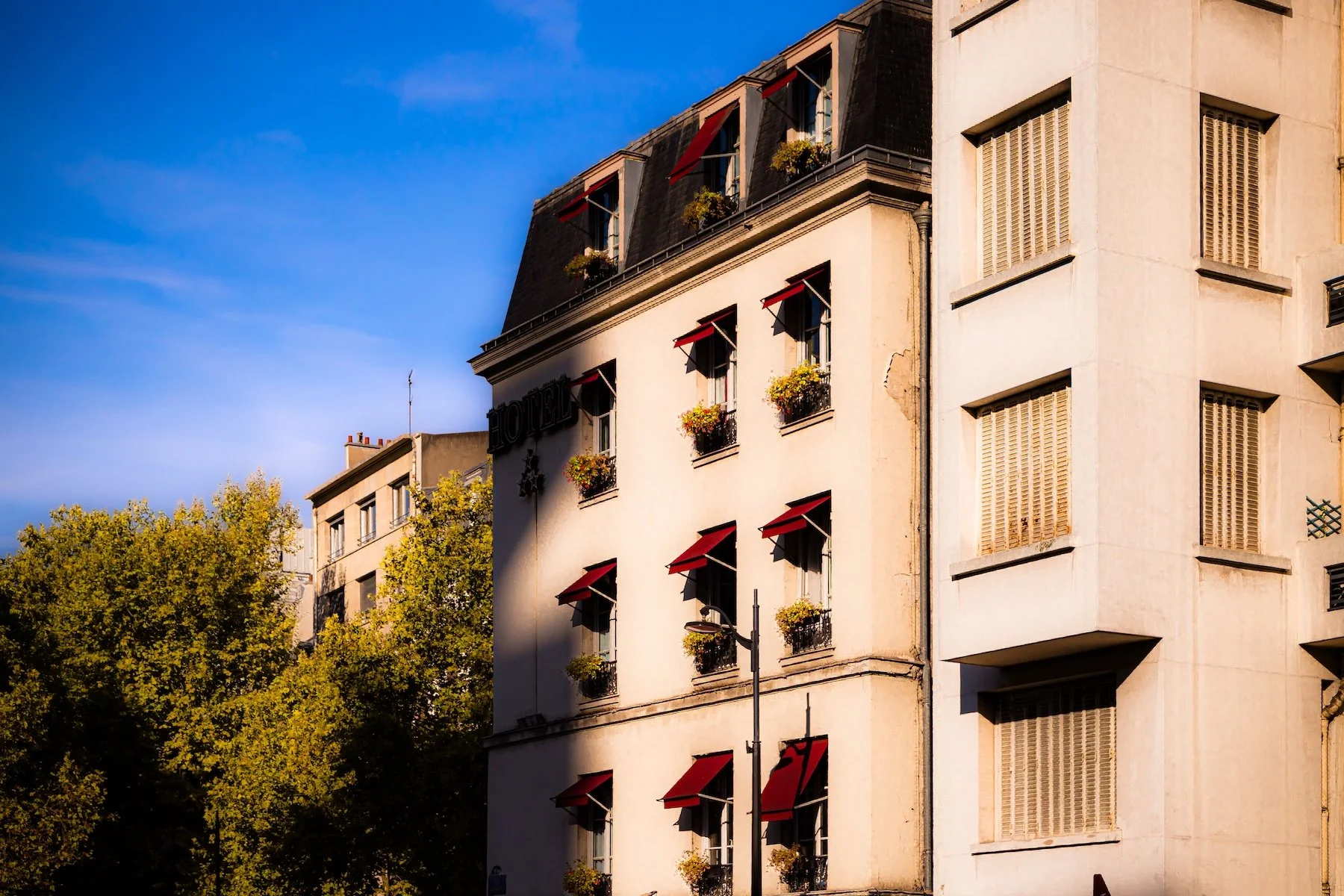
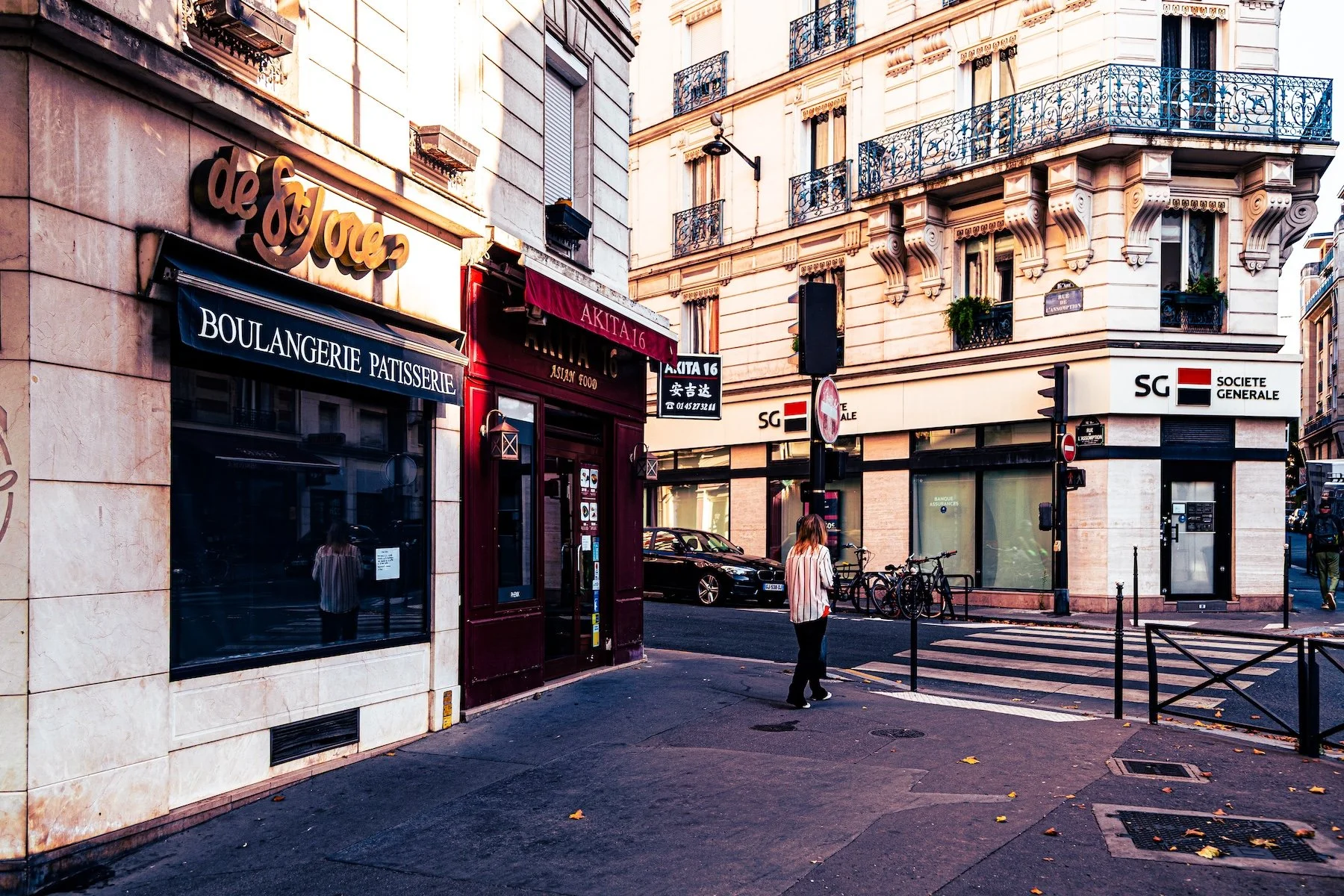
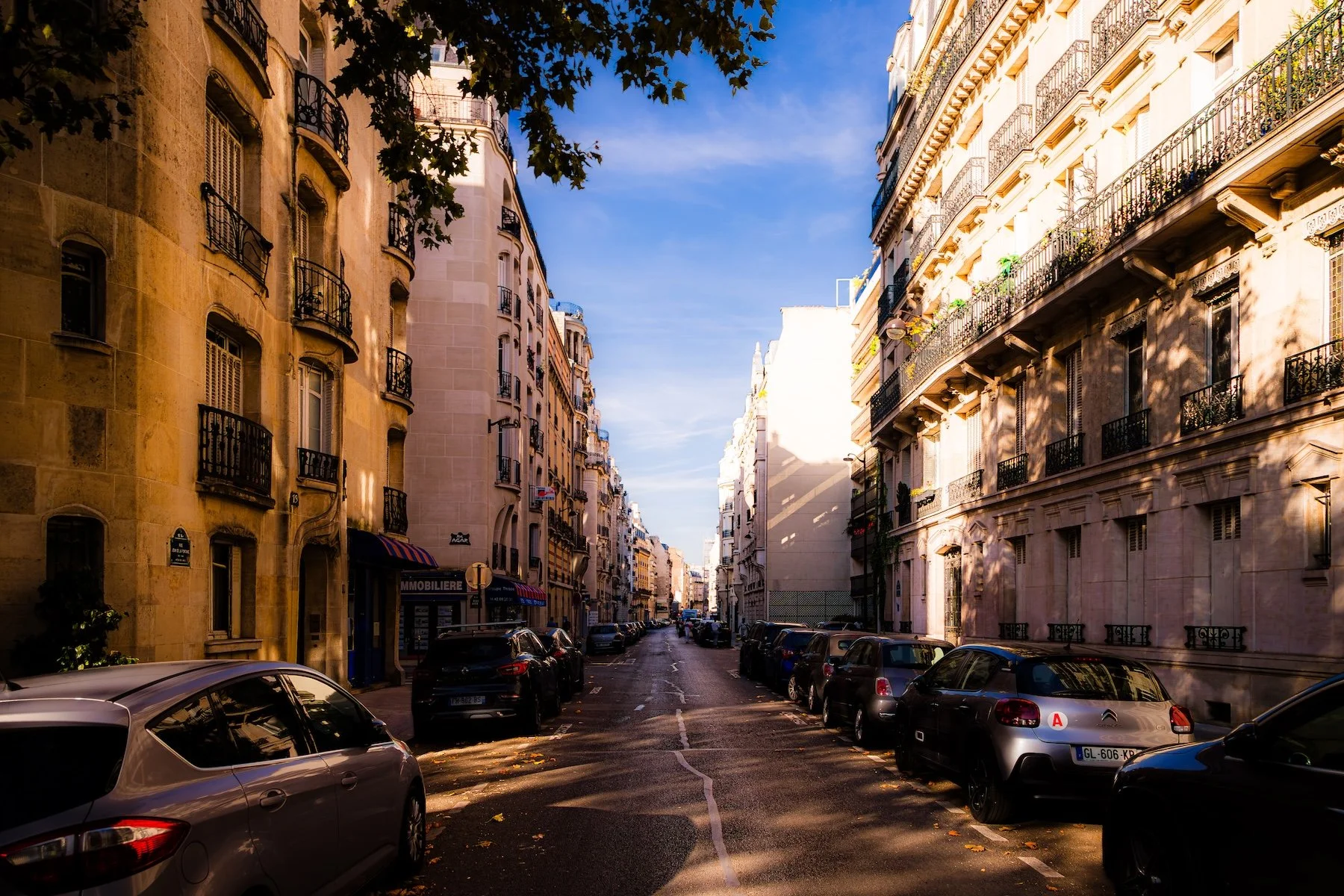
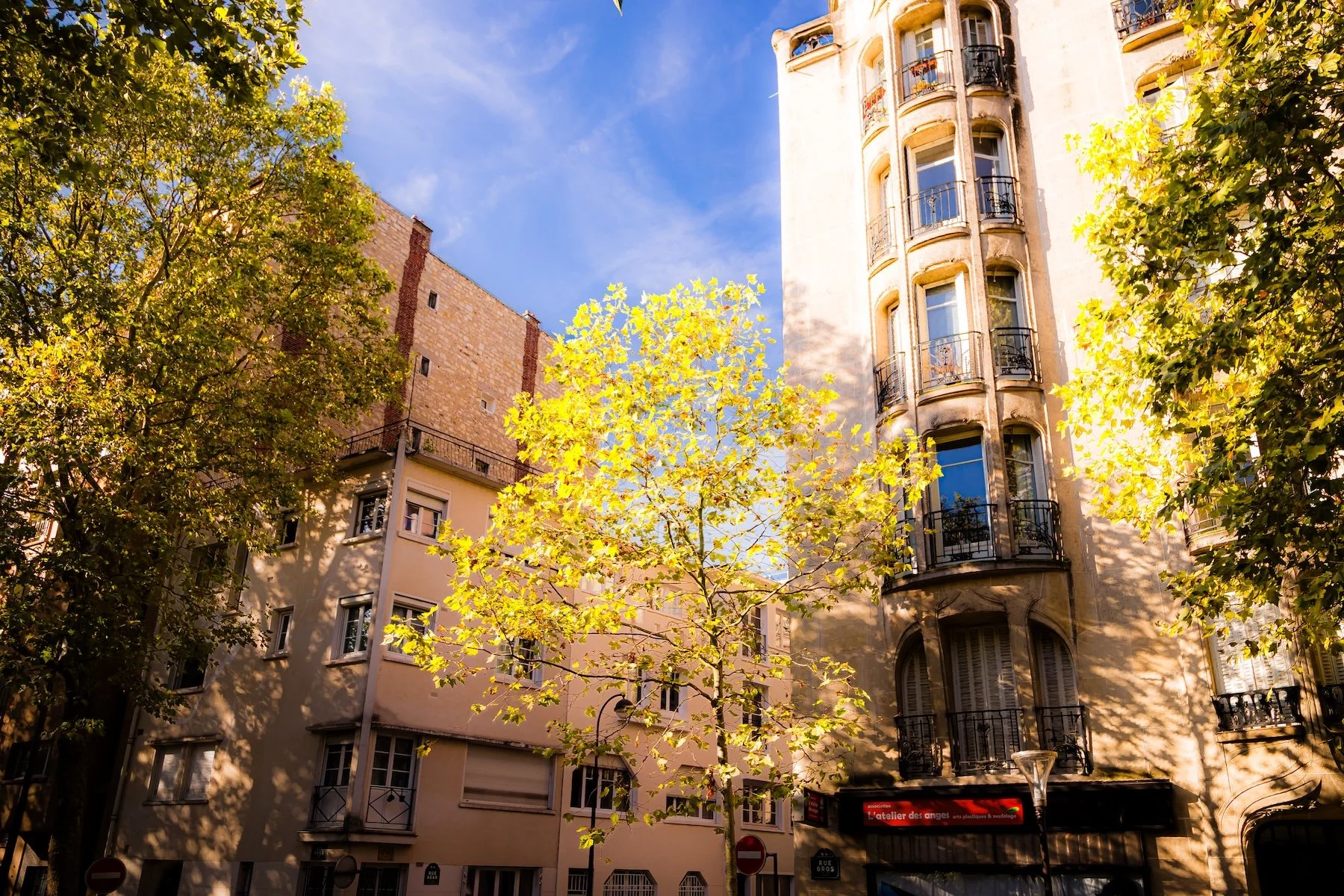
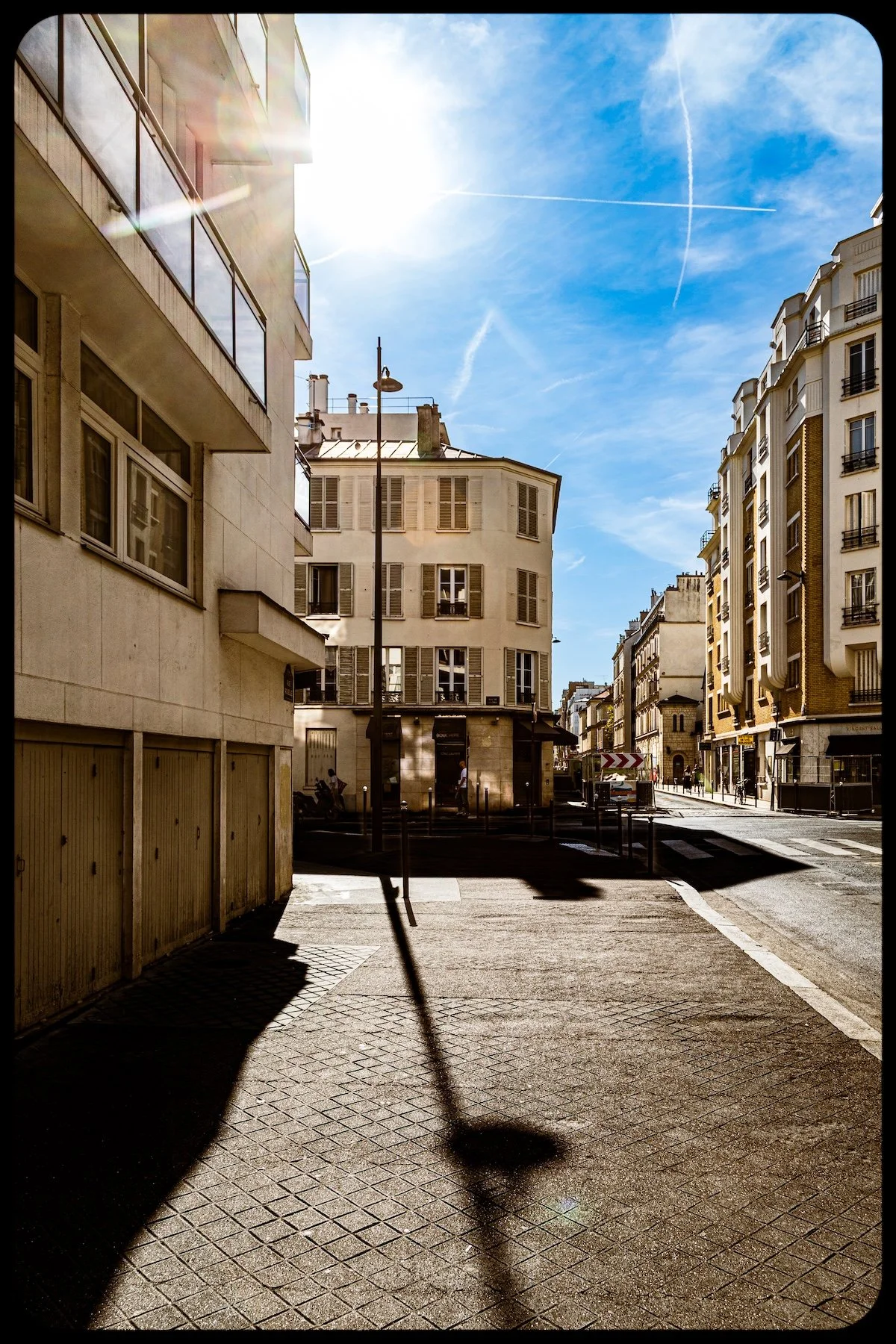
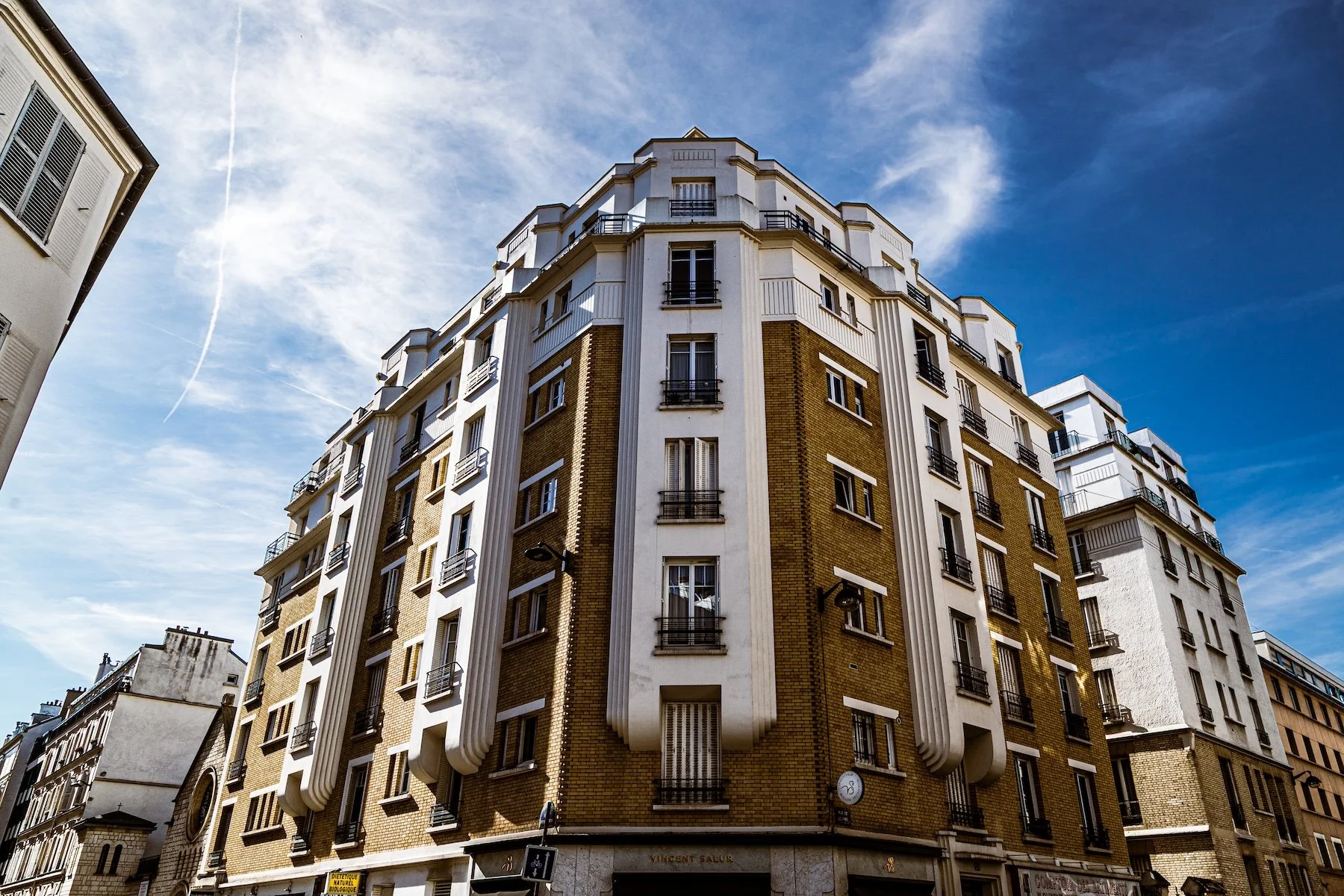
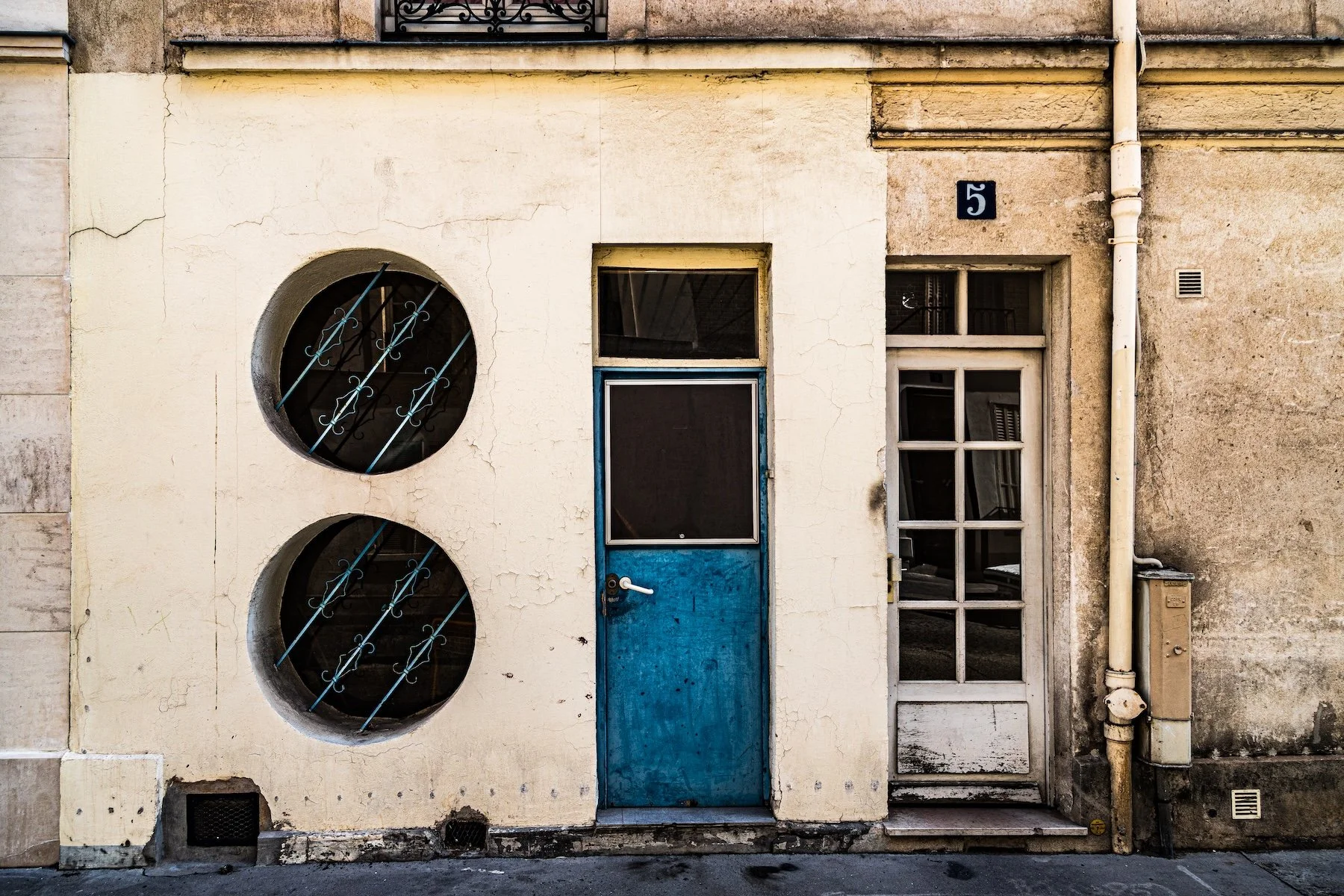
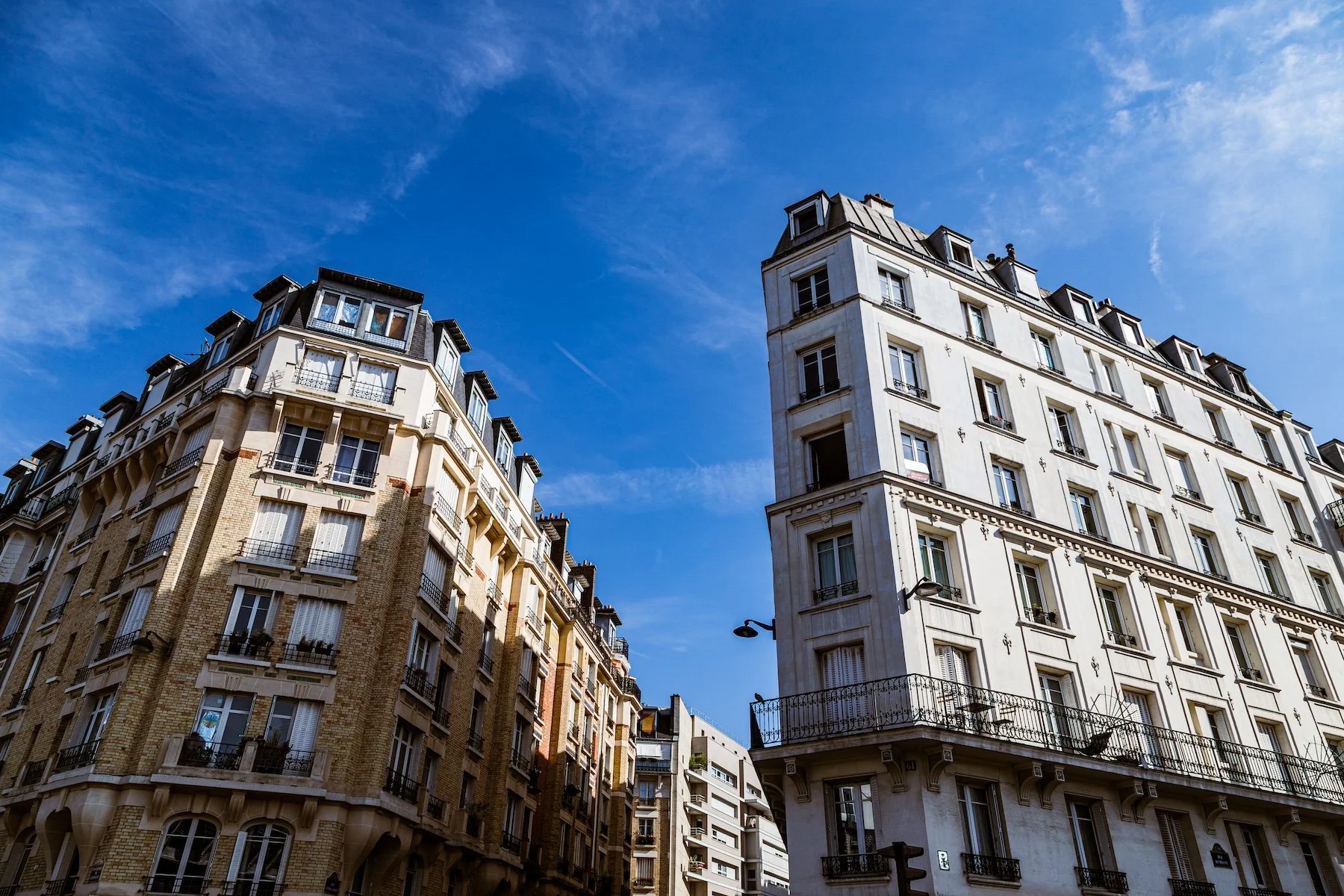
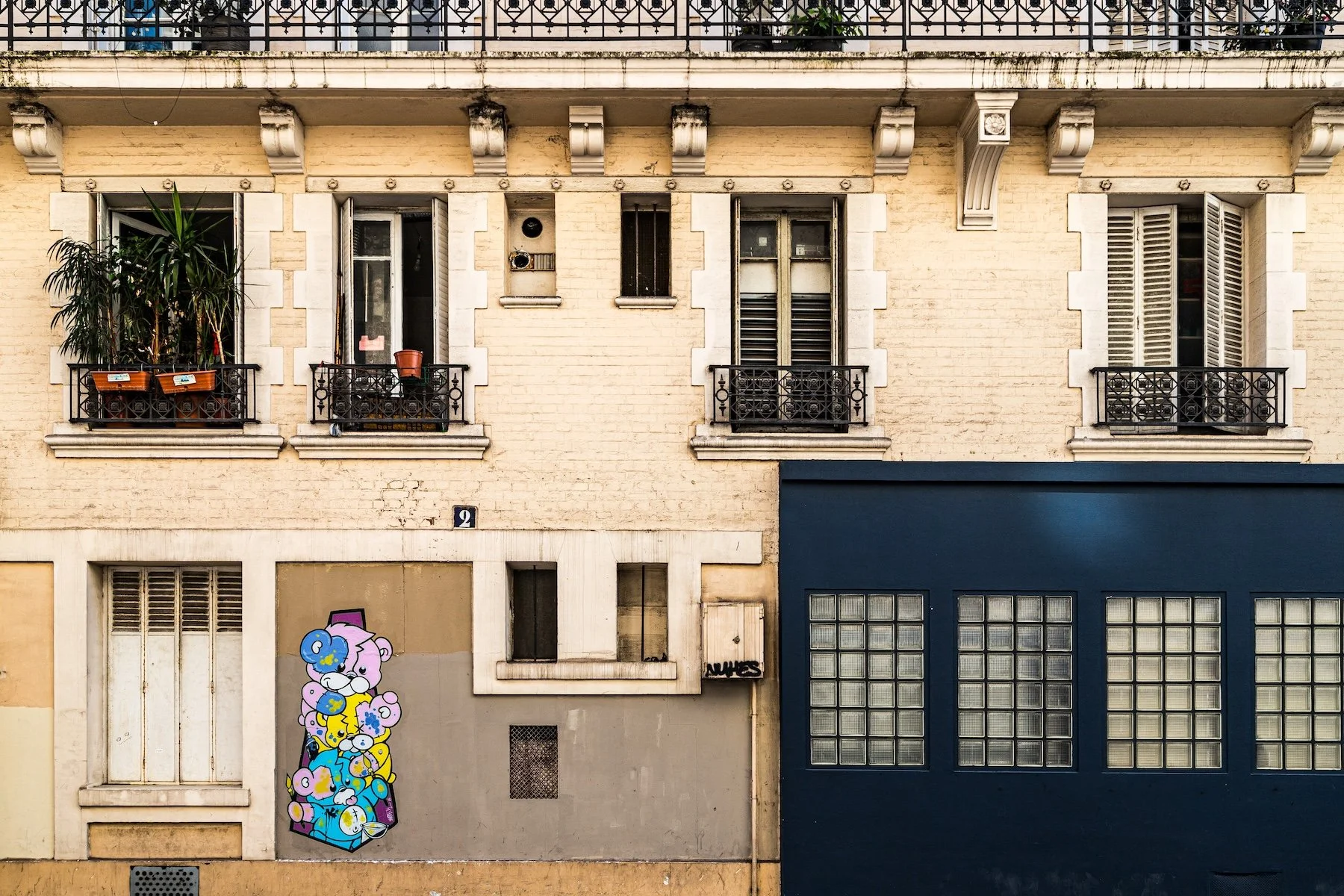
Photographing the arrondissements means moving between the official map and the street-level experience. The camera does not treat each arrondissement as visually uniform. Instead, it looks for the recurring forms, textures, transitions, and contrasts that make each district legible: the geometry of boulevards, the shade of plane trees, the repetition of balconies, the rise of stairways, the curve of canals, the presence of rail stations, the opening of parks, the weight of monuments, and the intimacy of side streets.
On CityNeighborhoods, the arrondissement provides the frame, but the photograph comes from the encounter between map, movement, light, and observation. As the Paris photography is processed, this section will connect each arrondissement more directly to the project’s Photographic Lexicon: the visual strategies, recurring motifs, and compositional patterns that shape how the city is seen through the lens.
If you visit Paris, these ideas can help inspire your own photography.
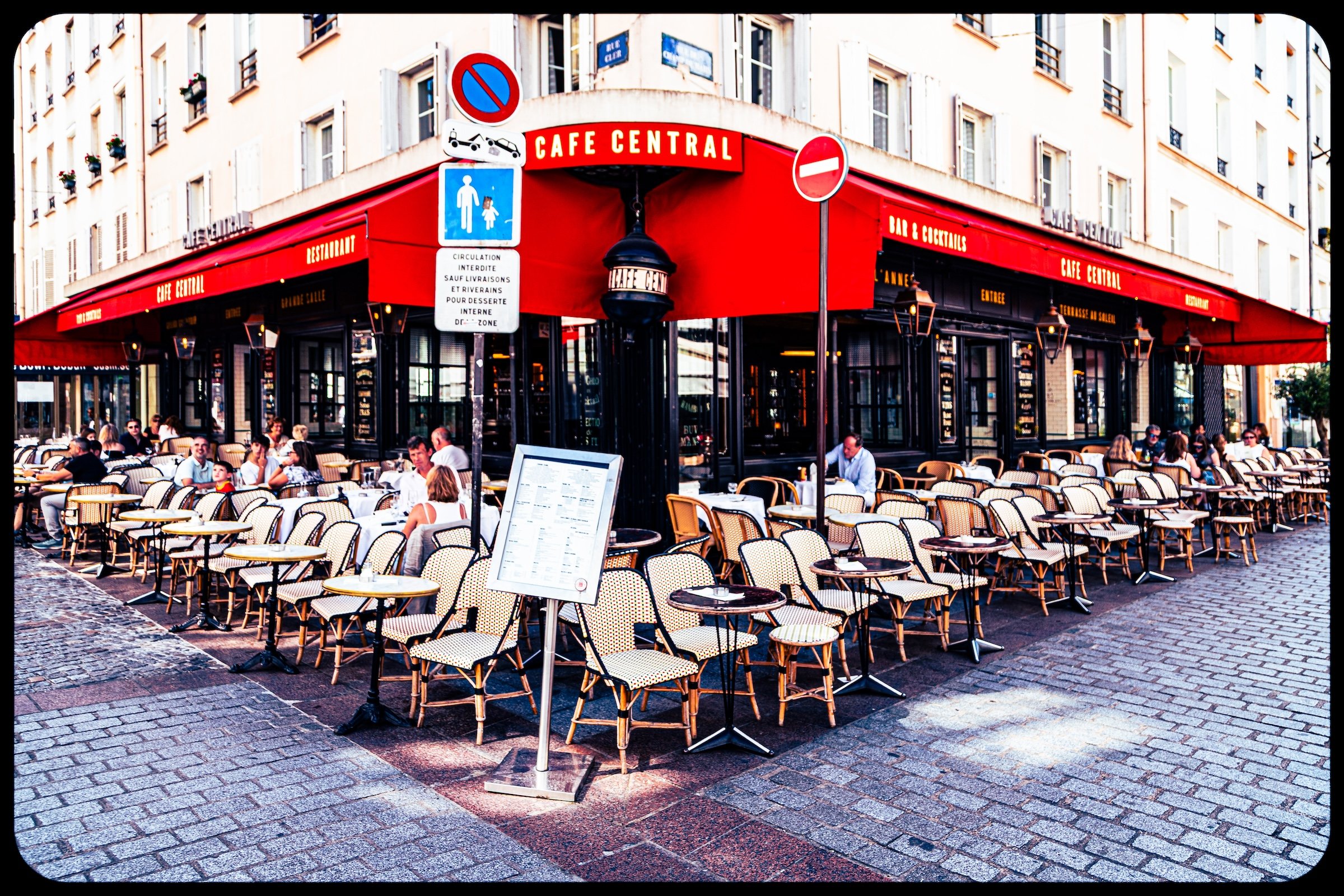
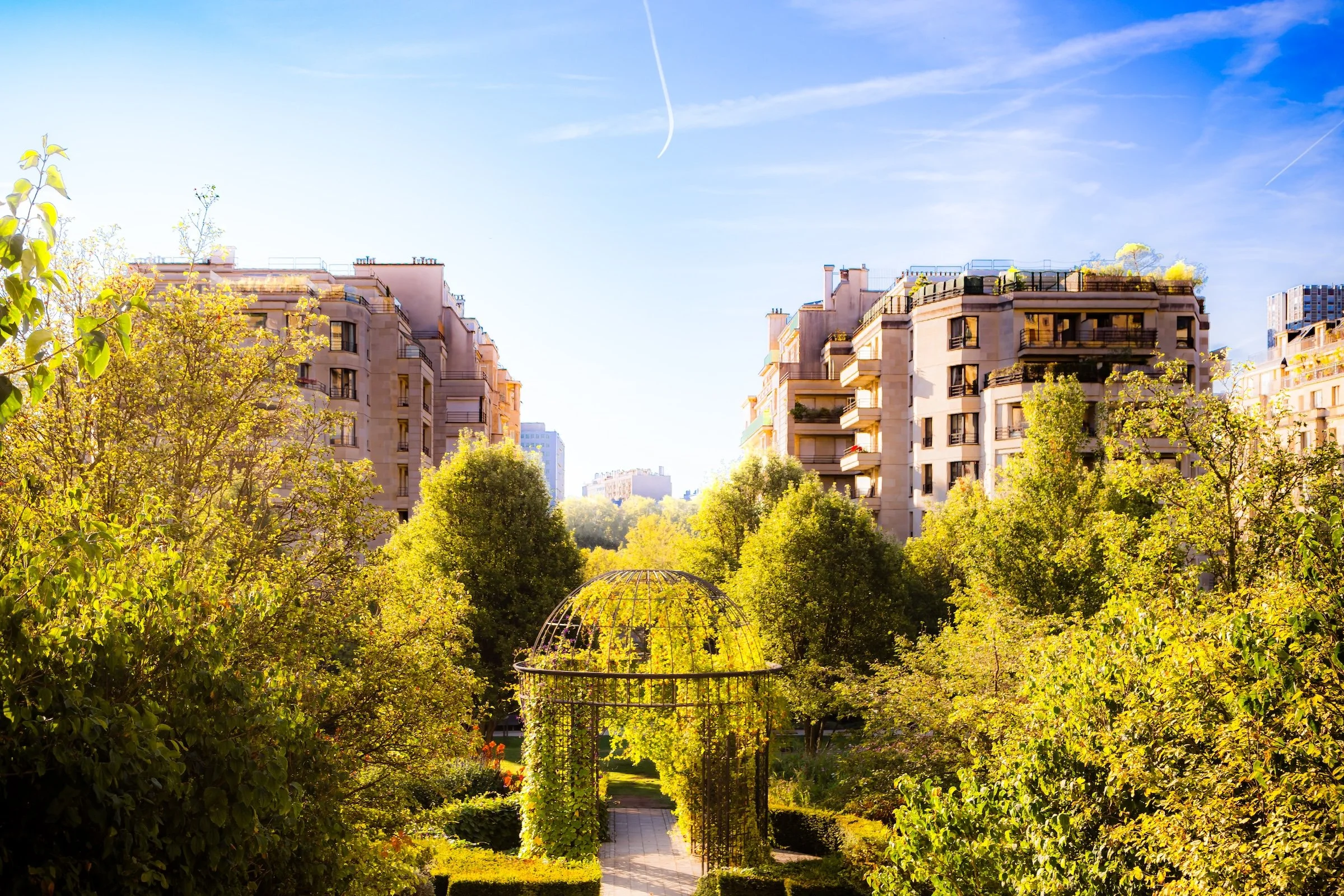
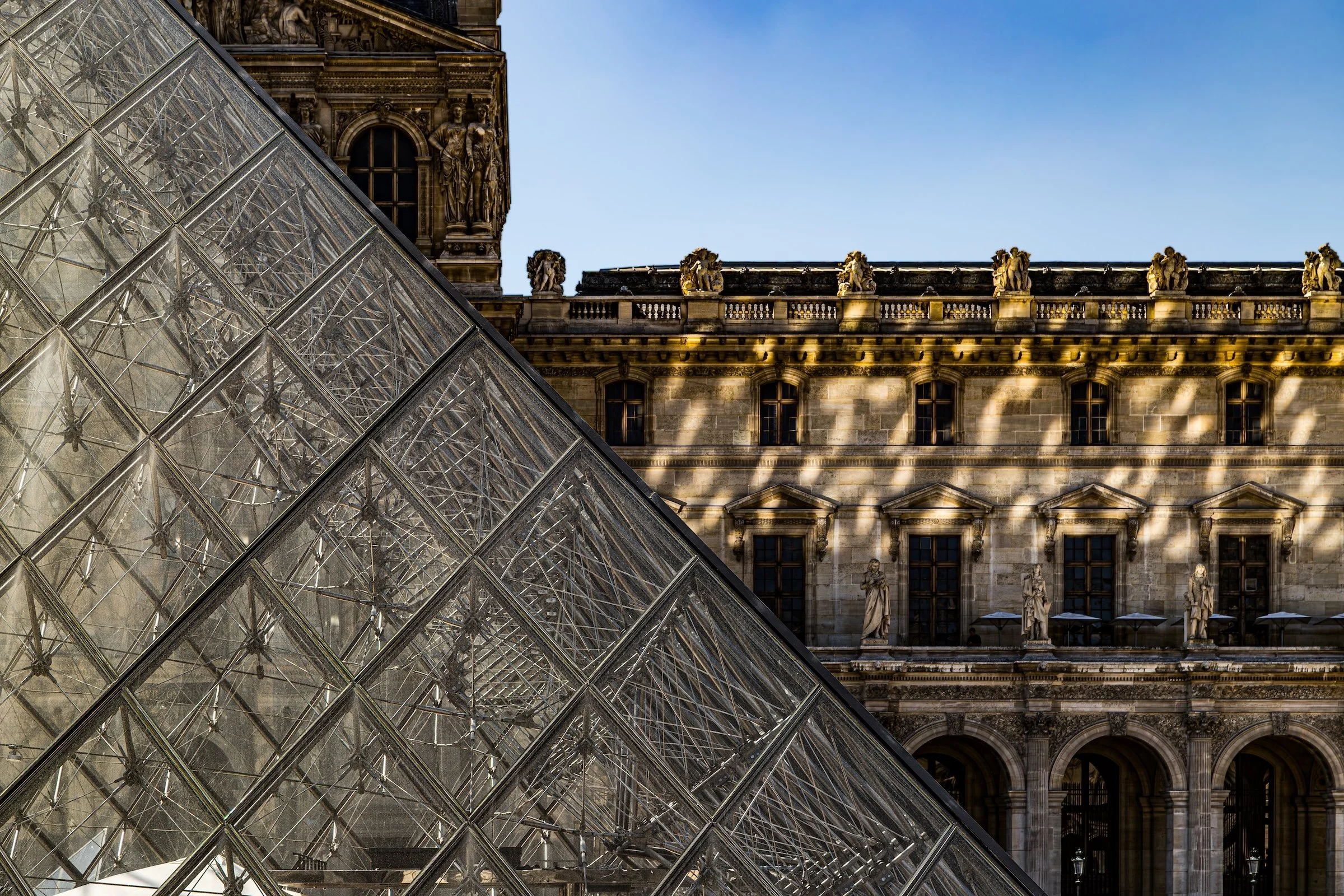
Paris: J’Espere, Je Rêve, Je Vive
Paris Photo Gallery
Paris Field Notes
-
Field Note: August 18, 2025 | 07:58 AM
Conditions: 73°F | Humidity: 72%.
Within the park's interior, the glacial kettle ponds acted as humidity traps, creating a soft, hazy light that filtered through the old-growth oaks. The transition from the park's dense shade to the sun-drenched edges of Oakland Gardens highlighted the day's exceptional "picture-perfect" clarity.
There is a fleeting window in Queens where the humidity of August hasn't yet heavy-set, and the morning sun hits the canopy of Alley Pond Park at a perfect oblique angle. Arriving just before 8:00 AM, I watched the light break through the oaks and tulip trees, casting long, dramatic shadows across the wet grass. It’s in these quiet, golden moments that the park feels less like a city escape and more like the ancient glacial valley it actually is.
Other neighborhoods visited:
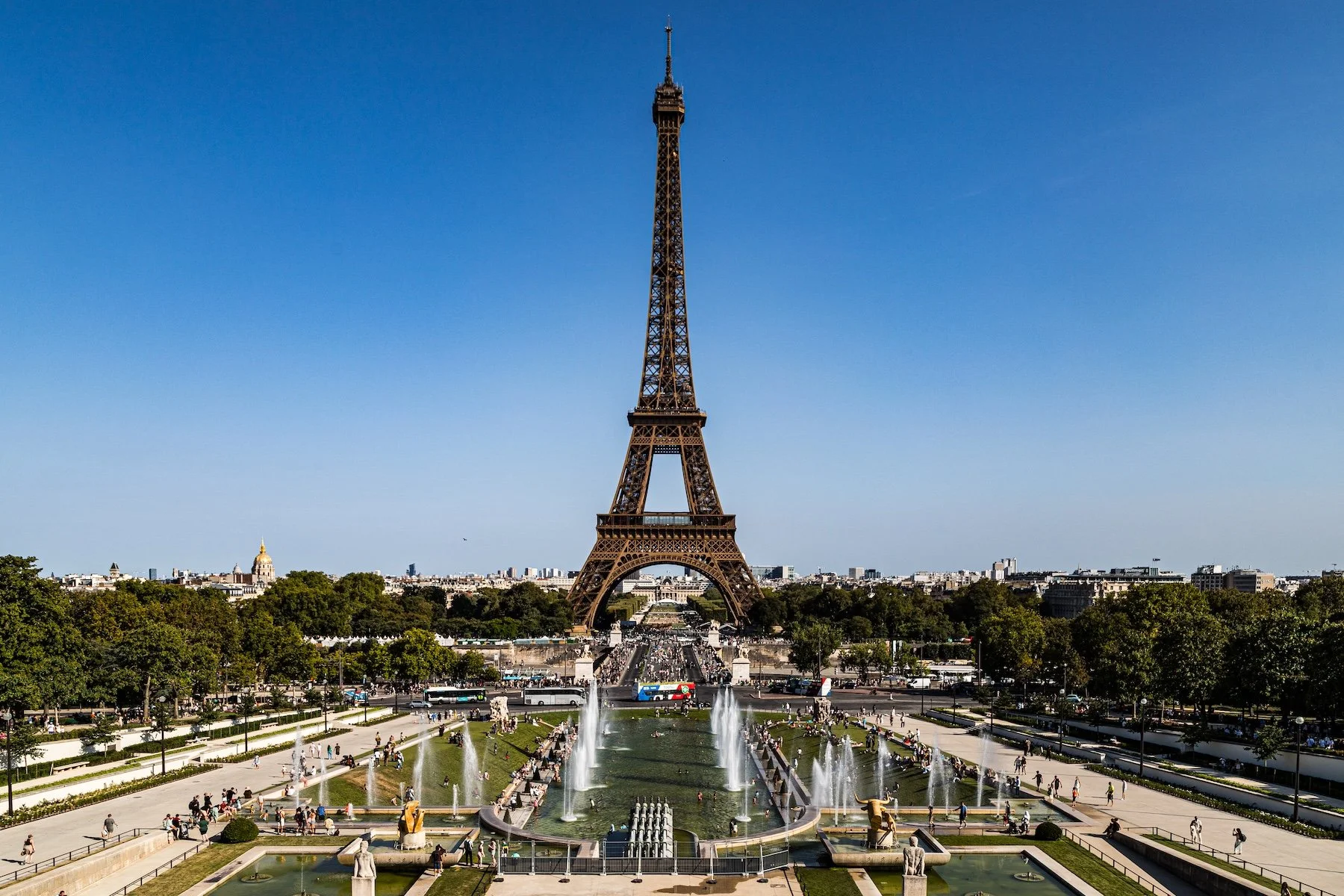
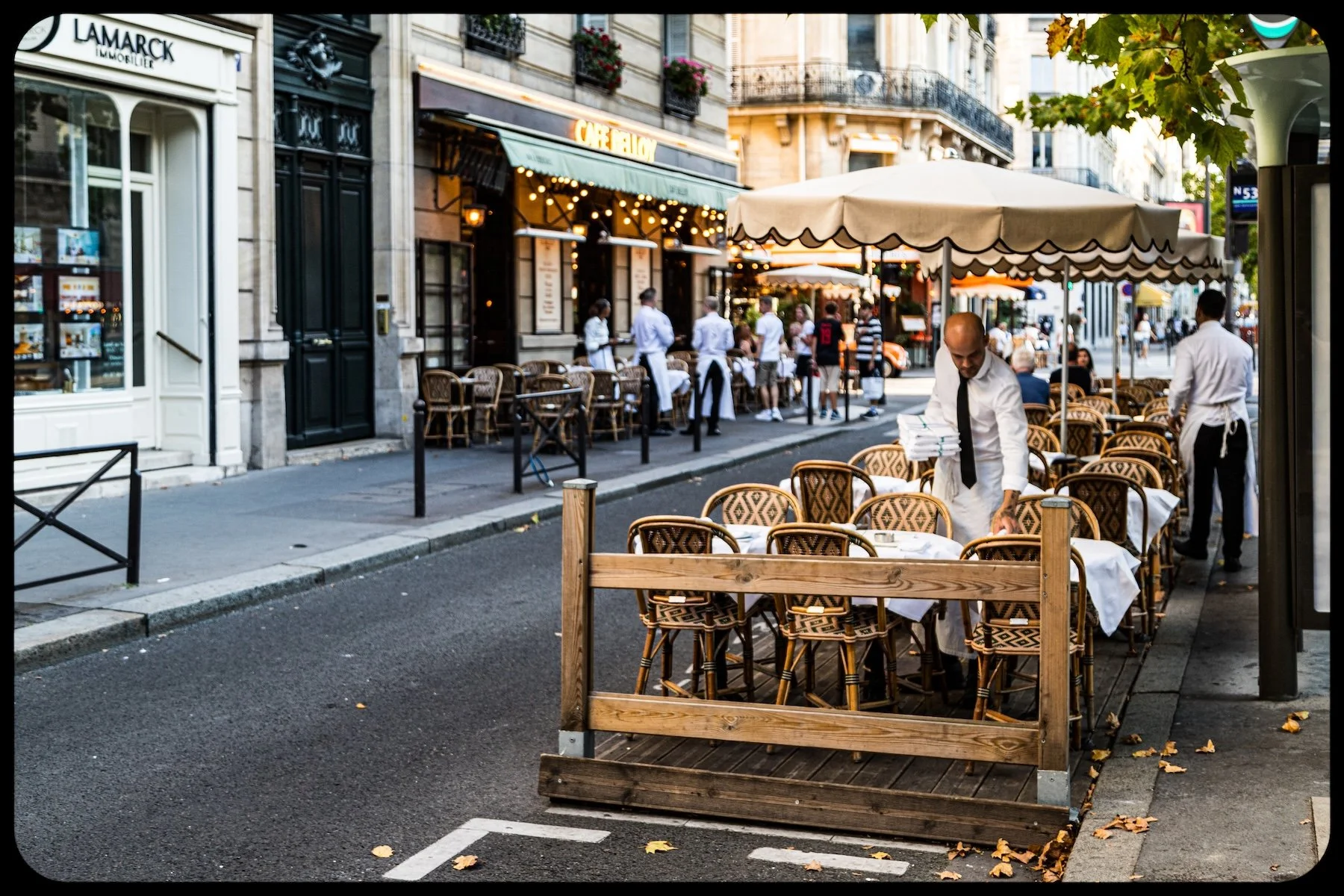
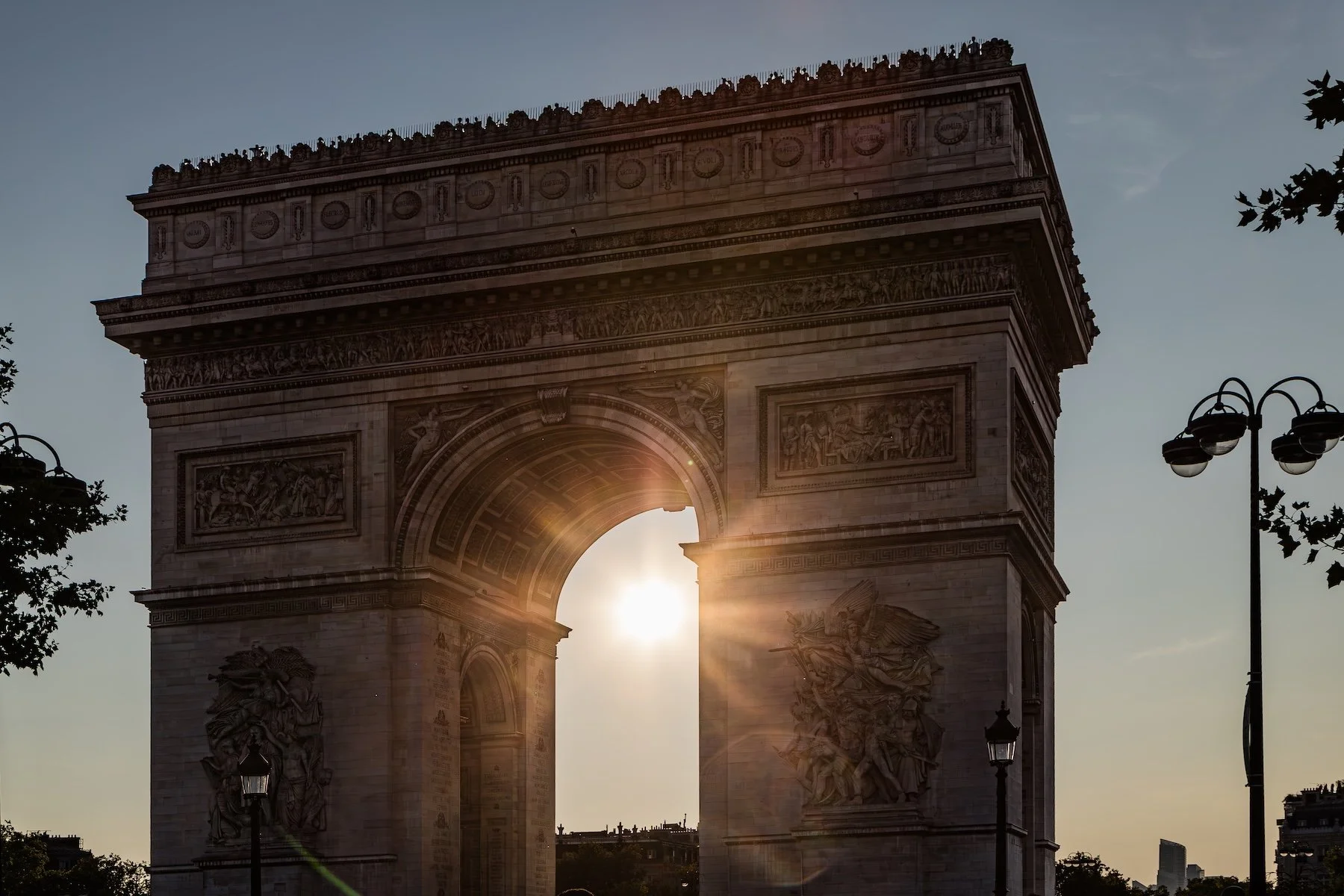
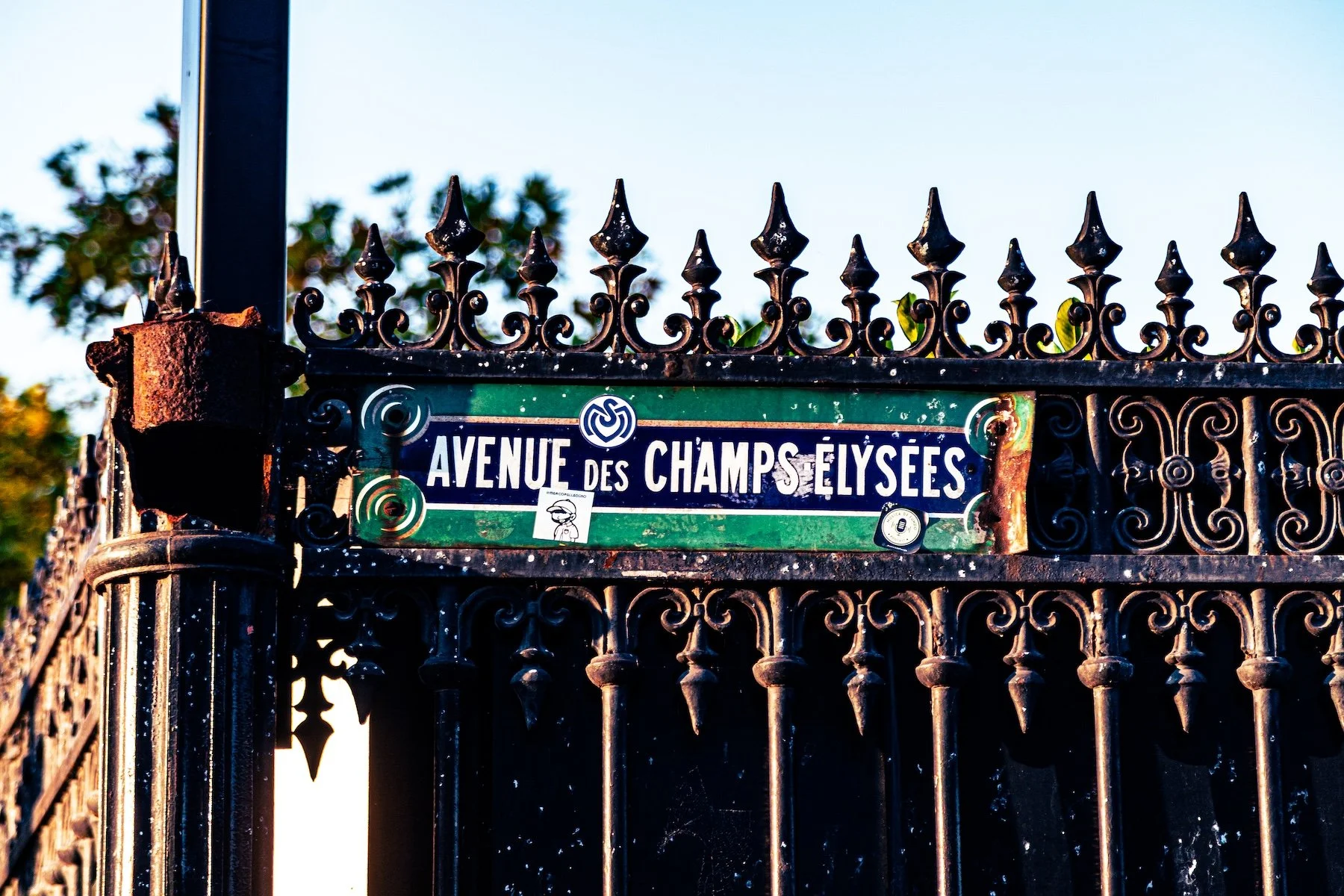
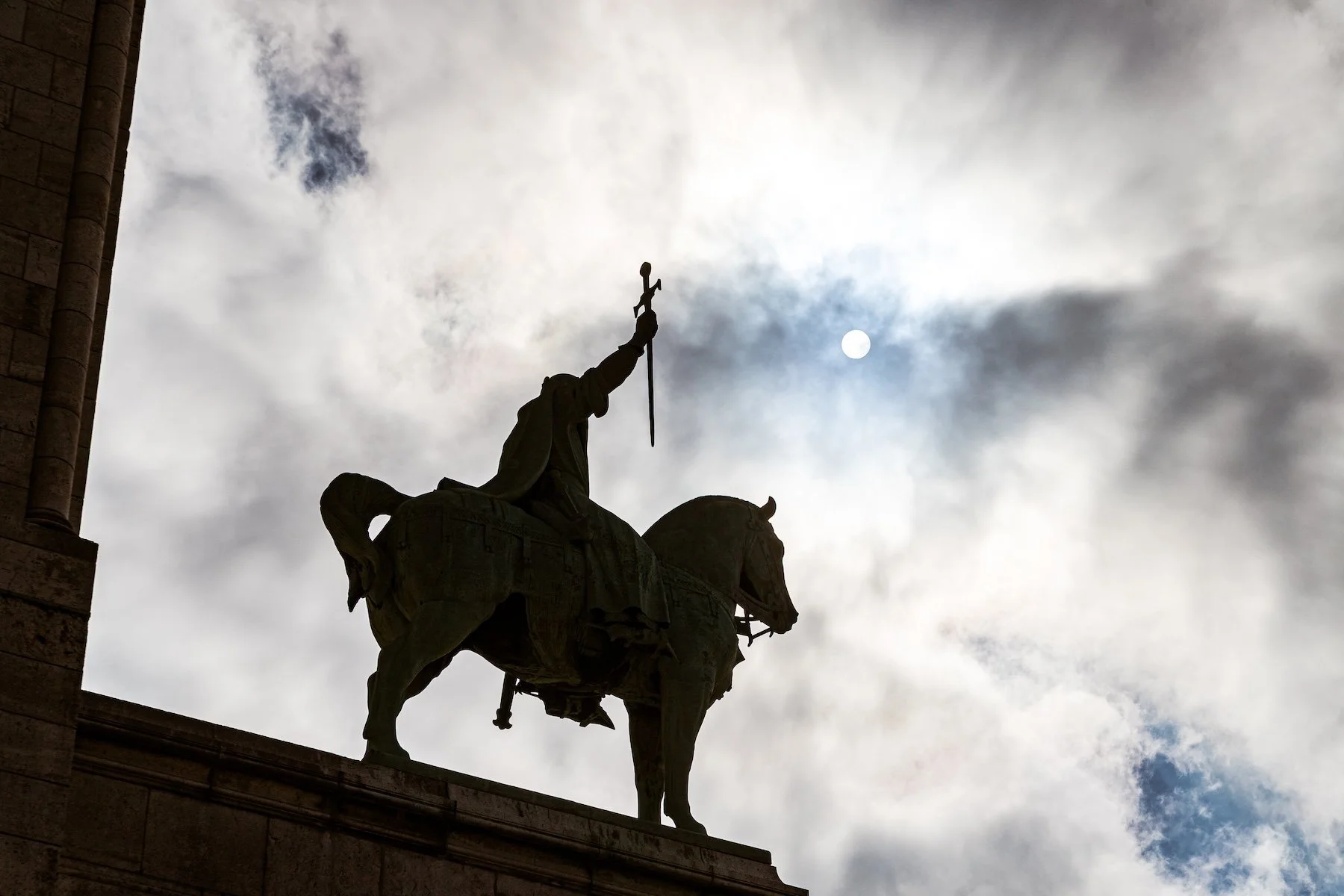
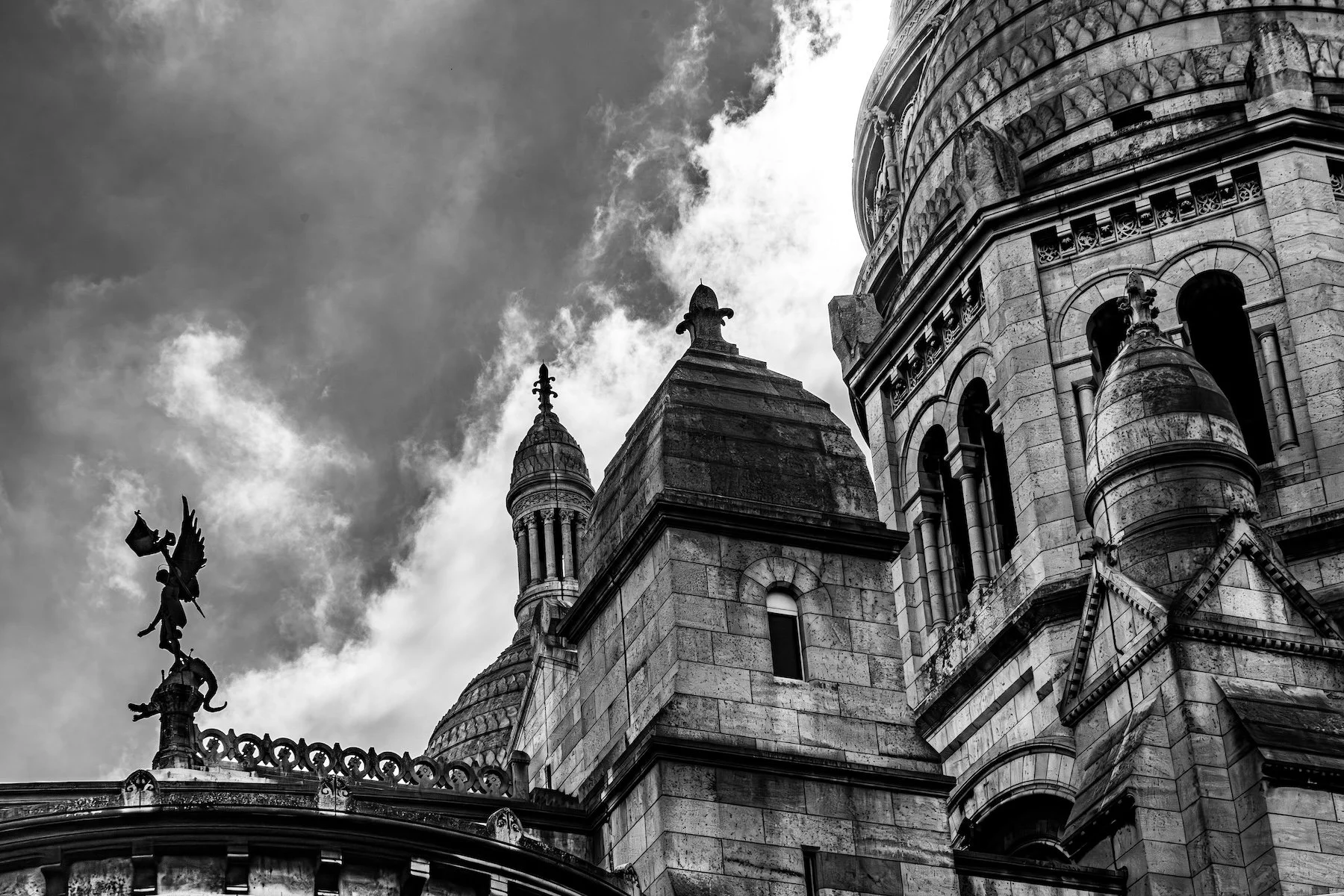
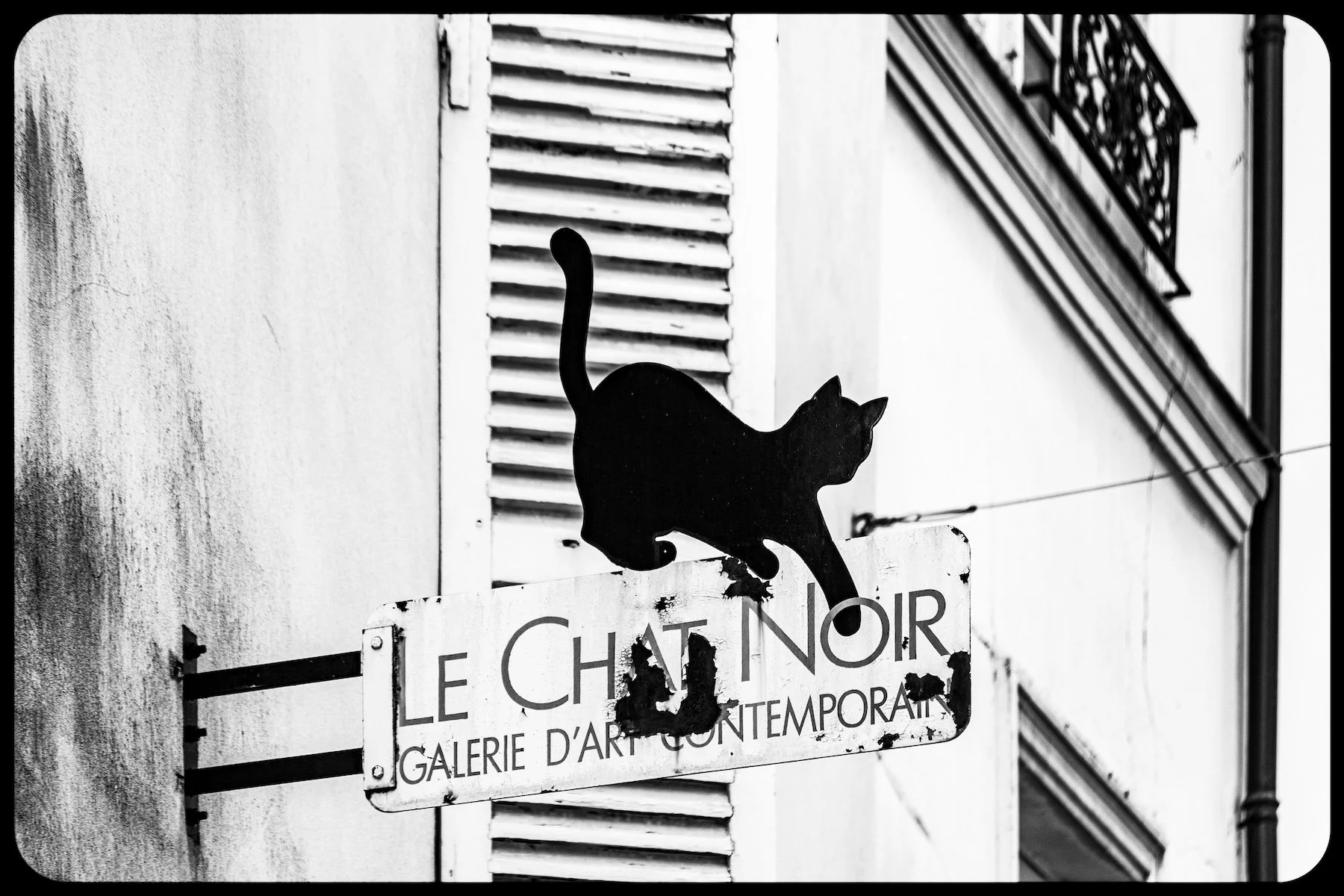
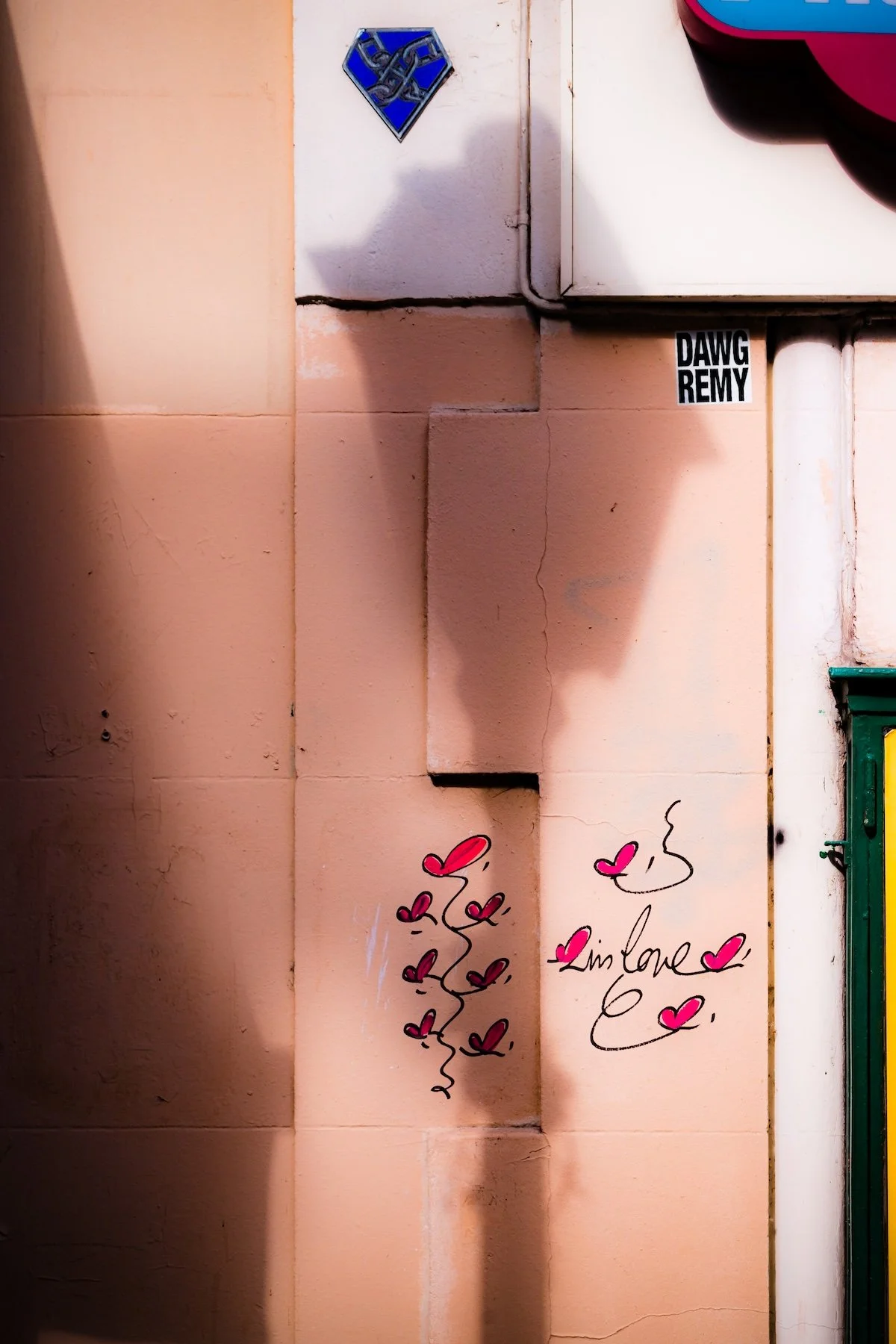
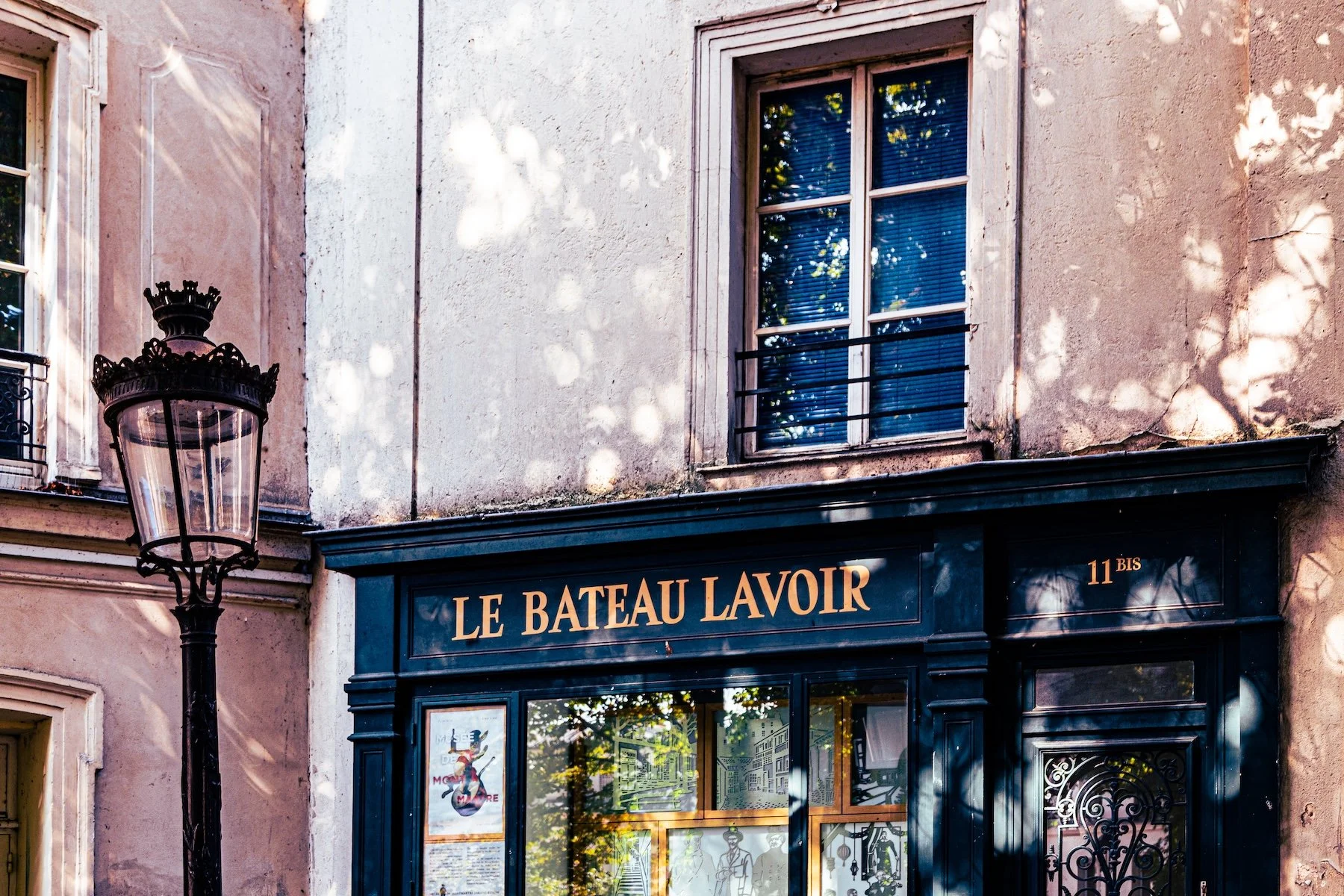
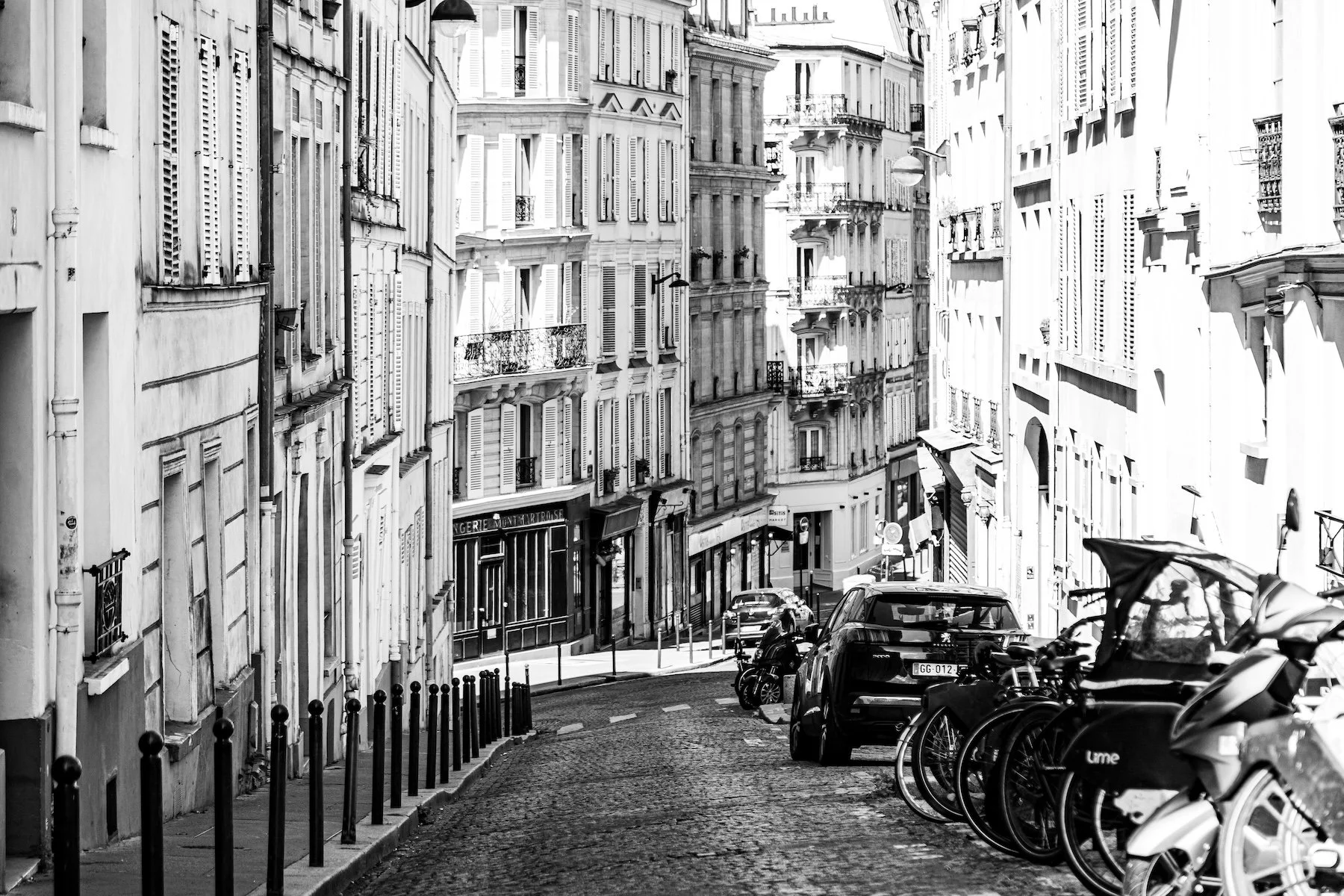
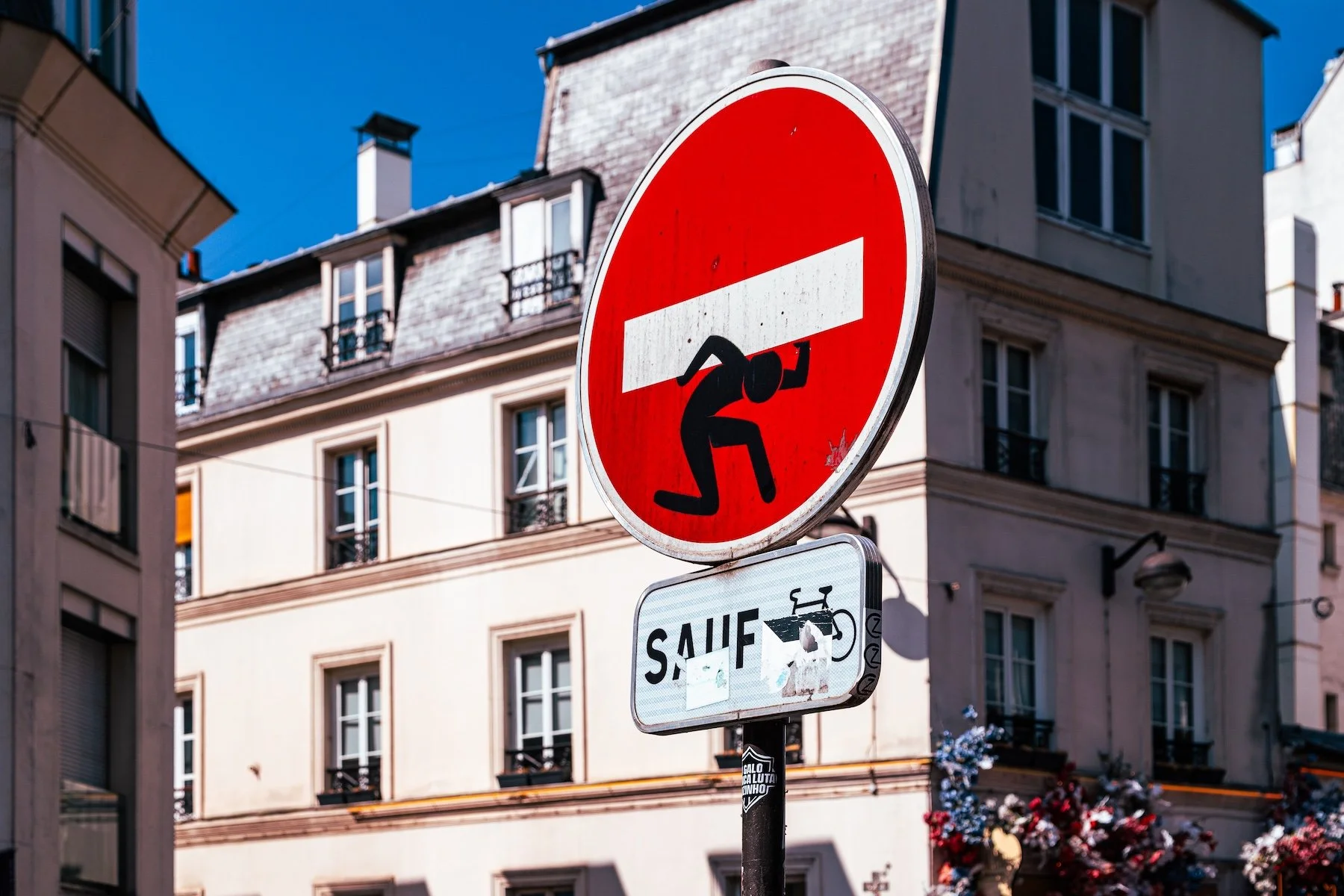
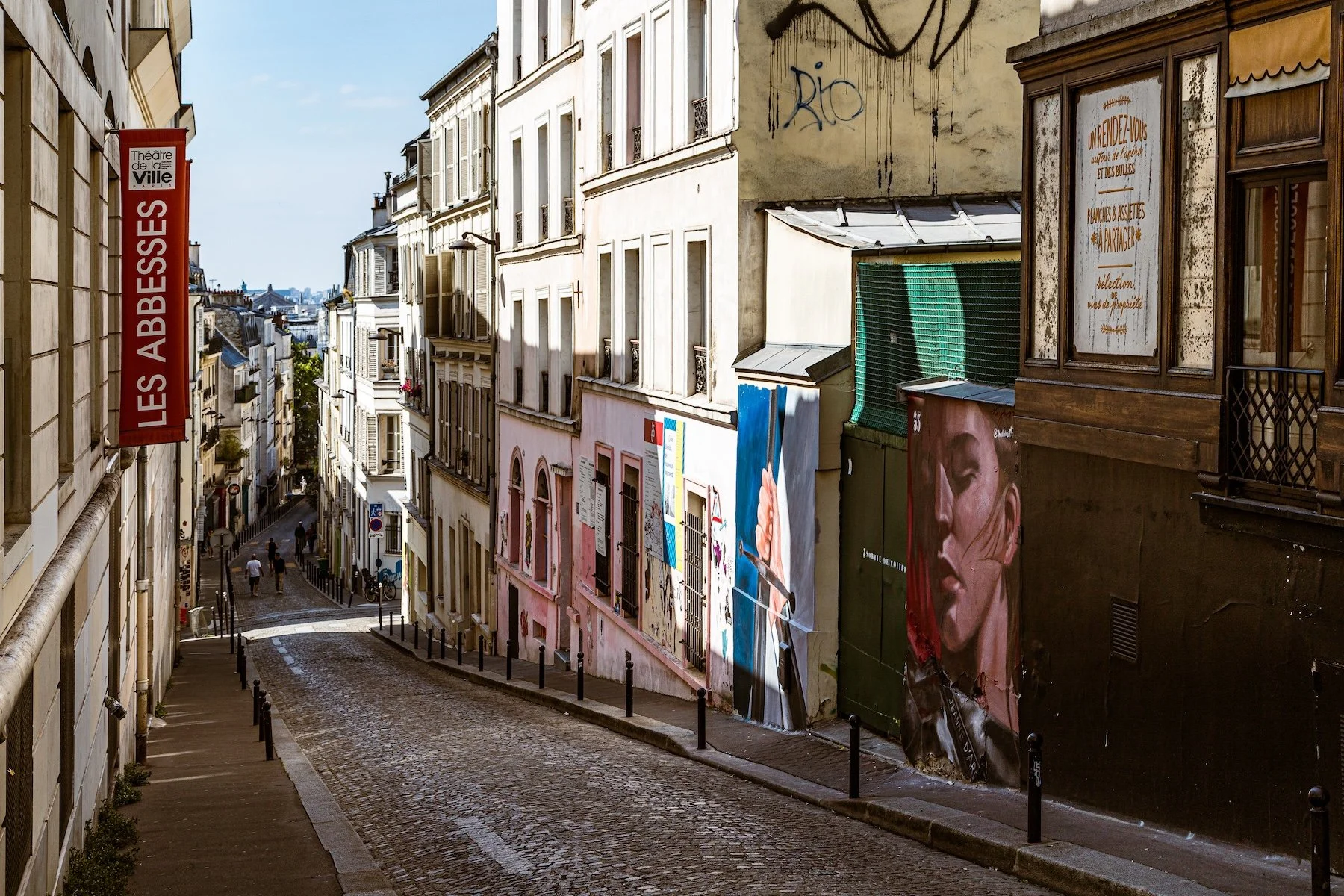
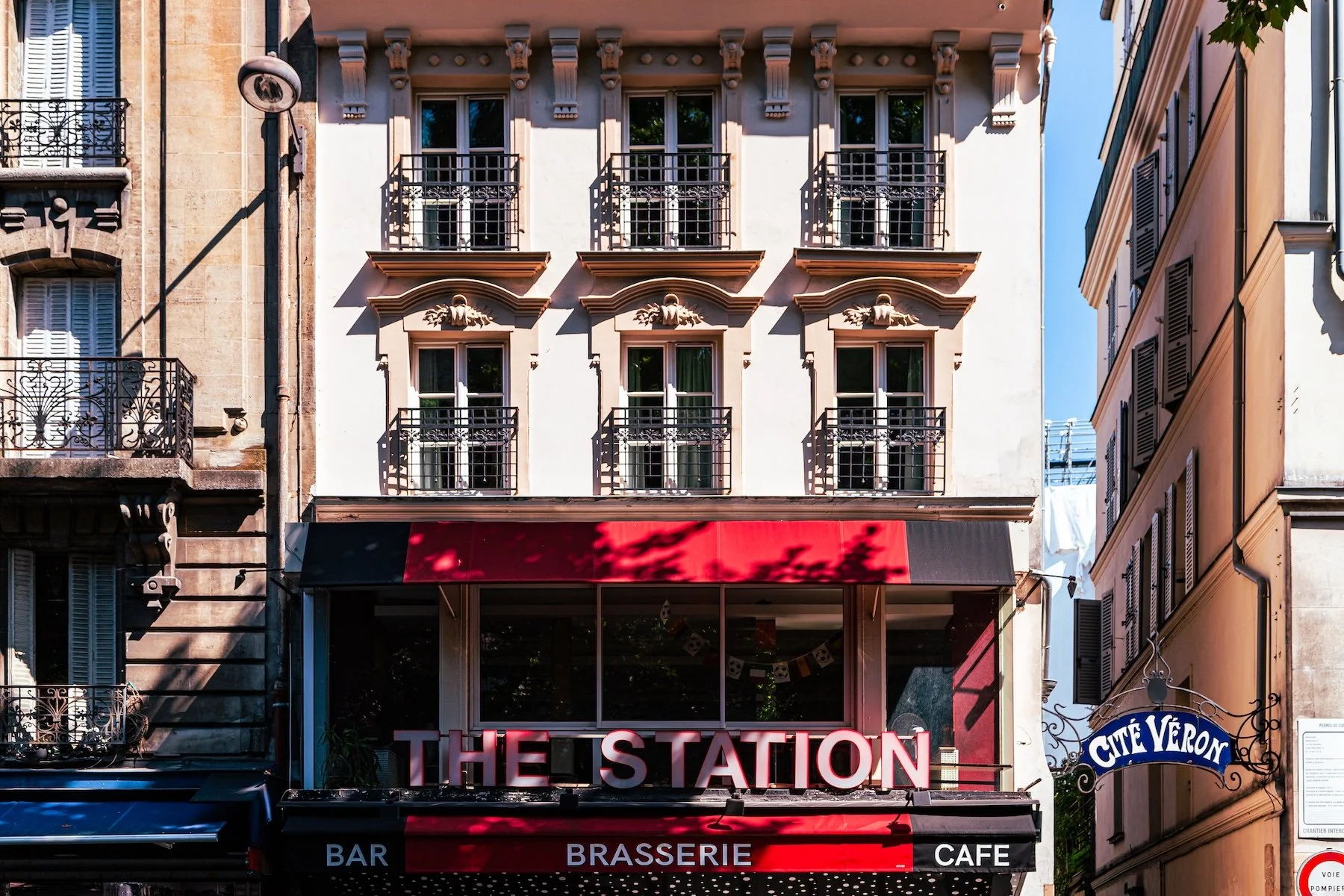
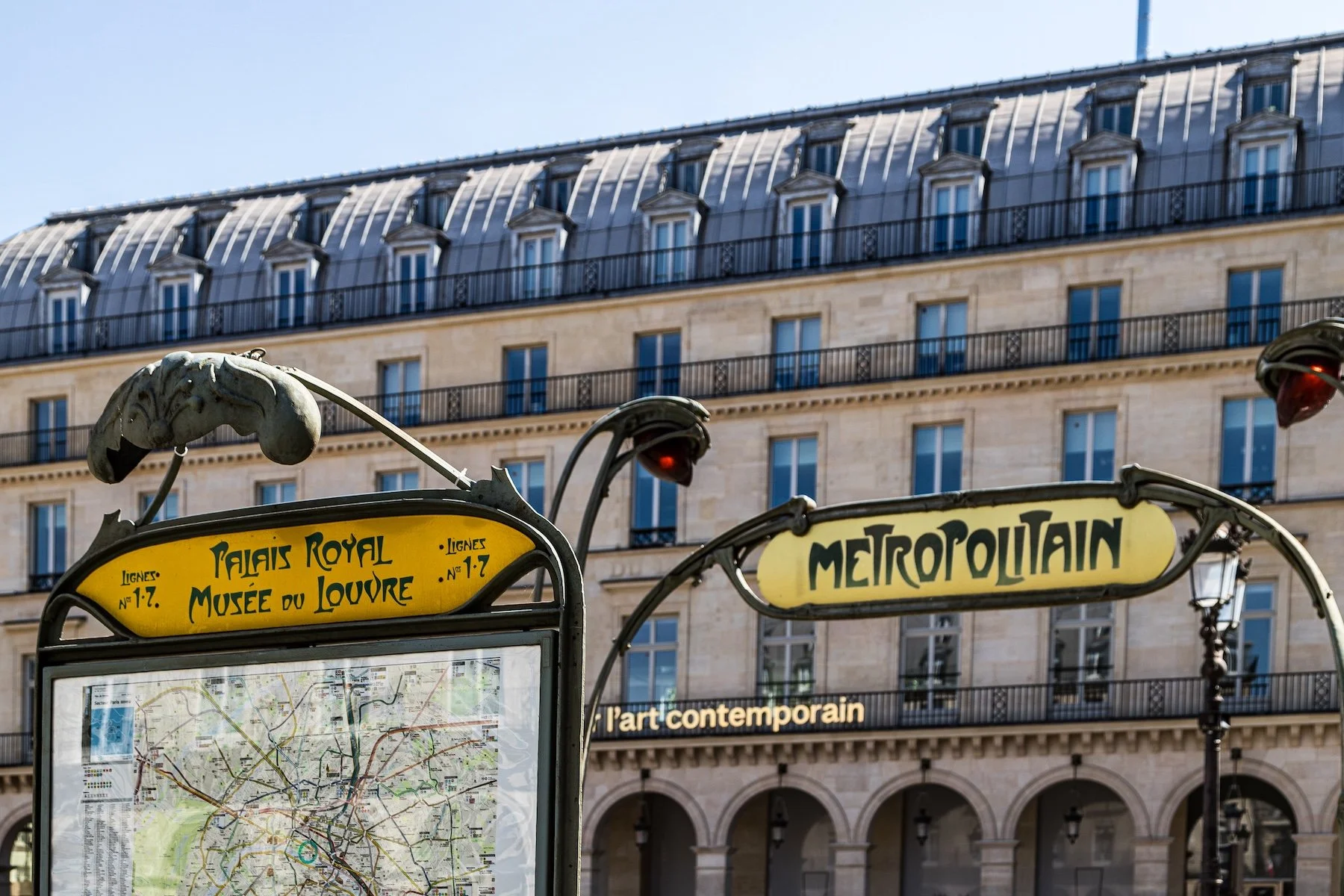
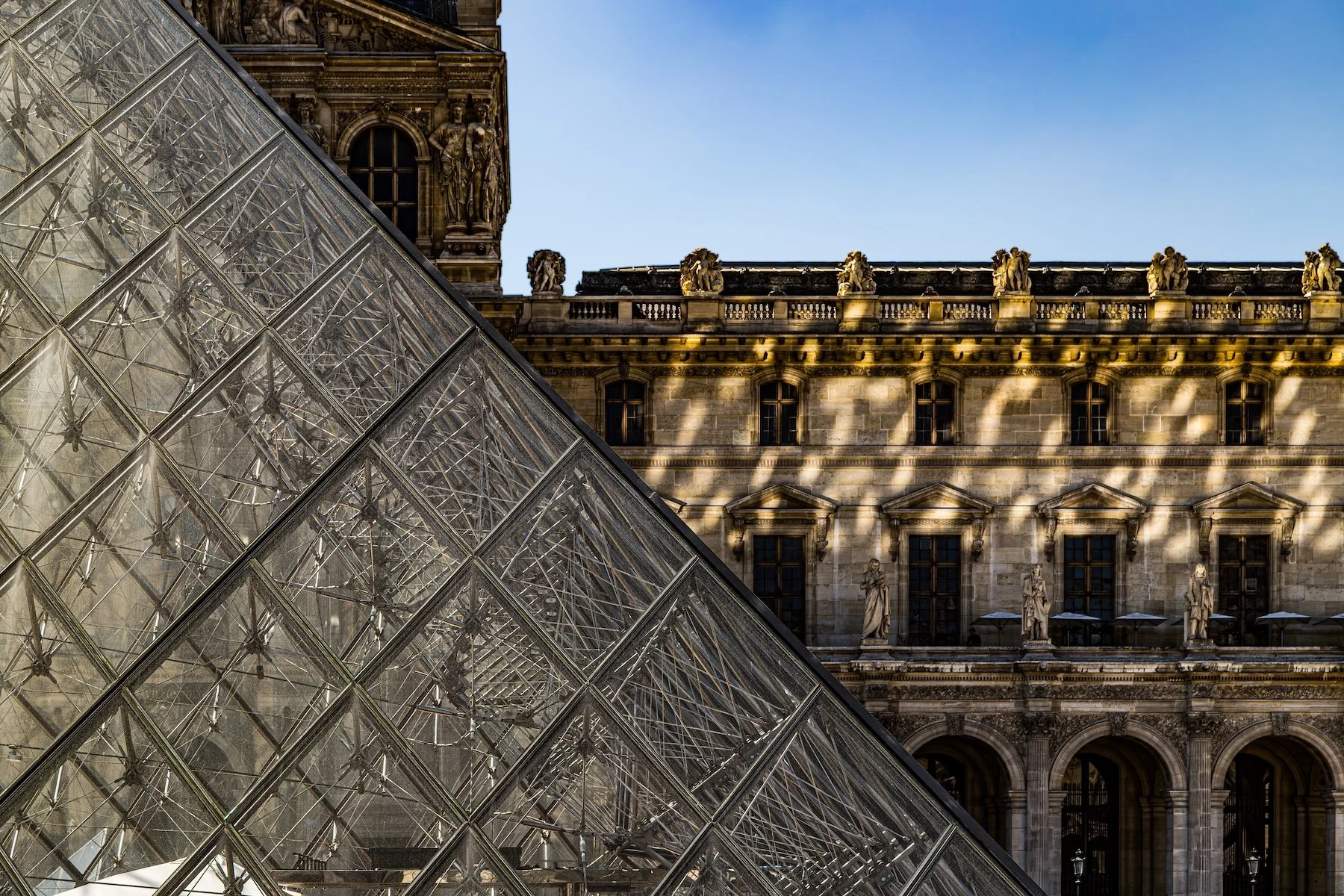
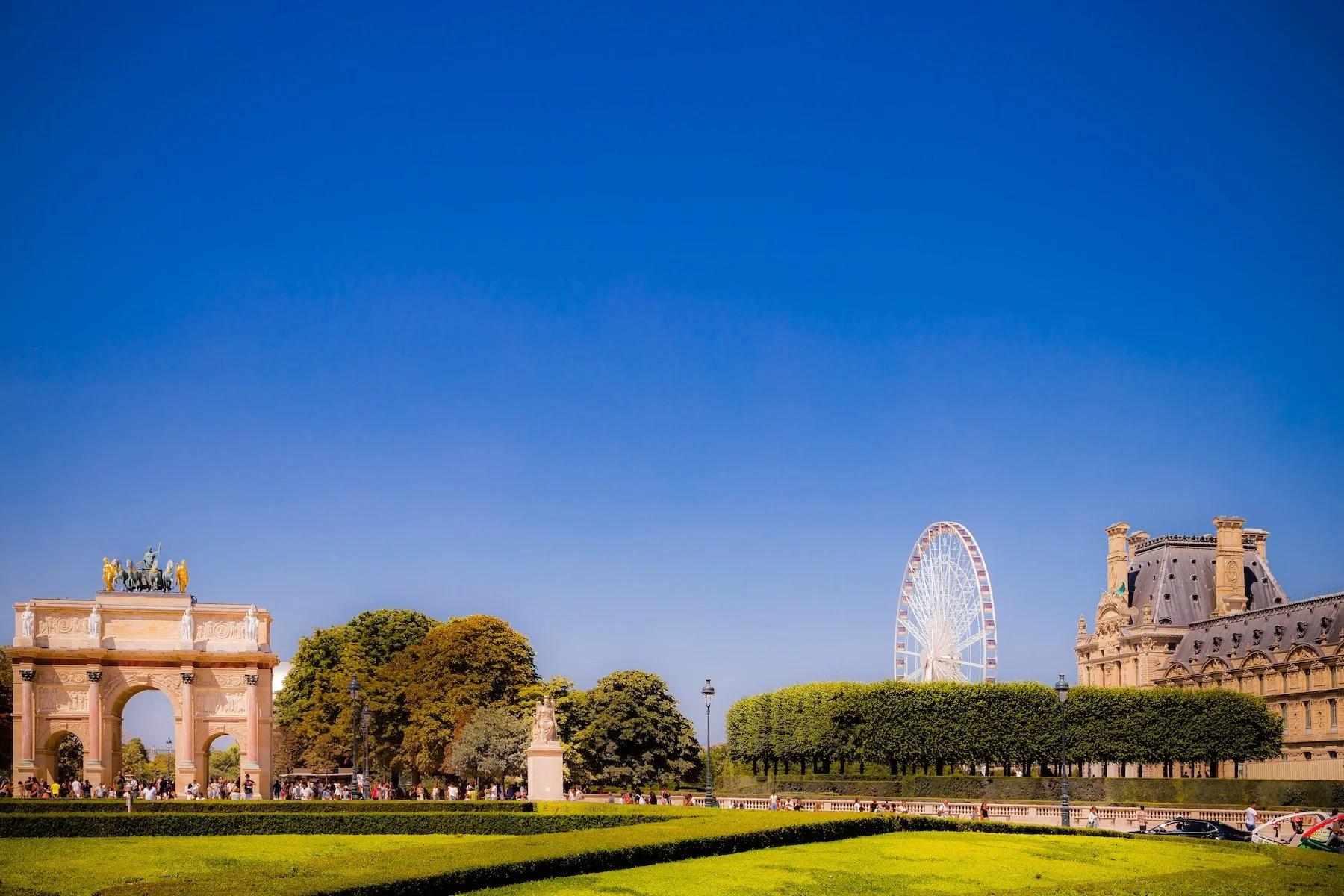
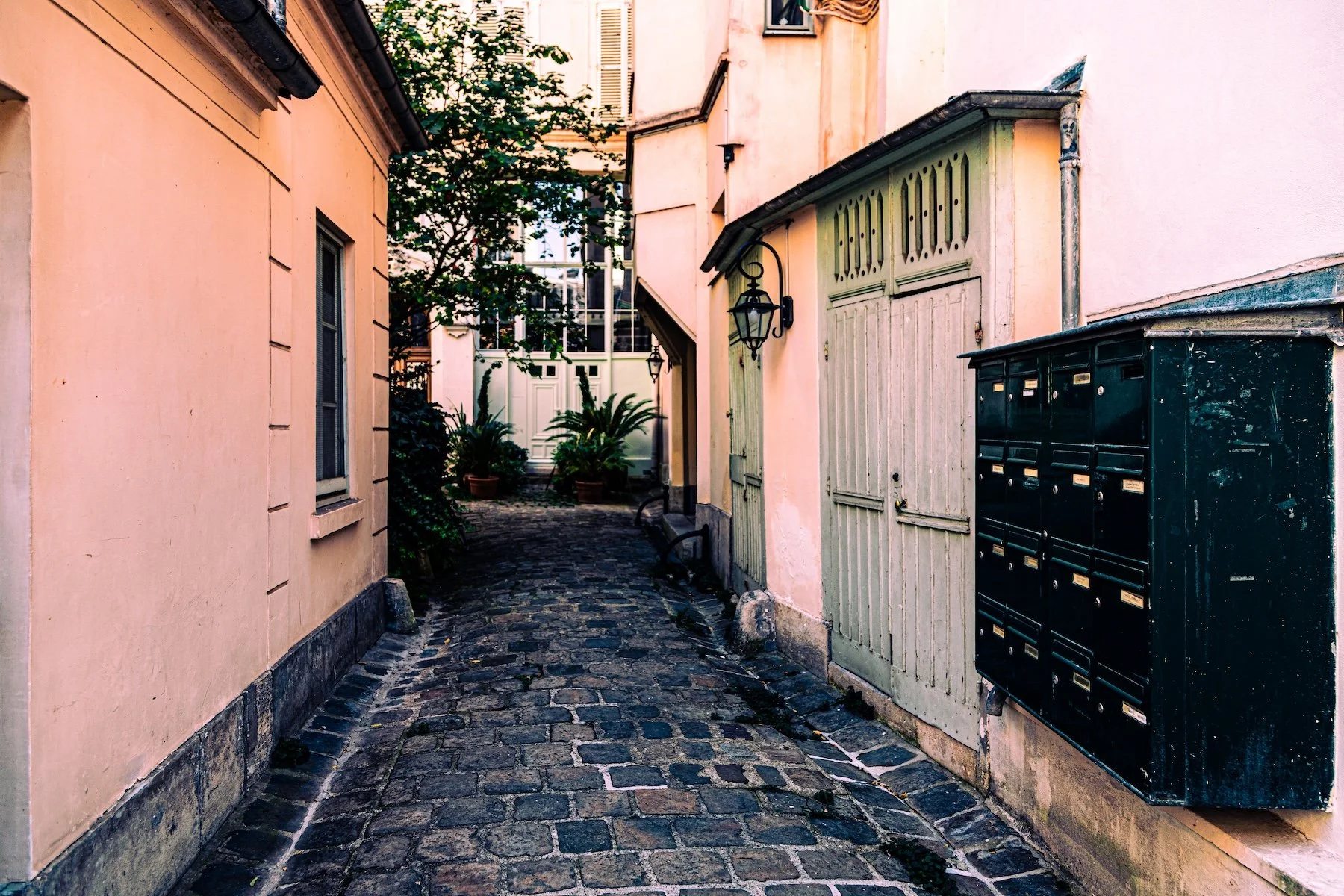
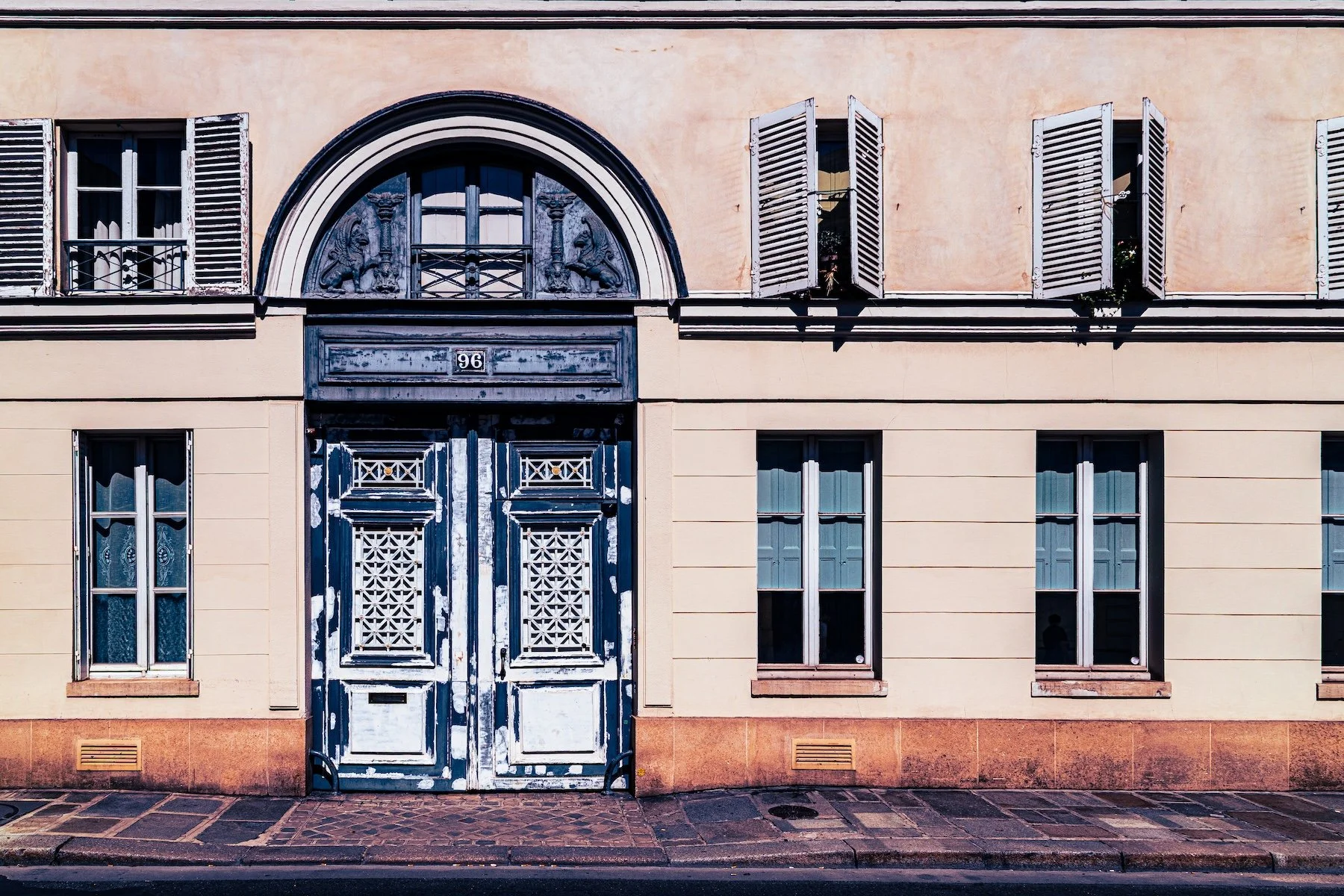
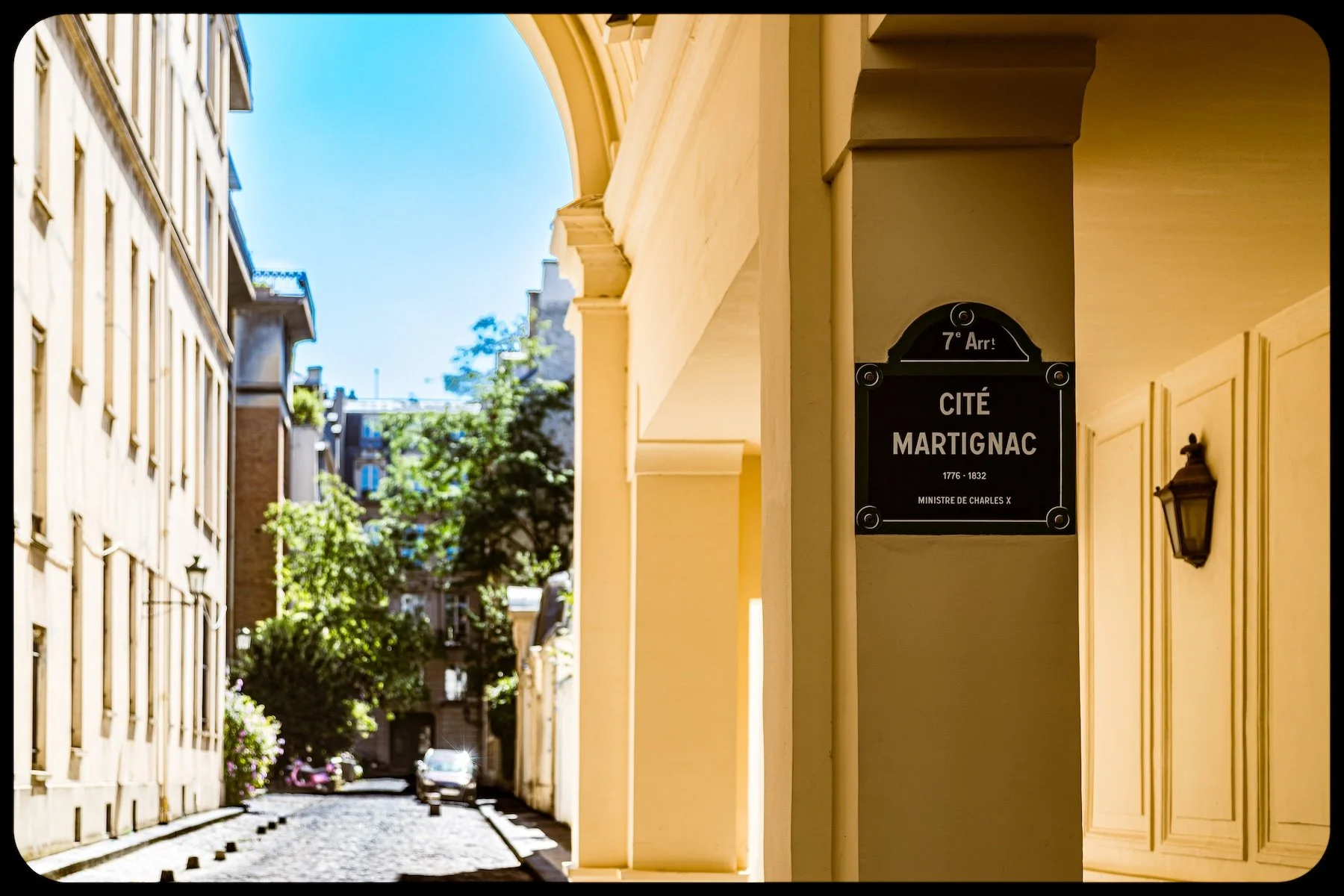
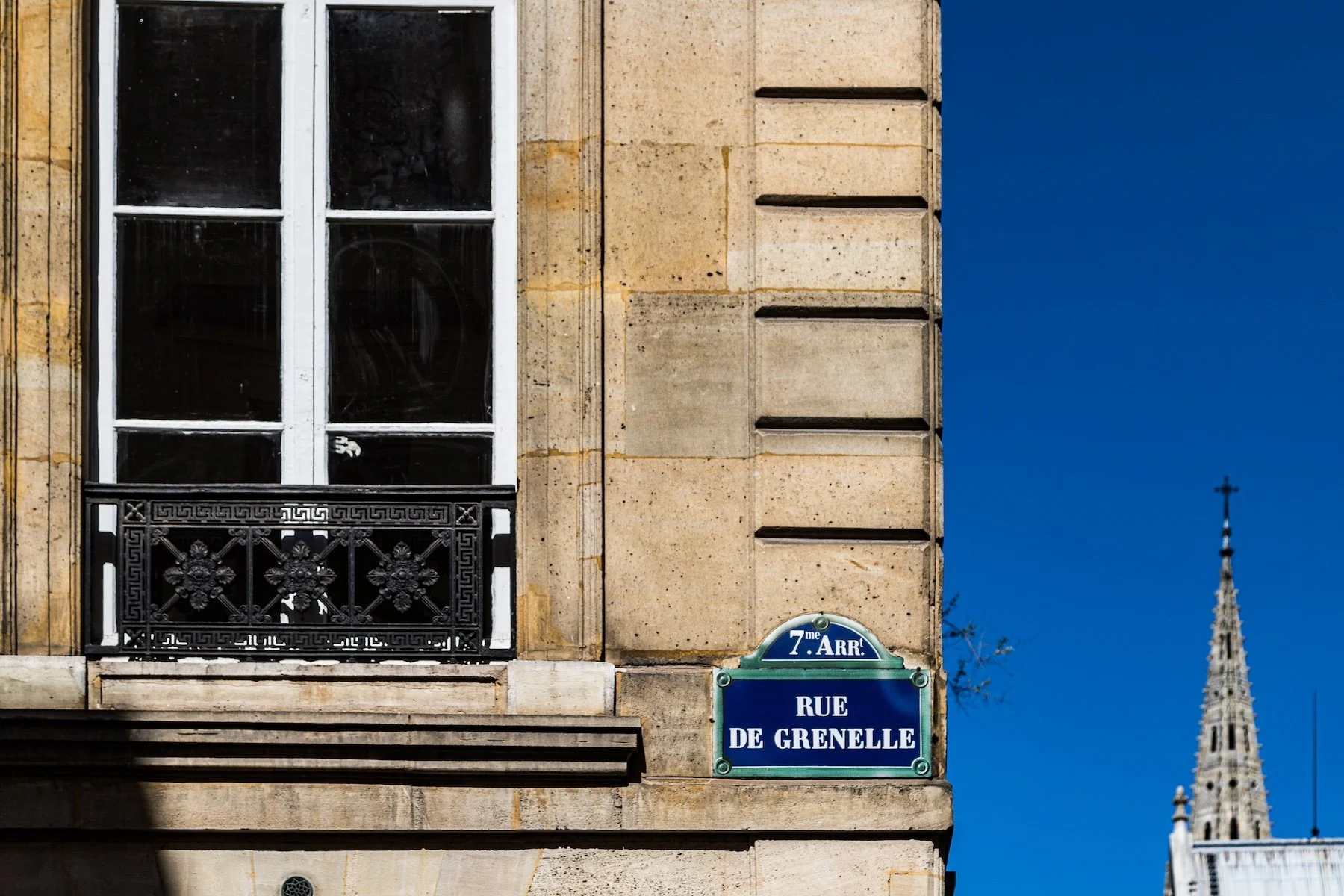
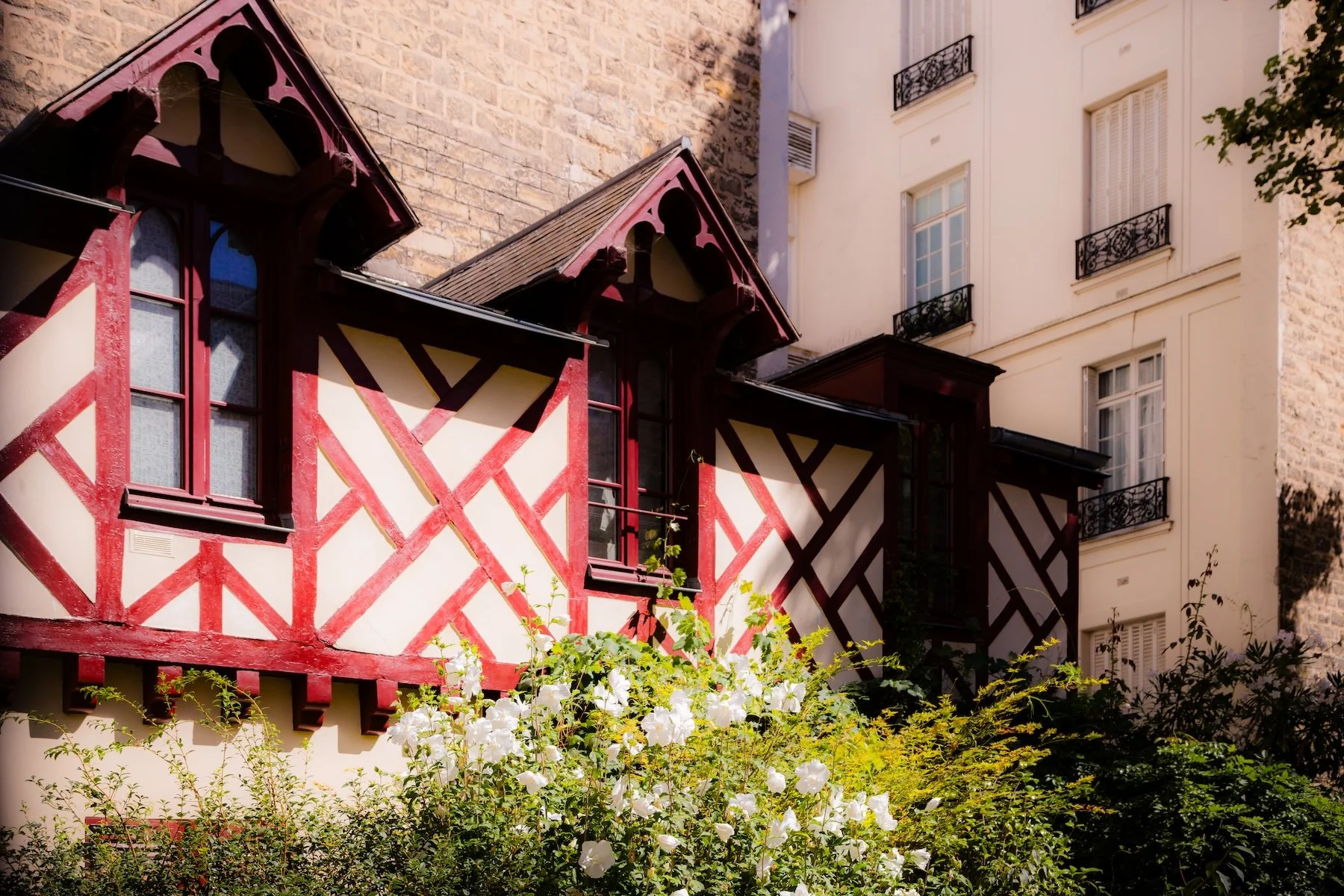
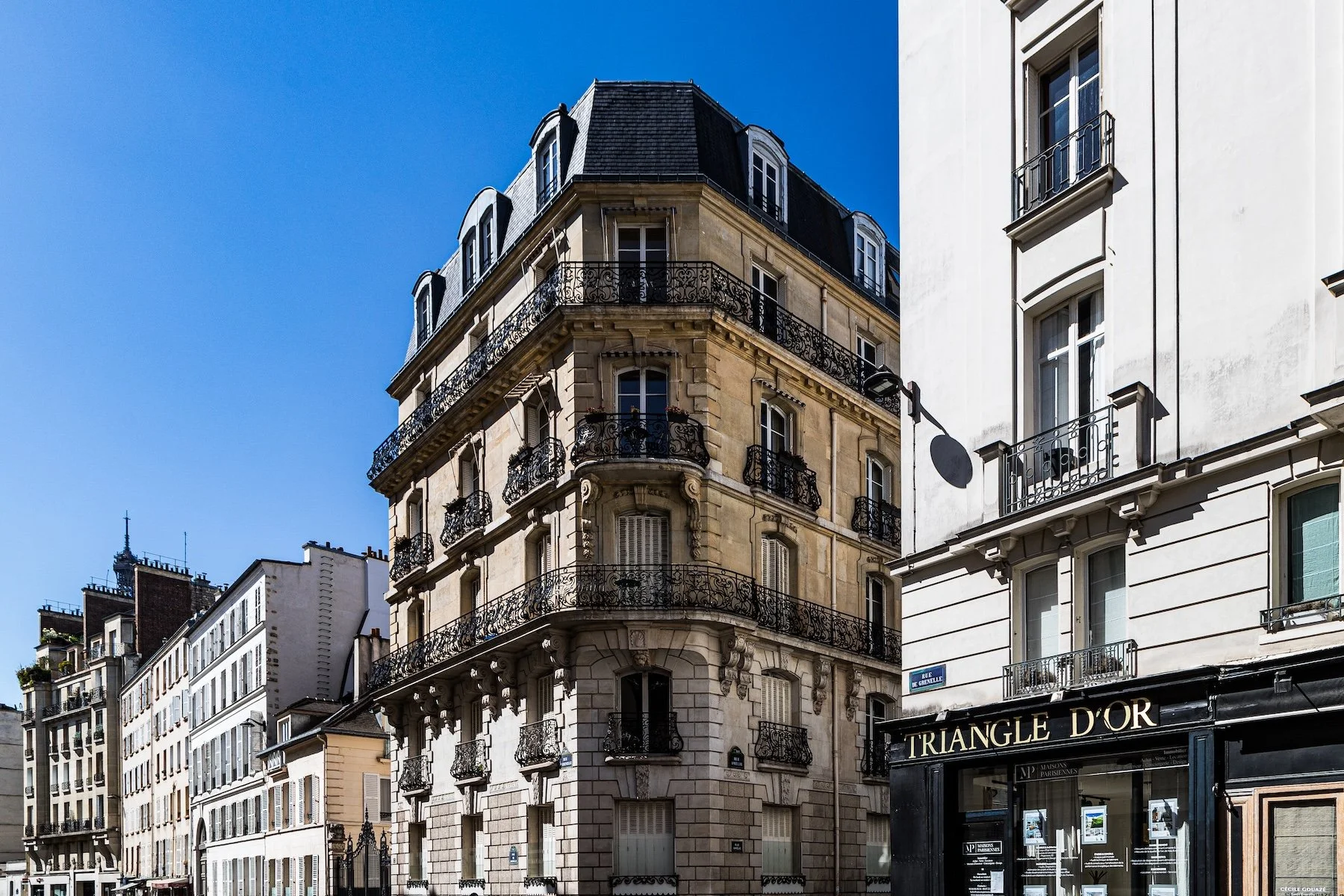
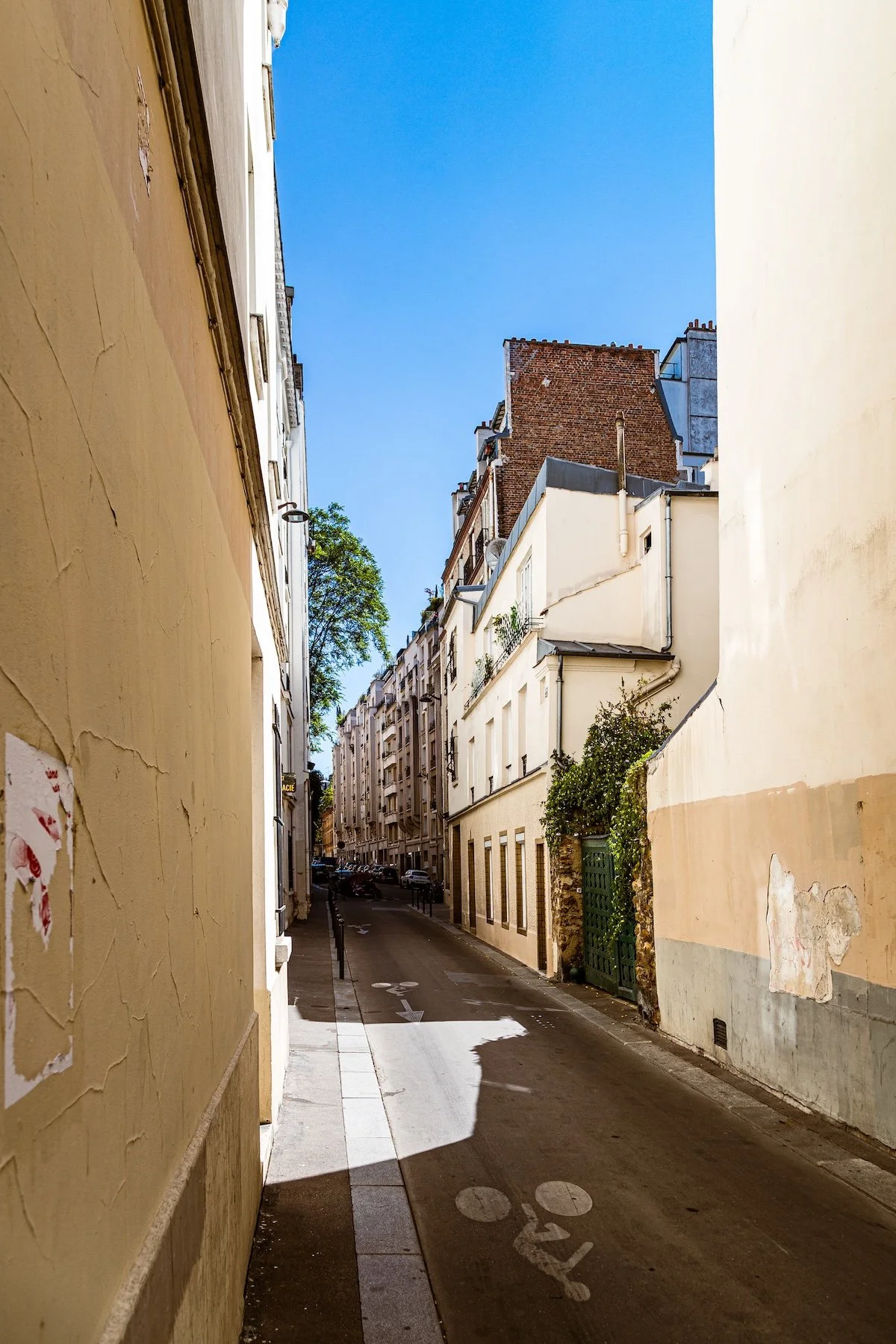
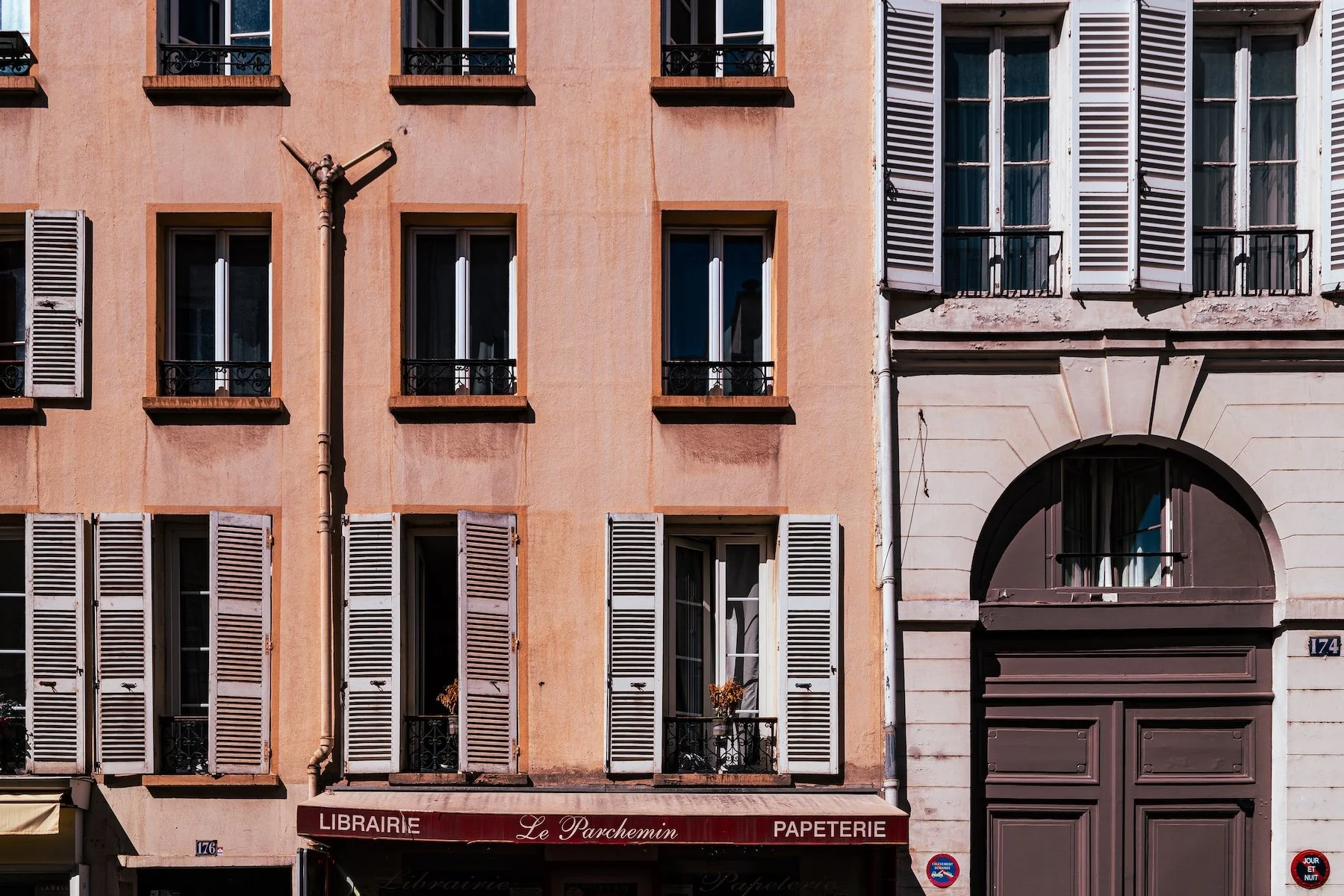
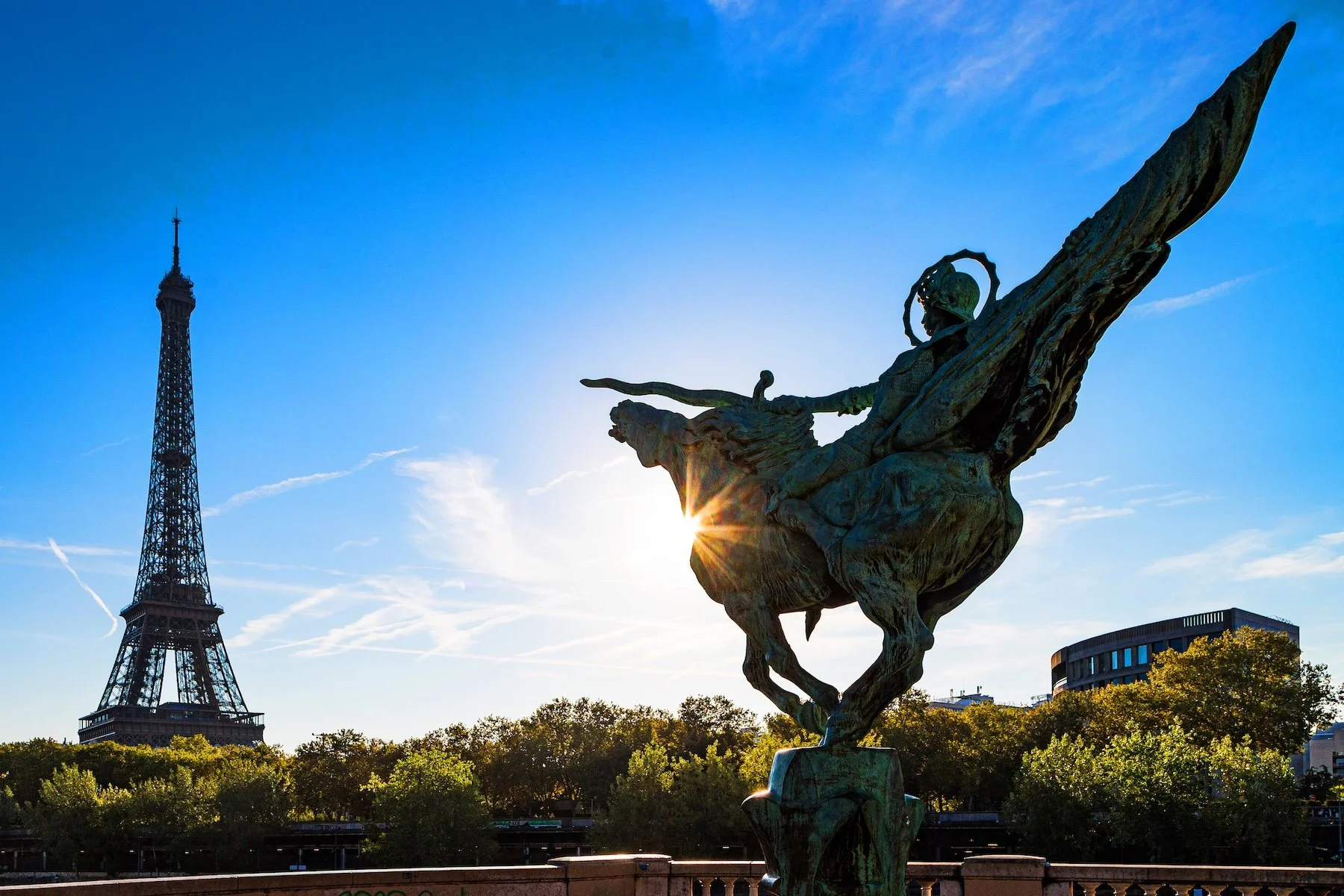
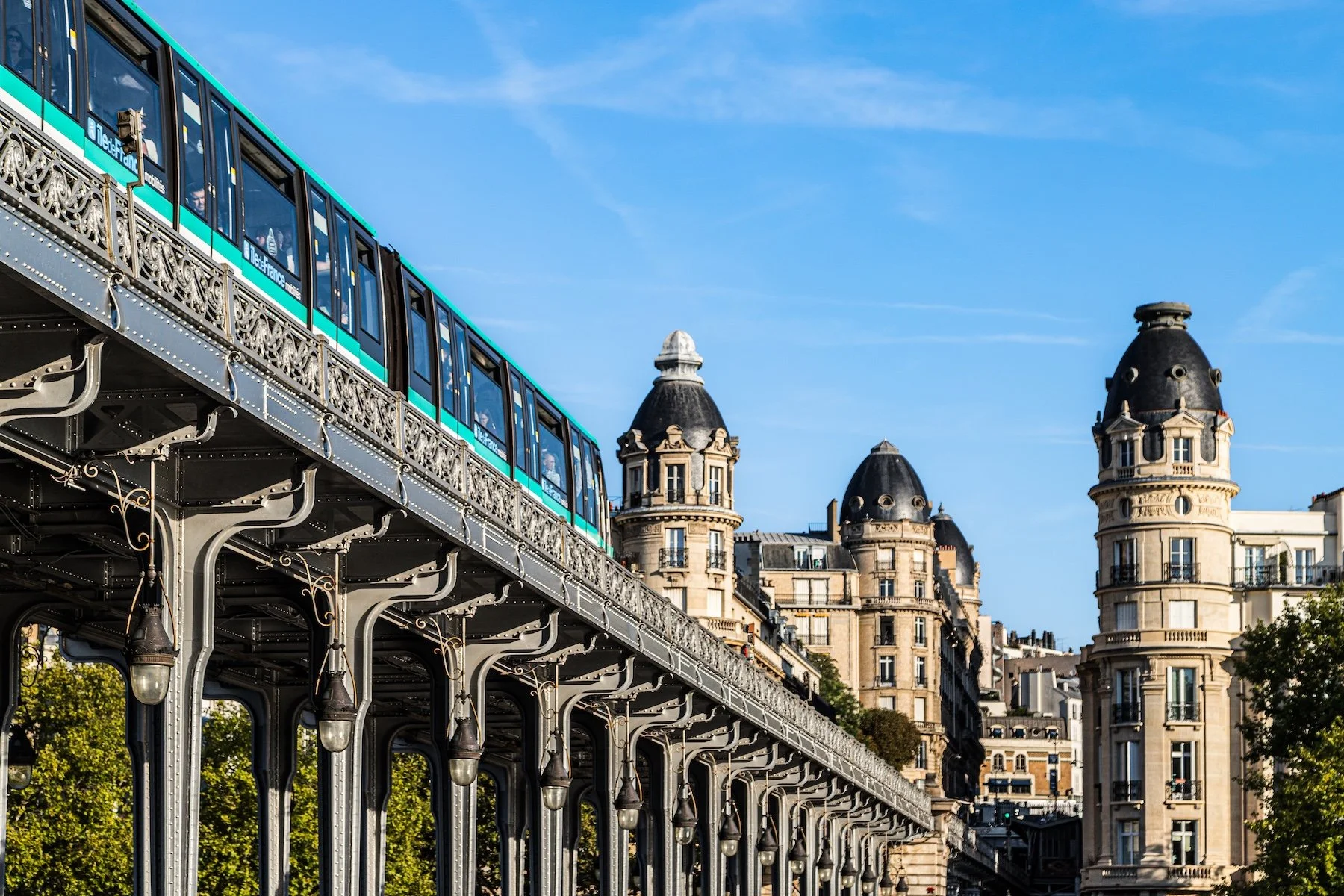
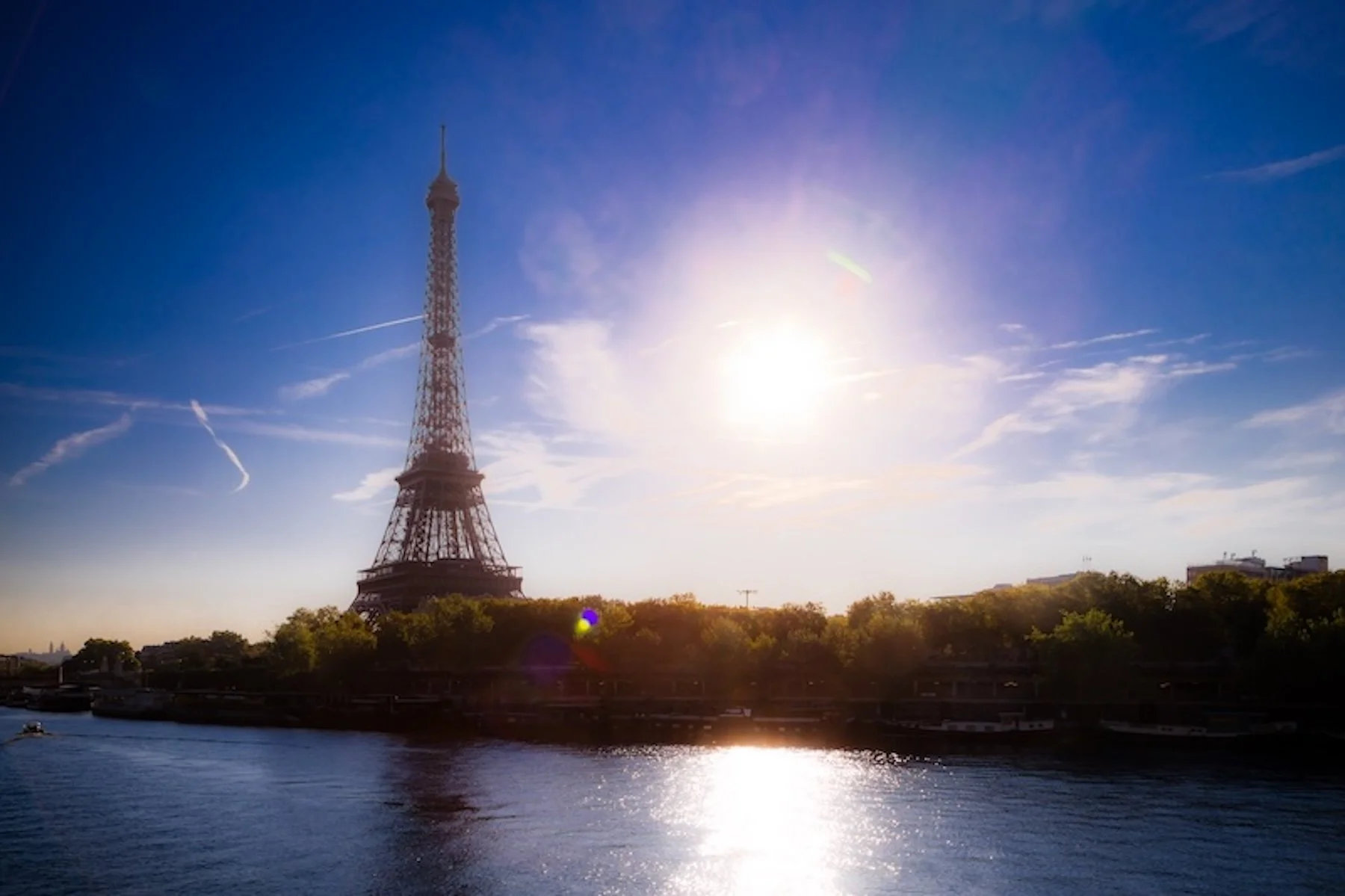
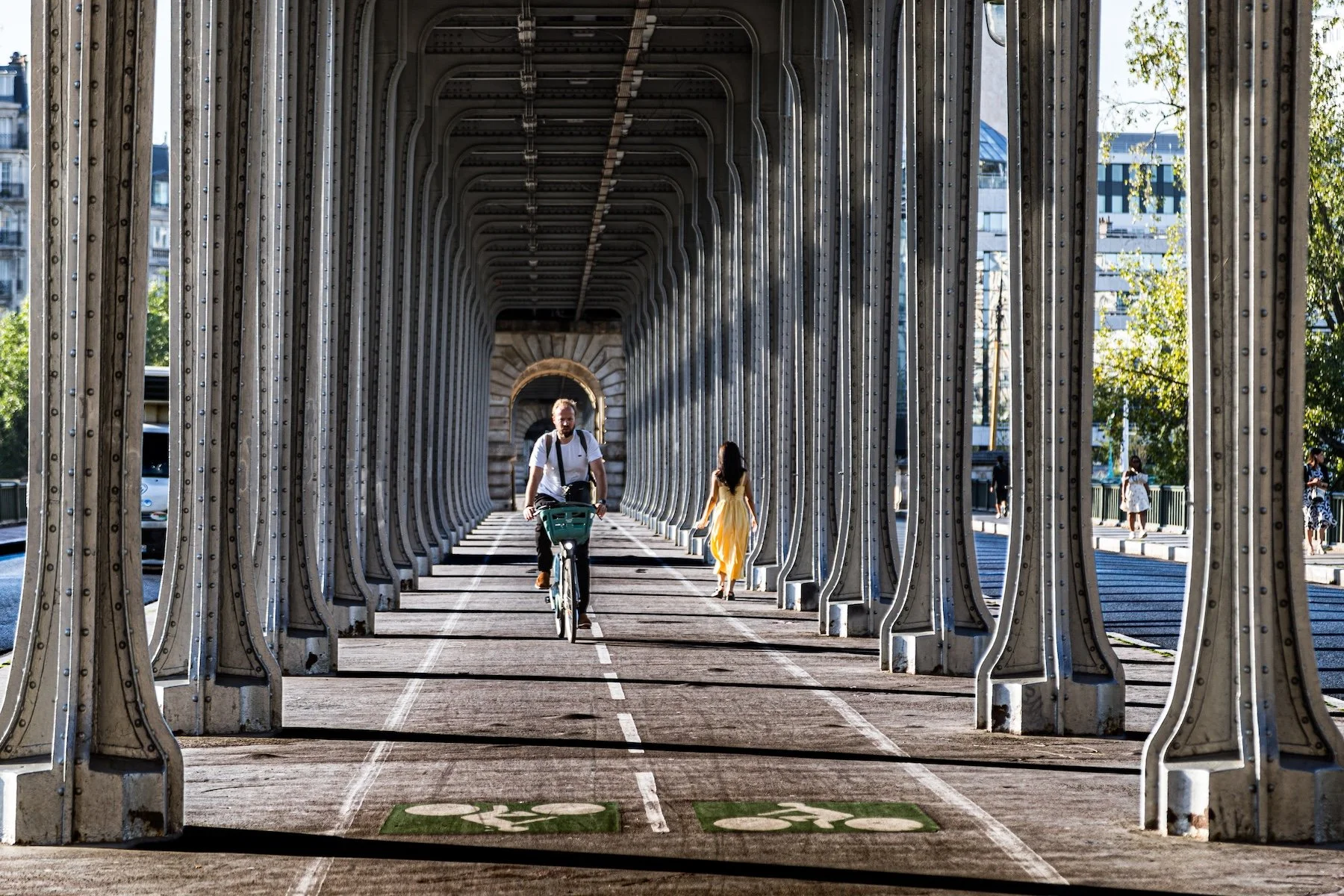

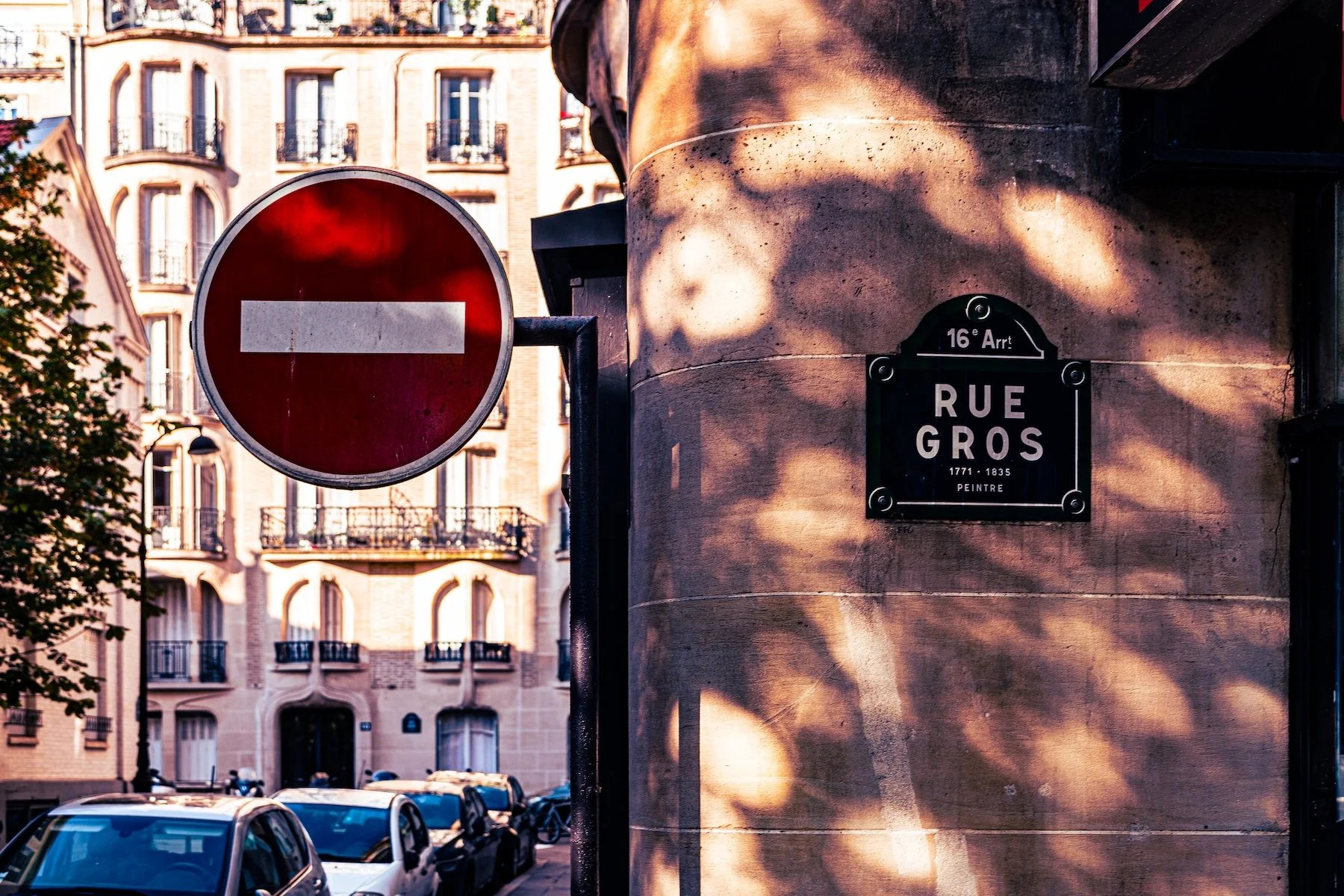
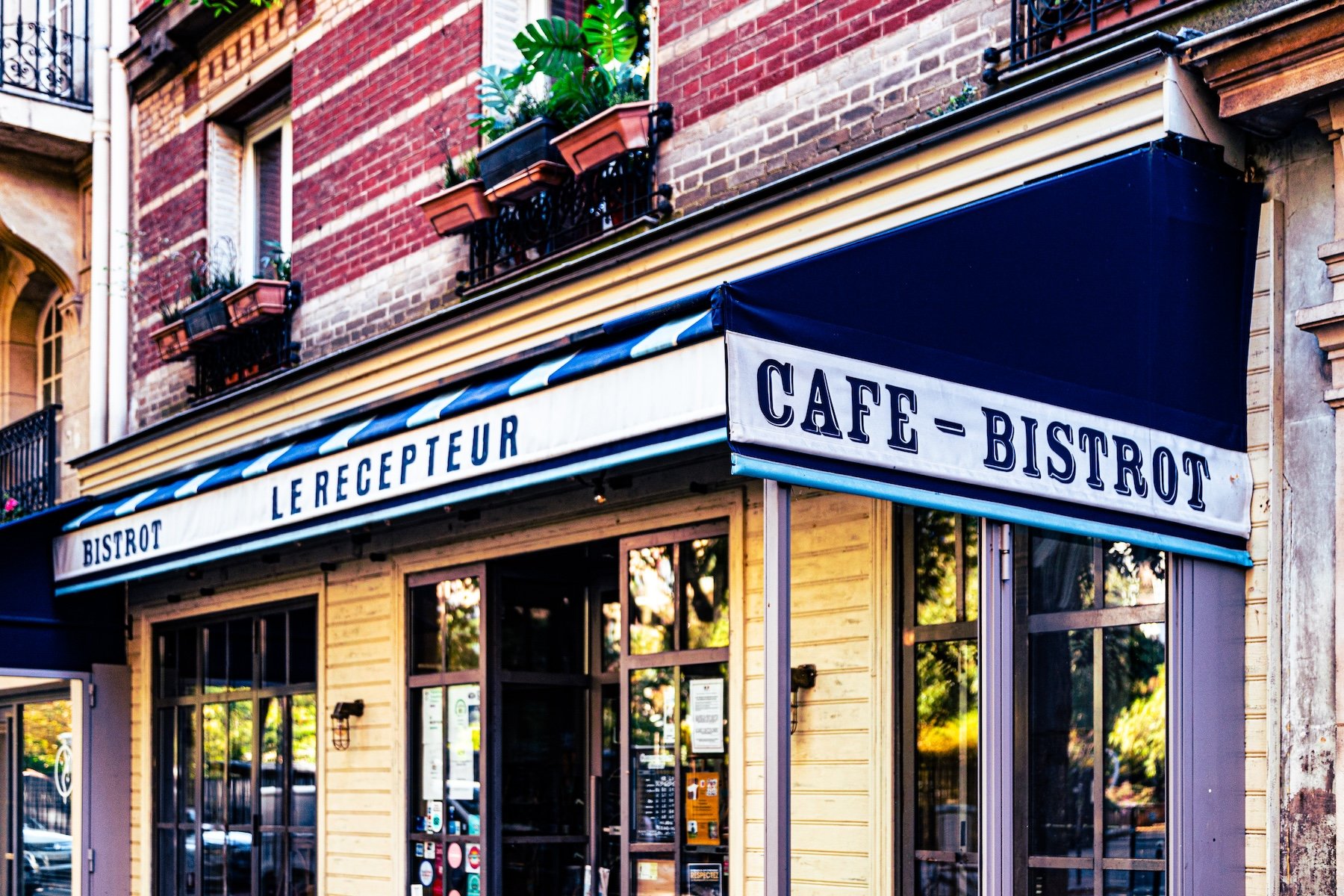
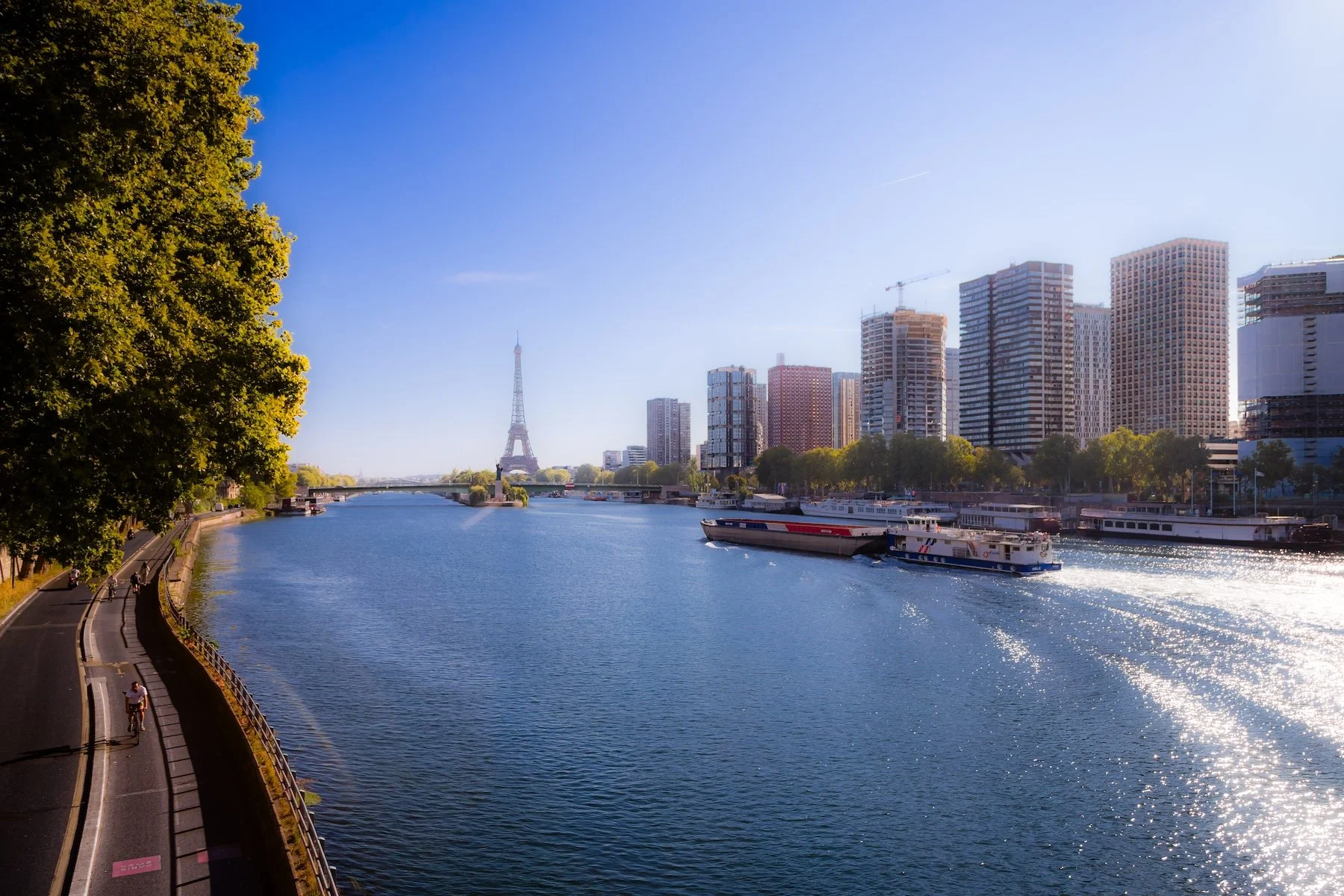
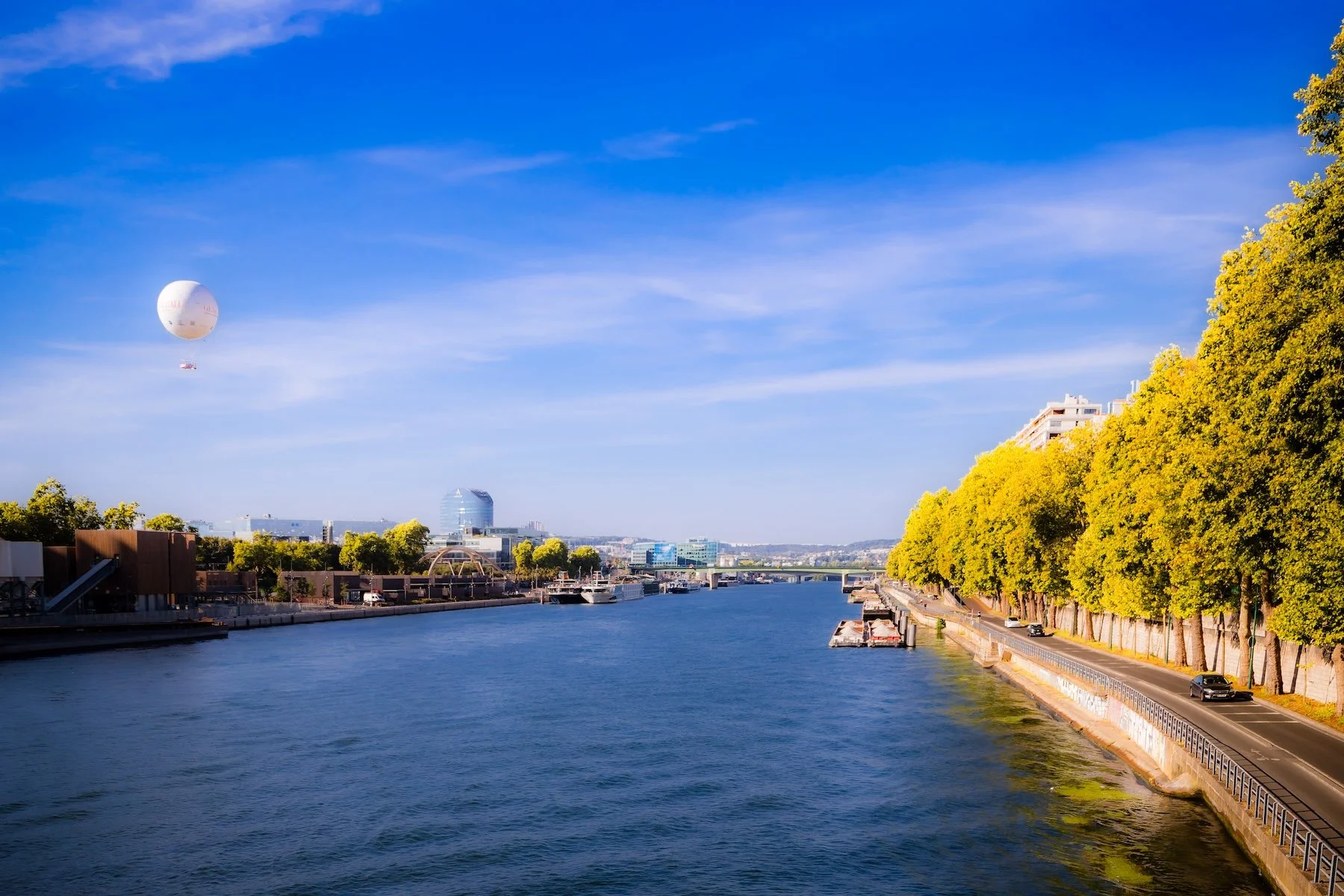
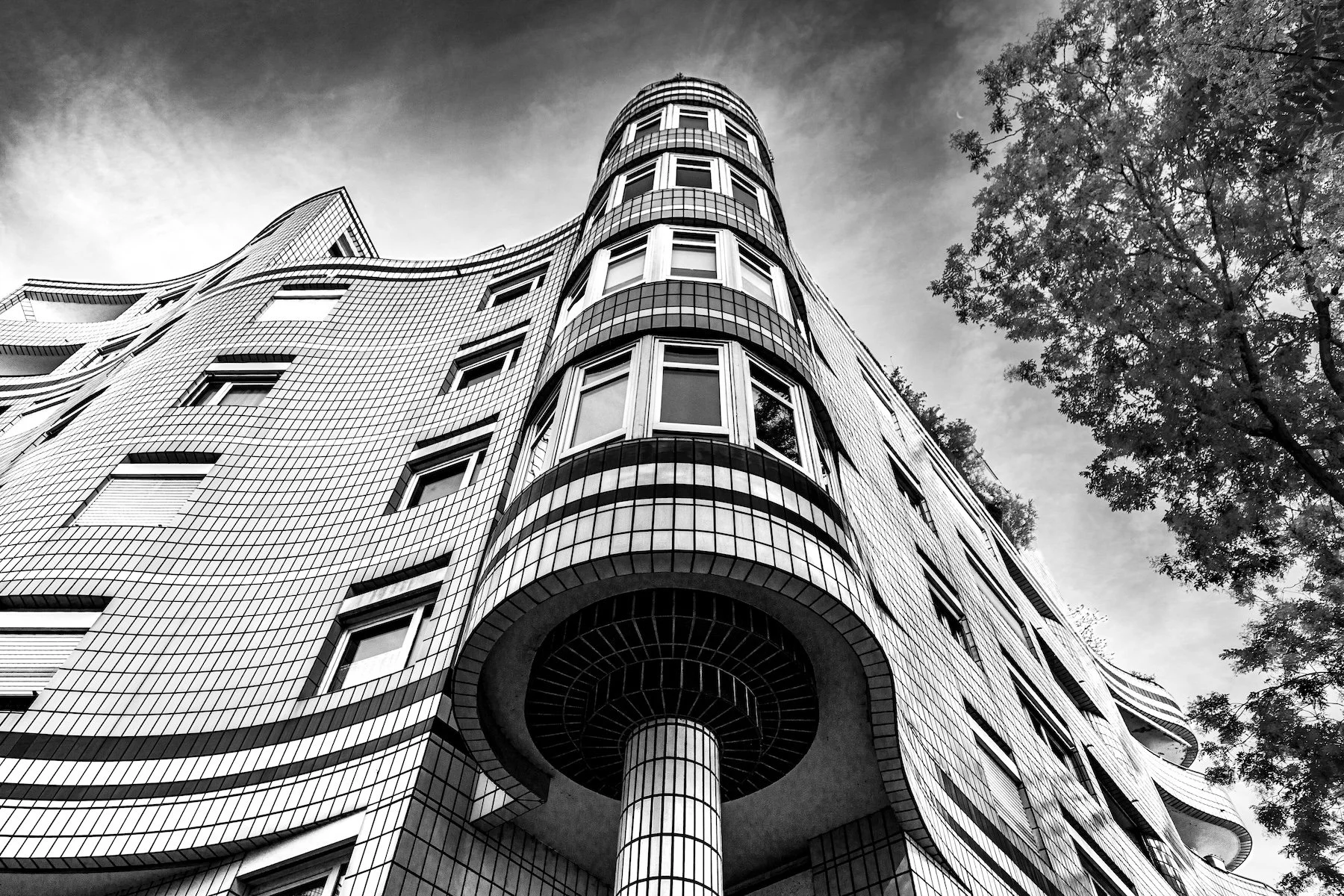
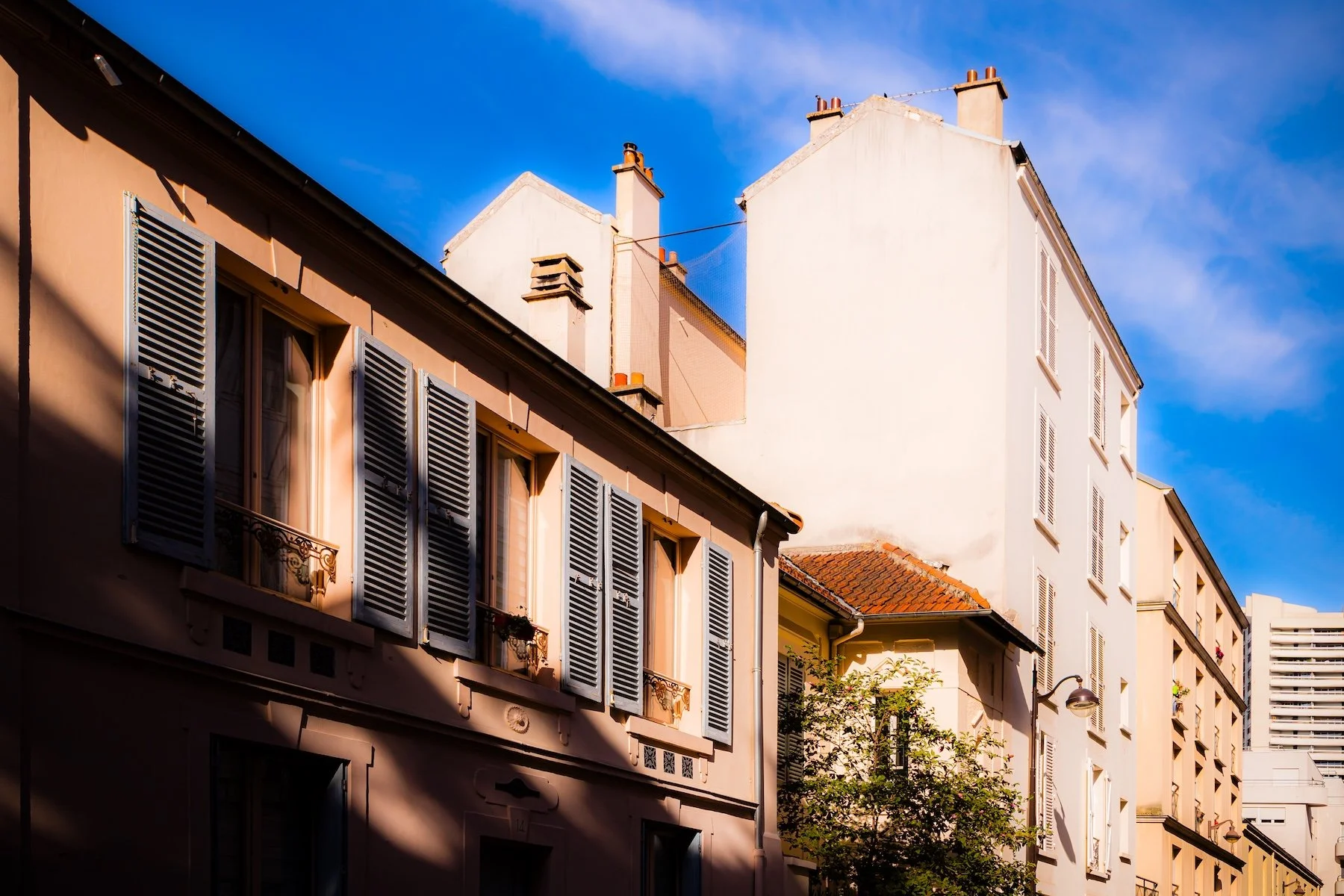
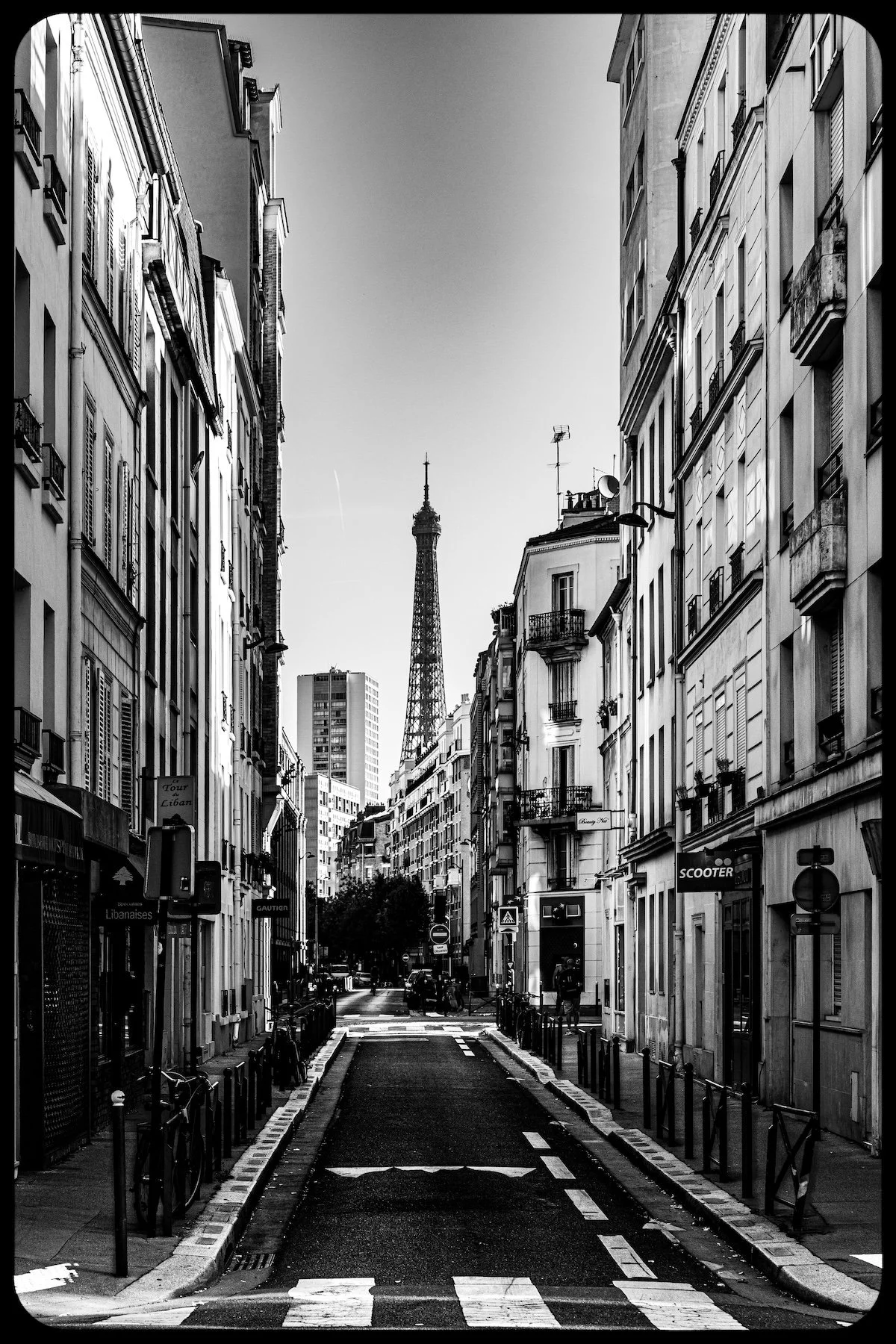
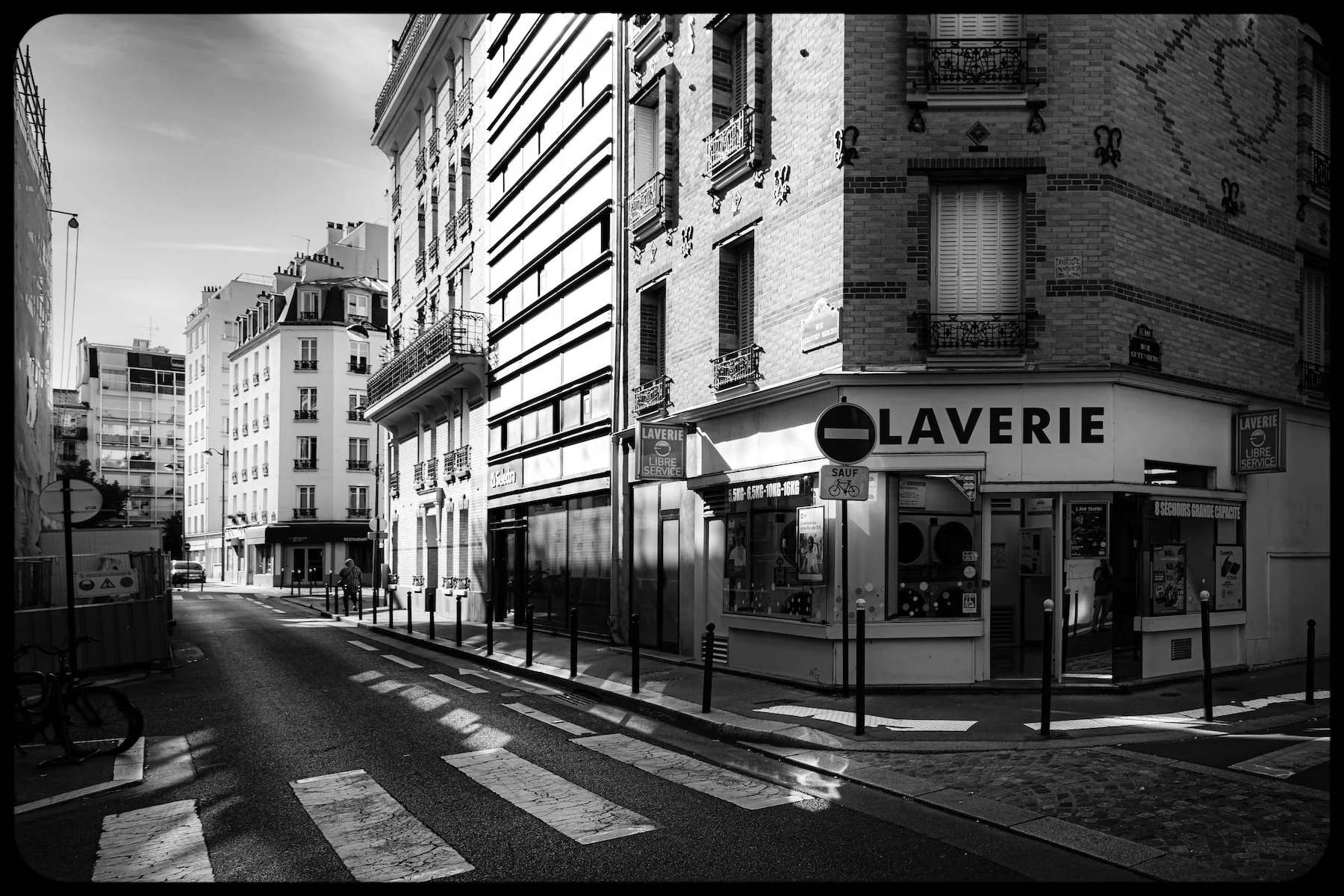
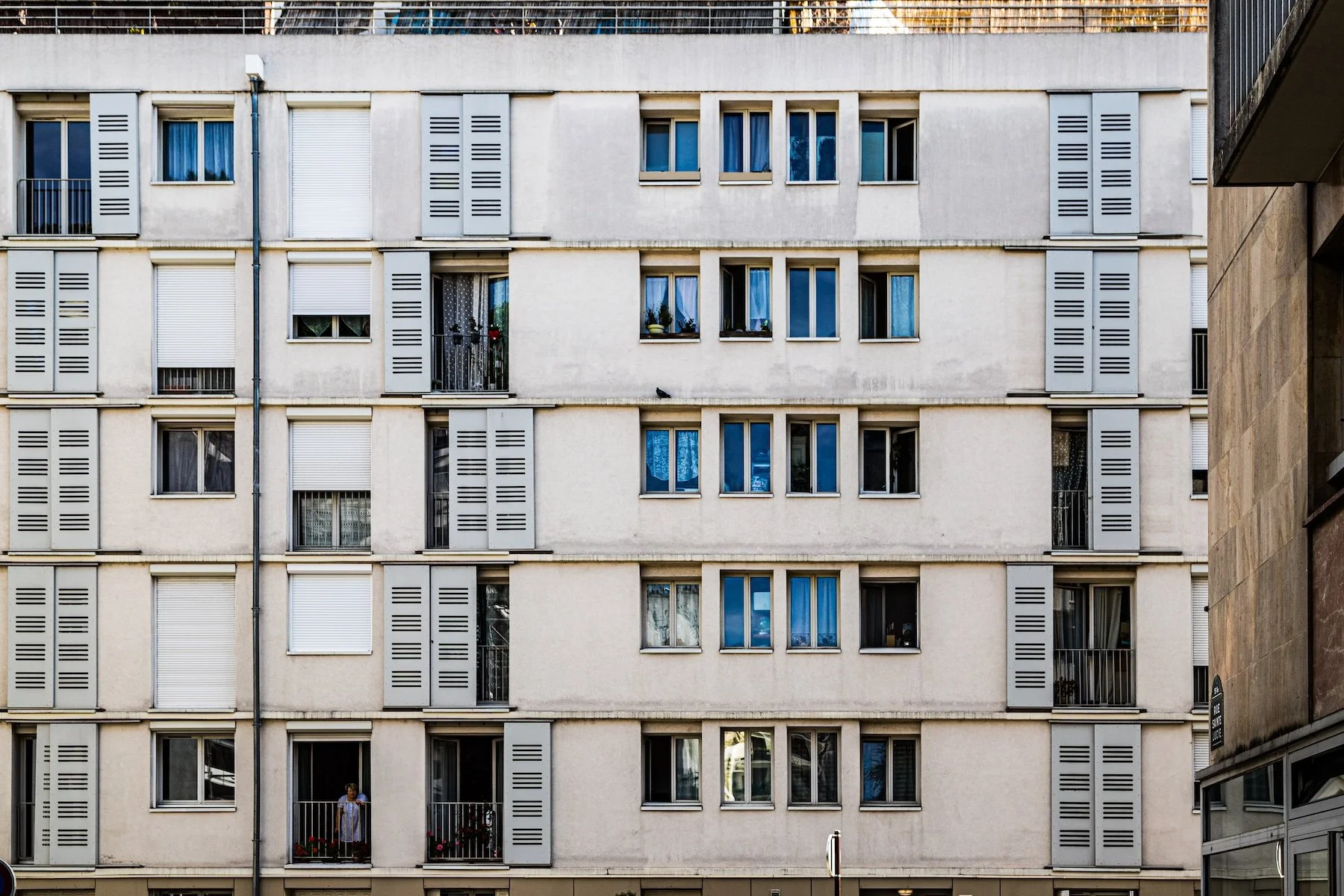
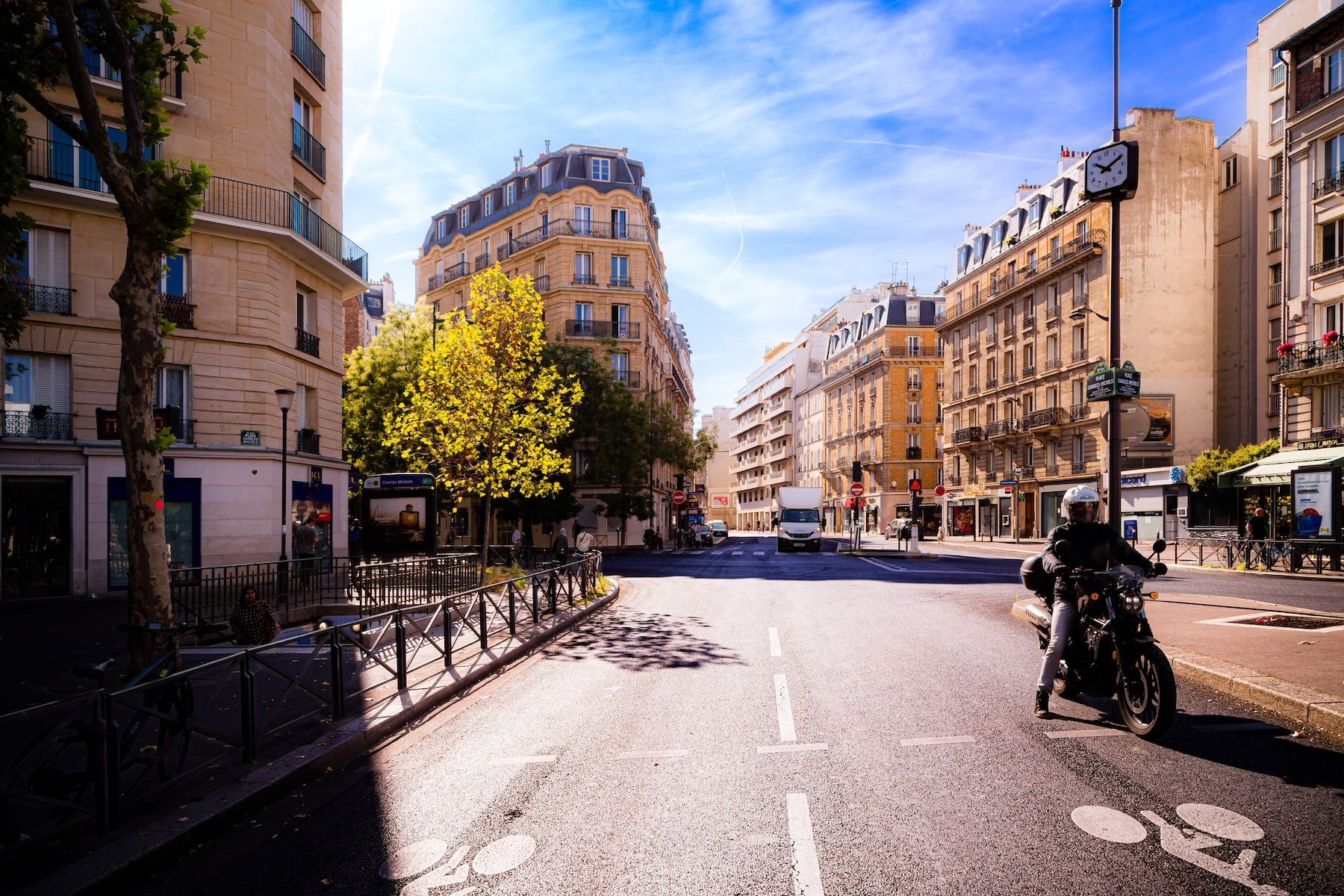
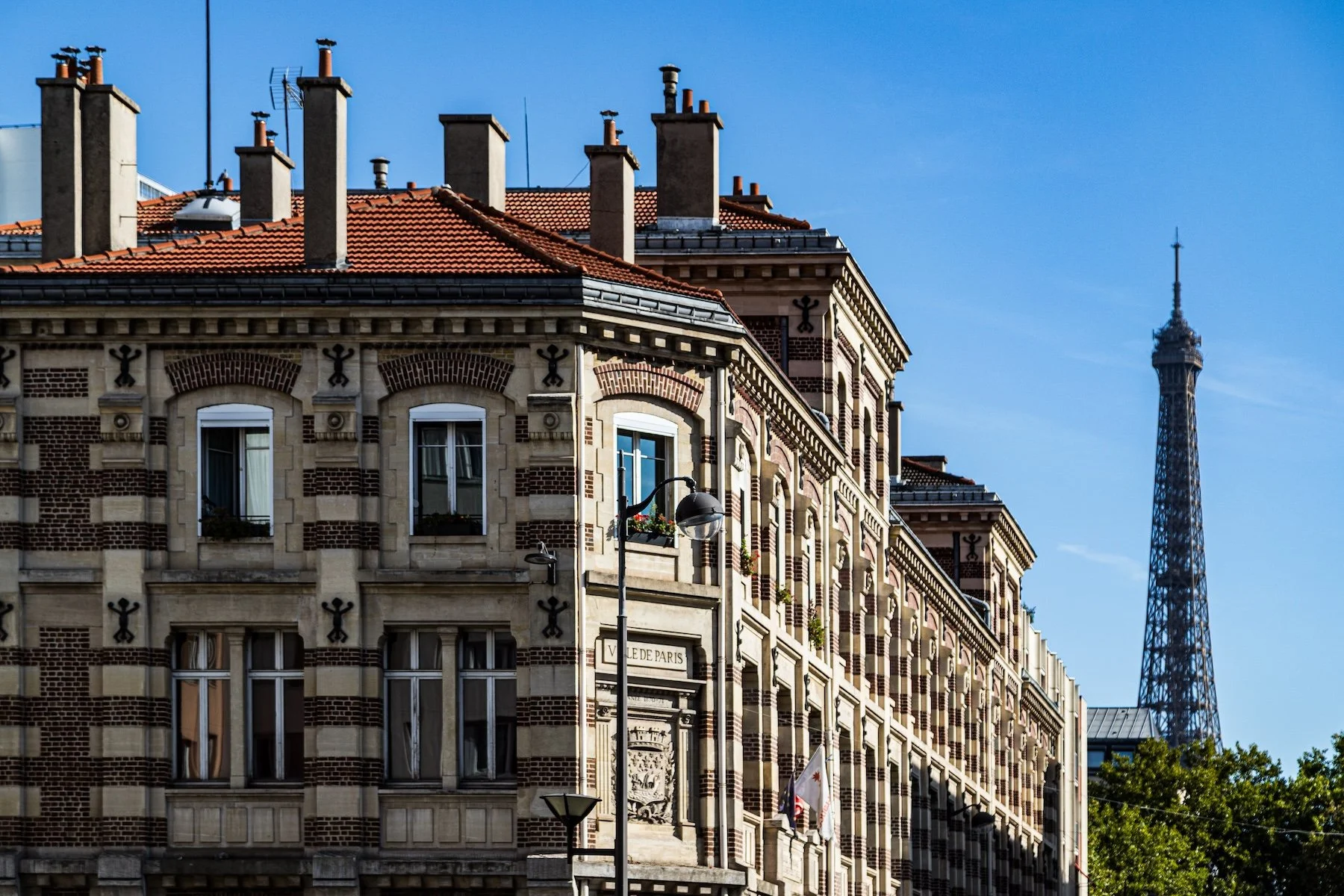
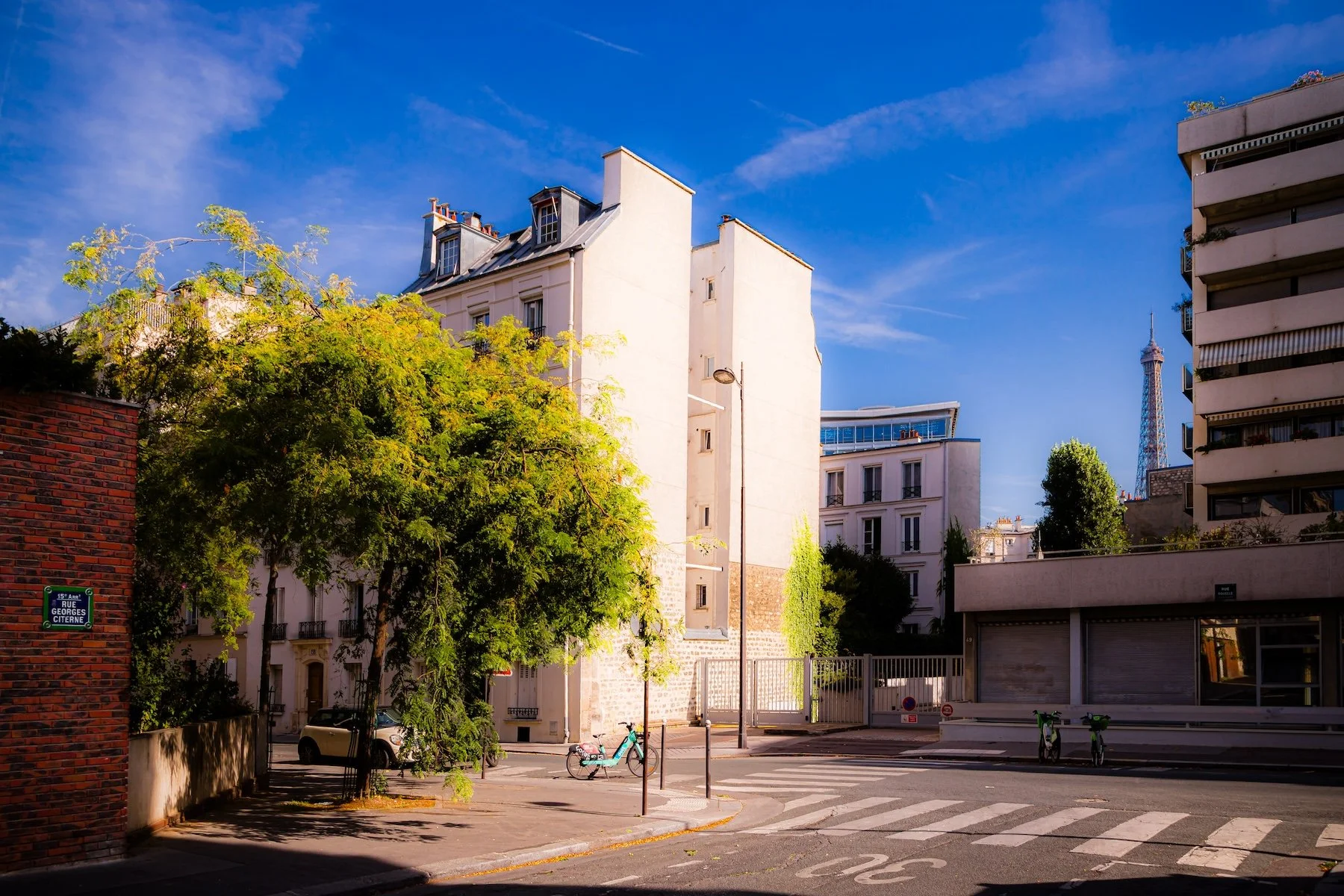
Explore Paris
-

The twenty arrondissements form the civic spiral of Paris, organizing the city into its broad local districts of government, identity, and daily life.
-

Each arrondissement is divided into four official administrative quarters, giving Paris a more precise civic and geographic framework.
-

The conseils de quartier bring participation to street level, giving residents a voice in neighborhood needs, public space, and local civic life.
-

Les Deux Rives trace Paris through the Seine’s two banks, revealing how the Rive Droite and Rive Gauche shaped the city’s civic power, commerce, learning, art, and cultural identity.
-

Cultural neighborhoods reveal the Paris people recognize through history, cafés, architecture, memory, atmosphere, and local belonging.