
1er - PALAIS-ROYALE
Quartiers Administratifs
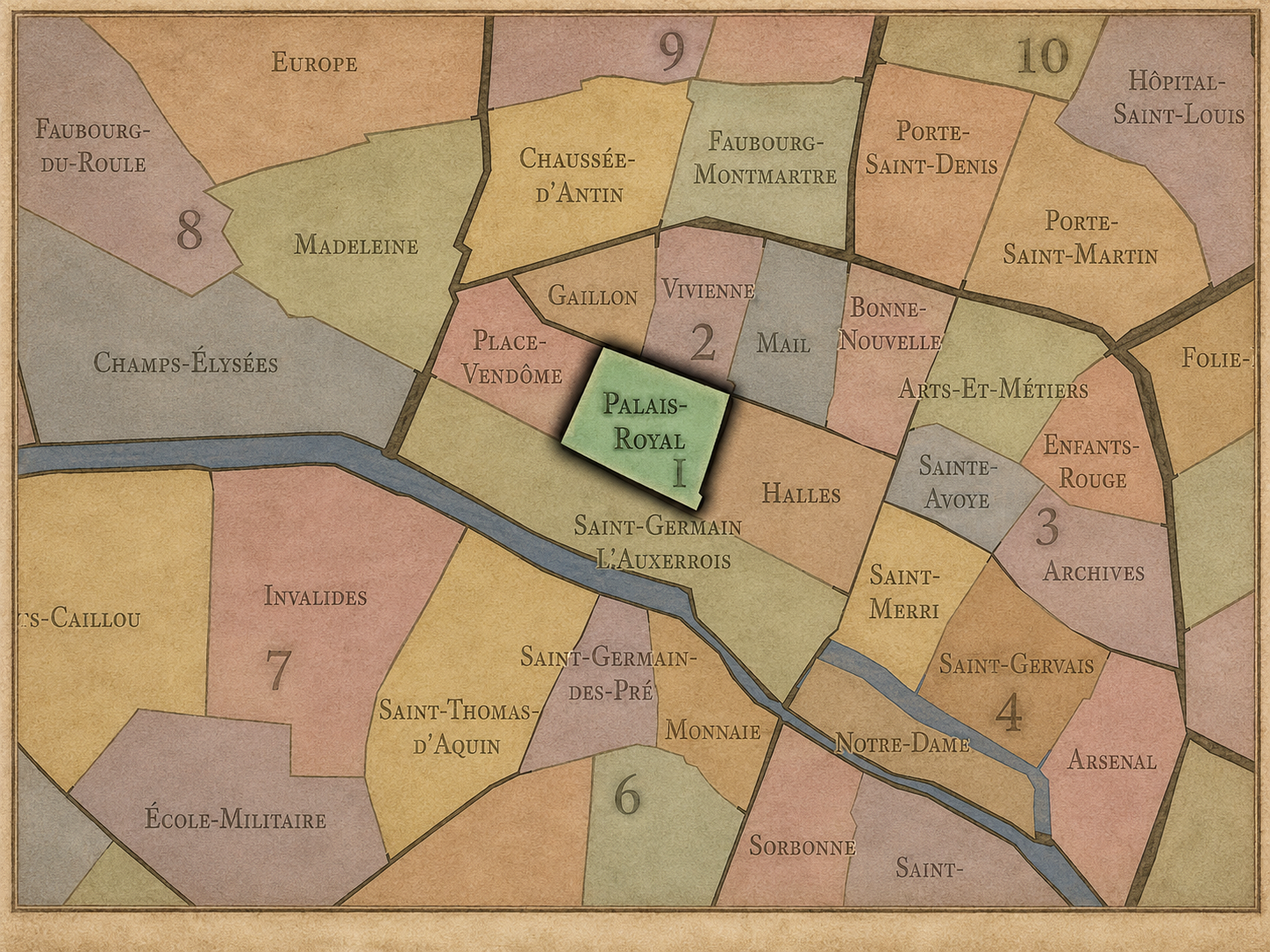
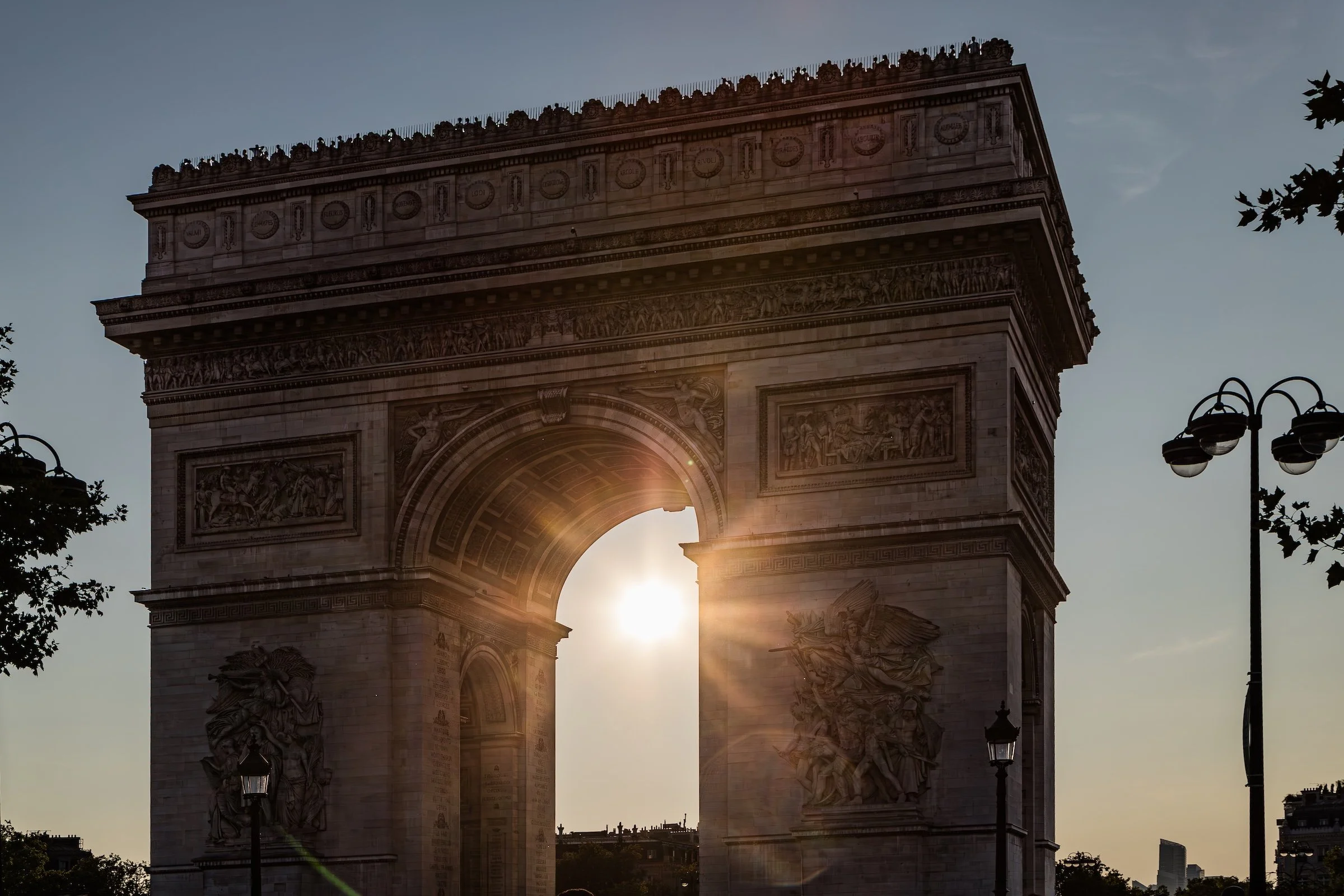
Part of an ongoing project to walk and photograph every neighborhood in Paris, this page explores the Administrative Quarter: 1er - Palais-Royale through maps, district identity, history, and photography.
The Map
Download the Paris Arrondissements Map
Geographic Setting
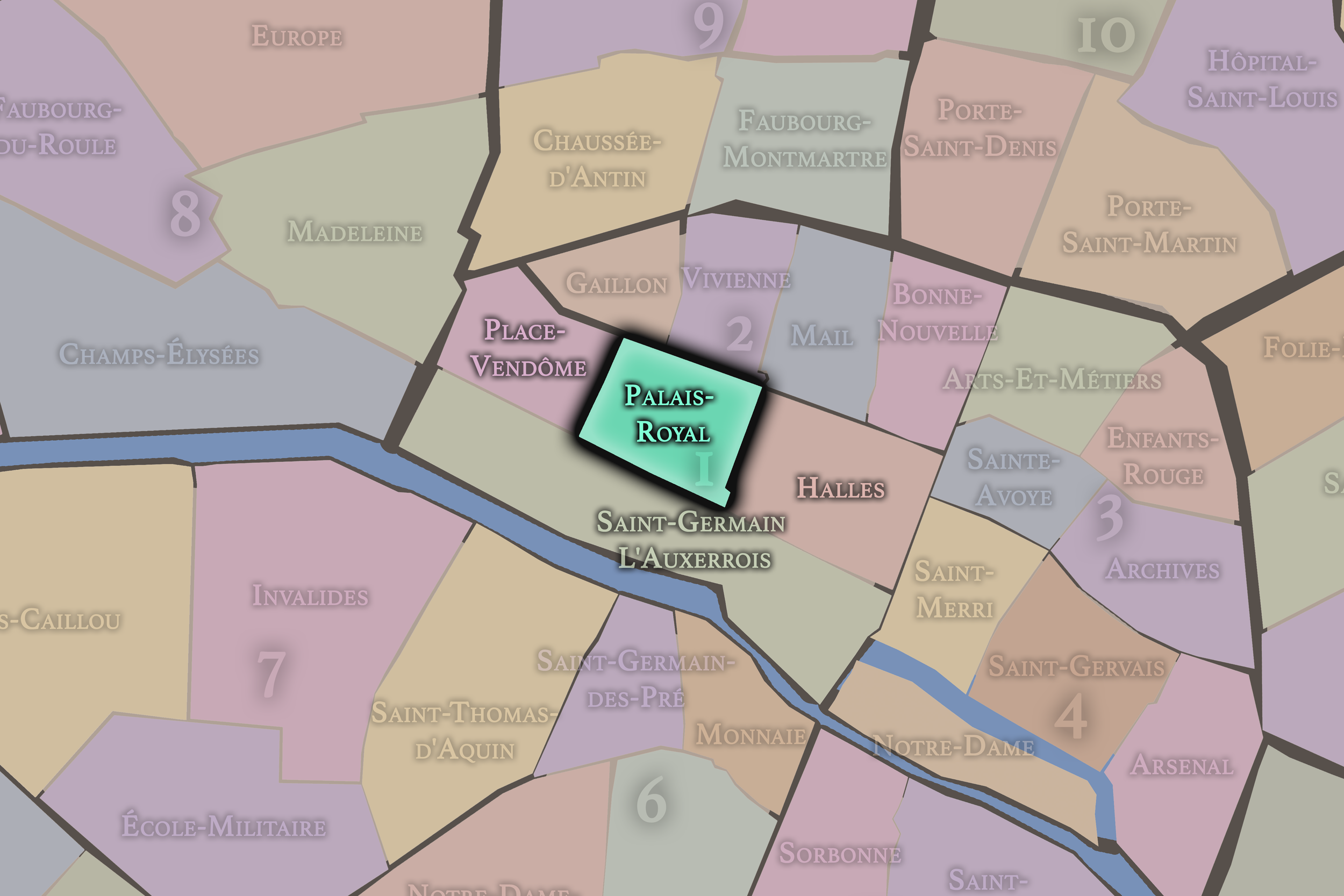
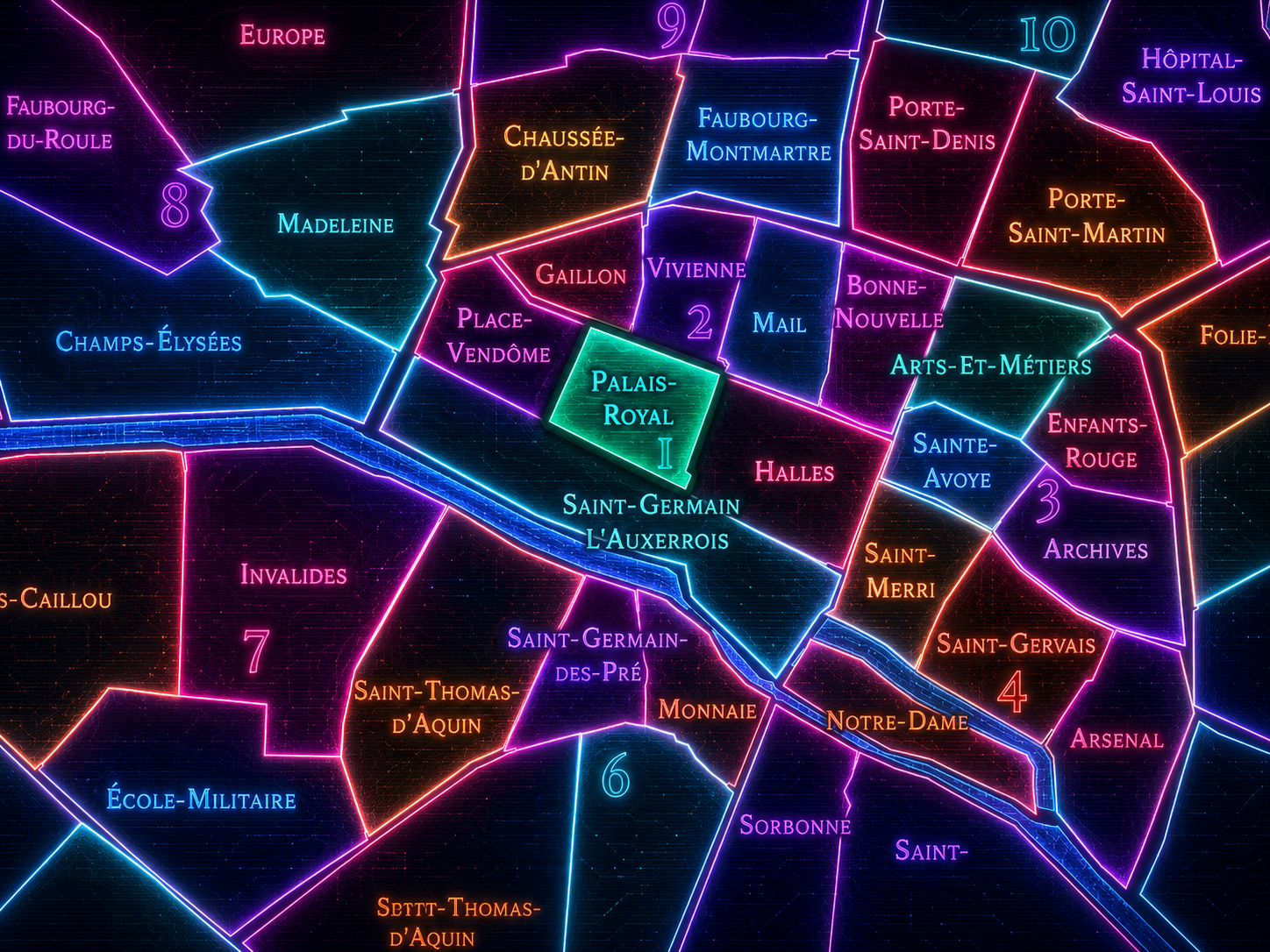
Palais-Royal occupies the northern portion of the 1st arrondissement, just above the Louvre and west of the dense commercial fabric of Les Halles. It is one of the most concentrated civic and cultural quarters in central Paris: a compact landscape of arcades, gardens, theaters, ministries, galleries, passages, and stone façades gathered around the great enclosed world of the Palais-Royal itself.
The quarter’s geography is defined less by broad spectacle than by interiority. Unlike Saint-Germain-l’Auxerrois, which opens toward the Seine, the Louvre, and the ceremonial riverfront, Palais-Royal turns inward. Its signature space is a garden hidden behind arcades, a quiet rectangle of trees, fountains, galleries, and aligned façades tucked into the heart of the Right Bank. Around it sit some of the city’s most important institutions: the Comédie-Française, the Conseil d’État, the Conseil constitutionnel, and the Ministry of Culture. The result is a quarter where theater, government, literature, architecture, and Parisian promenade meet within an unusually intimate civic frame.
Administrative Quarter Identity
Etymology and Origins
The name Palais-Royal means “Royal Palace,” but the place did not begin with that name. It was first known as the Palais-Cardinal, the residence of Cardinal Richelieu, chief minister to Louis XIII. Richelieu purchased the Hôtel de Rambouillet in 1624 and developed the surrounding property into a palace near the Louvre, placing his residence within the orbit of royal power. After Richelieu’s death, the palace passed to the crown and became associated with the royal household, giving rise to the name by which the quarter is now known.
This shift from Palais-Cardinal to Palais-Royal is more than a change of title. It reveals the quarter’s essential history: a private ministerial palace becoming a royal residence, then a princely domain, then a place of public promenade, commerce, theater, revolution, and state administration. The name carries that transformation within it. Palais-Royal is royal by inheritance, but its deeper identity comes from the tension between enclosure and public life, power and performance, authority and pleasure.
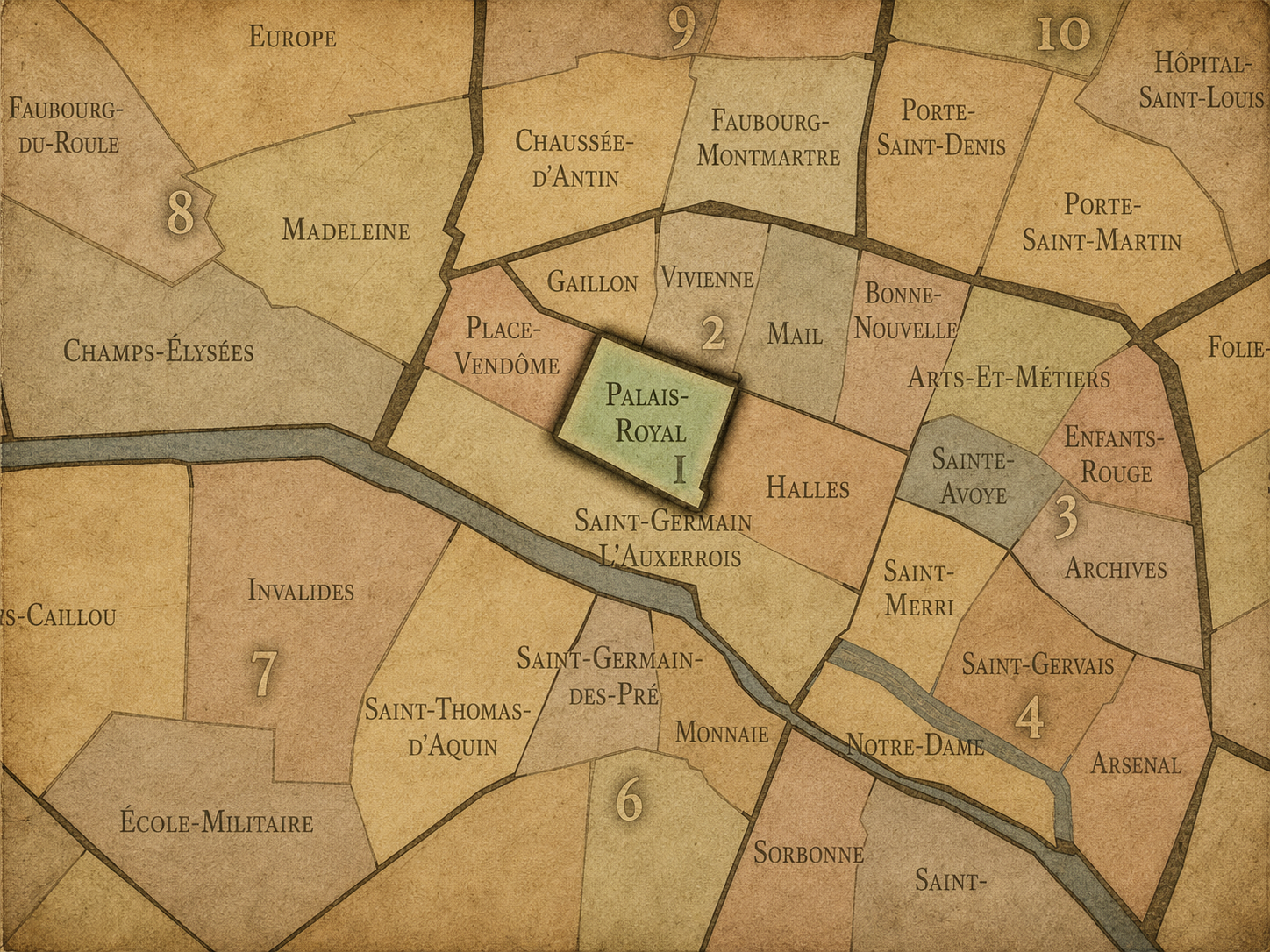
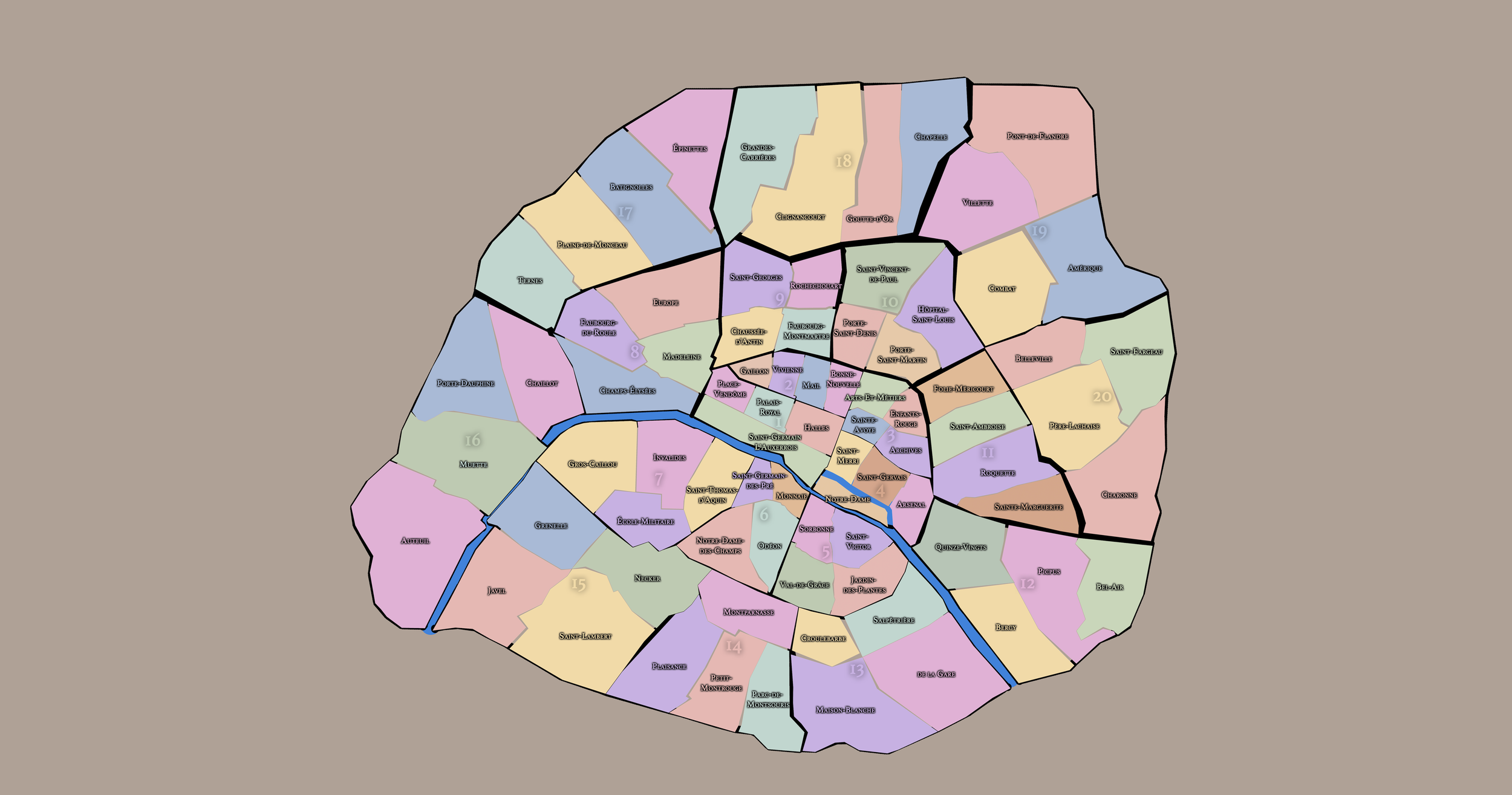
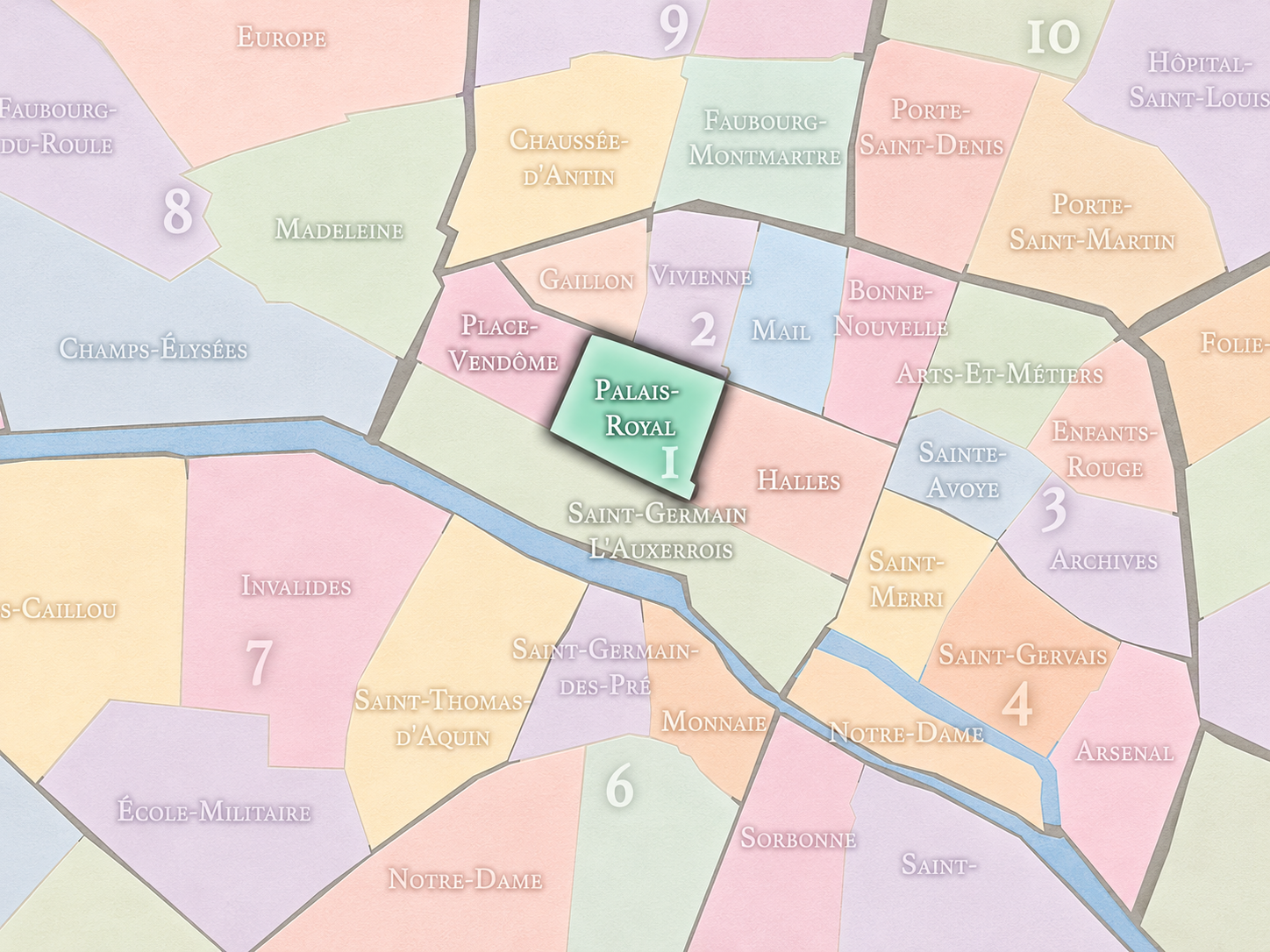
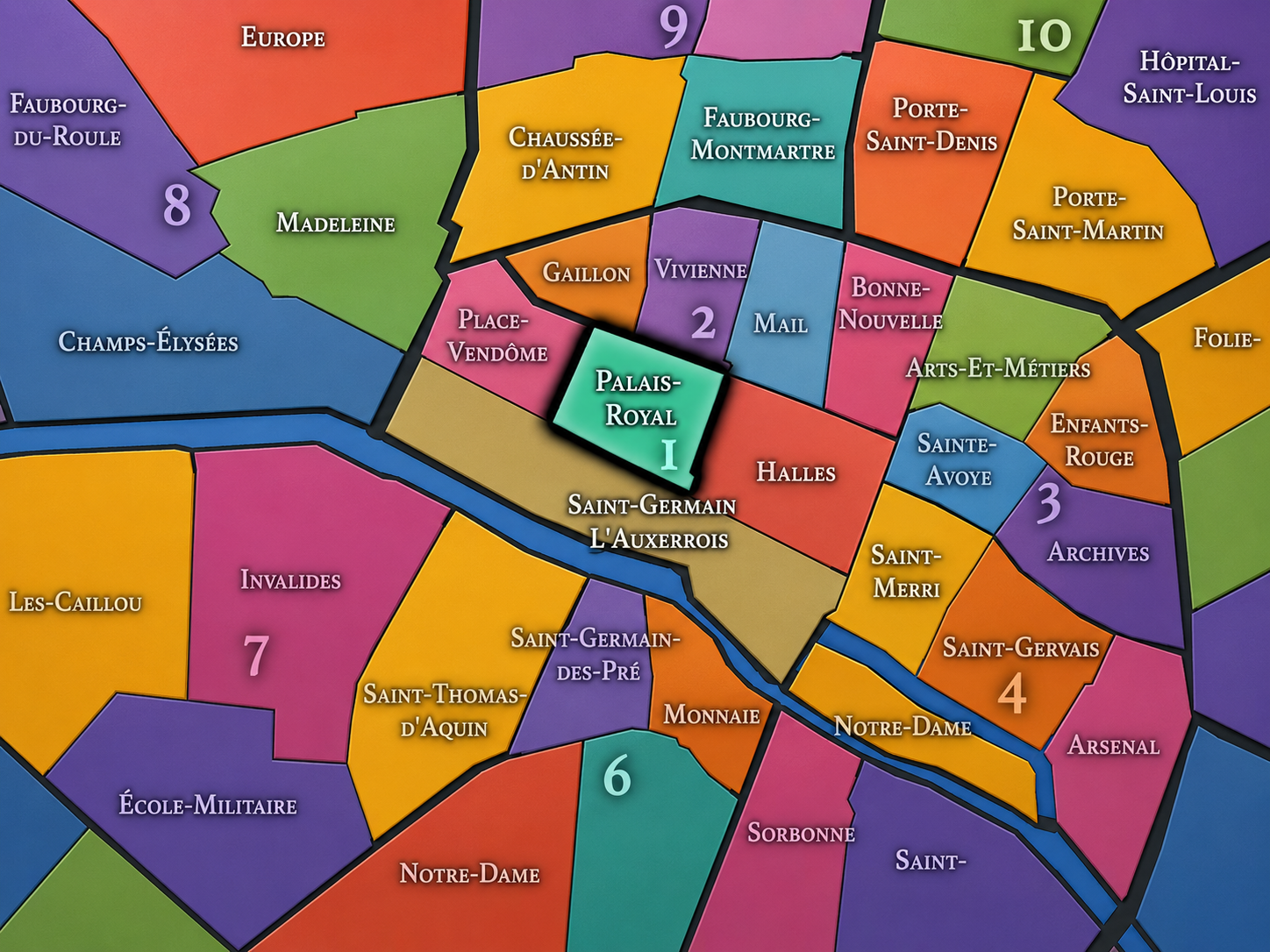
Within the official geography of Paris, Palais-Royal is one of the four administrative quarters of the 1st arrondissement, alongside Saint-Germain-l’Auxerrois, Halles, and Place-Vendôme. It occupies a distinct place within that group. Saint-Germain-l’Auxerrois holds the riverfront, the Louvre, and the oldest symbolic core of the city. Halles carries the memory of Paris’s central market and underground movement. Place-Vendôme expresses formal grandeur, luxury, and imperial urban design. Palais-Royal stands between them as a quarter of institutions, arcades, gardens, theaters, and interior civic life.
Its official status as an administrative quarter gives civic form to a place whose identity might otherwise be reduced to a single monument. Palais-Royal is not only the palace and garden. It is the surrounding urban district shaped by that palace: the streets, cultural institutions, enclosed passages, administrative buildings, and theatrical corridors that developed around one of the most layered complexes in Paris.
Civic Framework
Palais-Royal should be distinguished from the broader Louvre district, the 1st arrondissement as a whole, and the nearby commercial energy of Les Halles. Though it sits beside the Louvre, Palais-Royal has a different temperament. The Louvre is vast, axial, and globally monumental. Palais-Royal is enclosed, arcaded, and inward-facing. The Louvre overwhelms by scale. Palais-Royal reveals itself through passage.
It also differs from Place-Vendôme, whose identity is shaped by luxury, symmetry, formal urbanism, and imperial polish. Palais-Royal is equally refined, but more layered and theatrical. It contains official power, but also garden life. It contains elite architecture, but also memory of public gathering and political unrest. It is a quarter where authority and urban sociability exist side by side.
As an administrative quarter, Palais-Royal is therefore not simply a “neighborhood” in the casual sense. It is a civic-cultural district whose local identity radiates from a major architectural complex. Its distinction comes from the relationship between palace, garden, arcade, institution, and theater — a combination rarely matched elsewhere in Paris.
Neighborhood Distinction
Parisian Identity
Palais-Royal expresses a particularly Parisian kind of elegance: not the open monumentality of the Champs-Élysées, nor the riverine grandeur of the Louvre, but the cultivated drama of a hidden world. It is a quarter of thresholds. One passes from street to arcade, from arcade to garden, from garden to courtyard, from public life to institutional authority. Its spaces feel composed, almost theatrical, as if the city has arranged itself into scenes.
This theatrical quality is not accidental. The quarter has long been tied to performance, sociability, fashion, literature, and political conversation. The Comédie-Française anchors the southwestern edge of the Palais-Royal complex, while the galleries and garden have historically invited strolling, gathering, watching, and being watched. The quarter’s identity is both civic and performative: Paris as government, Paris as stage, Paris as salon, Paris as promenade.
Palais-Royal is also a reminder that Parisian public life has often flourished inside spaces that were not originally built for the public. A princely enclosure became a place of cafés, shops, debate, theater, and revolutionary agitation. The quarter’s genius lies in that conversion: private power becoming urban theater.
Neighborhood Connections
Every administrative quarter belongs to a wider Parisian fabric. These connections place Palais-Royale within the city’s civic, participatory, and cultural geography:
-
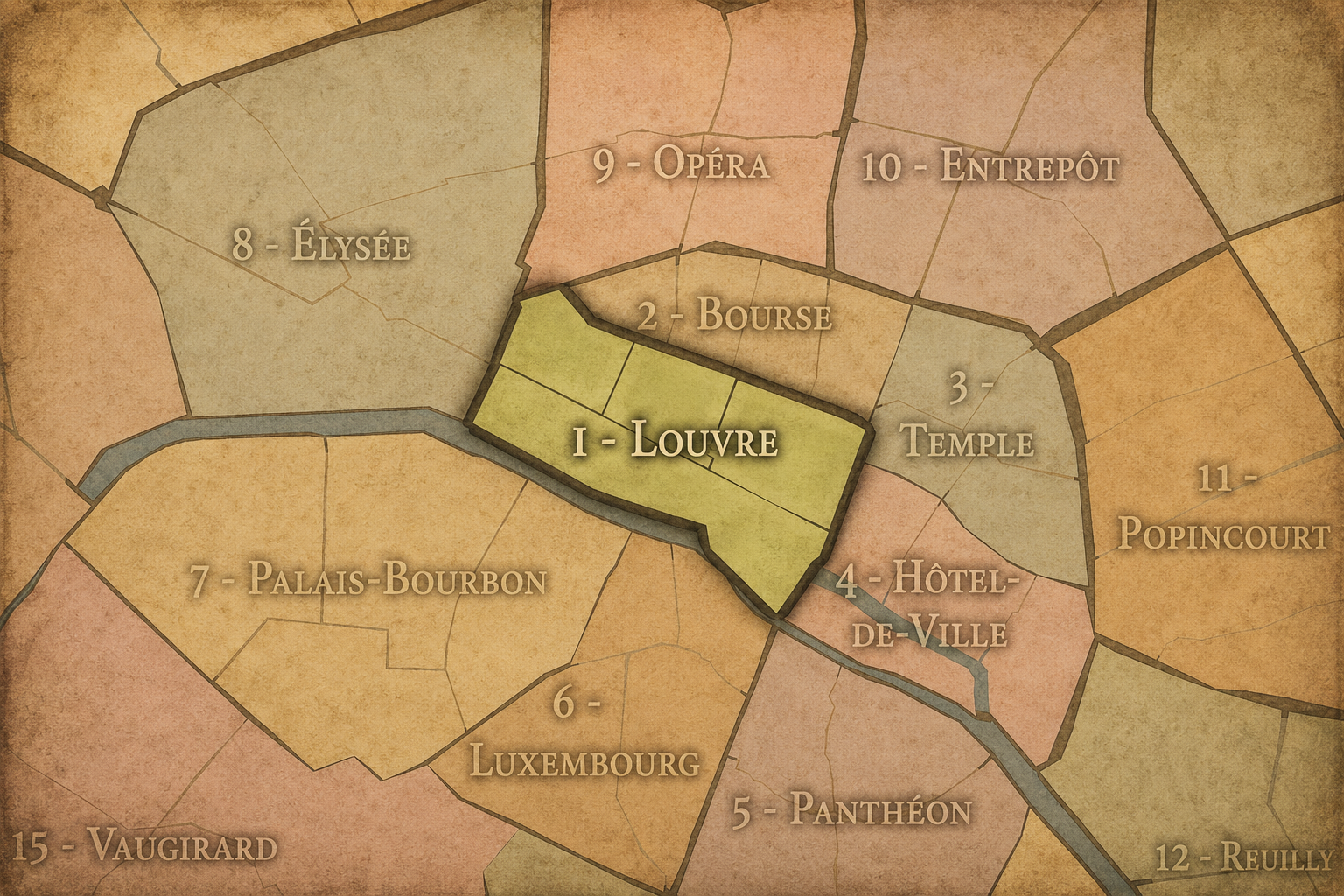
1er Arrondissement — Louvre
-
Louvre-Opéra
The History
The deeper origins of Palais-Royal lie in the expansion of royal and aristocratic Paris north of the Louvre. Before the palace existed, this area sat within the growing Right Bank city, close to the medieval wall, the court, and the commercial corridors leading toward central Paris. Its later identity was shaped decisively in the 17th century, when Cardinal Richelieu assembled property near the Louvre and commissioned a residence that matched his extraordinary political stature.
The first palace was therefore born from proximity to power. Richelieu’s position required a residence close to the king and to the machinery of government. By building near the Louvre, he placed himself physically and symbolically beside the monarchy. The future Palais-Royal began as an architecture of influence: not the residence of the king, but the palace of the minister who helped consolidate royal authority.
From the beginning, the site was more than domestic. It was political, cultural, and representational. Richelieu was a statesman, patron, collector, and theatrical figure in the grand drama of the French state. The palace that bore his title reflected that world.
Origins
16th–17th Century
The 17th century is the foundational age of Palais-Royal. In 1624, Richelieu purchased the Hôtel de Rambouillet and began the process of creating the Palais-Cardinal. The main body of the palace was built in the 1630s by architect Jacques Lemercier, who also worked on the Sorbonne. The residence stood near the Louvre and was designed as a statement of ministerial power at the center of the kingdom.
After Richelieu’s death, the palace passed into royal hands. Anne of Austria, regent for the young Louis XIV, lived there with her sons, and the building became known as the Palais-Royal. During the upheaval of the Fronde, the royal family’s experience of unrest in Paris helped shape Louis XIV’s later distrust of the capital and his eventual preference for royal distance from Parisian turbulence.
In 1661, the palace became associated with the Orléans branch of the royal family, beginning a long princely chapter in its history. From this point forward, Palais-Royal was not simply a royal residence in the narrow sense, but a dynastic and urban domain. Its gardens, apartments, galleries, and theaters became part of the social and cultural architecture of aristocratic Paris.
In the 18th century, Palais-Royal became one of the great public stages of Paris. Although still tied to princely ownership, its gardens and galleries increasingly functioned as spaces of sociability, commerce, entertainment, and political conversation. The enclosed palace grounds became a city within the city: arcades, shops, cafés, gaming rooms, bookstalls, theaters, and promenades gathered inside an aristocratic frame.
This was the century in which Palais-Royal acquired its reputation as a place of talk. The quarter’s arcades and garden invited circulation and encounter. Here, news, rumor, fashion, literature, and political argument moved quickly through a space that was both protected and public-facing. In the years before the Revolution, Palais-Royal became one of the places where the tensions of the old regime could be felt in urban form.
Its revolutionary associations are especially significant. The Palais-Royal, by then linked to the House of Orléans, became a setting for agitation and public assembly. The famous episode of Camille Desmoulins speaking to the crowd in July 1789 belongs to this wider memory of the palace garden as a charged political landscape. The quarter’s identity shifted again: from princely promenade to revolutionary threshold.
18th Century
19th Century
The 19th century transformed Palais-Royal into a quarter of institutional continuity, theatrical prestige, and urban memory. After the Revolution and the upheavals of empire, restoration, and regime change, the palace complex passed through changing political meanings. Its spaces were adapted to the needs of the modern state, while its theaters and arcades preserved the quarter’s older association with performance and public life.
The Comédie-Française became one of the defining presences of the quarter. The Salle Richelieu, built at the end of the Age of Enlightenment and connected to the Palais-Royal complex, became the company’s principal theater in the revolutionary era. The Comédie-Française describes the theater as emerging from the social and political conflicts of that period, with part of the troupe taking up residence there in 1791.
Throughout the century, Palais-Royal retained its reputation as a place of elegance, theater, and passage. But the rise of larger boulevards, department stores, and new entertainment districts gradually changed the role of its arcades. What had once been one of the great centers of fashionable public life became more historic, more enclosed, and more reflective of an earlier Parisian urban culture.
In the early and mid 20th century, Palais-Royal stood as one of central Paris’s great inherited interiors. Its palace, galleries, garden, and theater preserved a world shaped by monarchy, revolution, literature, and statecraft, even as the city around it modernized. The quarter remained close to the administrative and cultural heart of the capital, but its mood was increasingly one of continuity rather than transformation.
The Comédie-Française continued to anchor the quarter’s theatrical identity, while state institutions reinforced its civic role. The garden and arcades offered a quieter form of centrality: not the bustle of Les Halles, not the monumental crush of the Louvre, but a more composed experience of Parisian public space. In an age of war, occupation, liberation, and postwar recovery, Palais-Royal held onto the symbolic power of permanence.
Its architecture also carried memory in a particularly visible way. The quarter did not need to announce itself through height or scale. Its identity lived in proportion, enclosure, colonnades, stone, trees, and the measured relationship between public path and formal garden. In this sense, Palais-Royal remained one of the city’s great lessons in urban restraint.
Early–Mid 20th Century
Late 20th Century
The late 20th century brought renewed attention to Palais-Royal as both heritage site and contemporary cultural space. Its institutions remained central: the Ministry of Culture, Conseil d’État, Conseil constitutionnel, and Comédie-Française all contributed to the quarter’s unusual combination of state authority and artistic life.
The most visible modern intervention was Daniel Buren’s Les Deux Plateaux, installed in the Cour d’Honneur in 1986. Commonly known as the Buren Columns, the work introduced a bold contemporary rhythm of black-and-white striped columns into the historic courtyard. Its arrival was controversial, but it eventually became one of the most recognizable late-20th-century artistic interventions in Paris, joining the quarter’s older theatricality with a new visual language of repetition, play, and public interaction.
This moment sharpened one of Palais-Royal’s defining tensions: how should a historic space continue to live? The answer, in the late 20th century, was not simple preservation alone. It was dialogue — between classical architecture and contemporary art, state authority and public experience, inherited grandeur and modern visual experimentation.
In the 21st century, Palais-Royal remains one of the most refined and layered quarters of central Paris. Its garden is still a place of pause within the dense Right Bank. Its arcades still carry shops, galleries, and the memory of old commercial elegance. Its institutions continue to connect the quarter to the life of the French state. Its theaters keep performance at the center of its identity.
Today, the quarter is also deeply photographic. The alignments of the arcades, the contrast of the Buren Columns, the ordered garden, the filtered light beneath the galleries, and the surrounding streets all make Palais-Royal a place of frames within frames. It invites a slower kind of looking: through columns, under arches, across gravel paths, into courtyards, along façades.
For CityNeighborhoods: Paris, Palais-Royal is essential because it demonstrates that a neighborhood can be intimate without being informal. It is not village-like in the way some outer quarters are. It is not chaotic, expansive, or sprawling. Its identity is composed. It is a neighborhood of cultivated enclosure, where the city’s political, theatrical, architectural, and artistic histories are gathered into a remarkably controlled urban space.
21st Century
Spirit and Legacy
Palais-Royal is one of the great interior worlds of Paris. Its spirit is not loud, but it is unmistakable. It is the hush of the garden after the surrounding streets, the rhythm of arcades, the theatrical edge of the Comédie-Française, the authority of state institutions, the playfulness of modern columns in a classical courtyard, and the lingering memory of a palace that became a public stage.
Its legacy lies in transformation without erasure. A cardinal’s palace became a royal residence. A royal residence became a princely domain. A princely domain became a place of public promenade, commerce, theater, revolutionary conversation, state administration, and contemporary art. Few quarters in Paris carry so many shifts while remaining so spatially coherent.
To walk Palais-Royal is to enter a city within the city — Paris gathered behind walls and arcades, formal yet alive, dignified yet theatrical. It reminds us that public life does not always unfold in open squares or grand boulevards. Sometimes it flourishes in enclosed gardens, shaded galleries, and courtyards where history has learned to speak softly.
The Photography
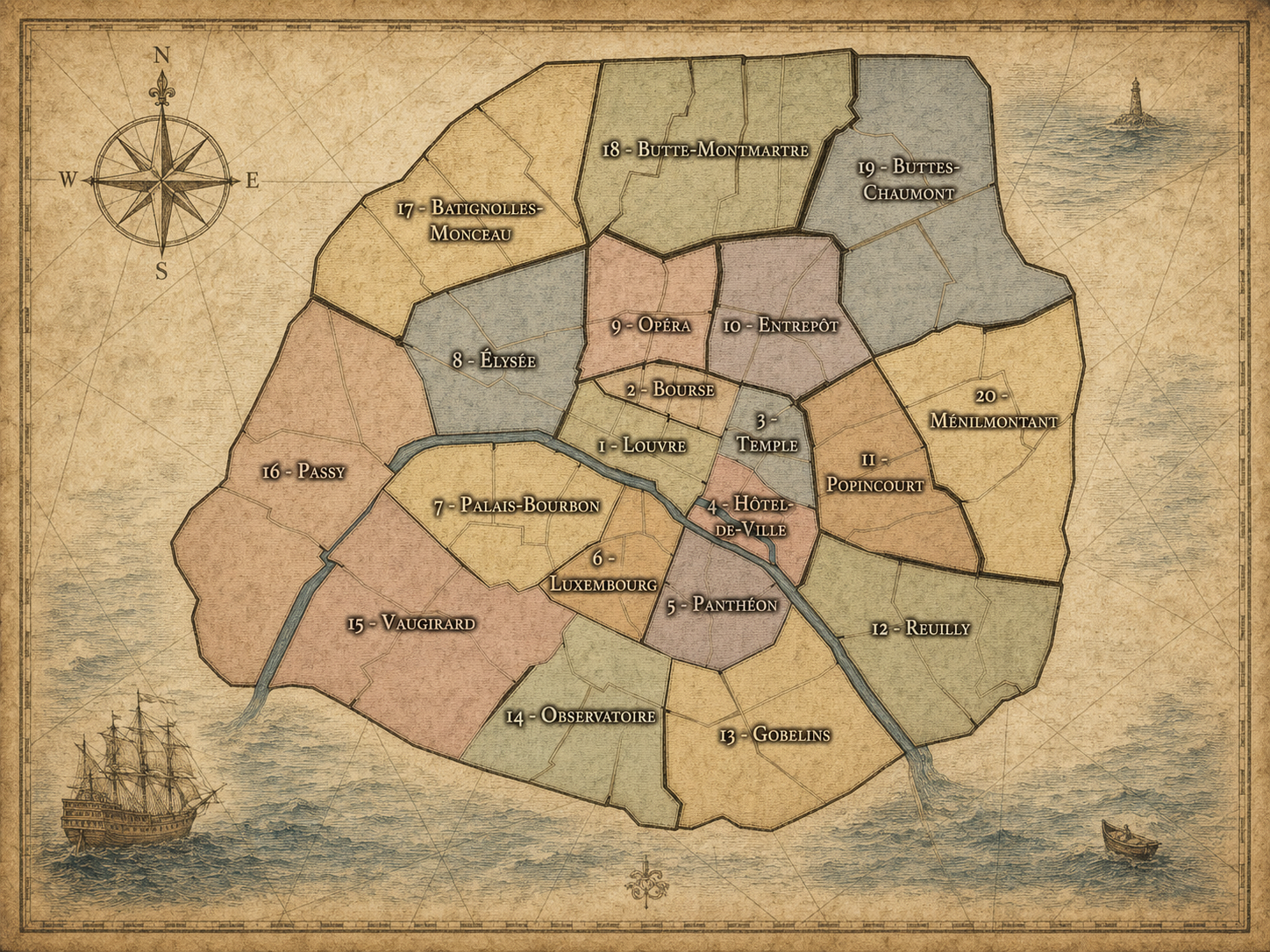
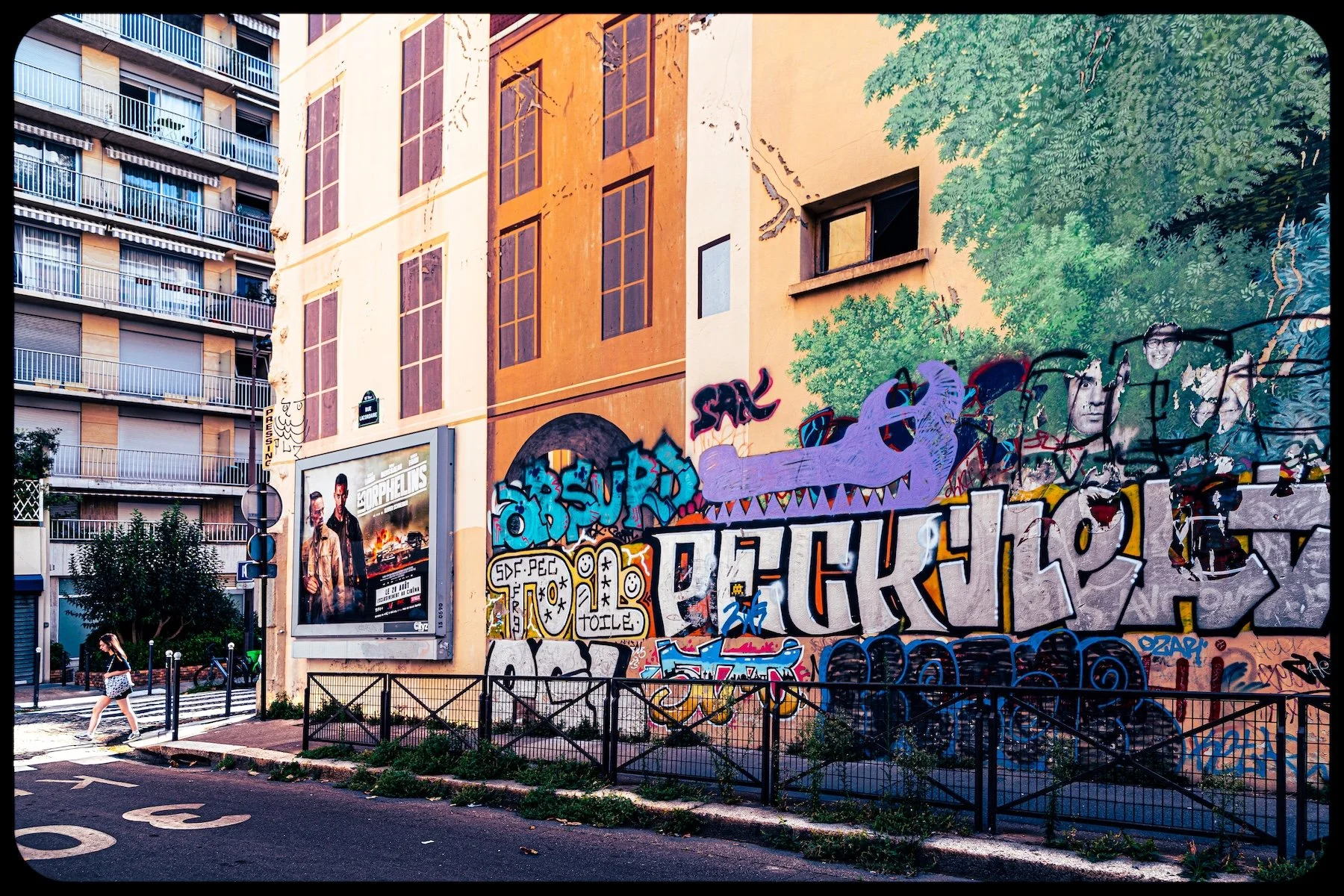
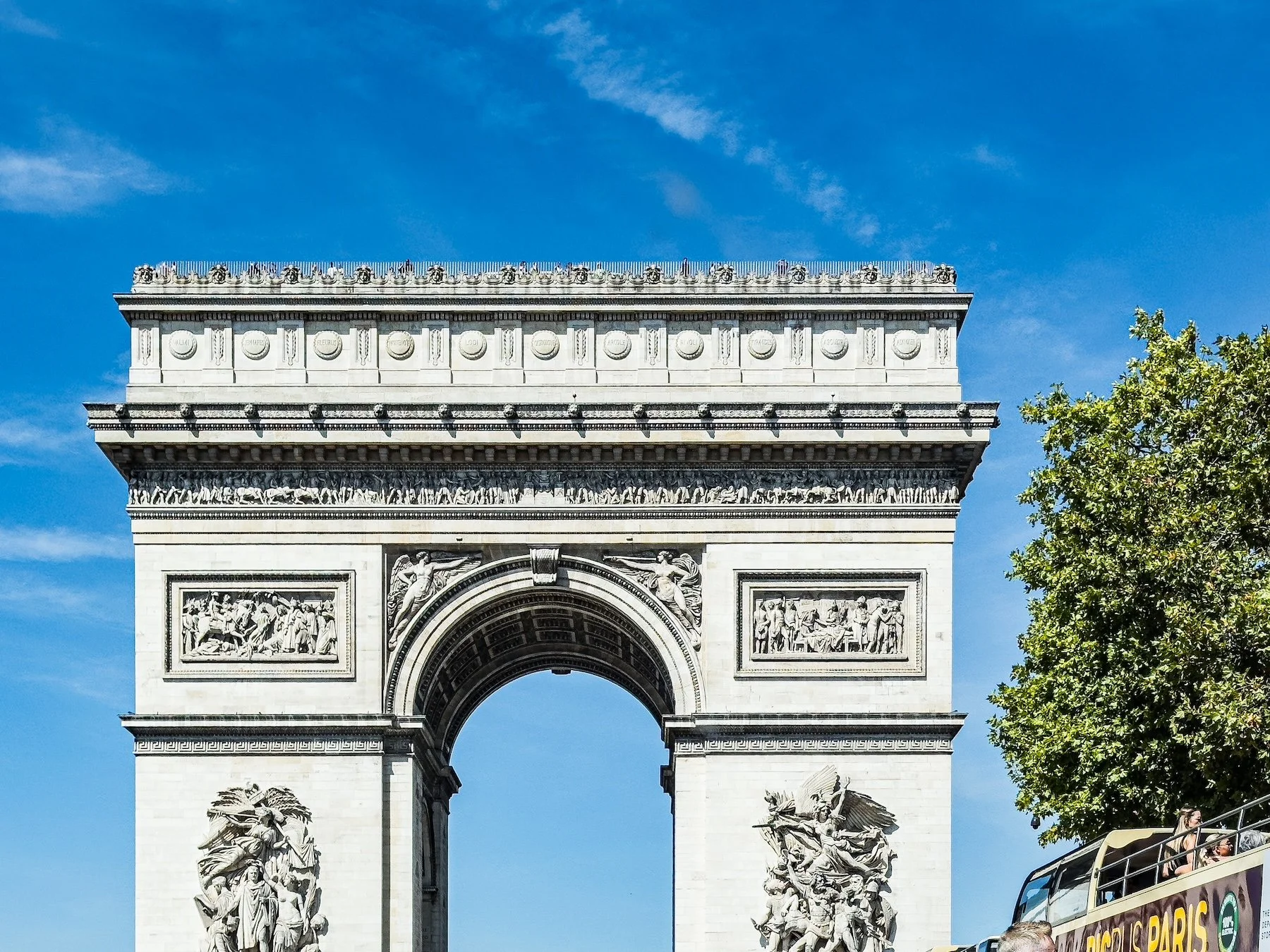
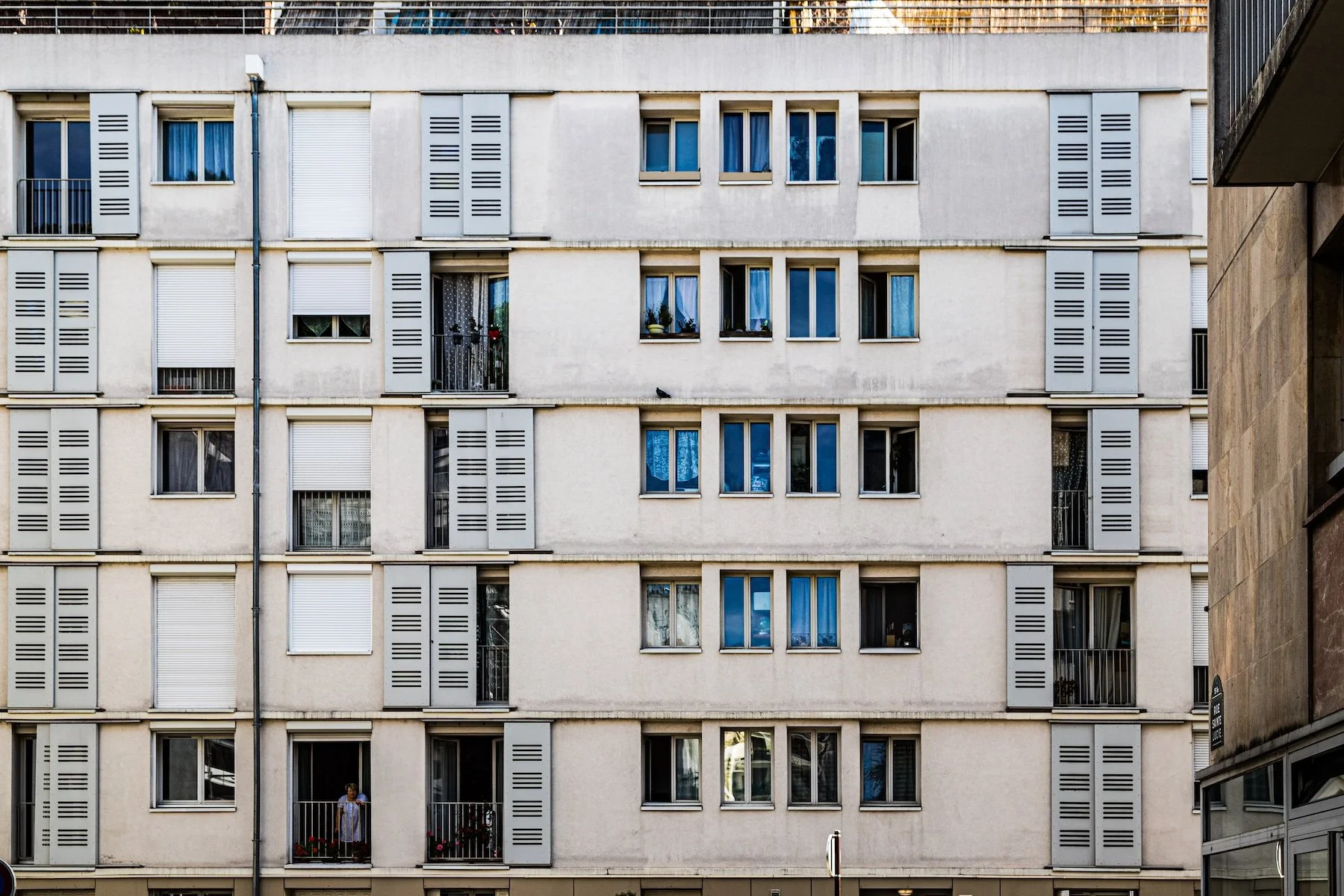
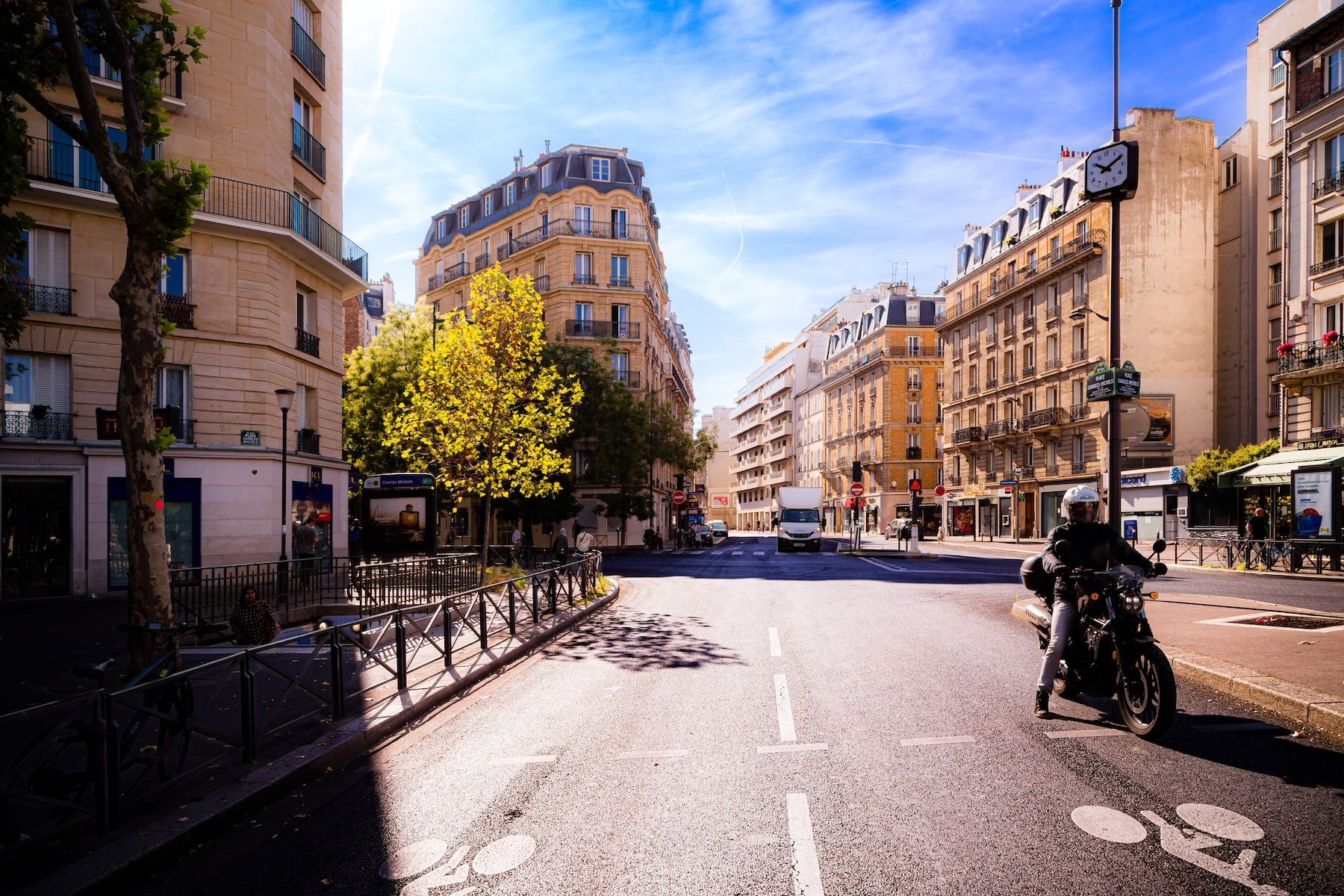
The arrondissements do not share a single visual identity. Instead, they organize Paris into twenty broad visual fields, each gathering its own combination of landmarks, streetscapes, institutions, residential districts, commercial corridors, parks, rail stations, markets, cemeteries, and riverfront edges.
Some arrondissements are defined by monumental scale: royal palaces, ceremonial avenues, government buildings, museums, formal gardens, and internationally recognized landmarks. Others are shaped by hills, canals, rail gateways, apartment-lined boulevards, neighborhood markets, former village streets, industrial remnants, parks, or the quieter rhythms of residential Paris. The arrondissement system gives these varied landscapes a civic frame, allowing the city to be read not as one visual language, but as a sequence of overlapping Parisian atmospheres.
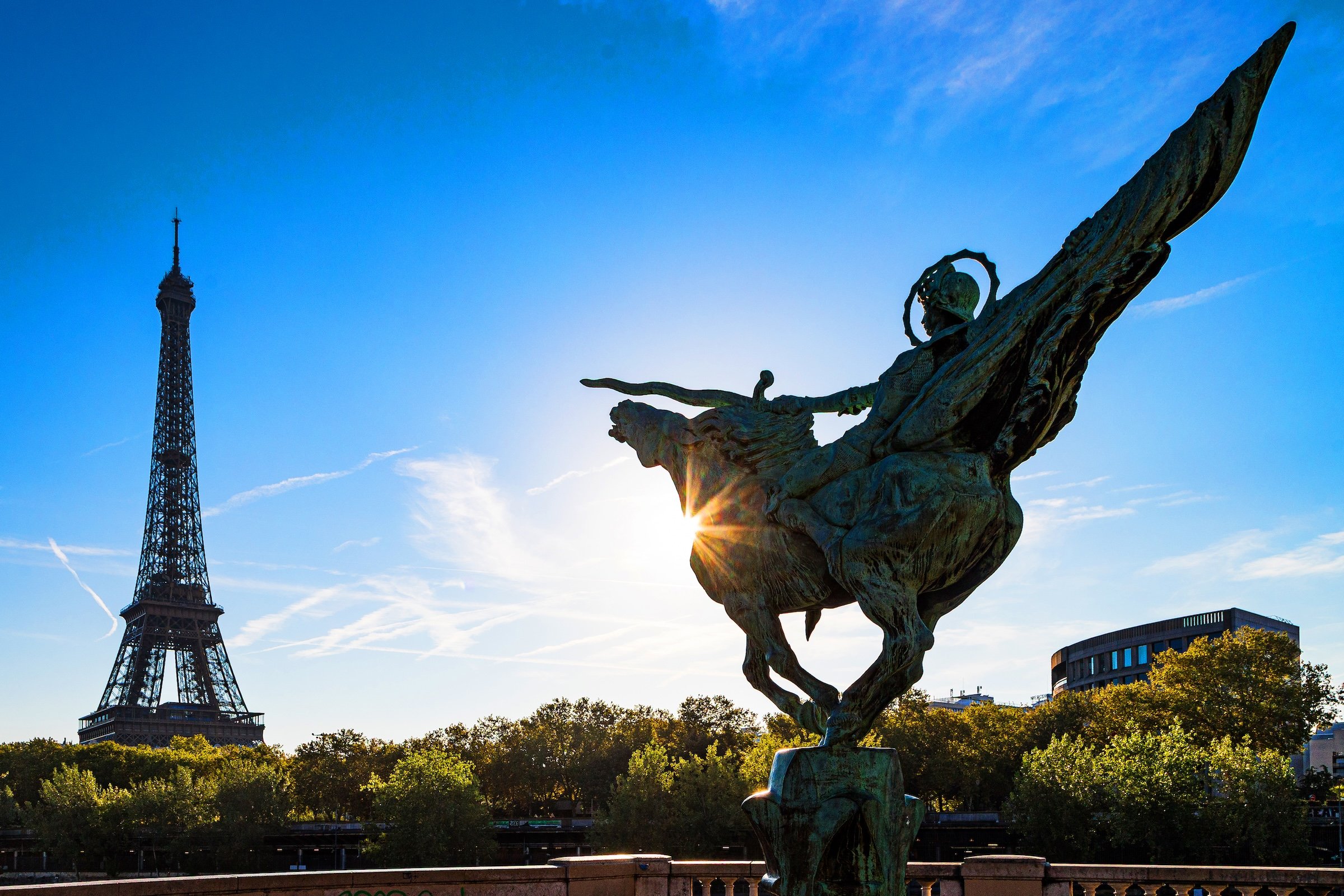
Visual Identity
Through The Lens
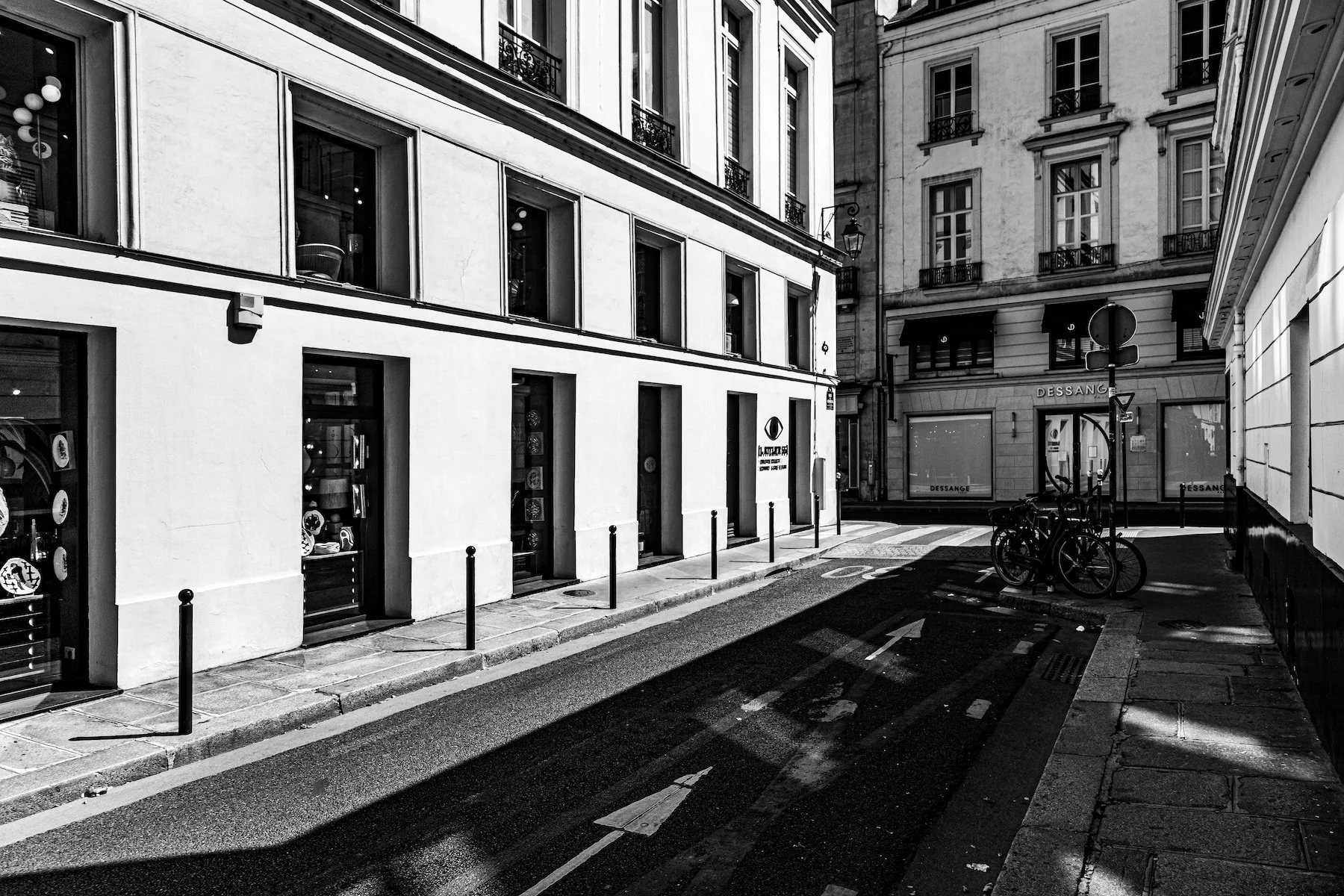
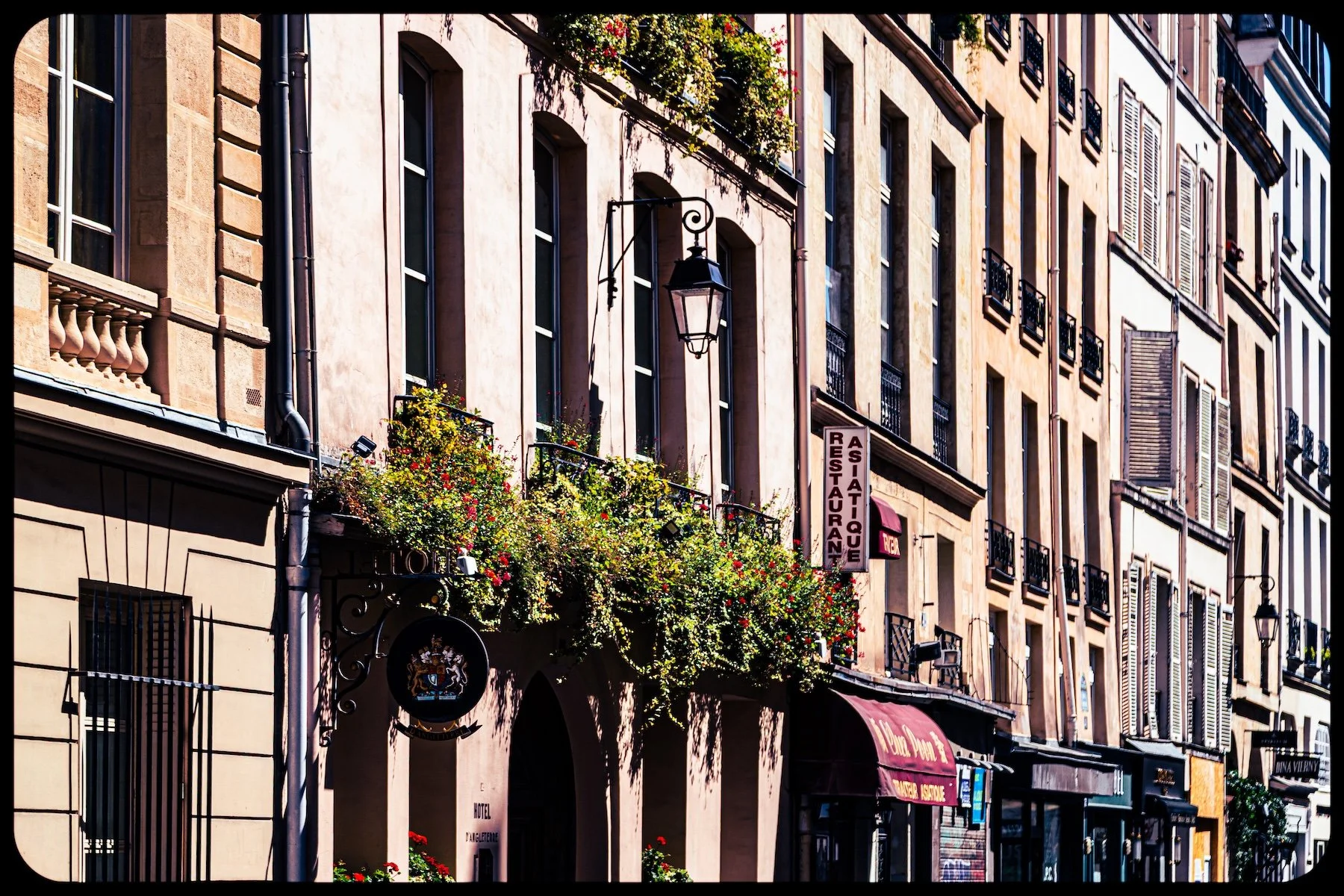
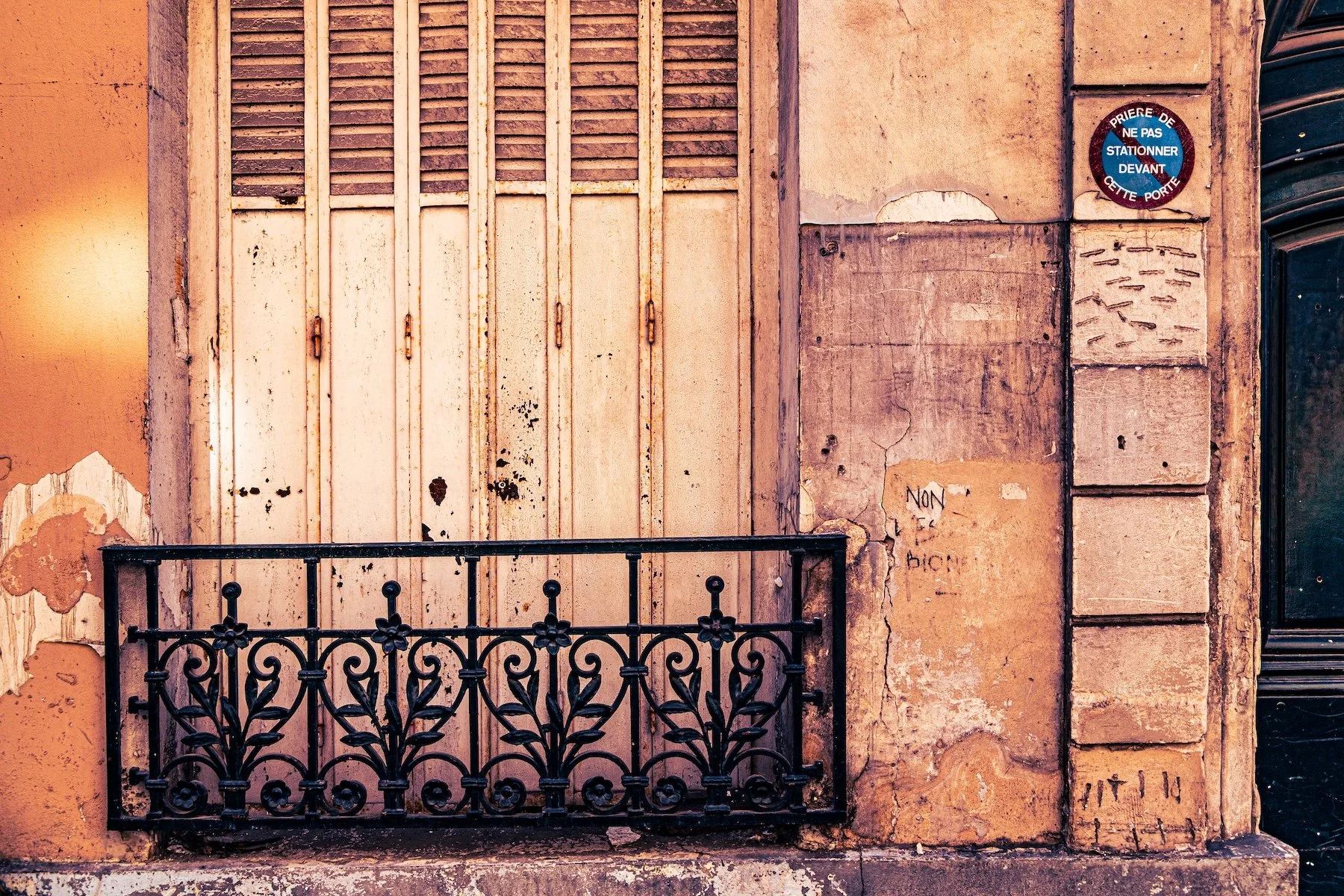
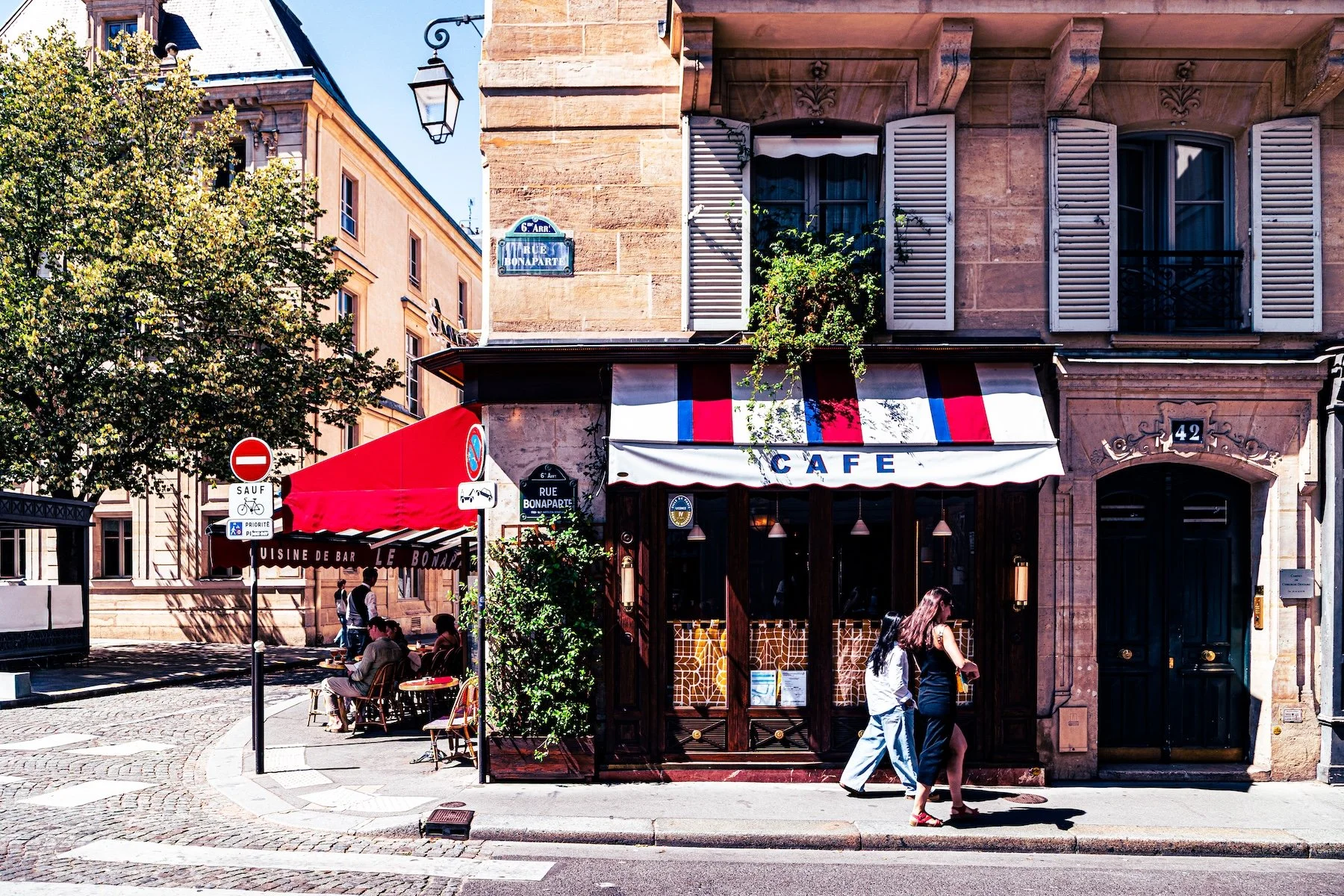
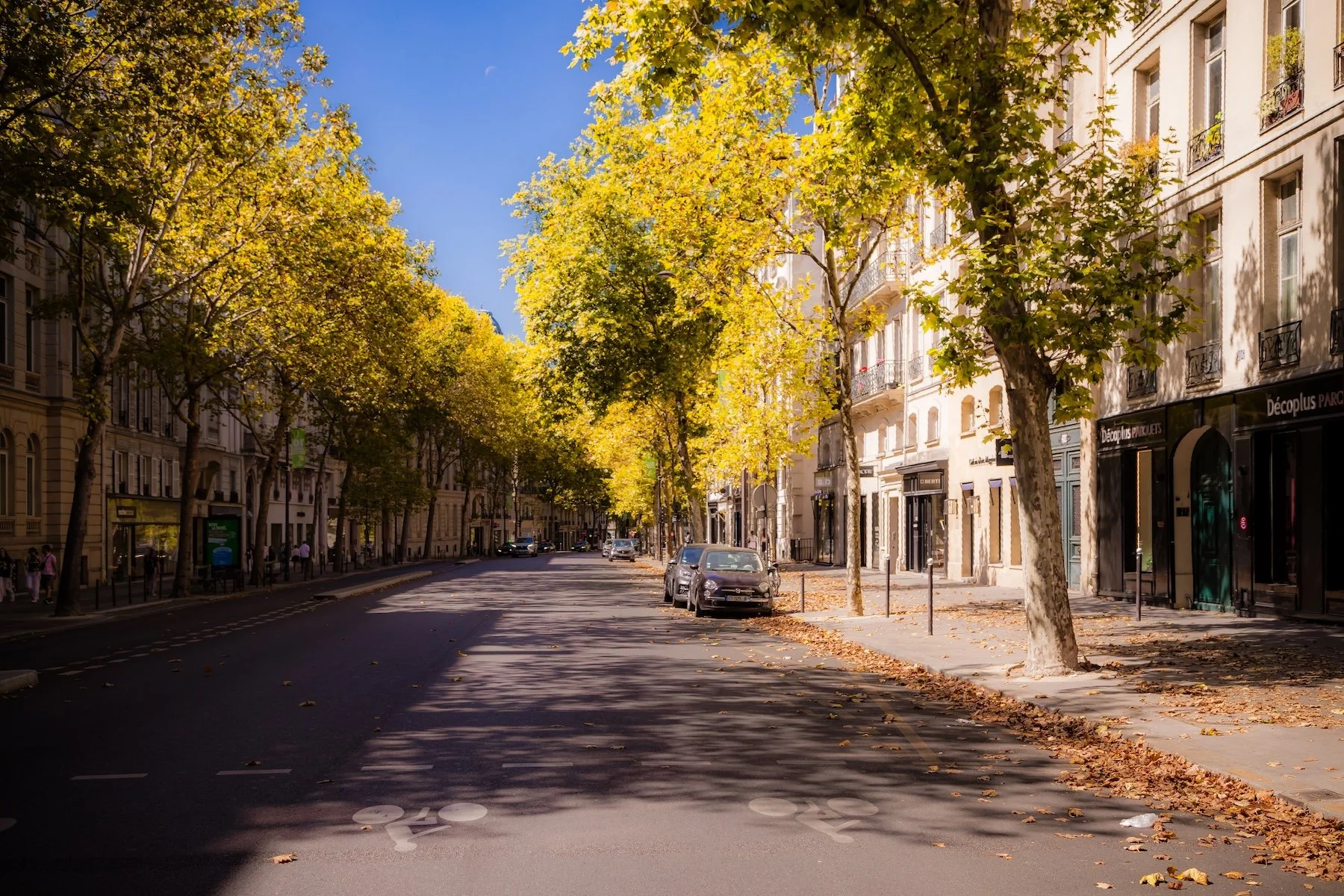
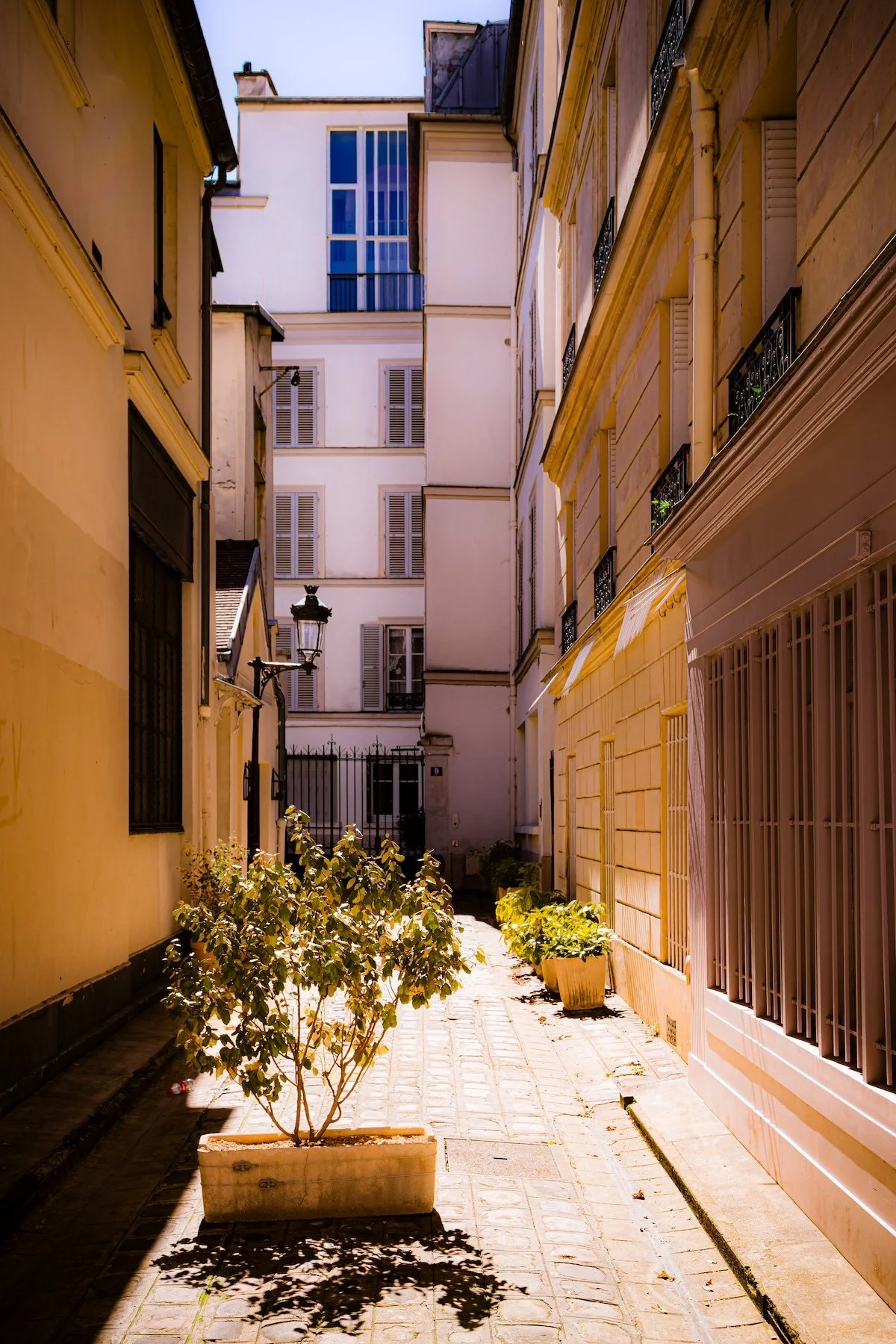
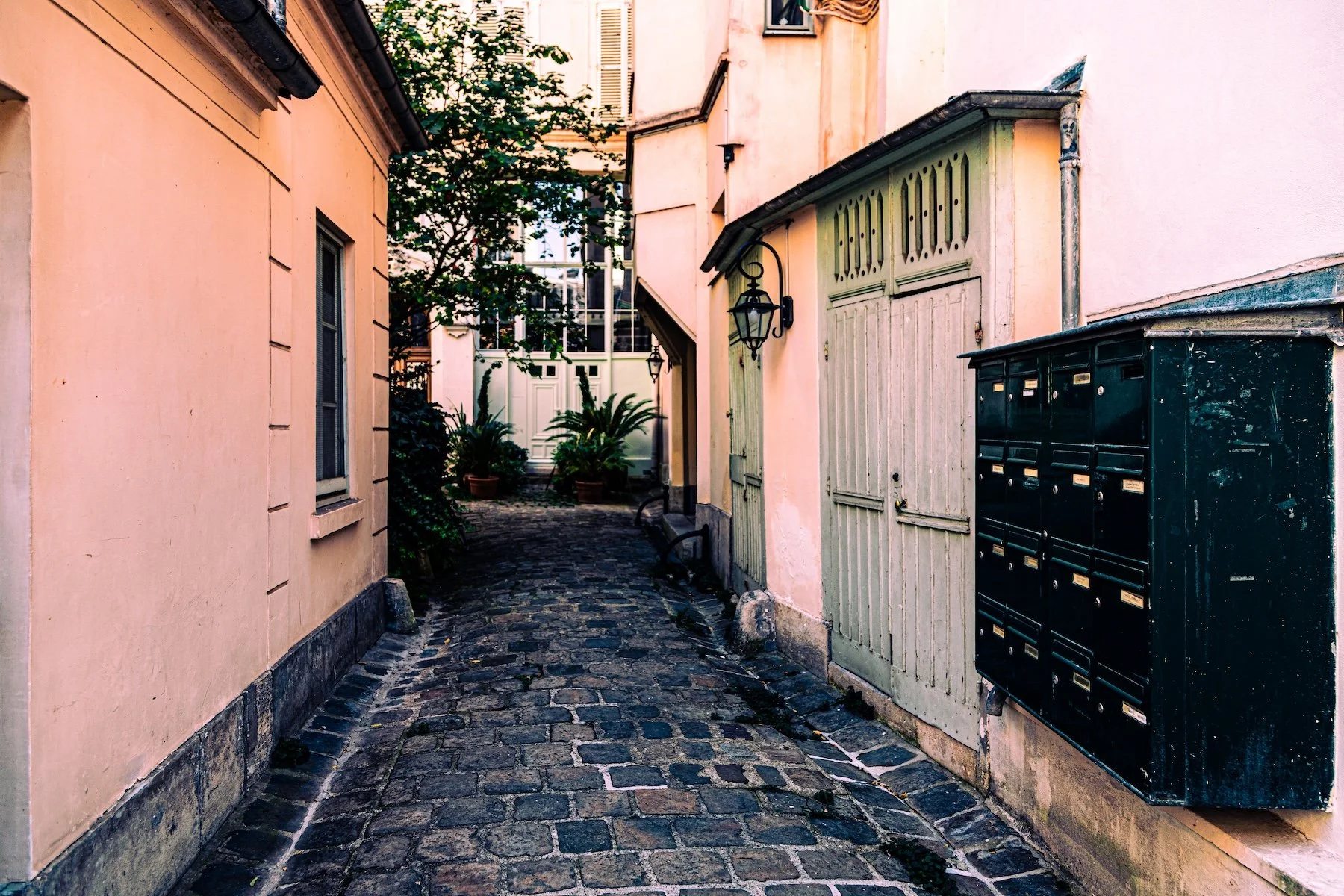
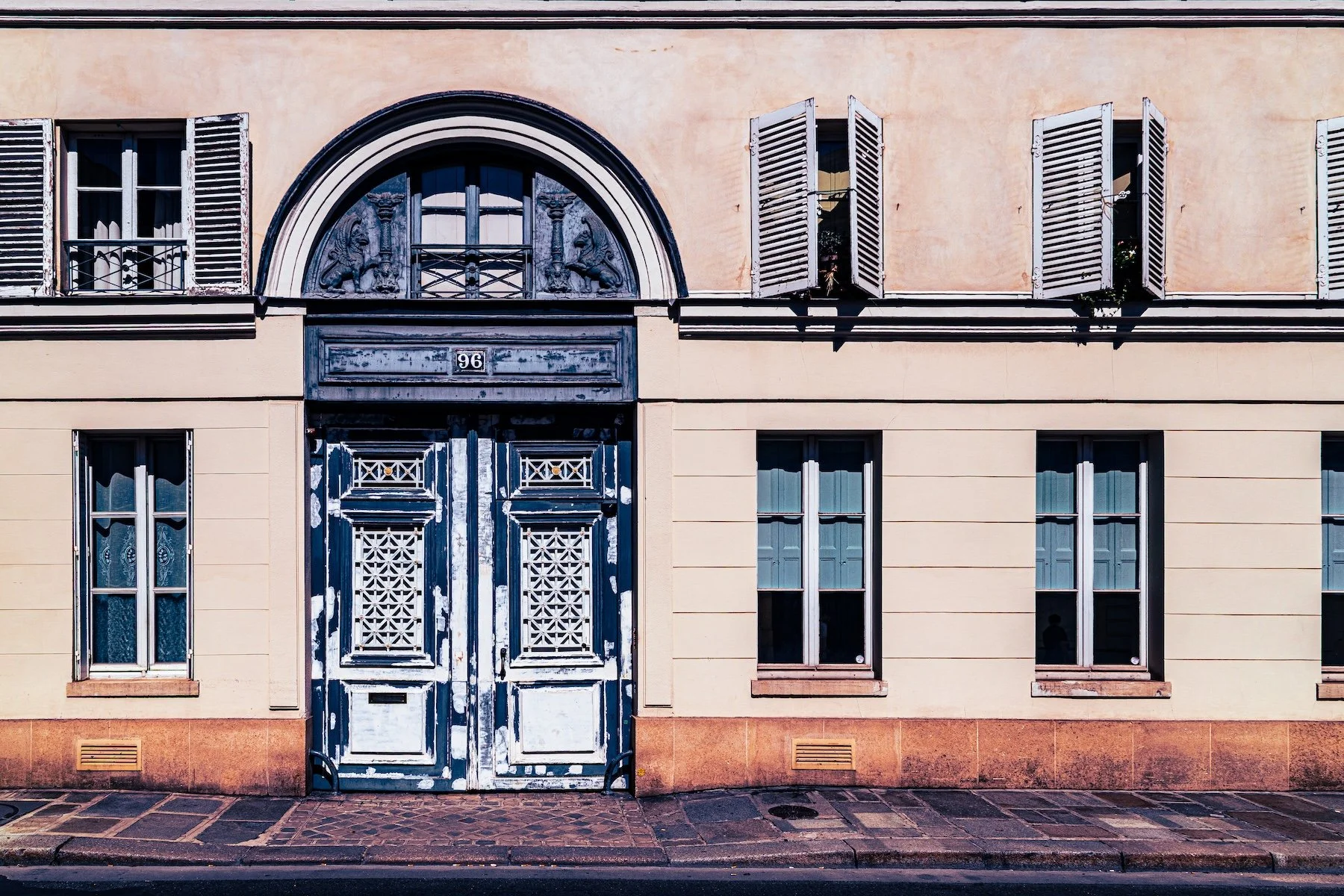
Photographing the arrondissements means moving between the official map and the street-level experience. The camera does not treat each arrondissement as visually uniform. Instead, it looks for the recurring forms, textures, transitions, and contrasts that make each district legible: the geometry of boulevards, the shade of plane trees, the repetition of balconies, the rise of stairways, the curve of canals, the presence of rail stations, the opening of parks, the weight of monuments, and the intimacy of side streets.
On CityNeighborhoods, the arrondissement provides the frame, but the photograph comes from the encounter between map, movement, light, and observation. As the Paris photography is processed, this section will connect each arrondissement more directly to the project’s Photographic Lexicon: the visual strategies, recurring motifs, and compositional patterns that shape how the city is seen through the lens.
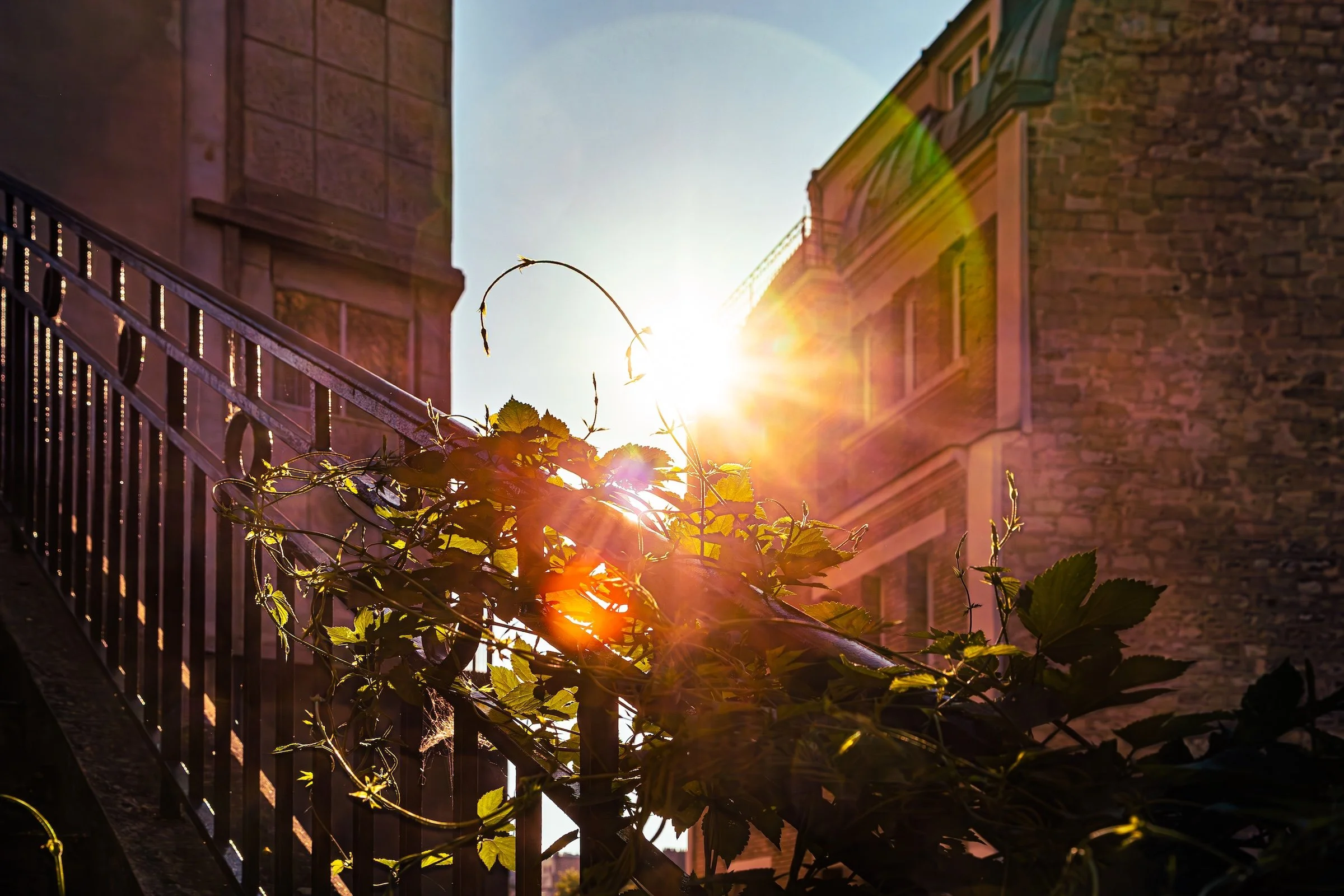
If you visit Paris, these ideas can help inspire your own photography.
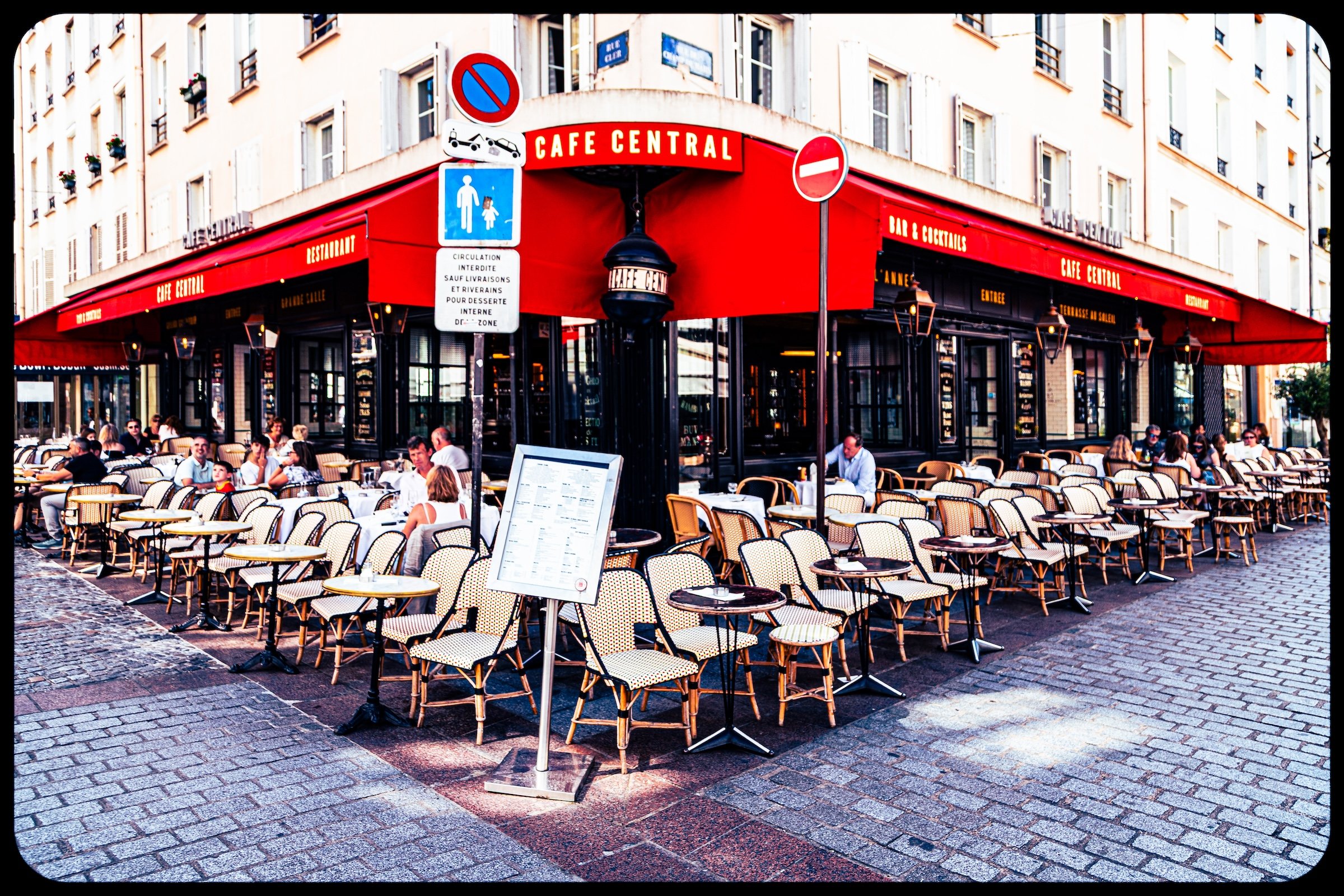
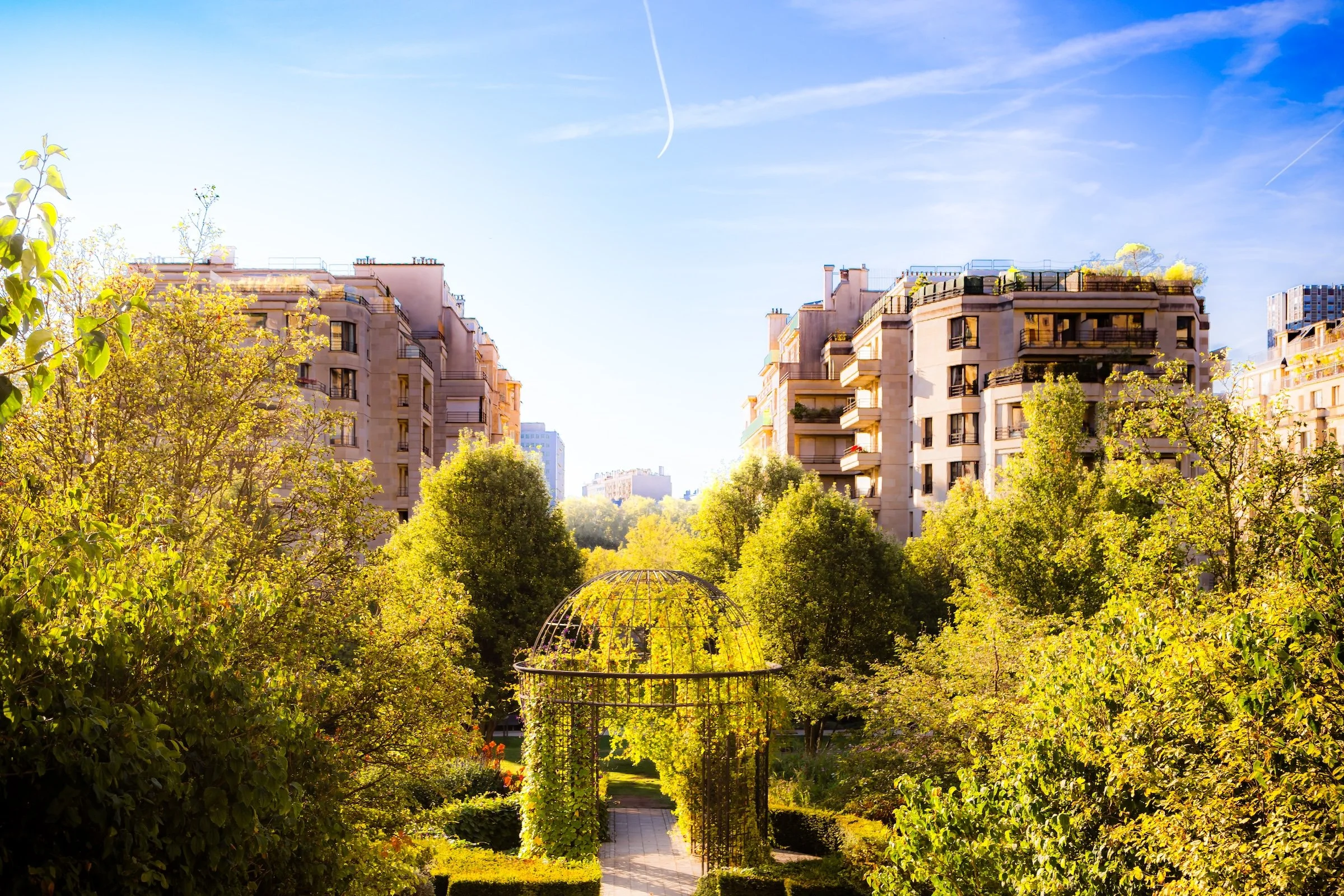
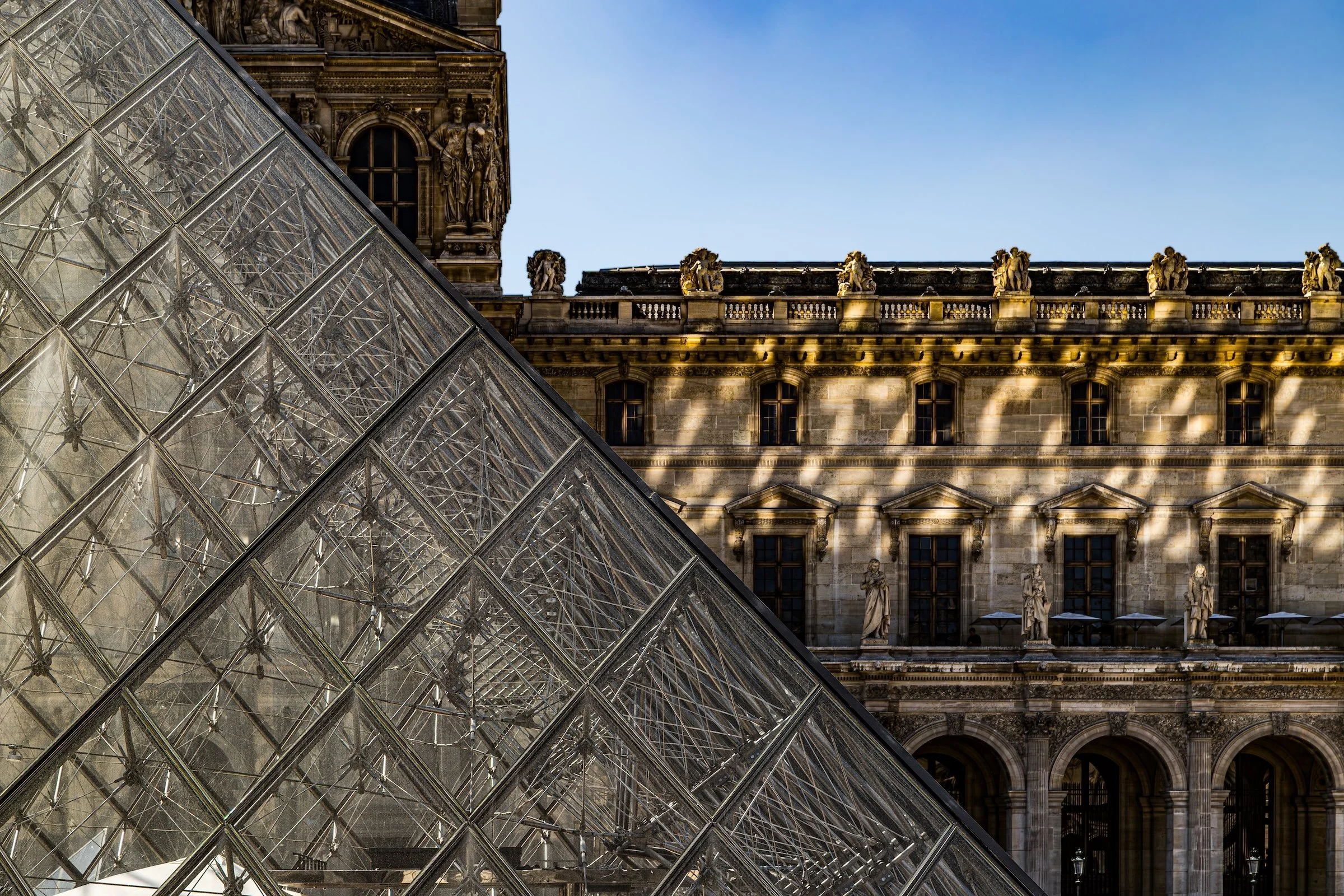
Paris: J’Espere, Je Rêve, Je Vive
Paris Photo Gallery
Paris Field Notes
-
Field Note: August 18, 2025 | 07:58 AM
Conditions: 73°F | Humidity: 72%.
Within the park's interior, the glacial kettle ponds acted as humidity traps, creating a soft, hazy light that filtered through the old-growth oaks. The transition from the park's dense shade to the sun-drenched edges of Oakland Gardens highlighted the day's exceptional "picture-perfect" clarity.
There is a fleeting window in Queens where the humidity of August hasn't yet heavy-set, and the morning sun hits the canopy of Alley Pond Park at a perfect oblique angle. Arriving just before 8:00 AM, I watched the light break through the oaks and tulip trees, casting long, dramatic shadows across the wet grass. It’s in these quiet, golden moments that the park feels less like a city escape and more like the ancient glacial valley it actually is.
Other neighborhoods visited:
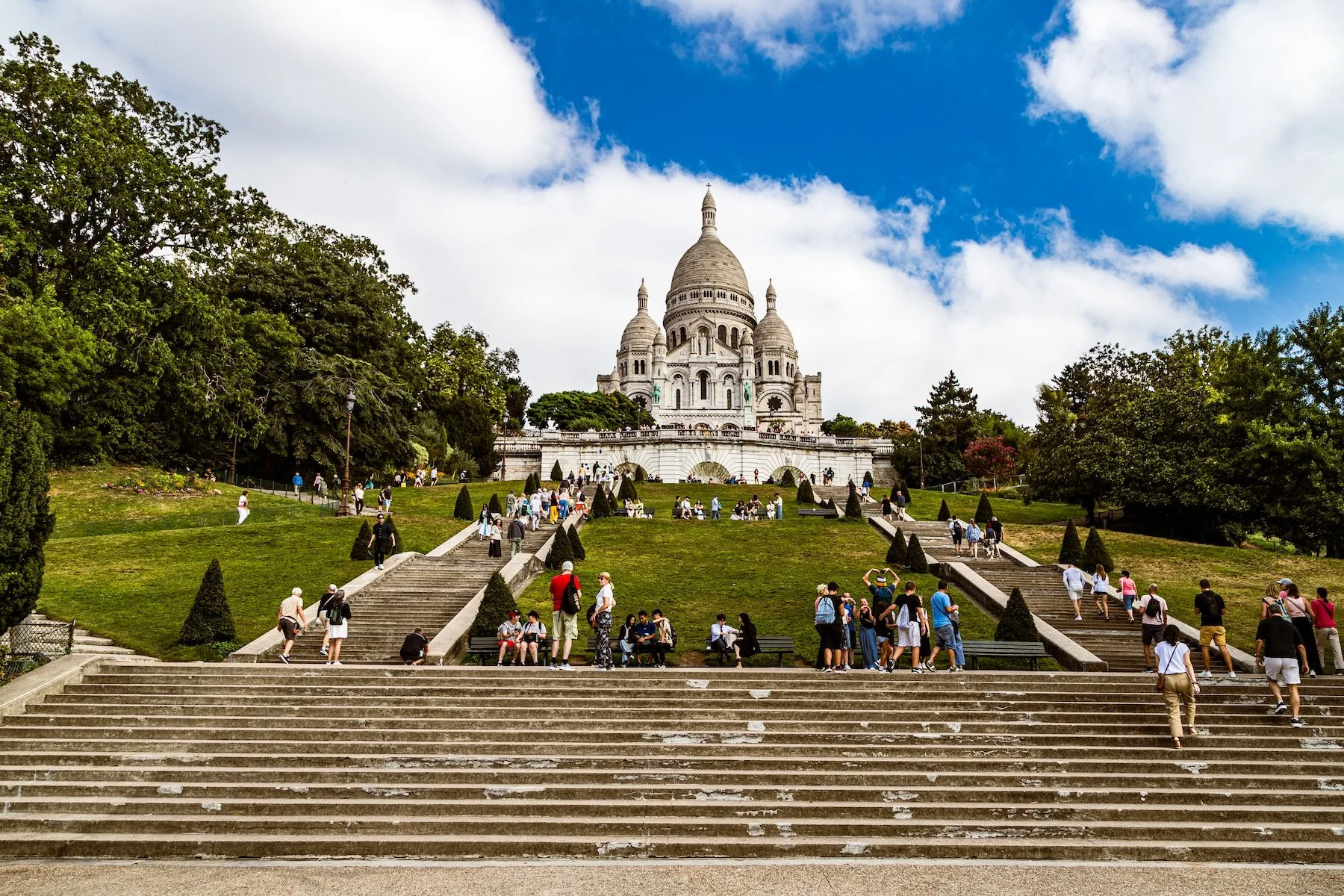
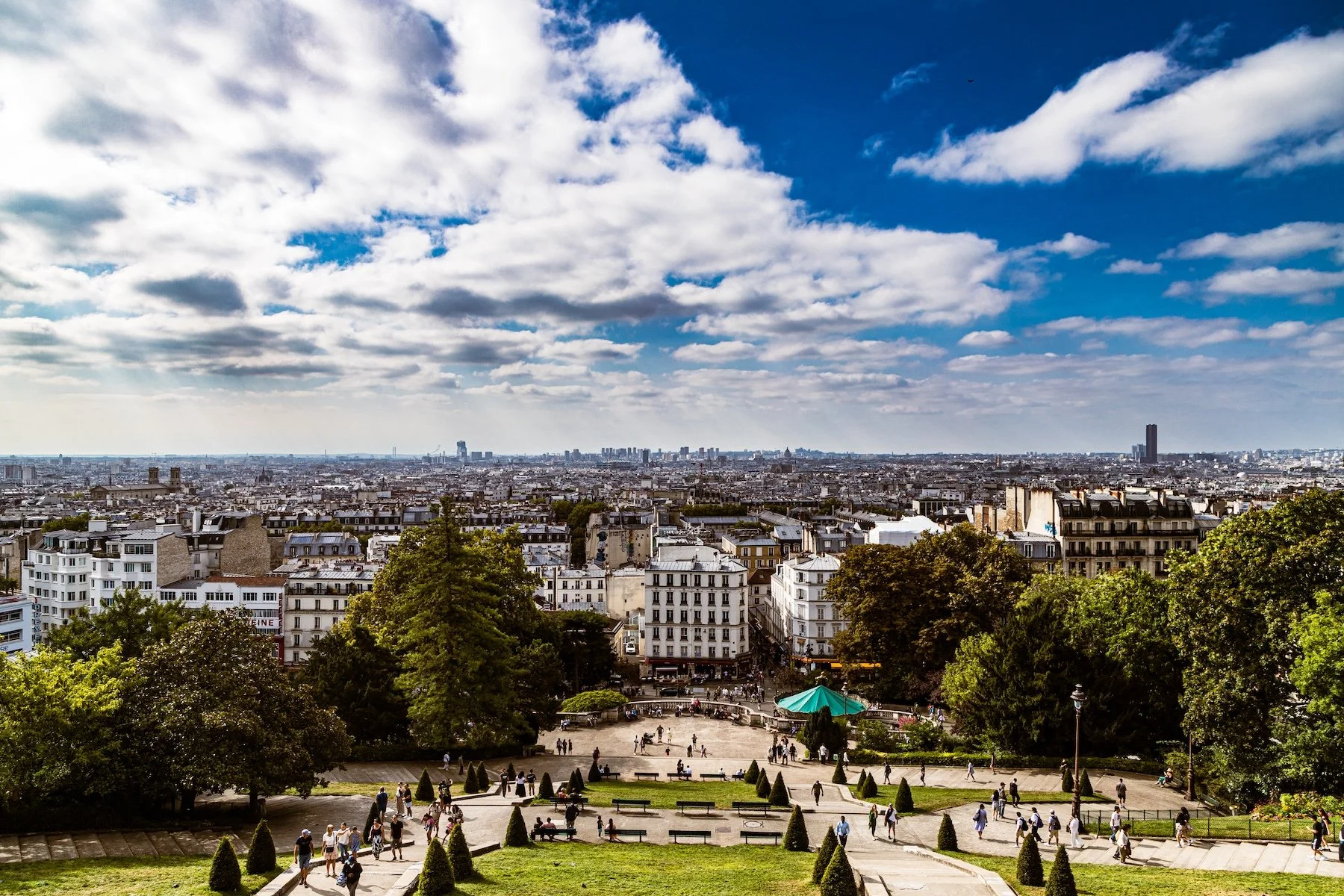
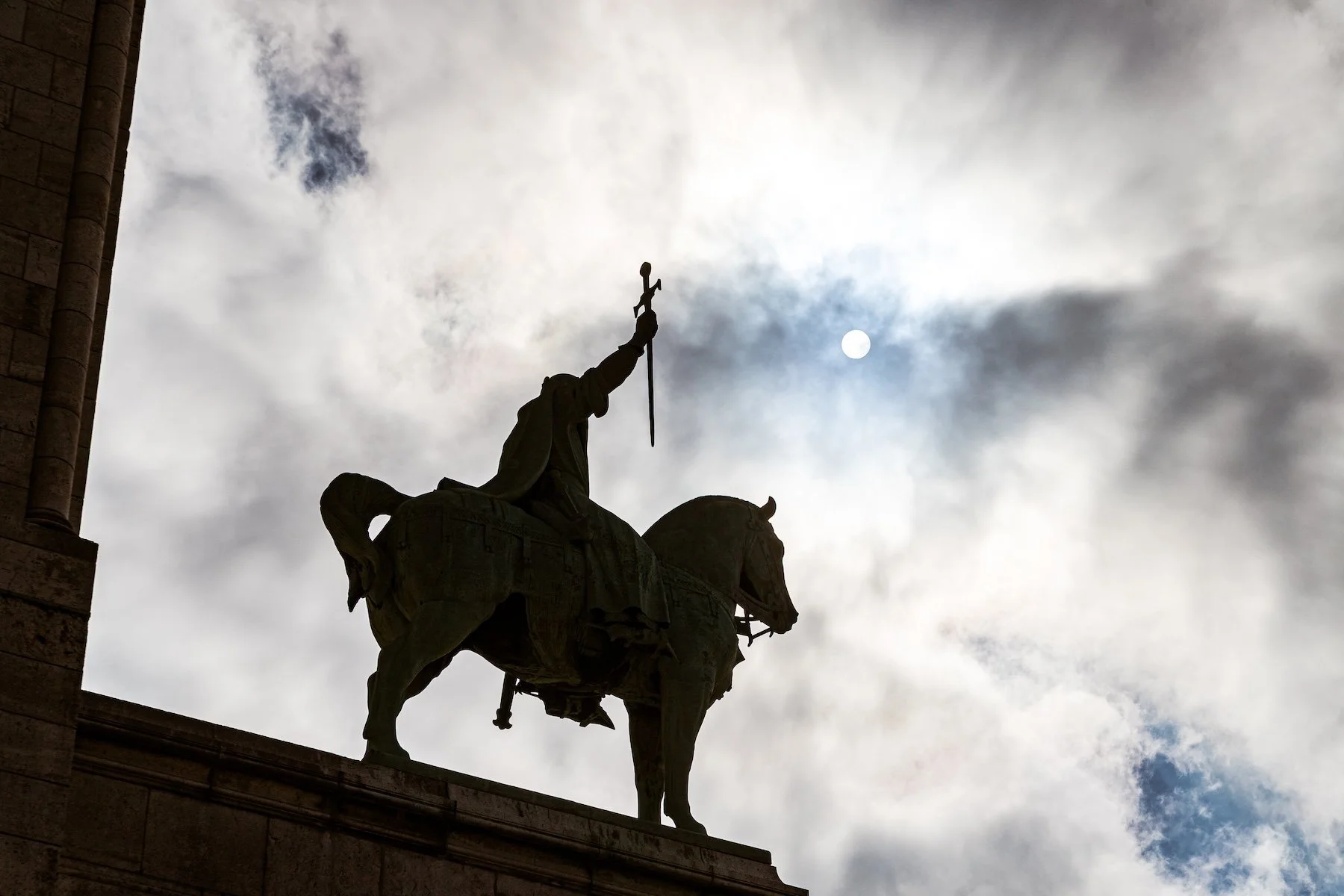
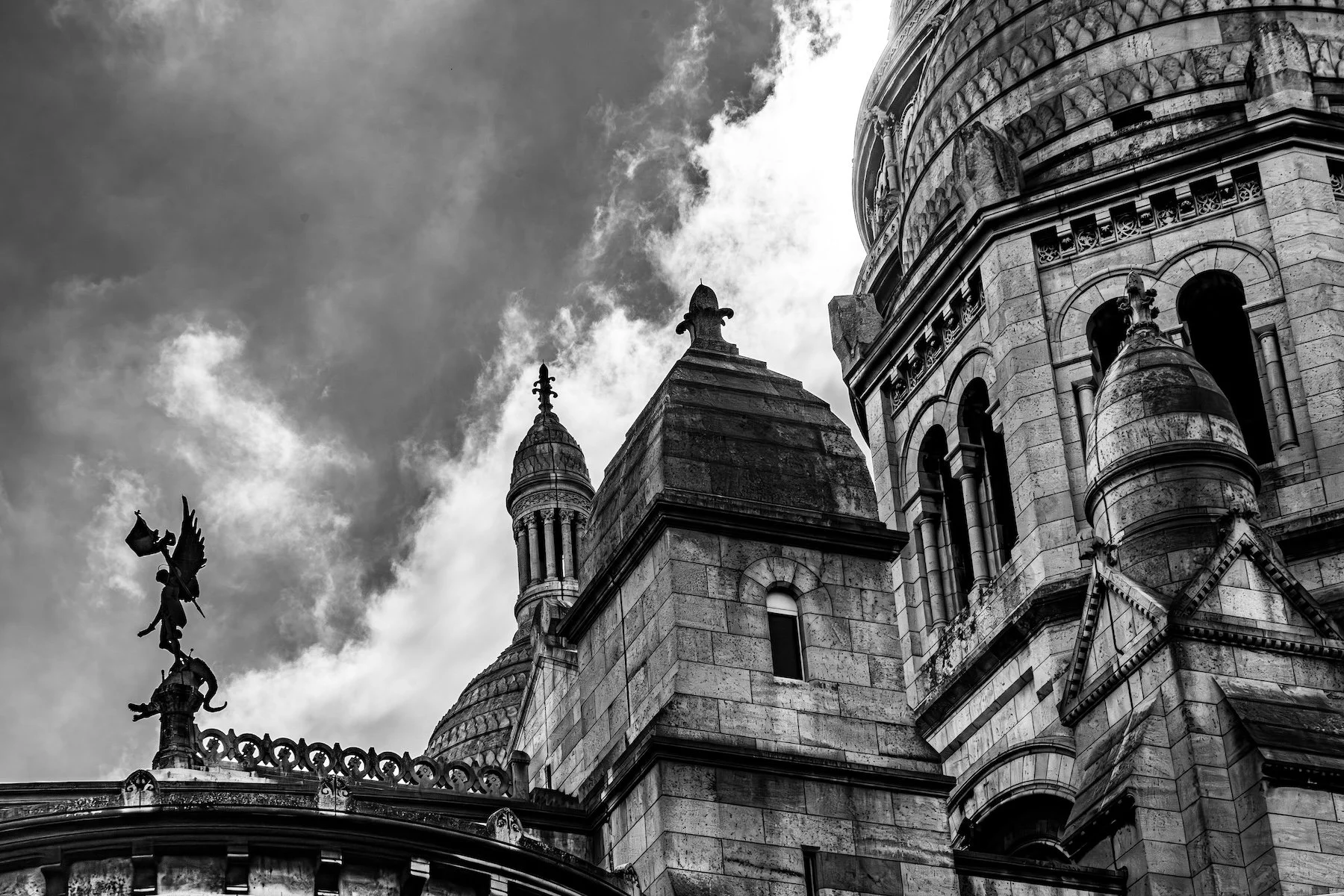
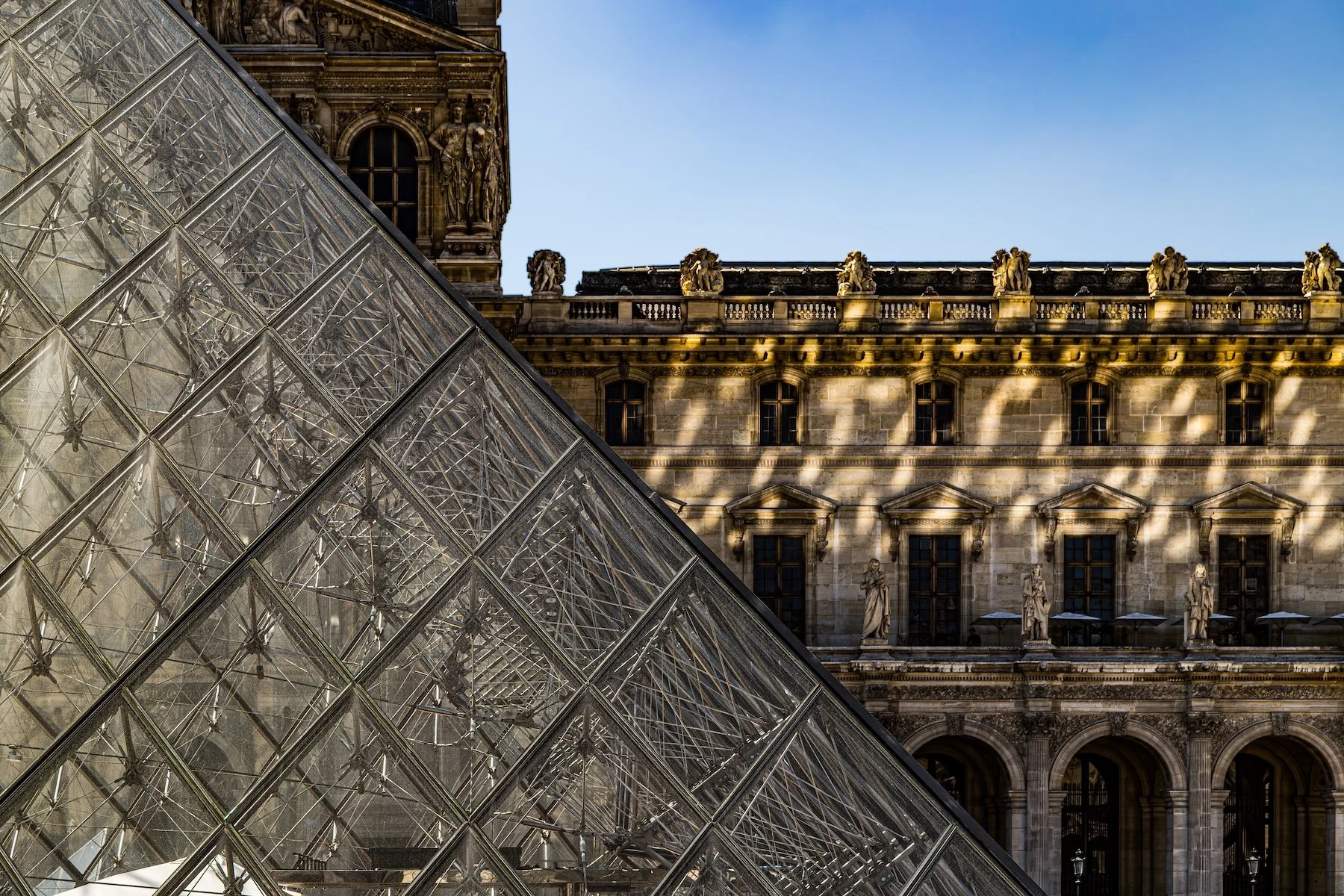
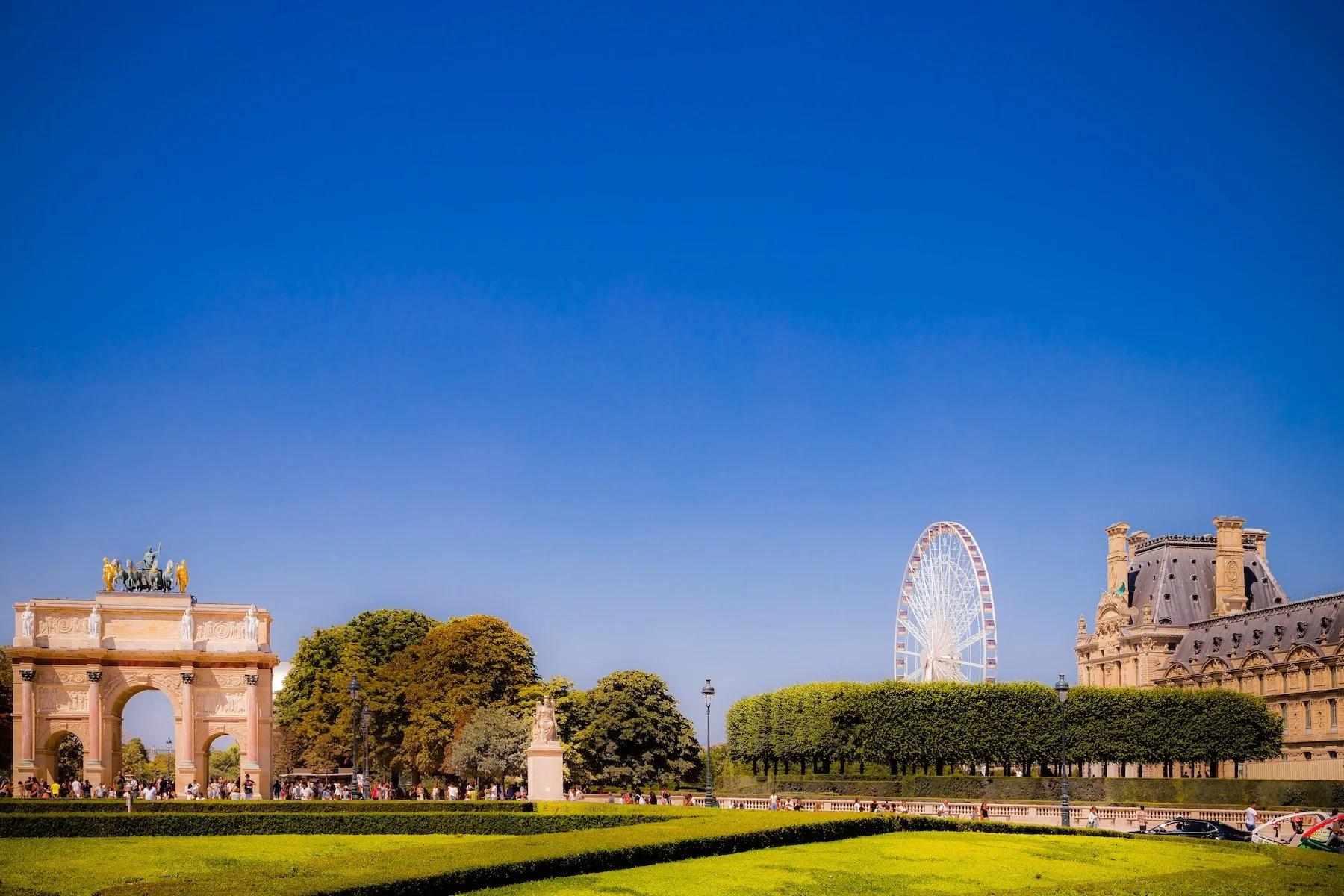
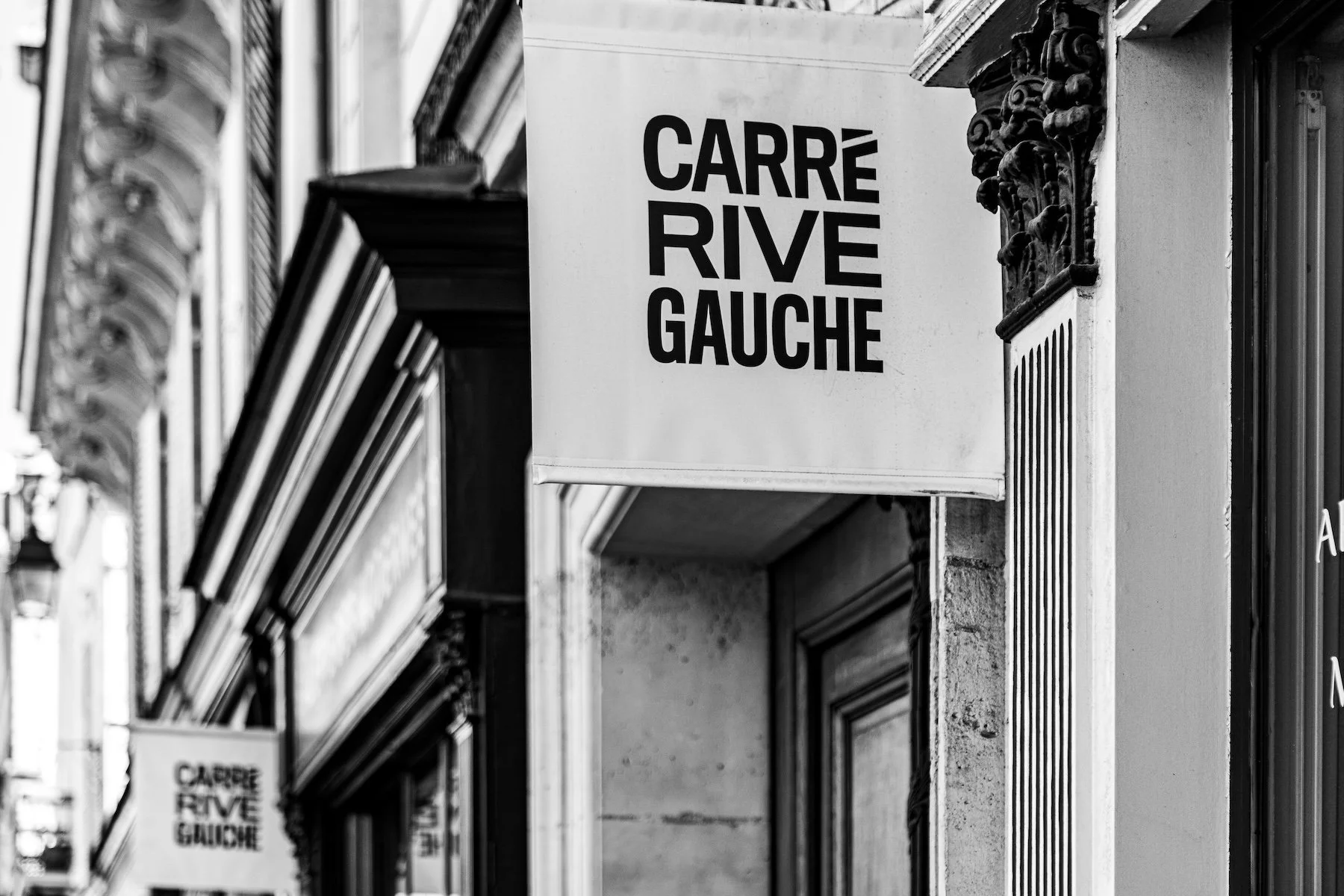
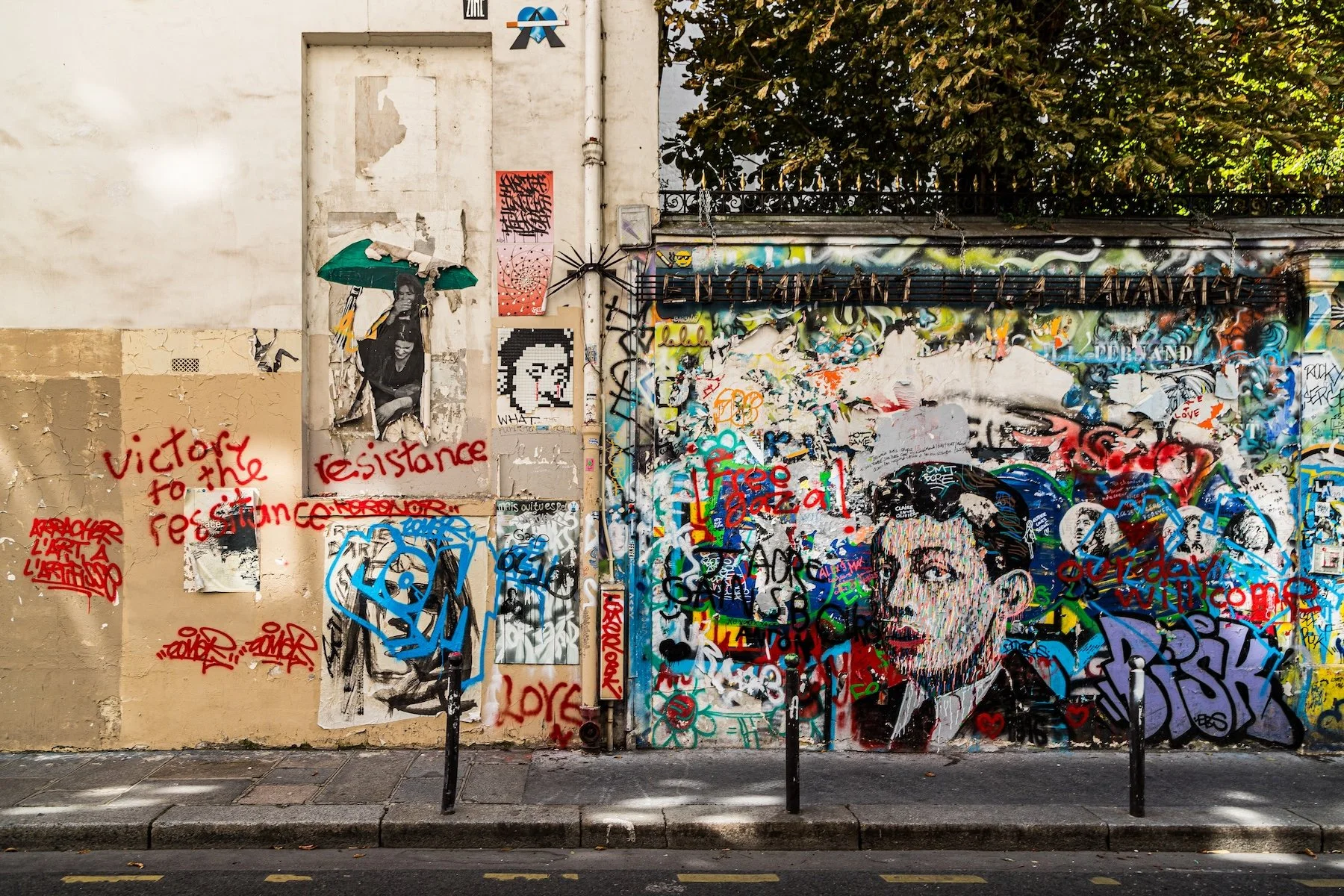
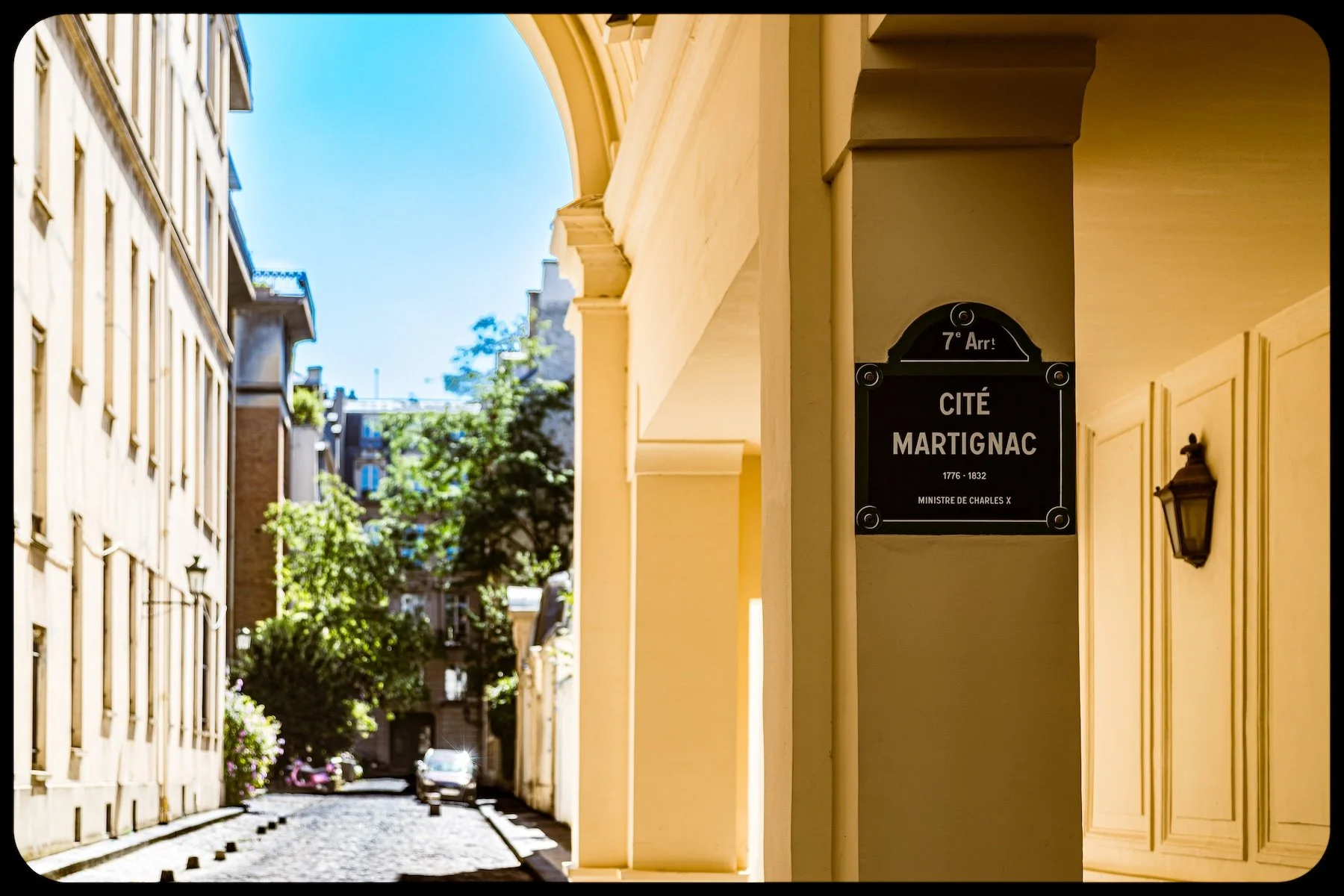
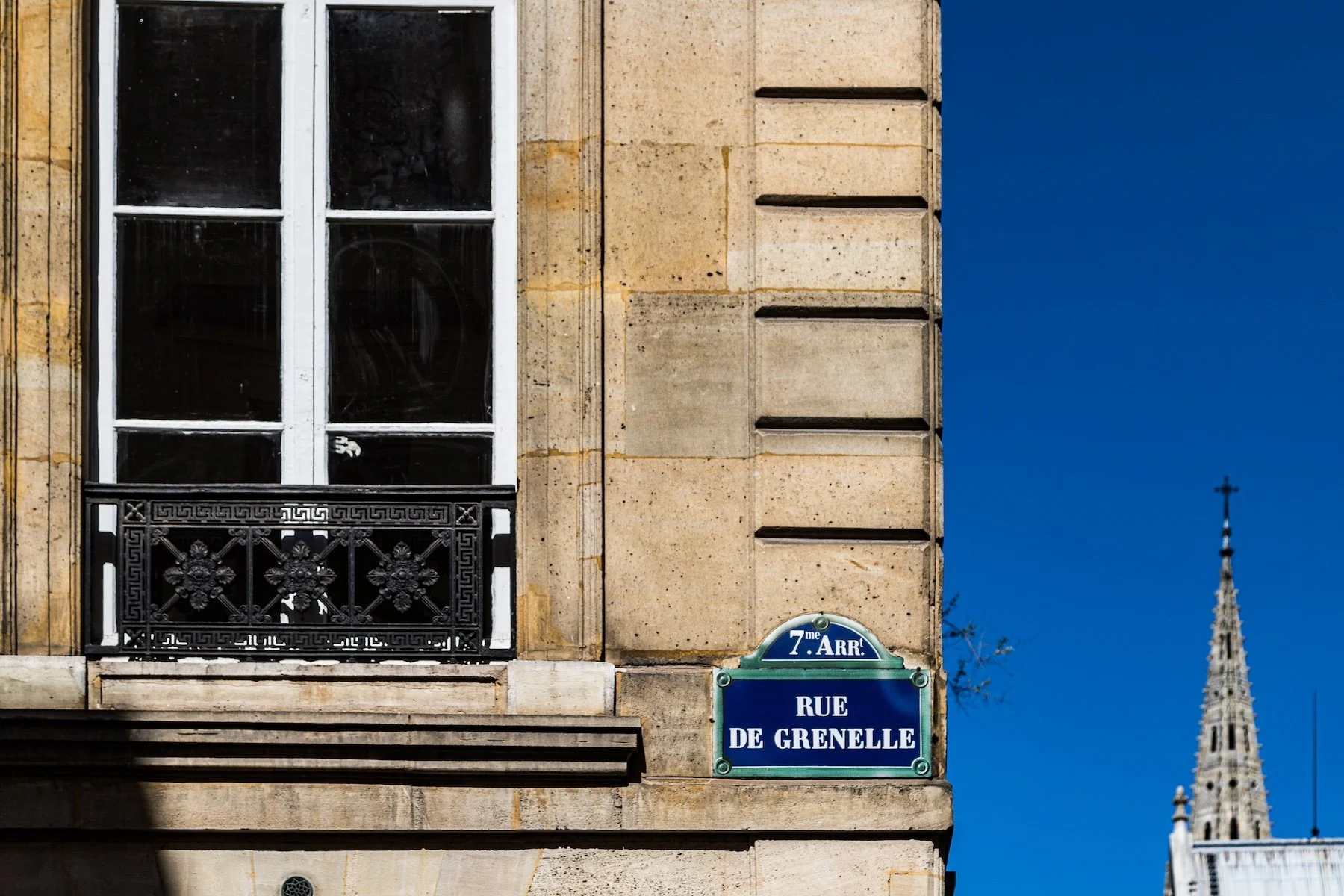
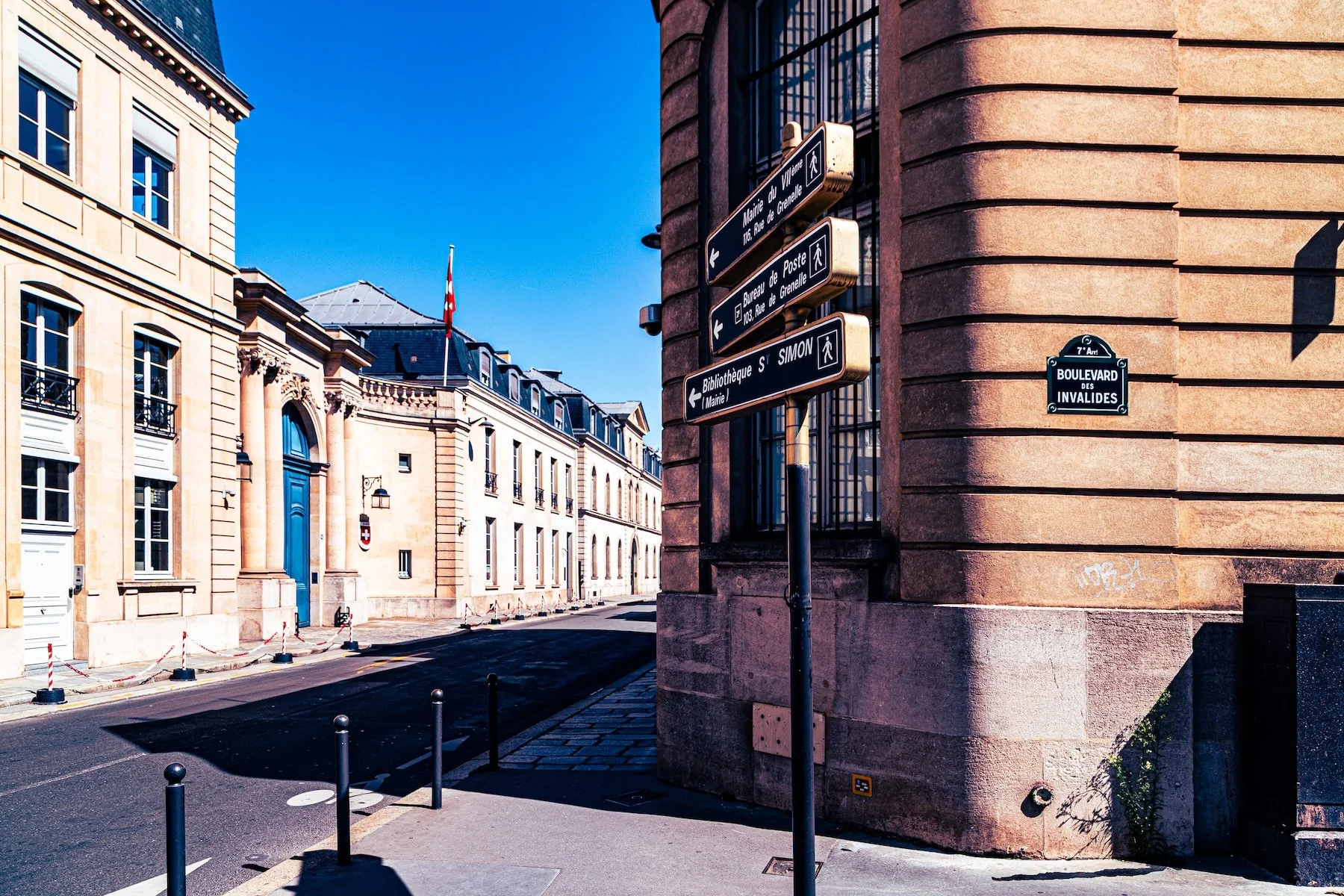
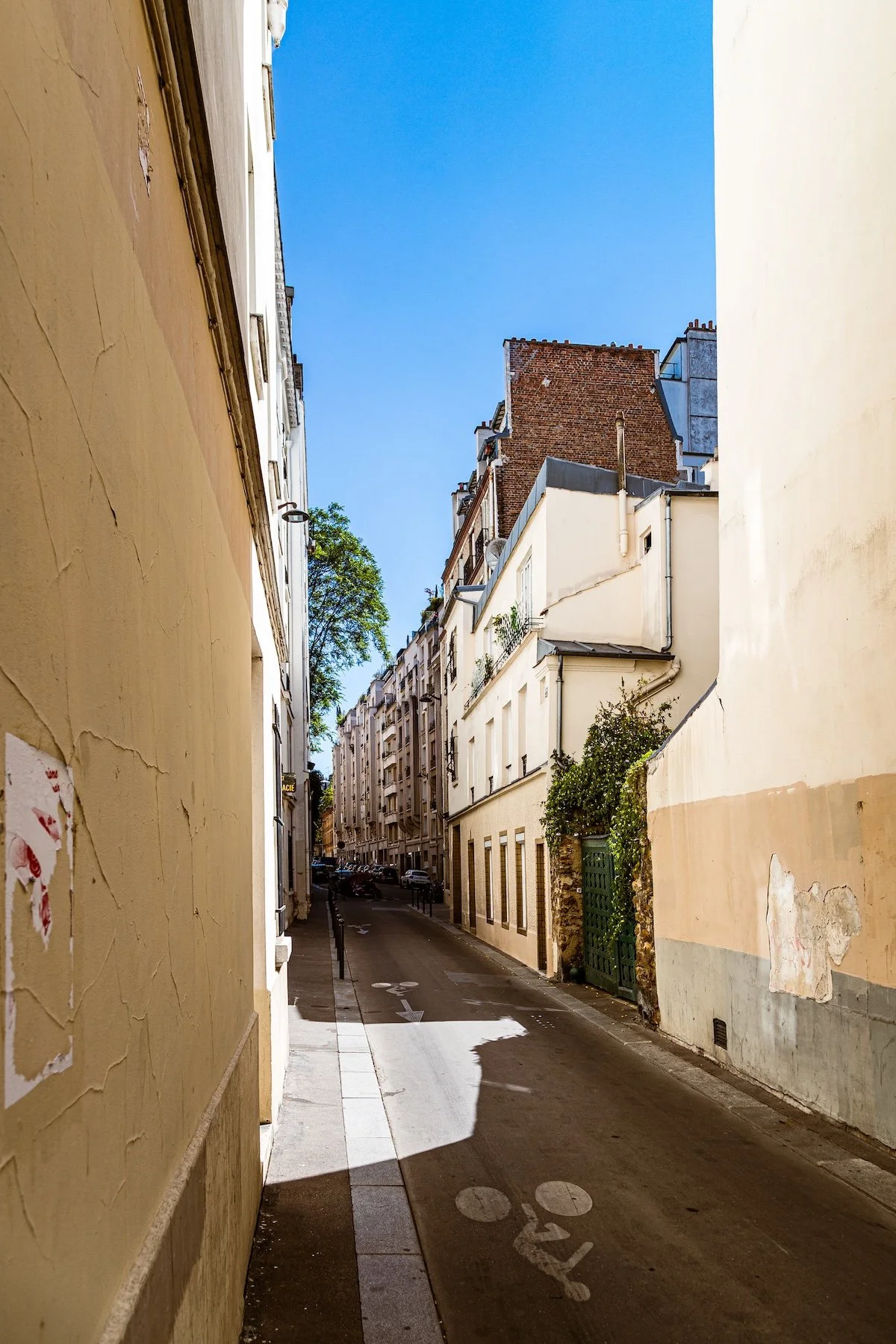
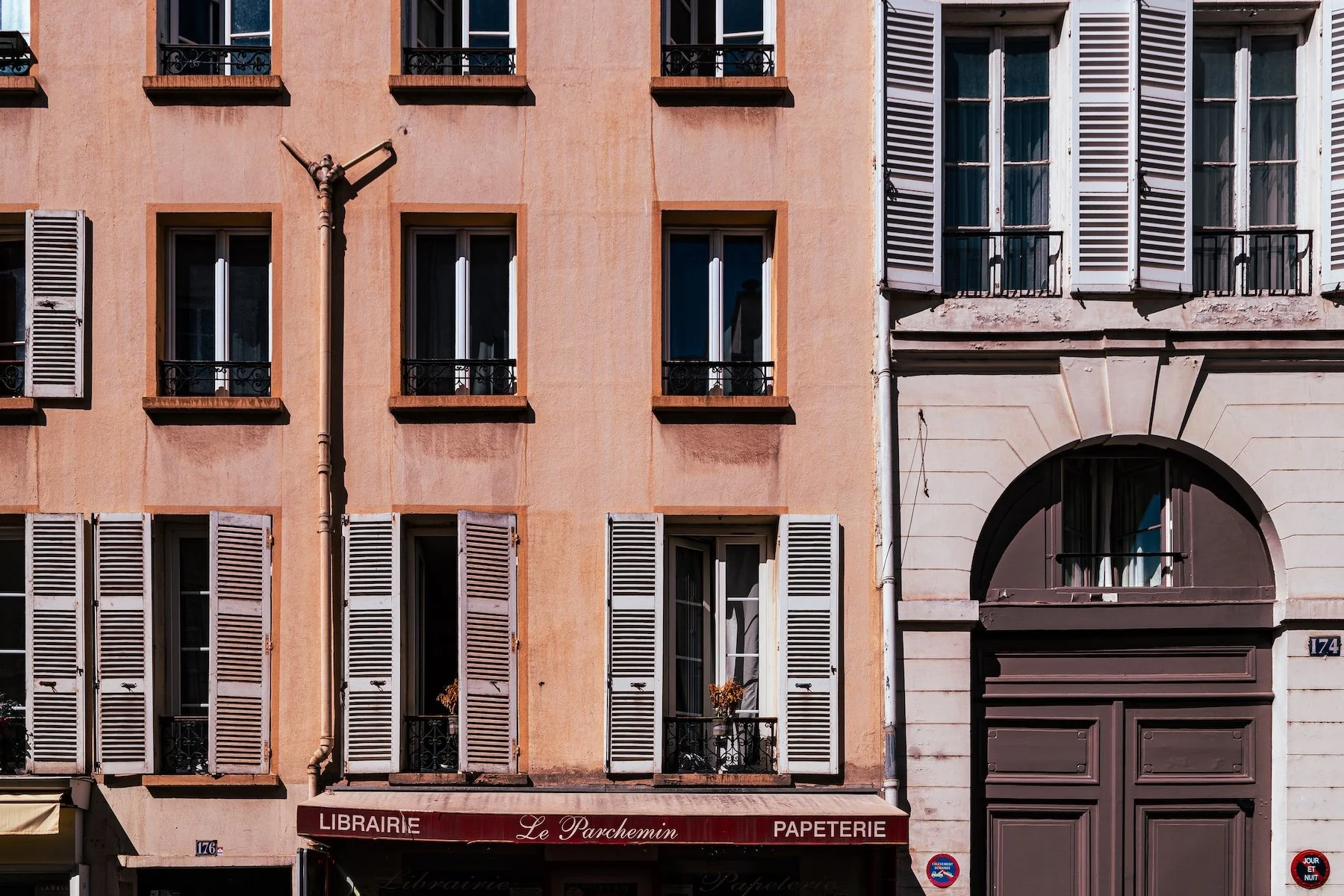
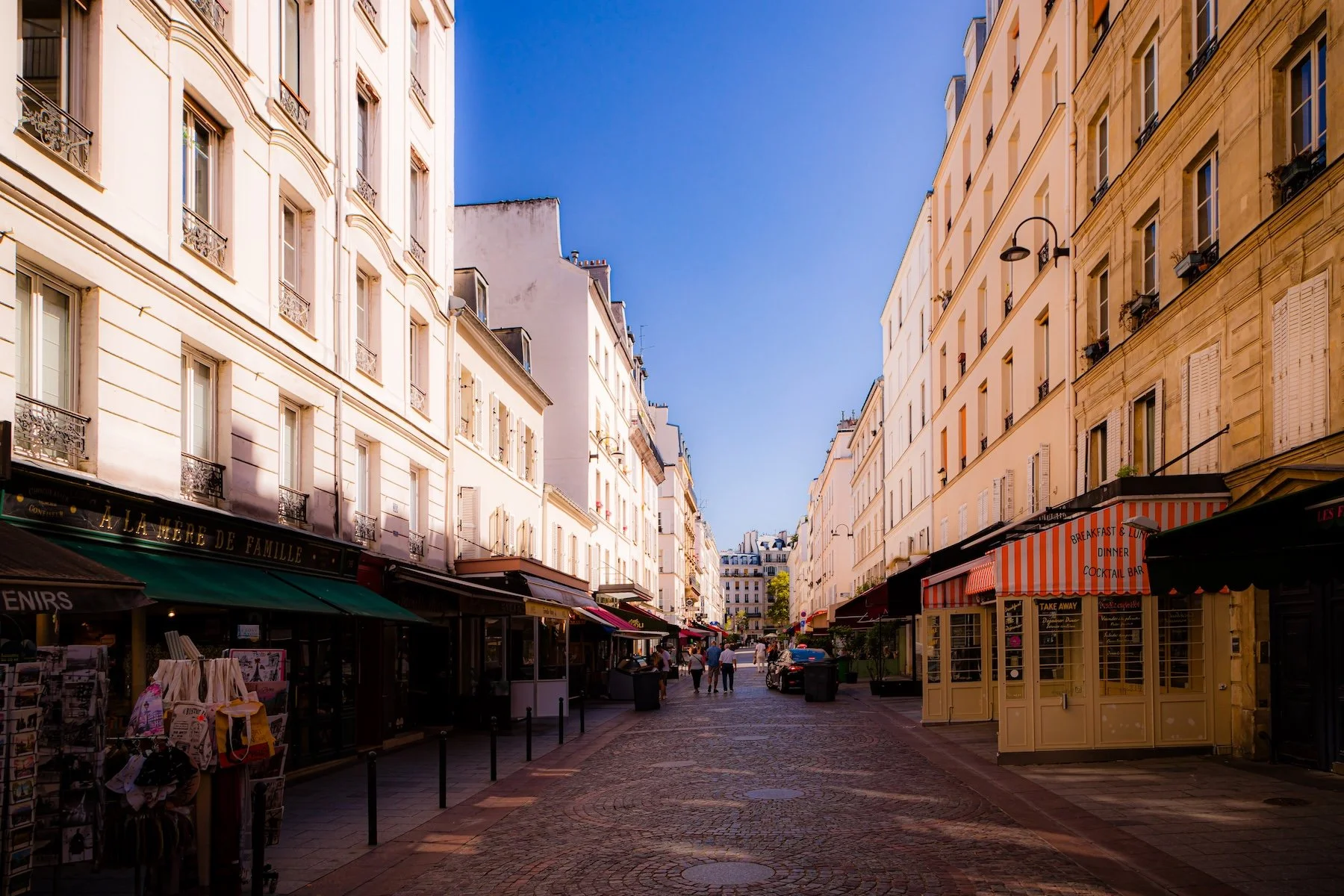
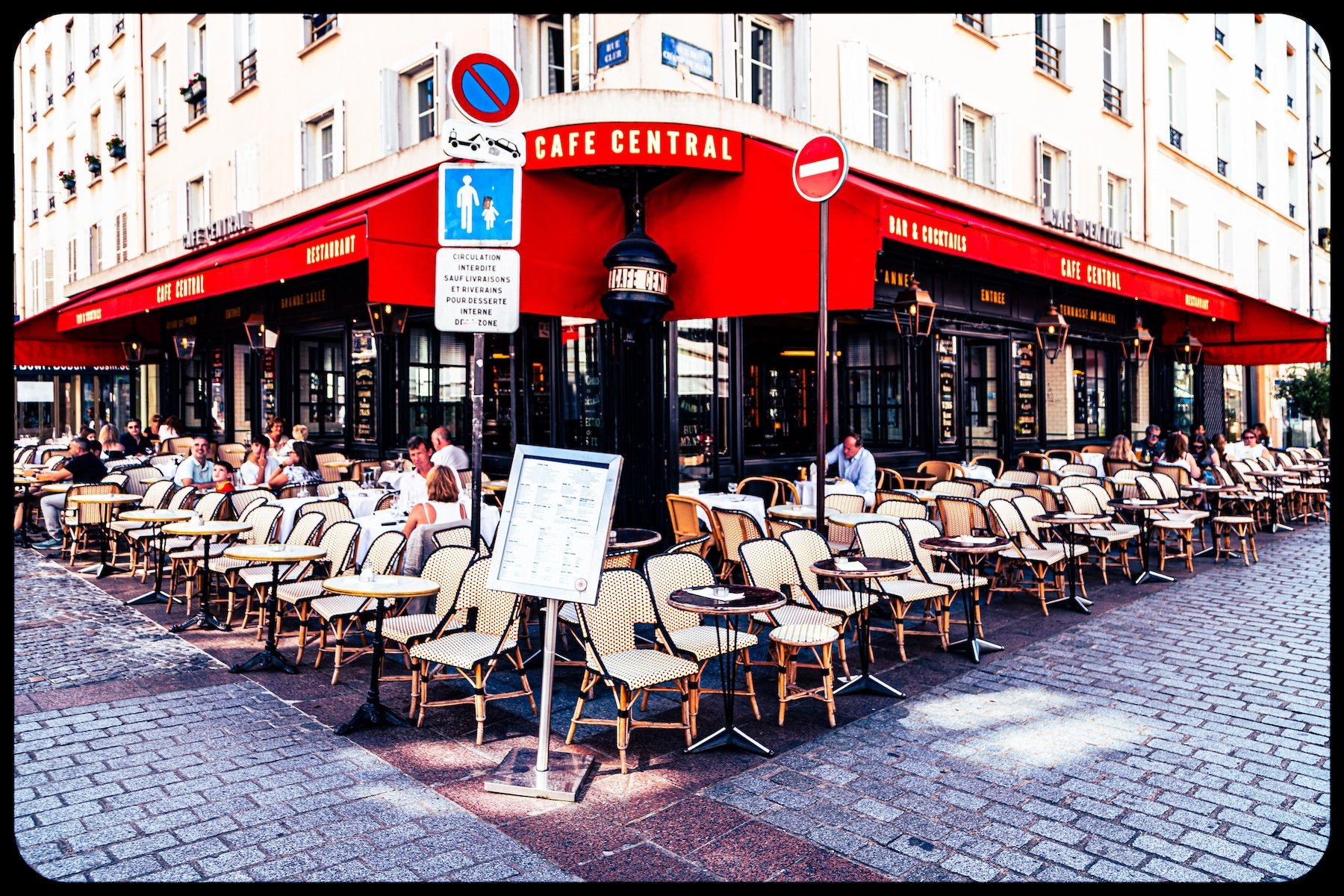
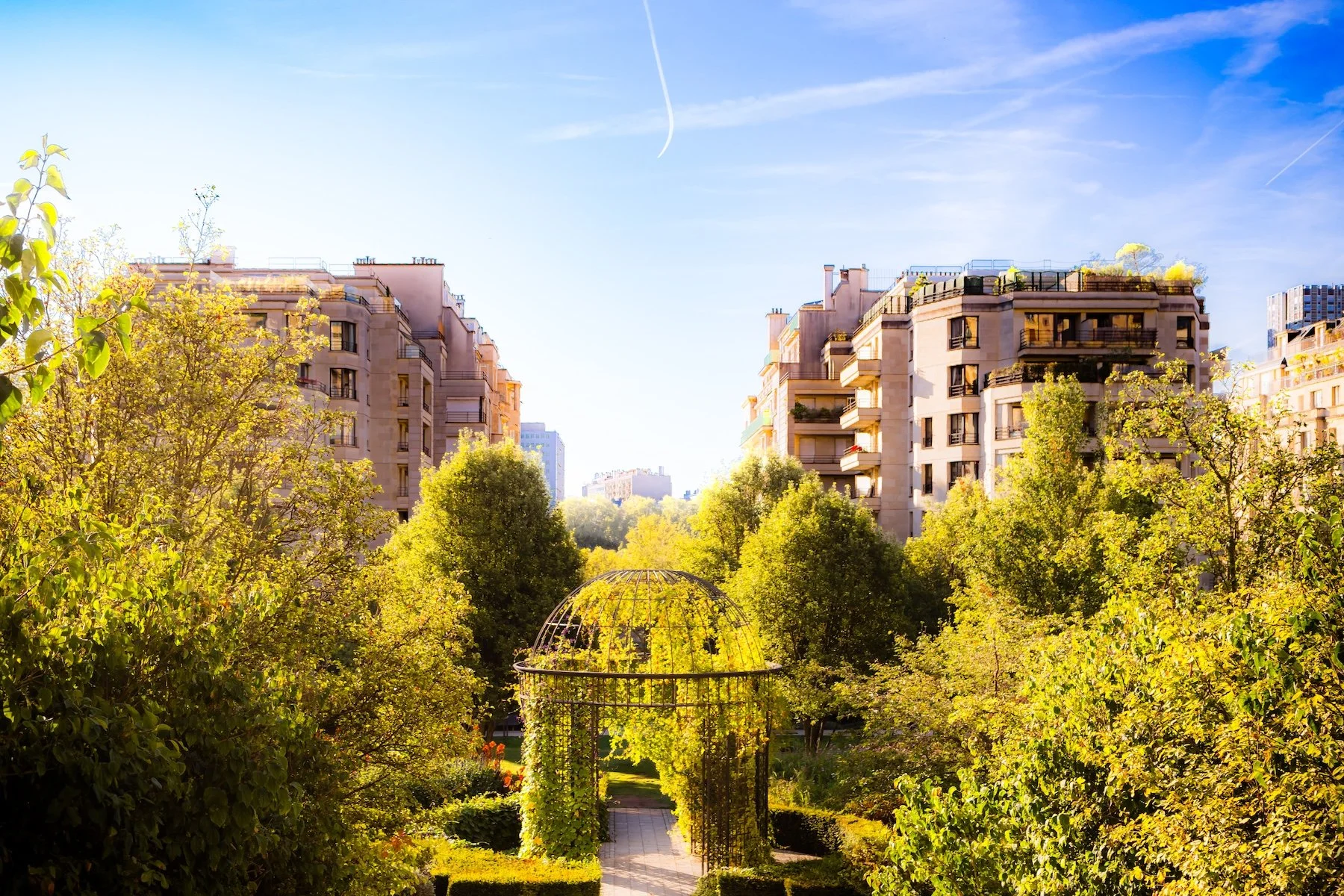
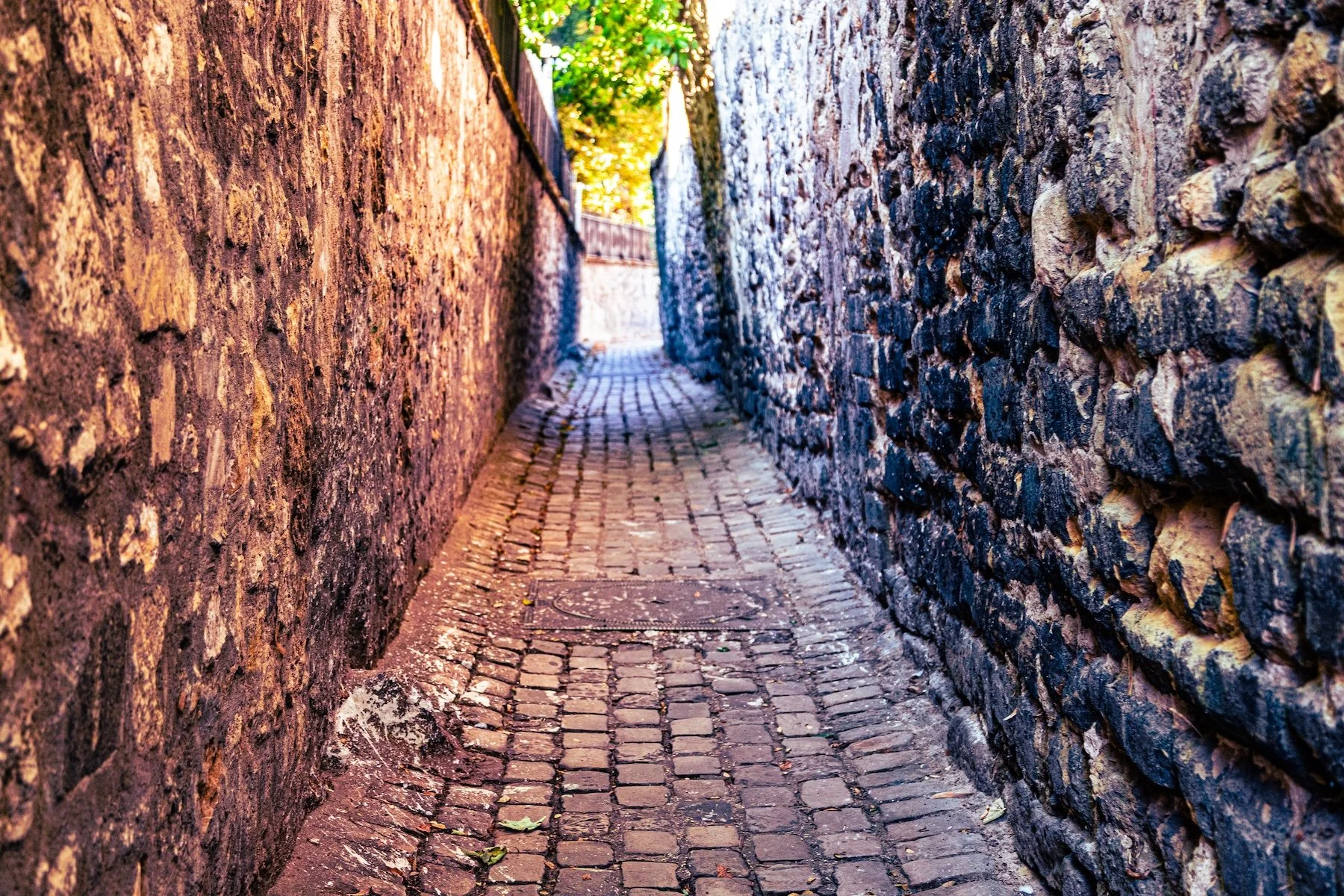
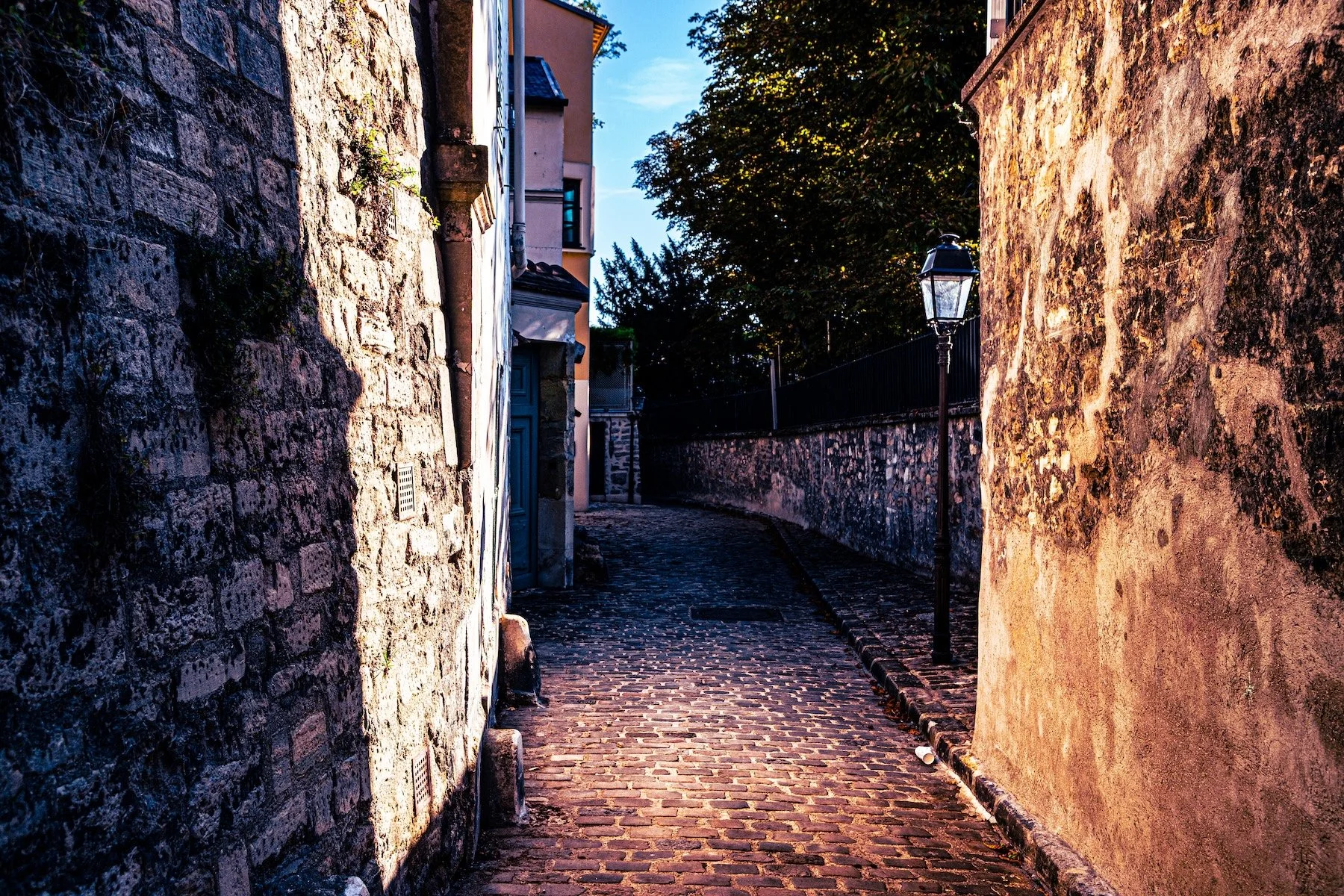
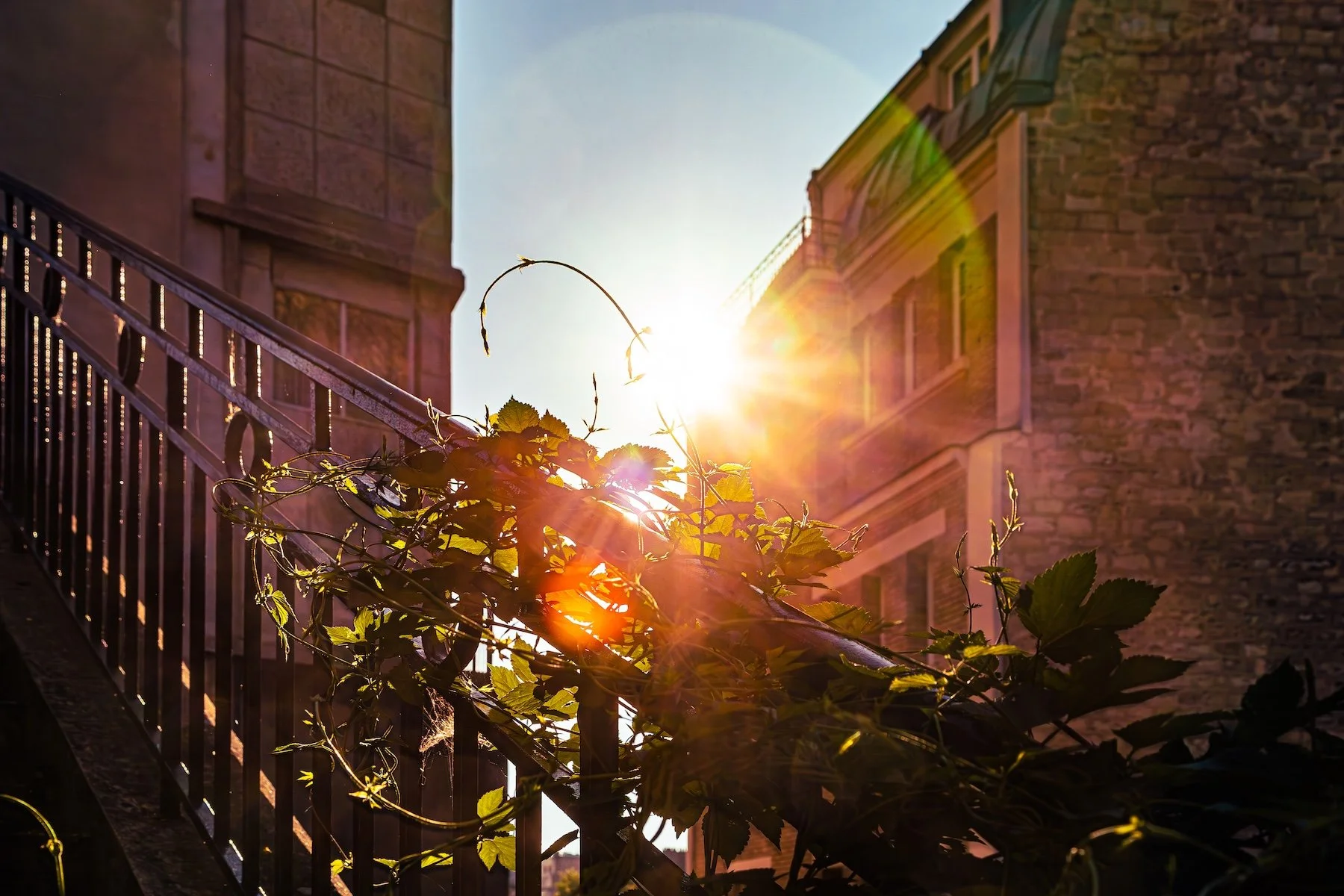
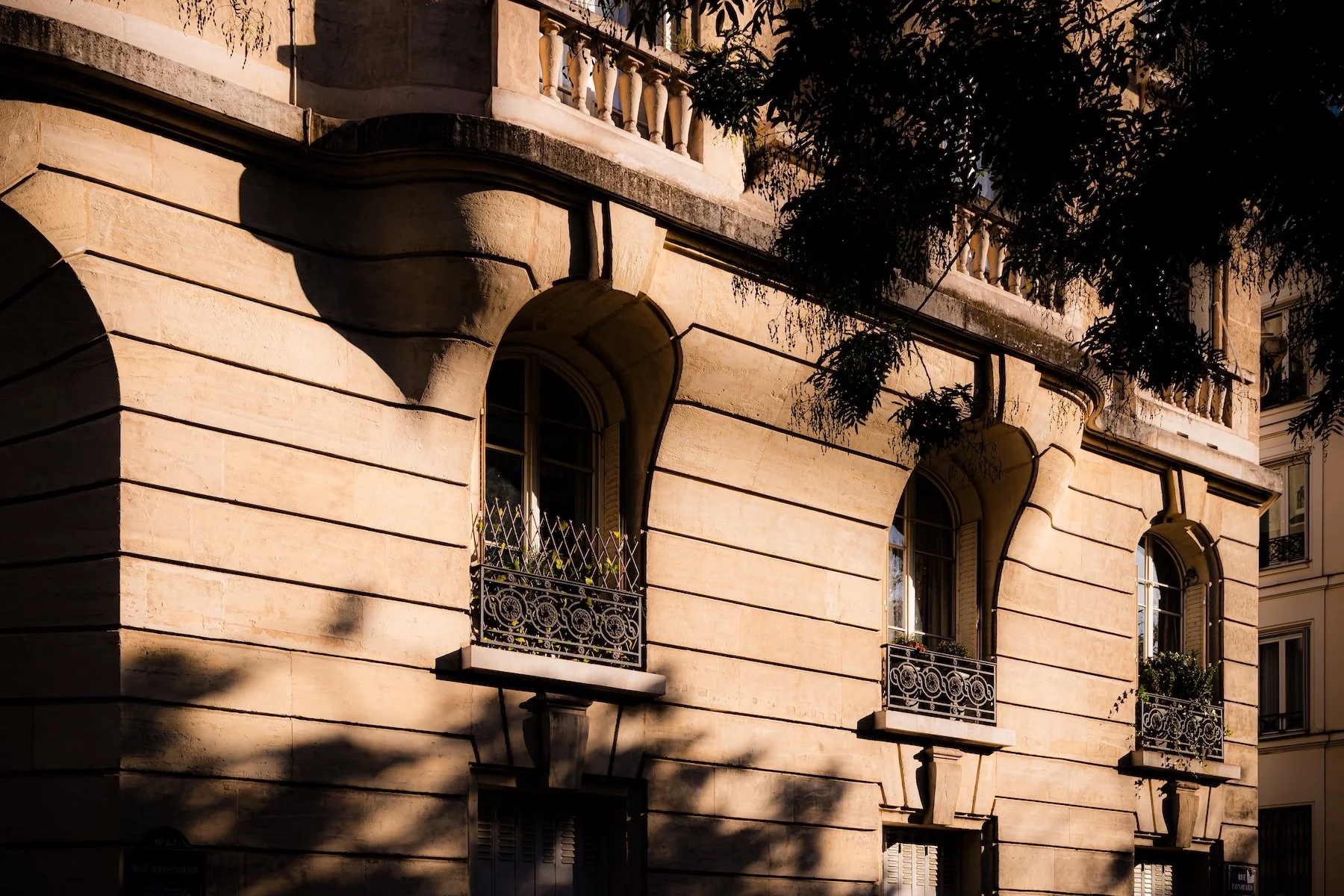
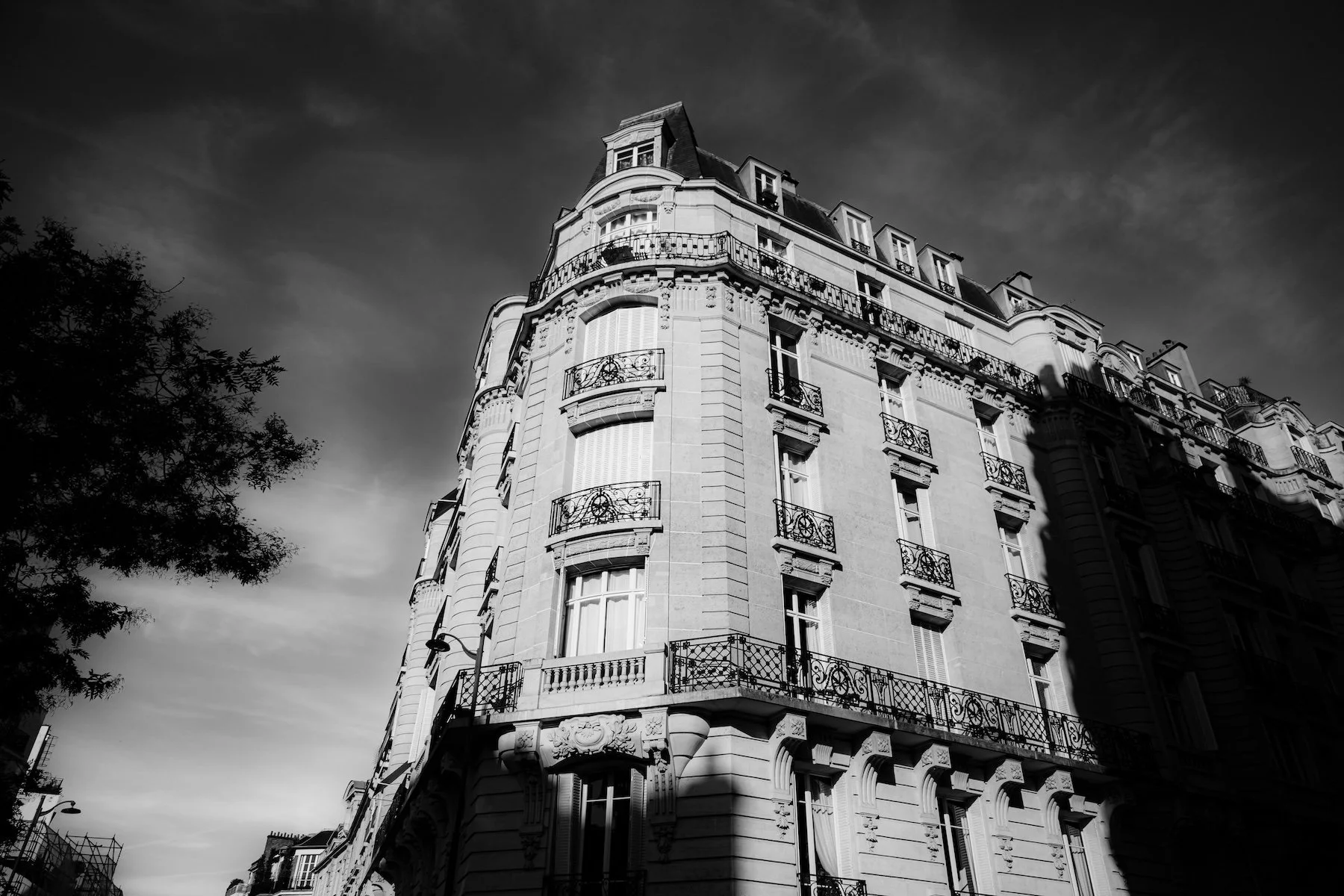
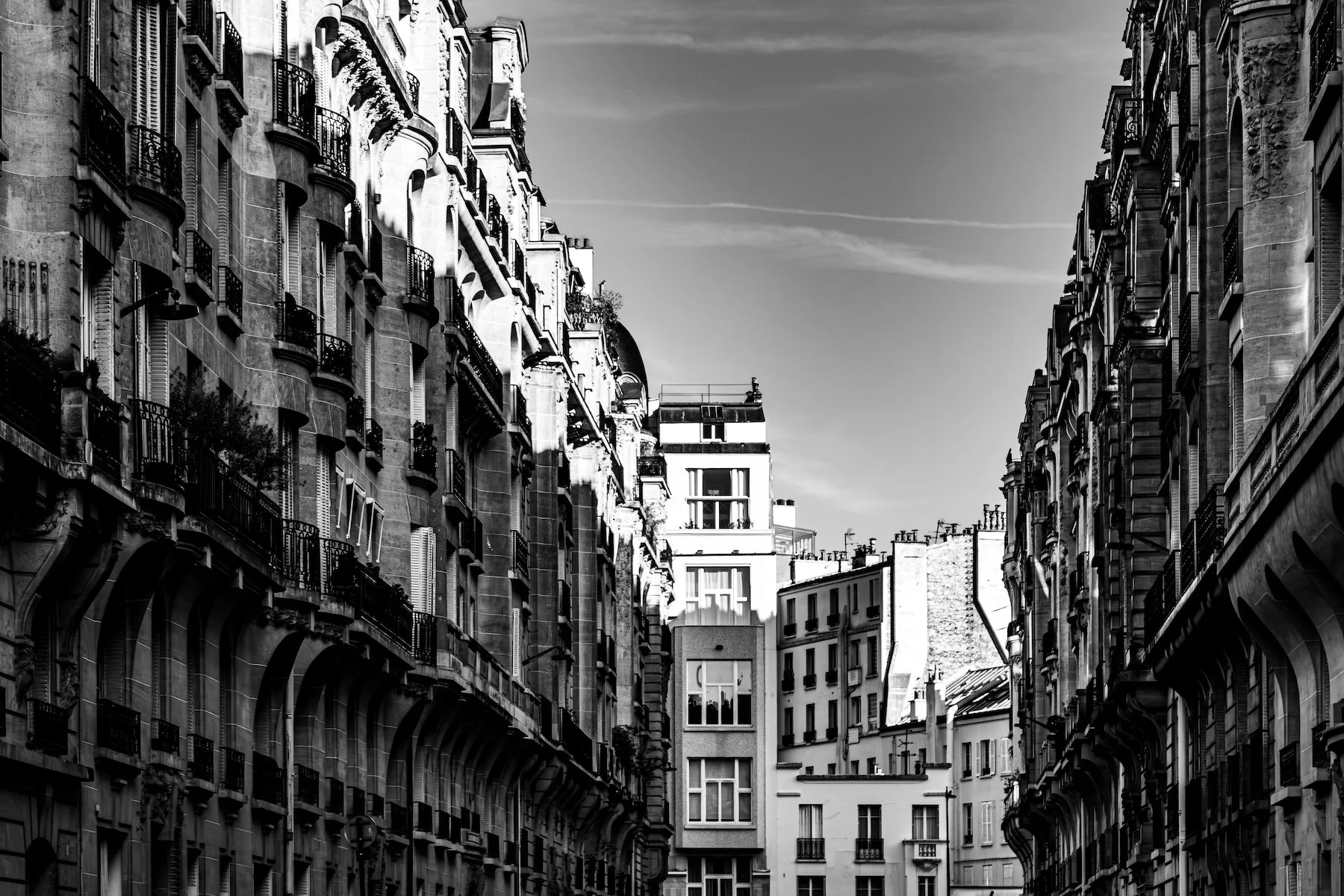
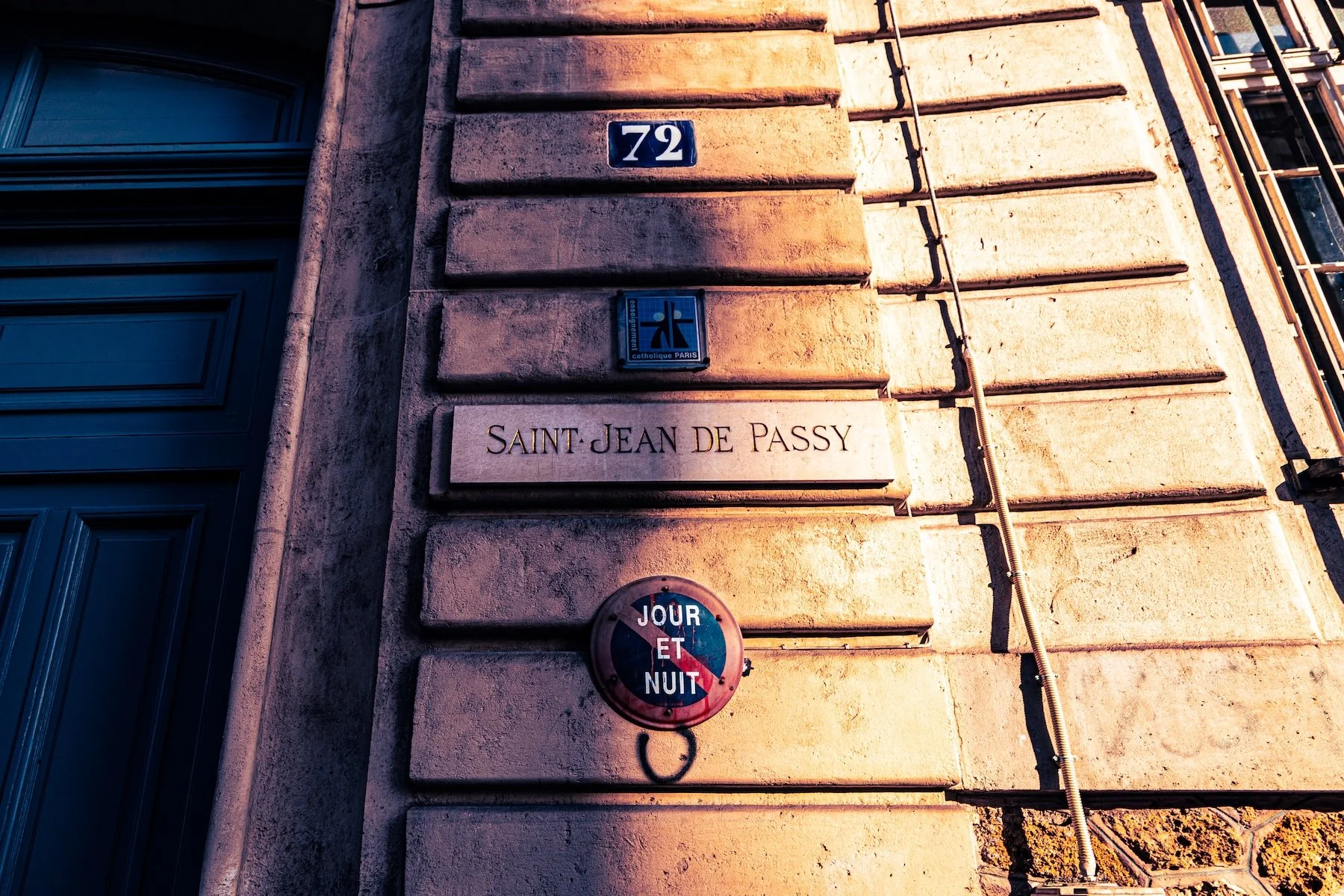

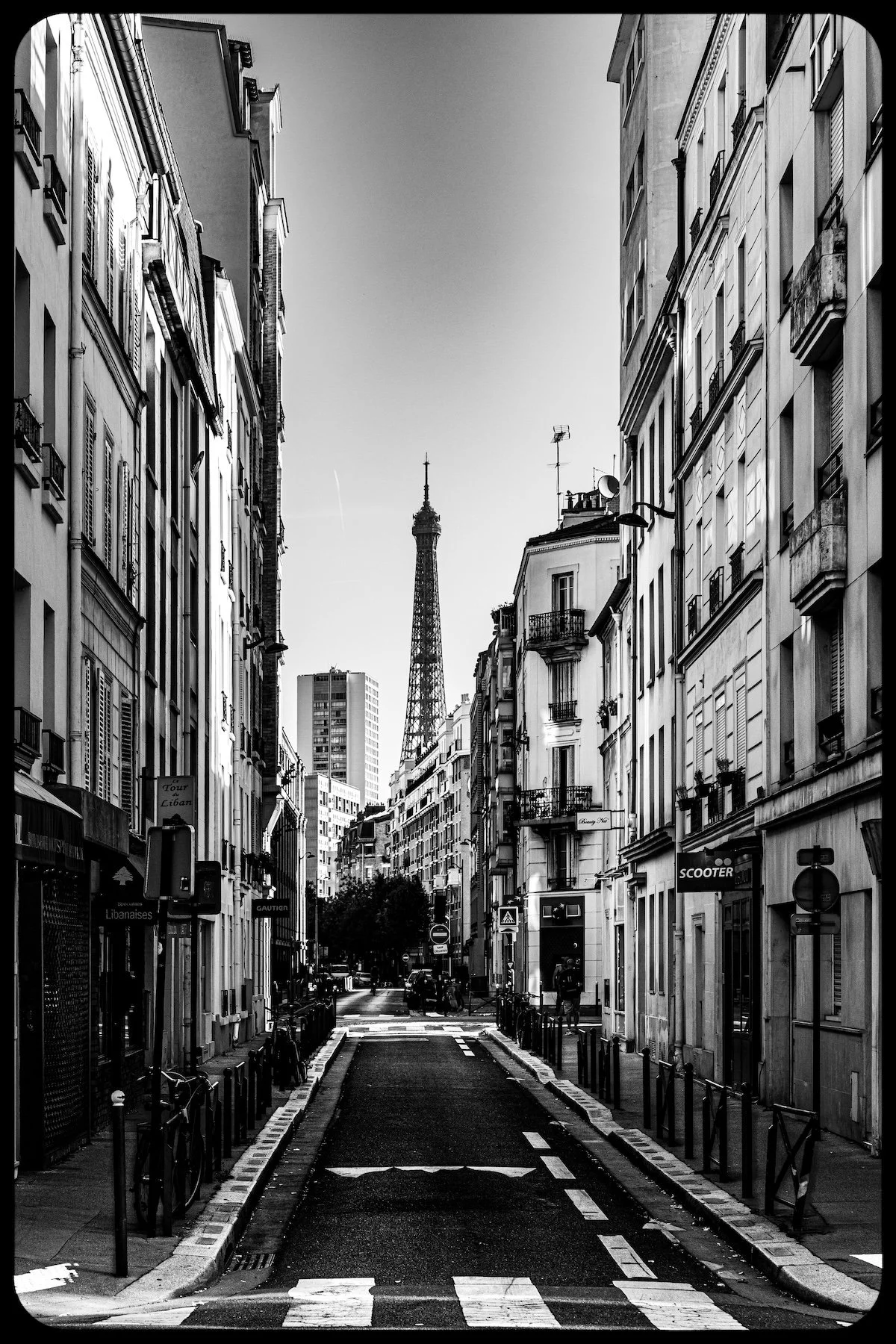
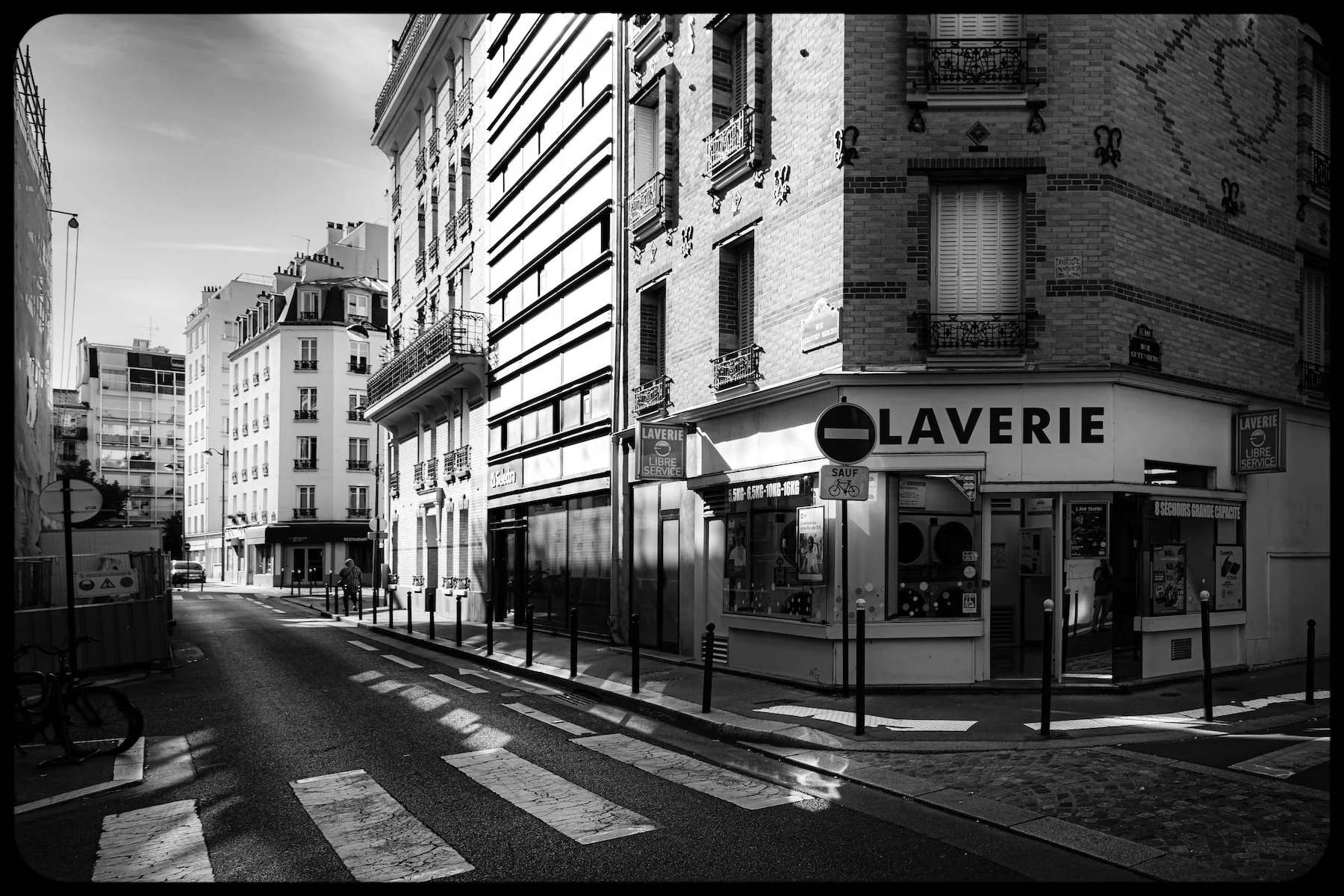
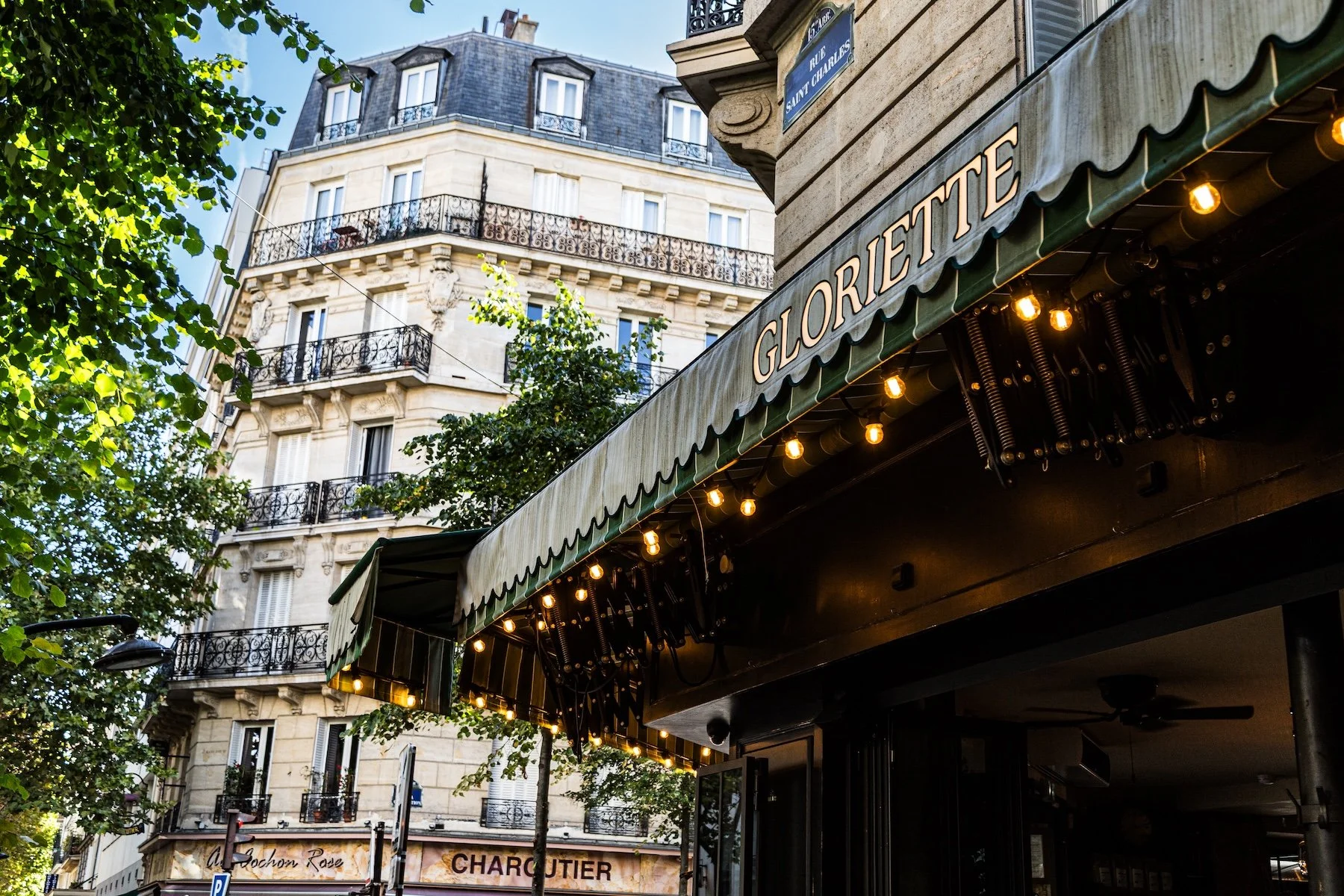
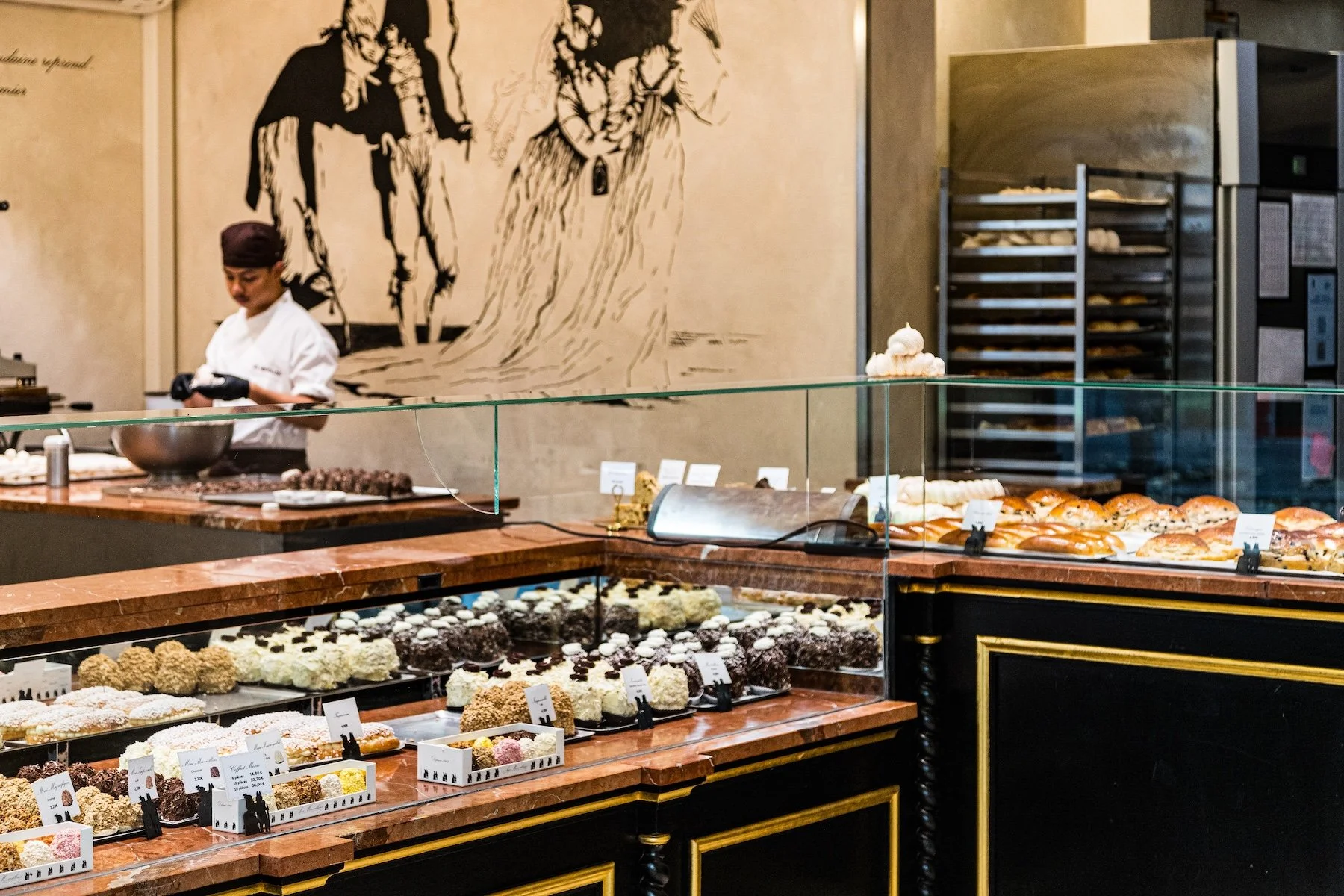
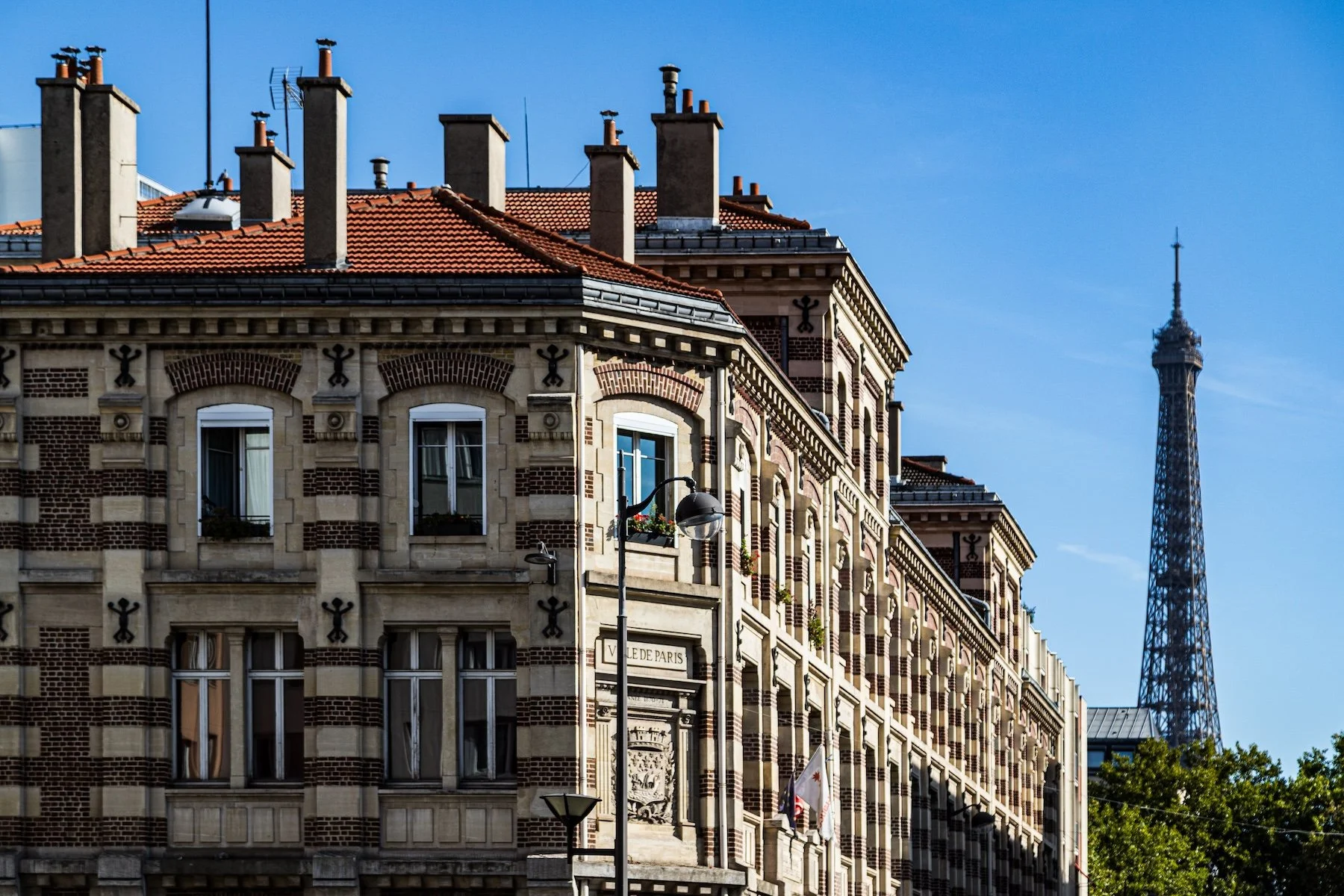
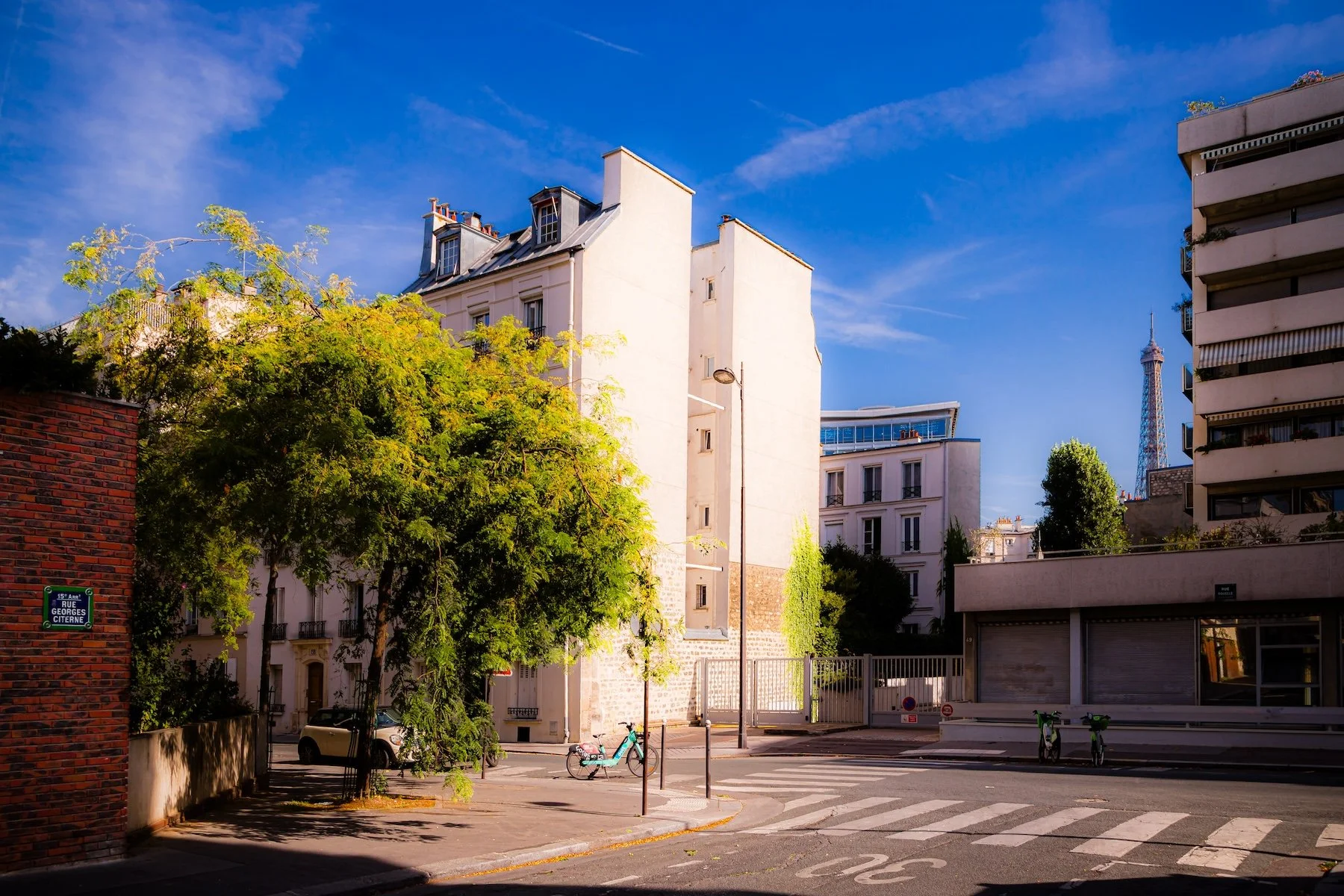
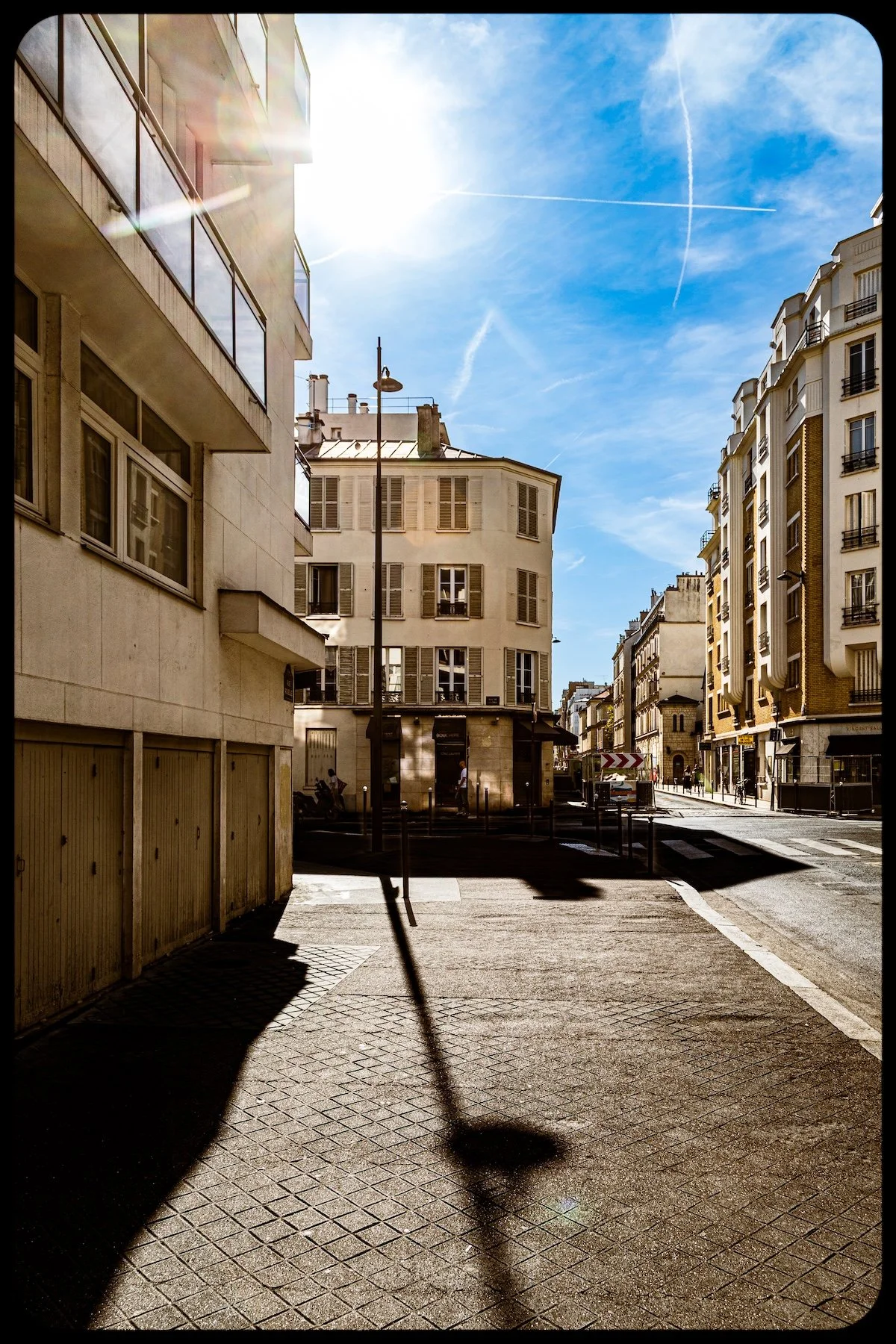
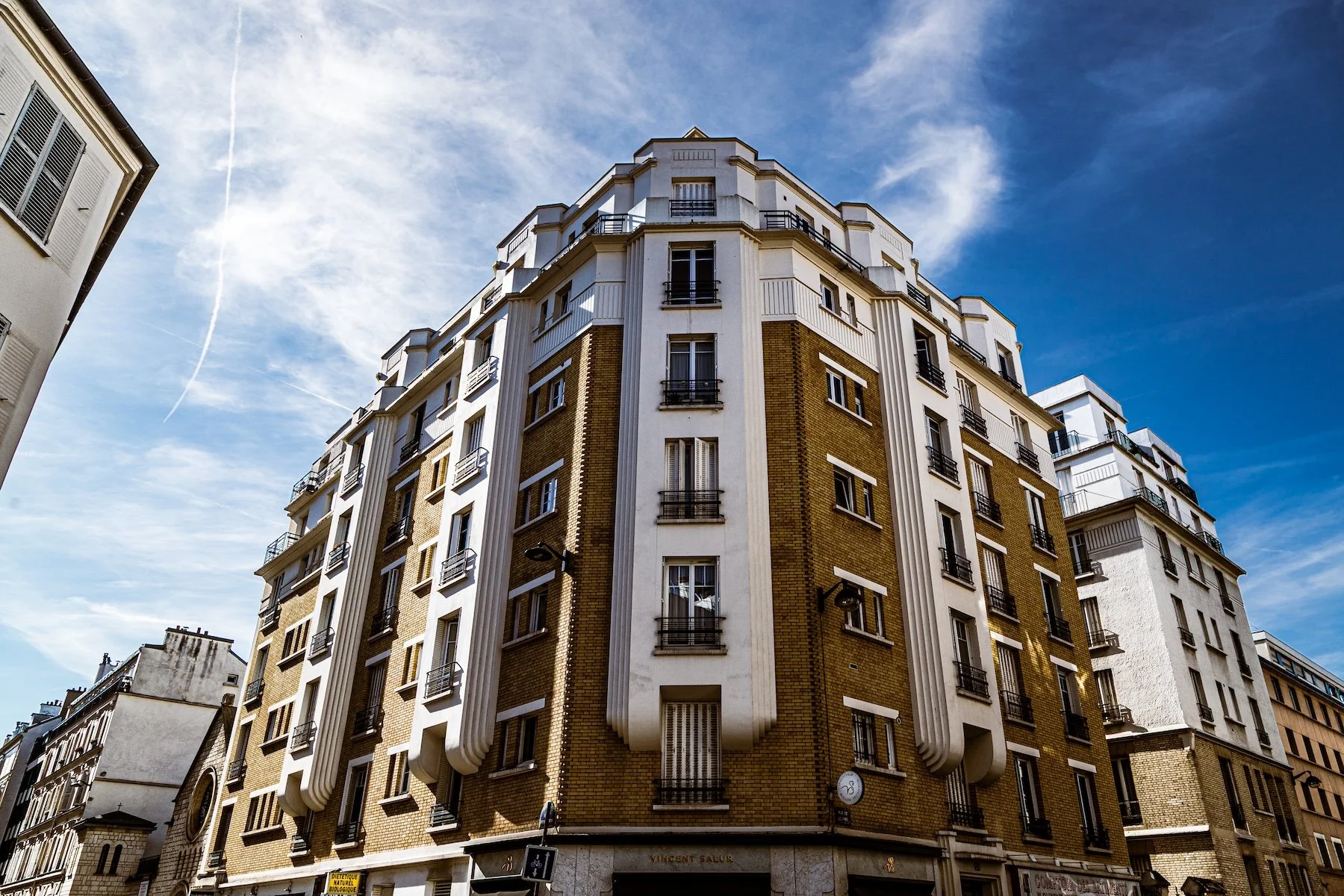
Explore Paris
-

The twenty arrondissements form the civic spiral of Paris, organizing the city into its broad local districts of government, identity, and daily life.
-

Each arrondissement is divided into four official administrative quarters, giving Paris a more precise civic and geographic framework.
-

The conseils de quartier bring participation to street level, giving residents a voice in neighborhood needs, public space, and local civic life.
-

Les Deux Rives trace Paris through the Seine’s two banks, revealing how the Rive Droite and Rive Gauche shaped the city’s civic power, commerce, learning, art, and cultural identity.
-

Cultural neighborhoods reveal the Paris people recognize through history, cafés, architecture, memory, atmosphere, and local belonging.