
1er - SAINT-GERMAINE-L’AUXERROIS
Quartiers Administratifs
Part of an ongoing project to walk and photograph every neighborhood in Paris, this page explores the Administrative Quarter: 1er - Saint-Germain-l'Auxerrois through maps, district identity, history, and photography.
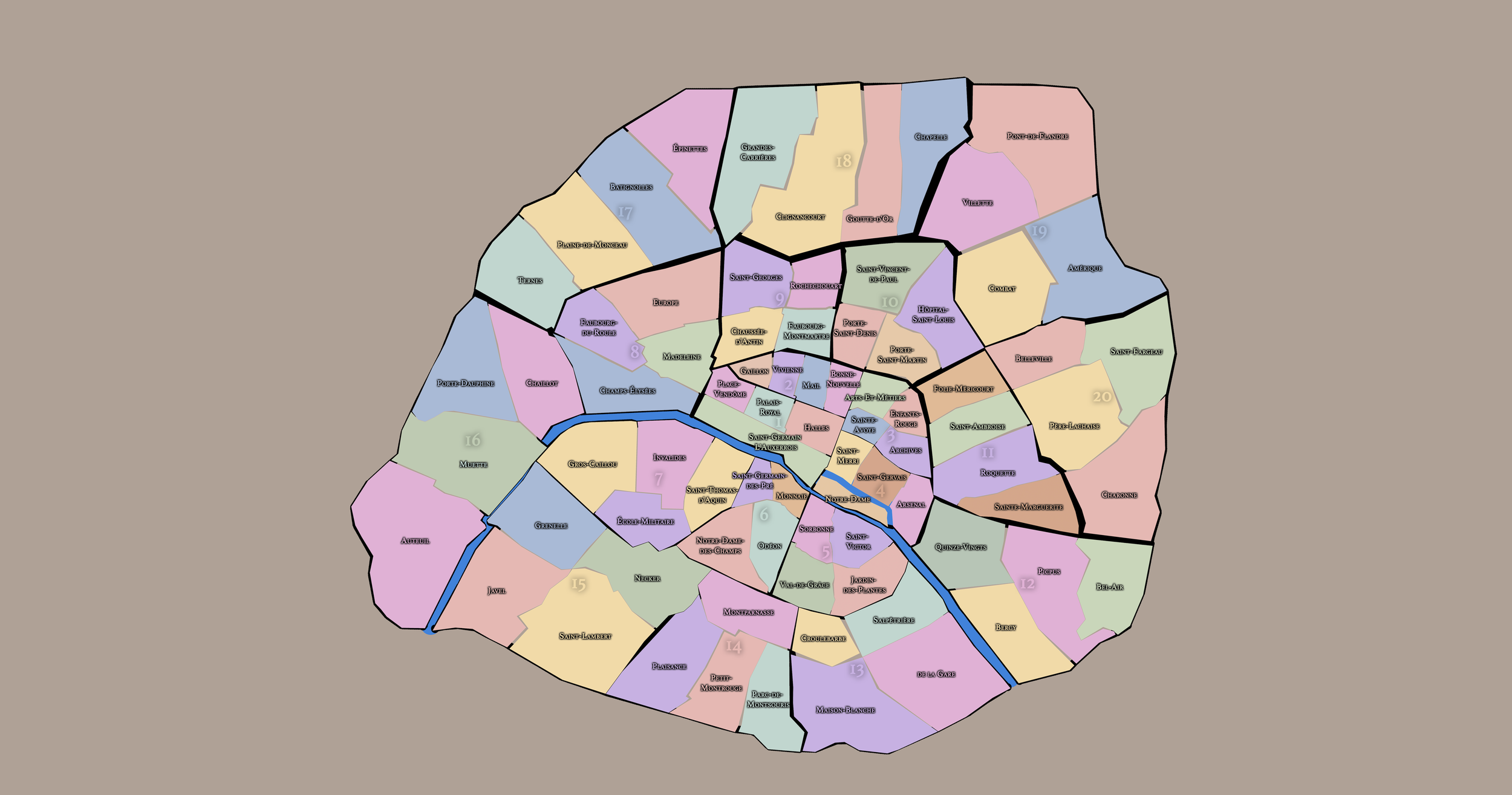
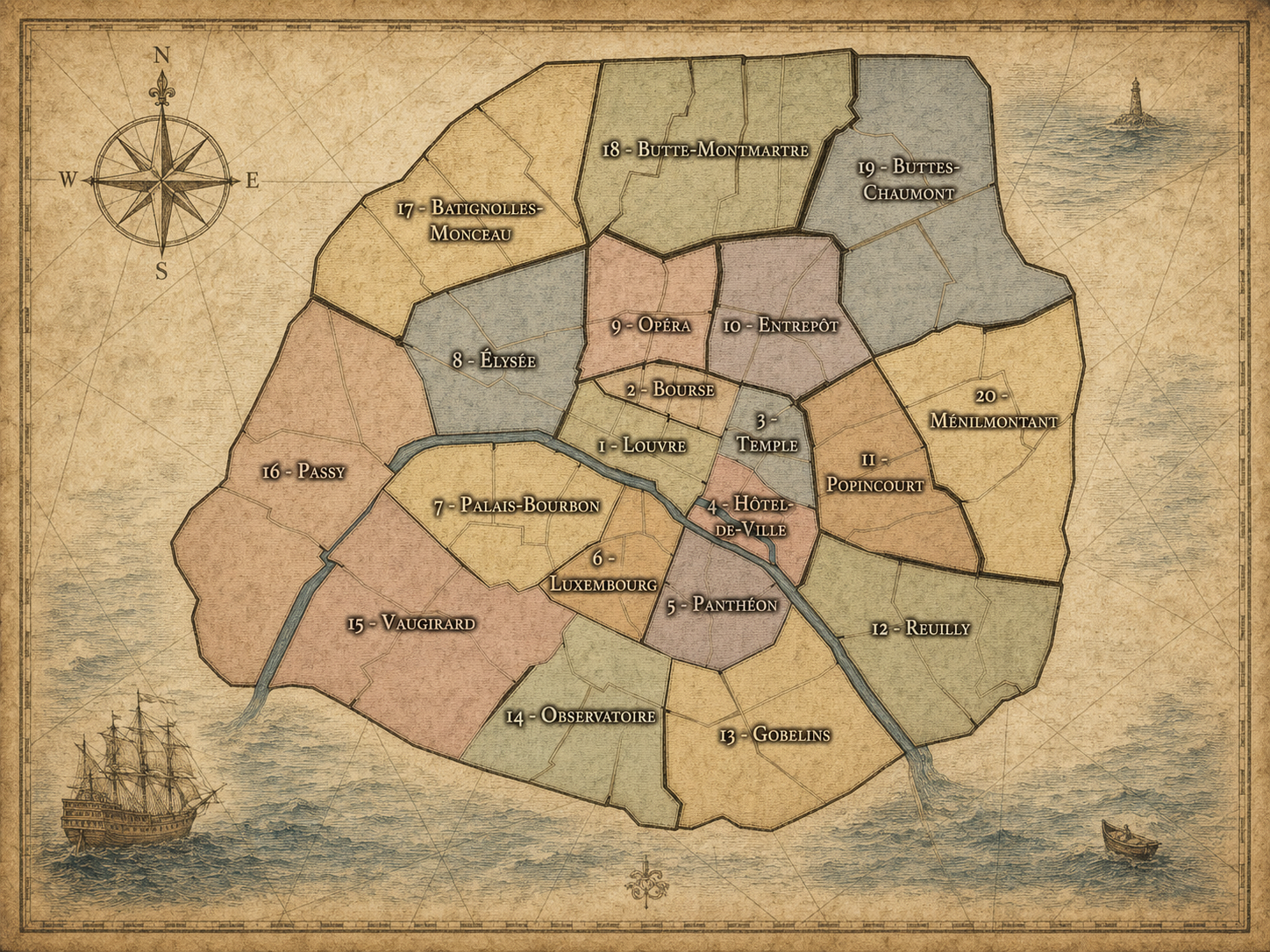
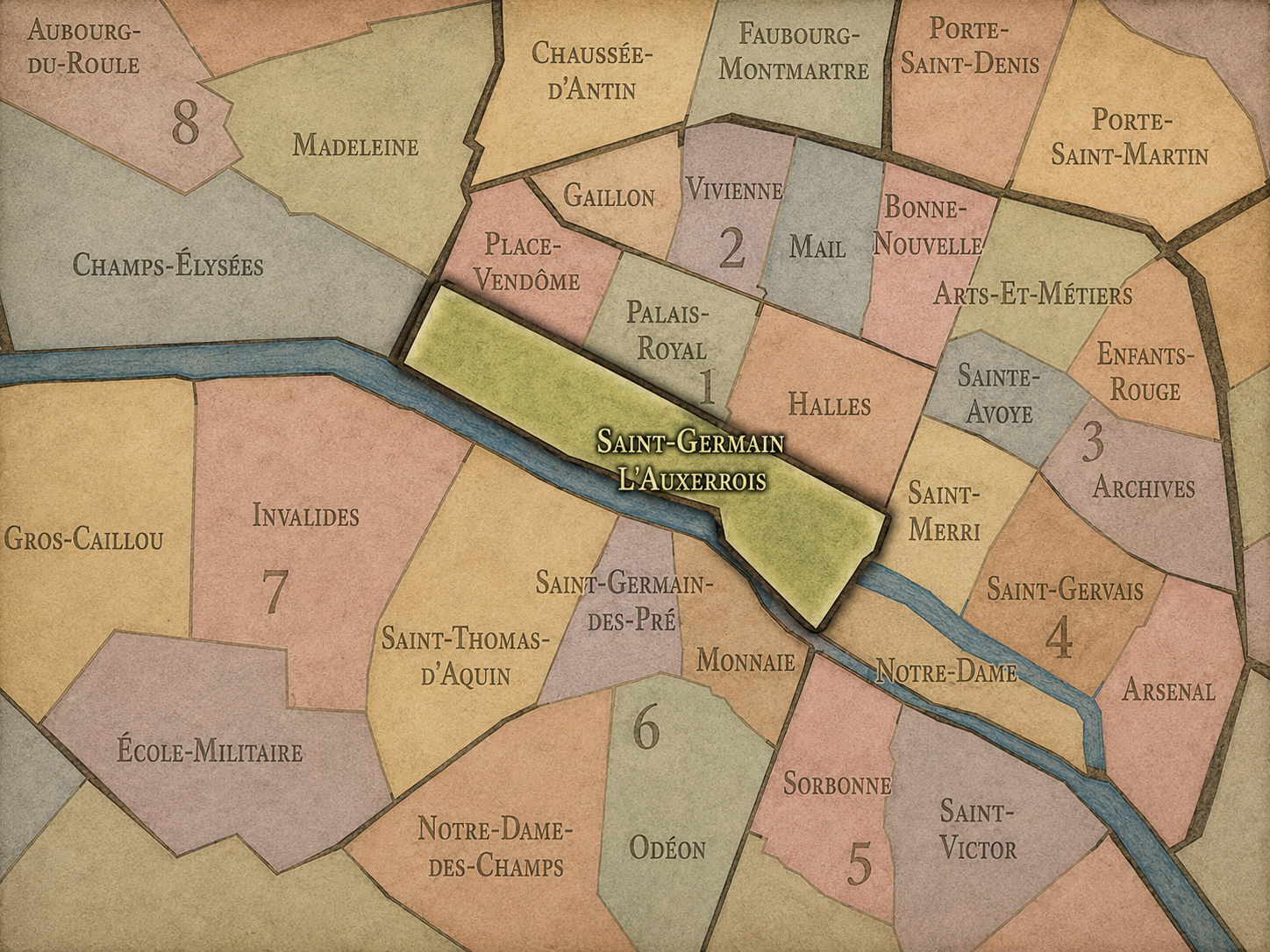
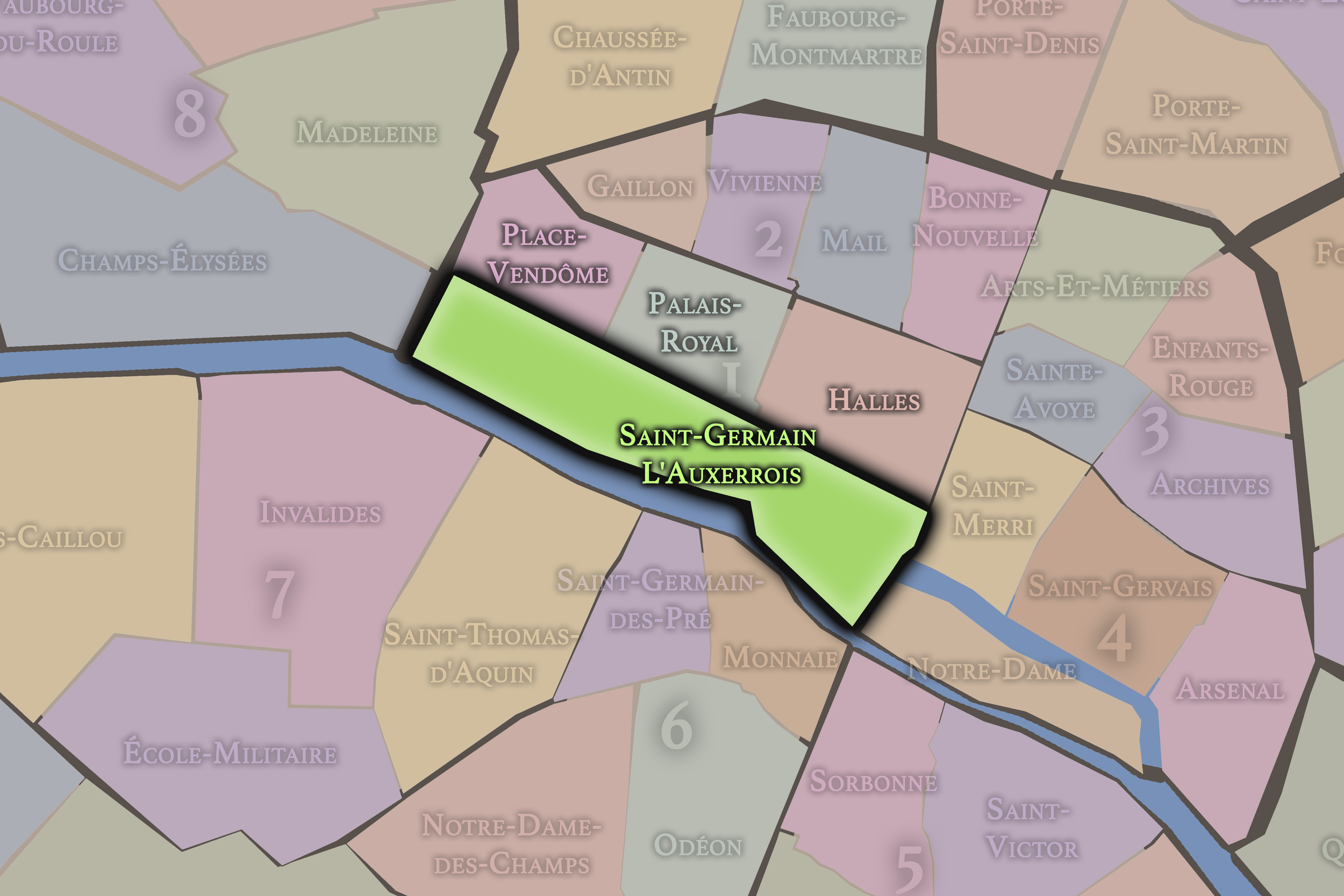
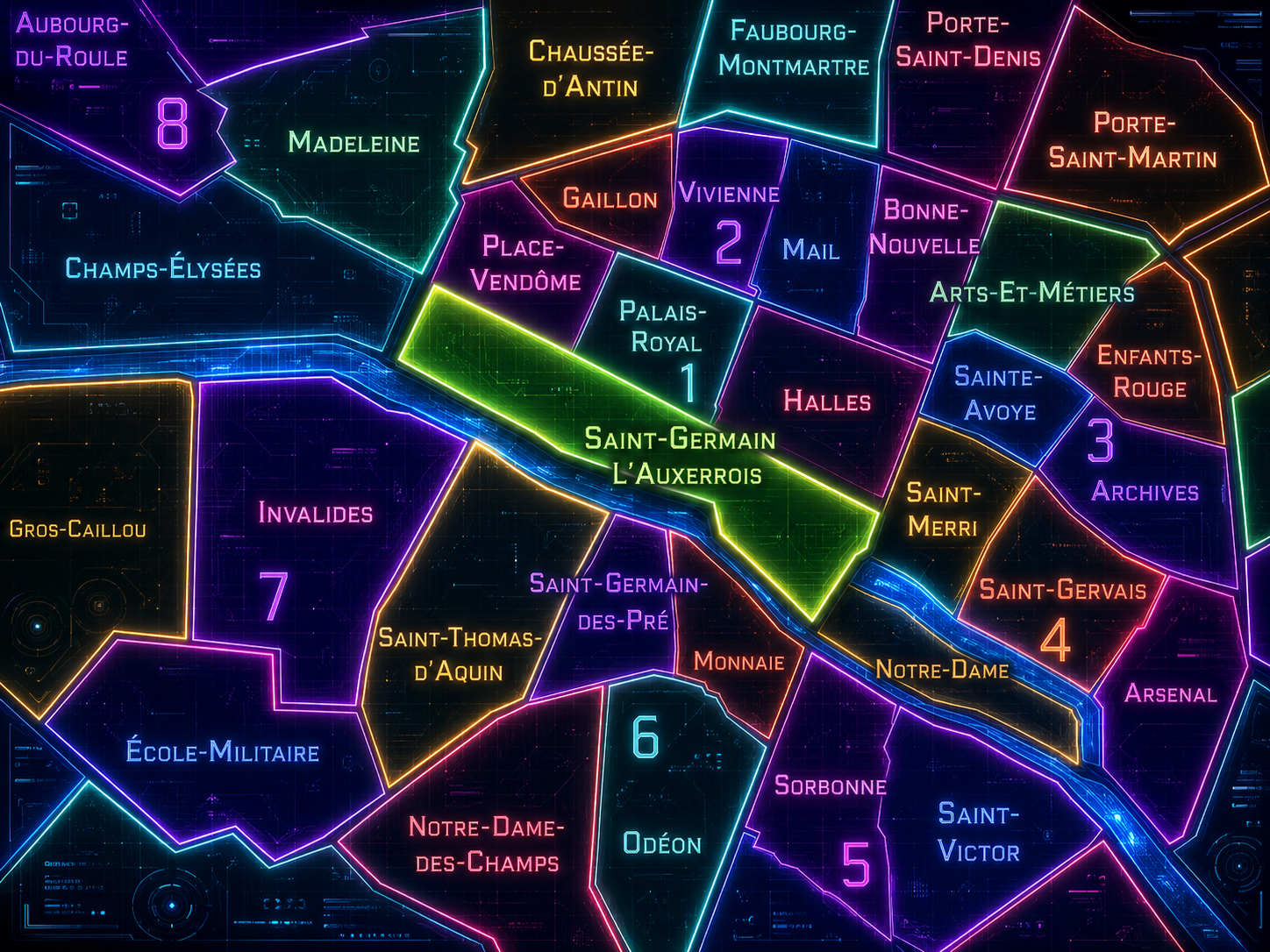
The Map
Download the Paris Arrondissements Map
Geographic Setting
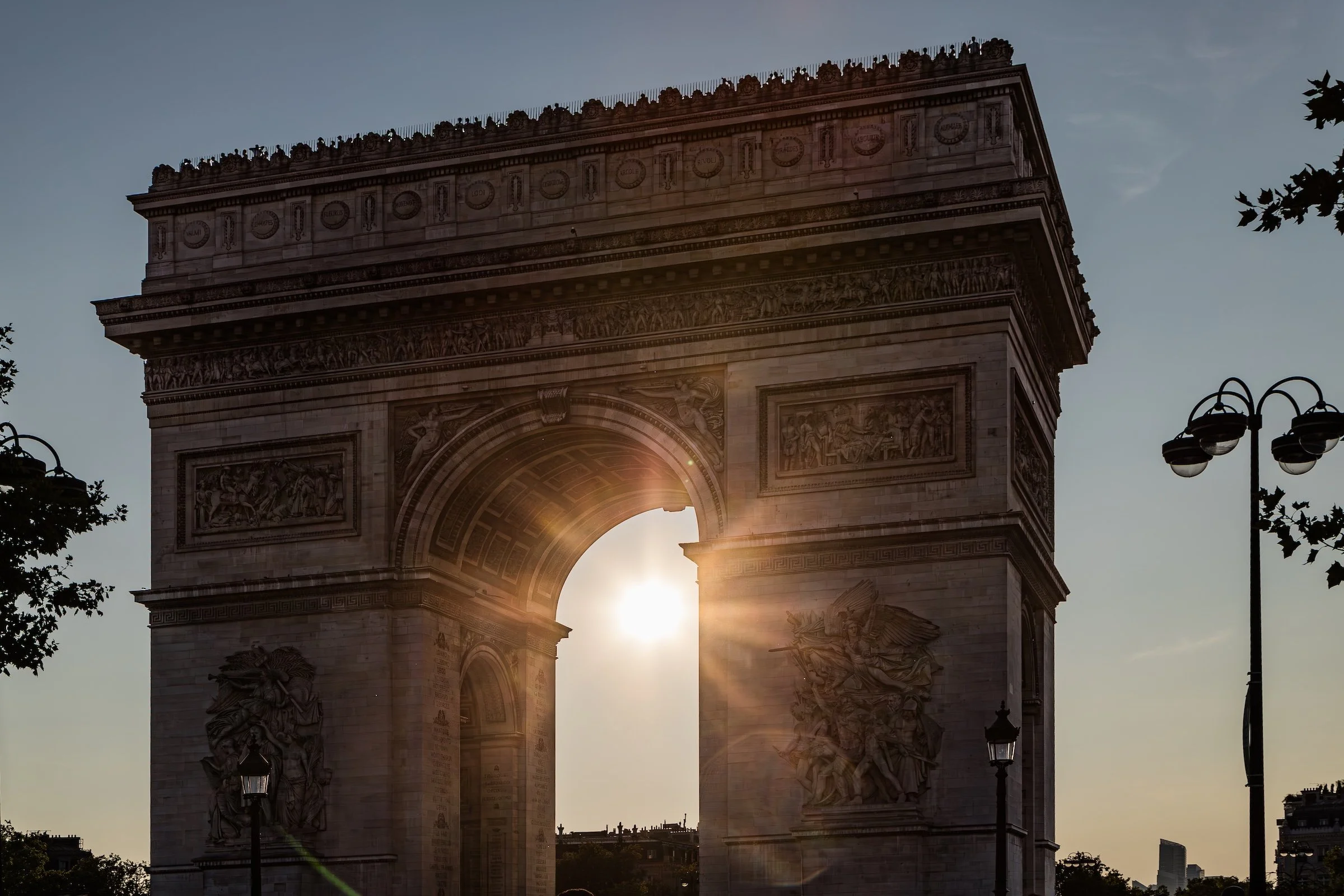
Saint-Germain-l’Auxerrois occupies the ceremonial heart of Paris, where the Right Bank meets the Seine and the city’s oldest civic, royal, and judicial landscapes gather around the Louvre and the western Île de la Cité. As the first administrative quarter of Paris, it lies in the southern portion of the 1st arrondissement and includes both a Right Bank landscape and part of the western island geography of the city’s historic core. The quarter is closely associated with the Louvre, the Seine, the Pont Neuf, the Tuileries edge, the church of Saint-Germain-l’Auxerrois, and the monumental approaches between palace, river, and island.
This is Paris at its most foundational: not simply central by location, but central by memory. Here, the city’s royal, religious, artistic, commercial, and judicial histories overlap within a compact geography. The Louvre faces the old parish church. The Pont Neuf binds the Right Bank, Left Bank, and Île de la Cité. The Seine curves through the quarter as both boundary and passage. Few administrative quarters contain so much of Paris’s symbolic weight in so small a space.
Administrative Quarter Identity
Etymology and Origins
The name Saint-Germain-l’Auxerrois comes from the church of Saint-Germain-l’Auxerrois, one of the historic parish churches of central Paris. The church is dedicated to Saint Germanus of Auxerre, a 5th-century bishop associated in Parisian tradition with Saint Geneviève, the patron saint of the city. The name therefore carries both Burgundian and Parisian resonance: Auxerre in the title, Paris in the memory, and the old church standing across from the Louvre as a witness to the city’s religious and royal past.
The quarter is also sometimes associated with the broader identity of the Louvre district. That dual identity matters. “Saint-Germain-l’Auxerrois” speaks to parish, medieval church, and sacred geography; “Louvre” speaks to monarchy, museum, palace, and the state. Together, they define the quarter’s essential character: a place where the sacred city and the royal city have long stood face to face.
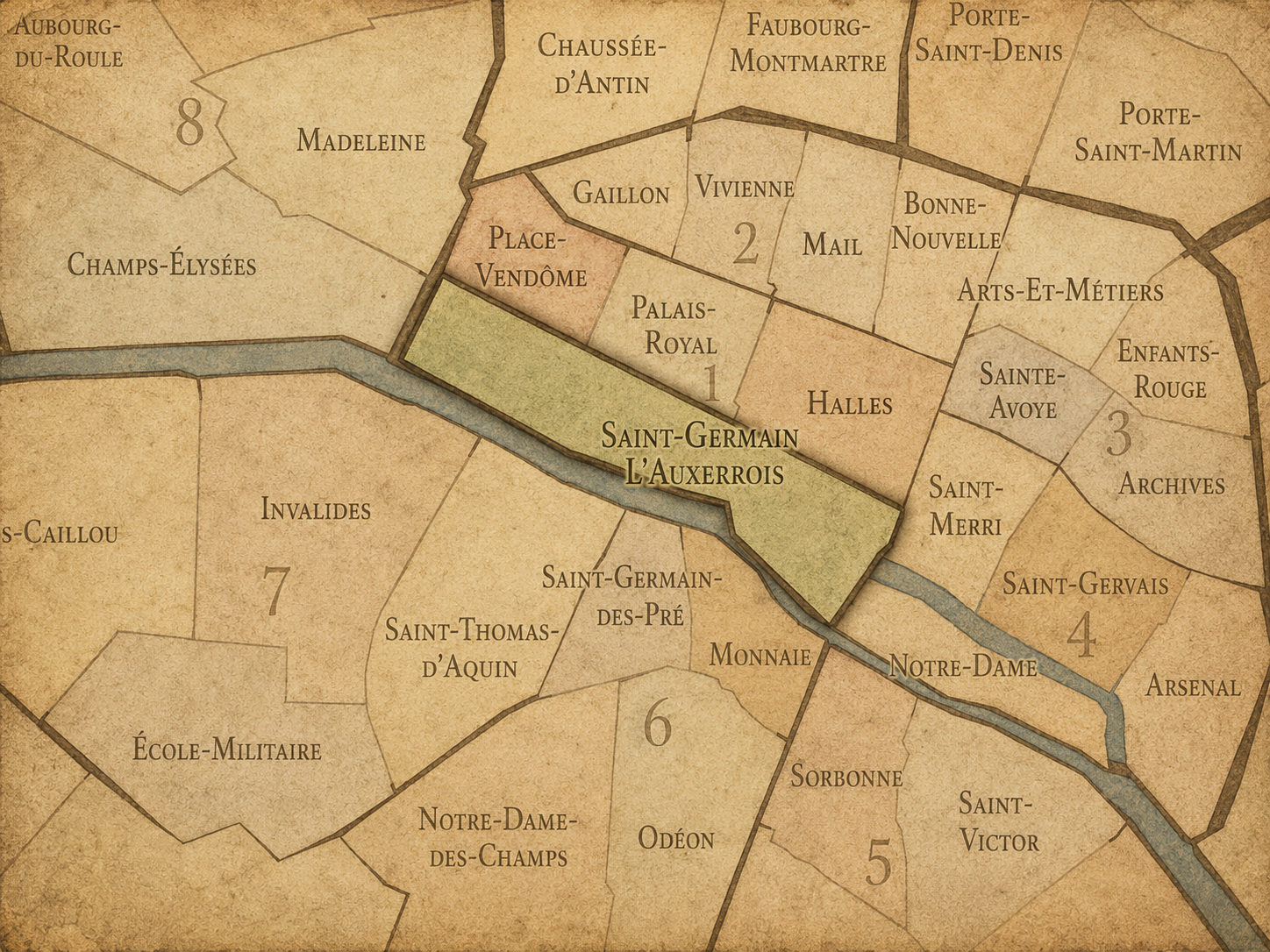
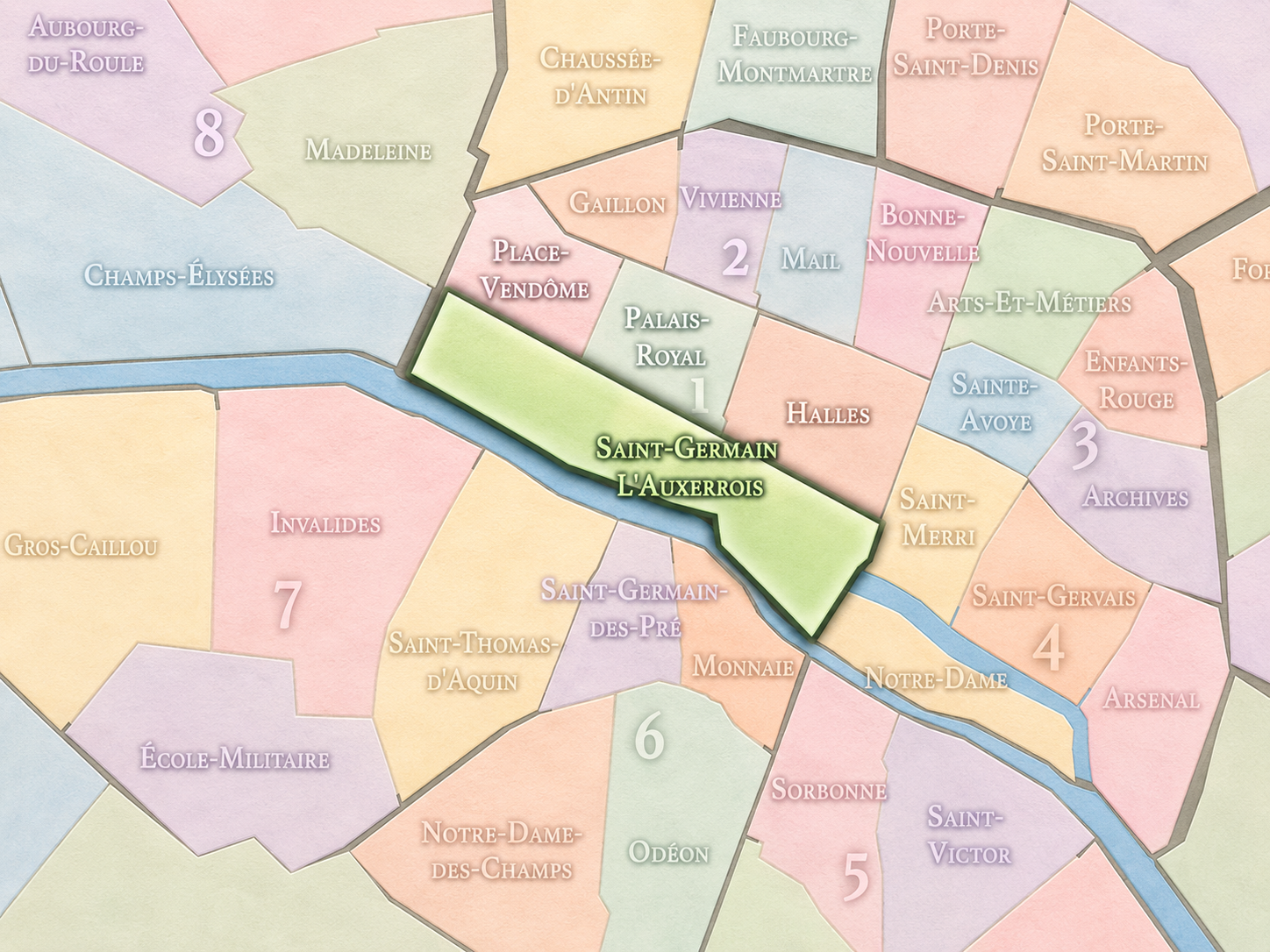
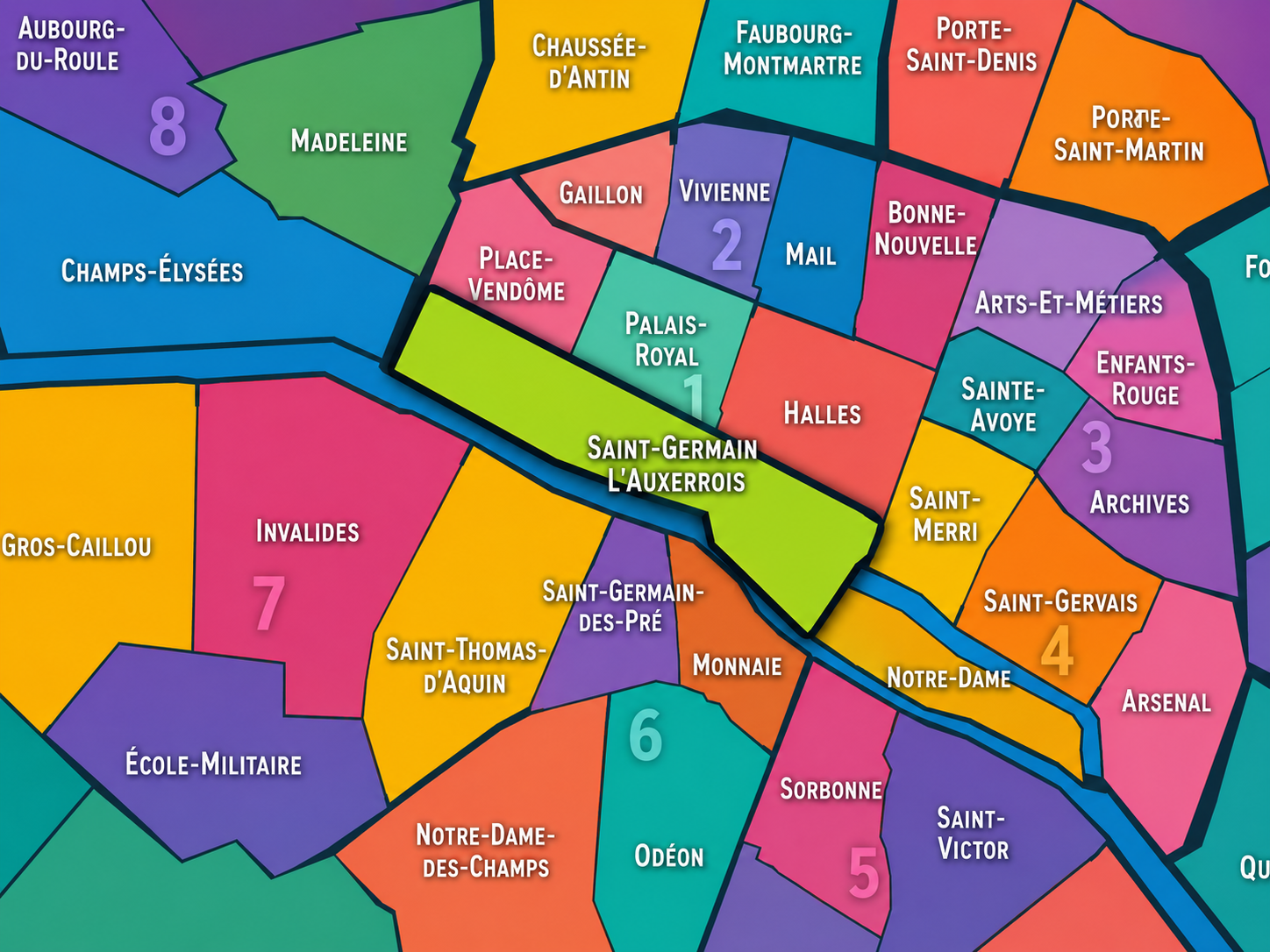
Within the administrative geography of Paris, Saint-Germain-l’Auxerrois is one of the four official quarters of the 1st arrondissement, alongside Halles, Palais-Royal, and Place-Vendôme. It is the 1st quarter of Paris in the traditional numbering of the quartiers administratifs, placing it at the very beginning of the city’s official neighborhood sequence.
That status gives the quarter a particular civic clarity. It is not merely an area around the Louvre, nor simply a tourist landscape of monuments. It is an official administrative unit within the municipal structure of Paris. Its boundaries help translate the symbolic center of the city into a mapped civic geography: palace, church, river, island, bridge, garden, and administrative order held within one named quarter.
Civic Framework
As an administrative quarter, Saint-Germain-l’Auxerrois should be distinguished from several overlapping but different identities. It is not the entire 1st arrondissement, though it contains some of the arrondissement’s most famous landmarks. It is not simply “the Louvre,” though the Louvre dominates its geography and public image. It is not the same as the cultural district of central Paris, nor does it fully correspond to the tourist imagination of the historic core.
Its distinction lies in how it gathers the city’s official and symbolic center into one civic unit. Halles is more commercial and infrastructural. Palais-Royal is more enclosed, theatrical, and governmental. Place-Vendôme is more formal, luxurious, and imperial in tone. Saint-Germain-l’Auxerrois is older and more foundational. It is the quarter of church, palace, river, bridge, and island — the Paris of origins and authority.
Neighborhood Distinction
Parisian Identity
Saint-Germain-l’Auxerrois expresses Paris as capital, archive, stage, and shrine. It is a place where the city repeatedly presents itself to history: as royal residence, revolutionary theater, national museum, religious parish, judicial center, and global destination. The quarter does not possess the intimacy of a village-like neighborhood in the way that Charonne, Auteuil, or Batignolles might. Its identity is more ceremonial, more monumental, and more densely layered.
Yet it is not only grand. Its power also lies in the smaller crossings: the view from the church toward the Louvre, the movement along the quais, the stone of the Pont Neuf, the approach to the Cour Carrée, the changing light across the Seine. Saint-Germain-l’Auxerrois is a reminder that the heart of Paris is not one monument, but a conversation among many — church and palace, bridge and river, museum and street.
Neighborhood Connections
Every administrative quarter belongs to a wider Parisian fabric. These connections place Saint-Germain-l’Auxerrois within the city’s civic, participatory, and cultural geography:
-
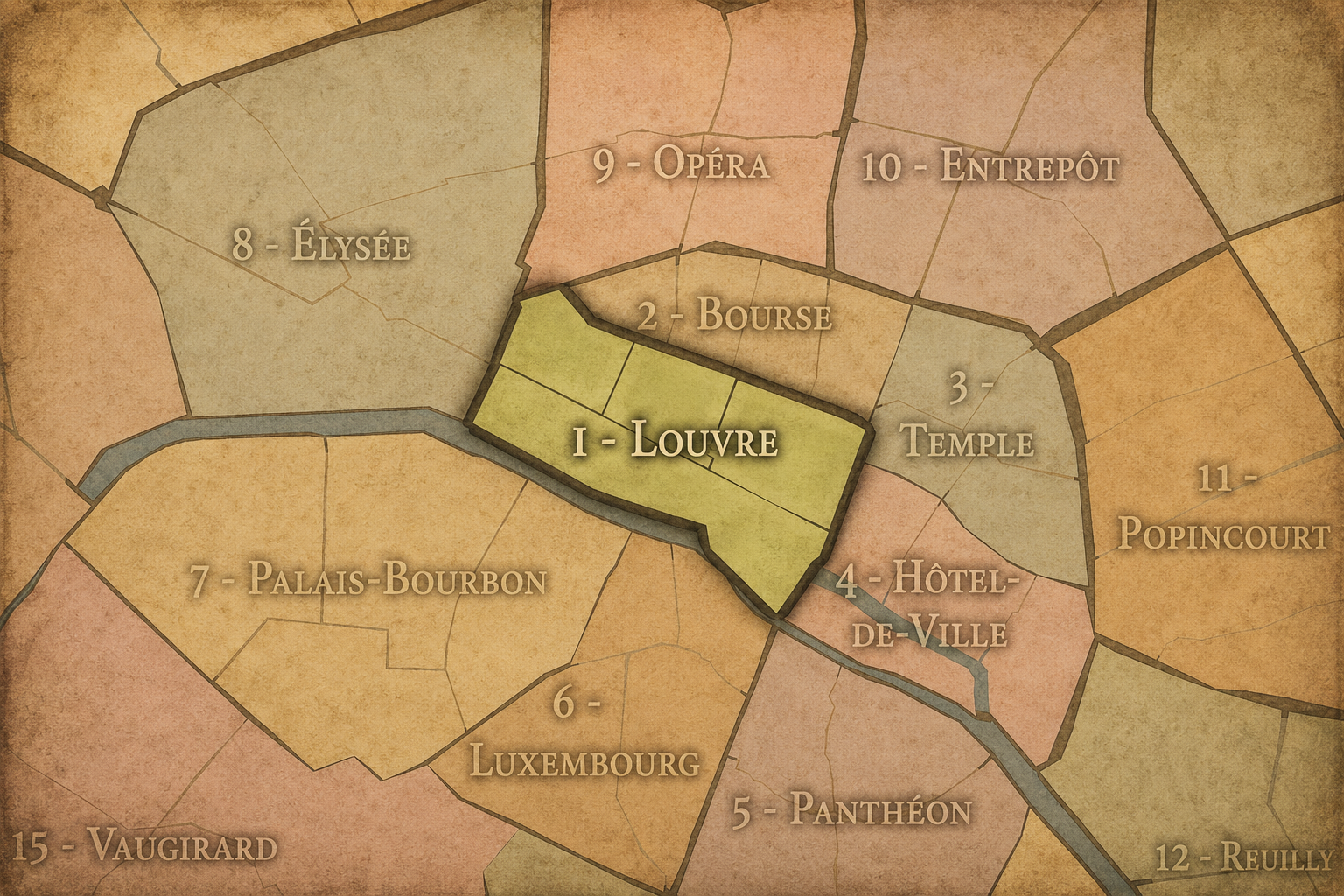
1er Arrondissement — Louvre
-
Louvre-Opéra / Seine
The History
The origins of Saint-Germain-l’Auxerrois reach into the earliest layers of Parisian urban life. The western Île de la Cité belongs to the ancient and medieval heart of the city, while the Right Bank around the Louvre developed over centuries from riverfront approaches, parish life, royal fortification, and commercial movement along the Seine. The church of Saint-Germain-l’Auxerrois is traditionally linked to very early Christian foundations, though the present building reflects many later medieval and early modern stages of construction.
The Louvre itself began not as a museum or palace of art, but as a medieval fortress on the western edge of the city. Built under Philippe Auguste in the late 12th century, it guarded the approaches to Paris before later becoming a royal palace and, eventually, one of the world’s great museums. In this pairing — fortress and church — the quarter’s deepest identity begins to emerge: protection and devotion, monarchy and parish, the city defended and the city sanctified.
Origins
16th–17th Century
The 16th and 17th centuries transformed Saint-Germain-l’Auxerrois into one of the central stages of royal Paris. The Louvre was gradually reshaped from medieval fortress into Renaissance and classical palace, while the surrounding streets and riverfront became increasingly tied to court life, royal administration, and the cultural world of artists, architects, and craftsmen who served the crown. The church of Saint-Germain-l’Auxerrois, standing opposite the Louvre, became closely associated with the royal household and with those who worked in and around the palace.
This period also carries one of the darkest memories in the quarter’s history. In August 1572, the bells of Saint-Germain-l’Auxerrois became associated with the beginning of the St. Bartholomew’s Day Massacre, when violence against Protestants erupted in Paris and spread beyond the city. For all its beauty and royal association, the church also stands within the memory of religious conflict, reminding visitors that the ceremonial heart of Paris has witnessed both splendor and rupture.
The Pont Neuf added another defining layer. Begun in the late 16th century and completed in the early 17th century, it became the oldest surviving bridge across the Seine and one of the great urban innovations of Paris: a bridge without houses, open to movement, views, and public life. For Saint-Germain-l’Auxerrois, the Pont Neuf strengthened the quarter’s role as a connector between banks, island, palace, and city.
In the 18th century, Saint-Germain-l’Auxerrois remained deeply tied to the royal and institutional center of Paris, but the meaning of that center was changing. The Louvre was no longer simply a royal residence in the older sense; it increasingly held artistic, academic, and cultural functions. The surrounding quarter retained its relationship to monarchy and administration while also becoming part of the intellectual and artistic geography that would later help shape the museum identity of the Louvre.
The streets around the church and palace continued to carry the practical life of the old city: river commerce, workshops, offices, residences, church processions, and routes between the Seine and the dense Right Bank. This was not yet the museum district of modern tourism. It was a working central quarter, where royal memory, urban commerce, religious life, and the daily mechanics of Paris coexisted.
By the end of the century, the French Revolution radically altered the symbolic order of the quarter. Royal spaces were reinterpreted as national spaces. Sacred and monarchical authority were challenged, reorganized, or repurposed. Saint-Germain-l’Auxerrois, standing beside the Louvre and near the oldest civic heart of Paris, was drawn into the revolutionary transformation of the city’s meaning.
18th Century
19th Century
The 19th century gave Saint-Germain-l’Auxerrois much of its modern public identity. The Louvre’s transformation into a national museum reoriented the quarter toward art, history, and public culture. What had once been a royal palace became a national institution, opening the memory of monarchy to citizens, scholars, artists, and visitors from around the world. The Louvre’s official history emphasizes this long transformation from medieval fortress to royal palace to museum — a sequence that defines the quarter’s architectural and symbolic power.
The century also reshaped the urban setting around the Louvre. Streets were widened, views clarified, and the relationship between monument and city became more formal. The nearby church of Saint-Germain-l’Auxerrois was restored and reframed within this changing urban landscape. In the age of Haussmann and historic preservation, the quarter became both an object of modernization and a repository of memory.
This is when Saint-Germain-l’Auxerrois began to resemble the Paris we recognize today: a monumental district of museums, churches, bridges, quays, and carefully staged vistas. But beneath that 19th-century clarity remained older strata — medieval parish, royal palace, Renaissance court, revolutionary upheaval, and riverfront city.
In the early and mid 20th century, Saint-Germain-l’Auxerrois stood as one of the symbolic landscapes through which Paris presented its continuity. The Louvre remained central to the cultural identity of France, while the church, quays, bridges, and nearby historic fabric preserved a sense of deep time amid modern upheaval.
The quarter lived through the pressures of war, occupation, liberation, and the shifting role of Paris as both national capital and global cultural center. Its monuments were not abstract heritage sites; they were part of a city that endured military occupation, political crisis, and postwar recovery. In this period, Saint-Germain-l’Auxerrois carried the burden of representing permanence even as the 20th century repeatedly unsettled the meanings of nation, memory, and public space.
Its identity as a museum-and-monument quarter grew stronger, but its older civic functions did not disappear. Courts, administrative institutions, churches, bridges, and river crossings continued to shape the geography of daily life. The quarter remained both destination and passageway.
Early–Mid 20th Century
Late 20th Century
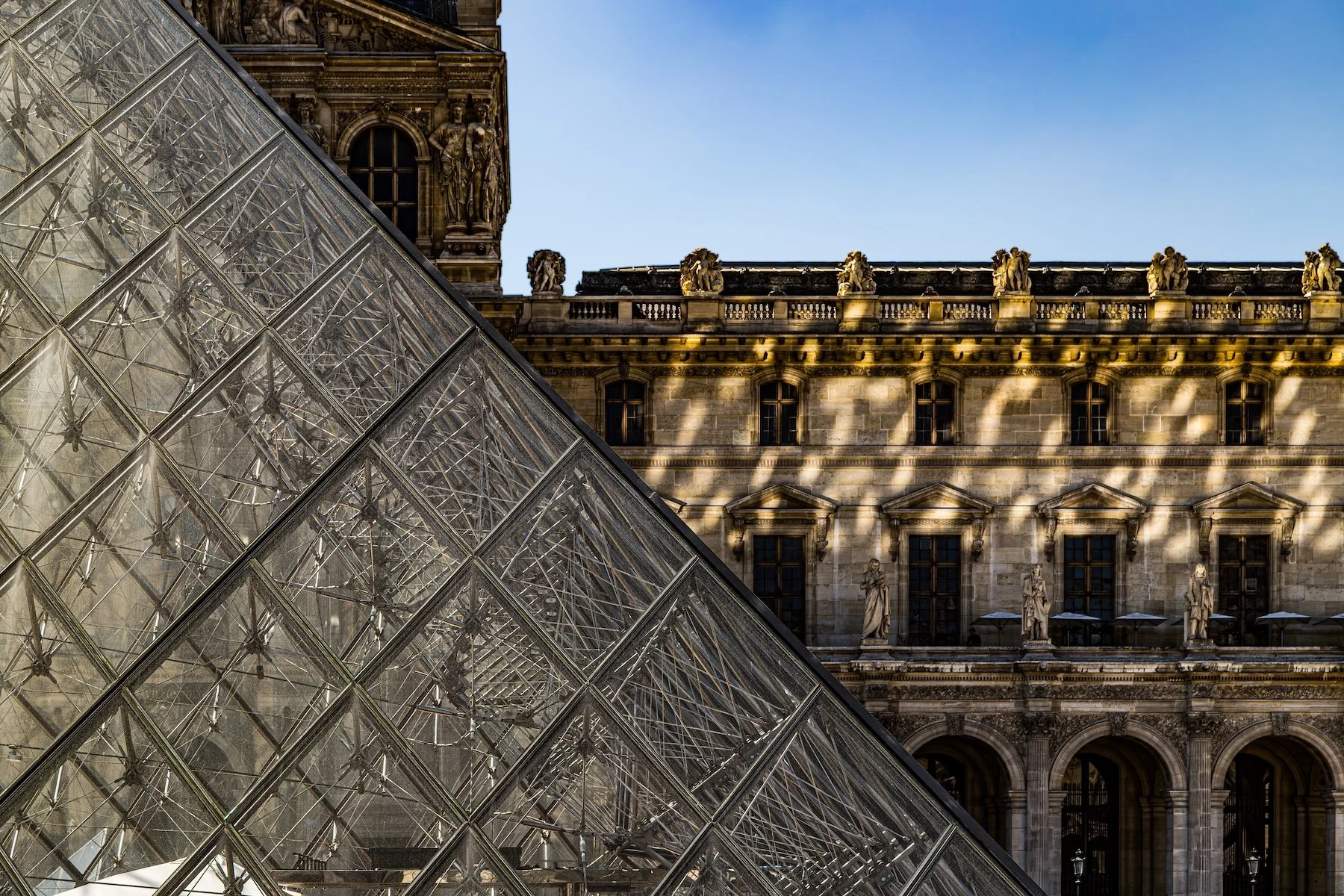
The late 20th century brought a new era of global visibility to Saint-Germain-l’Auxerrois. The Louvre became not only a national museum but one of the defining cultural institutions of the world. The creation of the Louvre Pyramid in the Cour Napoléon in the 1980s introduced a bold modern intervention into the historic palace complex, reframing the museum’s entrance and renewing debates about how contemporary design should speak within historic Paris. The Louvre itself presents the Pyramid as one of the palace’s modern symbols.
This period also intensified the quarter’s role in tourism, photography, and international imagination. The relationship between the medieval church, the vast museum, the Seine, and the Pont Neuf became part of the visual shorthand of Paris. Yet the late 20th century did not erase the quarter’s complexity. Saint-Germain-l’Auxerrois remained a place where beauty and burden coexist: royal splendor, religious memory, revolutionary rupture, national art, and the pressures of mass visitation.
In the 21st century, Saint-Germain-l’Auxerrois continues to stand at the intersection of heritage, culture, luxury, and public life. The Louvre remains one of the great anchors of world art, while the surrounding quarter has seen renewed attention through restoration, pedestrian movement, luxury redevelopment, and the reinvention of historic commercial spaces. La Samaritaine, founded in 1870, reopened in 2021 after a long closure and major renovation, adding another contemporary layer to the quarter’s riverfront identity.
The quarter today must balance many versions of itself. It is a civic quarter and a global destination. It is a historic landscape and a heavily photographed one. It is a place of Parisian memory and international visitation. Its streets can feel monumental, crowded, quiet, ceremonial, commercial, or contemplative depending on the hour and the route.
For CityNeighborhoods: Paris, Saint-Germain-l’Auxerrois is one of the essential starting points. It introduces the administrative quarters not as abstract divisions, but as vessels of history. Here, the official map meets the oldest symbolic center of the city.
21st Century
Spirit and Legacy
Saint-Germain-l’Auxerrois is the quarter where Paris gathers itself into origin. It is not the soft intimacy of a village quarter, nor the bohemian mythology of a hill, nor the everyday residential calm of the outer arrondissements. Its spirit is older, heavier, more ceremonial. It is the Paris of stone, river, crown, altar, bridge, museum, and state.
Its legacy lies in this extraordinary compression. Few places can hold so many identities without dissolving into abstraction: medieval fortress, royal palace, parish church, national museum, judicial island, historic bridge, riverfront crossing, and global image of Paris. Saint-Germain-l’Auxerrois does not simply contain landmarks. It contains relationships — between sacred and secular, monarchy and republic, art and power, memory and movement.
To walk this quarter is to move through the city’s deepest symbolic grammar. The Louvre does not stand alone. The church does not stand alone. The Seine does not merely pass by. Together, they form one of the great civic compositions of Paris: a place where the city’s official memory, visual grandeur, and historical conscience meet at the edge of the river.
The Photography
The arrondissements do not share a single visual identity. Instead, they organize Paris into twenty broad visual fields, each gathering its own combination of landmarks, streetscapes, institutions, residential districts, commercial corridors, parks, rail stations, markets, cemeteries, and riverfront edges.
Some arrondissements are defined by monumental scale: royal palaces, ceremonial avenues, government buildings, museums, formal gardens, and internationally recognized landmarks. Others are shaped by hills, canals, rail gateways, apartment-lined boulevards, neighborhood markets, former village streets, industrial remnants, parks, or the quieter rhythms of residential Paris. The arrondissement system gives these varied landscapes a civic frame, allowing the city to be read not as one visual language, but as a sequence of overlapping Parisian atmospheres.
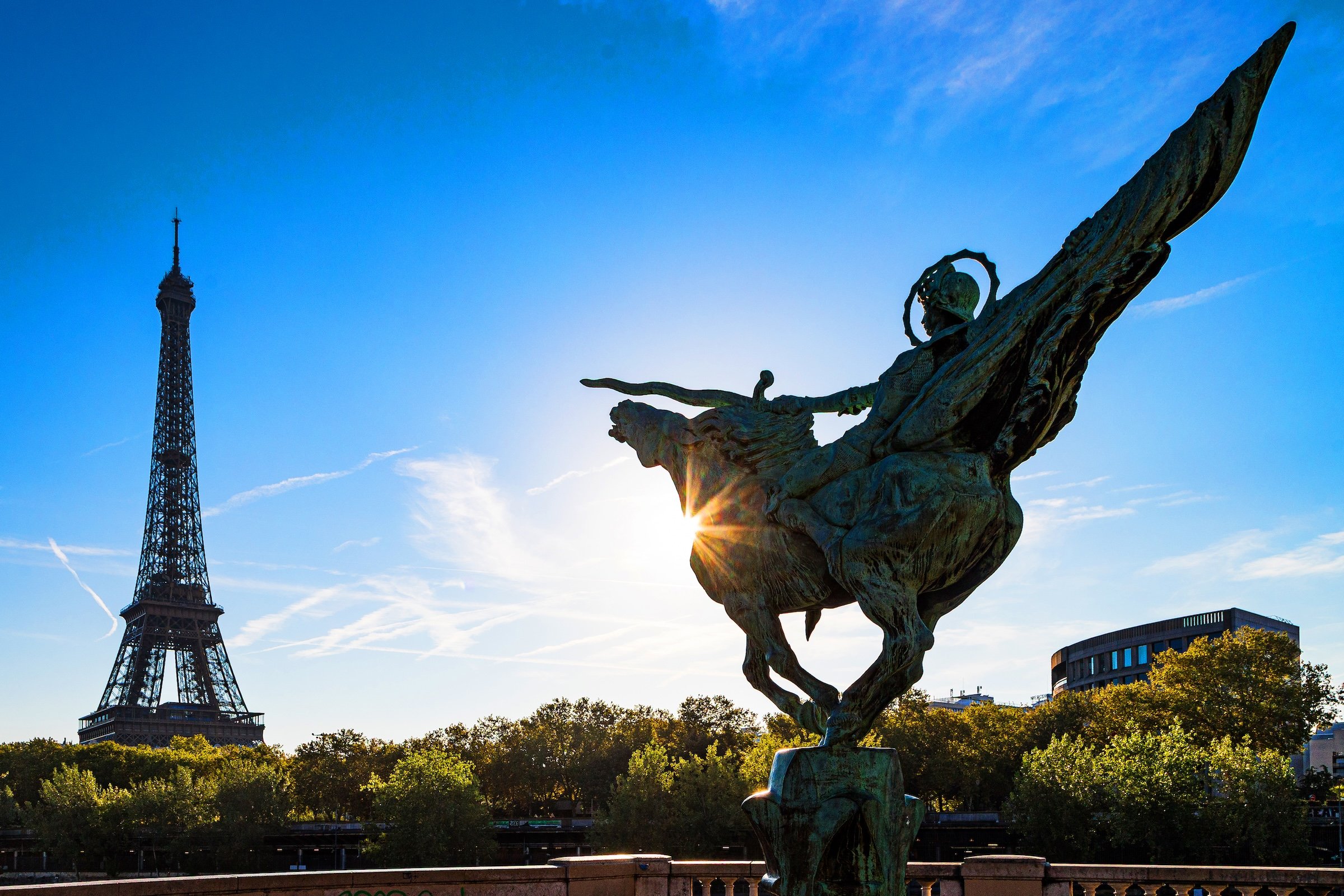
Visual Identity
Through The Lens
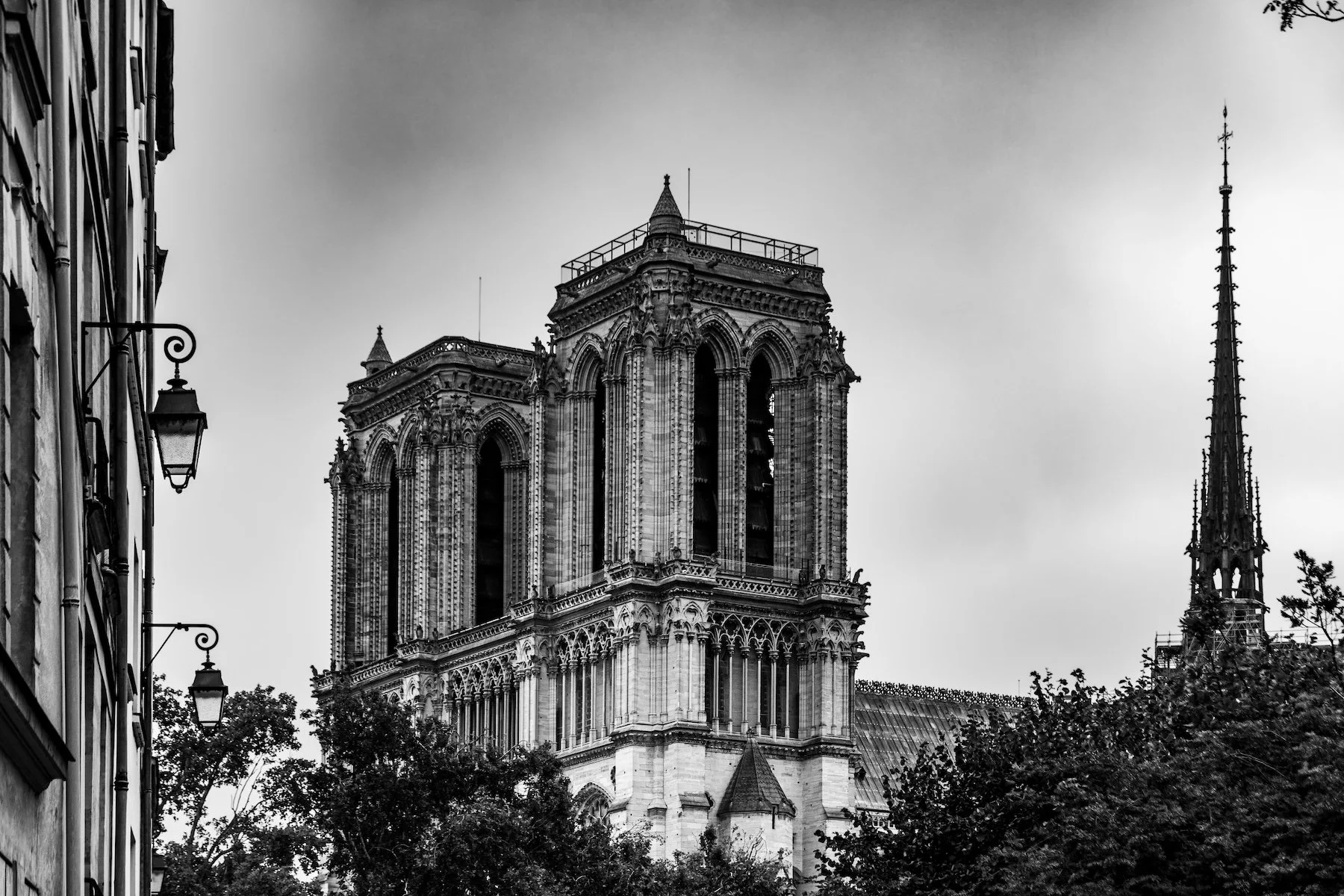
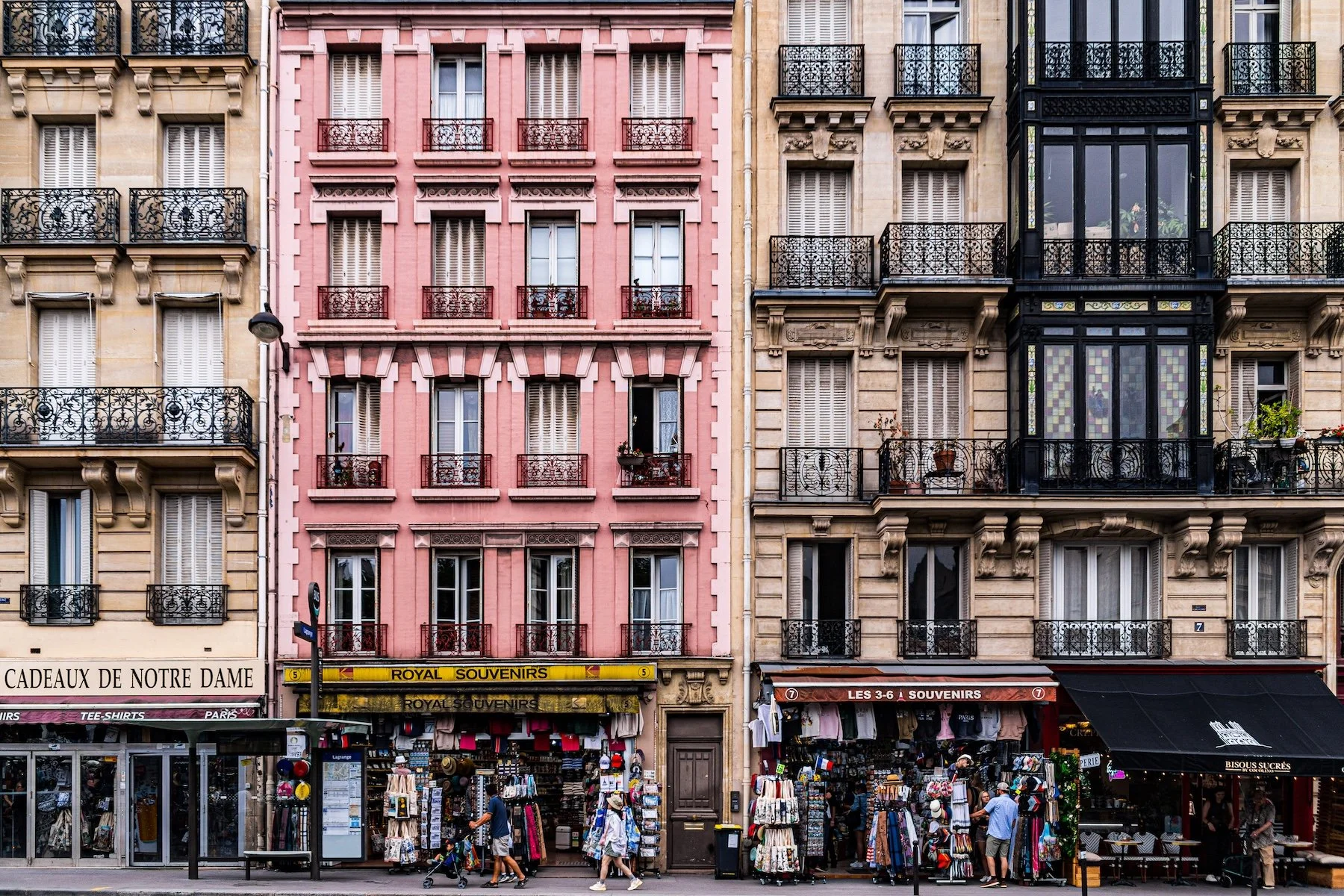
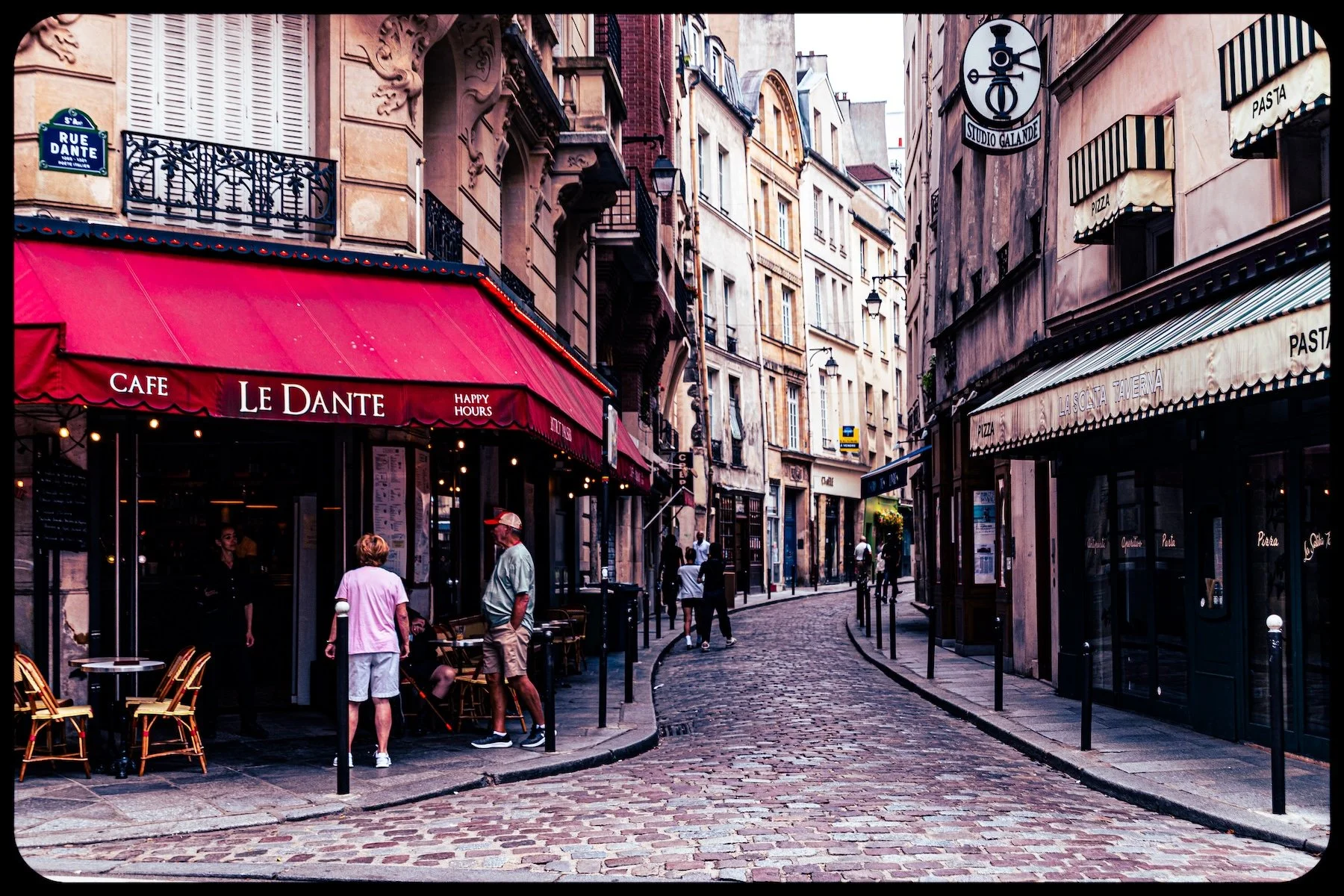
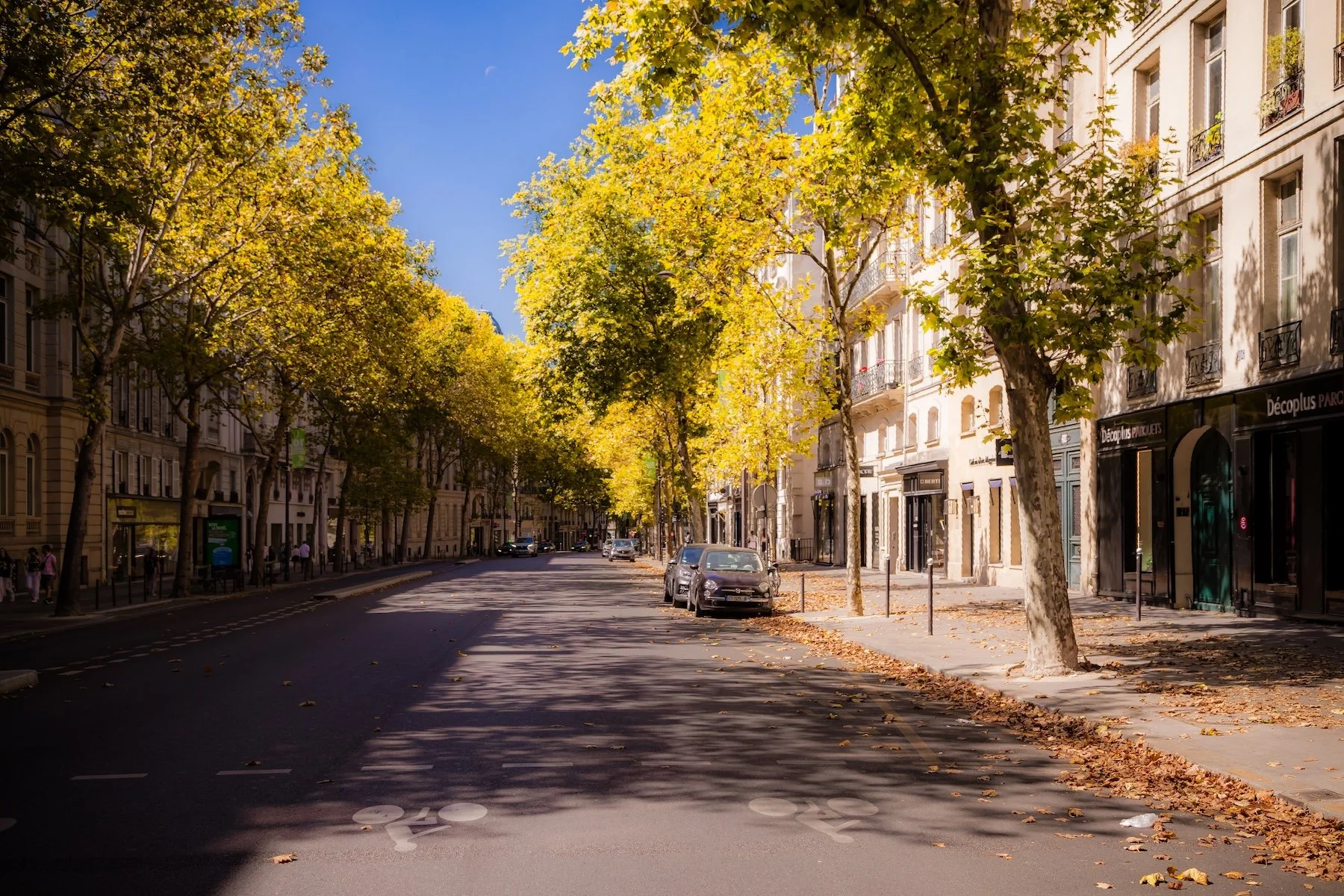
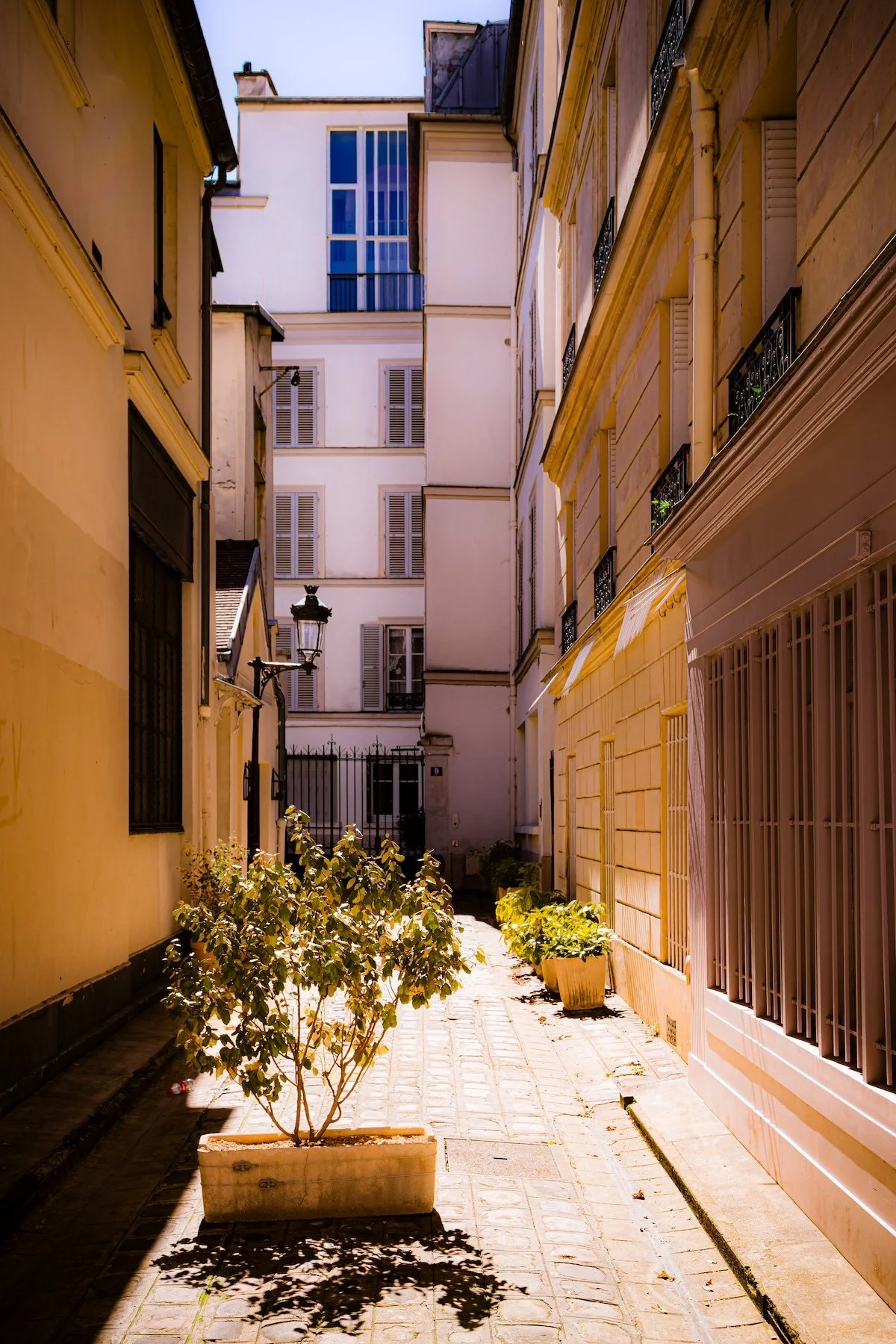
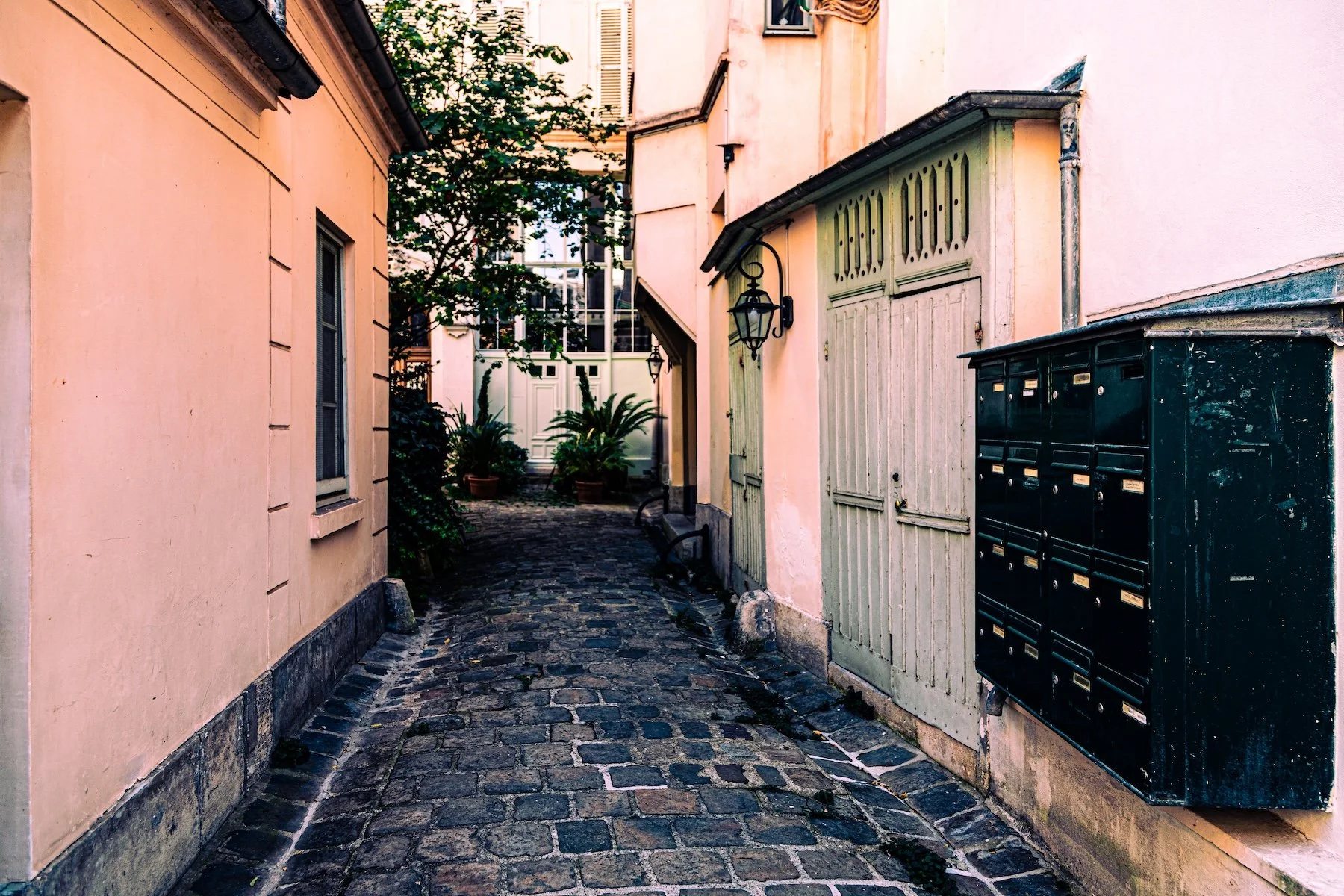
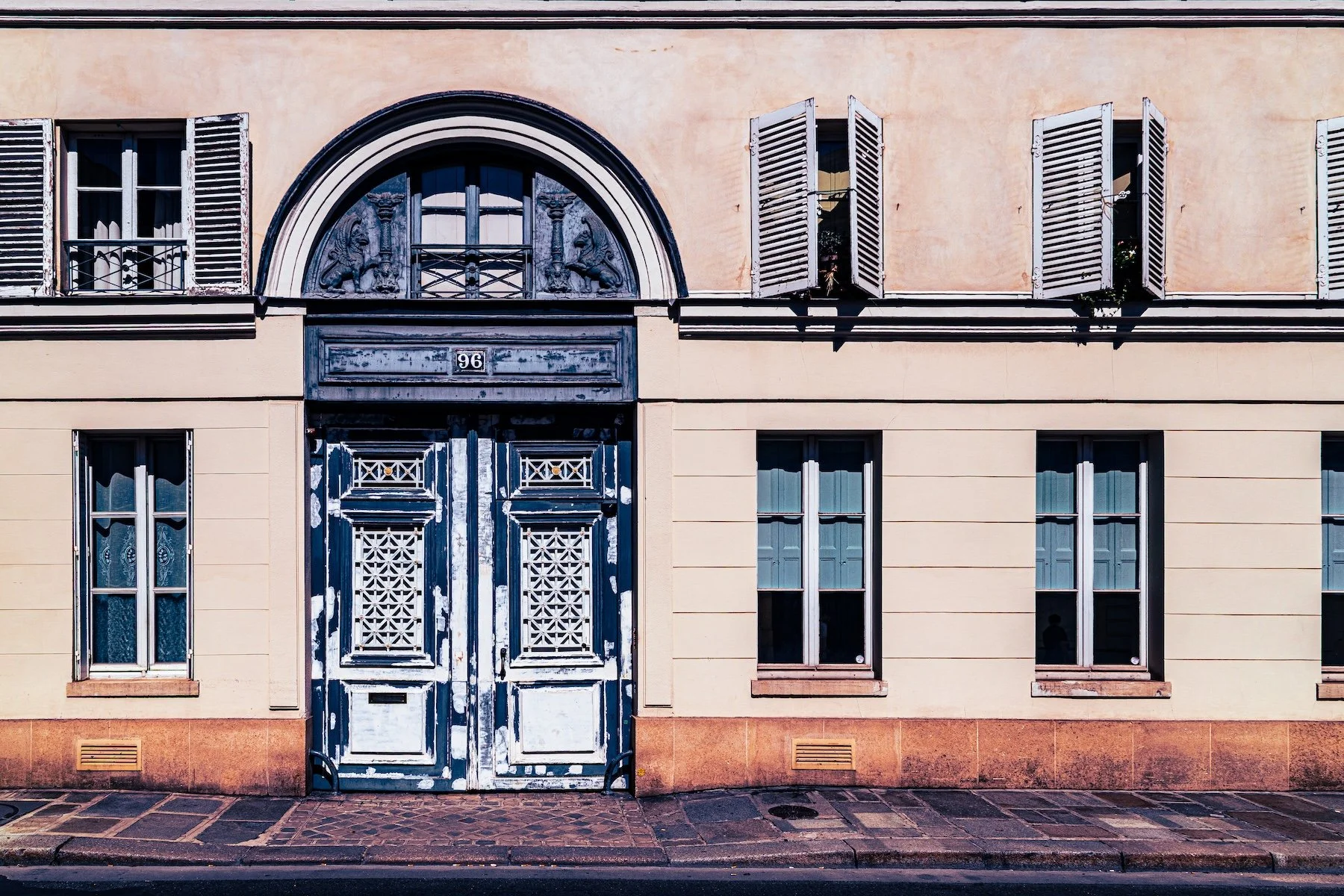
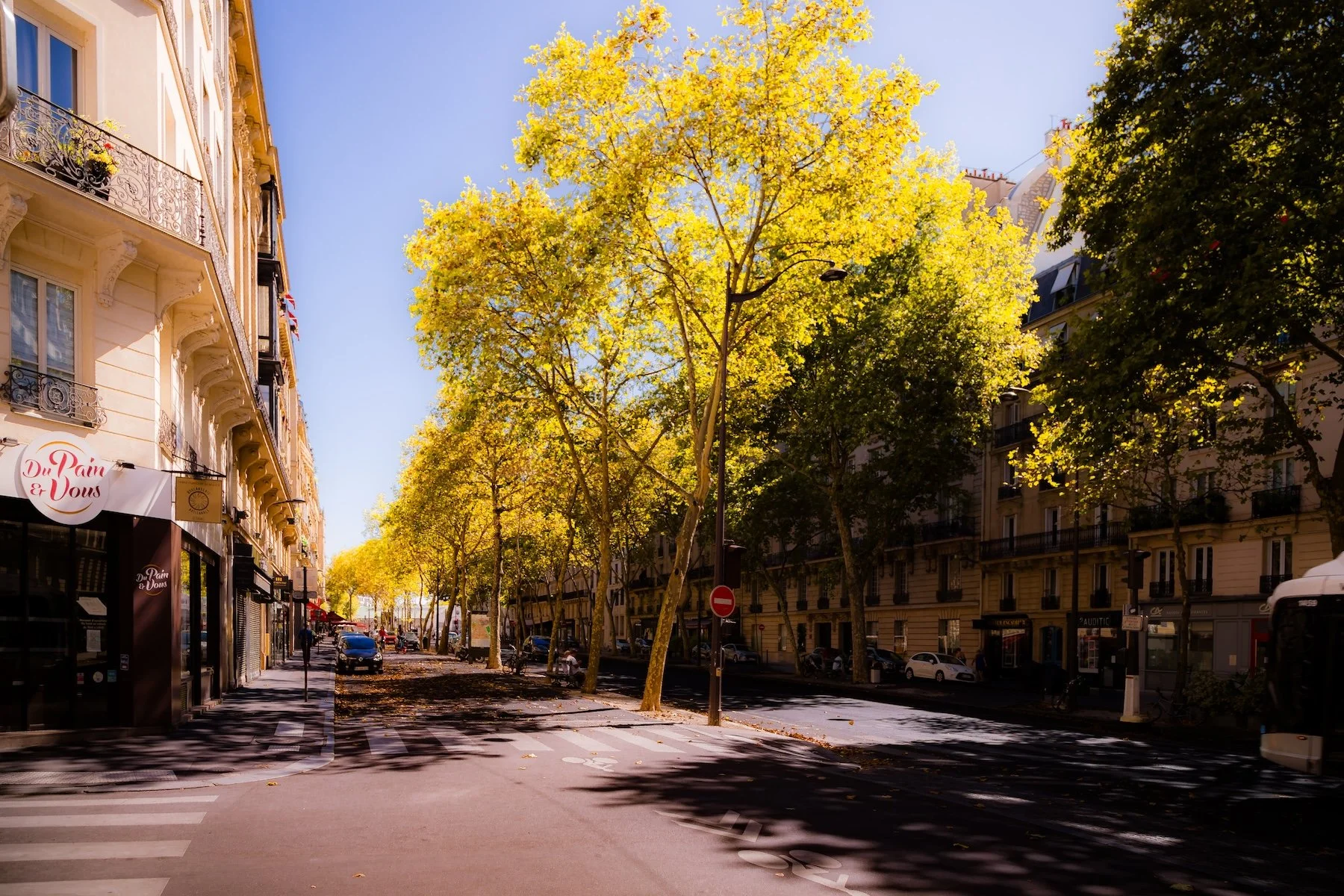
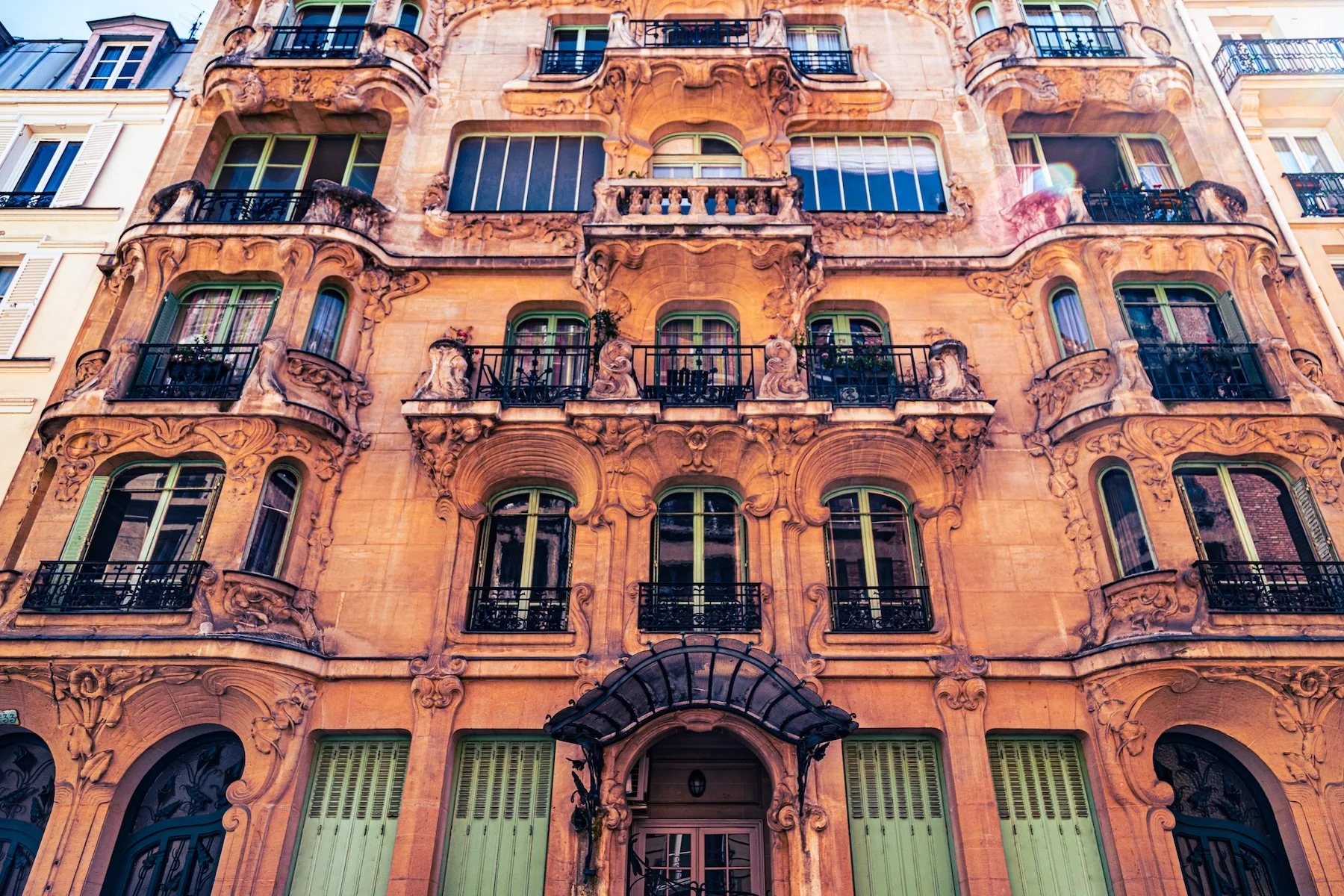
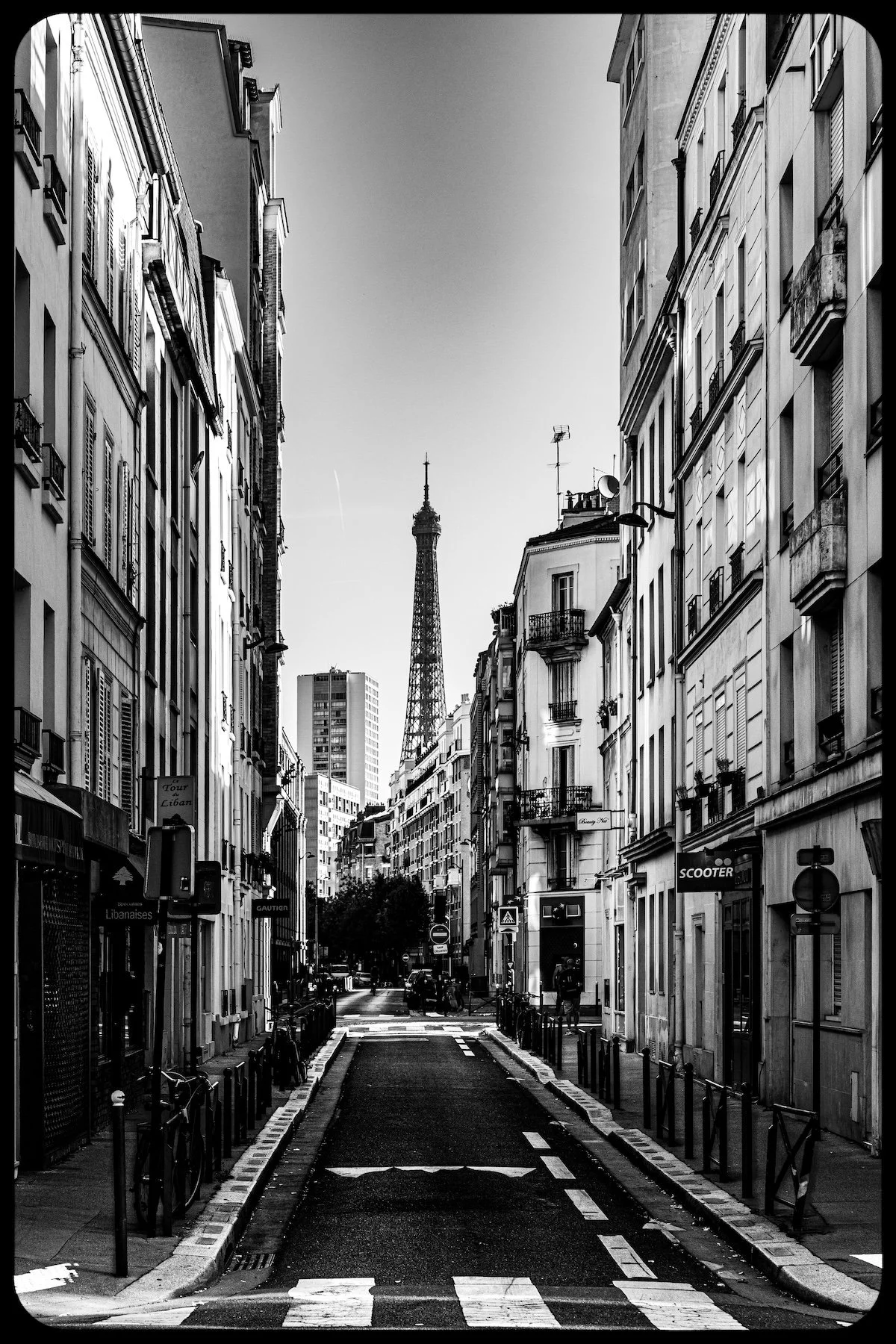
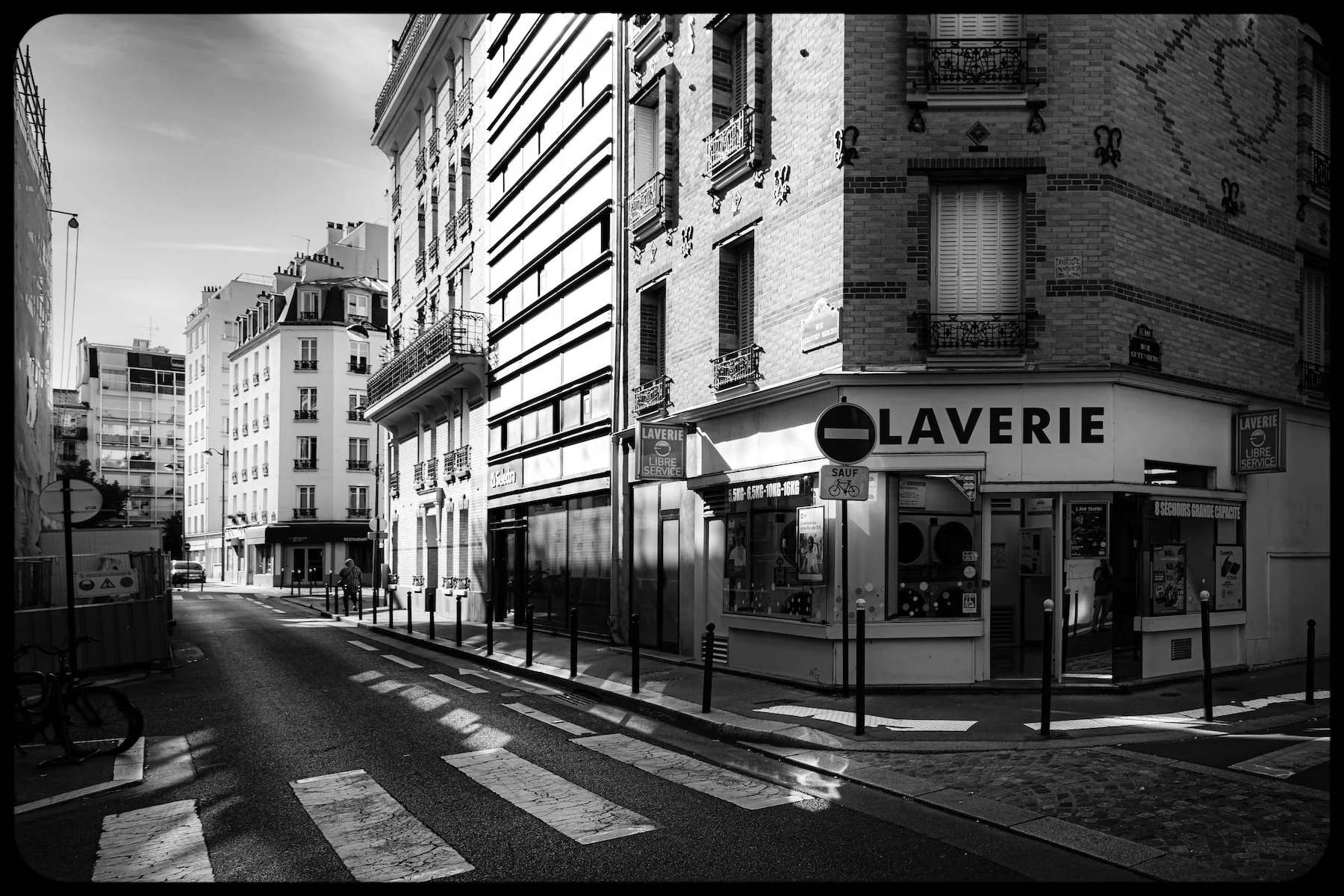
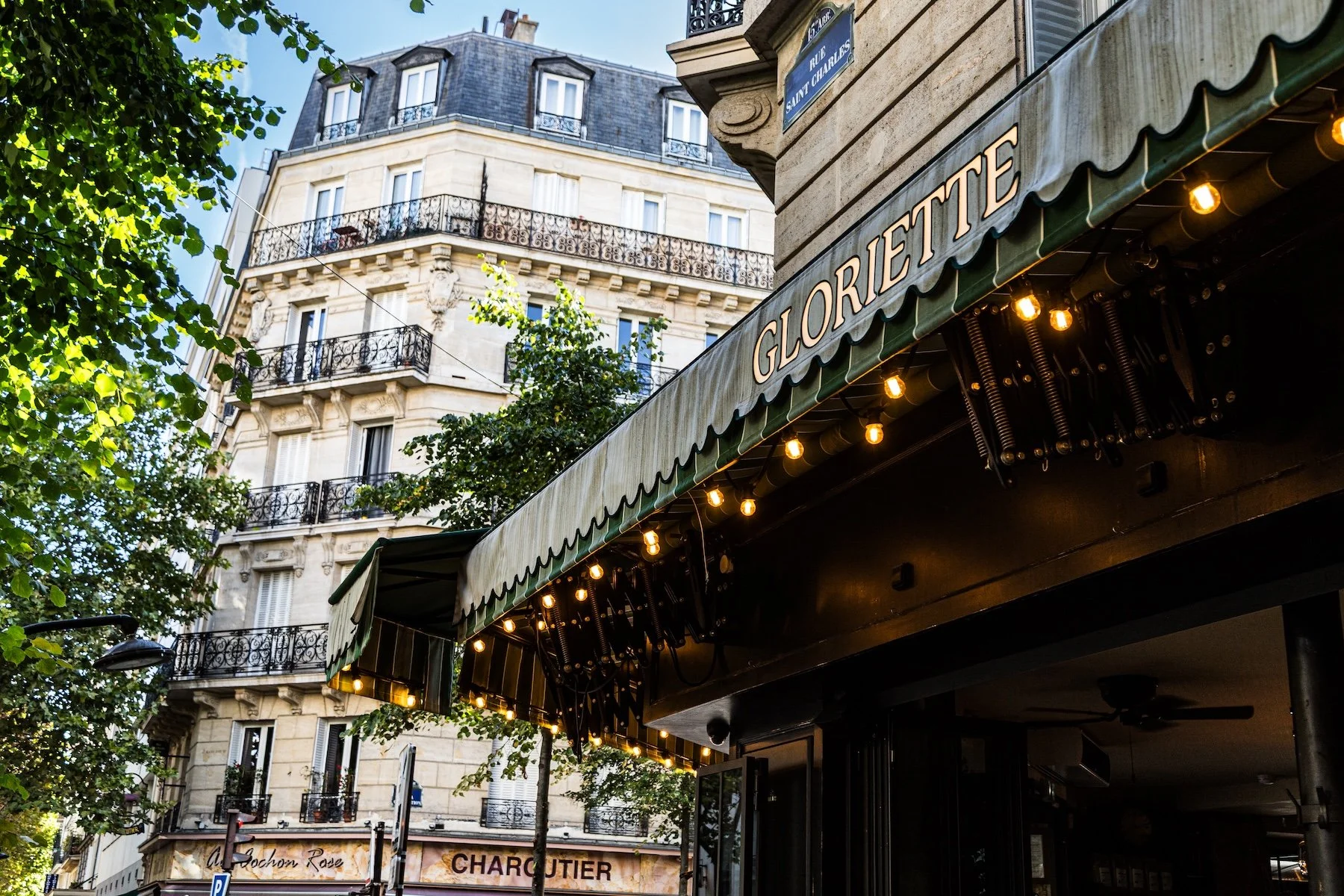
Photographing the arrondissements means moving between the official map and the street-level experience. The camera does not treat each arrondissement as visually uniform. Instead, it looks for the recurring forms, textures, transitions, and contrasts that make each district legible: the geometry of boulevards, the shade of plane trees, the repetition of balconies, the rise of stairways, the curve of canals, the presence of rail stations, the opening of parks, the weight of monuments, and the intimacy of side streets.
On CityNeighborhoods, the arrondissement provides the frame, but the photograph comes from the encounter between map, movement, light, and observation. As the Paris photography is processed, this section will connect each arrondissement more directly to the project’s Photographic Lexicon: the visual strategies, recurring motifs, and compositional patterns that shape how the city is seen through the lens.
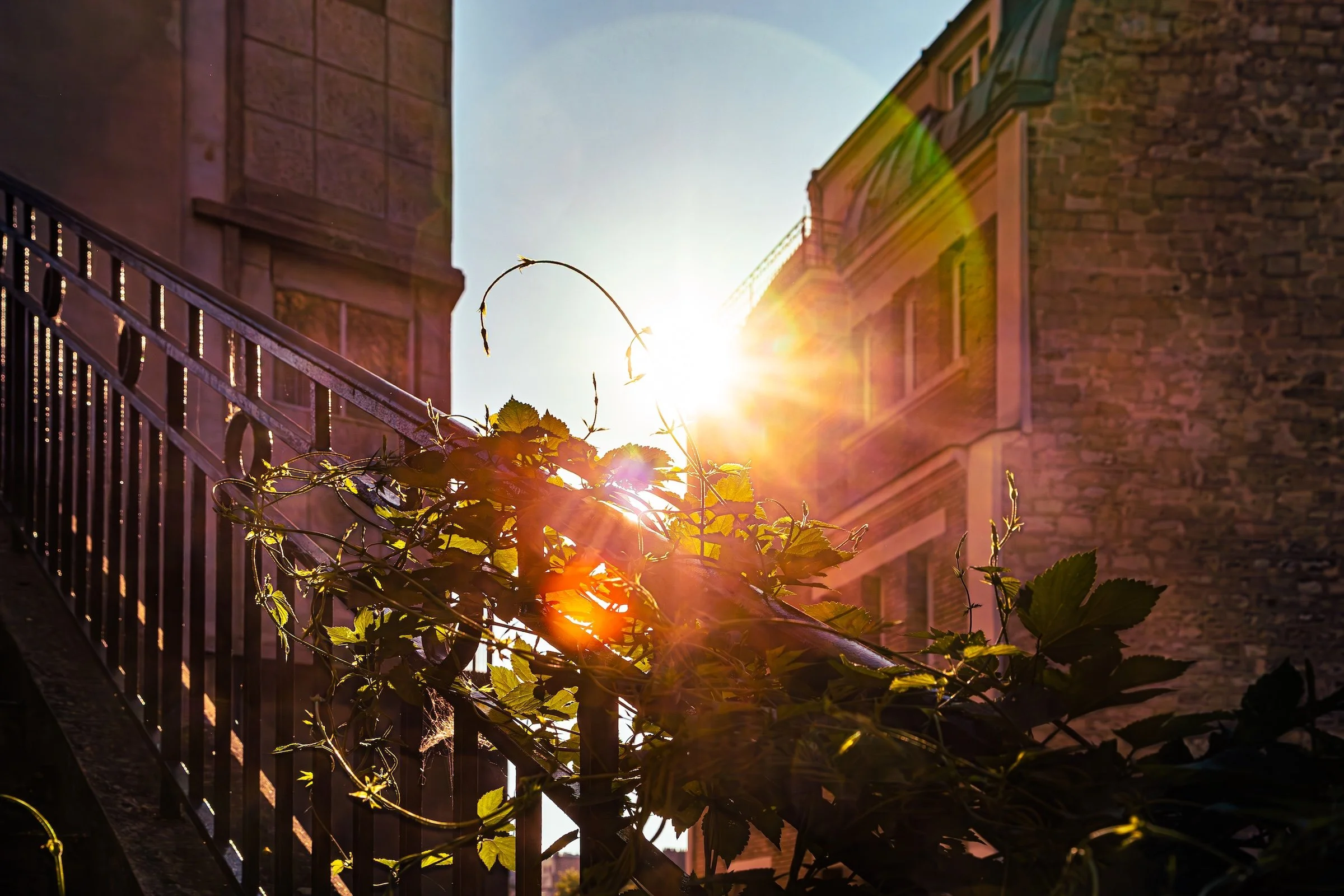
If you visit Paris, these ideas can help inspire your own photography.
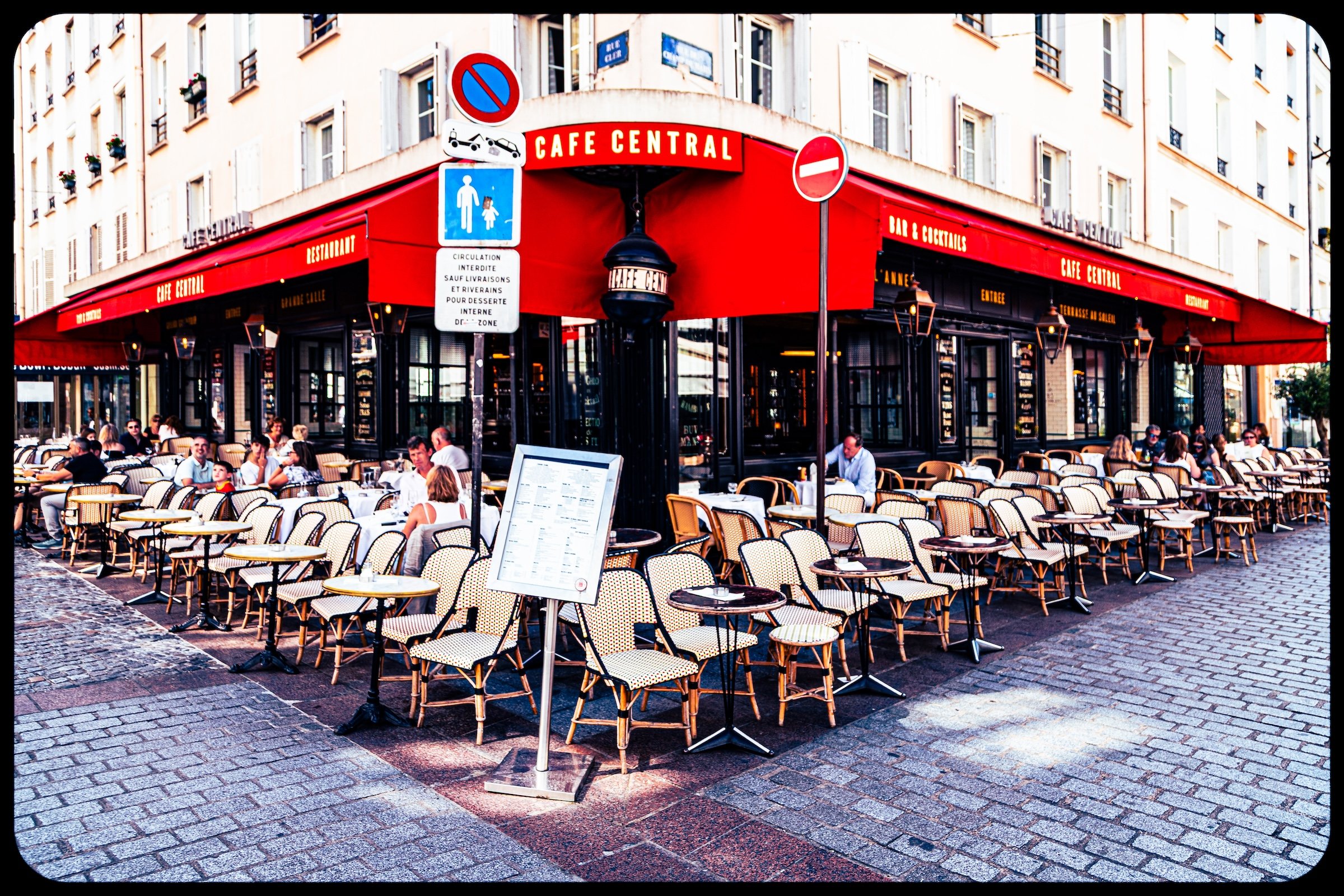
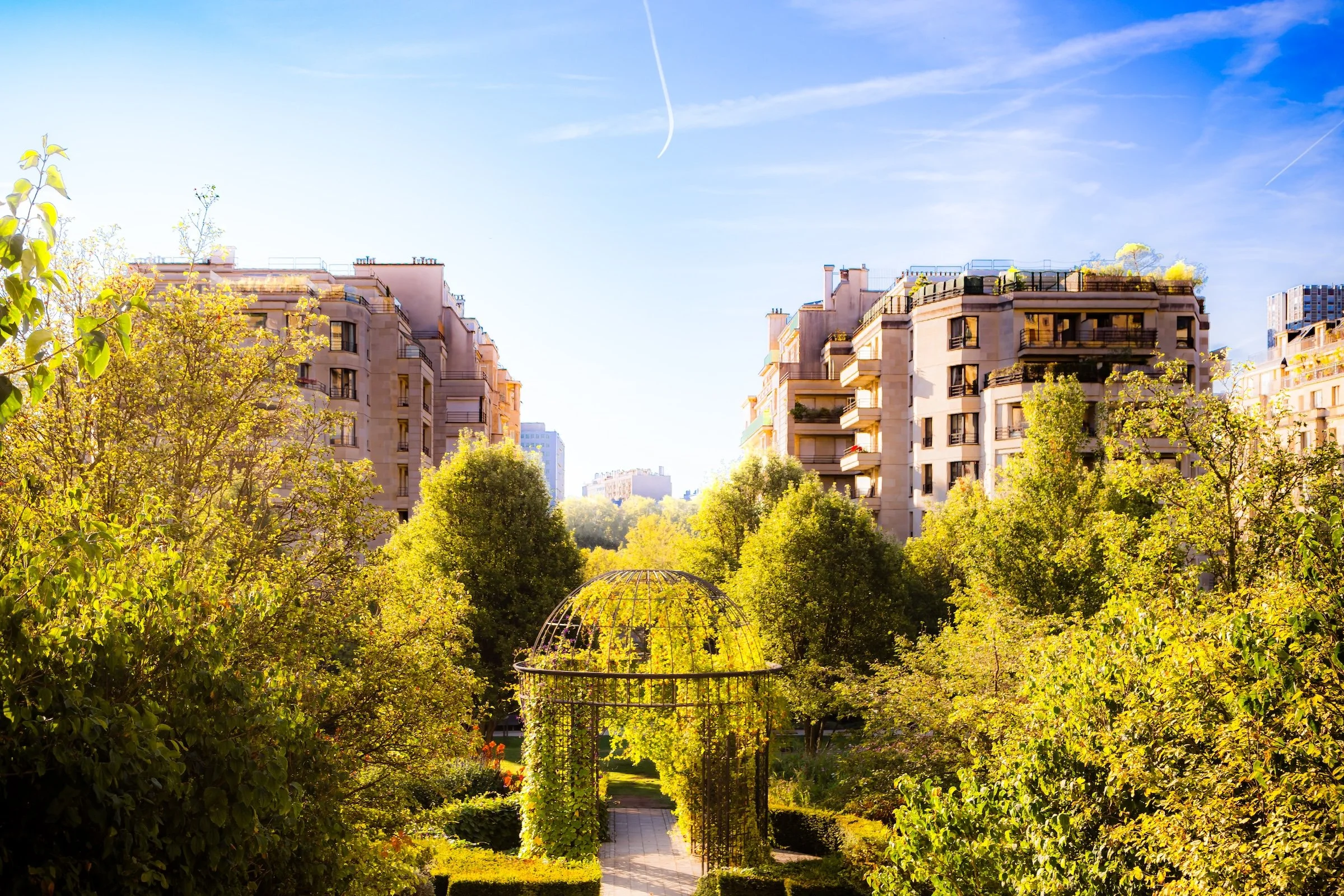
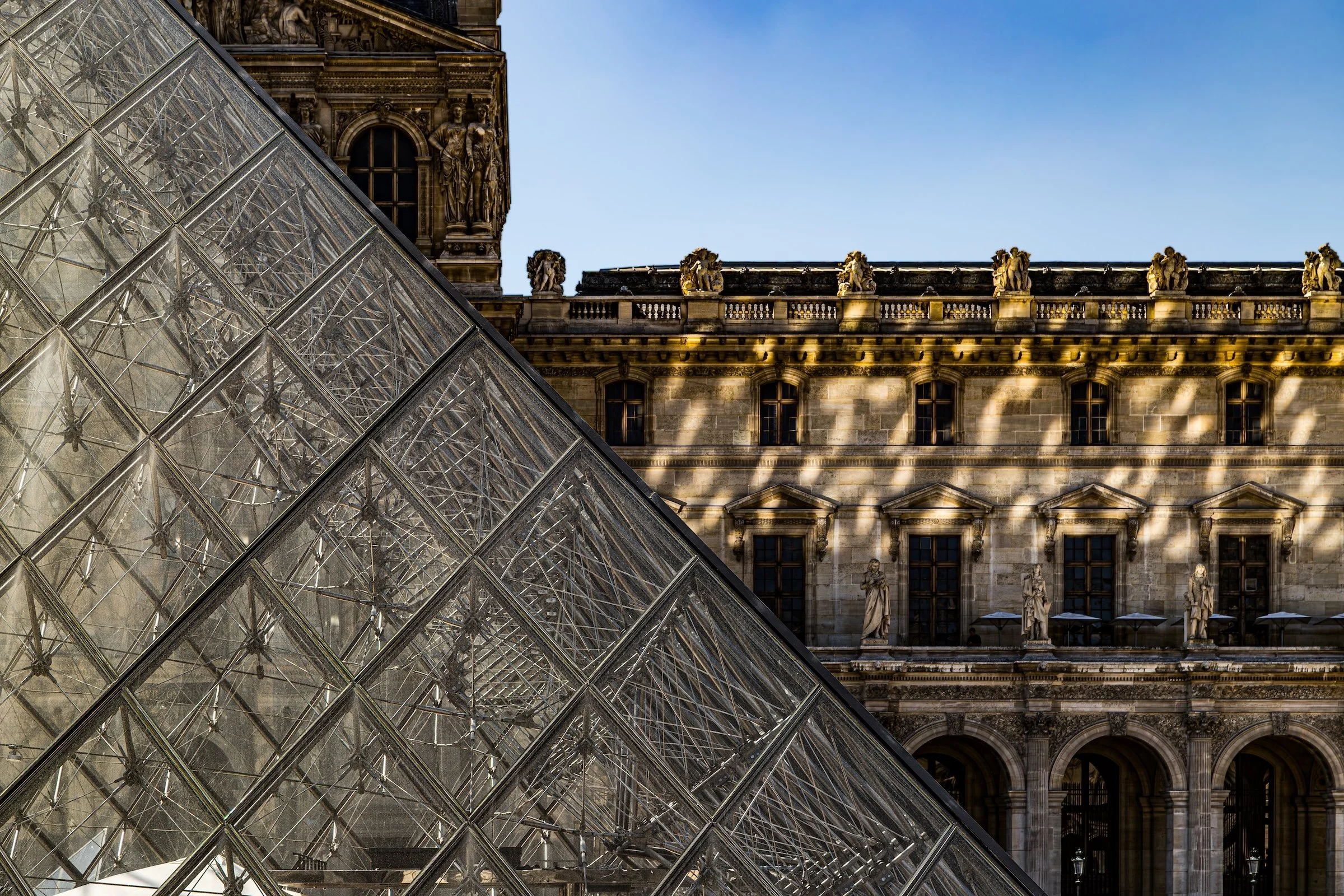
Paris: J’Espere, Je Rêve, Je Vive
Paris Photo Gallery
Paris Field Notes
-
Field Note: August 18, 2025 | 07:58 AM
Conditions: 73°F | Humidity: 72%.
Within the park's interior, the glacial kettle ponds acted as humidity traps, creating a soft, hazy light that filtered through the old-growth oaks. The transition from the park's dense shade to the sun-drenched edges of Oakland Gardens highlighted the day's exceptional "picture-perfect" clarity.
There is a fleeting window in Queens where the humidity of August hasn't yet heavy-set, and the morning sun hits the canopy of Alley Pond Park at a perfect oblique angle. Arriving just before 8:00 AM, I watched the light break through the oaks and tulip trees, casting long, dramatic shadows across the wet grass. It’s in these quiet, golden moments that the park feels less like a city escape and more like the ancient glacial valley it actually is.
Other neighborhoods visited:
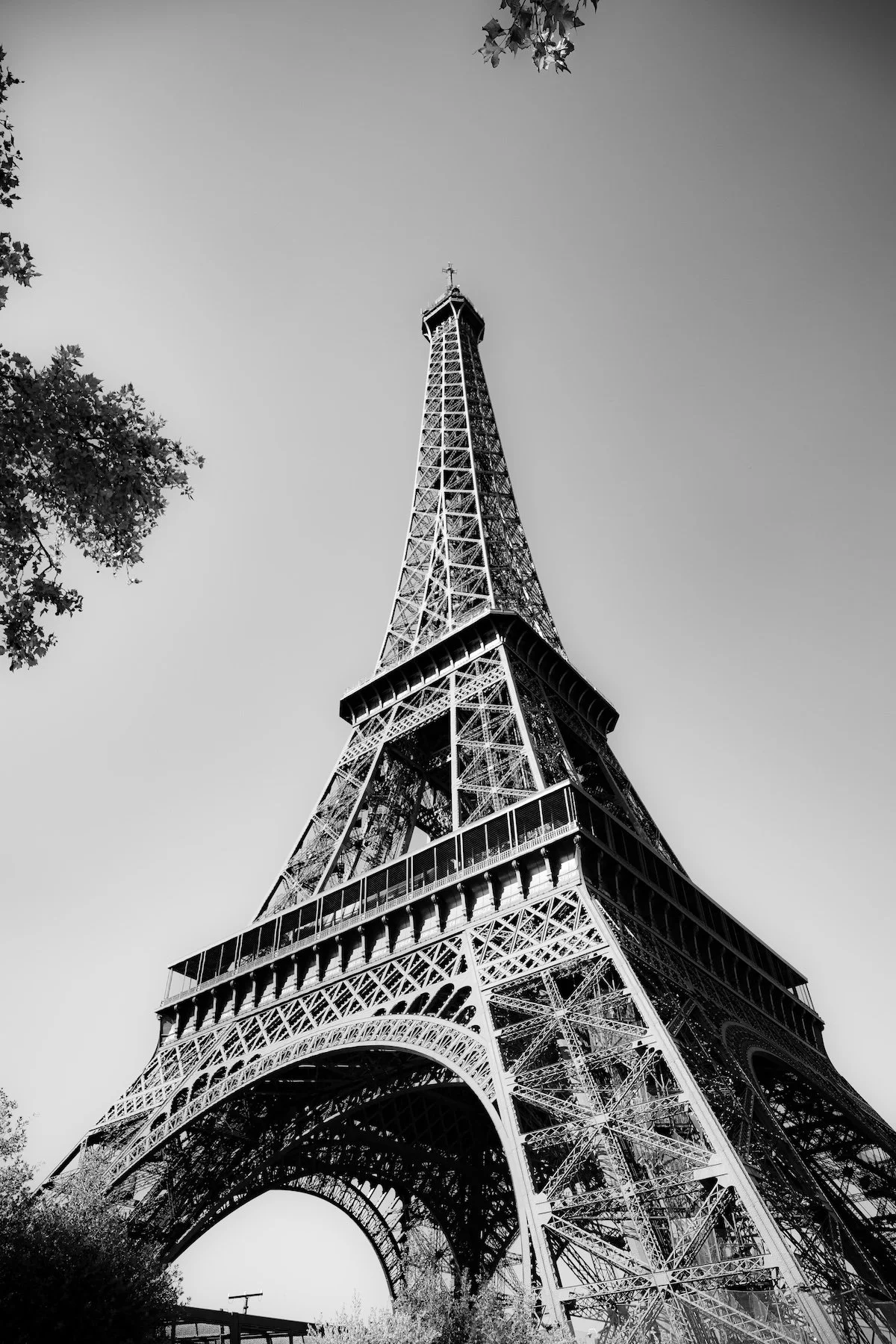
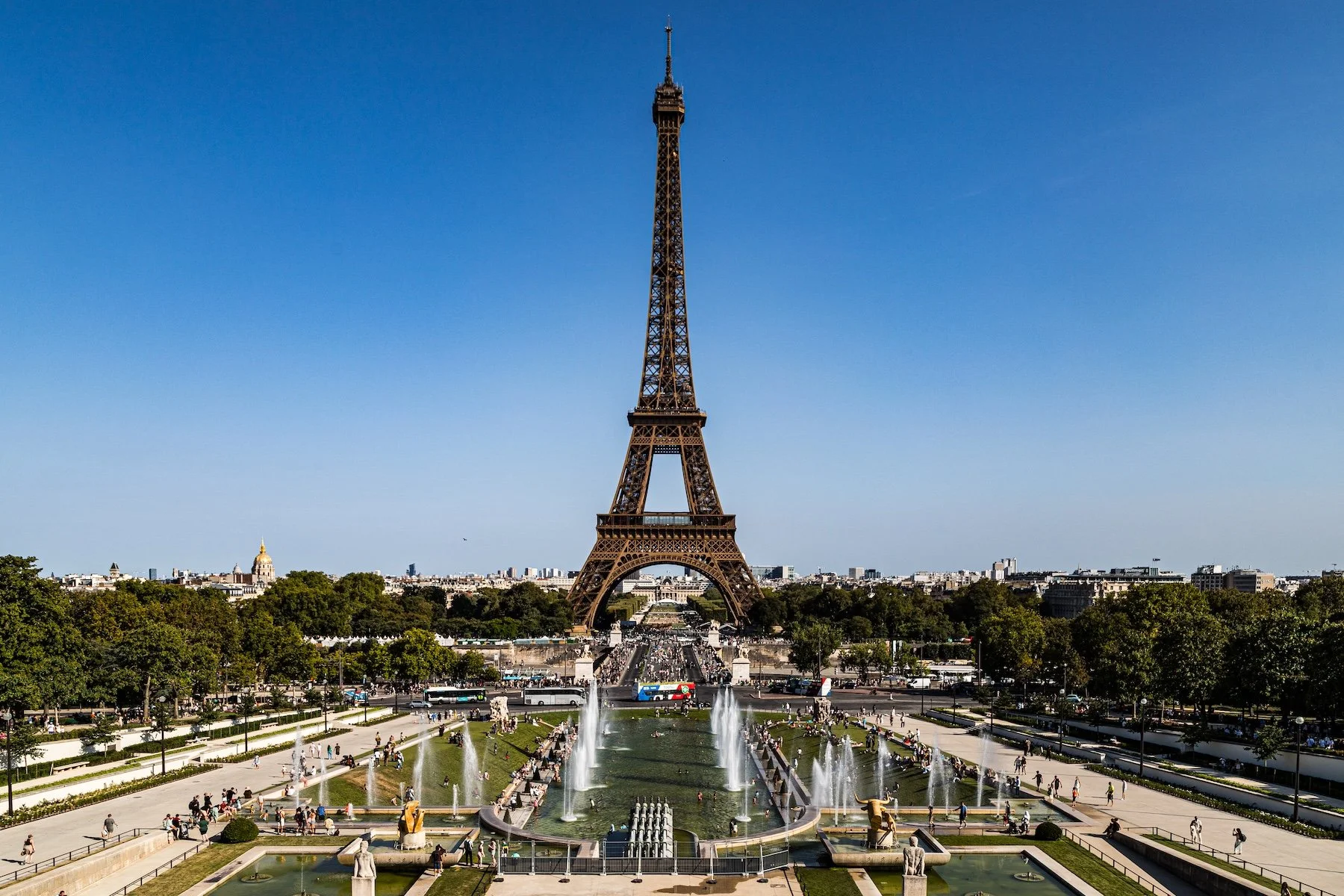
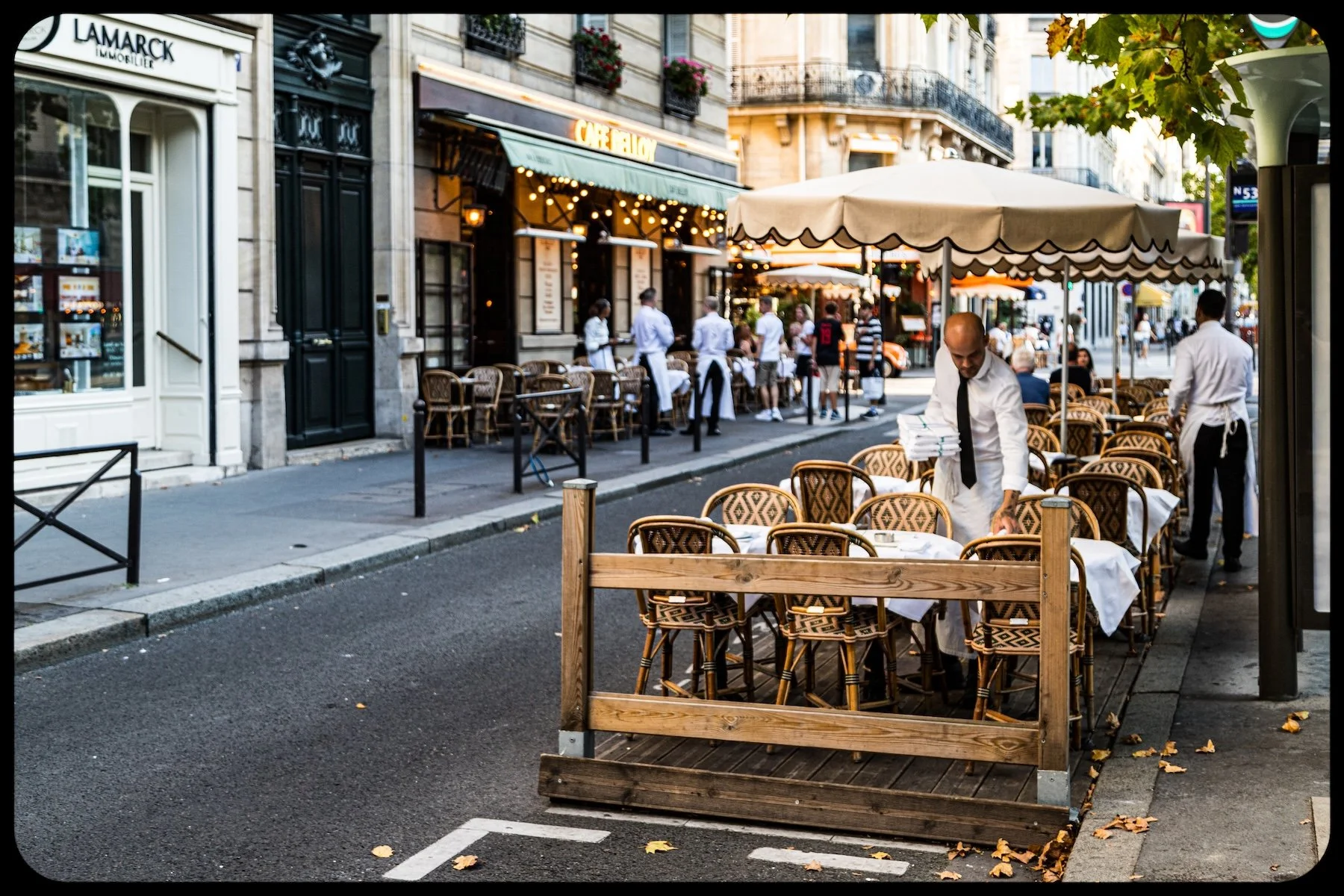
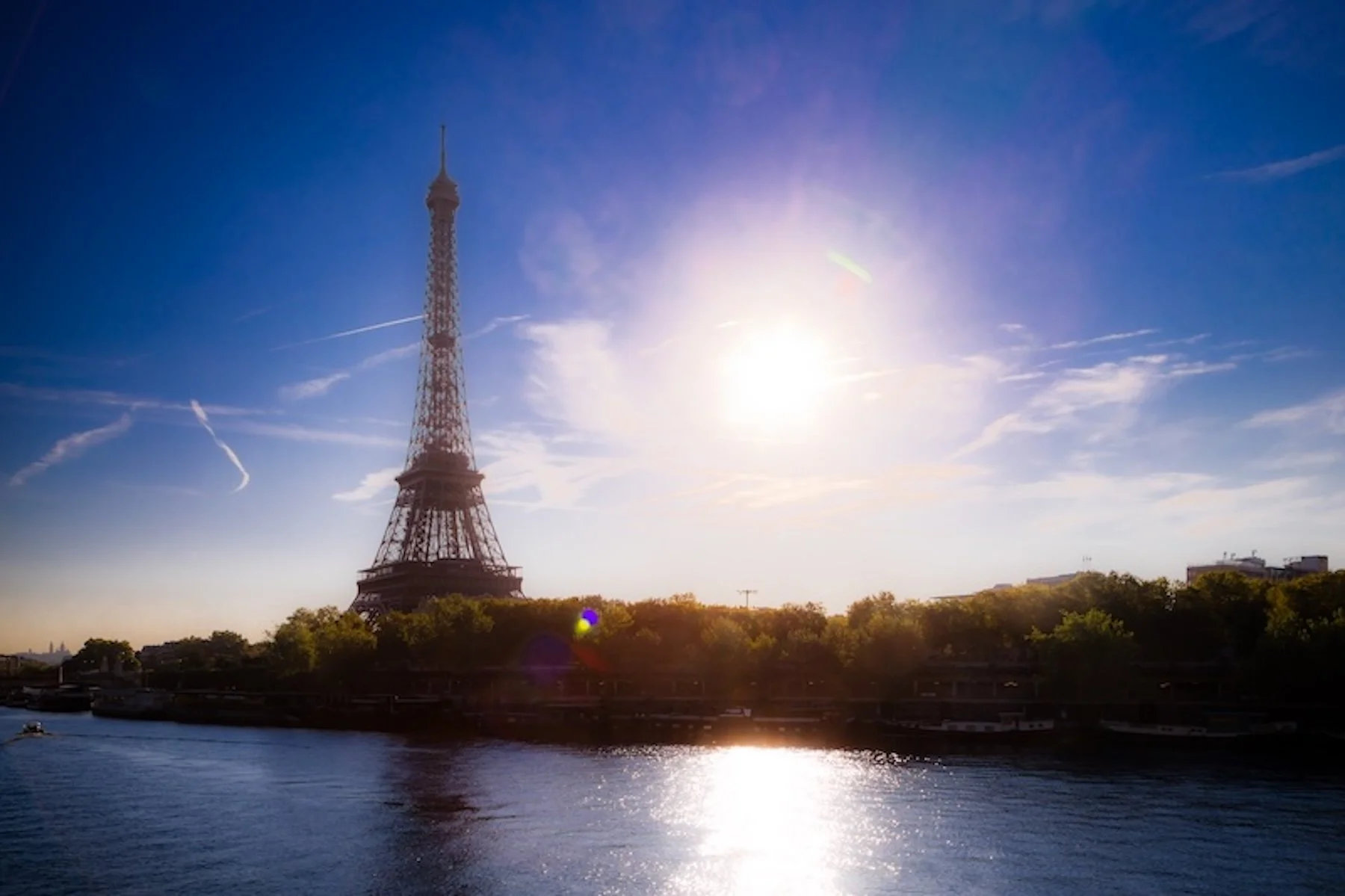
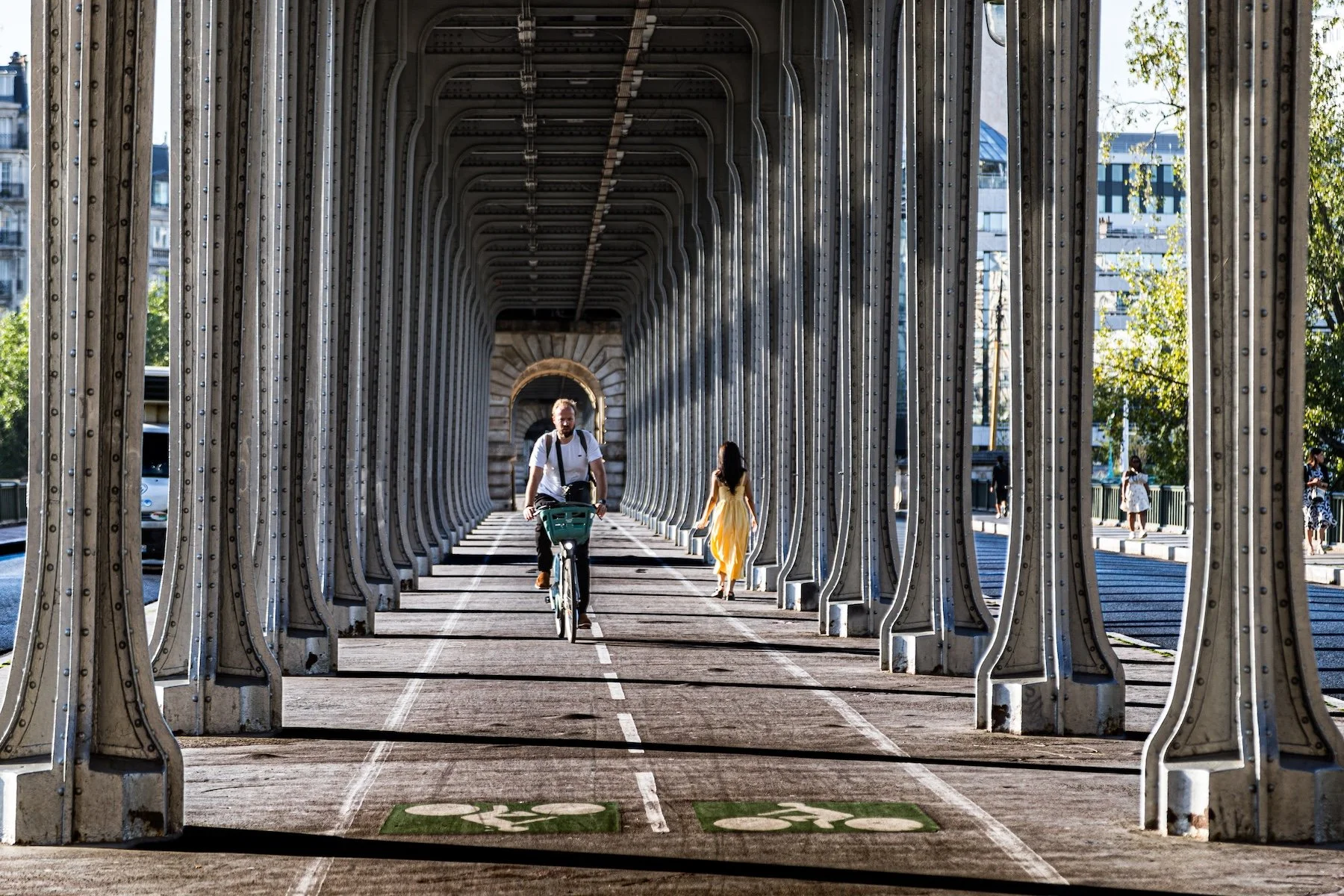
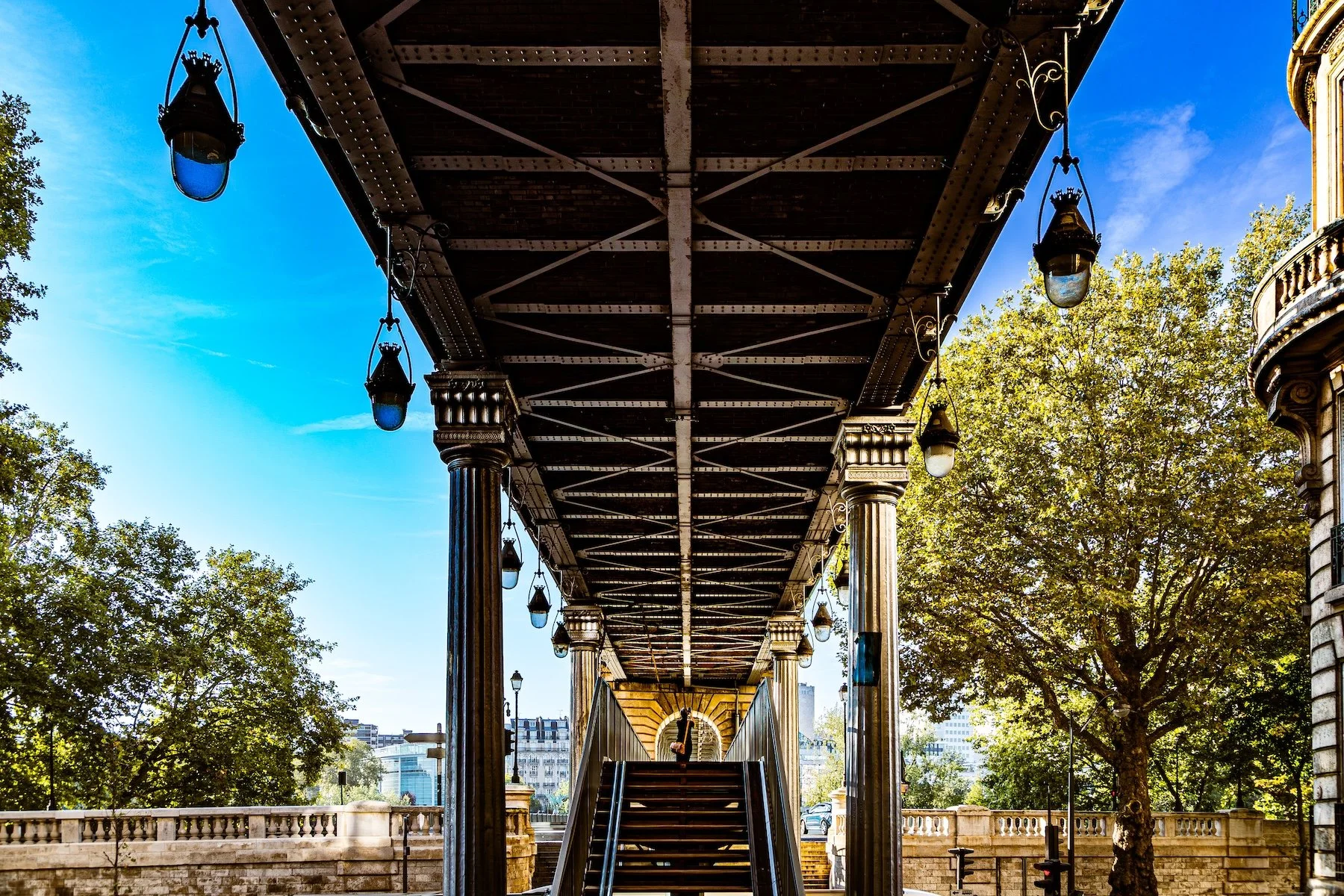
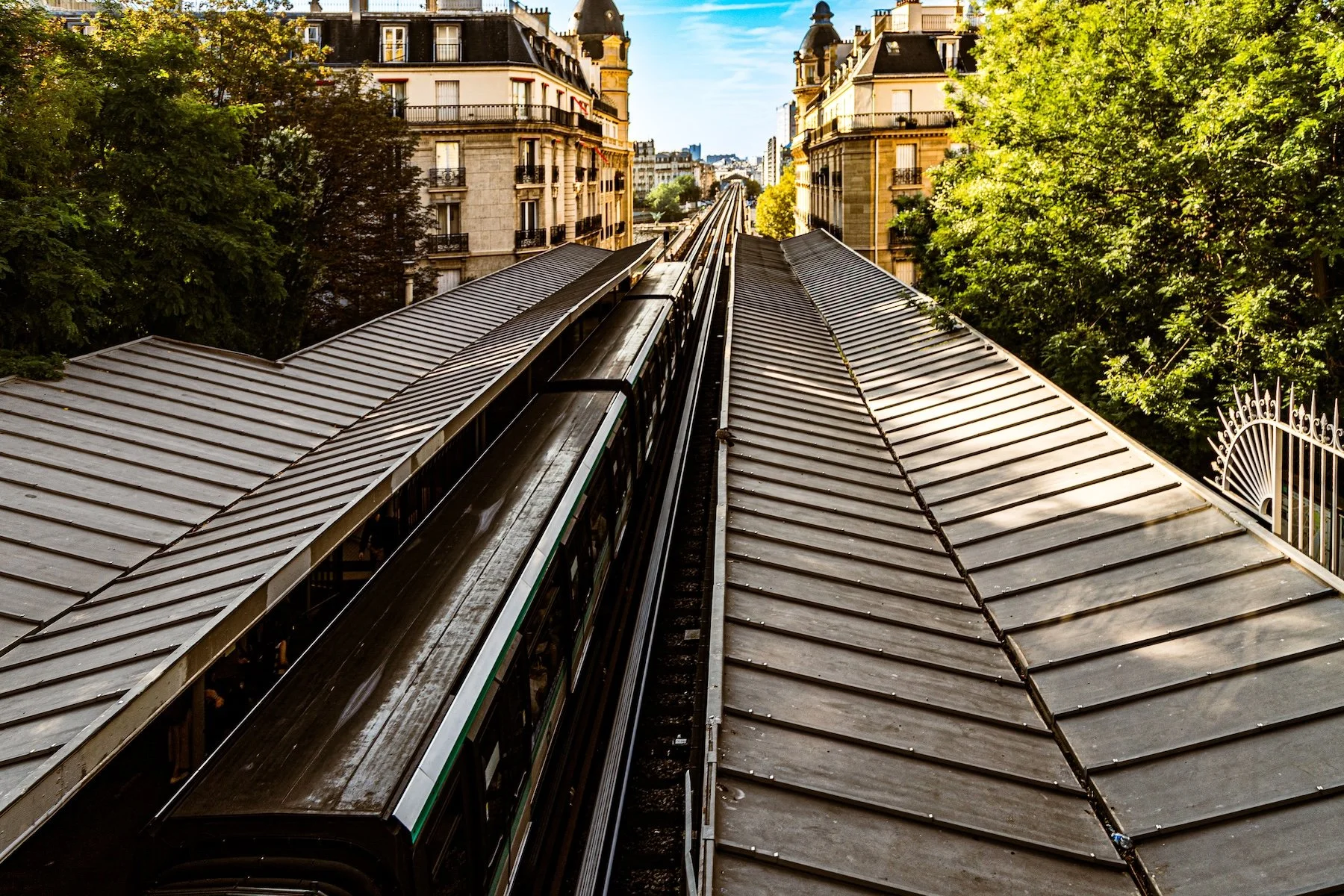

Explore Paris
-

The twenty arrondissements form the civic spiral of Paris, organizing the city into its broad local districts of government, identity, and daily life.
-

Each arrondissement is divided into four official administrative quarters, giving Paris a more precise civic and geographic framework.
-

The conseils de quartier bring participation to street level, giving residents a voice in neighborhood needs, public space, and local civic life.
-

Les Deux Rives trace Paris through the Seine’s two banks, revealing how the Rive Droite and Rive Gauche shaped the city’s civic power, commerce, learning, art, and cultural identity.
-

Cultural neighborhoods reveal the Paris people recognize through history, cafés, architecture, memory, atmosphere, and local belonging.