
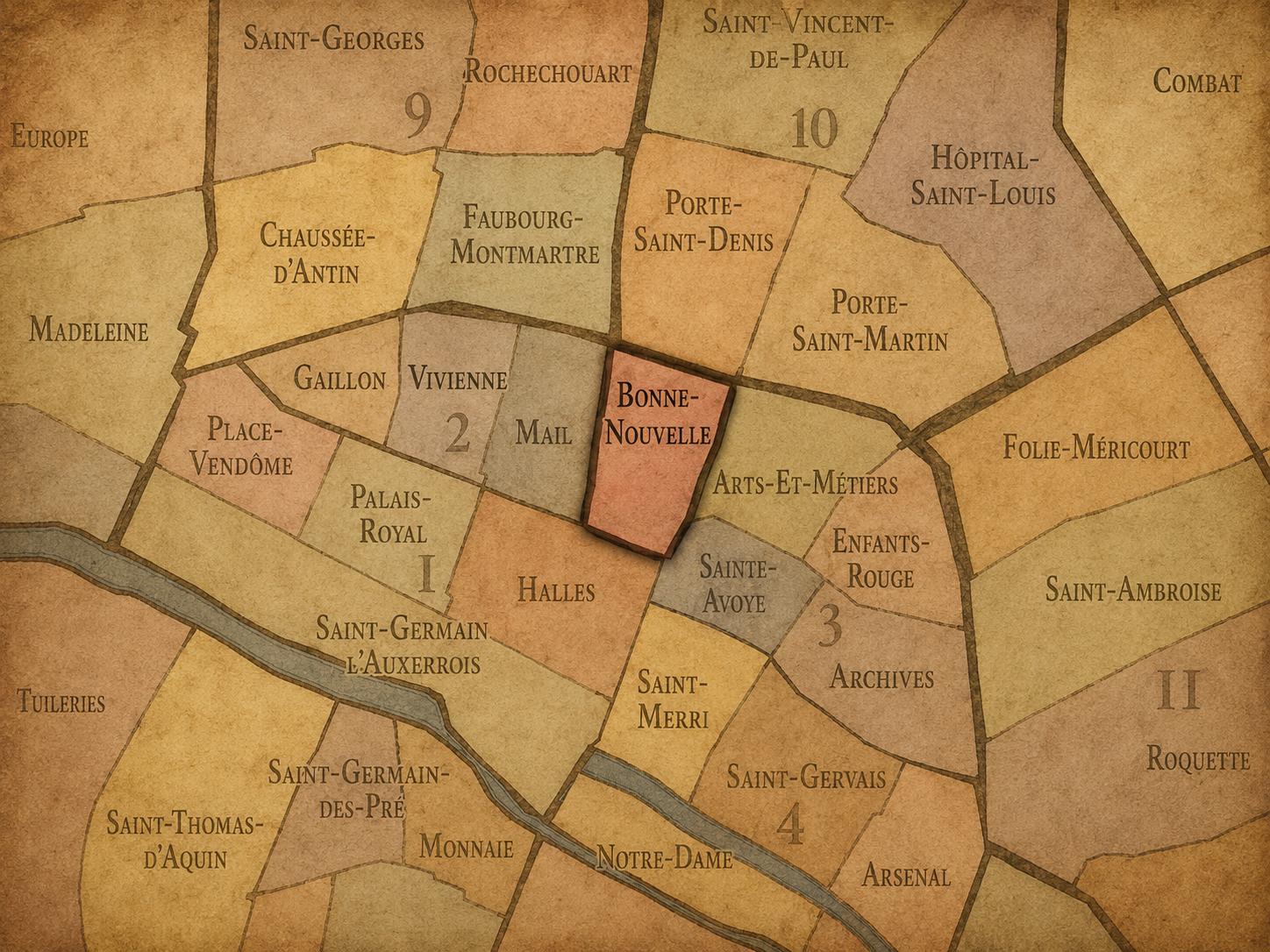
2e - BONNE NOUVELLE
Quartier Administratifs
Part of an ongoing project to walk and photograph every neighborhood in Paris, this page explores the Administrative Quarter: 2e - Gaillon through maps, district identity, history, and photography.

The Map
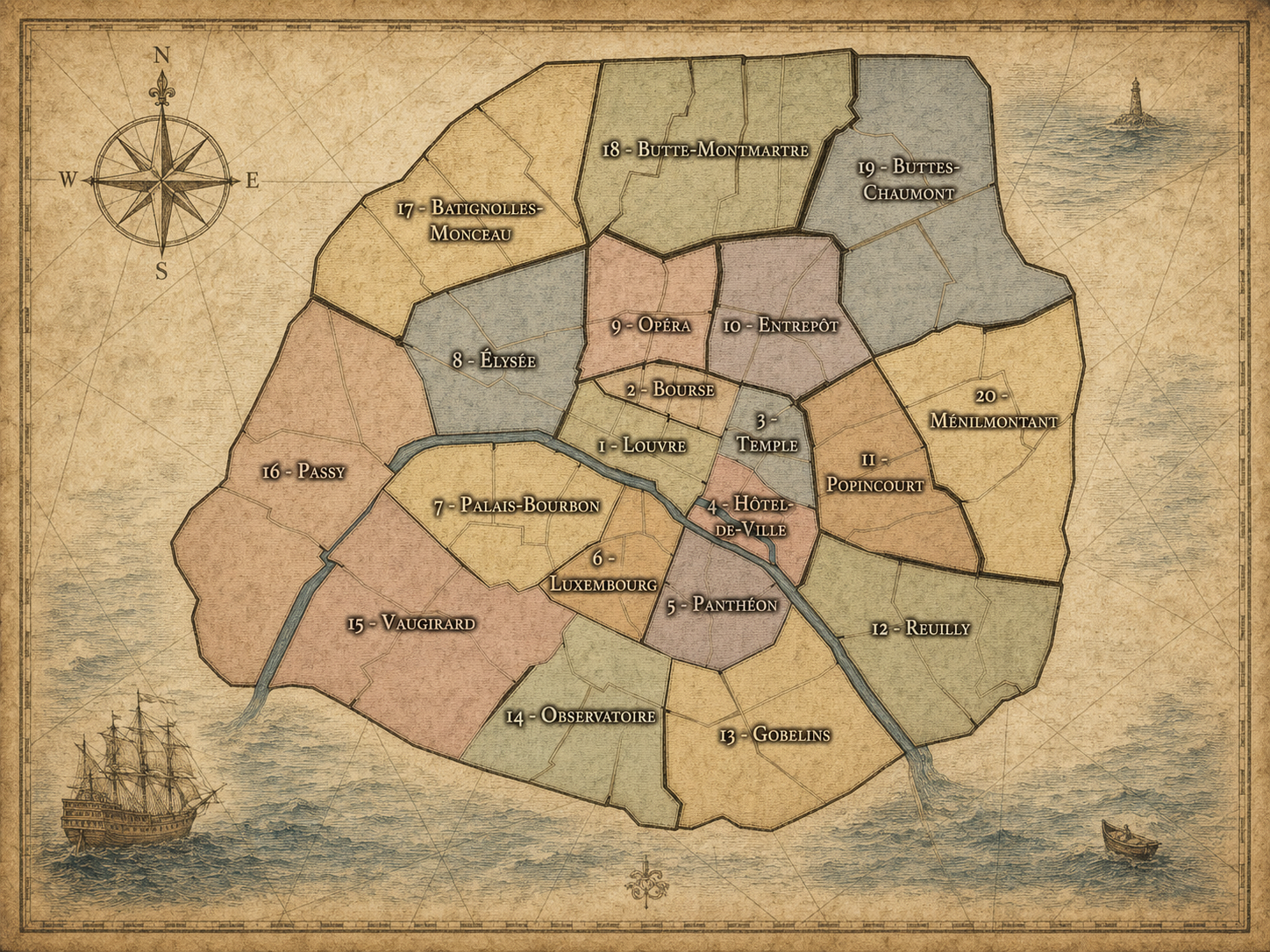
Download the Paris Arrondissements Map
Geographic Setting
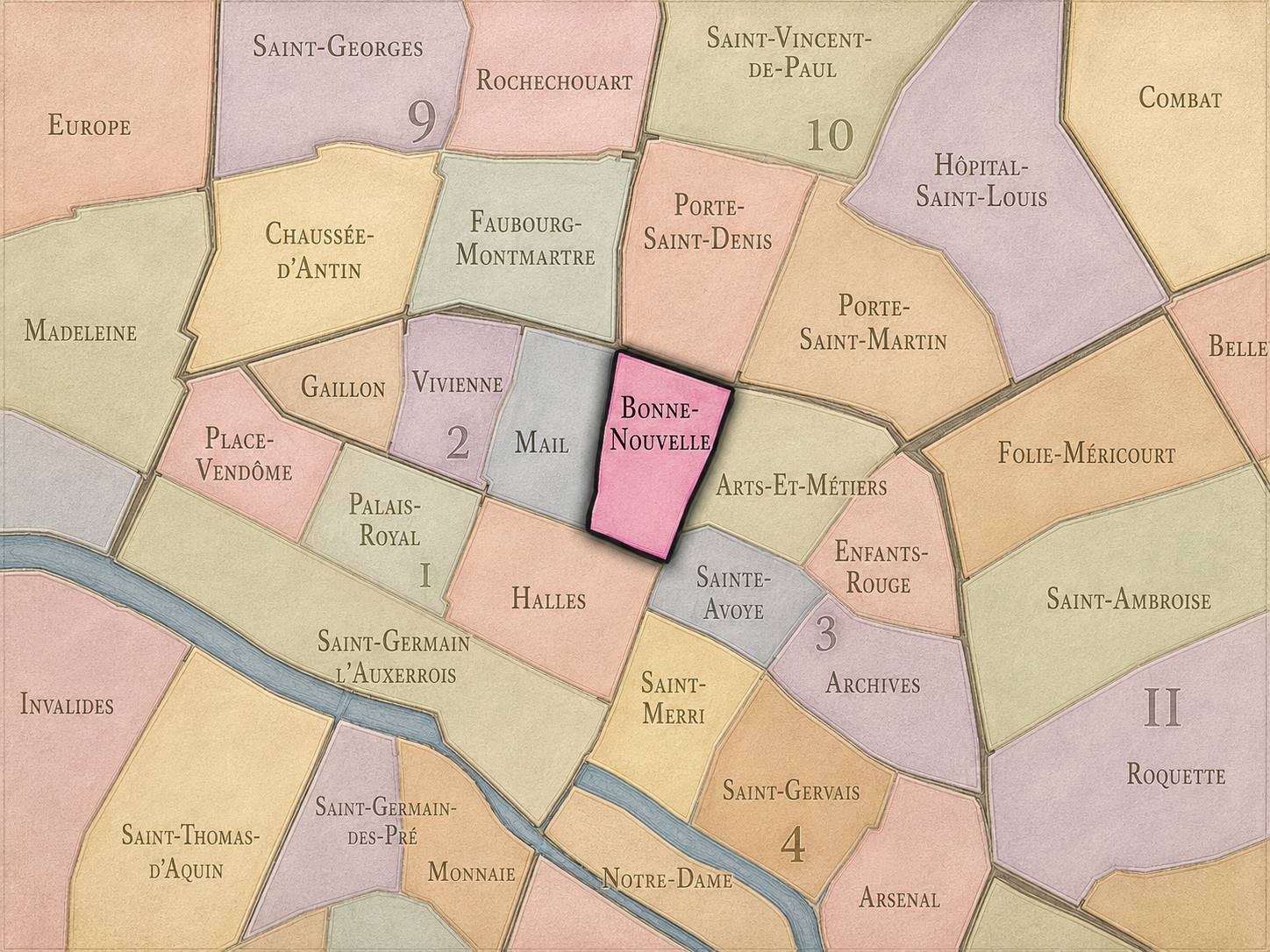
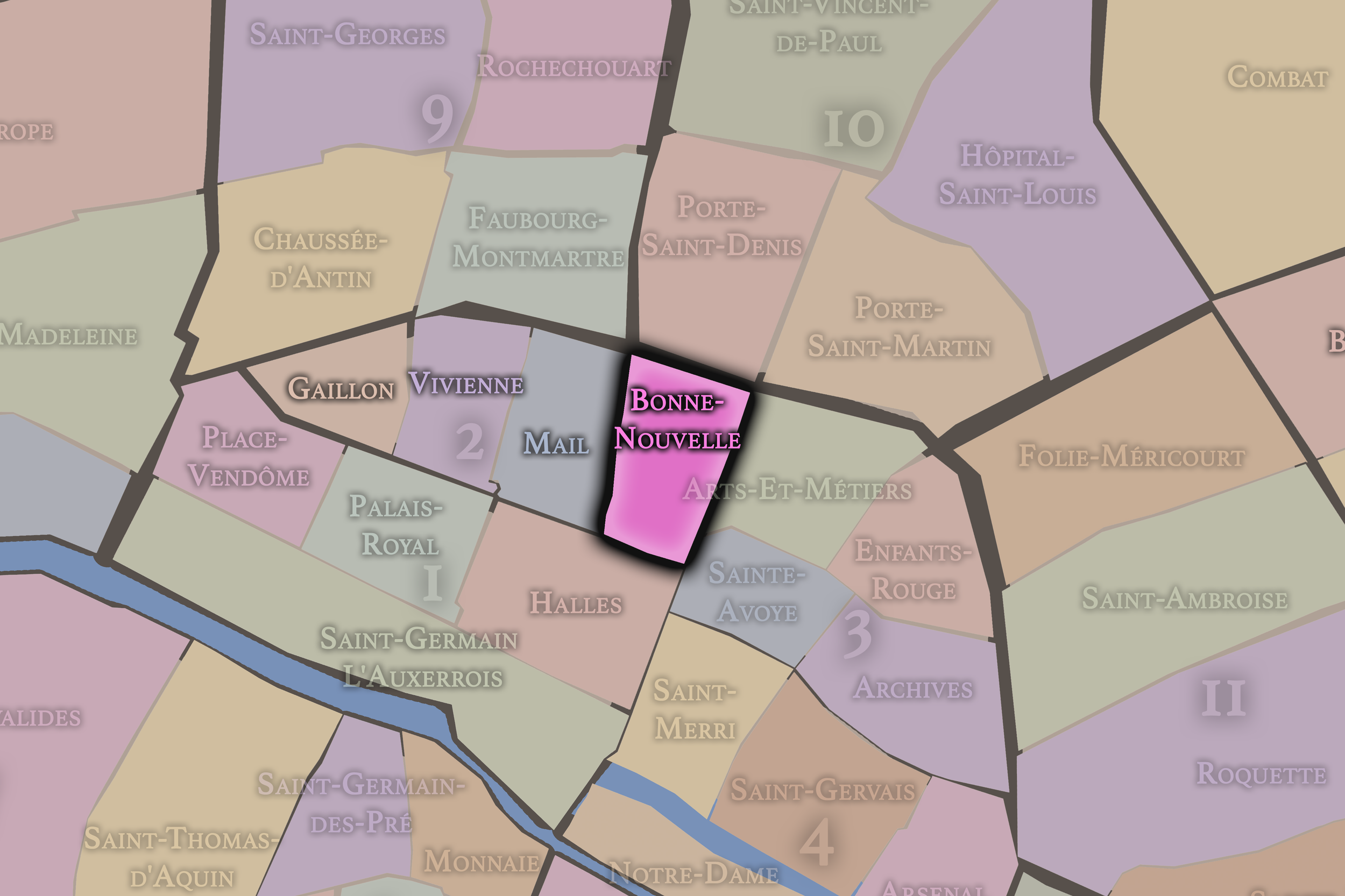
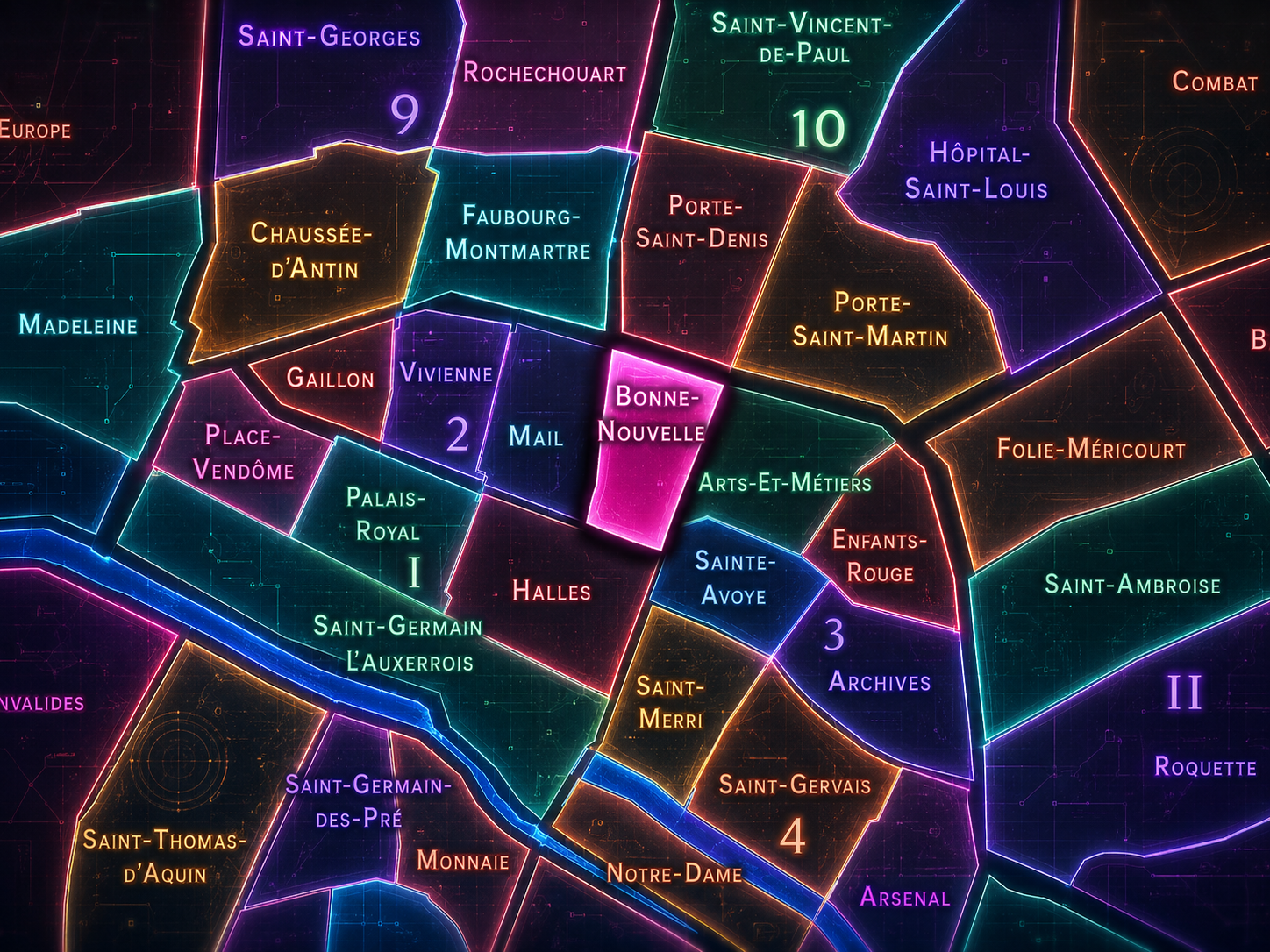
Bonne-Nouvelle occupies the eastern side of the 2nd arrondissement, where the compact streets of central Paris meet the Grands Boulevards, the Porte Saint-Denis, and the dense commercial corridors leading toward the 3rd and 10th arrondissements. It sits at the edge of several overlapping worlds: the Sentier to the west, the old Rue Saint-Denis corridor to the south, the boulevard theaters and triumphal gates to the north, and the broad north–south cut of Boulevard de Sébastopol to the east.
This is a quarter of thresholds. It is not the polished western edge of Gaillon, nor the covered-passage elegance of Vivienne, nor the textile density of Mail alone. Bonne-Nouvelle carries a more transitional energy: boulevard and backstreet, old gate and modern traffic, commercial street and entertainment corridor, central Paris and the routes outward toward the northern faubourgs. Its geography has long been shaped by movement — into the city, out of the city, across the old fortification lines, through the commercial spine of Rue Saint-Denis, and along the elevated line of the Grands Boulevards.
Cultural Neighborhood Identity
Etymology and Origins
The name Bonne-Nouvelle comes from Notre-Dame-de-Bonne-Nouvelle, the church and parish that gave the district its enduring identity. “Bonne nouvelle” means “good news,” a phrase with religious resonance tied to the Christian message of annunciation and salvation. In the Parisian map, the name became attached not only to the church, but also to the boulevard, metro station, and administrative quarter that now carry the Bonne-Nouvelle identity.
The name is especially fitting for a district of passage. Unlike Gaillon, which preserves the memory of a former noble property, or Vivienne, whose name is tied to a street and covered passage, Bonne-Nouvelle speaks in the language of proclamation. It has a public sound: news spreading, voices circulating, crowds gathering at the edge of the city. Whether understood through parish history, boulevard life, or urban movement, the name suggests a place where messages travel.
That layered meaning gives Bonne-Nouvelle a character larger than its size. It is at once a church name, a boulevard name, a station name, and a neighborhood name — a small quarter with a phrase-like identity that seems to announce itself.
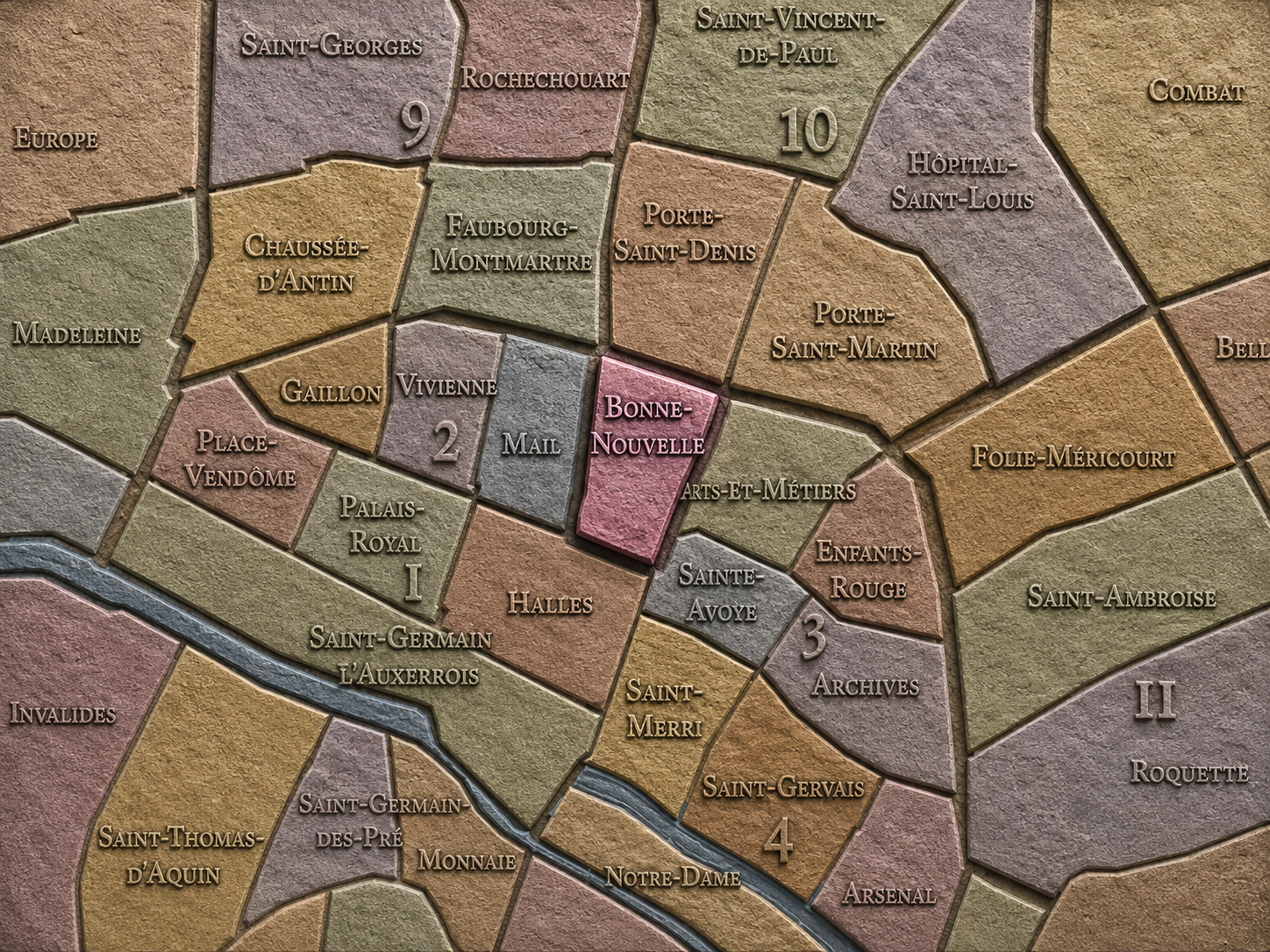
Within the official geography of Paris, Bonne-Nouvelle is one of the four administrative quarters of the 2nd arrondissement, alongside Gaillon, Vivienne, and Mail. It is traditionally counted as the 8th administrative quarter of Paris, placing it at the eastern end of the city’s smallest arrondissement and along the boundary with neighboring districts to the north and east. Its northern edge is closely associated with Boulevard Saint-Denis and Boulevard de Bonne-Nouvelle, while the eastern side meets the modern axis of Boulevard de Sébastopol.
This civic position matters. Bonne-Nouvelle is an administrative quarter of the 2nd arrondissement, but it behaves like a hinge between several larger urban systems. It belongs to Bourse by municipal structure, to the Grands Boulevards by physical form, to the old Rue Saint-Denis corridor by history, and to the Sentier / central commercial district by economic identity. The official boundary gives it a name and frame; the surrounding city gives it motion.
Civic Framework
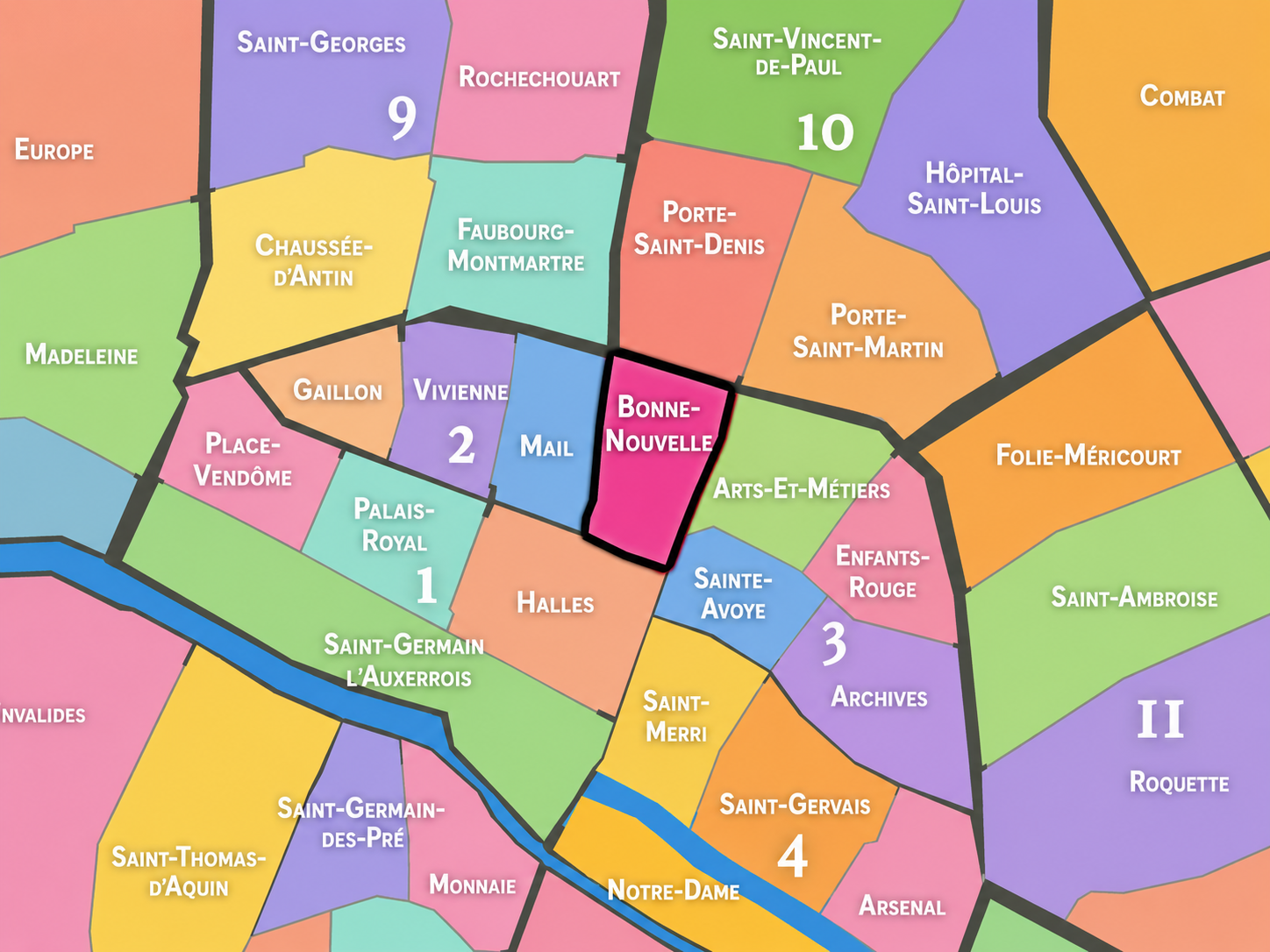
Bonne-Nouvelle differs from the other quarters of the 2nd arrondissement through its edge condition. Gaillon turns toward Opéra, restaurants, theaters, and the refined western Right Bank. Vivienne gathers the Bourse, the Bibliothèque nationale, and the refined world of passages and financial institutions. Mail is strongly associated with the Sentier, textile commerce, and the compact working streets of the central Right Bank. Bonne-Nouvelle is more outward-facing, more boulevard-driven, and more closely tied to the old northern approaches to Paris.
The quarter also differs from the adjacent Porte-Saint-Denis quarter in the 10th arrondissement, even though the Porte Saint-Denis itself strongly shapes the surrounding urban scene. Bonne-Nouvelle looks toward that gate from the south and west, holding the 2nd arrondissement side of a larger threshold landscape. The boundary does not erase the shared atmosphere of the boulevards, but it helps distinguish Bonne-Nouvelle as the inner-city counterpart to the faubourg world beyond.
As a neighborhood layer, Bonne-Nouvelle is therefore best understood as a quarter of contact. It is where the old central city, boulevard entertainment, commercial density, and northern routes touch each other. Its distinction lies not in separation, but in the intensity of its crossings.
Neighborhood Distinction
Parisian Identity
Bonne-Nouvelle expresses a Parisian identity built on circulation, performance, commerce, and urban improvisation. It does not have the polished ceremonial quality of Place-Vendôme or the inward elegance of Palais-Royal. Its appeal is more kinetic. Streets narrow and open. Boulevards carry traffic and theater fronts. The old gate at Saint-Denis stands nearby as a reminder that this was once a point of entry, boundary, and display.
The quarter belongs to a Paris of newsprint, signs, shopfronts, cafés, workers, theaters, passages, and crowds. It is central but not stately, historic but not frozen. It carries the complicated energy of places that have long absorbed movement from many directions. Bonne-Nouvelle can feel slightly restless, even when quiet, because its identity has always depended on things passing through.
This is part of its value. Bonne-Nouvelle reminds us that Paris is not only a city of monuments and preserved vistas. It is also a city of corridors — streets where commerce, immigration, entertainment, labor, and everyday movement give form to urban life.
Neighborhood Connections
Civic & Cultural Foundations
-
Rive Droite
-
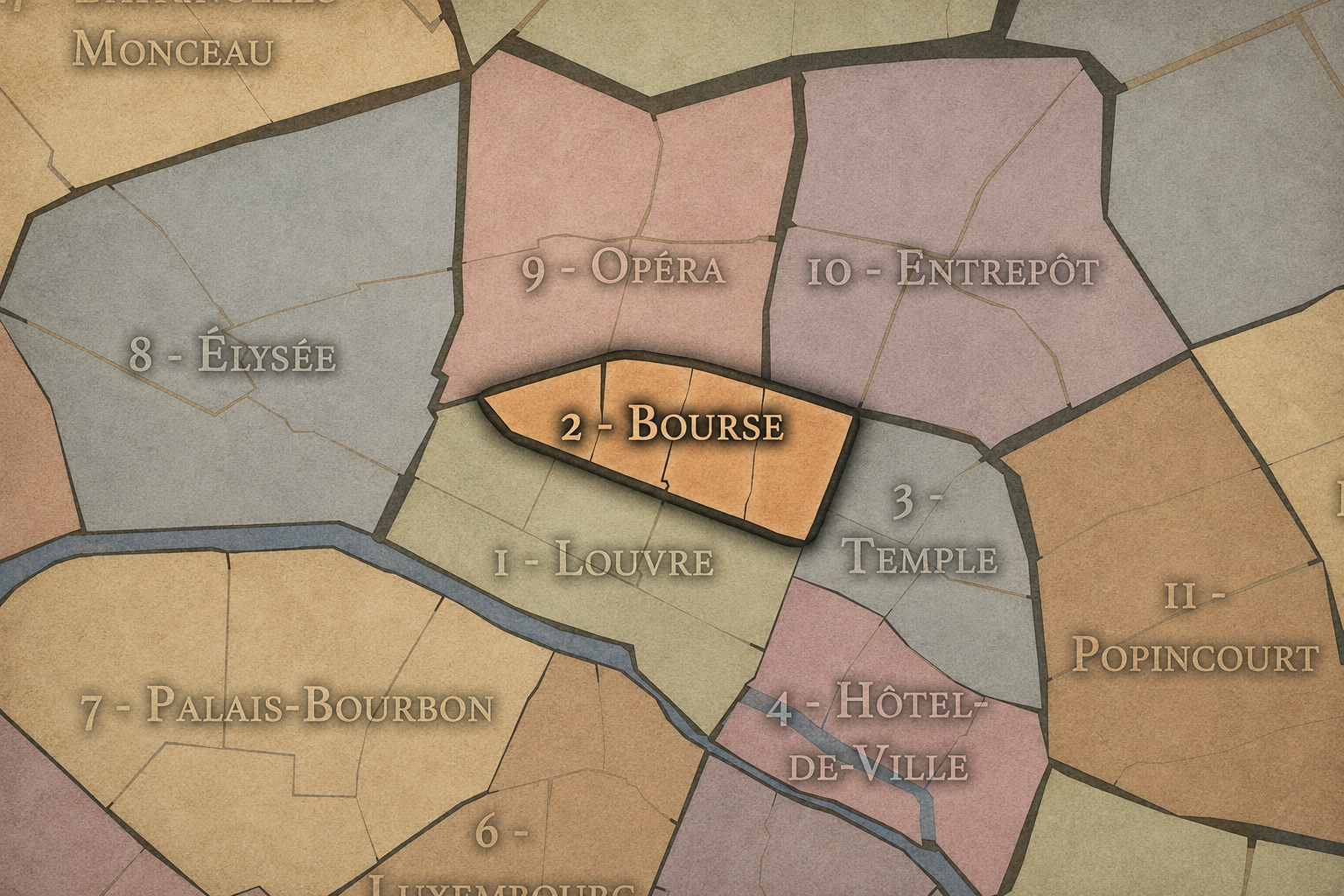
2e — Bourse
Neighborhood Councils
-
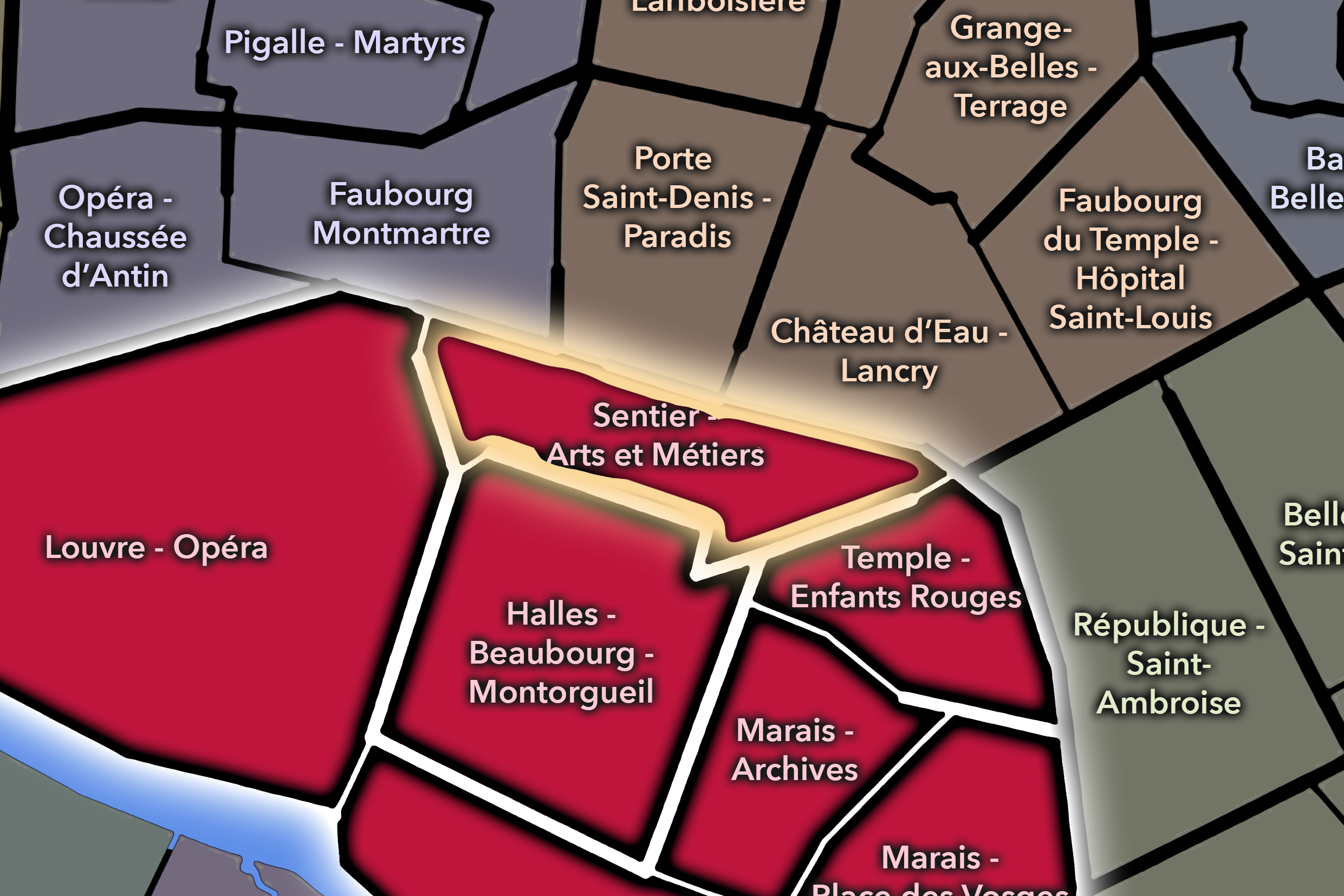
Paris Centre - Sentier - Arts et Métiers
-
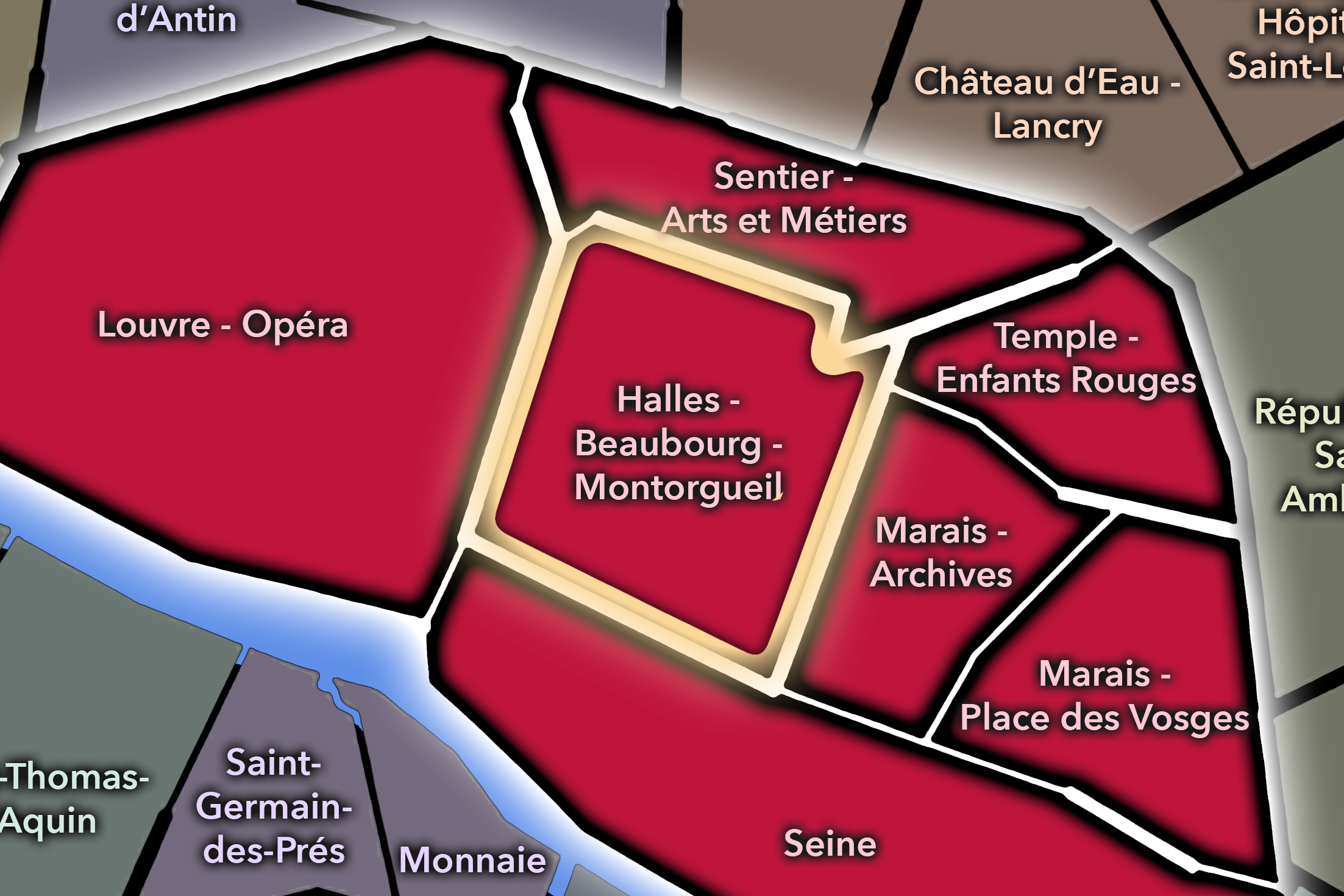
Paris Centre - Halles - Beaubourg - Montorgueil
Cultural Neighborhoods
-
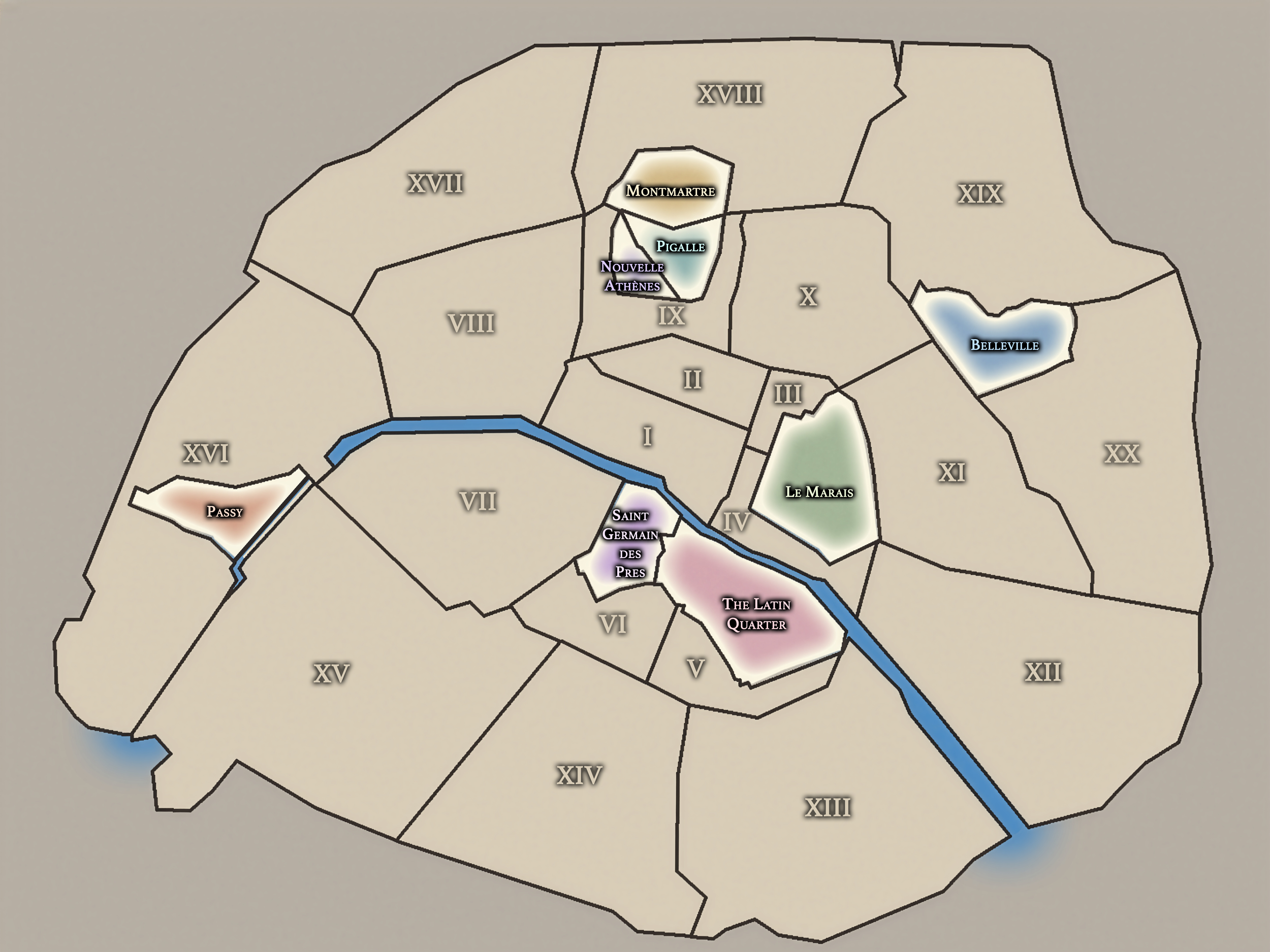
Grands Boulevards
Grands Boulevards is a Cultural Neighborhood shaped by theaters, passages, cafés, commerce, journalism, and the public life of the Right Bank. Its full entry will be added as the Paris photo archive continues to be processed.
The History
The origins of Bonne-Nouvelle lie in the growth of Paris beyond its older medieval core and along the roads leading north from the city. The Rue Saint-Denis was one of the great historic routes of Paris, connecting the city center toward Saint-Denis and the royal necropolis beyond. Around this road and the nearby city gates, the northern edge of Paris developed as a landscape of passage, trade, and gradual urban expansion.
Before the formal administrative quarter existed, the area included edges, slopes, small settlements, religious sites, and the outer approaches to the old city. Some accounts associate the early district with the Butte aux Gravois and the small faubourg of Ville-Neuve-les-Gravois, a settlement near the Porte Saint-Denis beyond earlier city walls. This origin story matters because it places Bonne-Nouvelle in the geography of growth: not the ancient island city, not the royal palace quarter, but a developing northern edge where Paris pushed outward.
Over time, parish, boulevard, and commercial street would turn this edge into an interior district. That is one of the great transformations in Parisian history: yesterday’s boundary becomes today’s center.
Origins
16th–17th Century
In the 16th and 17th centuries, the future Bonne-Nouvelle quarter belonged to the expanding northern Right Bank. The area around Rue Saint-Denis, the old gates, and the emerging faubourg landscapes became increasingly urbanized as Paris grew in population and activity. The neighborhood’s relationship to the city wall and the roads beyond helped define it as a place of entry, exit, and exchange.
The Porte Saint-Denis is central to understanding this geography. The present triumphal arch, built in the 17th century, stands near the site of an older city gate associated with the Wall of Charles V. Its location at the crossing of Rue Saint-Denis / Rue du Faubourg-Saint-Denis with Boulevard de Bonne-Nouvelle and Boulevard Saint-Denis marks the historical threshold between inner Paris and the northern faubourg.
During this period, Bonne-Nouvelle’s identity was still forming, but the key ingredients were already present: a church name, a road to the north, a city gate, and the steady urbanization of land once near the edge. The quarter’s later boulevard identity would grow from this threshold condition.
In the 18th century, Bonne-Nouvelle became increasingly tied to the culture of the boulevards. As Paris expanded and older fortification lines lost their military function, the spaces around them became promenades, entertainment corridors, and commercial streets. The Grands Boulevards transformed the edge of the old city into one of its most active public landscapes.
Bonne-Nouvelle participated in this shift from boundary to boulevard. The area around Boulevard de Bonne-Nouvelle and Boulevard Saint-Denis drew movement, spectacle, and sociability. Shops, cafés, theaters, and crowds made the northern edge of central Paris feel less like a limit and more like a stage. This was a Paris of circulation and display, where people came not only to pass through, but to look, gather, and be part of the street.
The quarter also remained connected to older working and commercial structures. Rue Saint-Denis and the surrounding streets continued to carry trade, labor, and the dense practical life of central Paris. By the end of the century, Bonne-Nouvelle stood at the intersection of popular urban life and the political transformations that reshaped the city during the Revolution.
18th Century
19th Century
The 19th century strengthened Bonne-Nouvelle’s identity as a boulevard and commercial quarter. The Grands Boulevards became one of Paris’s great urban theaters: lined with cafés, shops, newspaper offices, theaters, and entertainment venues. Bonne-Nouvelle, sitting along this northern arc, belonged to the lively public world that made the boulevards central to modern Parisian life.
The century also transformed the district through urban planning and infrastructure. New streets, widened axes, and the creation of Boulevard de Sébastopol changed the eastern edge of the quarter and connected it more forcefully to the north–south circulation of modern Paris. The area’s older commercial streets remained dense, but the surrounding city was being reorganized by the logic of movement, visibility, and metropolitan scale.
Bonne-Nouvelle thus became a quarter where old and new Paris visibly met. Older streets and trades persisted within the fabric, while boulevards and modern circulation reshaped the city around them. This combination gave the district a layered urban character: part old commercial center, part boulevard theater, part modern traffic corridor.
In the early and mid 20th century, Bonne-Nouvelle remained a quarter of commerce, entertainment, and central-city movement. The boulevards continued to carry theaters, cinemas, cafés, and crowds, while the streets south of them retained connections to trade, workshops, printing, offices, and the changing economy of the central Right Bank.
The quarter’s position made it responsive to the broader transformations of Paris. As entertainment shifted from stage to cinema, as newspaper and printing cultures changed, and as older trades adapted to modern commerce, Bonne-Nouvelle absorbed new uses without losing its identity as a place of passage. The district remained active precisely because it was never too singular. It could accommodate many kinds of urban life.
During the upheavals of war, occupation, liberation, and postwar recovery, Bonne-Nouvelle’s centrality gave it both vulnerability and resilience. It was part of the everyday working city, not only the monumental city. Its importance lay in continued use: people moving through, businesses opening and closing, theaters adapting, streets retaining the dense social texture of central Paris.
Early–Mid 20th Century
Late 20th Century
In the late 20th century, Bonne-Nouvelle experienced the pressures common to many central Paris districts: changes in commerce, office use, nightlife, immigration, real estate, and cultural consumption. The boulevard theaters and entertainment venues remained important, but the surrounding streets also reflected shifting patterns of small business, textile trade, food culture, and urban diversity.
The quarter’s proximity to the Sentier and to Rue Saint-Denis helped keep it commercially active, even as the nature of that activity changed. Older workshop and trade identities gave way in places to offices, restaurants, technology firms, nightlife, and new forms of retail. Bonne-Nouvelle became less easily categorized but no less central.
This period also reinforced the quarter’s role as a threshold between different social and urban atmospheres. To one side lay the more formal Bourse and Opéra-adjacent worlds; to another, the animated corridors toward Strasbourg-Saint-Denis, the 10th arrondissement, and the multicultural food and nightlife landscapes beyond. Bonne-Nouvelle remained a hinge, but the worlds it connected continued to evolve.
In the 21st century, Bonne-Nouvelle is one of the small central quarters where Paris feels especially layered. The old boulevard identity remains visible. The Porte Saint-Denis still marks the northern threshold nearby. Rue Saint-Denis continues to carry one of the city’s oldest urban names and one of its most complex contemporary reputations. Around them, offices, restaurants, cafés, start-ups, theaters, shops, and late-night activity give the district a restless modern life.
The quarter is also increasingly experienced through movement between destinations: toward Sentier, Montorgueil, Strasbourg-Saint-Denis, the Grands Boulevards, Réaumur-Sébastopol, and the central Right Bank. It is a place people cross as much as inhabit, but that crossing is part of its identity. Bonne-Nouvelle shows how a neighborhood can be defined not by enclosure, but by circulation.
For CityNeighborhoods: Paris, Bonne-Nouvelle is valuable because it resists simple romanticization. It is historic, but not museum-like. Central, but not polished into ceremony. Commercial, but not reducible to shopping. It is a living threshold, one of the places where the older body of Paris still meets the city’s modern flow.
21st Century
Spirit and Legacy
Bonne-Nouvelle is the quarter of the announced city — the city of news, gates, boulevards, crowds, crossings, and changing signs. Its spirit lies in movement. It gathers the old Rue Saint-Denis corridor, the memory of the city wall, the spectacle of the Grands Boulevards, and the practical density of central commerce into one compact urban field.
Its legacy is the transformation of boundary into life. What was once near the edge became central. What was once a gate became a boulevard. What was once a route outward became a place of gathering, trade, entertainment, and passage. Bonne-Nouvelle carries that history in its name and in its street pattern.
To walk Bonne-Nouvelle is to encounter Paris as a city in motion: not only preserved, but circulating; not only beautiful, but busy; not only historic, but unfinished. It is a reminder that some neighborhoods are defined less by stillness than by flow — by the people, messages, goods, performances, and histories that keep passing through.
The Photography
The arrondissements do not share a single visual identity. Instead, they organize Paris into twenty broad visual fields, each gathering its own combination of landmarks, streetscapes, institutions, residential districts, commercial corridors, parks, rail stations, markets, cemeteries, and riverfront edges.
Some arrondissements are defined by monumental scale: royal palaces, ceremonial avenues, government buildings, museums, formal gardens, and internationally recognized landmarks. Others are shaped by hills, canals, rail gateways, apartment-lined boulevards, neighborhood markets, former village streets, industrial remnants, parks, or the quieter rhythms of residential Paris. The arrondissement system gives these varied landscapes a civic frame, allowing the city to be read not as one visual language, but as a sequence of overlapping Parisian atmospheres.

Visual Identity
Through The Lens
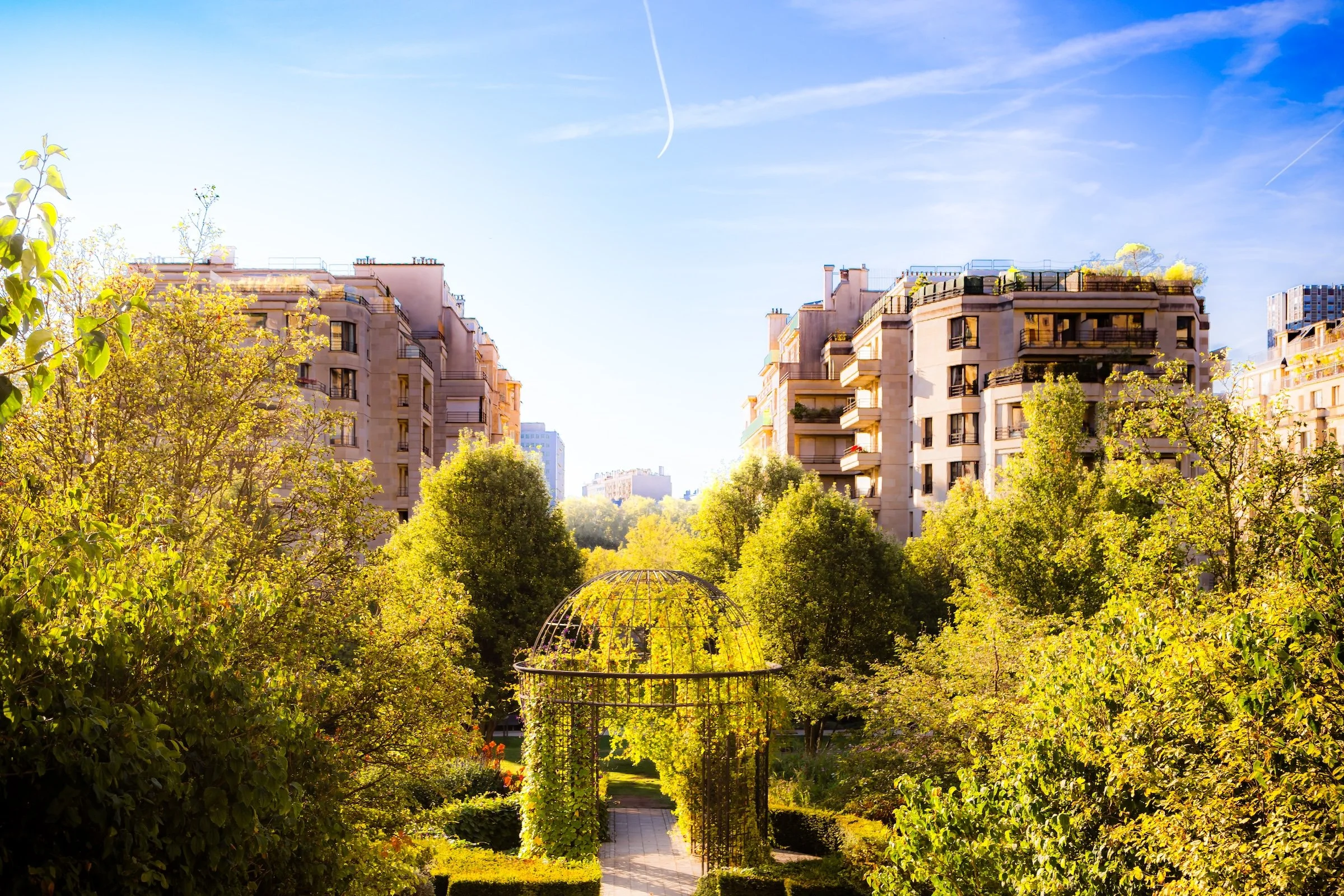
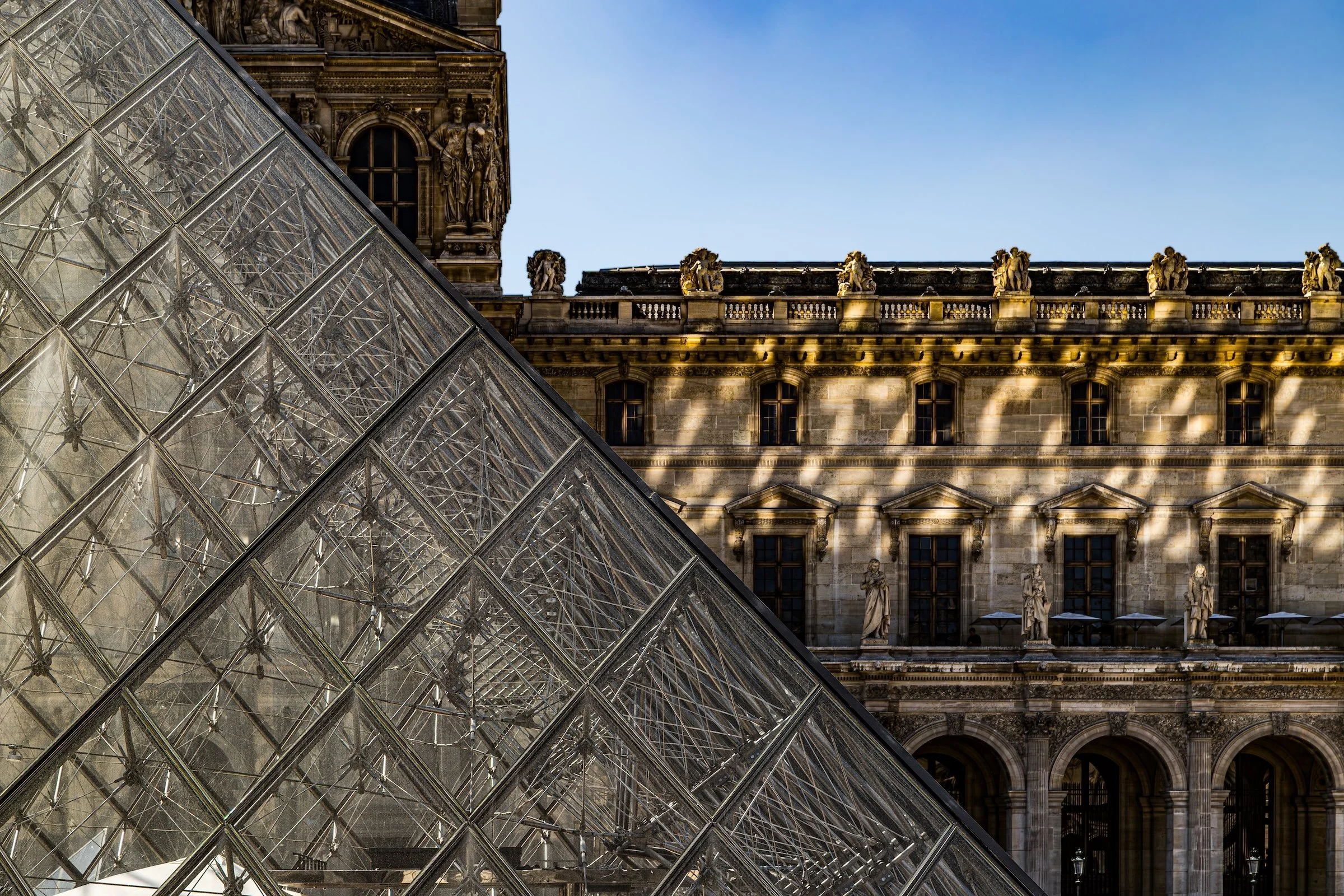
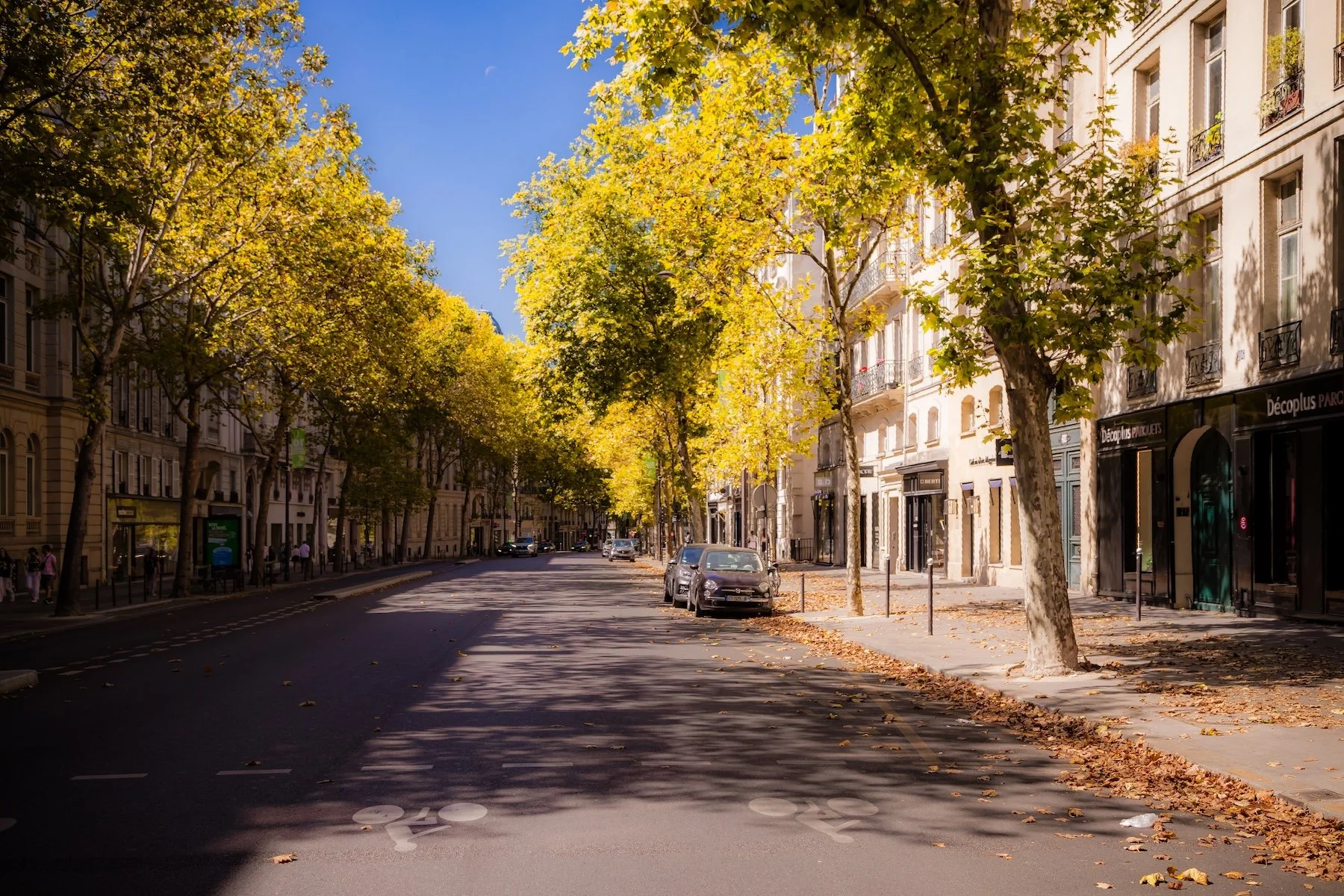
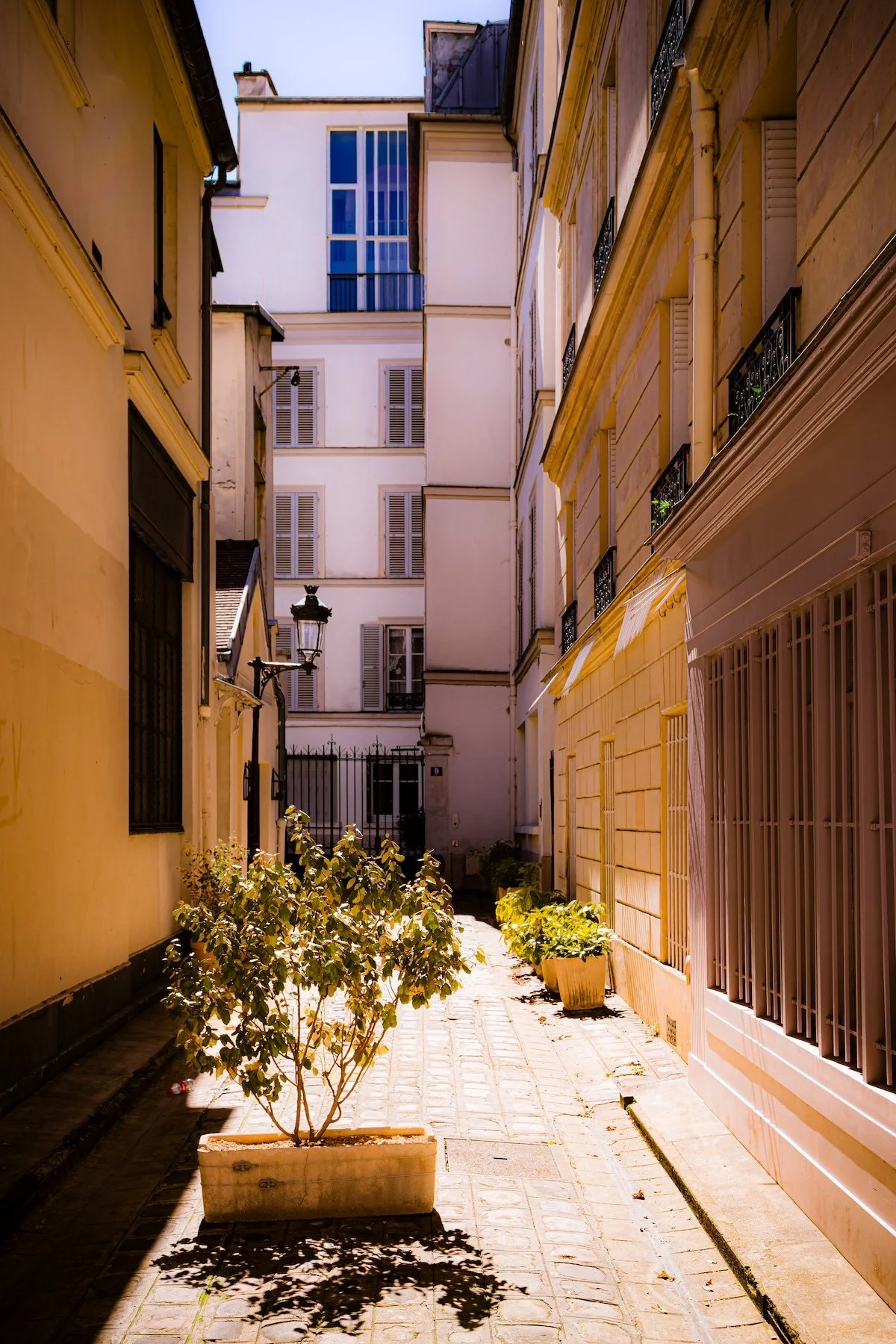
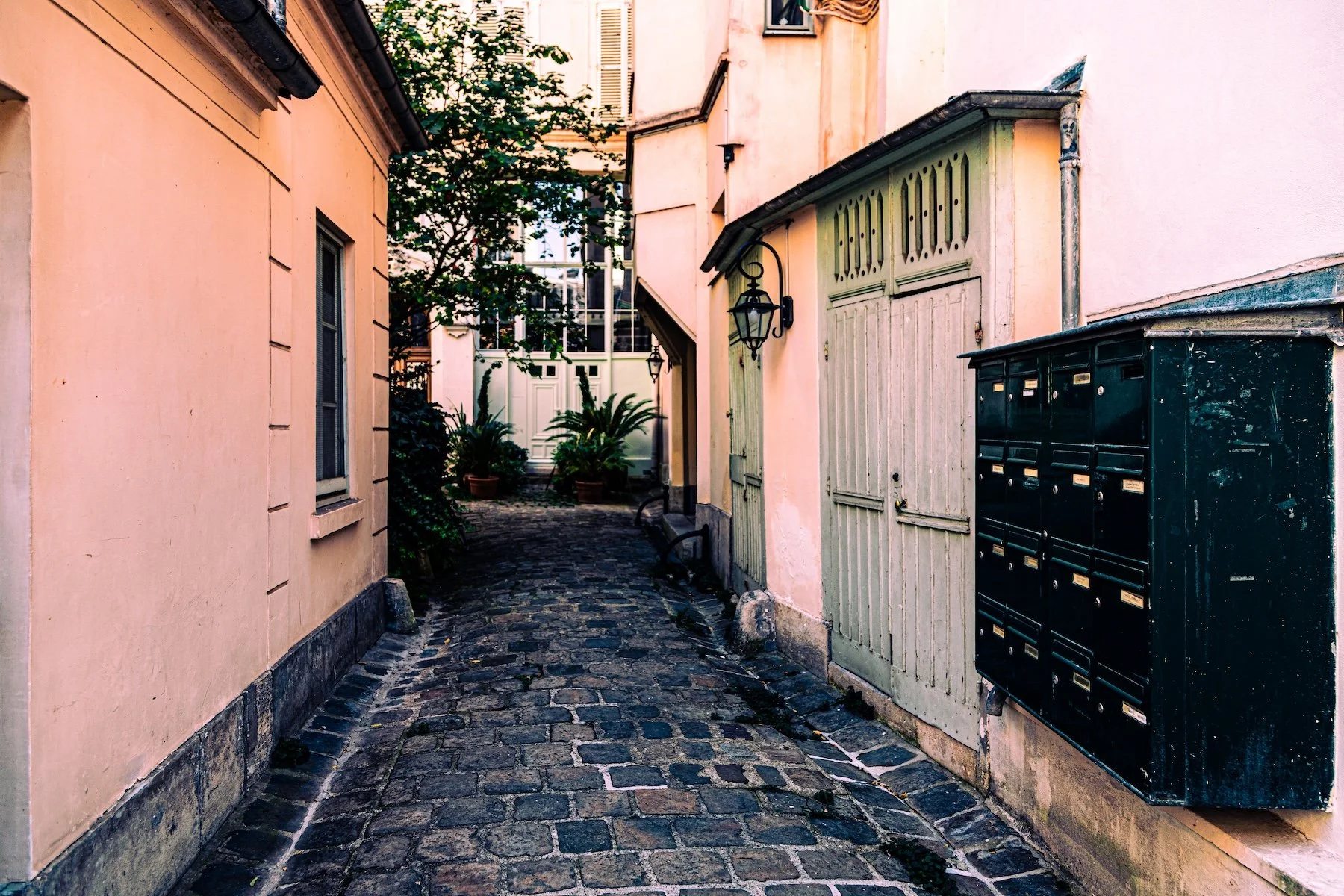
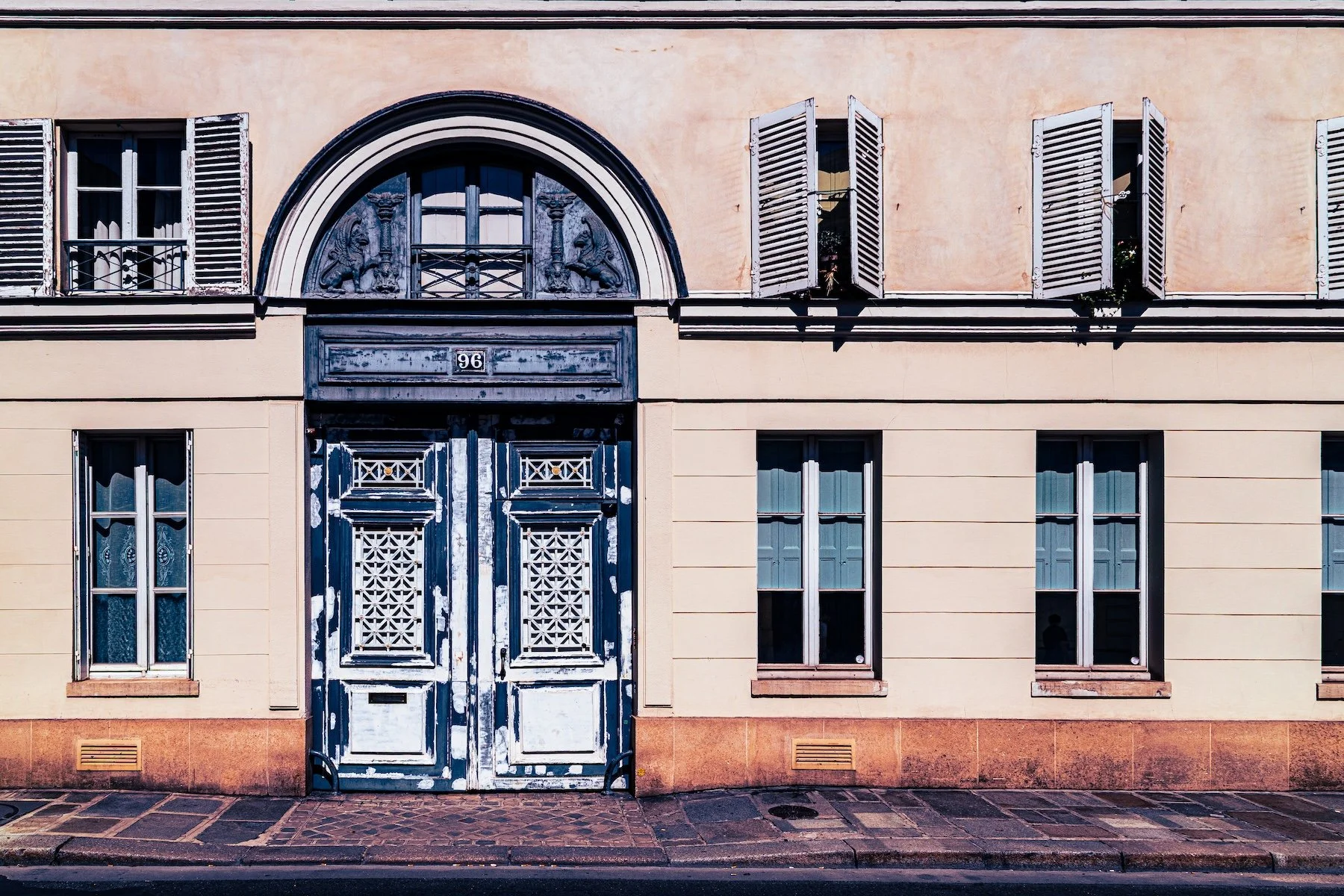
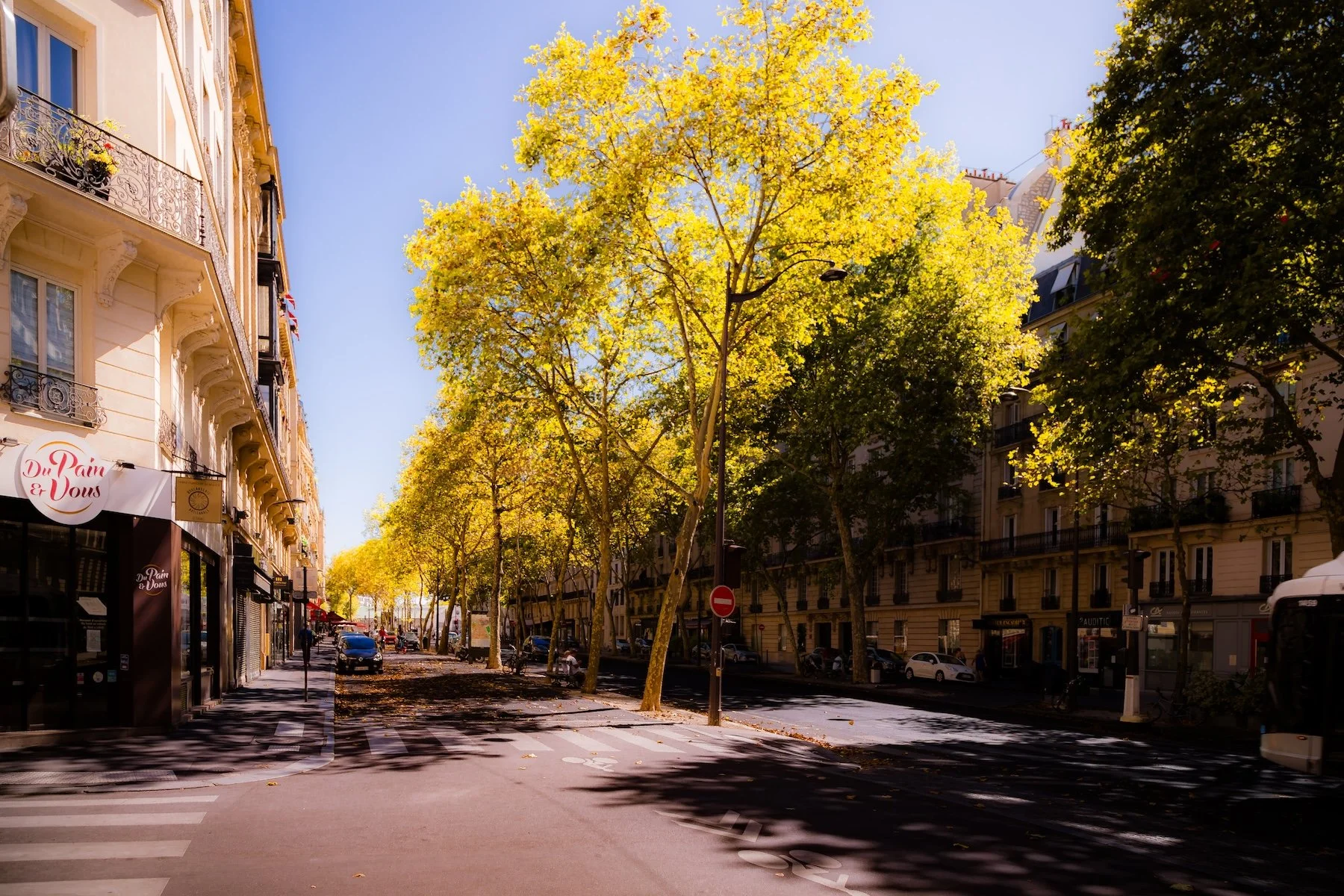
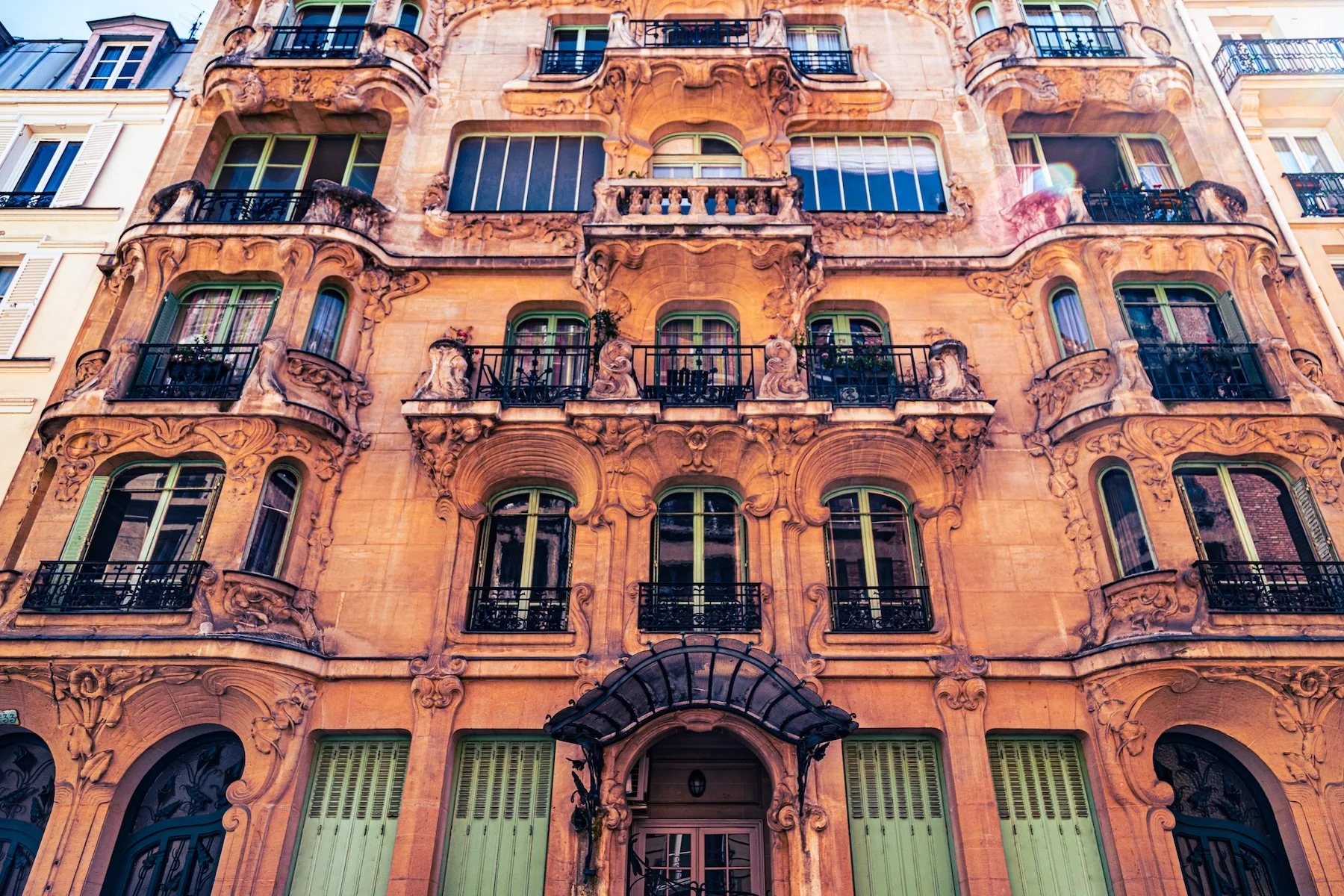
Photographing the arrondissements means moving between the official map and the street-level experience. The camera does not treat each arrondissement as visually uniform. Instead, it looks for the recurring forms, textures, transitions, and contrasts that make each district legible: the geometry of boulevards, the shade of plane trees, the repetition of balconies, the rise of stairways, the curve of canals, the presence of rail stations, the opening of parks, the weight of monuments, and the intimacy of side streets.
On CityNeighborhoods, the arrondissement provides the frame, but the photograph comes from the encounter between map, movement, light, and observation. As the Paris photography is processed, this section will connect each arrondissement more directly to the project’s Photographic Lexicon: the visual strategies, recurring motifs, and compositional patterns that shape how the city is seen through the lens.
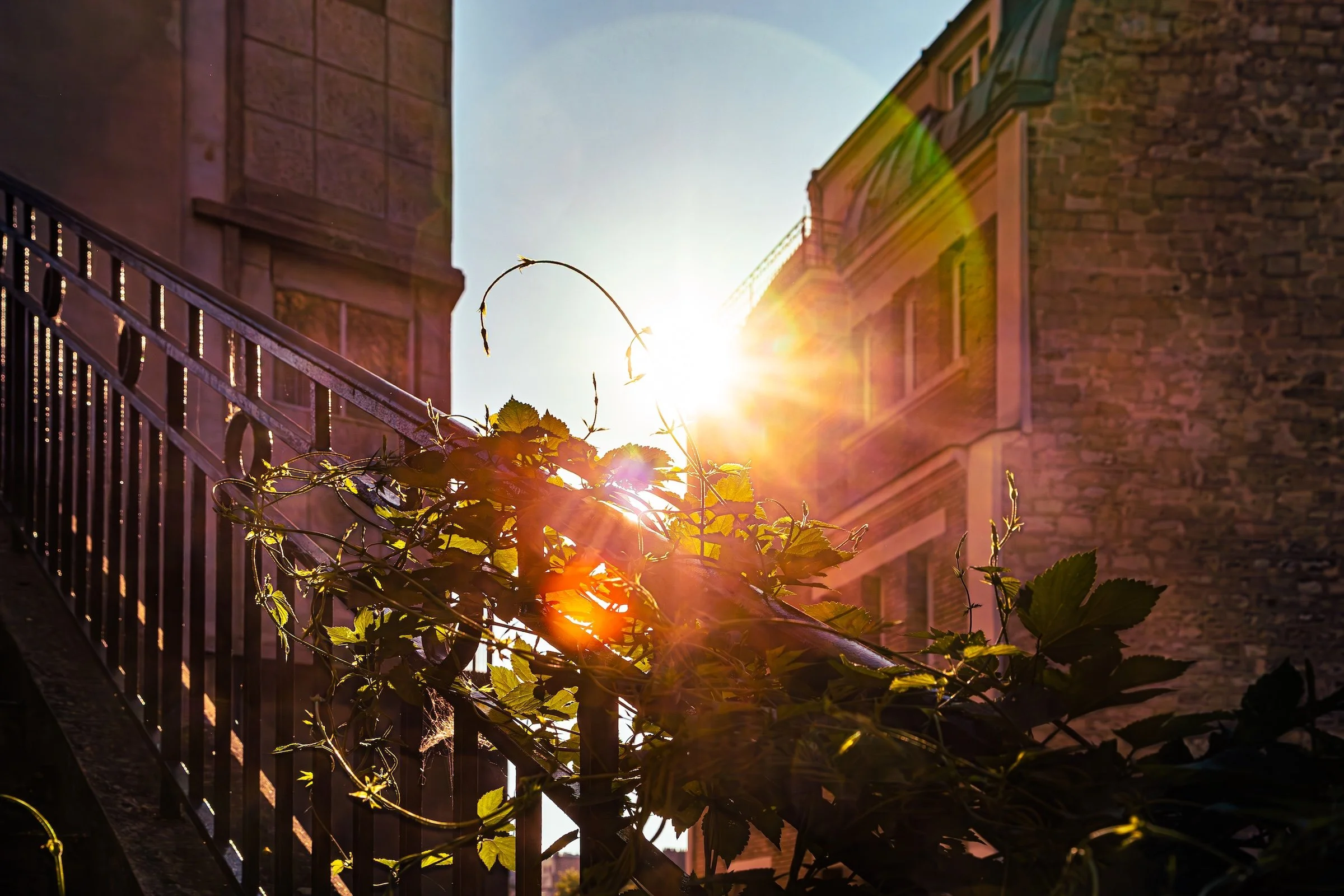
If you visit Paris, these ideas can help inspire your own photography.
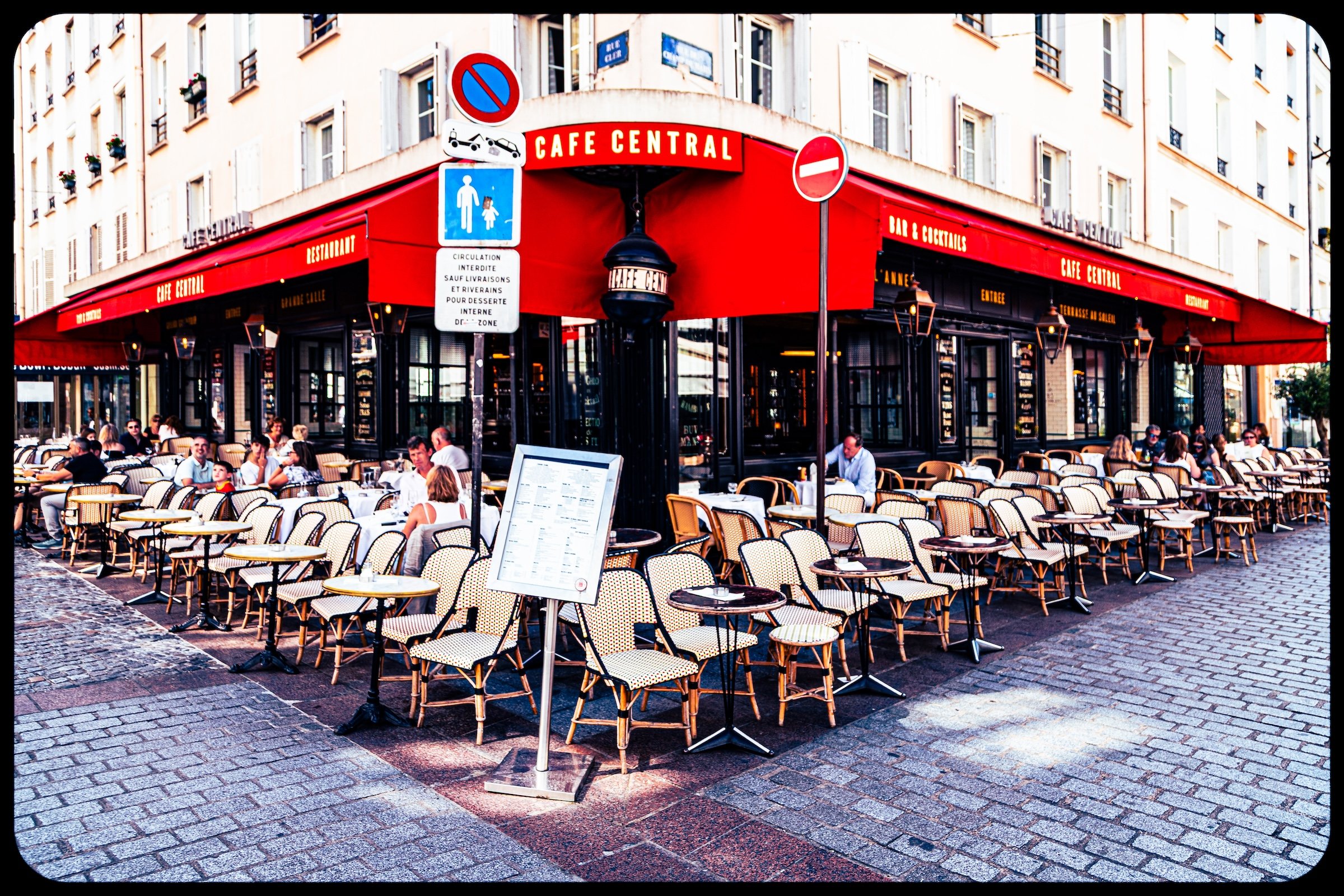
Paris: J’Espere, Je Rêve, Je Vive
Paris Photo Gallery
Paris Field Notes
-
Field Note: August 18, 2025 | 07:58 AM
Conditions: 73°F | Humidity: 72%.
Within the park's interior, the glacial kettle ponds acted as humidity traps, creating a soft, hazy light that filtered through the old-growth oaks. The transition from the park's dense shade to the sun-drenched edges of Oakland Gardens highlighted the day's exceptional "picture-perfect" clarity.
There is a fleeting window in Queens where the humidity of August hasn't yet heavy-set, and the morning sun hits the canopy of Alley Pond Park at a perfect oblique angle. Arriving just before 8:00 AM, I watched the light break through the oaks and tulip trees, casting long, dramatic shadows across the wet grass. It’s in these quiet, golden moments that the park feels less like a city escape and more like the ancient glacial valley it actually is.
Other neighborhoods visited:

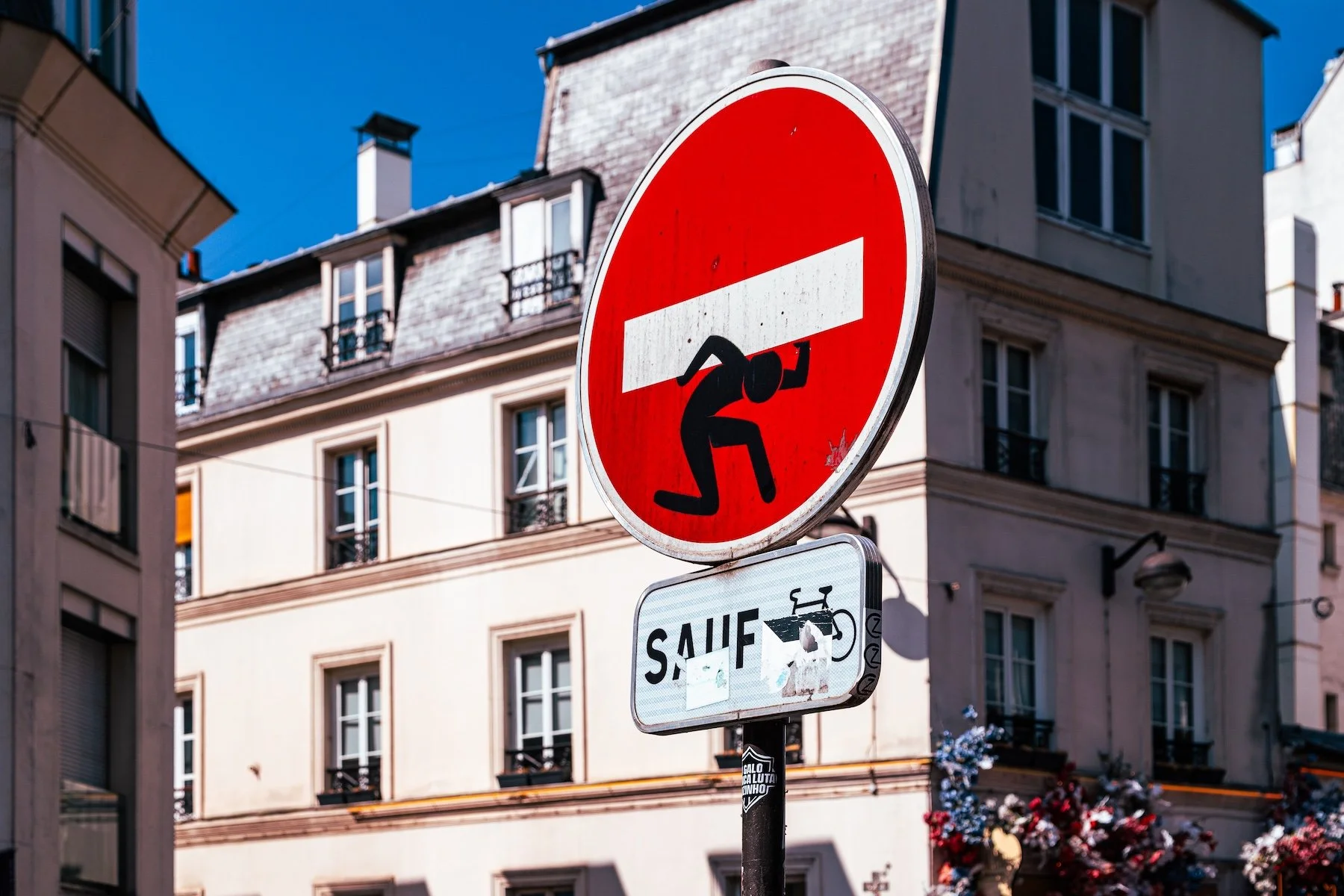
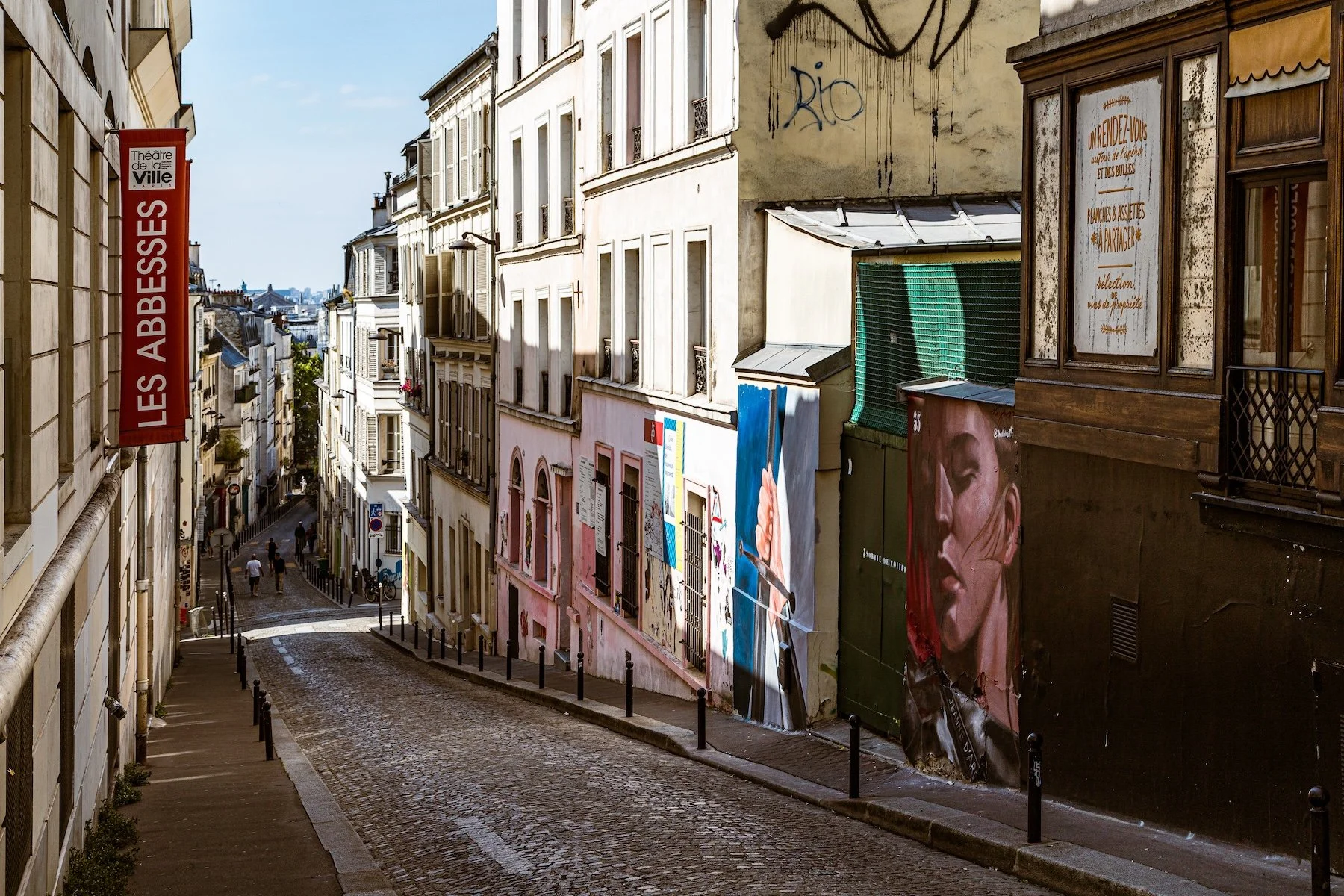
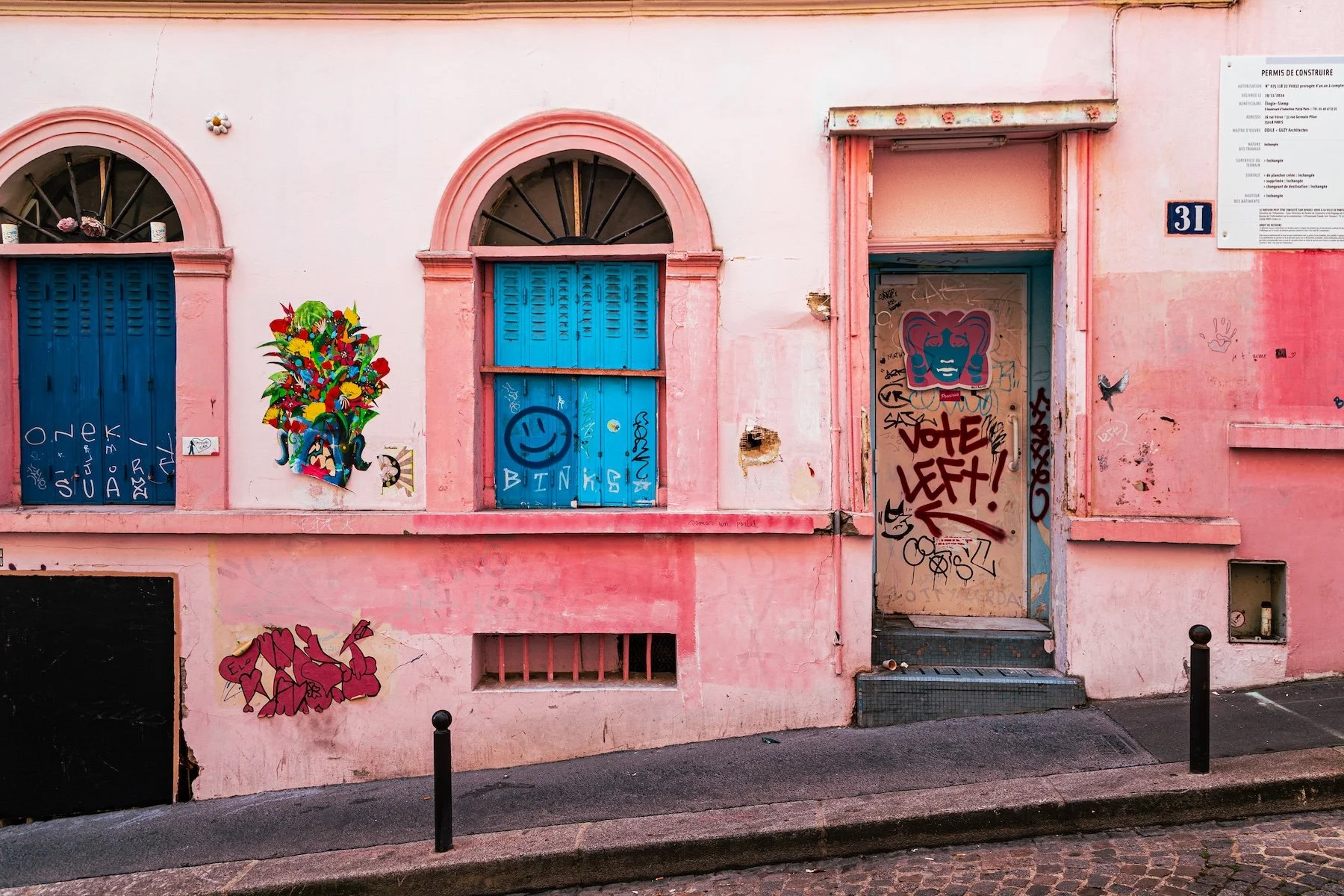
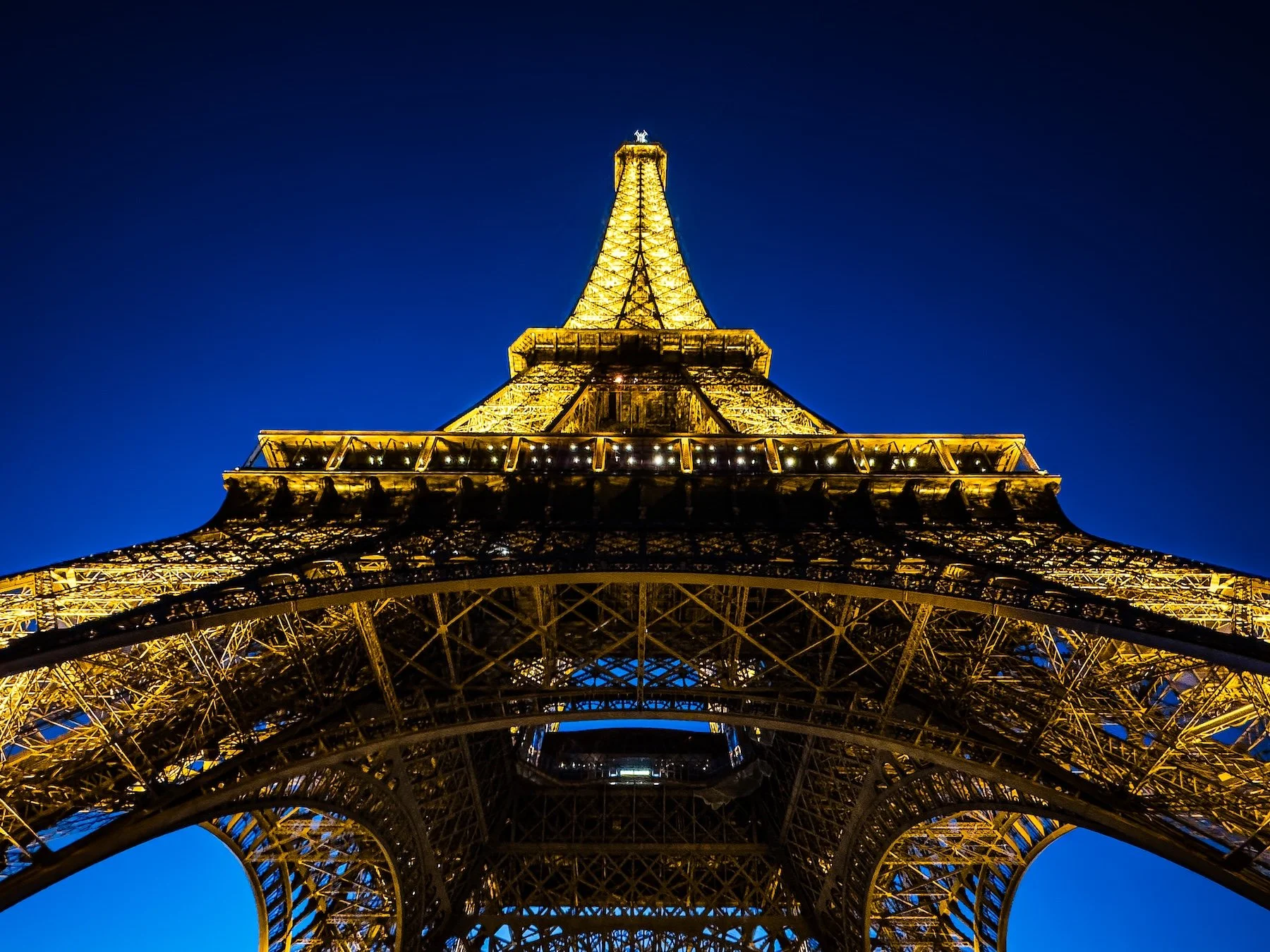

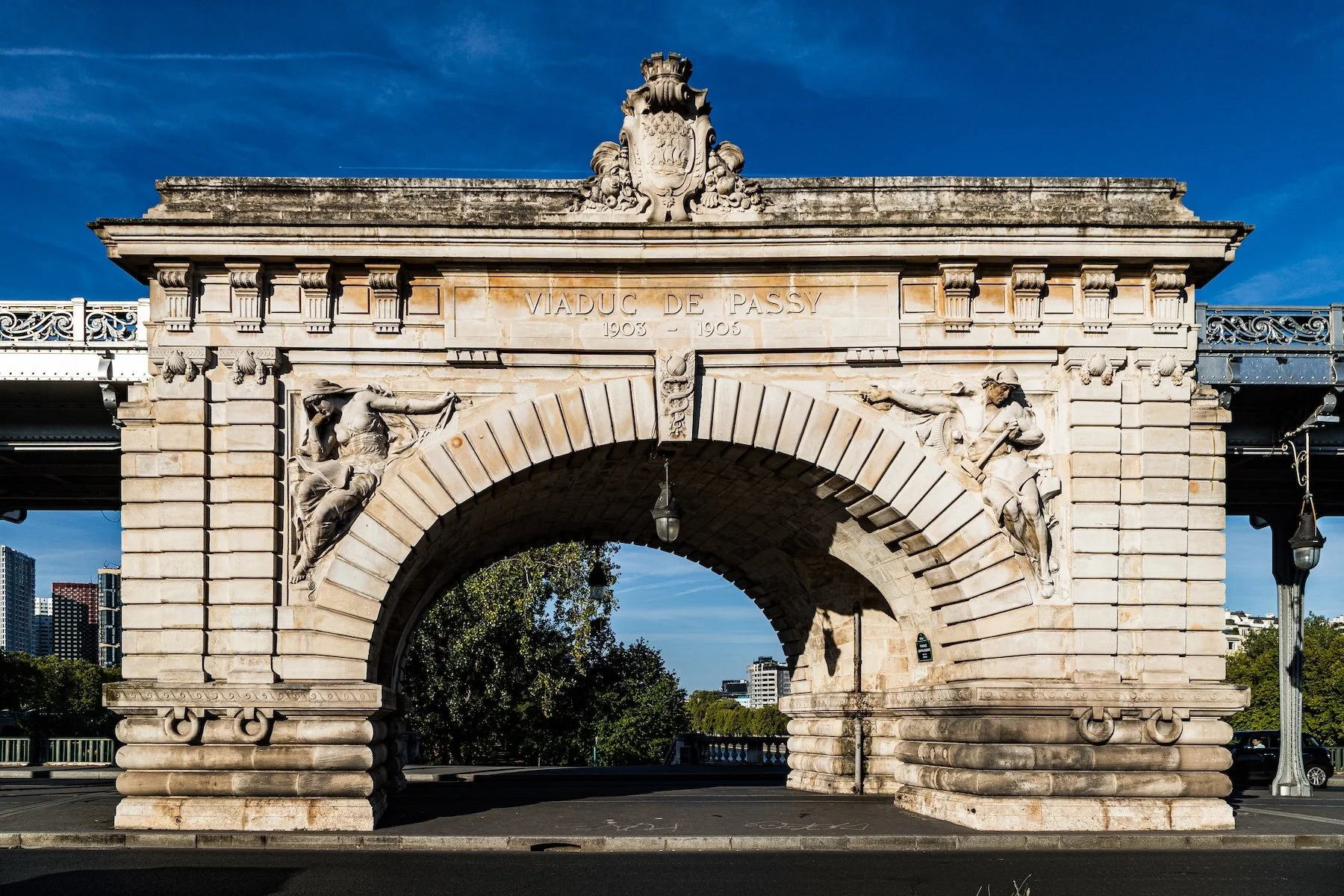

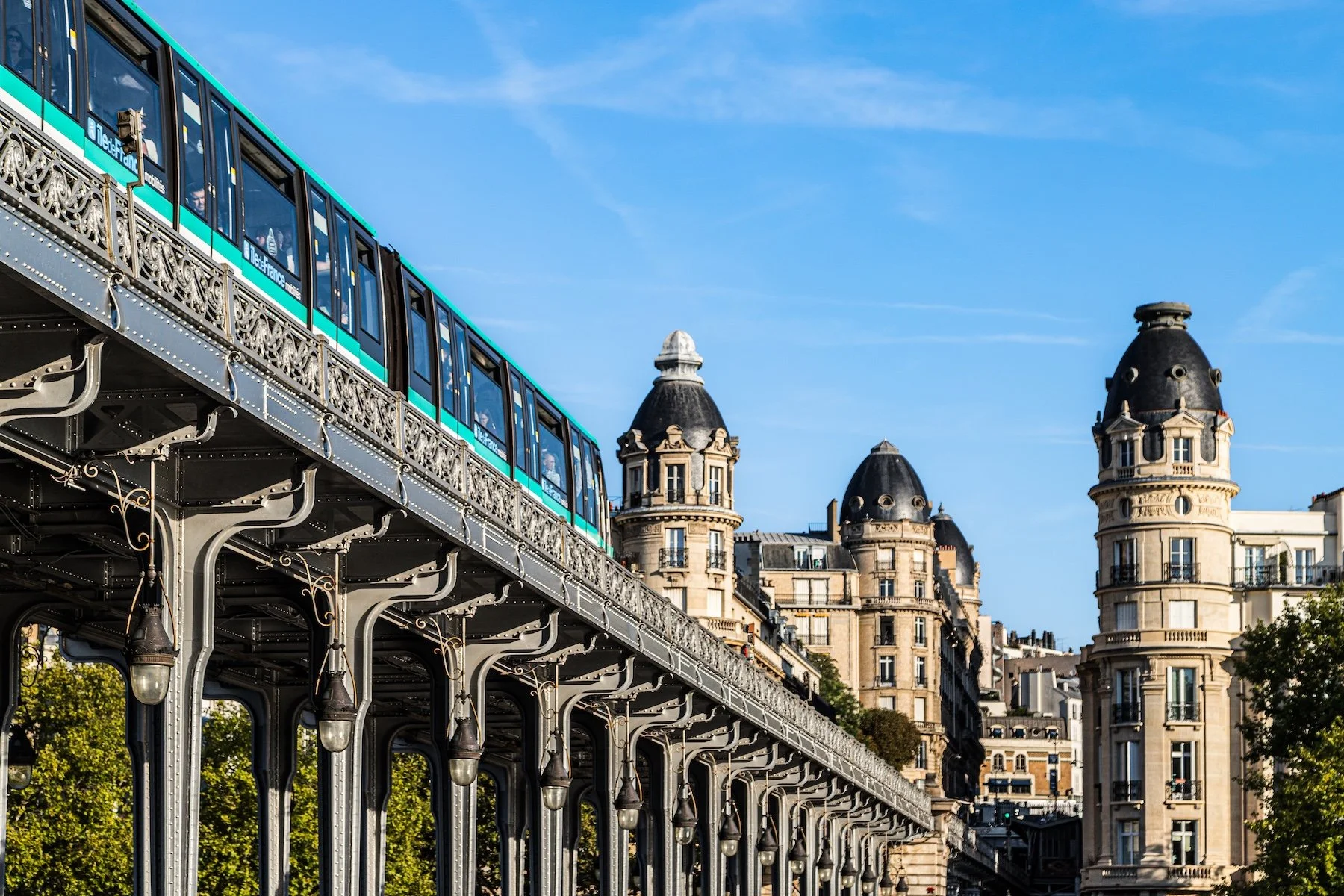

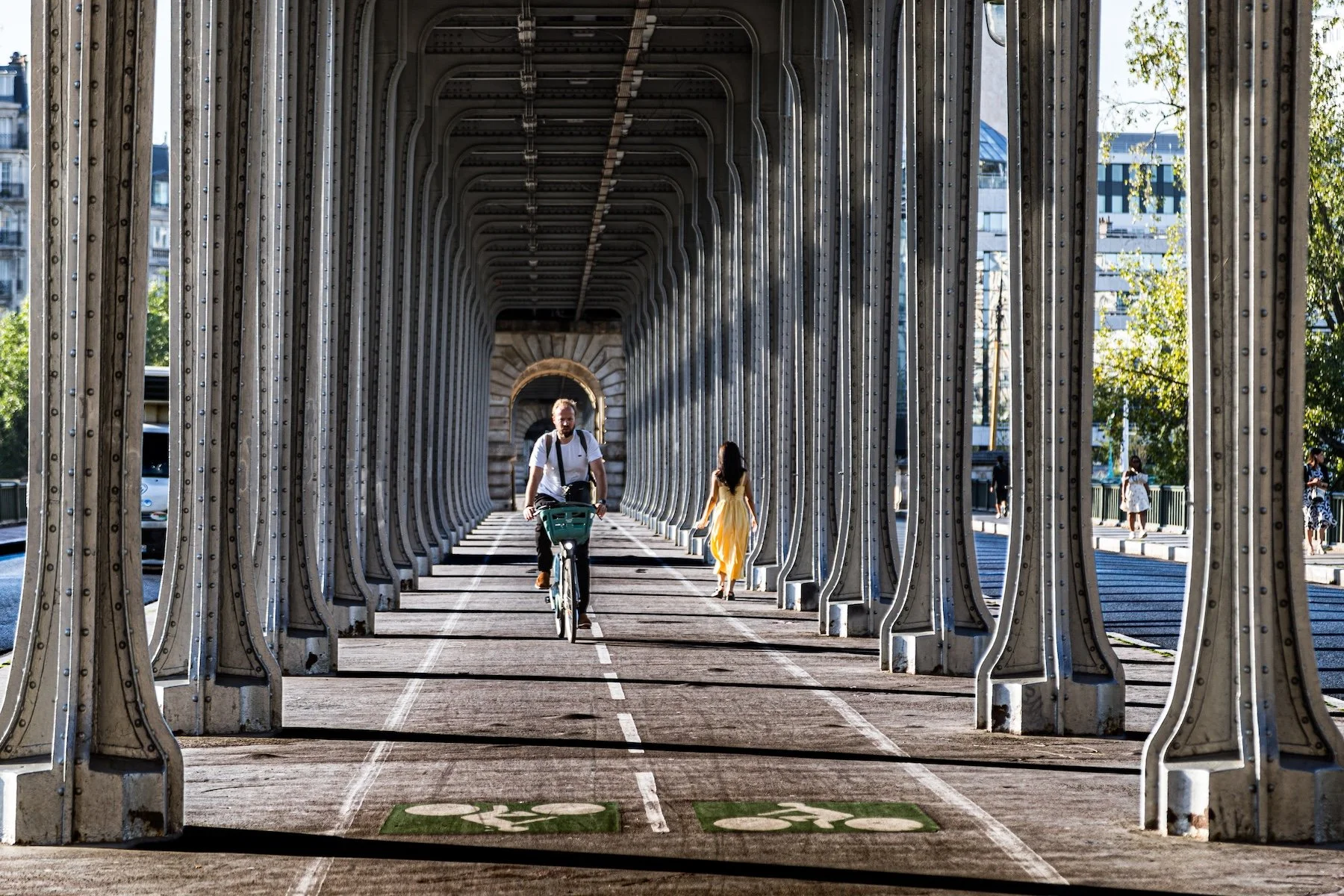
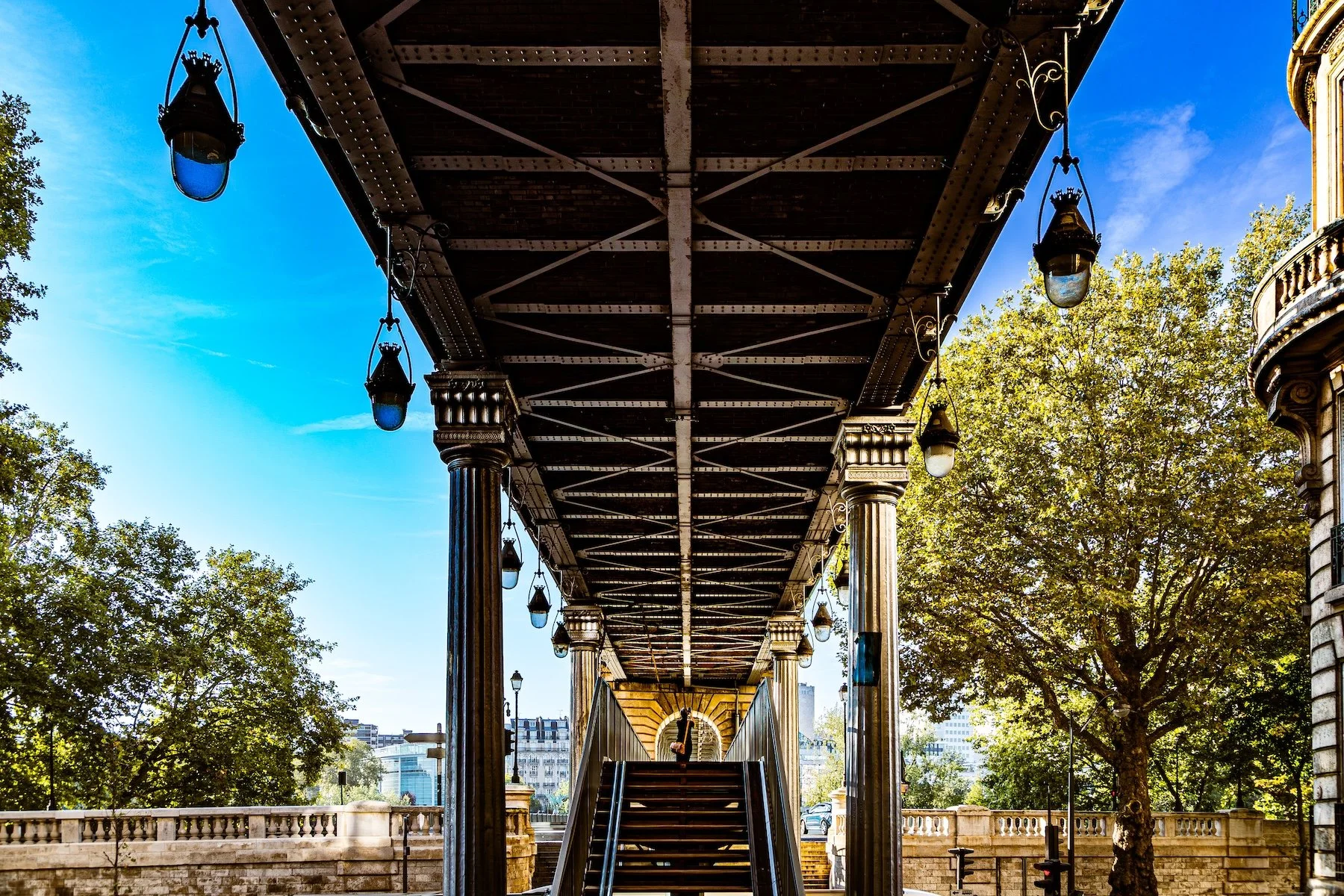

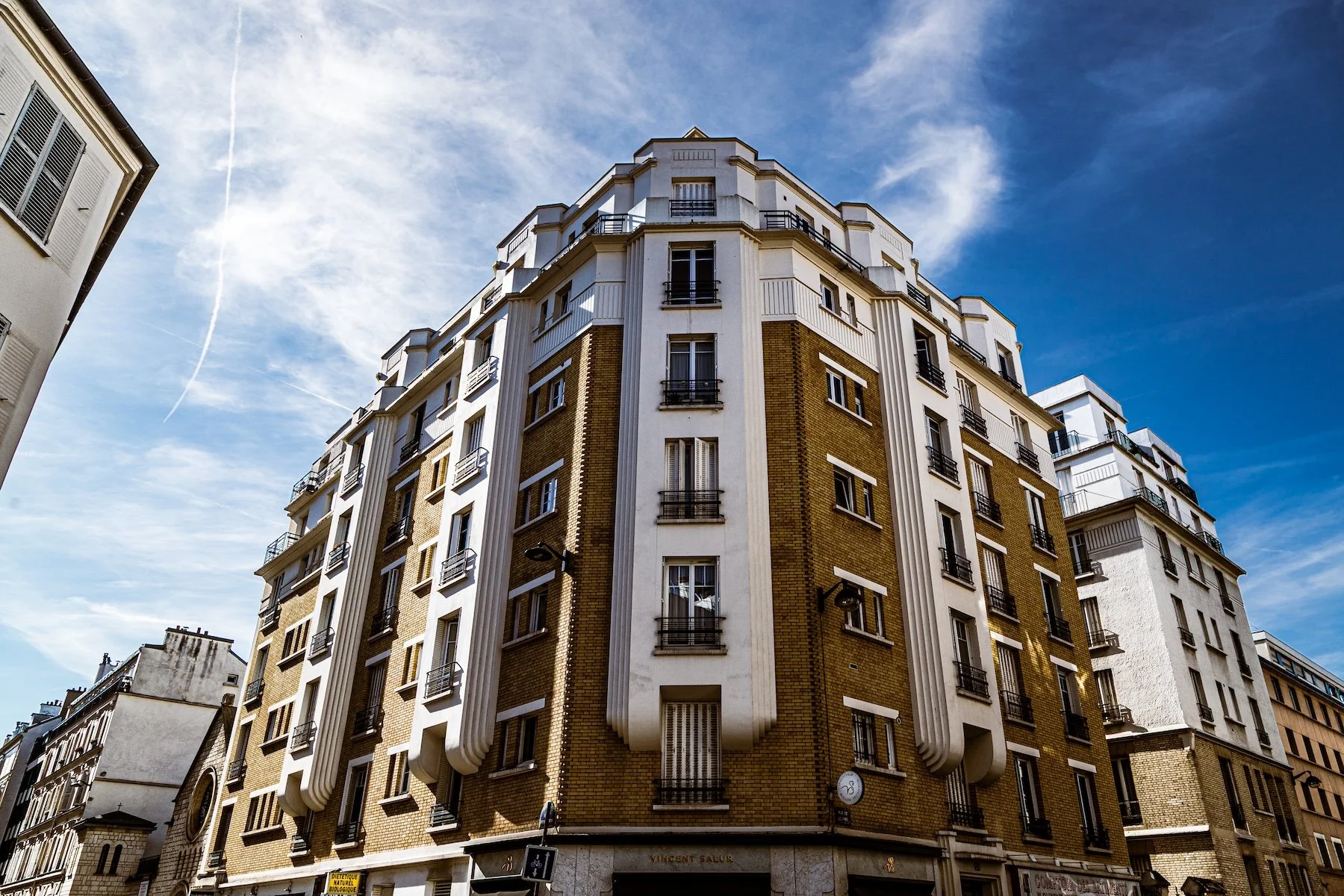
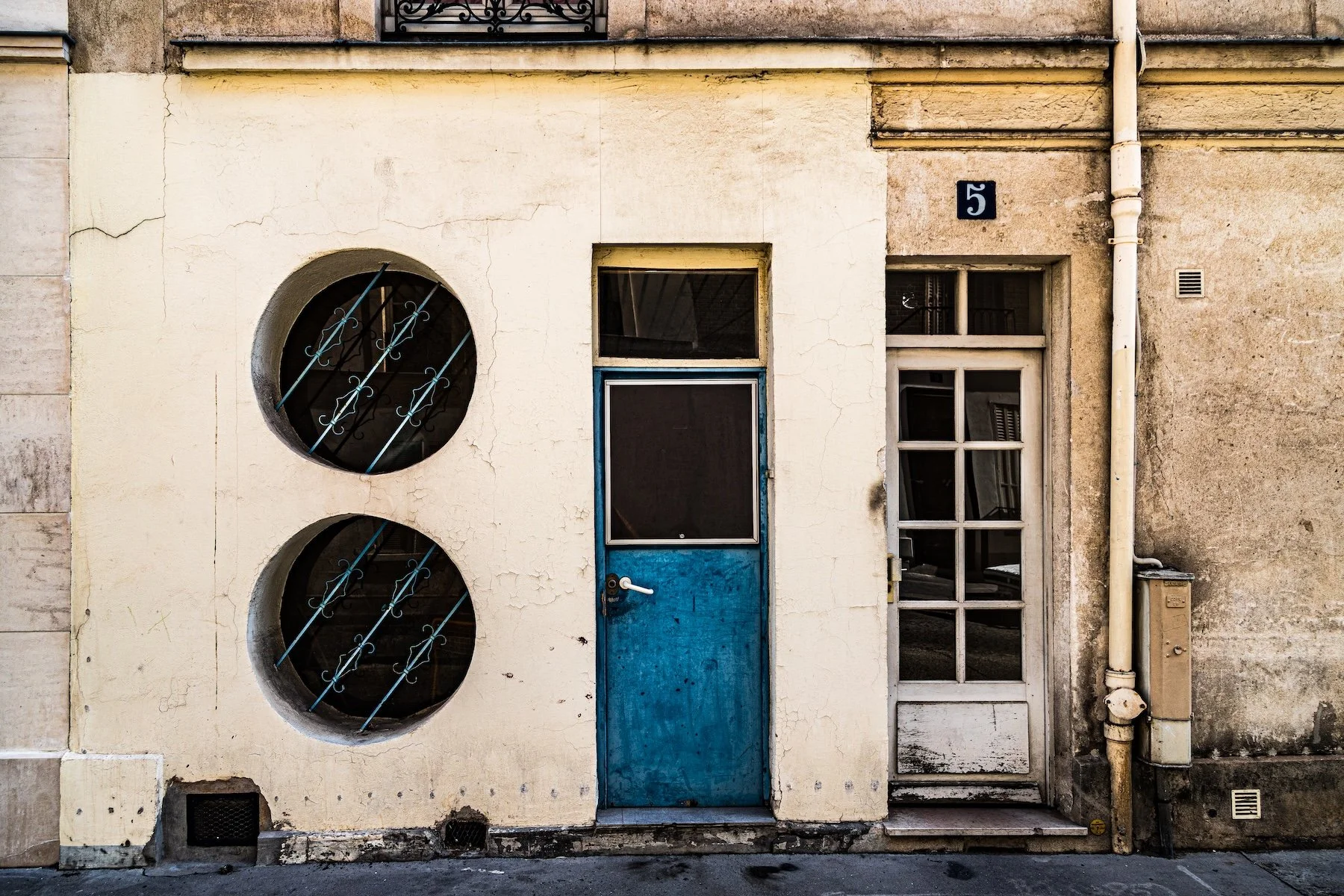
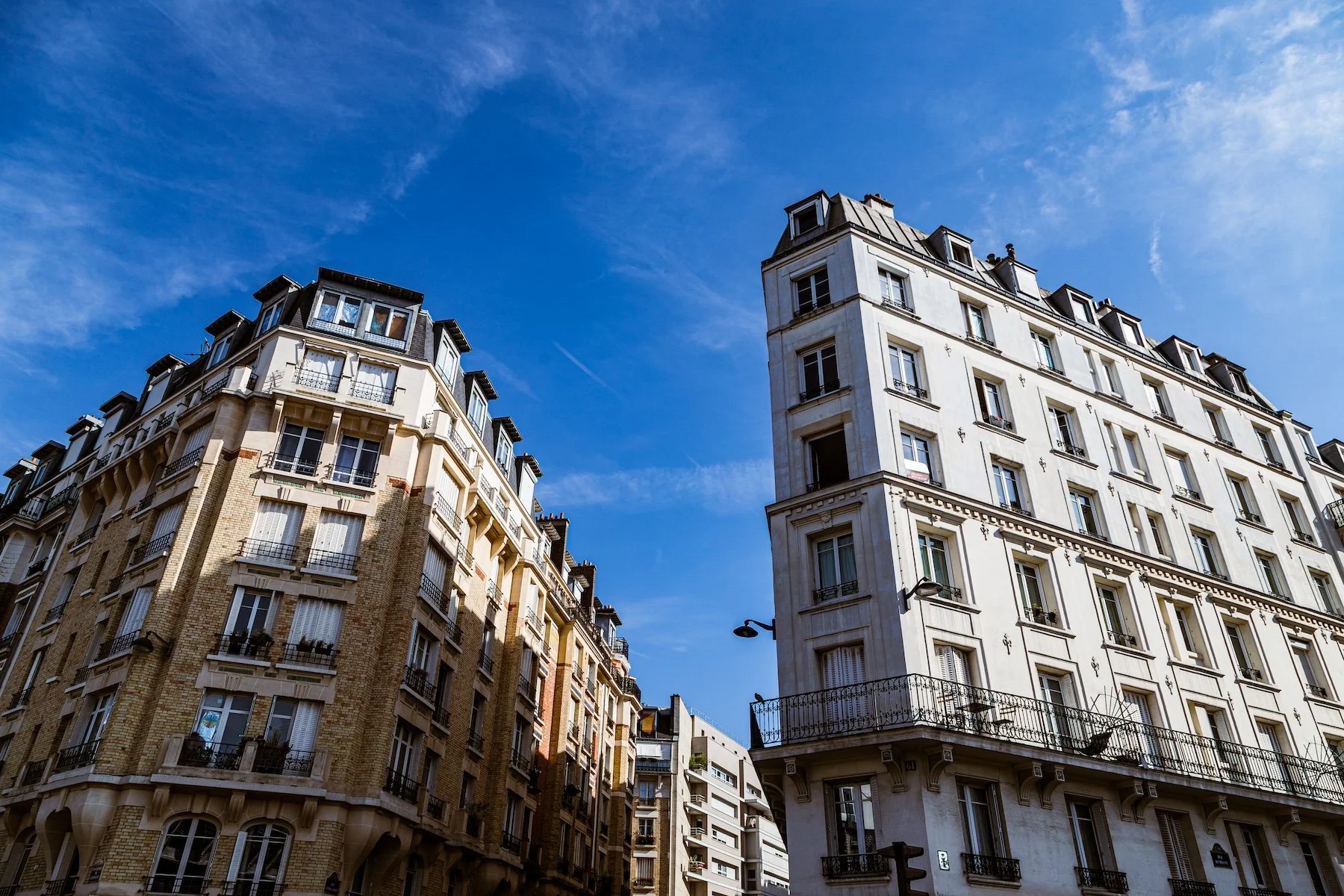
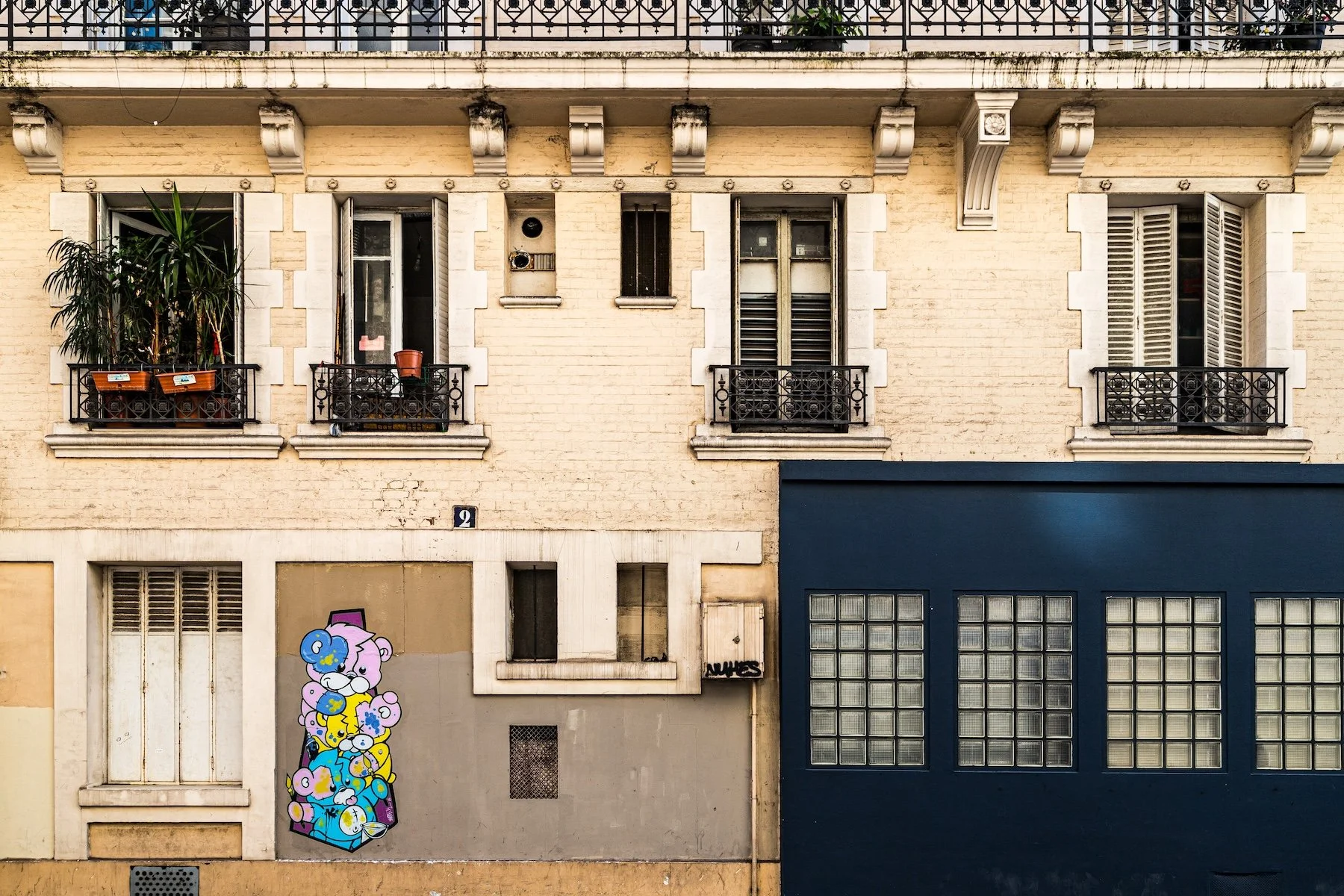
Explore Paris
-

The twenty arrondissements form the civic spiral of Paris, organizing the city into its broad local districts of government, identity, and daily life.
-

Each arrondissement is divided into four official administrative quarters, giving Paris a more precise civic and geographic framework.
-

The conseils de quartier bring participation to street level, giving residents a voice in neighborhood needs, public space, and local civic life.
-

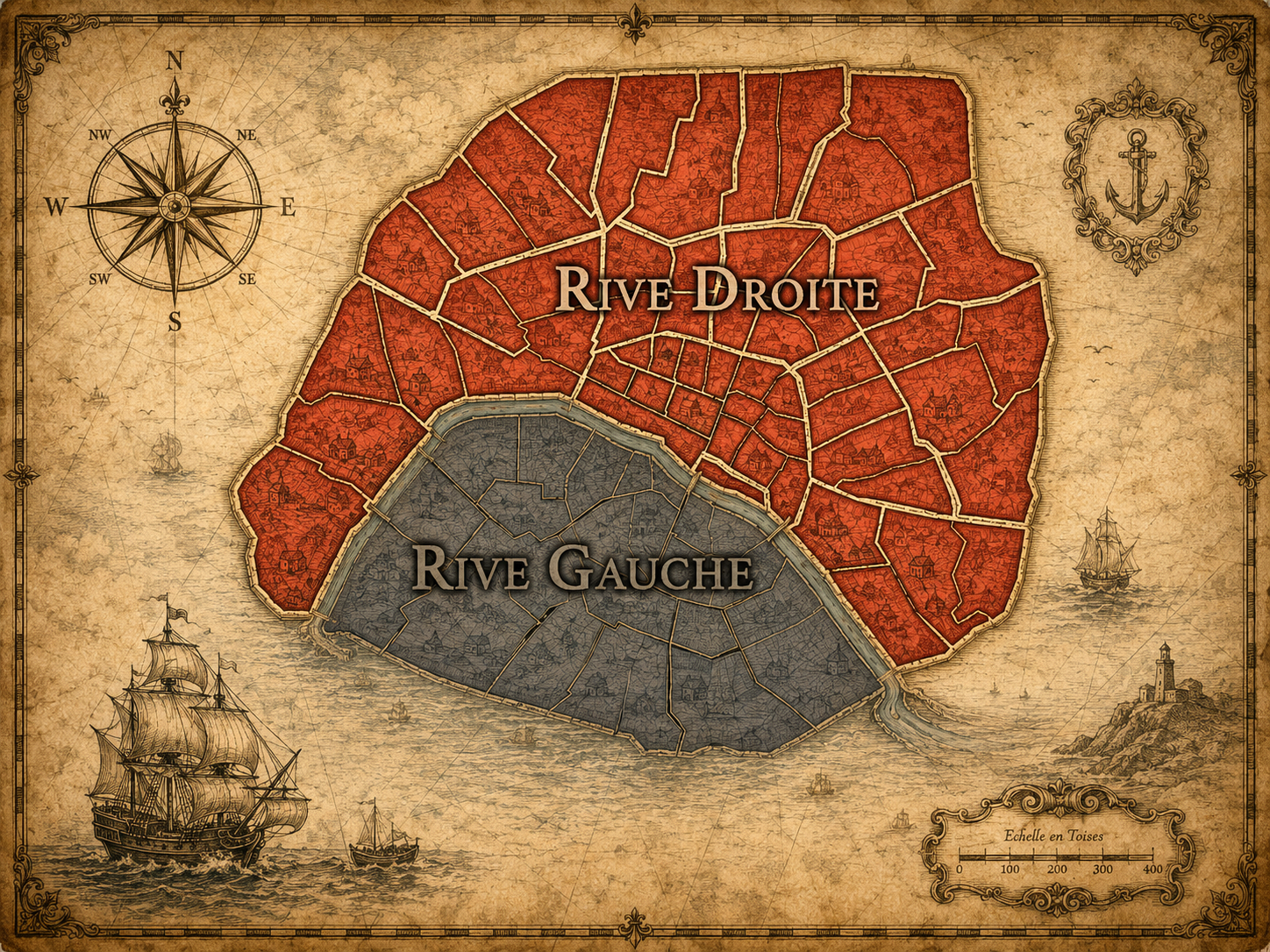
Les Deux Rives trace Paris through the Seine’s two banks, revealing how the Rive Droite and Rive Gauche shaped the city’s civic power, commerce, learning, art, and cultural identity.
-

Cultural neighborhoods reveal the Paris people recognize through history, cafés, architecture, memory, atmosphere, and local belonging.