
4e - SAINT-GERVAIS
Quartiers Administratifs
Part of an ongoing project to walk and photograph every neighborhood in Paris, this page explores the Administrative Quarter: 4e - Saint-Gervais through maps, district identity, history, and photography.
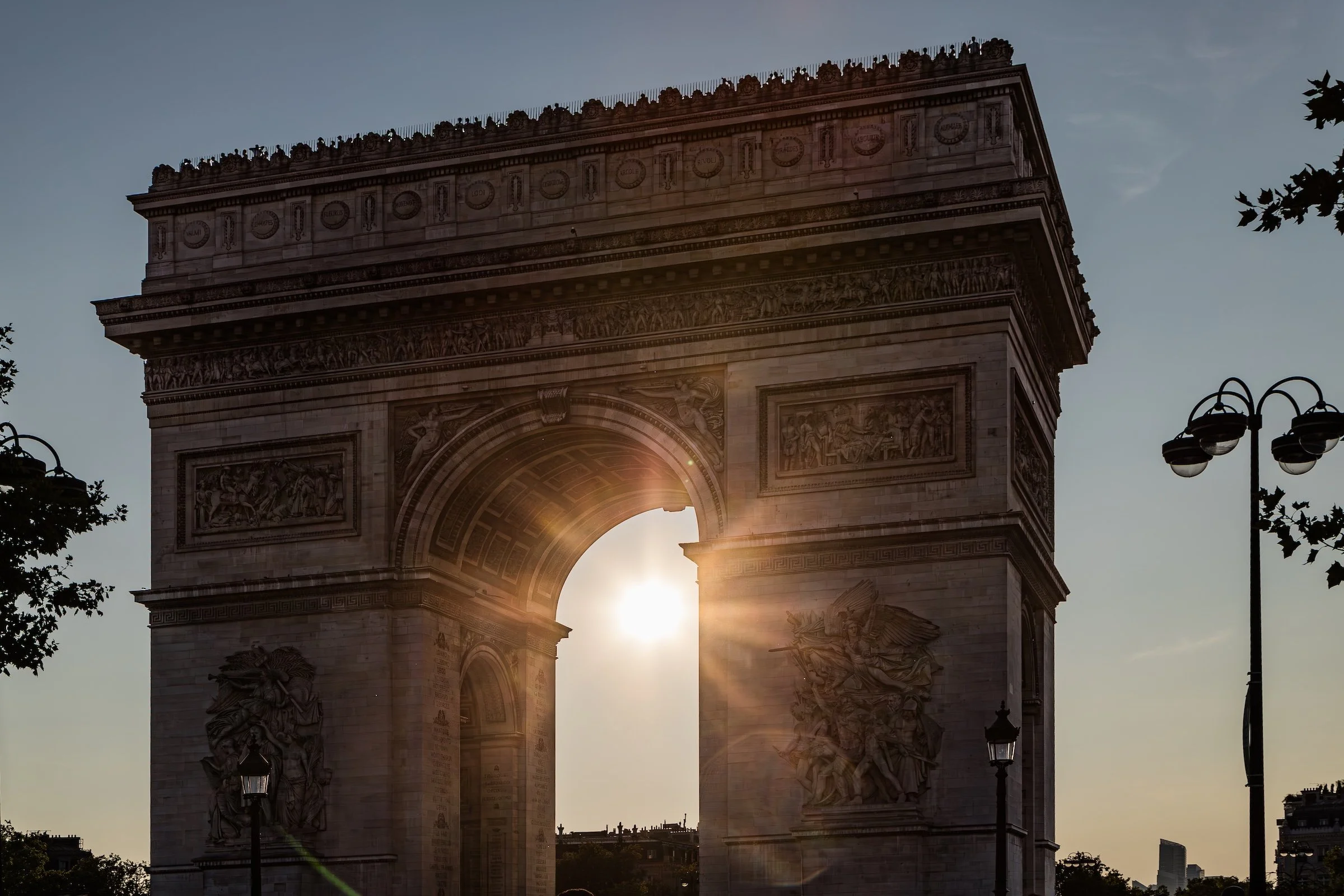
The Map
Download the Paris Arrondissements Map
Geographic Setting
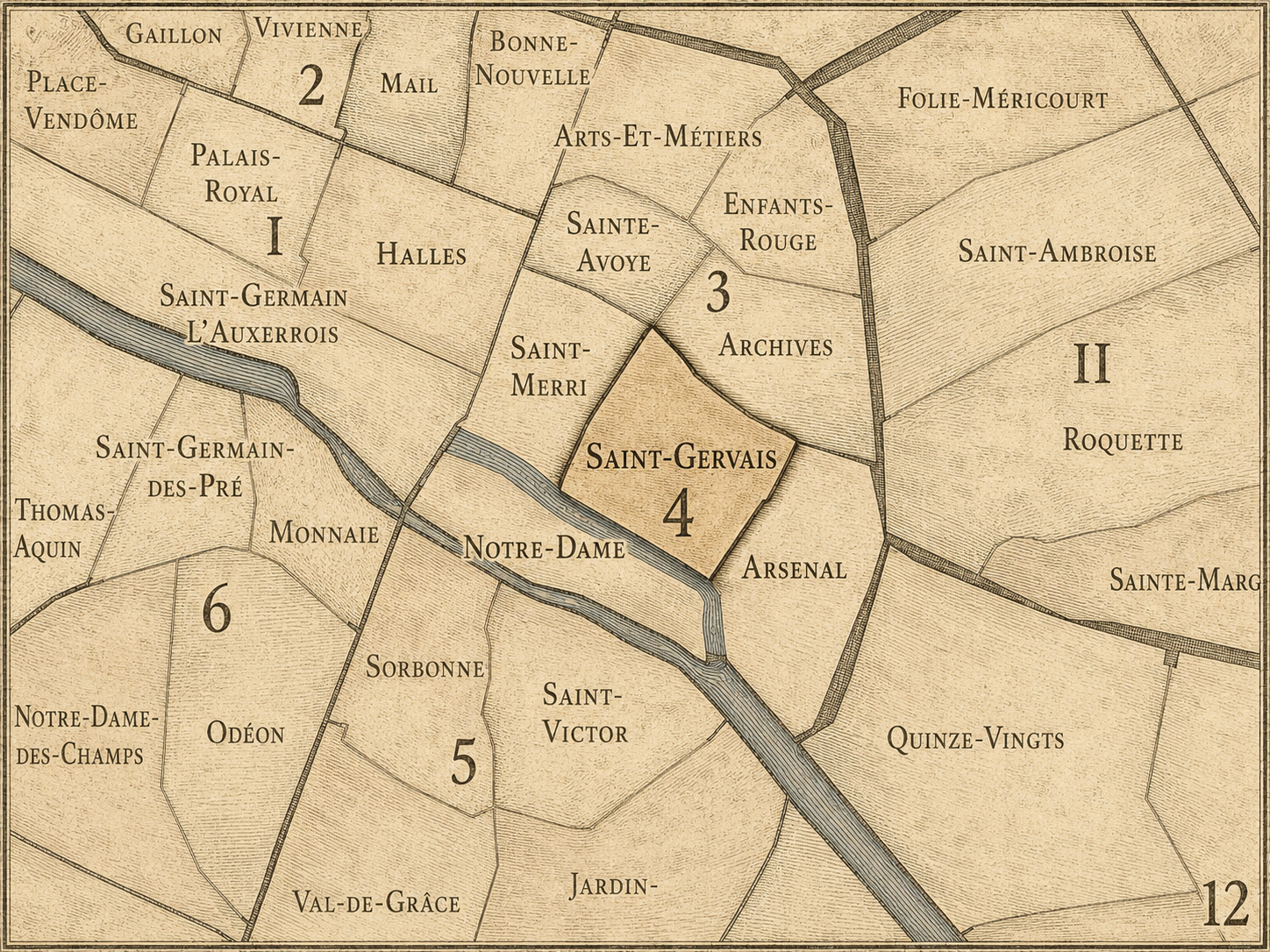
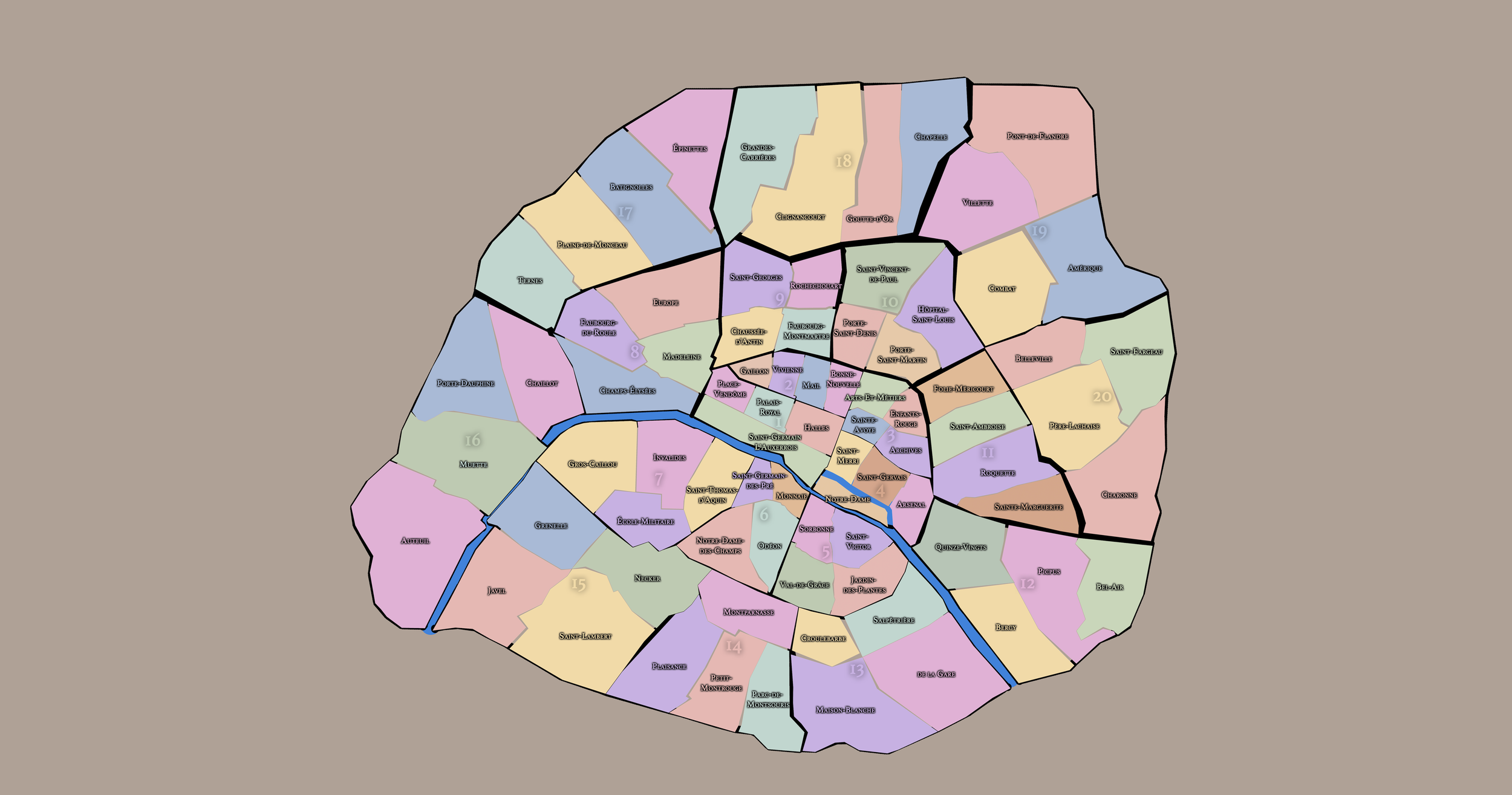
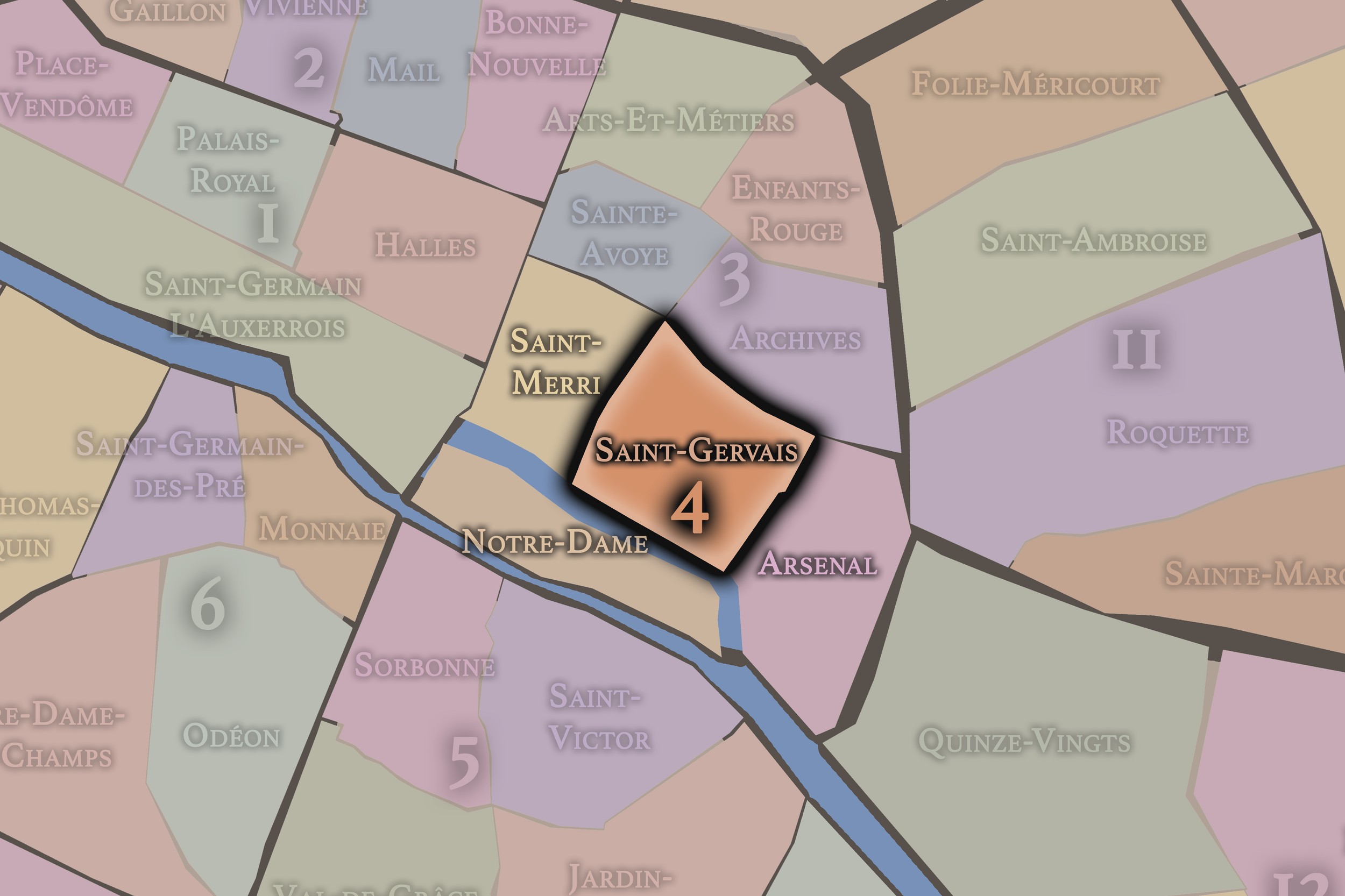
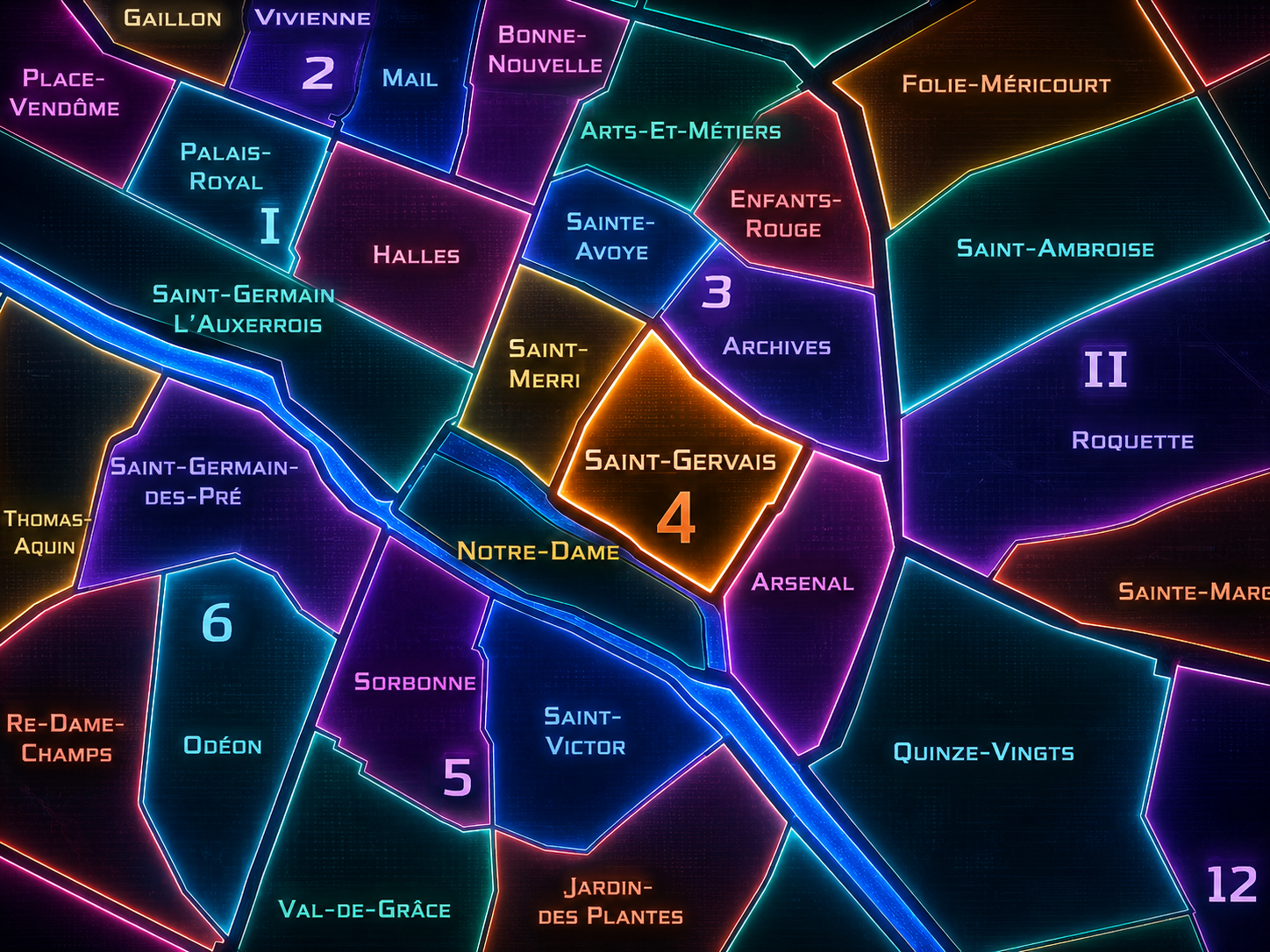
Saint-Gervais occupies the northwestern mainland portion of the 4th arrondissement, where the old Right Bank gathers around Hôtel de Ville, the southern Marais, the Seine, and the dense historic corridors leading toward Rue de Rivoli, Rue des Archives, Rue Vieille-du-Temple, and Rue François-Miron. It sits between Saint-Merri to the west, Arsenal to the east, Notre-Dame and the island quarter to the south, and Archives / Sainte-Avoye in the 3rd arrondissement to the north. Within Paris Centre, it is one of the quarters where civic power, parish memory, Jewish history, aristocratic architecture, and everyday street life overlap with remarkable intensity.
The quarter’s defining landmarks include the Church of Saint-Gervais-Saint-Protais, Hôtel de Ville, the streets of the southern Marais, and the historic fabric around Rue des Barres, Rue François-Miron, Rue du Pont-Louis-Philippe, Rue des Rosiers, Rue des Archives, and Rue Vieille-du-Temple. Its geography is close to the Seine but not defined by island separation. It belongs to the Right Bank’s old heart: the city of parish streets, municipal authority, medieval traces, hôtels particuliers, courtyards, shops, restaurants, synagogues, schools, and dense pedestrian movement.
Unlike Notre-Dame, whose identity is concentrated on the islands, or Arsenal, whose landscape turns toward Bastille and the basin, Saint-Gervais is rooted in the urban body of the old Right Bank. It is one of the places where Paris feels both historic and lived — not simply preserved as monument, but continuously inhabited, adapted, worshipped in, governed from, remembered, and walked.
Administrative Quarter Identity
Etymology and Origins
The name Saint-Gervais comes from the Church of Saint-Gervais-Saint-Protais, dedicated to the twin Christian martyrs Gervasius and Protasius. The church gives the quarter its official name and anchors its religious memory, standing near Hôtel de Ville in one of the oldest parish landscapes of the Right Bank. The name therefore preserves a sacred geography that predates many of the quarter’s later civic and cultural identities.
That religious naming matters because Saint-Gervais is not only a civic quarter shaped by Hôtel de Ville, nor only a Marais quarter shaped by aristocratic and Jewish history. Its identity begins with parish. Before modern administration, before tourist districts, before the Marais became a cultural shorthand, the church helped organize local life through worship, burial, procession, charity, bells, and neighborhood belonging.
The full dedication, Saint-Gervais-Saint-Protais, also reminds us that Parisian place-names often simplify older religious identities. The administrative quarter is Saint-Gervais, but the church carries both saints. In that shortening, the map retains the essential local memory while allowing the name to become civic, geographic, and broadly recognizable.
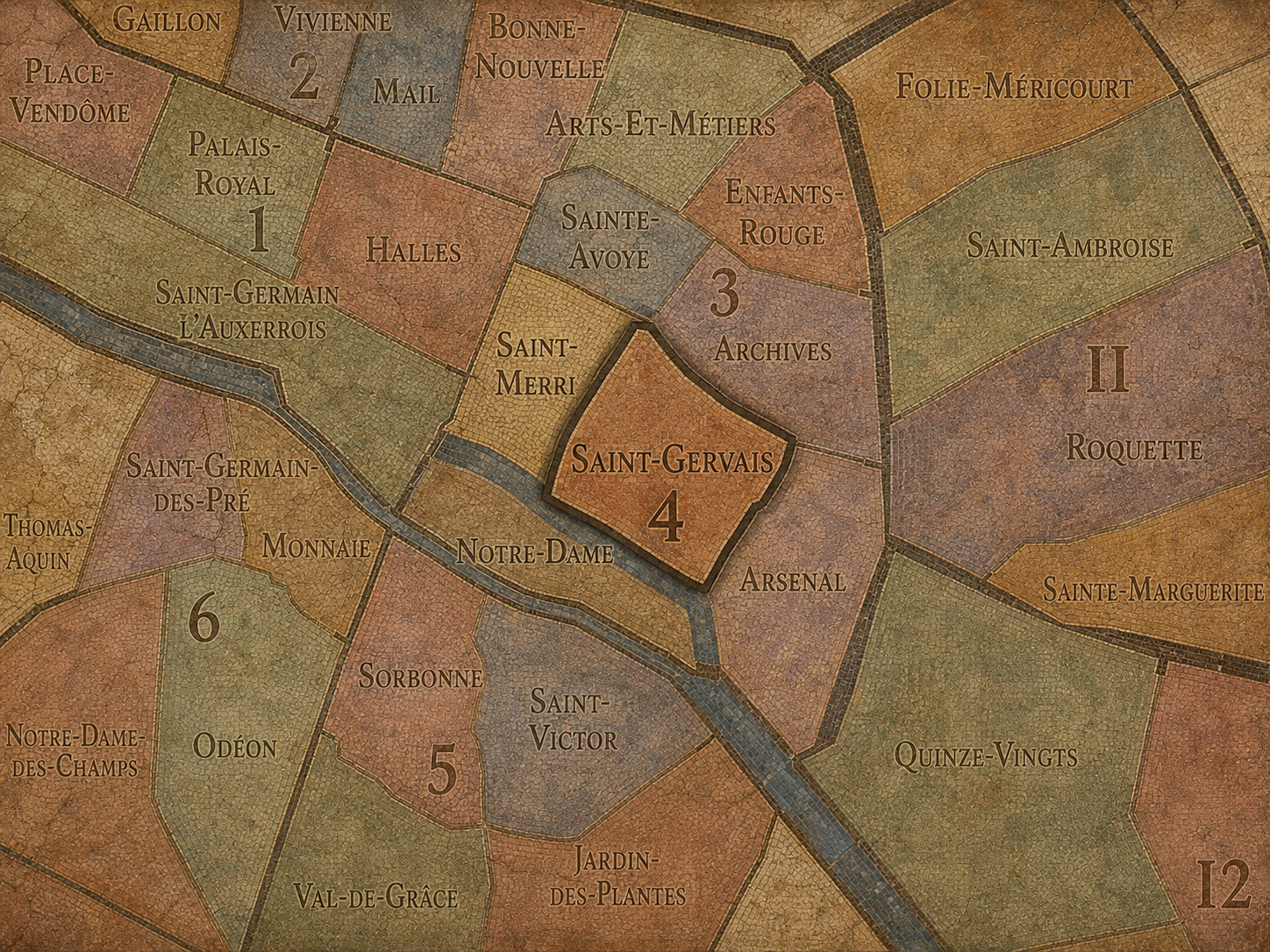
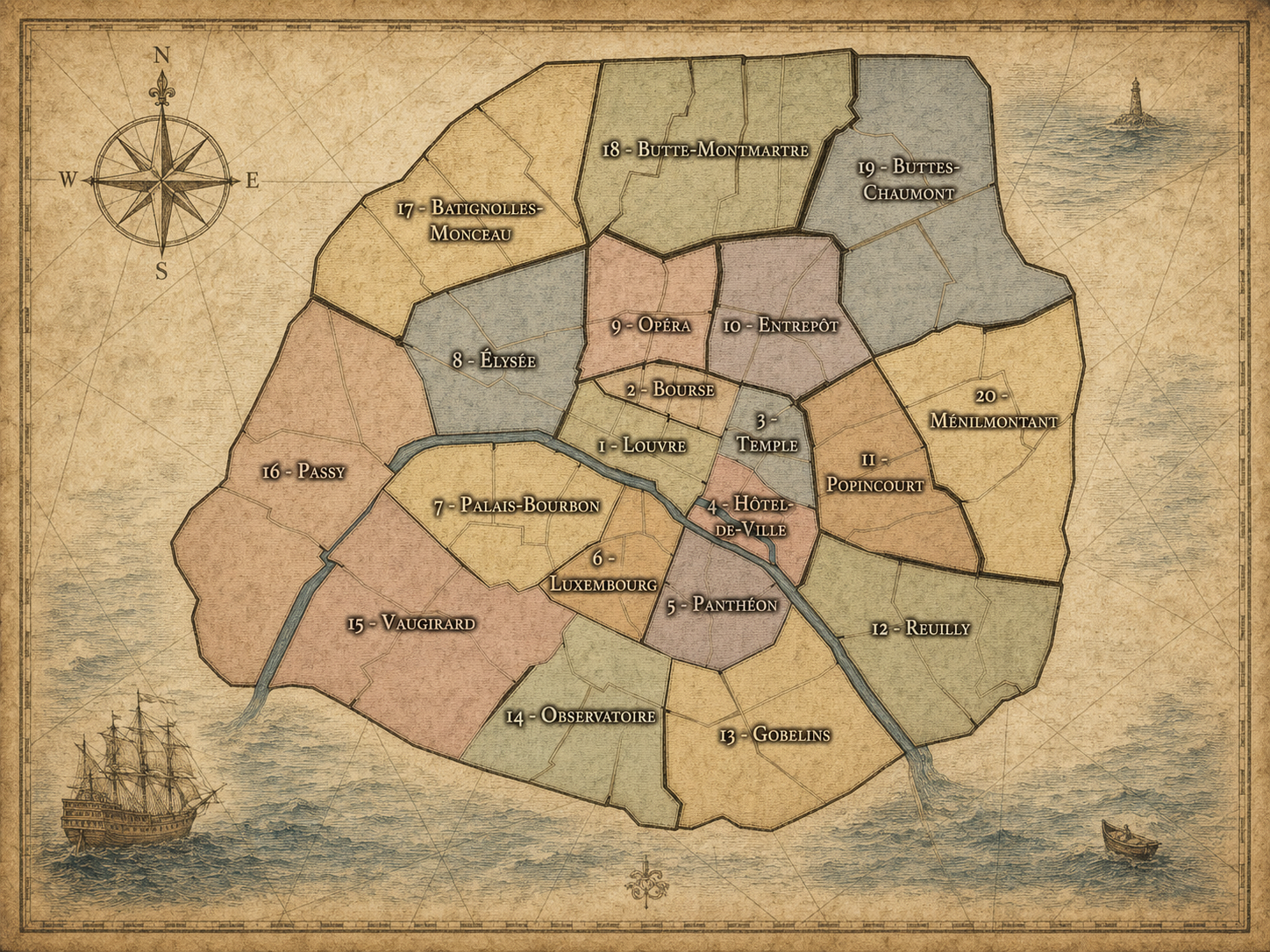
Within the official geography of Paris, Saint-Gervais is one of the four administrative quarters of the 4th arrondissement, alongside Saint-Merri, Arsenal, and Notre-Dame. It occupies the arrondissement’s northwestern mainland area and belongs to the municipal structure of Paris Centre, which now gathers the 1st, 2nd, 3rd, and 4th arrondissements under a shared local governance framework.
As an administrative quarter, Saint-Gervais gives formal shape to one of the most layered parts of central Paris. It includes the area around Hôtel de Ville and a major portion of the southern Marais, where official boundaries, religious memory, cultural identity, Jewish history, and civic symbolism constantly overlap. Without the administrative quarter, this area might simply be described as “the Marais,” “Hôtel de Ville,” or “near the Seine.” The quarter name allows these identities to be held together without collapsing them into one.
Saint-Gervais also has a particularly strong civic role because of Hôtel de Ville. The presence of Paris’s city hall places municipal authority within the quarter, balancing the religious identity of Saint-Gervais-Saint-Protais and the cultural-historical identity of the Marais. It is a quarter where parish, city, and neighborhood all meet.
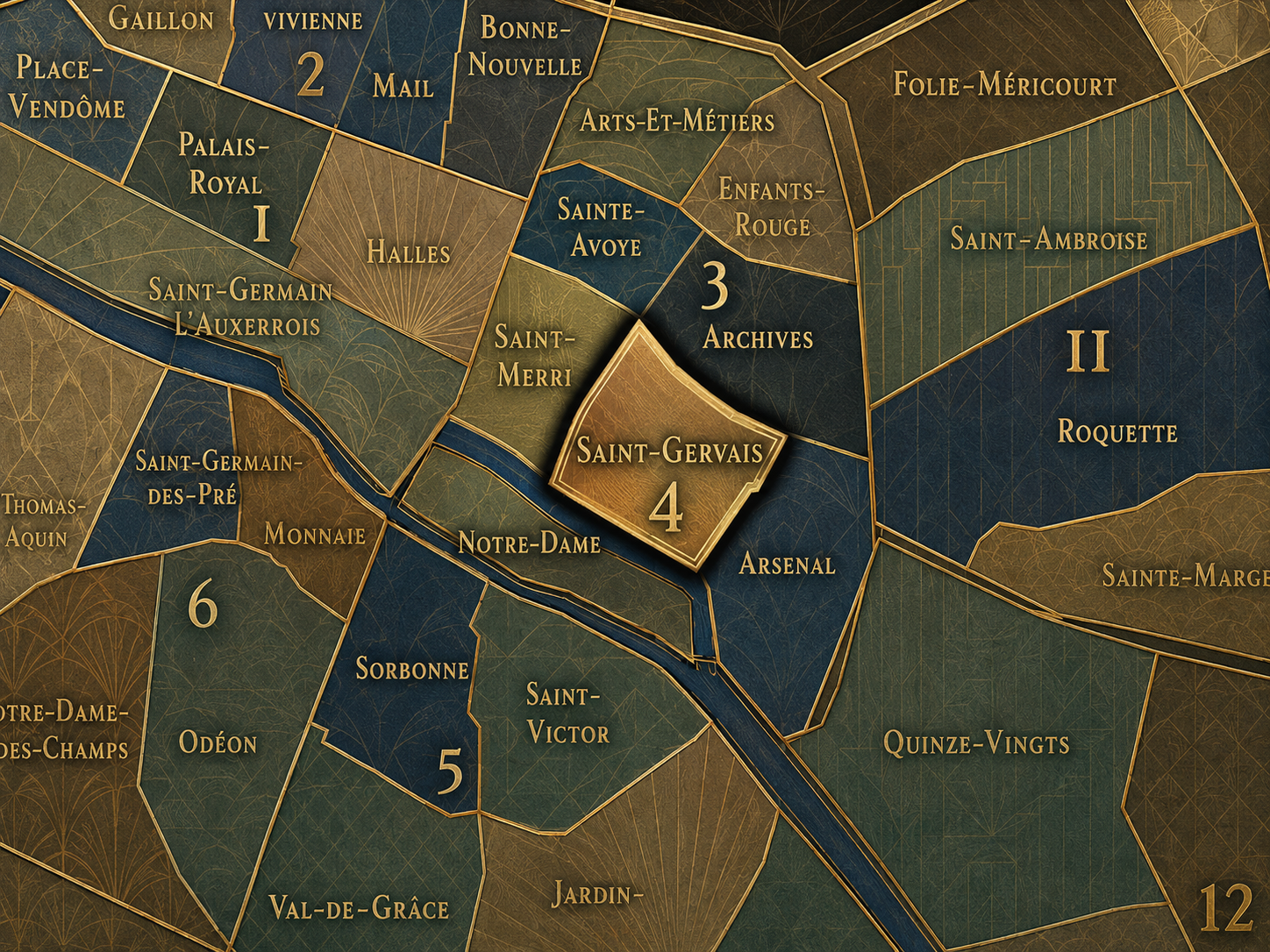
Civic Framework
Saint-Gervais differs from the other quarters of the 4th arrondissement through its combination of municipal authority, old parish identity, southern Marais street life, and Jewish cultural memory. Saint-Merri is shaped more strongly by Beaubourg, the Centre Pompidou, and the western cultural edge of the 4th. Notre-Dame belongs to the island core of cathedral, court, hospital, bridge, and river origin. Arsenal turns eastward toward Bastille, the former royal arsenal, the basin, and the transition into eastern Paris.
Saint-Gervais is more deeply embedded in the old Right Bank fabric. It is less singular than Notre-Dame, less infrastructural than Arsenal, and less modern-cultural in tone than Saint-Merri. Its identity comes from density: church and city hall, medieval streets and later façades, Marais courtyards and civic plazas, Jewish bakeries and memorial plaques, residential entrances and global visitors.
It should also be distinguished from the Marais as a whole. The Marais stretches across parts of the 3rd and 4th arrondissements and contains many internal identities: aristocratic, archival, market-centered, religious, Jewish, LGBTQ+, commercial, residential, and cultural. Saint-Gervais is one official quarter within that broader landscape, especially important for understanding the southern Marais and its relationship to the Seine, Hôtel de Ville, and the old civic heart of Paris.
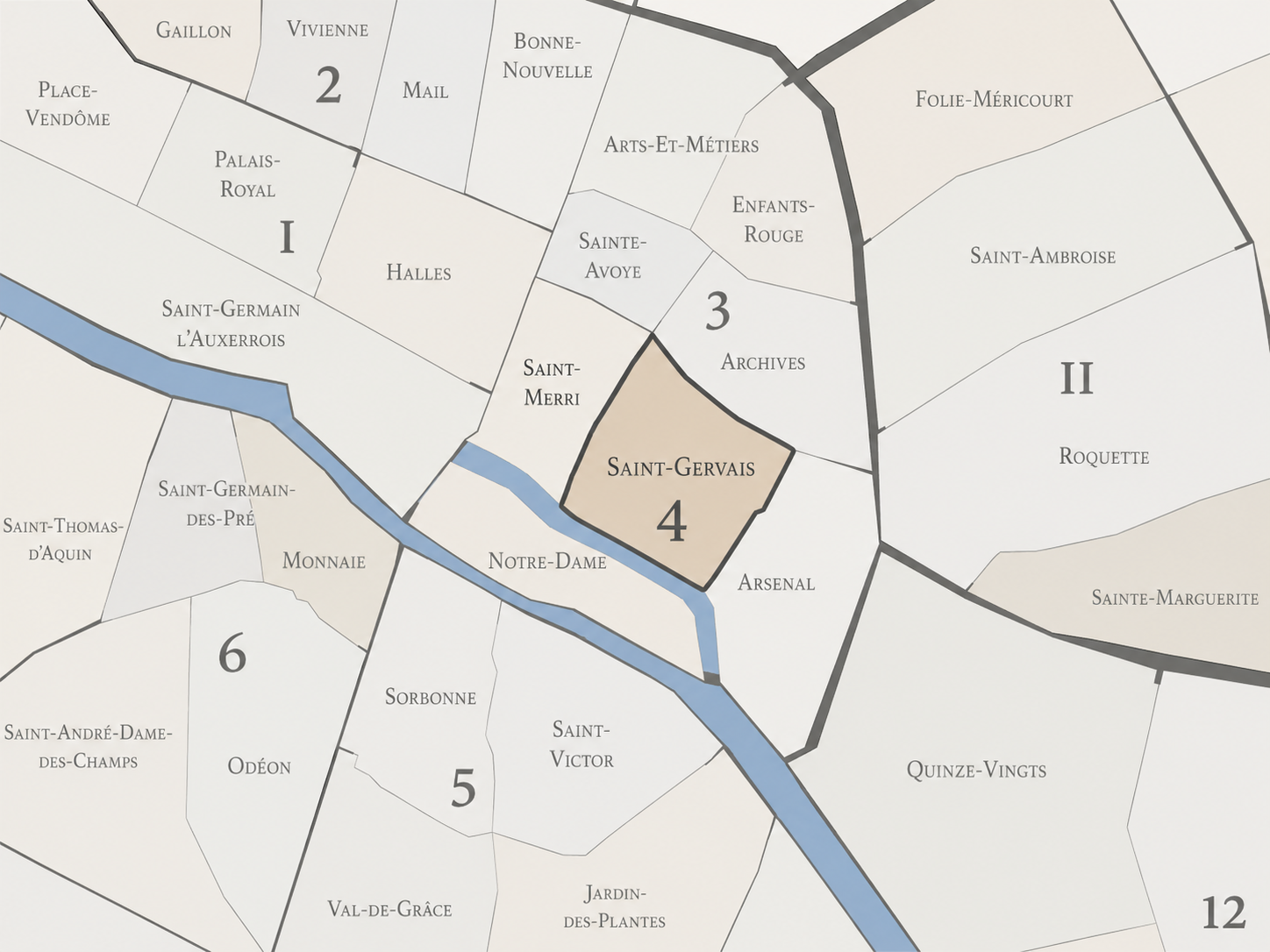
Neighborhood Distinction
Parisian Identity
Saint-Gervais expresses Paris as a city of overlapping authority and intimacy. It is both grand and close-grained. Hôtel de Ville gives the quarter a public civic face, a stage for municipal ceremony, protest, administration, and collective memory. The Church of Saint-Gervais-Saint-Protais gives it a sacred and parish-based depth. The streets of the Marais give it texture, memory, and lived complexity.
The quarter also reveals the plural character of Parisian identity. Here, the city is not one thing. It is Catholic parish, municipal capital, Jewish neighborhood, preserved historic district, residential community, tourist destination, fashion and food corridor, memorial landscape, and everyday pedestrian route. These identities do not sit neatly beside one another. They cross, overlap, and sometimes press against each other.
That makes Saint-Gervais especially important for CityNeighborhoods: Paris. It is not a simple neighborhood portrait. It is a study in urban coexistence: institutions and streets, public power and private memory, official monuments and lived culture. In Saint-Gervais, Paris becomes visible as a city that carries many histories at once, sometimes harmoniously, sometimes uneasily, but always intensely.
Neighborhood Connections
Every administrative quarter belongs to a wider Parisian fabric. These connections place Saint-Gervais within the city’s civic, participatory, and cultural geography:
-
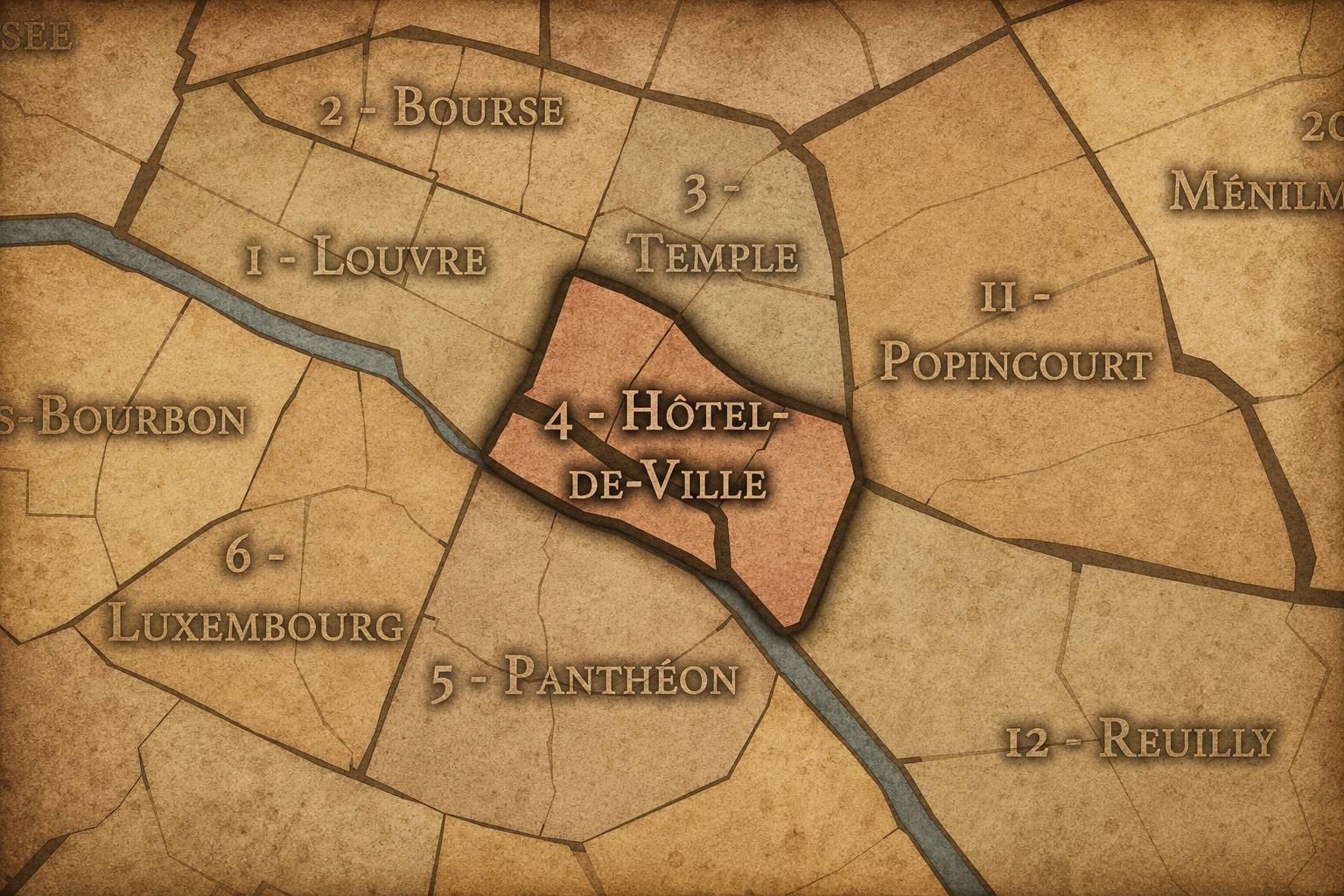
4e - Hôtel-de-Ville
-
Marais-Archives • Marais-Place des Vosges • Seine
The History
The origins of Saint-Gervais lie in the early growth of the Right Bank opposite the Île de la Cité. As Paris expanded beyond its island core, the area near the river and the future Hôtel de Ville became one of the city’s important zones of settlement, trade, worship, and civic organization. The proximity to the Seine, bridges, markets, and municipal life made this part of the Right Bank central to the city’s development.
The church of Saint-Gervais-Saint-Protais marks one of the deep anchors of that early urban landscape. Churches in medieval Paris were not only places of worship. They structured parish boundaries, social networks, charitable obligations, neighborhood memory, and the rhythm of time itself. The quarter’s identity grew from this religious and local foundation before later layers of municipal, aristocratic, commercial, and cultural life reshaped it.
The nearby Place de Grève, now associated with Hôtel de Ville, also belongs to the early civic geography of Paris. It was a riverfront open space tied to labor, gathering, punishment, ceremony, and municipal life. The future Saint-Gervais quarter therefore emerged from both sacred and civic origins: church and square, parish and city, worship and public assembly.
Origins
16th–17th Century
In the 16th and 17th centuries, Saint-Gervais became increasingly important within the expanding Right Bank. The church of Saint-Gervais-Saint-Protais took on the architectural form by which it is now recognized, with major construction and rebuilding phases contributing to its Gothic and classical character. Its façade, among the notable early classical church façades in Paris, gave the parish a strong presence near the civic heart of the city.
The surrounding district also participated in the rise of the Marais as one of the most important aristocratic and residential landscapes of early modern Paris. Hôtels particuliers, religious institutions, workshops, and dense streets developed nearby. The quarter was close enough to the Hôtel de Ville and the old center to remain civic and commercial, while also sharing in the prestige and enclosure of the Marais.
This period helped establish Saint-Gervais as a quarter of layered authority. Parish life remained central. Municipal life gathered nearby. Elite residences and urban commerce shaped the surrounding fabric. The neighborhood became a place where different forms of power — religious, civic, social, and economic — stood close together in the street.
In the 18th century, Saint-Gervais remained tied to both the civic life of Hôtel de Ville and the evolving social landscape of the Marais. Aristocratic fashion had begun shifting westward, and many parts of the Marais became more mixed in use. Older hôtels particuliers were adapted, subdivided, or repurposed, while workshops, residences, commerce, religious institutions, and local services continued to animate the district.
The quarter’s Jewish history also deepened within the broader Marais. While Jewish presence in Paris had a long and interrupted history, the streets of the Marais became increasingly associated with Jewish community life over time, especially in and around what would later be known as the Pletzl. This history would become one of the defining cultural layers of Saint-Gervais and neighboring parts of the 4th arrondissement.
The French Revolution transformed the civic and religious meanings of the quarter. Churches, municipal institutions, public squares, and old regime properties were reinterpreted through revolutionary politics. Hôtel de Ville and its surrounding spaces became central to the political life of Paris, while religious institutions faced suppression, reorganization, or reuse. Saint-Gervais entered the modern era carrying both old parish memory and a newly charged civic landscape.
18th Century
19th Century
The 19th century reshaped Saint-Gervais through urban modernization, political upheaval, and the changing identity of the Marais. Hôtel de Ville became one of the most symbolically important civic buildings in Paris, especially after destruction and rebuilding tied to the events of the Paris Commune. The city hall that stands today reflects the late-19th-century reconstruction of municipal authority after rupture and fire.
The surrounding streets experienced both preservation and transformation. Unlike some parts of Paris that were dramatically remade by Haussmannian boulevards, much of the Marais retained its older street pattern. This allowed Saint-Gervais to preserve a dense historical texture, even as nearby routes such as Rue de Rivoli and other modern interventions altered circulation and visibility.
During this century, the Marais also became more strongly associated with working-class life, small industry, workshops, and Jewish settlement. The quarter’s older aristocratic and parish fabric did not disappear, but it was joined by new social realities. Saint-Gervais became less a quarter of elite residence alone and more a dense urban district where memory, labor, religion, commerce, and civic identity overlapped.
In the early and mid 20th century, Saint-Gervais stood within one of the most historically charged parts of Paris. The southern Marais was home to Jewish families, businesses, synagogues, schools, food shops, and community life, while Hôtel de Ville remained a central symbol of municipal Paris. The quarter’s identity was both local and civic, intimate and public.
The Second World War and the German occupation left deep scars on this landscape. The Jewish history of the Marais cannot be separated from deportation, persecution, resistance, absence, and remembrance. Streets near Rue des Rosiers, synagogues, schools, plaques, and memorial sites carry this history into the present. Saint-Gervais, as part of this broader Marais geography, holds memory not only in architecture but in absence — in lives interrupted and communities forever marked by the Shoah.
At the same time, the quarter remained part of the everyday central city. Residents, workers, worshippers, officials, shopkeepers, and visitors continued to move through its streets. The power of Saint-Gervais in this period lies in the contrast between ordinary urban life and profound historical trauma.
Early–Mid 20th Century
Late 20th Century
In the late 20th century, Saint-Gervais was transformed by preservation, cultural revival, and the growing international visibility of the Marais. Historic buildings were restored, streets became more desirable, and the district attracted galleries, boutiques, restaurants, LGBTQ+ life, cultural institutions, and increasing tourism. The Marais became one of Paris’s most celebrated historic neighborhoods, and Saint-Gervais stood at the heart of that transformation.
This renewed attention brought beauty and protection, but also tension. Preservation and popularity changed the social balance of the district. Older residents, small businesses, and long-standing community spaces faced pressure from rising costs, changing commerce, and the transformation of memory into cultural consumption. Saint-Gervais became more polished, but the deeper histories of parish, Jewish life, civic authority, and working urban texture remained essential to its meaning.
Hôtel de Ville also continued to serve as a major public stage, not only for administration but for gatherings, celebrations, demonstrations, and civic identity. The quarter’s municipal role remained active, reminding visitors that this was not simply a heritage district. It was still part of the governing heart of Paris.
In the 21st century, Saint-Gervais remains one of the most layered quarters of Paris Centre. It is historic, civic, residential, religious, commercial, touristic, and memorial all at once. The Church of Saint-Gervais-Saint-Protais, Hôtel de Ville, Rue des Rosiers, Rue François-Miron, Rue Vieille-du-Temple, and the surrounding streets form a dense landscape where the older Right Bank continues to live inside contemporary Paris.
The quarter today must hold many expectations. Visitors come for the Marais, Jewish foodways, architecture, shopping, LGBTQ+ nightlife nearby, and the walkable beauty of the historic center. Residents and workers move through daily routines. Civic life continues at Hôtel de Ville. Religious and memorial landscapes maintain deeper layers of belonging and remembrance.
For CityNeighborhoods: Paris, Saint-Gervais is essential because it demonstrates how one administrative quarter can hold several of the city’s most important identities without becoming reducible to any one of them. It is not only Hôtel de Ville. It is not only the Marais. It is not only Jewish Paris, parish Paris, or historic Paris. It is the place where all of these meet.
21st Century
Spirit and Legacy
Saint-Gervais is the quarter where Paris gathers civic life, sacred memory, and lived history into a dense Right Bank fabric. Its spirit is layered and deeply human. It belongs to church bells and city hall, to narrow streets and public squares, to shopfronts and memorial plaques, to stone façades and crowded sidewalks, to old parishes and modern communities.
Its legacy is one of coexistence under pressure. Parish became quarter. Civic square became municipal stage. Aristocratic streets became working district. Jewish life flourished, suffered, remembered, and endured. Historic fabric became heritage landscape. Through each transformation, Saint-Gervais remained central not only by location, but by meaning.
To walk Saint-Gervais is to encounter Paris as a city of shared memory. It is beautiful, but beauty is not the whole story. It is official, but official history is not the whole story. It is old, but not finished. In this quarter, neighborhood identity is a woven fabric — sacred, civic, cultural, wounded, resilient, and alive.
The Photography
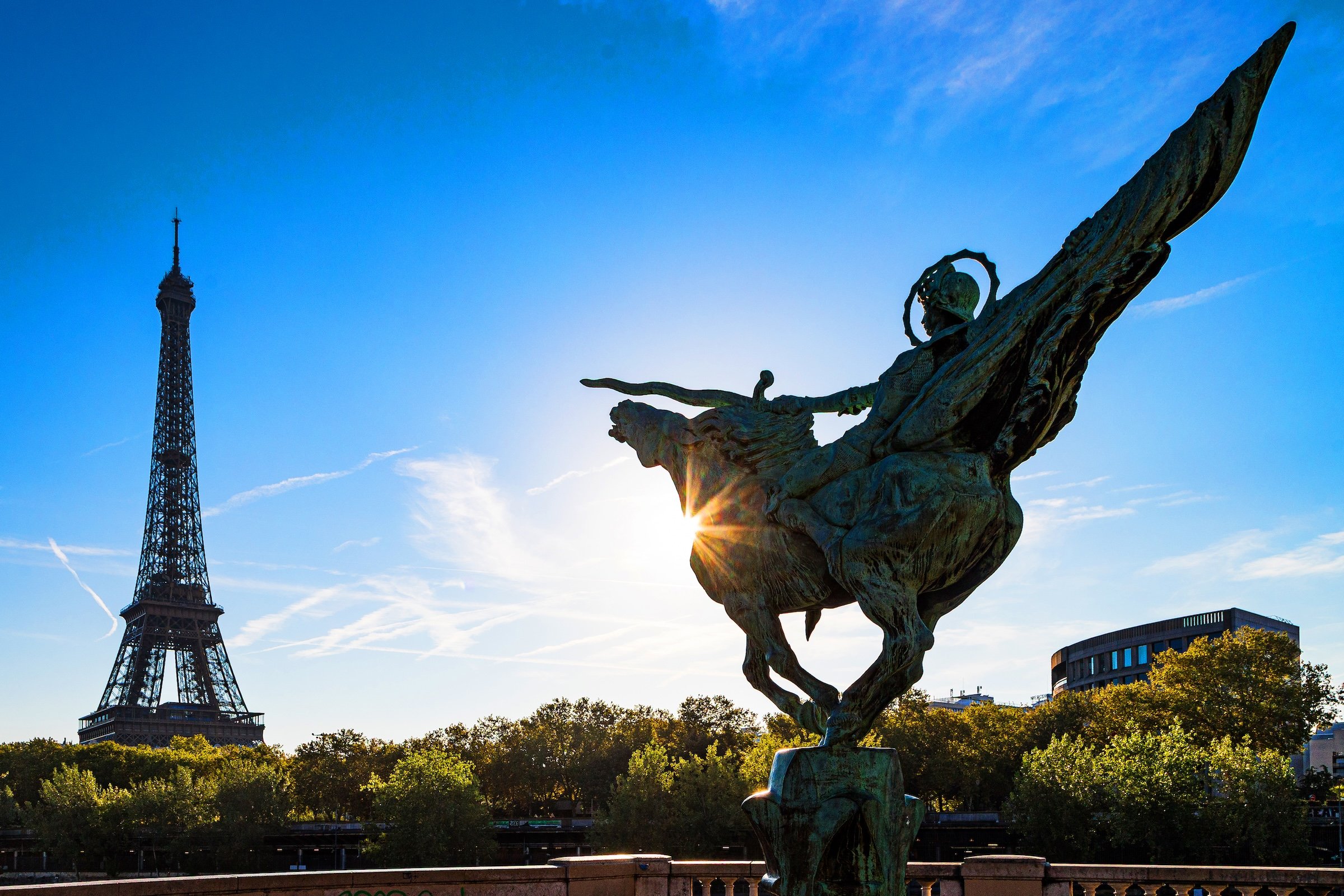
The arrondissements do not share a single visual identity. Instead, they organize Paris into twenty broad visual fields, each gathering its own combination of landmarks, streetscapes, institutions, residential districts, commercial corridors, parks, rail stations, markets, cemeteries, and riverfront edges.
Some arrondissements are defined by monumental scale: royal palaces, ceremonial avenues, government buildings, museums, formal gardens, and internationally recognized landmarks. Others are shaped by hills, canals, rail gateways, apartment-lined boulevards, neighborhood markets, former village streets, industrial remnants, parks, or the quieter rhythms of residential Paris. The arrondissement system gives these varied landscapes a civic frame, allowing the city to be read not as one visual language, but as a sequence of overlapping Parisian atmospheres.
Visual Identity
Through The Lens
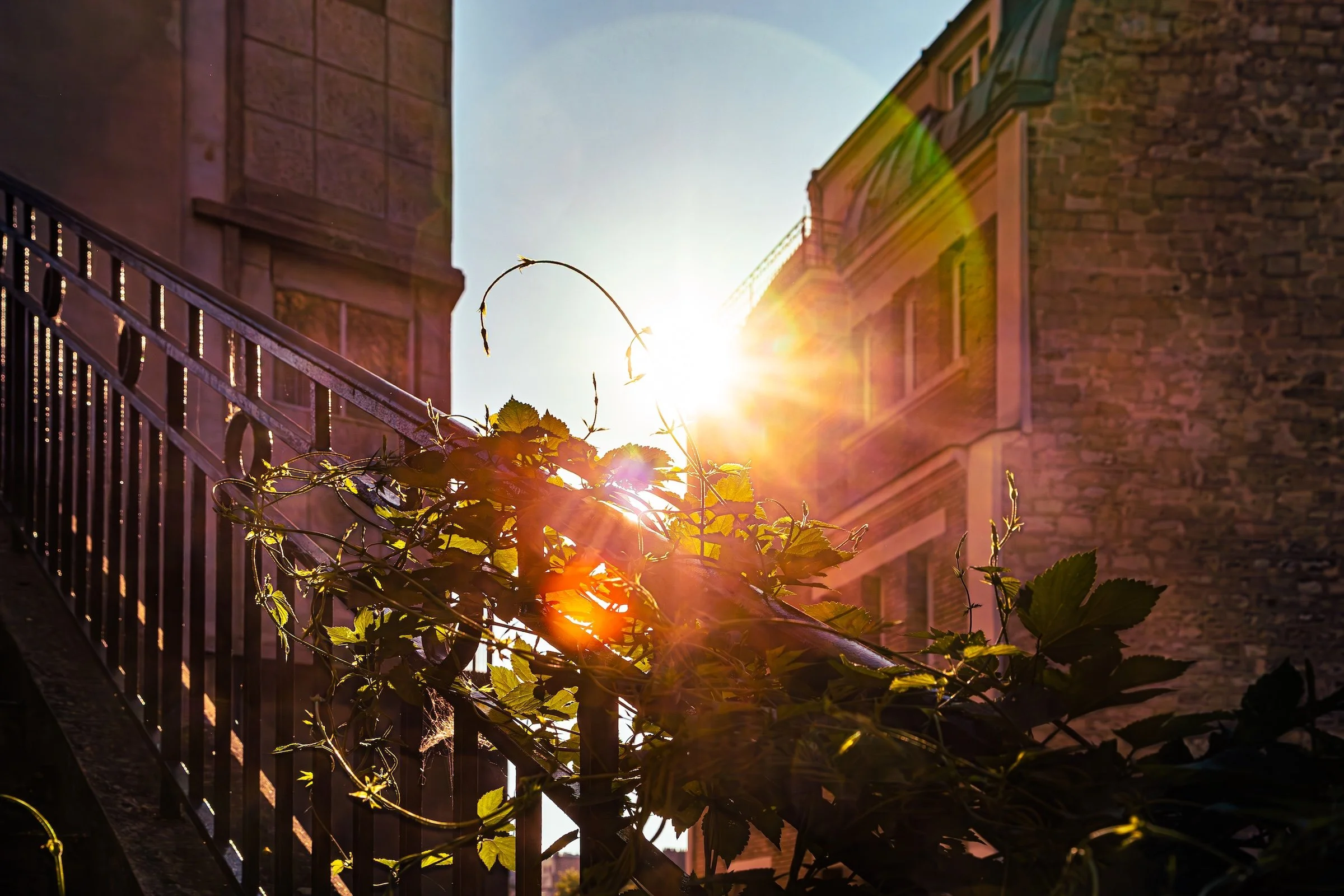
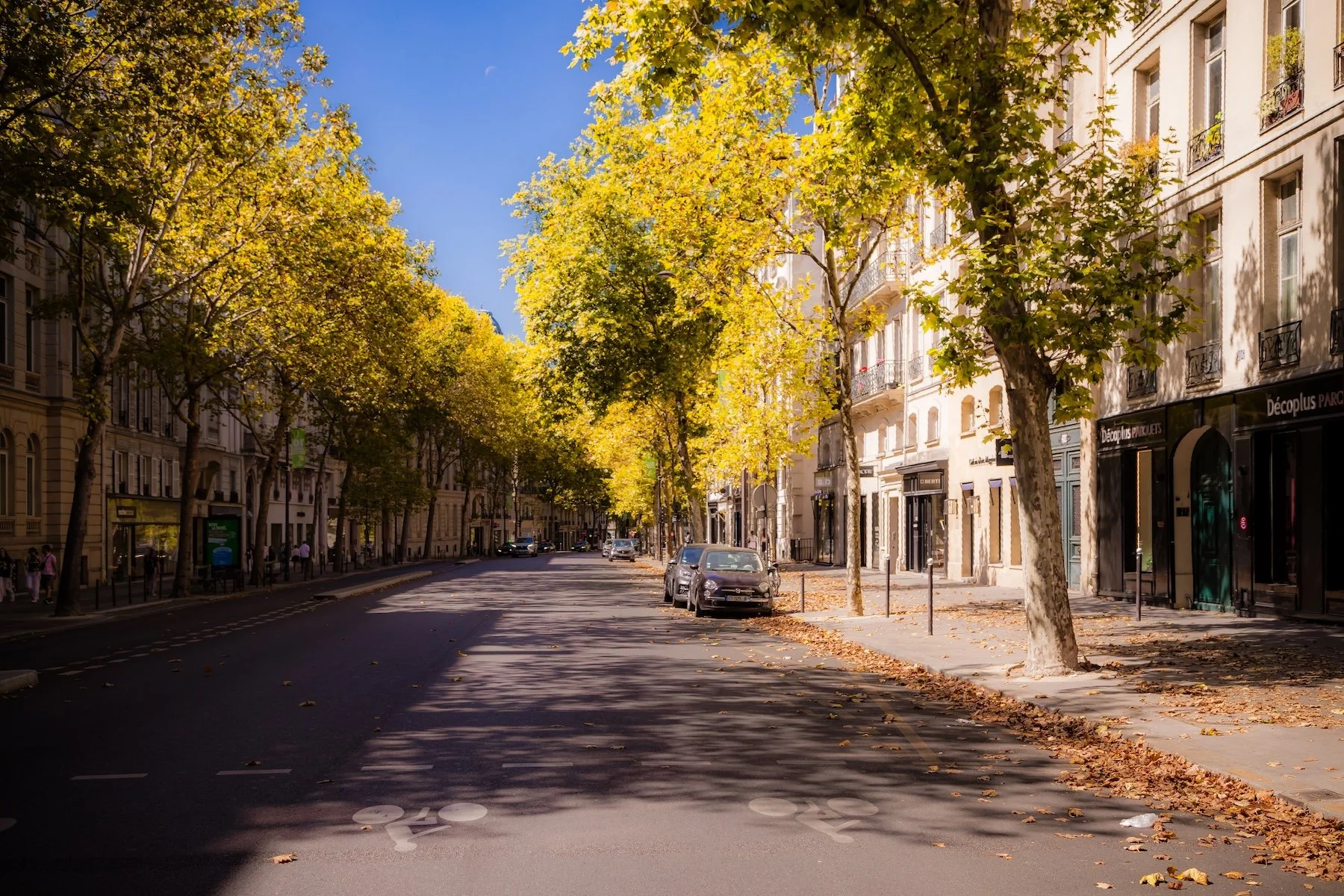
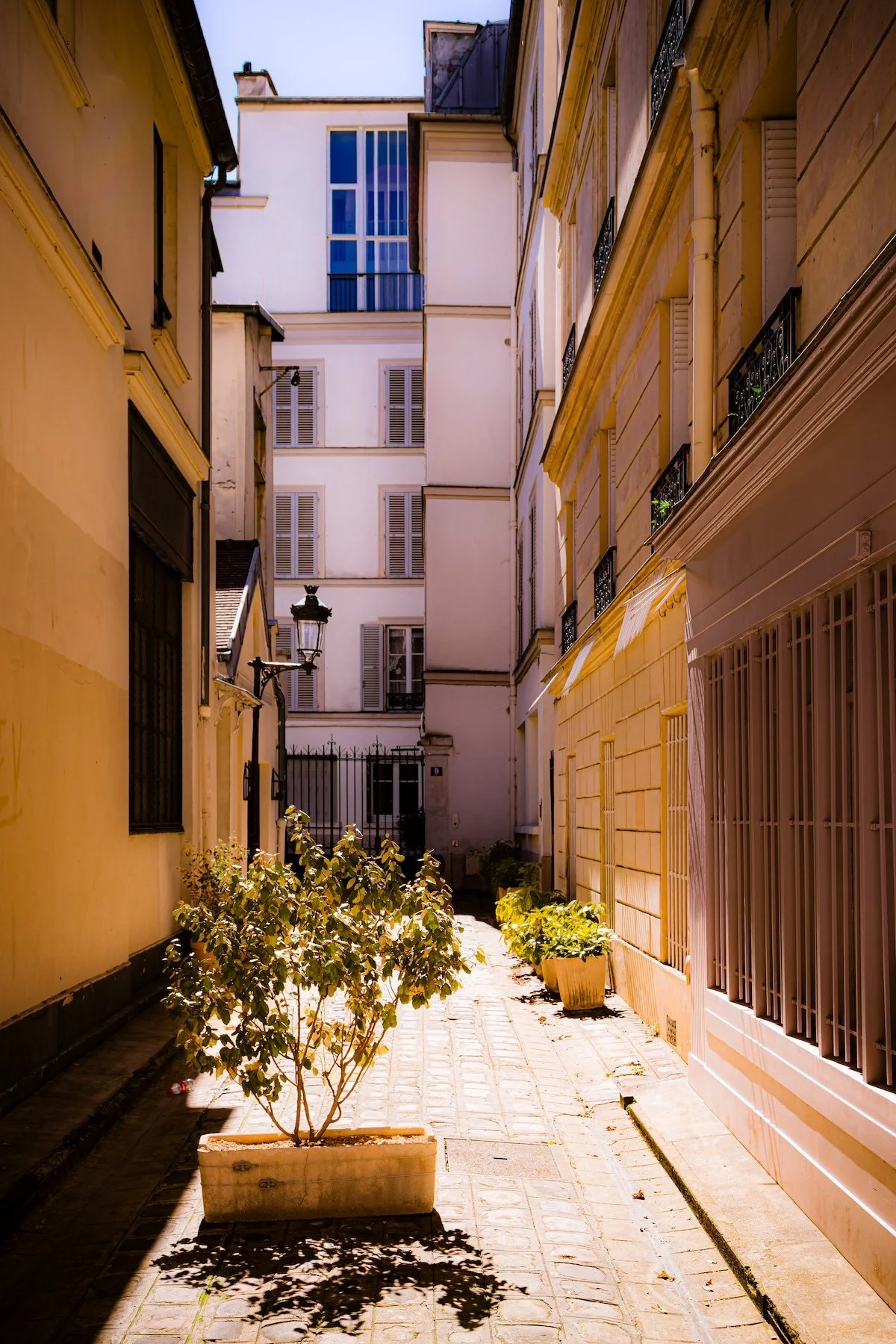
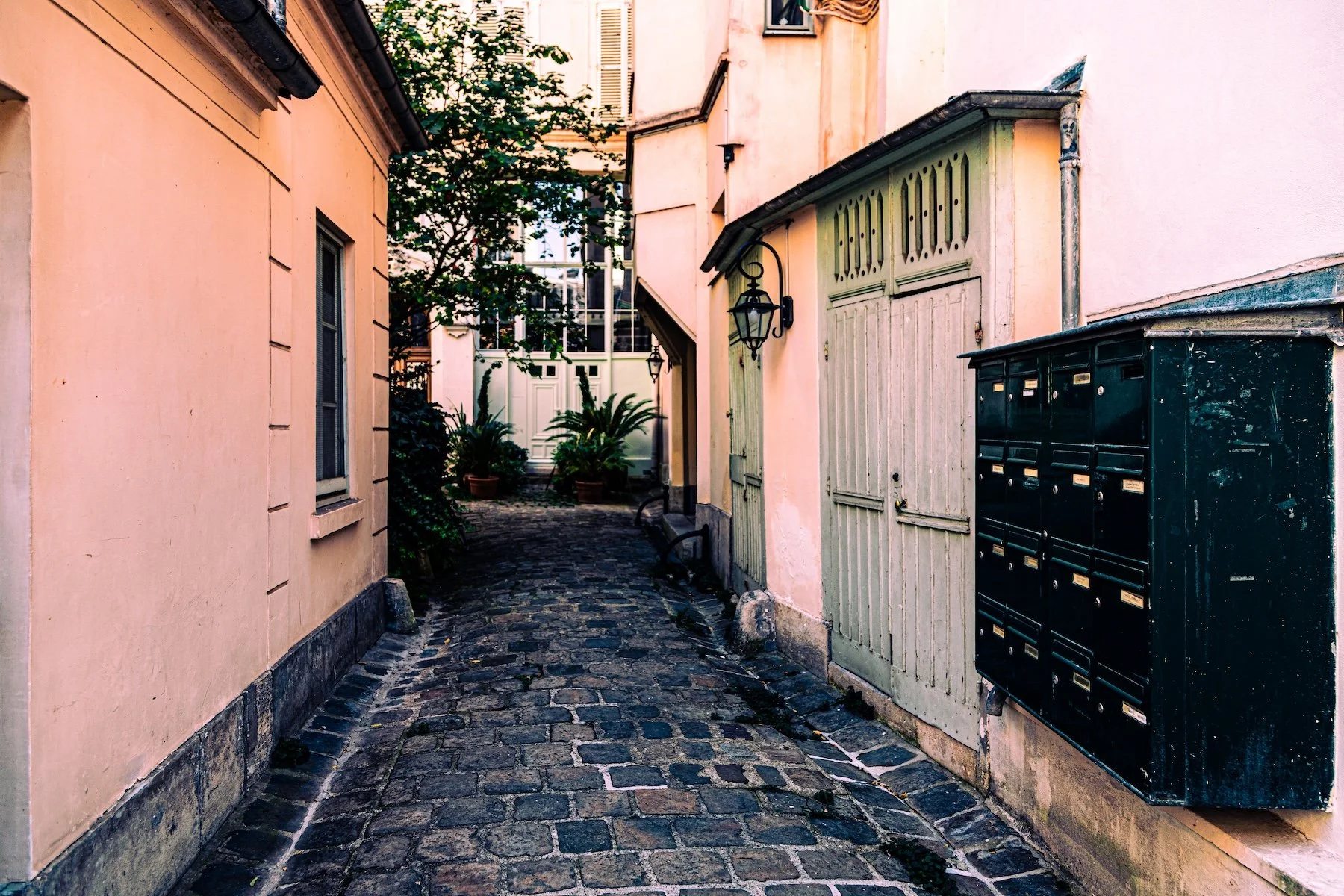
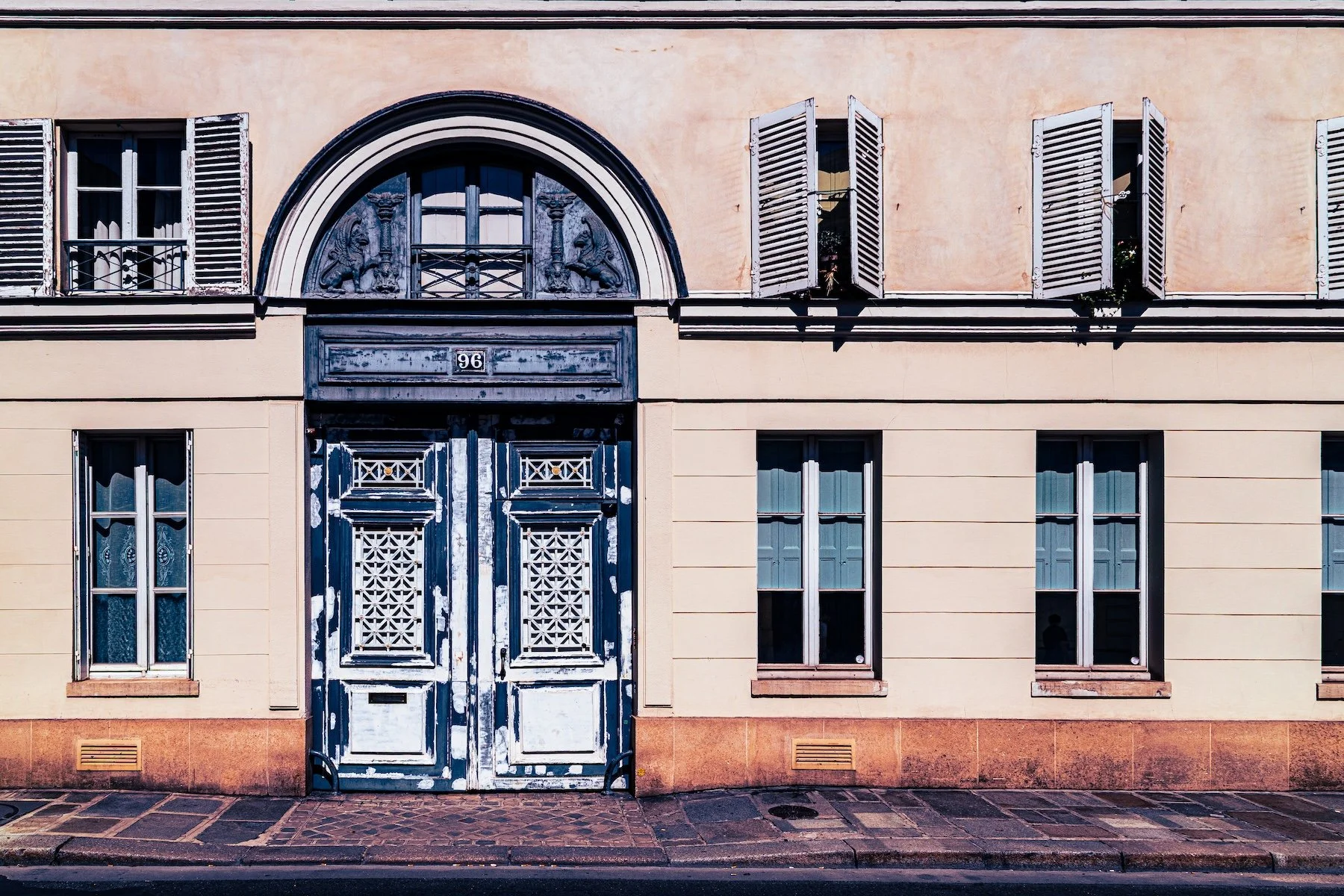
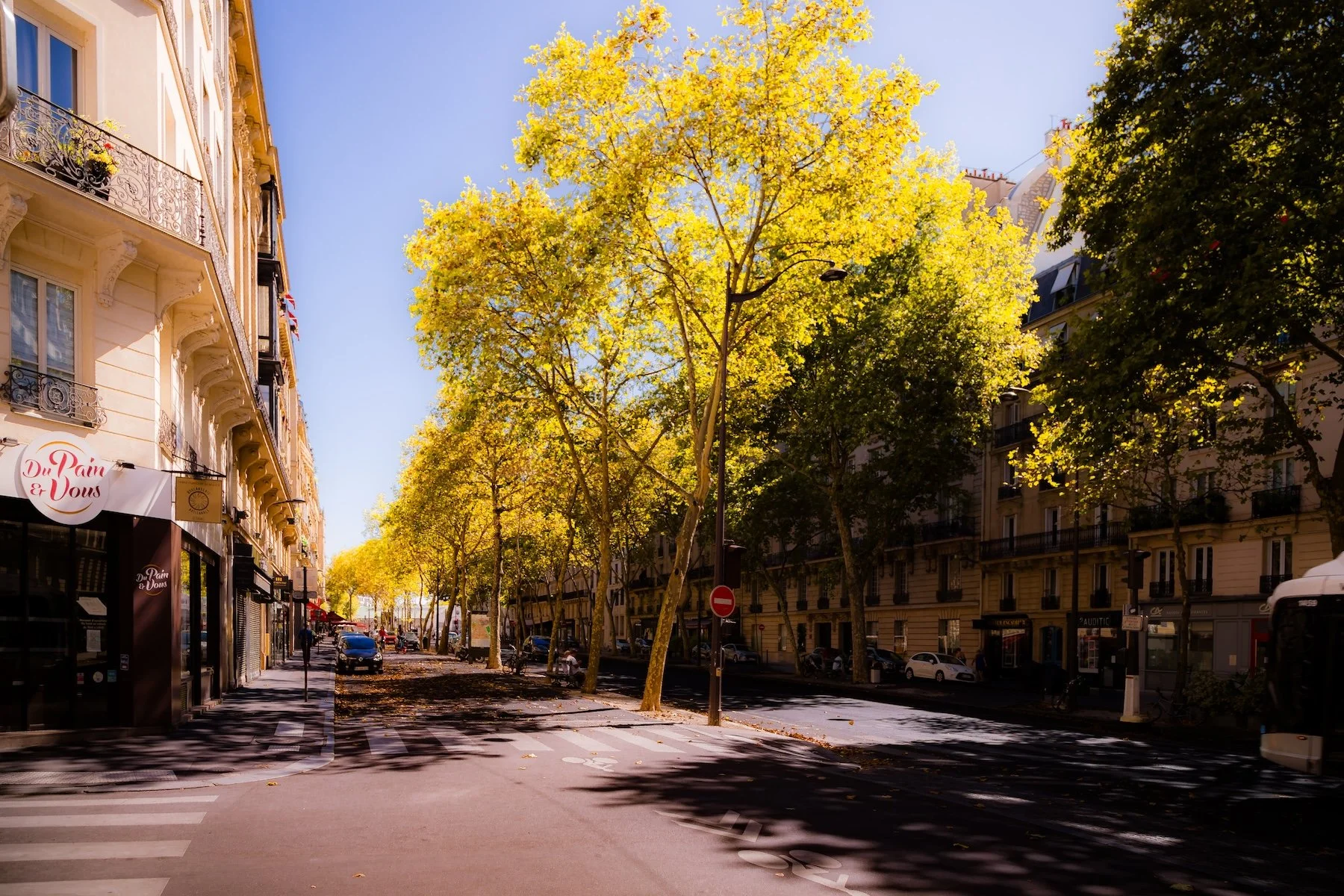
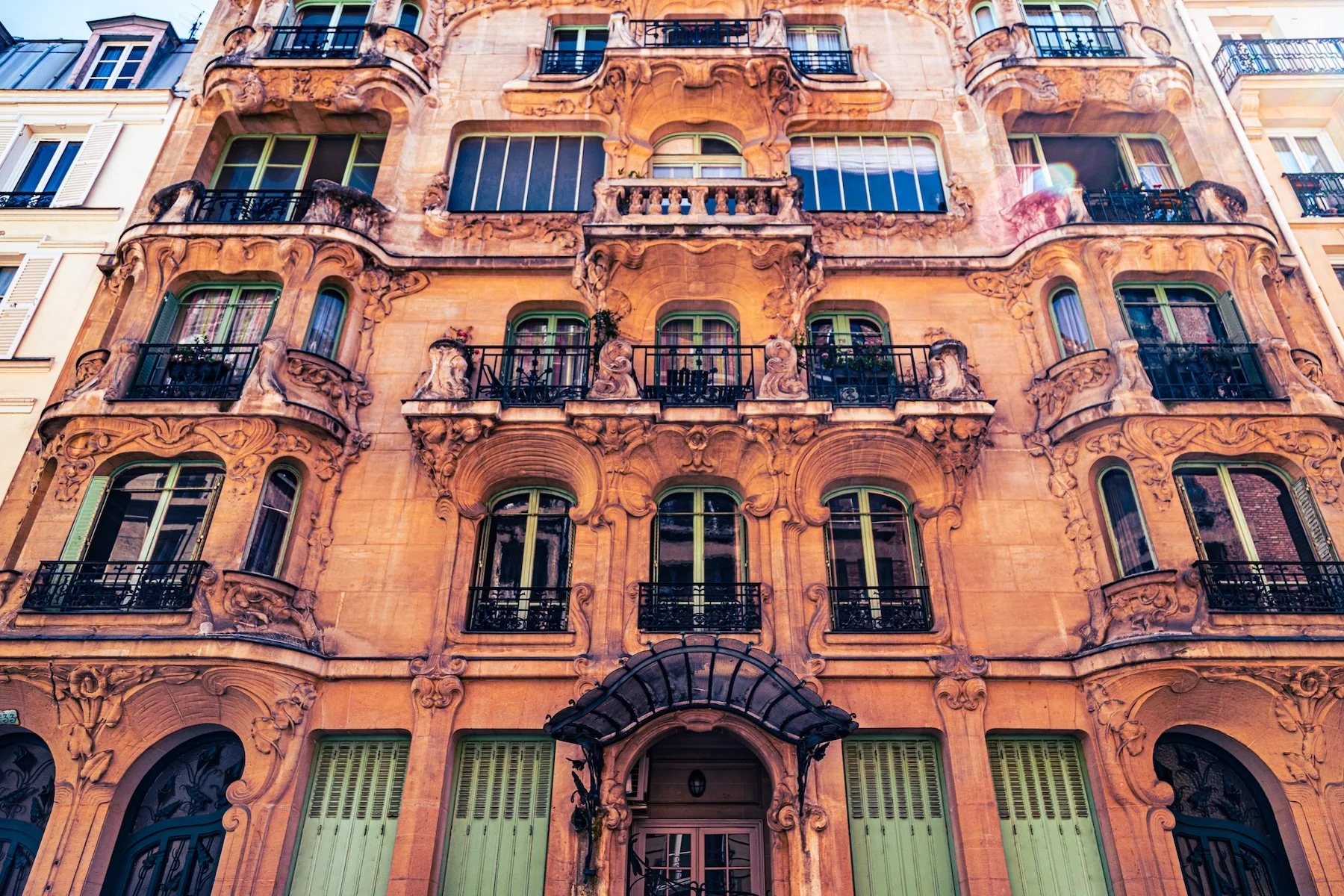
Photographing the arrondissements means moving between the official map and the street-level experience. The camera does not treat each arrondissement as visually uniform. Instead, it looks for the recurring forms, textures, transitions, and contrasts that make each district legible: the geometry of boulevards, the shade of plane trees, the repetition of balconies, the rise of stairways, the curve of canals, the presence of rail stations, the opening of parks, the weight of monuments, and the intimacy of side streets.
On CityNeighborhoods, the arrondissement provides the frame, but the photograph comes from the encounter between map, movement, light, and observation. As the Paris photography is processed, this section will connect each arrondissement more directly to the project’s Photographic Lexicon: the visual strategies, recurring motifs, and compositional patterns that shape how the city is seen through the lens.
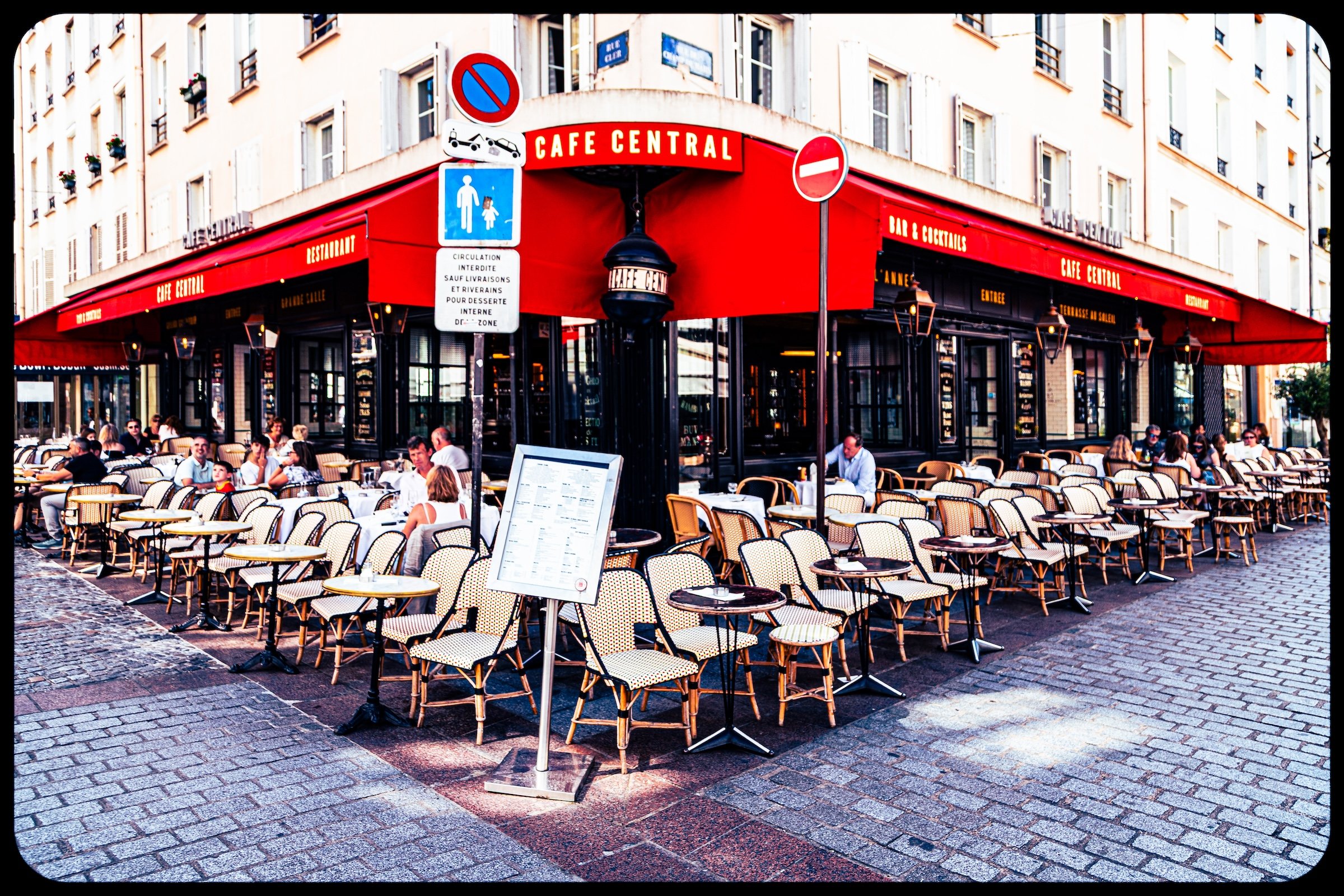
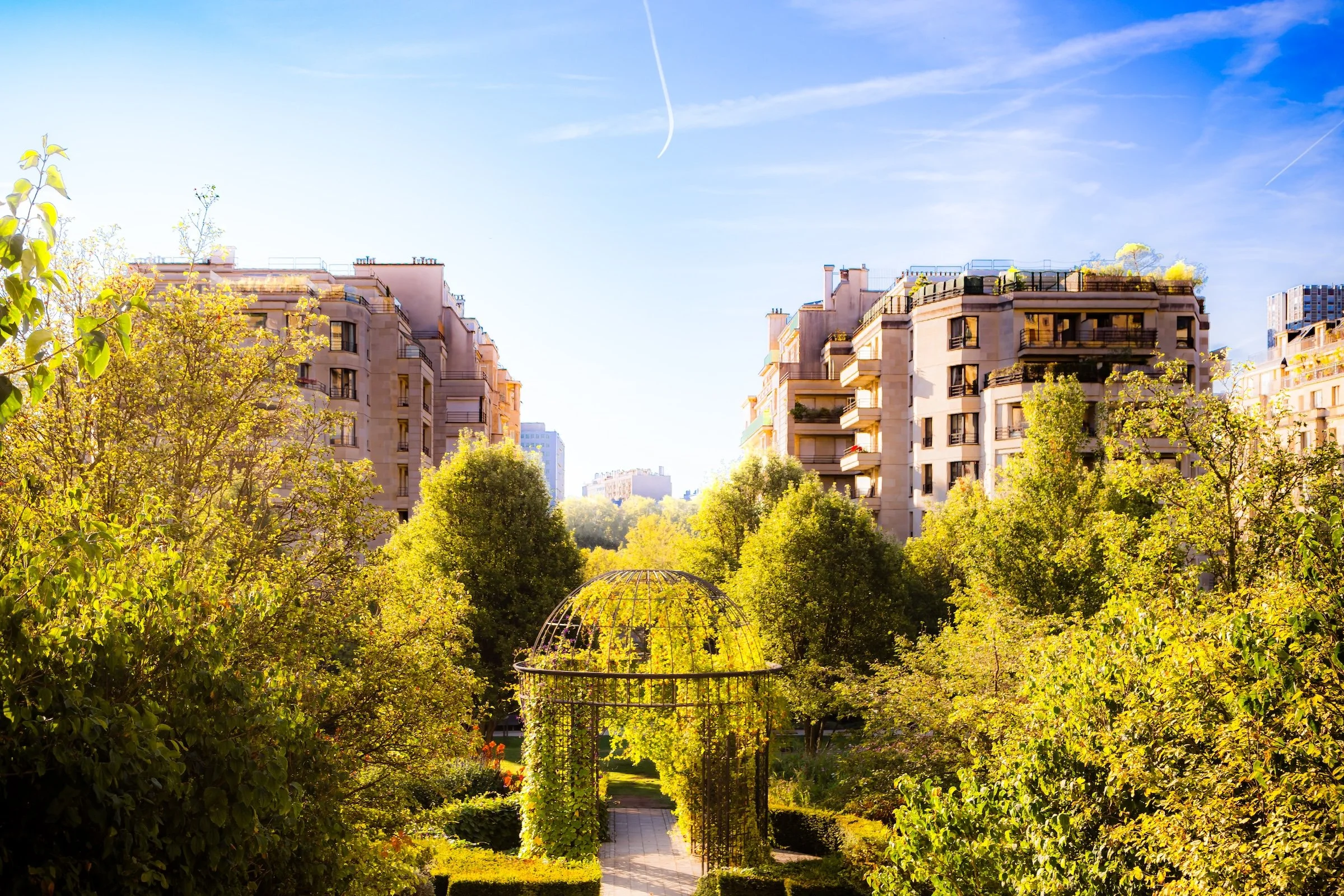
If you visit Paris, these ideas can help inspire your own photography.
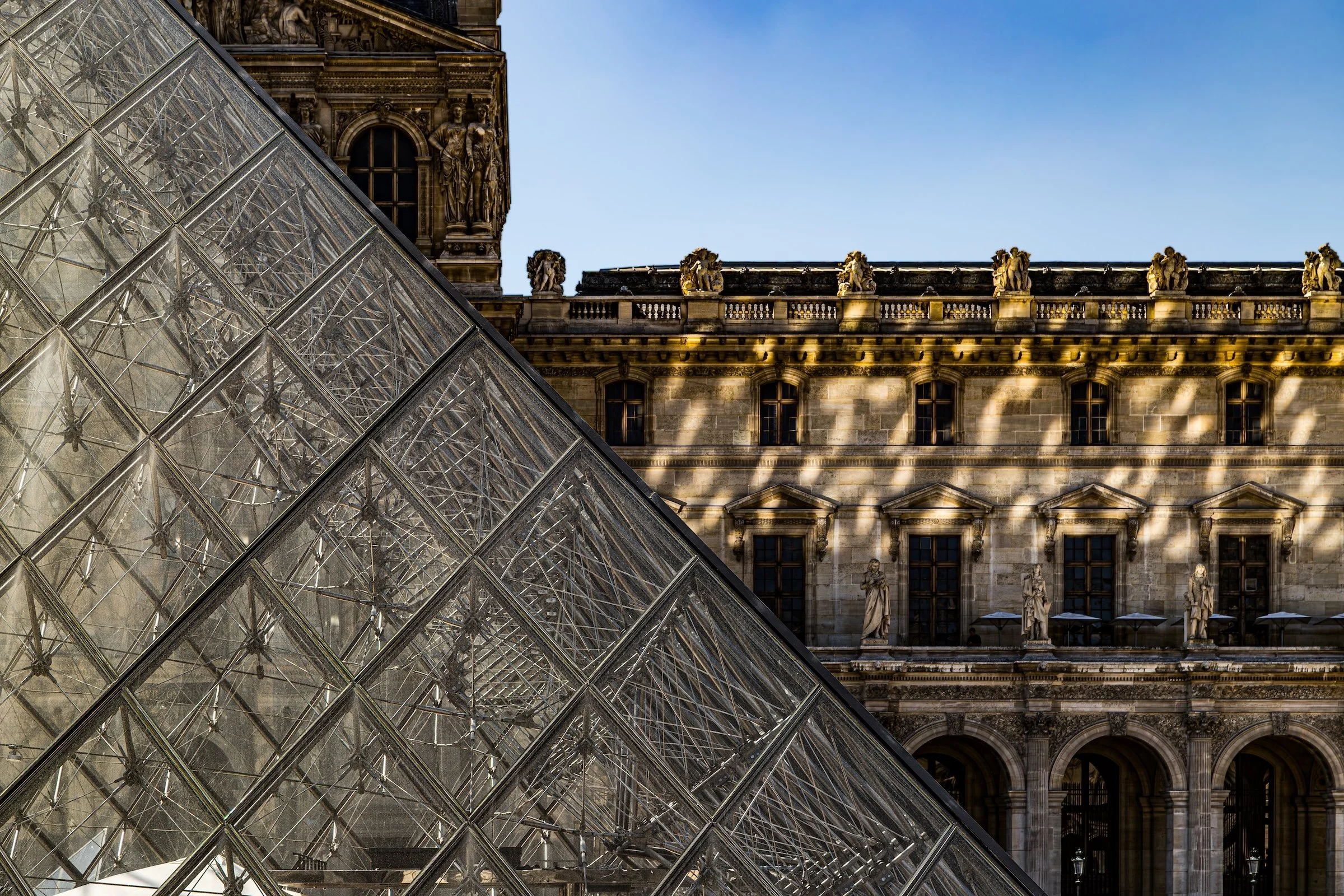
Paris: J’Espere, Je Rêve, Je Vive
Paris Photo Gallery
Paris Field Notes
-
Field Note: August 18, 2025 | 07:58 AM
Conditions: 73°F | Humidity: 72%.
Within the park's interior, the glacial kettle ponds acted as humidity traps, creating a soft, hazy light that filtered through the old-growth oaks. The transition from the park's dense shade to the sun-drenched edges of Oakland Gardens highlighted the day's exceptional "picture-perfect" clarity.
There is a fleeting window in Queens where the humidity of August hasn't yet heavy-set, and the morning sun hits the canopy of Alley Pond Park at a perfect oblique angle. Arriving just before 8:00 AM, I watched the light break through the oaks and tulip trees, casting long, dramatic shadows across the wet grass. It’s in these quiet, golden moments that the park feels less like a city escape and more like the ancient glacial valley it actually is.
Other neighborhoods visited:
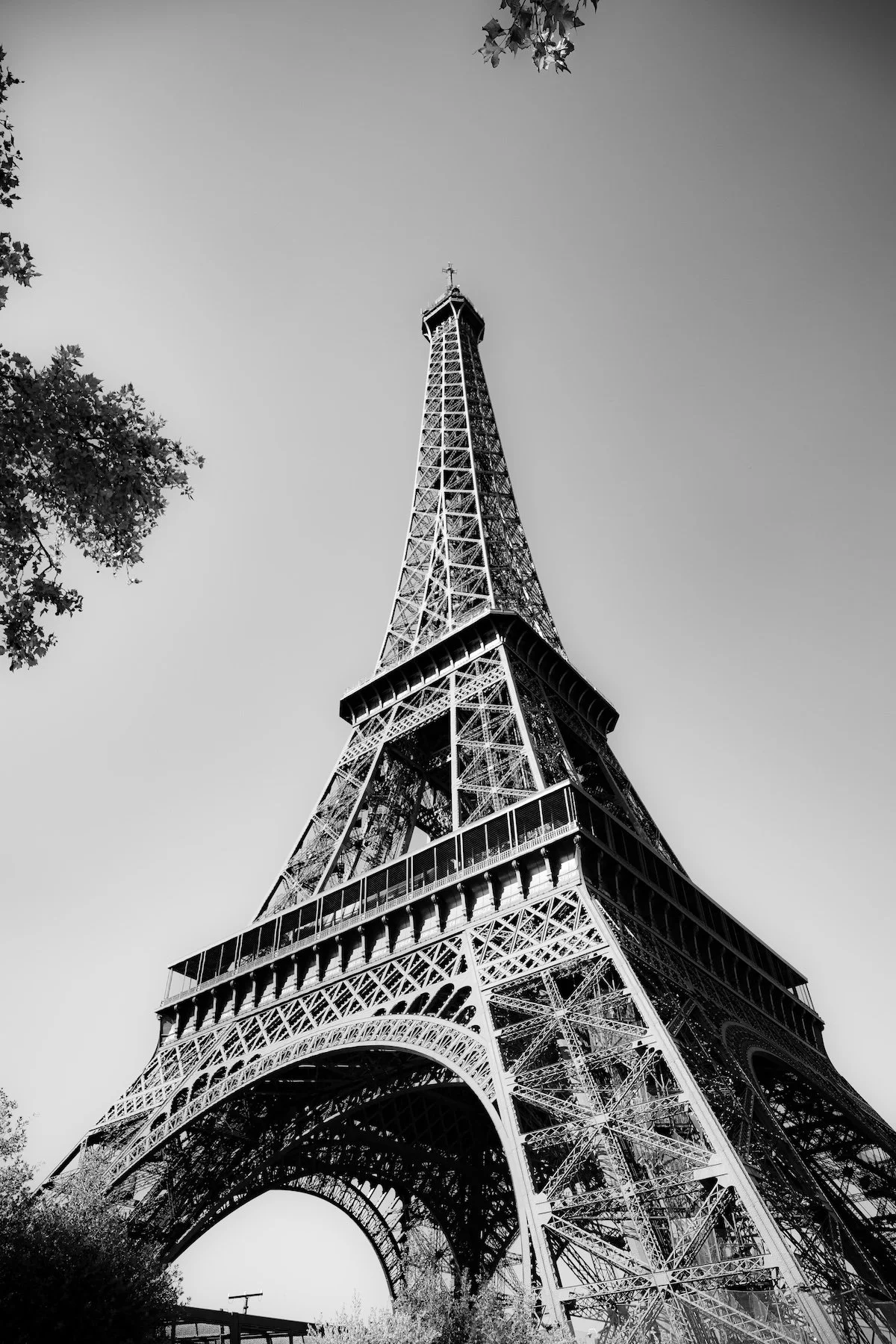
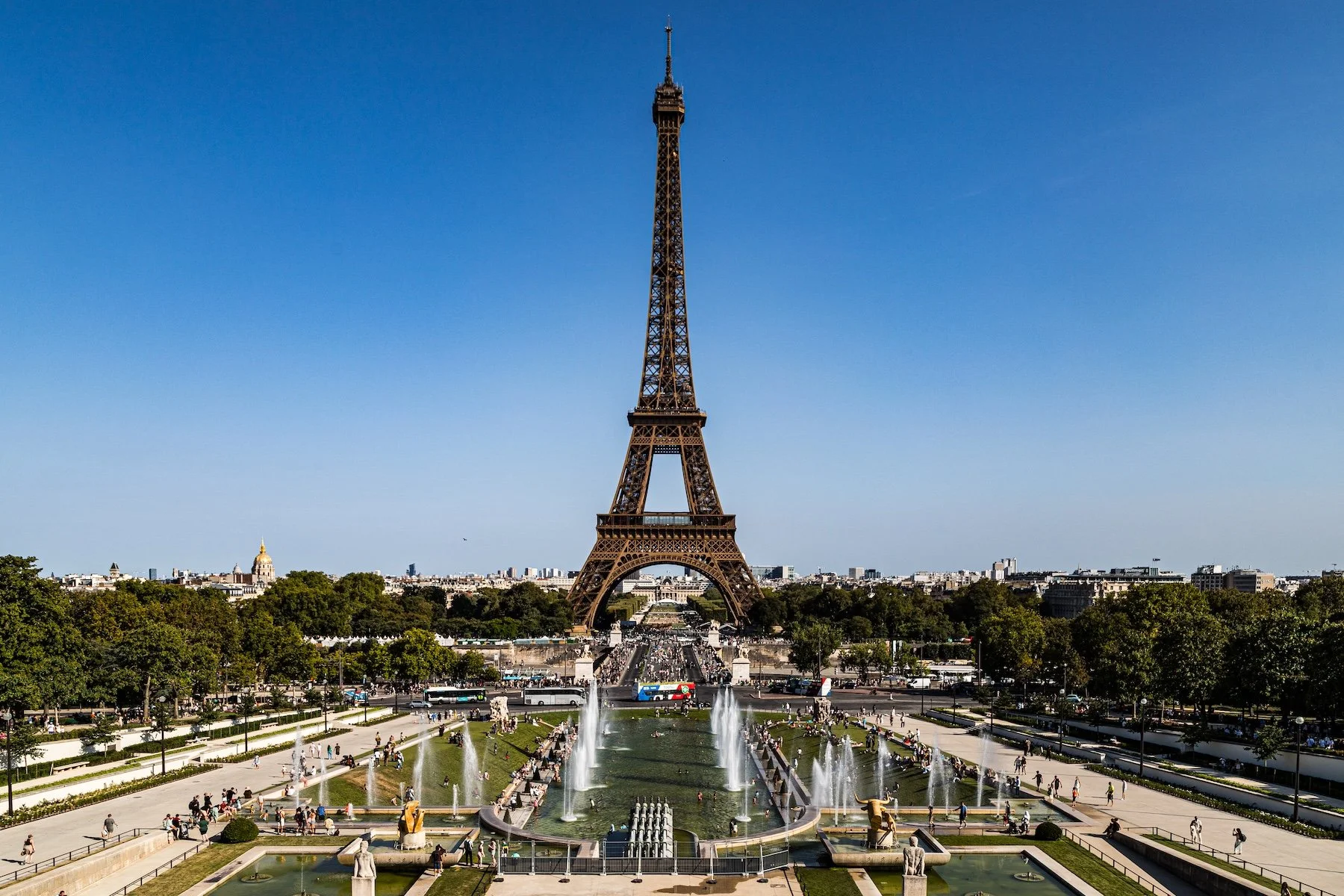
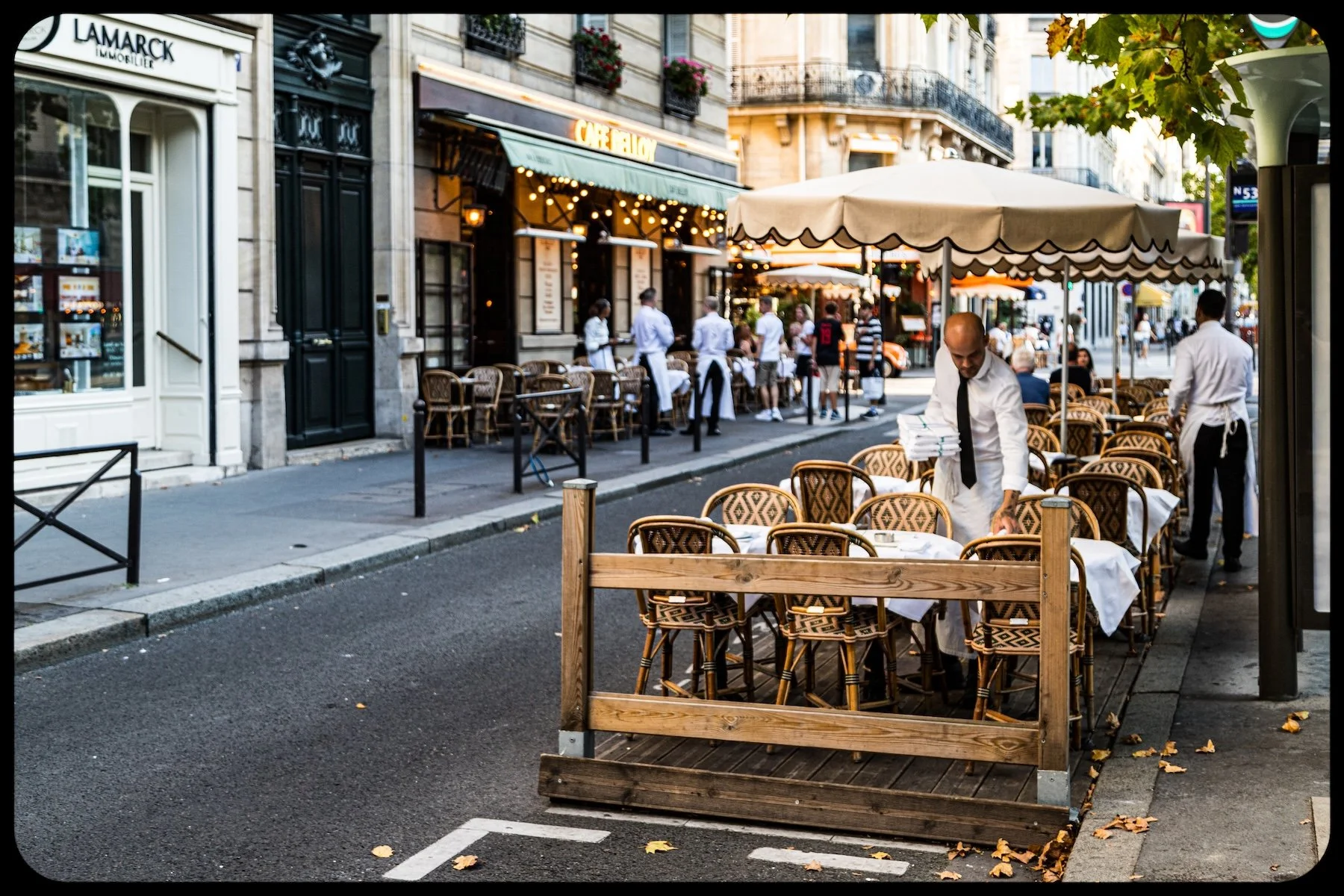
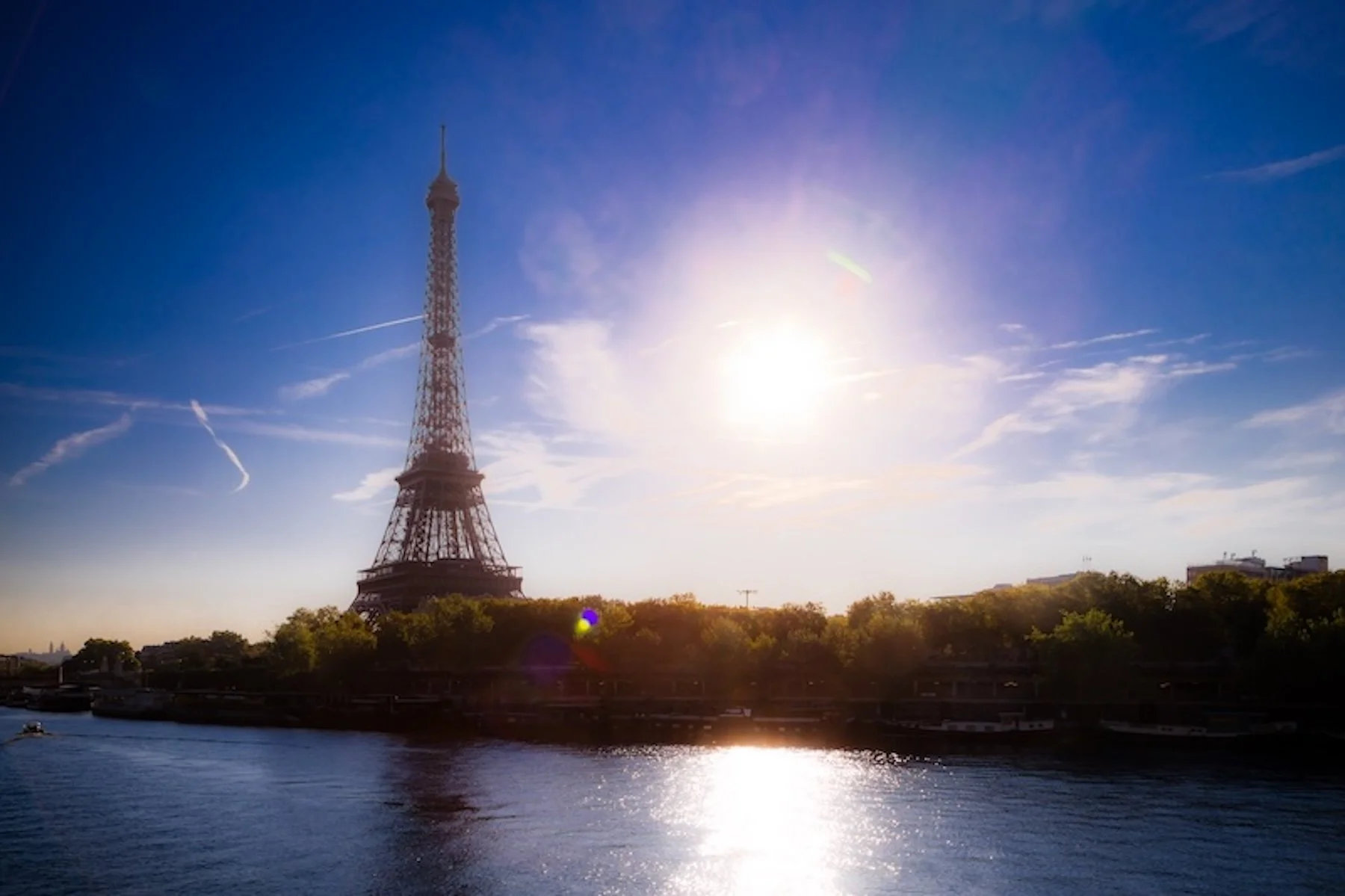
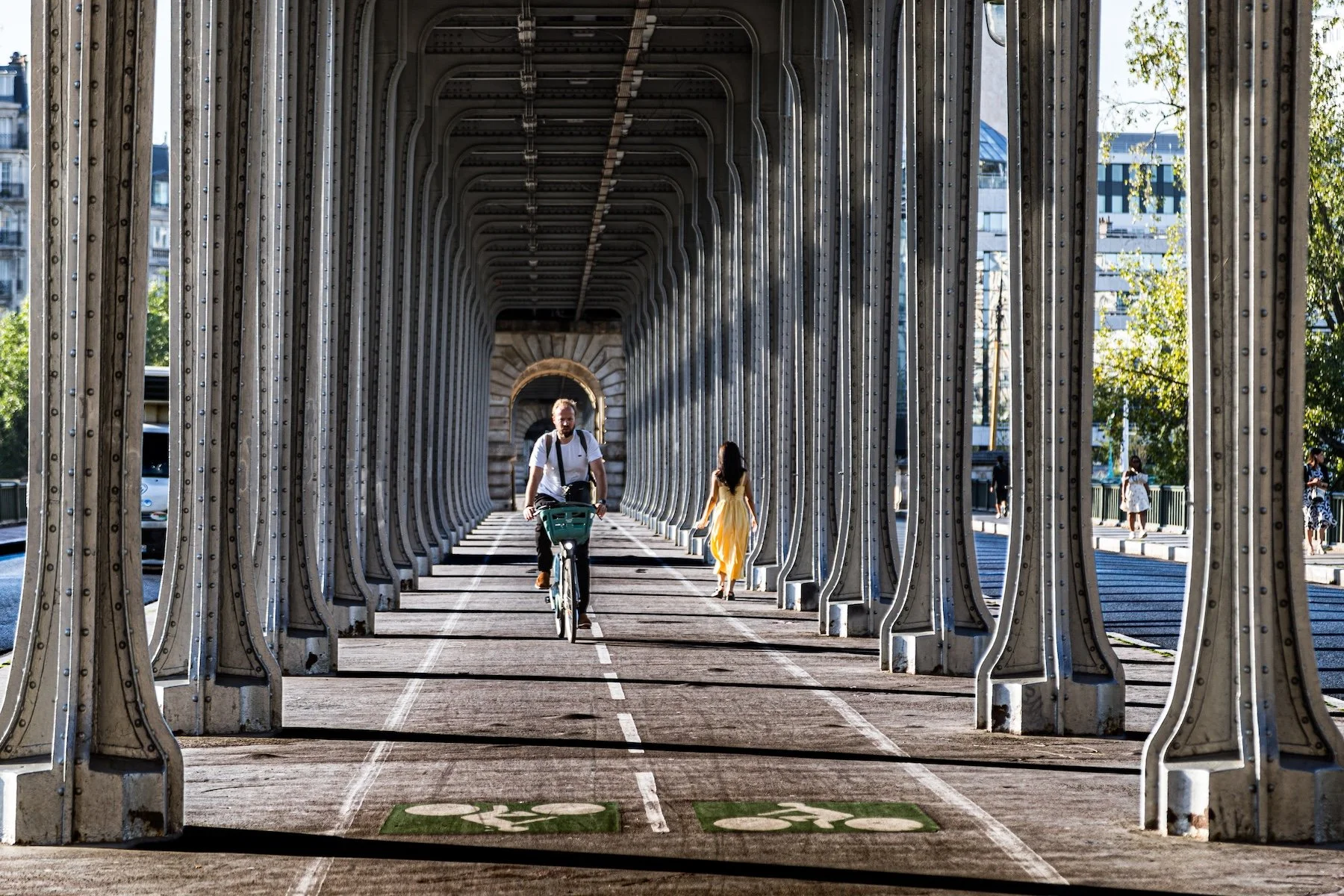
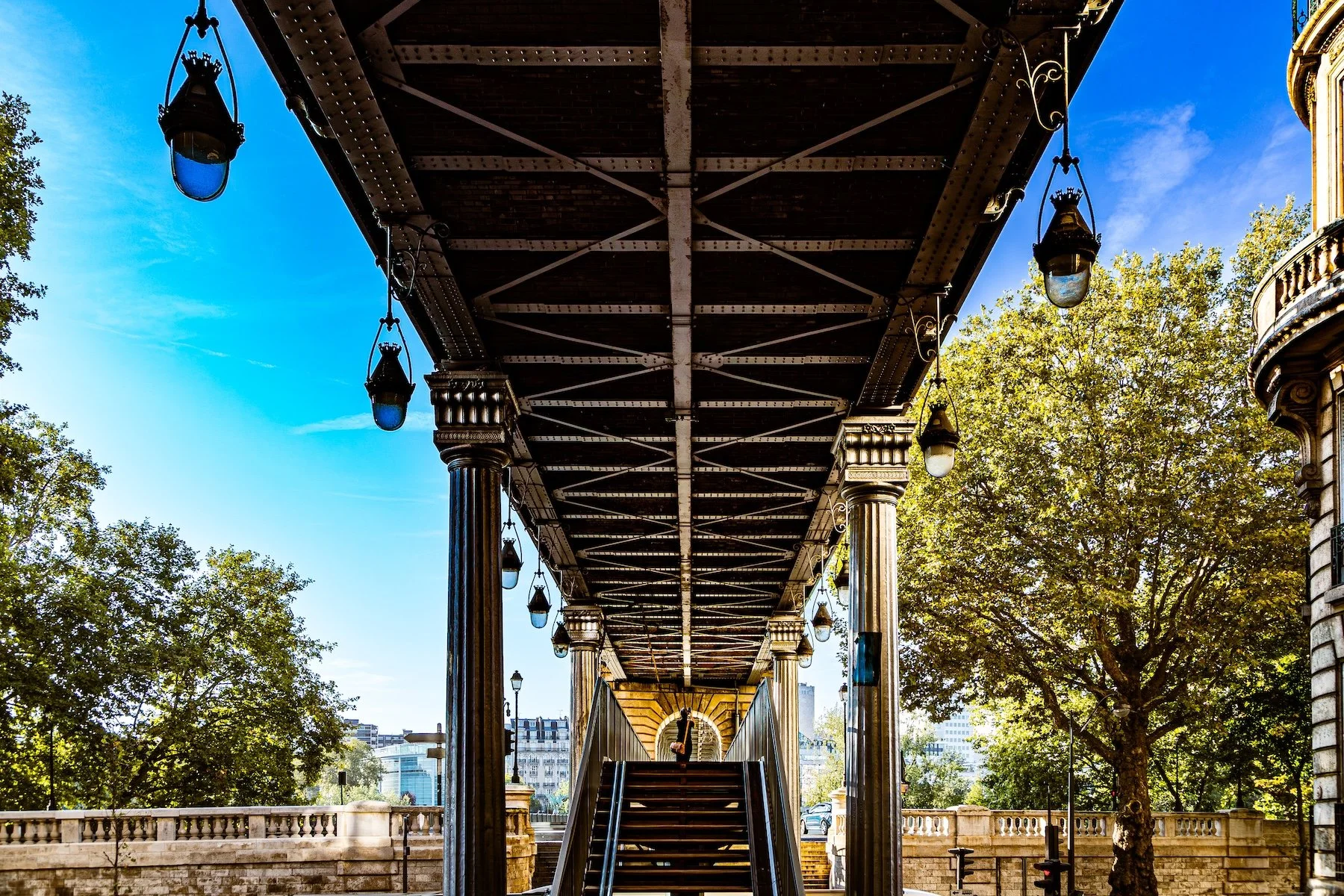
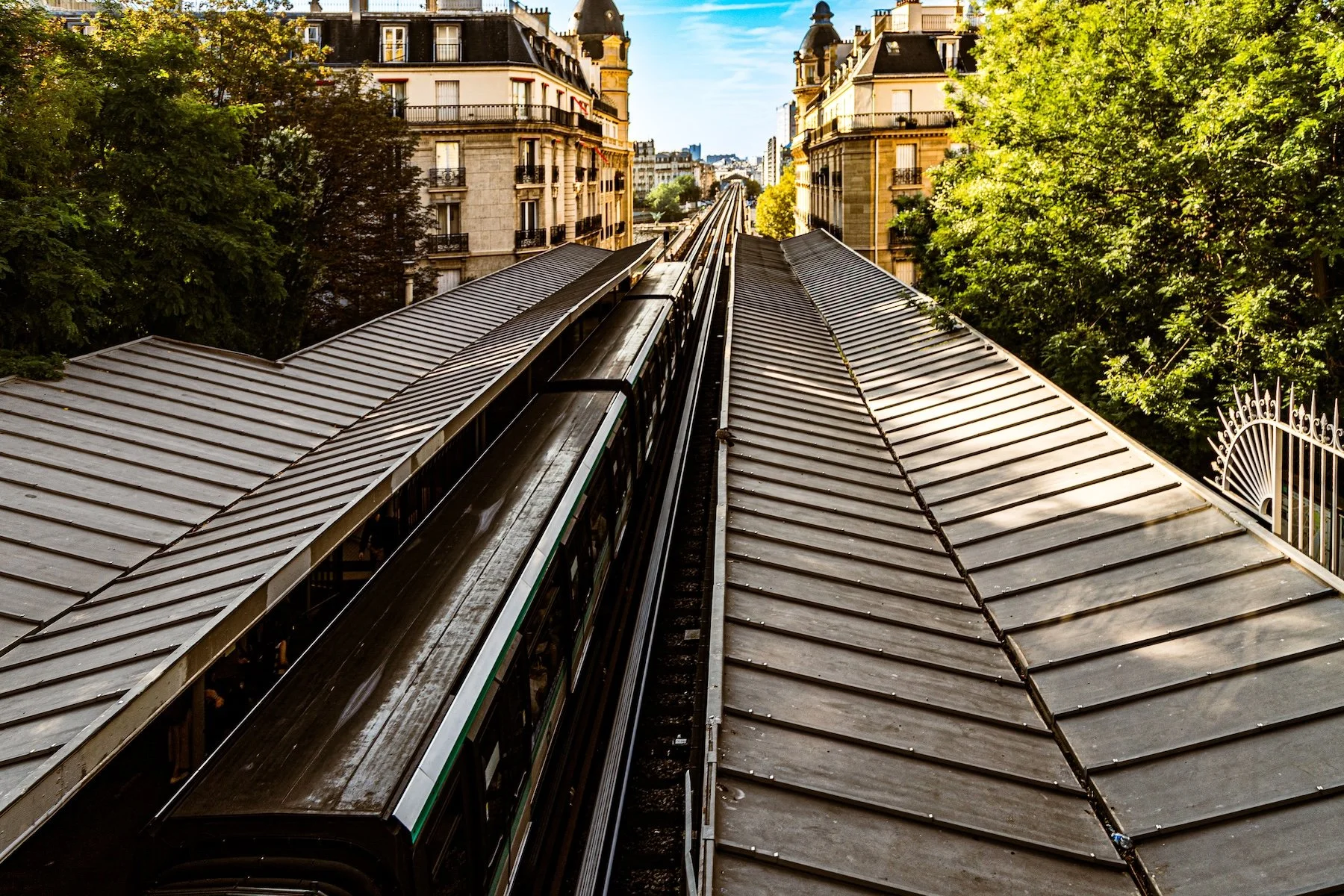

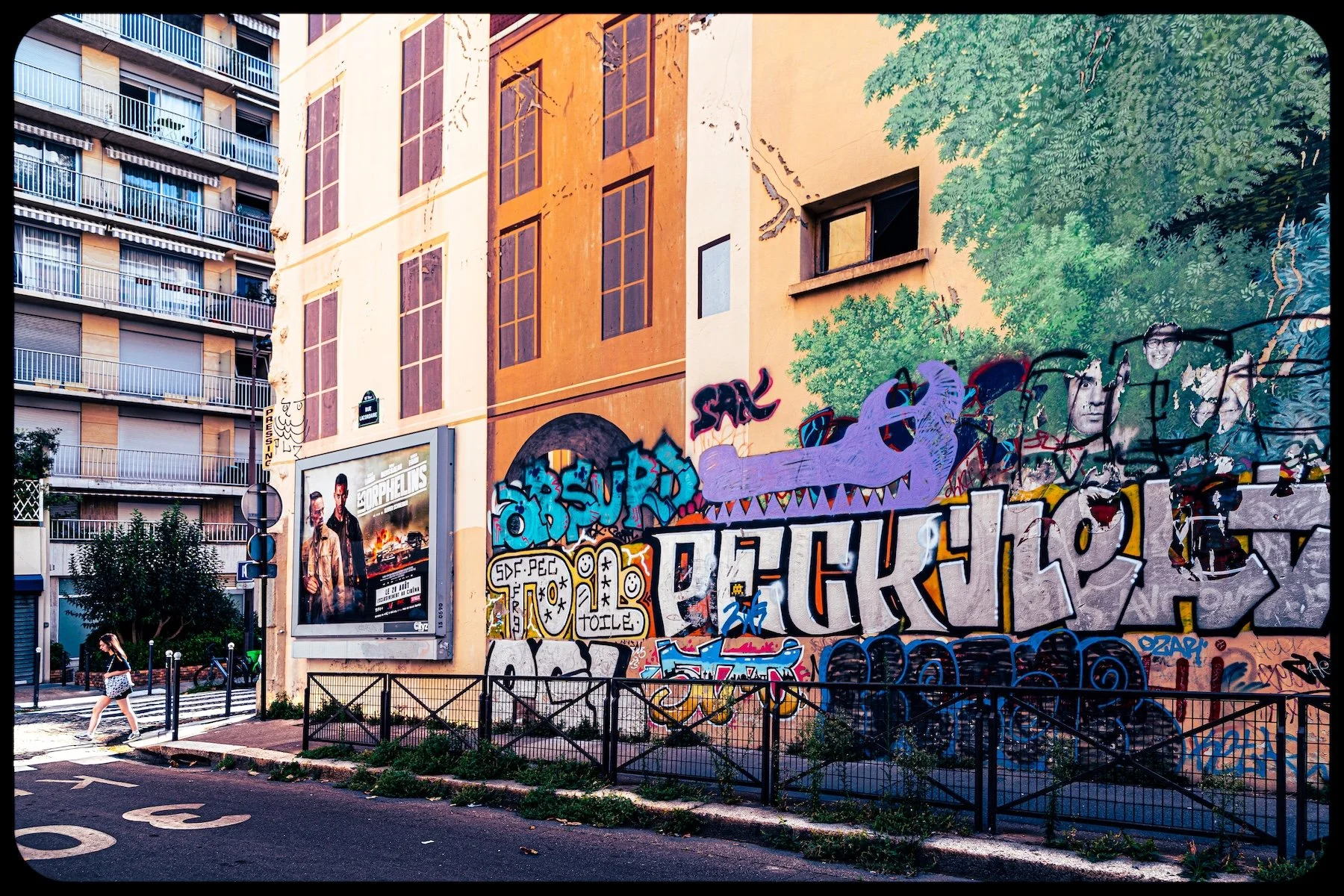
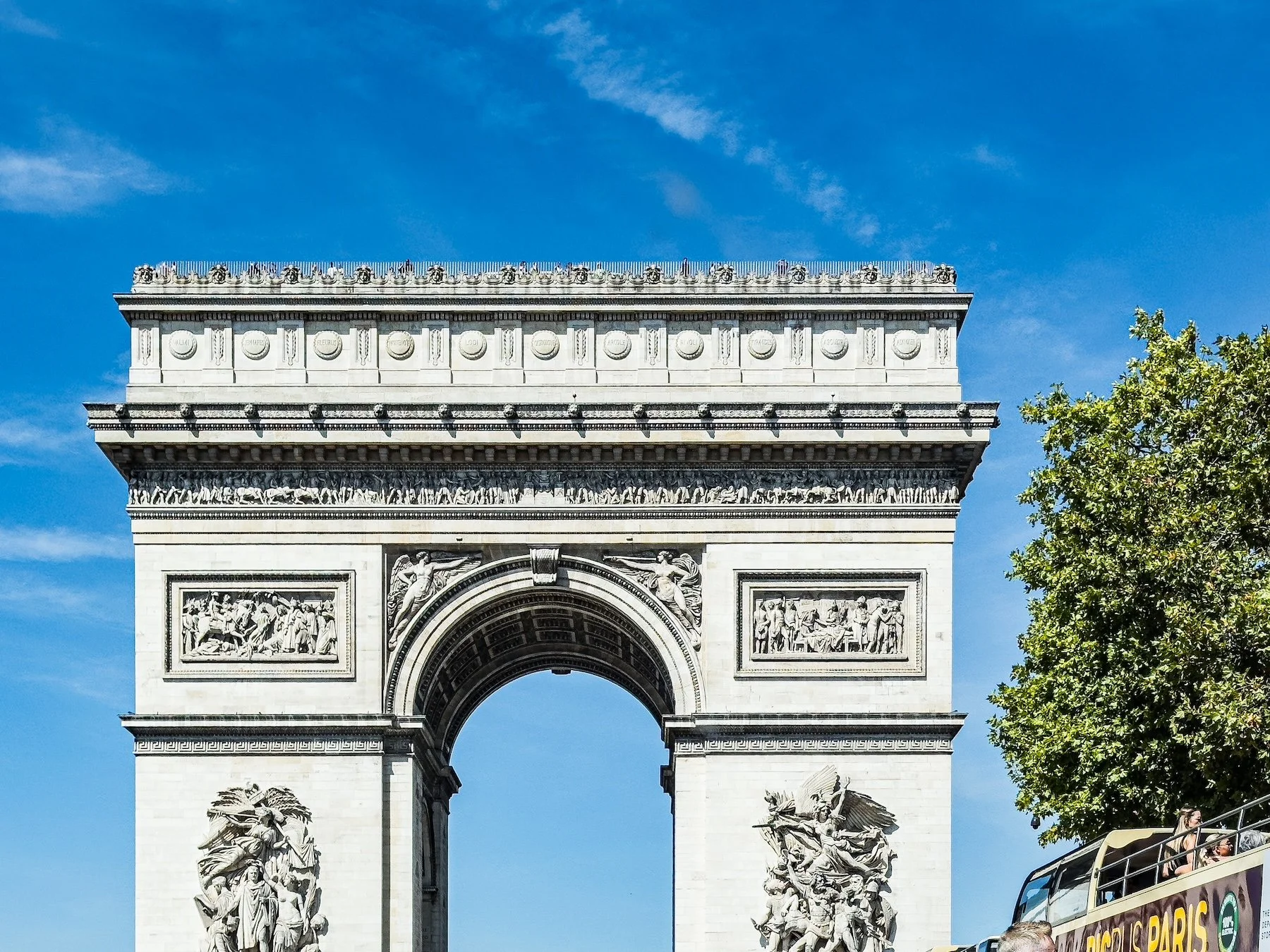
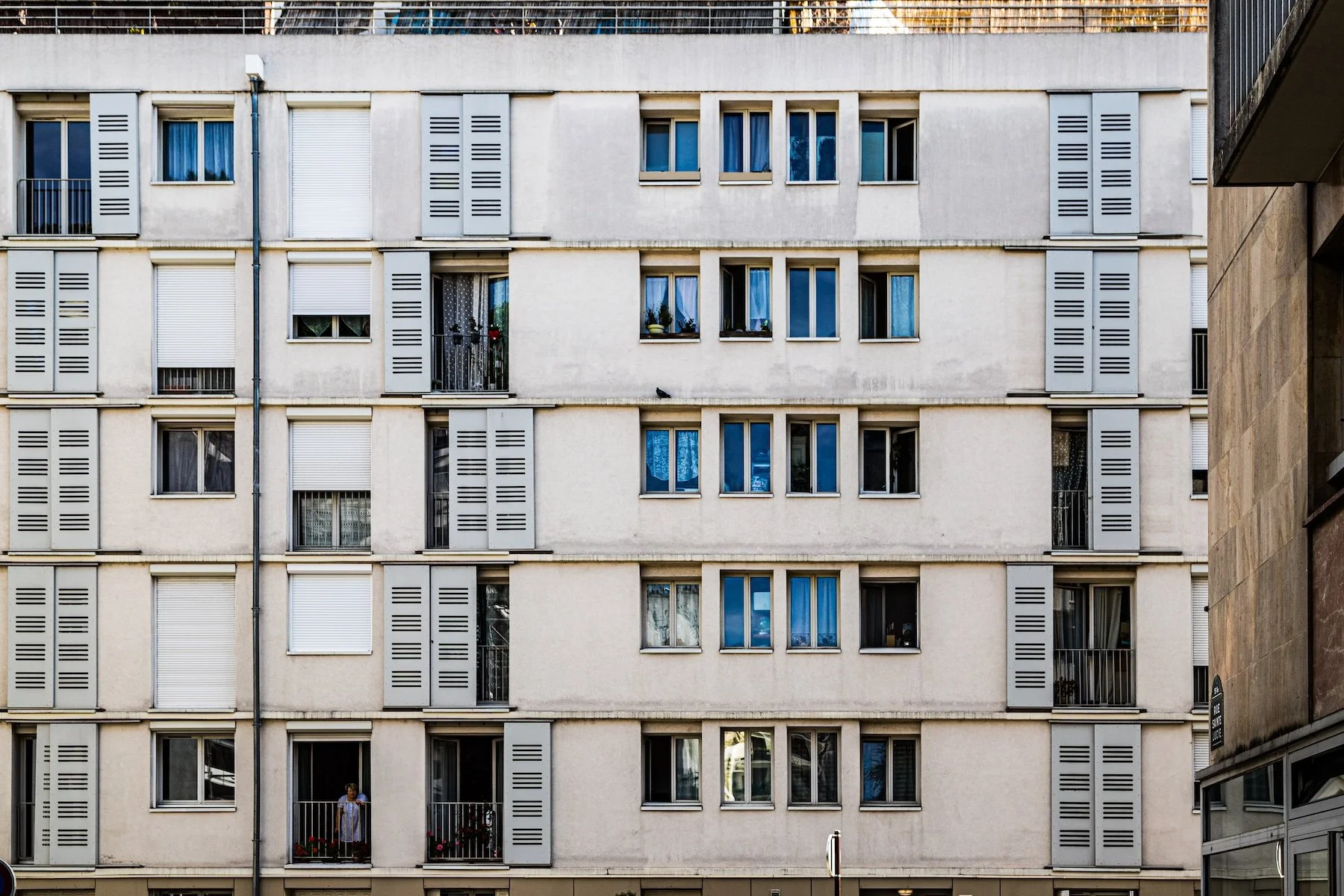
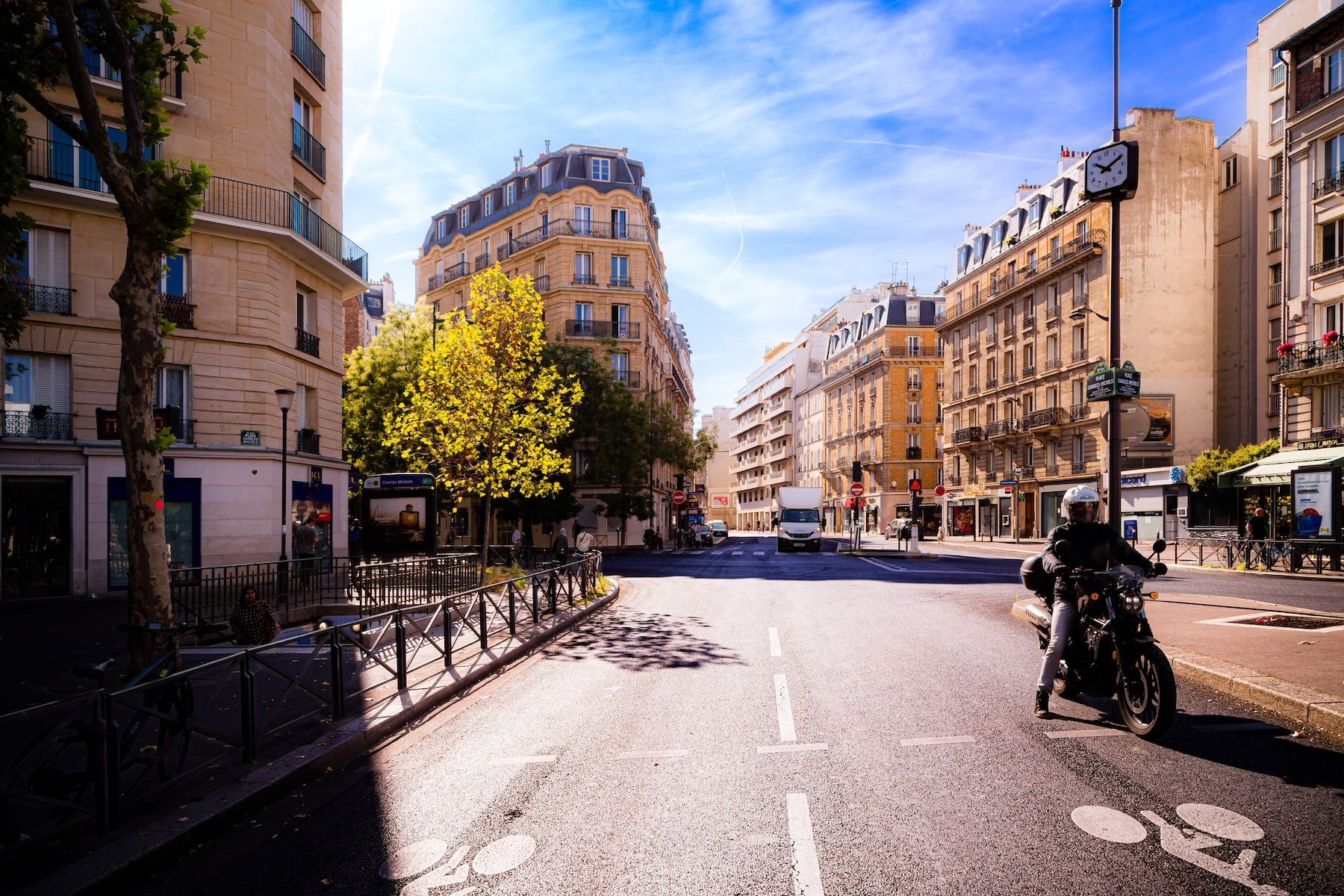
Explore Paris
-

The twenty arrondissements form the civic spiral of Paris, organizing the city into its broad local districts of government, identity, and daily life.
-

Each arrondissement is divided into four official administrative quarters, giving Paris a more precise civic and geographic framework.
-

The conseils de quartier bring participation to street level, giving residents a voice in neighborhood needs, public space, and local civic life.
-

Les Deux Rives trace Paris through the Seine’s two banks, revealing how the Rive Droite and Rive Gauche shaped the city’s civic power, commerce, learning, art, and cultural identity.
-

Cultural neighborhoods reveal the Paris people recognize through history, cafés, architecture, memory, atmosphere, and local belonging.