
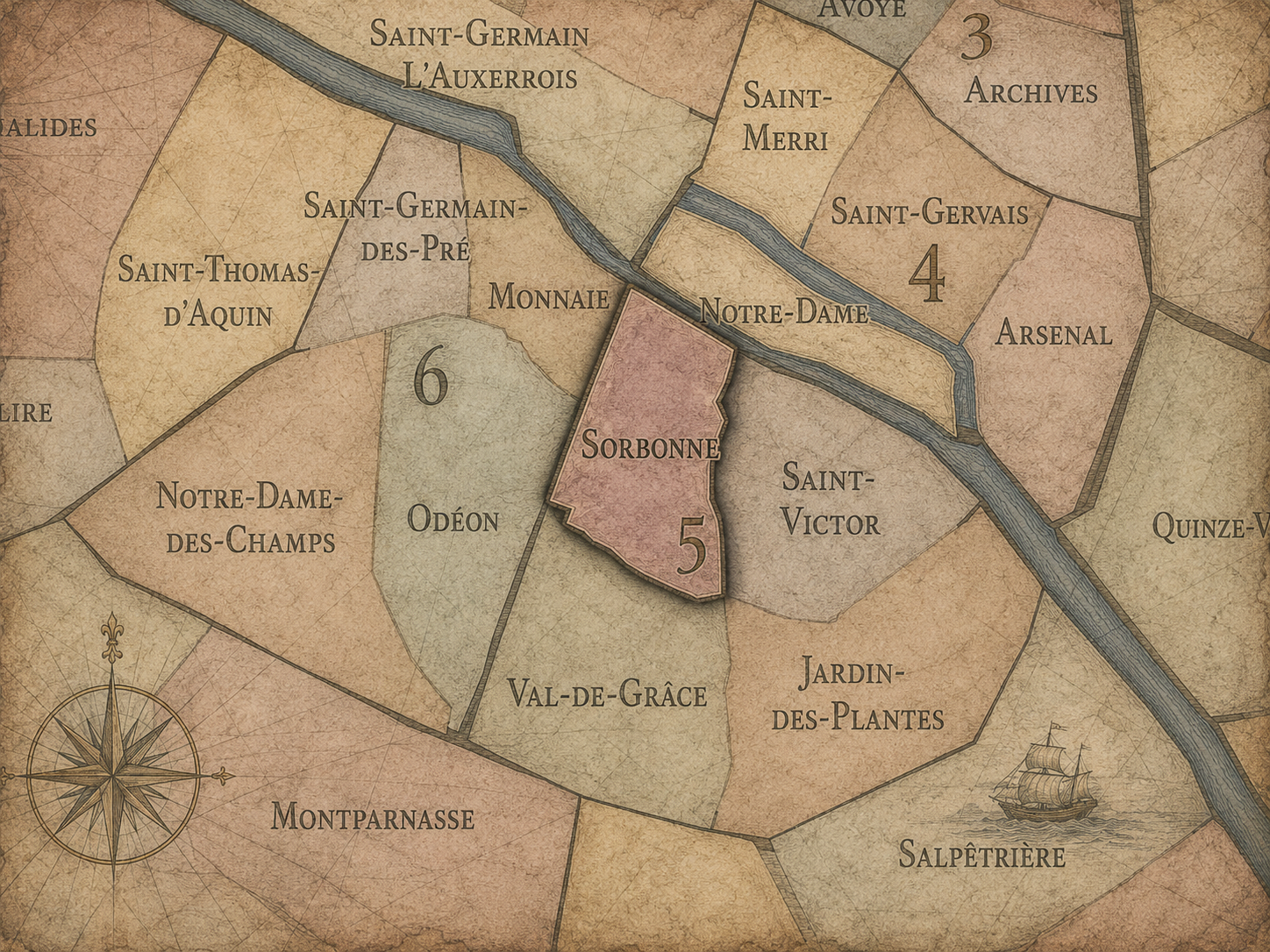
5e - SORBONNE
Quartiers Administratifs
Part of an ongoing project to walk and photograph every neighborhood in Paris, this page explores the Administrative Quarter: 5e - Sorbonne through maps, district identity, history, and photography.
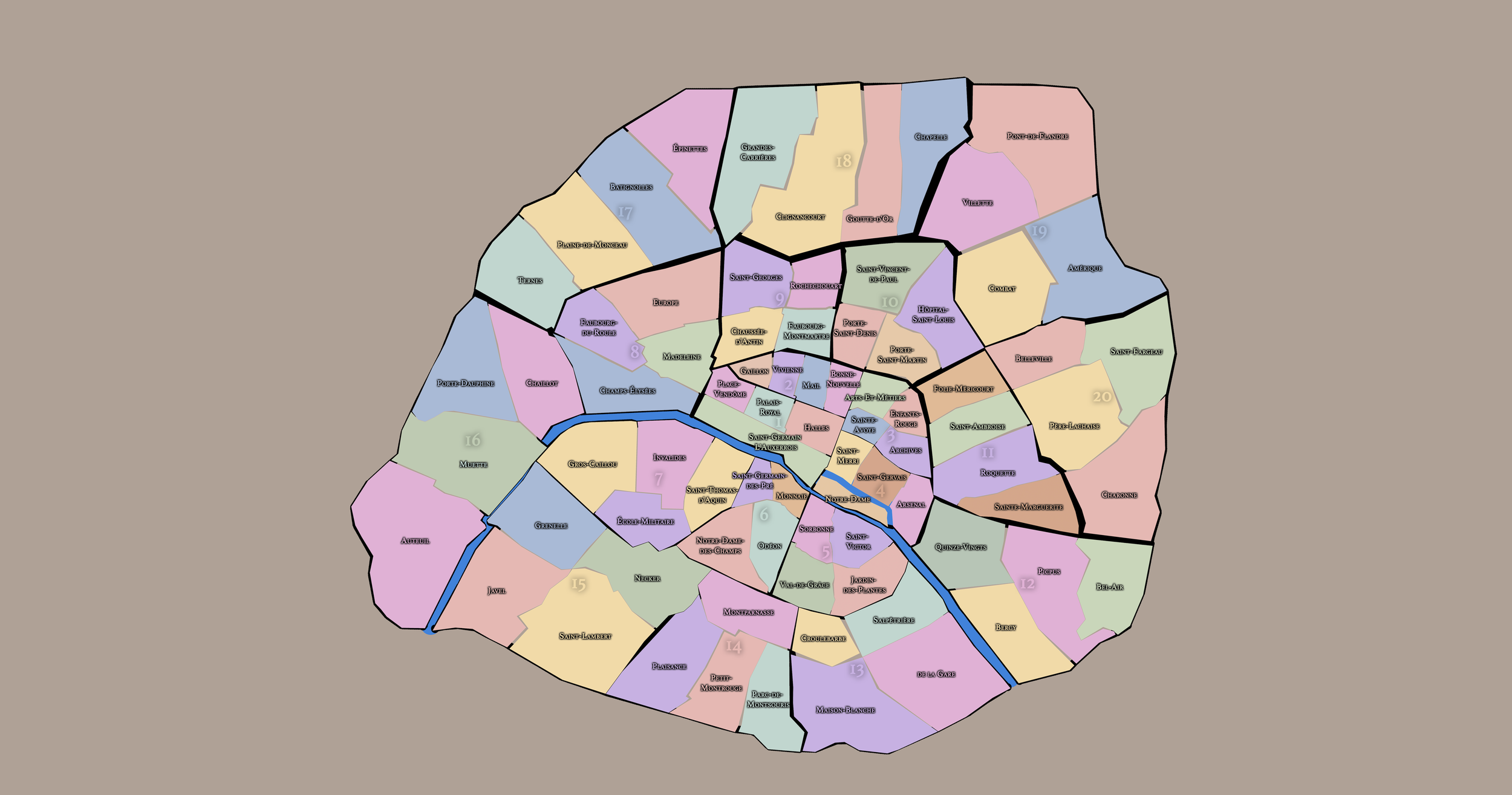
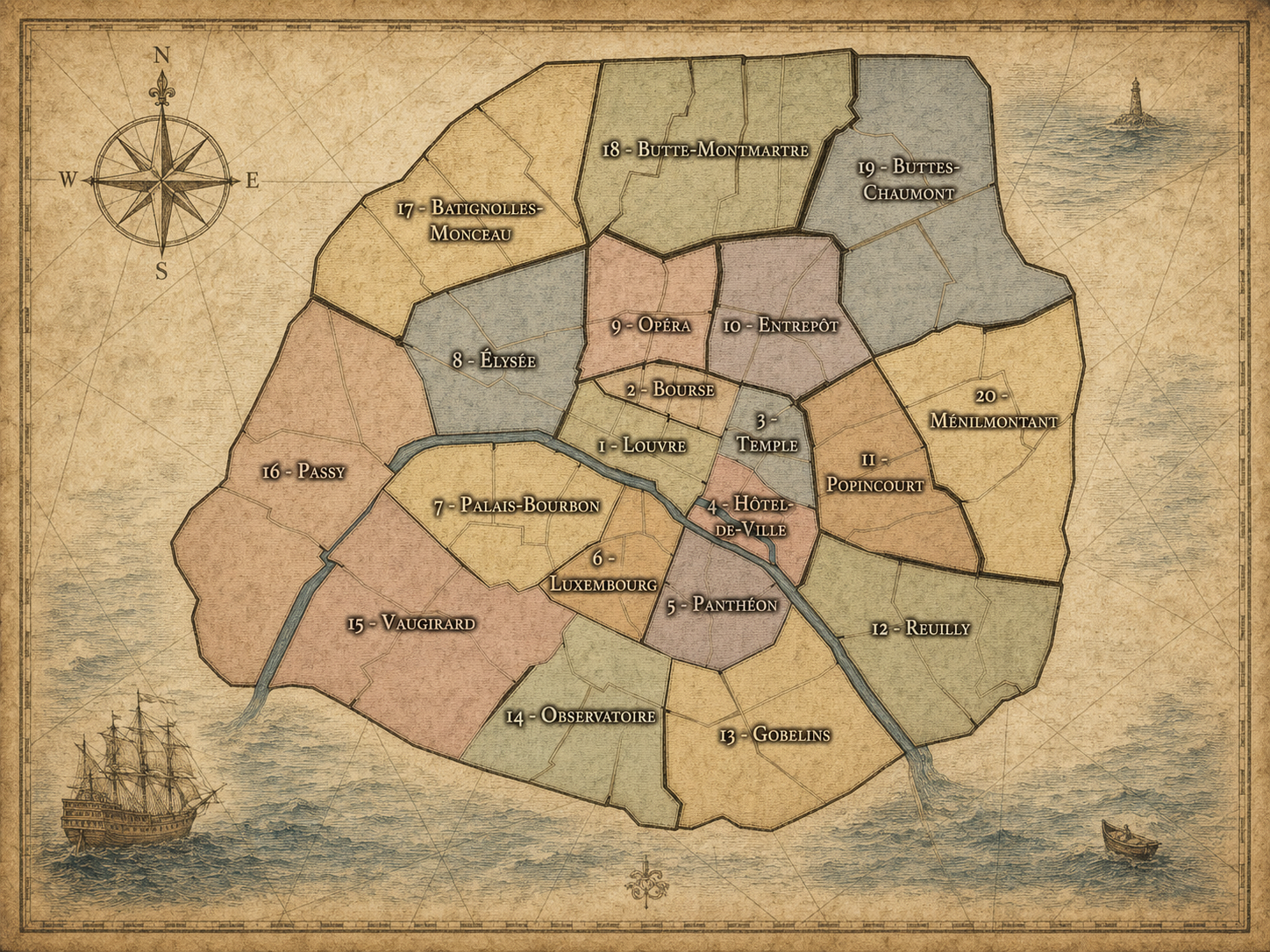
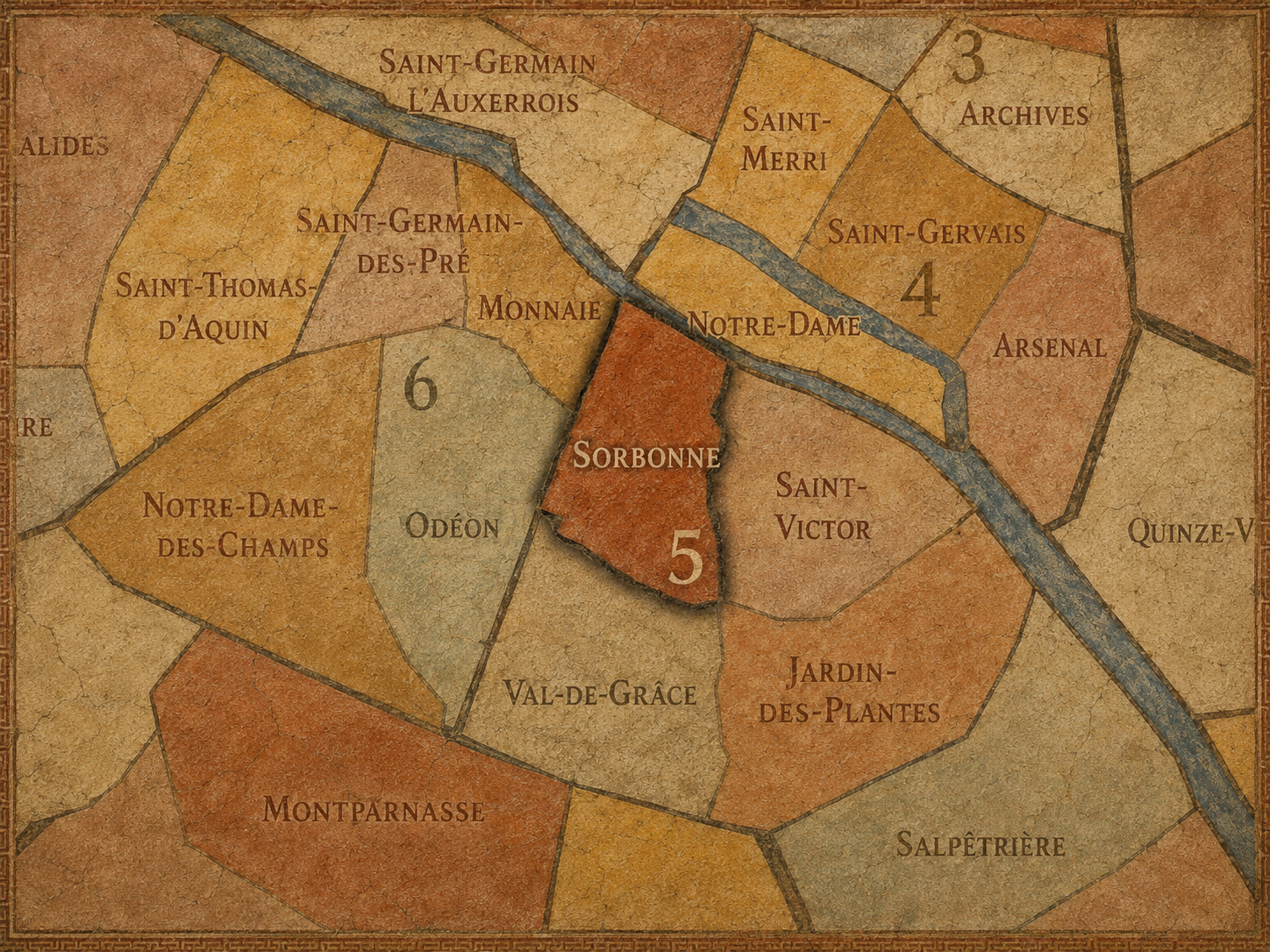
The Map
Download the Paris Arrondissements Map
Geographic Setting
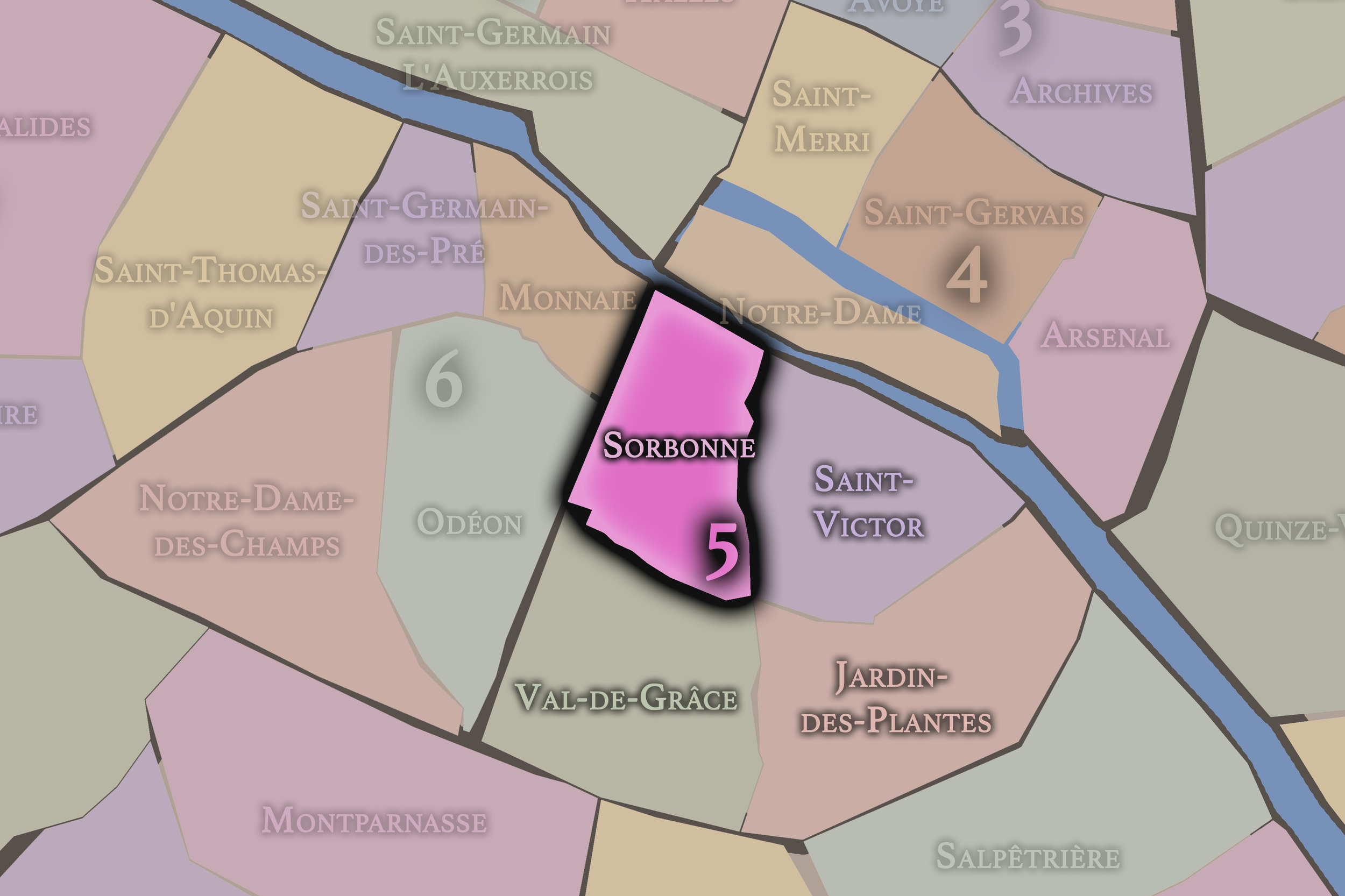
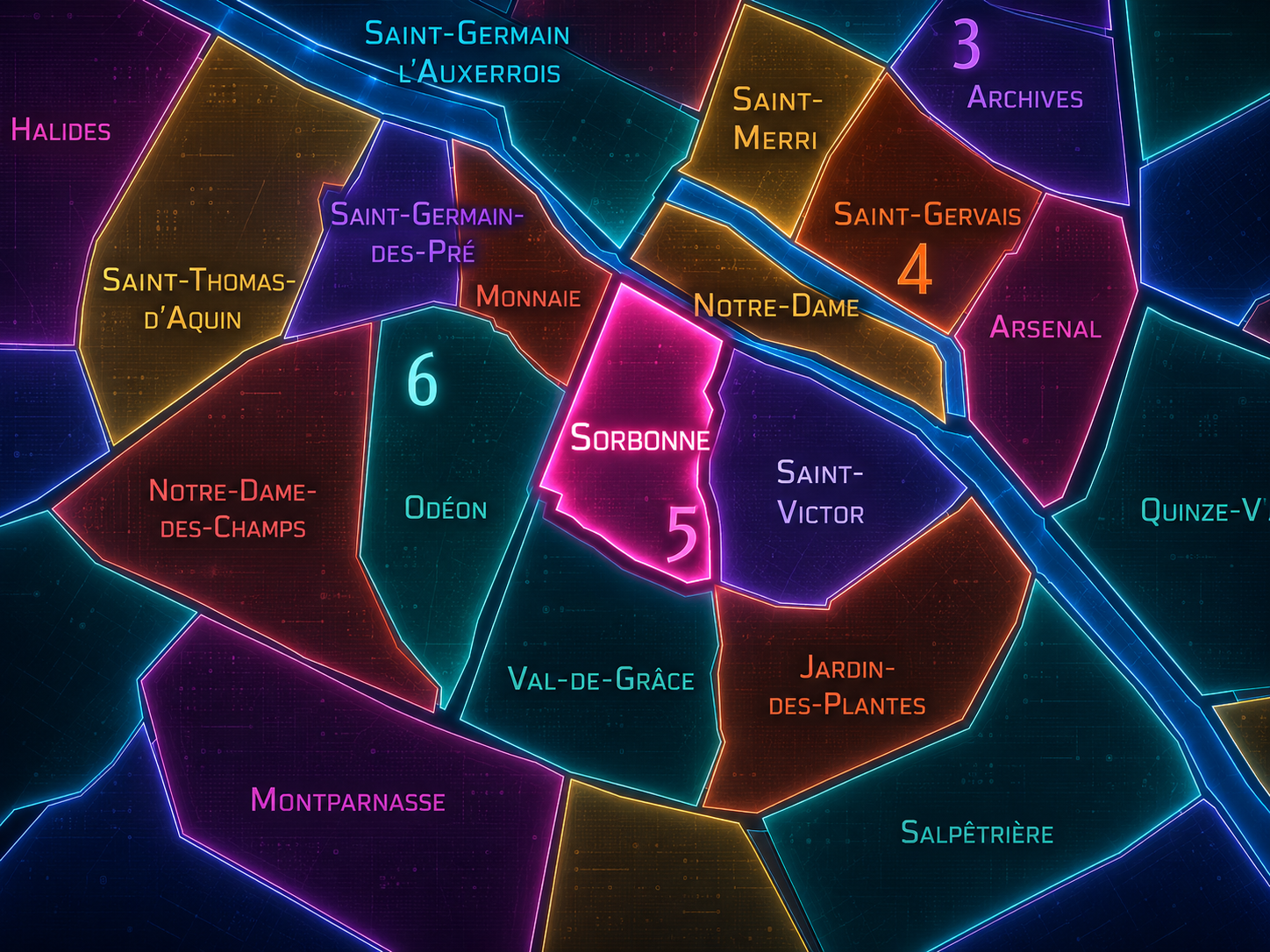
Sorbonne occupies the northwestern portion of the 5th arrondissement, where the Latin Quarter reaches one of its most concentrated expressions of university life, medieval street memory, religious architecture, civic symbolism, and intellectual mythology. Set on the Left Bank above the Seine, the quarter lies south of Notre-Dame and the island core, west of Saint-Victor, north of Val-de-Grâce, and east of the 6th arrondissement’s Odéon and Luxembourg landscapes. It is one of the places where Paris most clearly presents itself as a city of study, argument, books, churches, schools, cafés, and stone.
The quarter’s geography is shaped by the Sorbonne, the Panthéon nearby, the Collège de France, the Lycée Louis-le-Grand, the Lycée Henri-IV, the Église Saint-Étienne-du-Mont, the Place de la Sorbonne, the Rue des Écoles, Boulevard Saint-Michel, Rue Saint-Jacques, Rue Soufflot, and the narrow streets that climb toward the Montagne Sainte-Geneviève. The Seine is close, but the quarter’s identity is less riverfront than hillside and institutional: a district rising from the old bridges and medieval streets into the symbolic heights of scholarship and national memory.
Unlike Jardin-des-Plantes, whose identity turns toward natural history and public science, or Saint-Victor, whose memory gathers around abbey, river, and modern university expansion, Sorbonne is the classic academic heart of the Latin Quarter. It is Paris as intellectual landscape — not only because students have gathered here for centuries, but because the neighborhood itself seems organized around learning, debate, examination, publication, and remembrance.
Administrative Quarter Identity
Etymology and Origins
The name Sorbonne comes from the Collège de Sorbonne, founded in the 13th century by Robert de Sorbon, chaplain and confessor to King Louis IX. Originally established as a theological college for poor students, the Sorbonne became one of the most famous institutions of the University of Paris and eventually lent its name to the broader quarter. Over time, “the Sorbonne” came to signify not only a particular college or building, but the intellectual authority of Paris itself.
That evolution gives the name extraordinary power. Few Parisian administrative quarters carry a name so deeply associated with learning. Sorbonne is at once a place, an institution, a symbol, and an idea. It evokes medieval theology, scholastic disputation, student life, university prestige, political unrest, literary cafés, public lectures, and the long association between the Left Bank and intellectual identity.
The name also reveals how a single institution can expand into neighborhood meaning. The quarter is not only the Sorbonne building. It contains many schools, churches, streets, bookish corridors, and civic monuments. Yet the name Sorbonne gathers them into one atmosphere: the Paris of study, language, inquiry, and debate.
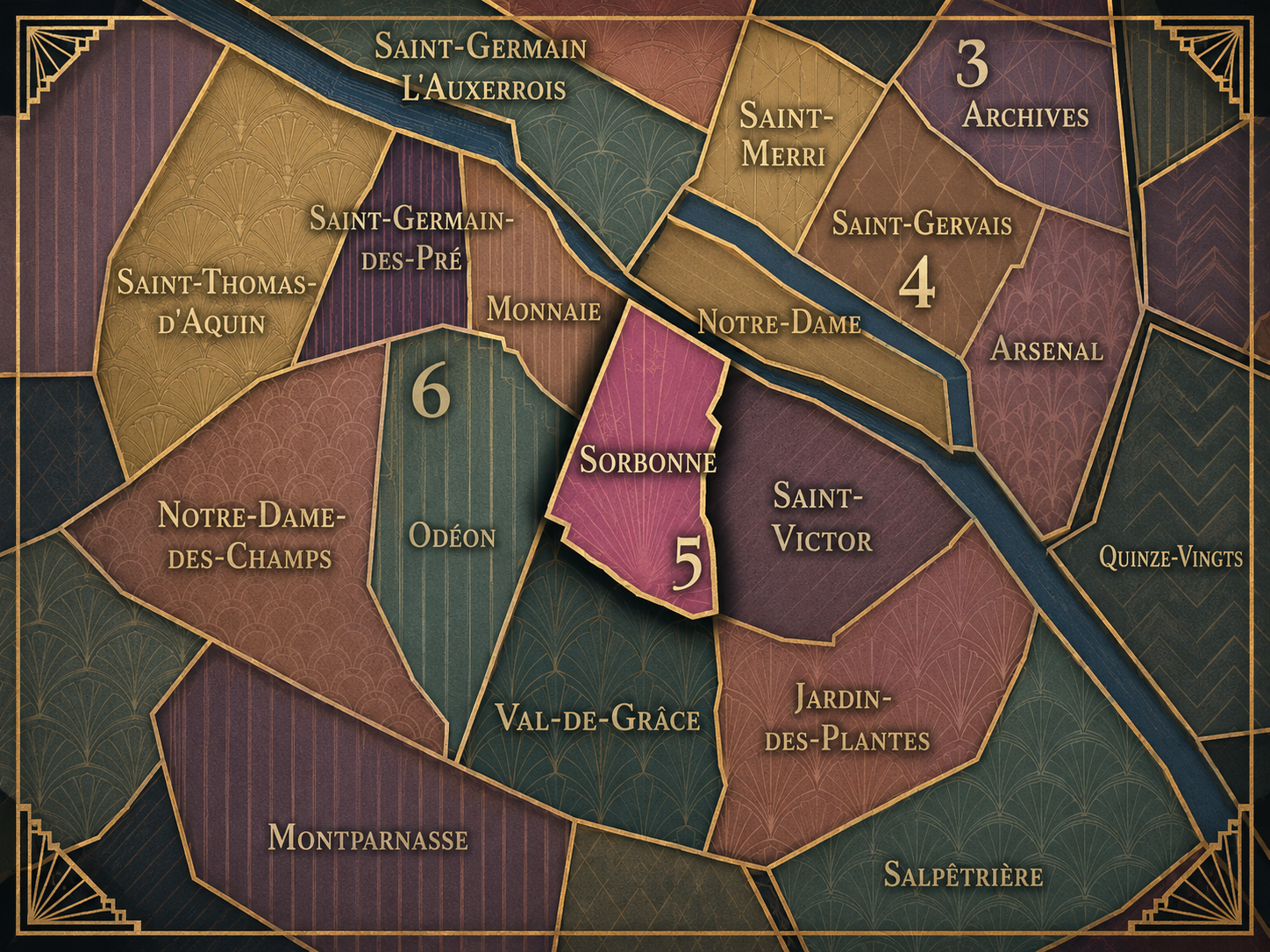
Within the official geography of Paris, Sorbonne is one of the four administrative quarters of the 5th arrondissement, alongside Saint-Victor, Jardin-des-Plantes, and Val-de-Grâce. It occupies the arrondissement’s northwestern sector and forms one of the principal civic units of the Latin Quarter, the historic student and scholarly district of Paris.
As an administrative quarter, Sorbonne gives formal shape to an area whose cultural identity is much broader than its boundaries. The Latin Quarter extends beyond the Sorbonne quarter into parts of the 5th and 6th arrondissements, and its influence reaches through streets, institutions, bookstores, cinemas, cafés, churches, schools, and university buildings. The official quarter name helps identify one especially concentrated portion of that larger intellectual landscape.
The quarter’s civic role is also important because it distinguishes different kinds of Left Bank identity. Sorbonne is not simply “the 5th.” It is not the scientific garden quarter, not the medical-residential quarter, and not the eastern abbey-university quarter. It is the symbolic academic core, where the official map, the university tradition, and the cultural imagination of the Latin Quarter align most strongly.
Civic Framework
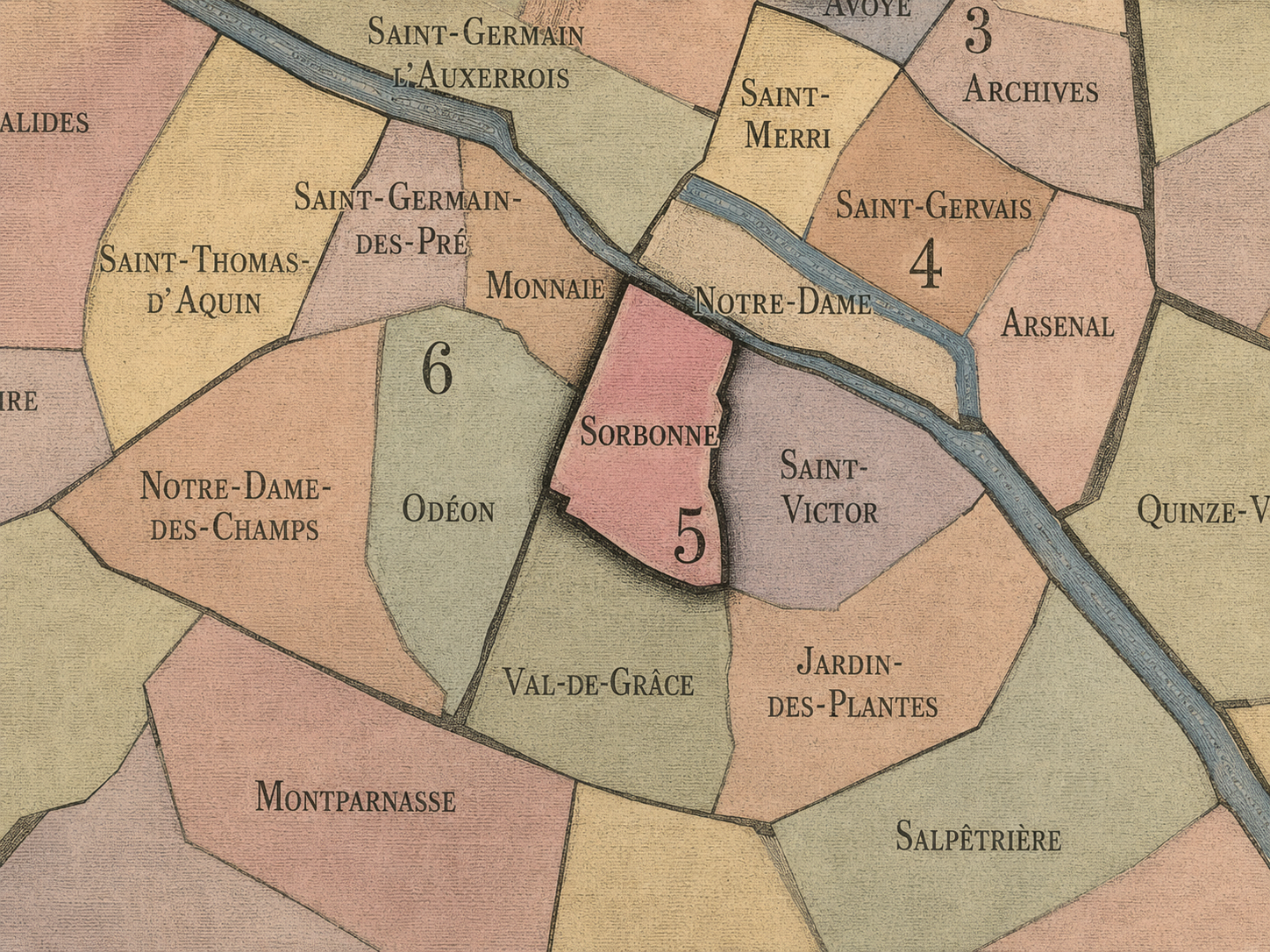
Sorbonne differs from the other quarters of the 5th arrondissement through its concentration of academic, religious, and symbolic institutions. Jardin-des-Plantes is shaped by natural history, gardens, museums, and the scientific study of life. Saint-Victor carries the memory of a vanished abbey, the eastern Latin Quarter, Jussieu, and the riverfront. Val-de-Grâce is more residential, medical, conventual, and southward-facing, shaped by the former royal abbey and hospital landscape.
Sorbonne is the quarter of the classical Latin Quarter image. Its streets are dense with schools, churches, lecture halls, libraries, bookshops, student routes, and public monuments. It is where the intellectual identity of the Left Bank is most legible to visitors and residents alike. The neighborhood’s distinction lies not only in the presence of the Sorbonne itself, but in the way many institutions reinforce the same theme: study as urban identity.
It should also be distinguished from the broader cultural idea of Saint-Germain-des-Prés, often associated with writers, cafés, postwar intellectual life, publishing, and existentialism. Sorbonne belongs to a deeper academic lineage: medieval university, theology, scholastic debate, classical education, and institutional learning. It is less literary-salon in tone than Saint-Germain and more university-civic in structure.
Neighborhood Distinction
Parisian Identity
Sorbonne expresses Paris as a city of thought made visible. Its identity rests in the belief that learning can shape urban space. Streets, squares, churches, schools, libraries, and monuments all participate in that idea. The quarter is not merely a place where education happens behind doors; it is a place where education gives the neighborhood its atmosphere.
The quarter also carries the tension between authority and dissent. The Sorbonne represents institutional prestige, tradition, examinations, scholarship, and the long continuity of the University of Paris. Yet the Latin Quarter has also been a landscape of student protest, political debate, intellectual rebellion, and public argument. The same streets that symbolize academic authority have often hosted challenges to authority.
That tension is deeply Parisian. Sorbonne is not only a quiet neighborhood of books and schools. It is a district where knowledge has civic force. Ideas here have been taught, defended, condemned, revived, shouted in streets, printed in pamphlets, debated in cafés, and carried into national life. In Sorbonne, the intellectual identity of Paris is not decorative. It is active.
Neighborhood Connections
Every administrative quarter belongs to a wider Parisian fabric. These connections place Sorbonne within the city’s civic, participatory, and cultural geography:
-
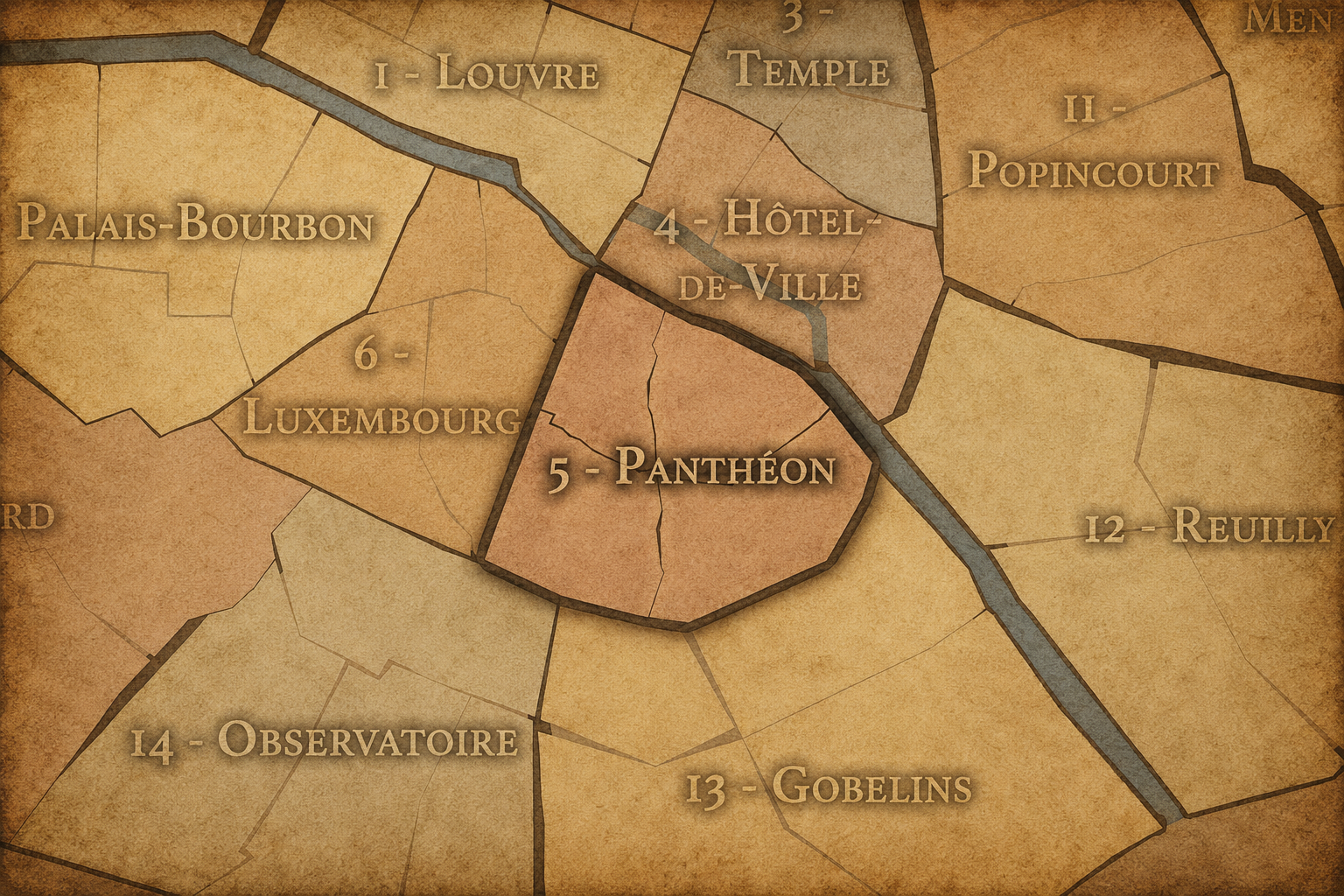
5e - Panthéon
-
Sorbonne
The History
The origins of Sorbonne lie in the medieval rise of the University of Paris and the growth of the Latin Quarter as a district of students, masters, colleges, churches, and book culture. The name “Latin Quarter” itself reflects the language of medieval learning, when Latin was the common language of instruction, theology, and scholarly exchange. This part of the Left Bank became one of Europe’s great centers of university life.
Robert de Sorbon’s 13th-century college emerged within this wider landscape of education. It was not the only institution in the district, but it became one of the most influential. The college’s focus on theology placed it at the heart of medieval intellectual life, while its charitable purpose connected learning to social and religious obligations.
Before the modern quarter existed, then, the area was already a neighborhood of study. Its origins were not residential in the ordinary sense, nor commercial in the manner of Halles, nor aristocratic in the manner of the Marais. Sorbonne began as a landscape where teaching, religion, language, discipline, and intellectual community shaped the urban fabric.
Origins
16th–17th Century
In the 16th and 17th centuries, Sorbonne remained central to the religious and intellectual life of Paris. The University of Paris and its colleges continued to exert influence over theology, philosophy, law, and public debate, even as the Renaissance, Reformation, Counter-Reformation, and growth of royal power transformed the intellectual world around them.
The Sorbonne itself played a major role in religious controversy and doctrinal authority. Its theologians participated in debates over orthodoxy, reform, and the relationship between church, crown, and learning. The quarter was therefore not only academic, but deeply tied to the spiritual and political tensions of early modern Europe.
The 17th century also brought major architectural and institutional transformation. Cardinal Richelieu rebuilt the Sorbonne’s chapel and buildings, giving the institution a more monumental presence. The quarter’s intellectual identity became increasingly architectural, as learning and authority were expressed not only through books and lectures, but through stone, façades, courtyards, and chapel dome.
In the 18th century, Sorbonne stood at the meeting point of old university tradition and Enlightenment change. The district remained associated with theology, classical education, and institutional authority, but Parisian intellectual life was expanding beyond the older university structures. Salons, academies, cafés, publishing houses, scientific institutions, and philosophical networks reshaped the city’s culture of ideas.
This did not make Sorbonne irrelevant. It made its role more complex. The quarter represented inherited learning within a city increasingly animated by critique, experiment, and public reason. The older university world encountered a broader intellectual public, and the Left Bank became a landscape where tradition and Enlightenment argument coexisted uneasily.
The French Revolution transformed the quarter’s institutional order. The old University of Paris was suppressed, religious institutions were reorganized, and education itself became part of the revolutionary debate over citizenship, reason, and the future of the nation. Sorbonne’s identity survived, but the world that had sustained it was profoundly altered.
18th Century
19th Century
The 19th century rebuilt Sorbonne’s academic identity within the modern French state. After revolutionary disruption and Napoleonic reorganization, higher education in Paris took new institutional forms, and the Sorbonne gradually regained prominence as a symbol of university life. The quarter became part of a broader landscape of schools, lycées, faculties, libraries, and state-shaped education.
The Panthéon and the surrounding Montagne Sainte-Geneviève added another layer to the quarter’s meaning. Nearby, national memory and academic life stood in close relation: great figures were honored in the Panthéon, while schools and universities trained generations of students below and around it. The district became a place where learning and republican memory reinforced one another.
Urban changes also shaped the quarter. New streets and boulevards, including the development of Boulevard Saint-Michel and Rue des Écoles, altered circulation and visibility while preserving much of the Left Bank’s scholarly atmosphere. Sorbonne became both older and modern: medieval in memory, 19th-century in institutional form, and increasingly national in symbolism.
In the early and mid 20th century, Sorbonne remained one of the great academic quarters of Europe. Students, professors, schools, libraries, publishers, cafés, and religious institutions continued to define its streets. The quarter’s reputation extended beyond France, drawing scholars, writers, political thinkers, and international students into the Latin Quarter’s orbit.
The neighborhood was also shaped by the upheavals of war, occupation, liberation, and postwar reconstruction. University life continued under pressure, and the intellectual life of Paris was deeply affected by political crisis, resistance, collaboration, exile, and renewal. The quarter’s cafés, lecture halls, libraries, and streets remained part of the city’s public and private conversations about national identity, freedom, and responsibility.
During this period, Sorbonne became increasingly associated not only with formal education, but with the larger intellectual mythology of the Left Bank. The student quarter, the bookish street, the politically engaged café, and the university lecture hall all contributed to its image. It was a working academic district and a symbolic landscape at once.
Early–Mid 20th Century
Late 20th Century
In the late 20th century, Sorbonne became one of the symbolic centers of student politics and cultural upheaval. The events of May 1968 gave the quarter and the wider Latin Quarter a renewed global identity as a landscape of protest, barricades, debate, and generational conflict. The Sorbonne itself became a symbol of institutional authority being challenged by students, workers, intellectuals, and activists.
After 1968, the reorganization of the University of Paris changed the institutional structure of higher education, dispersing the old university into multiple successor institutions. Yet the Sorbonne name remained powerful. It continued to signify academic prestige and the historic intellectual identity of the district, even as the administrative reality became more complex.
The late 20th century also brought tourism, heritage attention, and changes in the local economy. Bookshops, cinemas, cafés, schools, churches, and student spaces adapted to a city increasingly shaped by global visitors and rising central-city pressures. Sorbonne remained intellectually charged, but its environment became more curated, more visited, and more expensive.
In the 21st century, Sorbonne remains one of Paris’s essential intellectual landscapes. The quarter continues to hold universities, schools, research institutions, churches, libraries, bookstores, cafés, and the symbolic power of the Latin Quarter. It is a district where students still pass between classes, visitors seek the old academic atmosphere, and institutions carry forward centuries of educational memory.
Yet contemporary Sorbonne is also a place of negotiation. The quarter must balance student life, heritage tourism, academic prestige, local residence, security, commercial change, and the pressures of central Paris. Its identity is still rooted in learning, but the social conditions of learning have changed. The medieval student quarter has become a global cultural landscape, and the Sorbonne name now carries both local and international meaning.
For CityNeighborhoods: Paris, Sorbonne is essential because it shows how a neighborhood can be built around the life of the mind. It is not only a university district, not only the Latin Quarter, not only a historic name. It is a place where knowledge has repeatedly shaped the city’s form, politics, architecture, and mythology.
21st Century
Spirit and Legacy
Sorbonne is the quarter where Paris thinks aloud. Its spirit is scholarly, argumentative, disciplined, restless, and alive with inherited questions. It belongs to lecture halls and church steps, libraries and cafés, examinations and protests, medieval colleges and modern universities, Latin memory and contemporary debate.
Its legacy is the endurance of learning as urban identity. A medieval college became a symbol of the university. A student district became a global image of intellectual Paris. A neighborhood of schools became a stage for national argument. Across centuries, Sorbonne has carried both authority and dissent, tradition and reinvention.
To walk Sorbonne is to move through a city shaped by ideas. The quarter reminds us that neighborhoods are not only made from houses, markets, parks, or monuments. They can also be made from questions — asked in classrooms, contested in streets, preserved in books, and renewed by each generation that comes to the Left Bank seeking knowledge, language, and a place in the long conversation of Paris.
The Photography
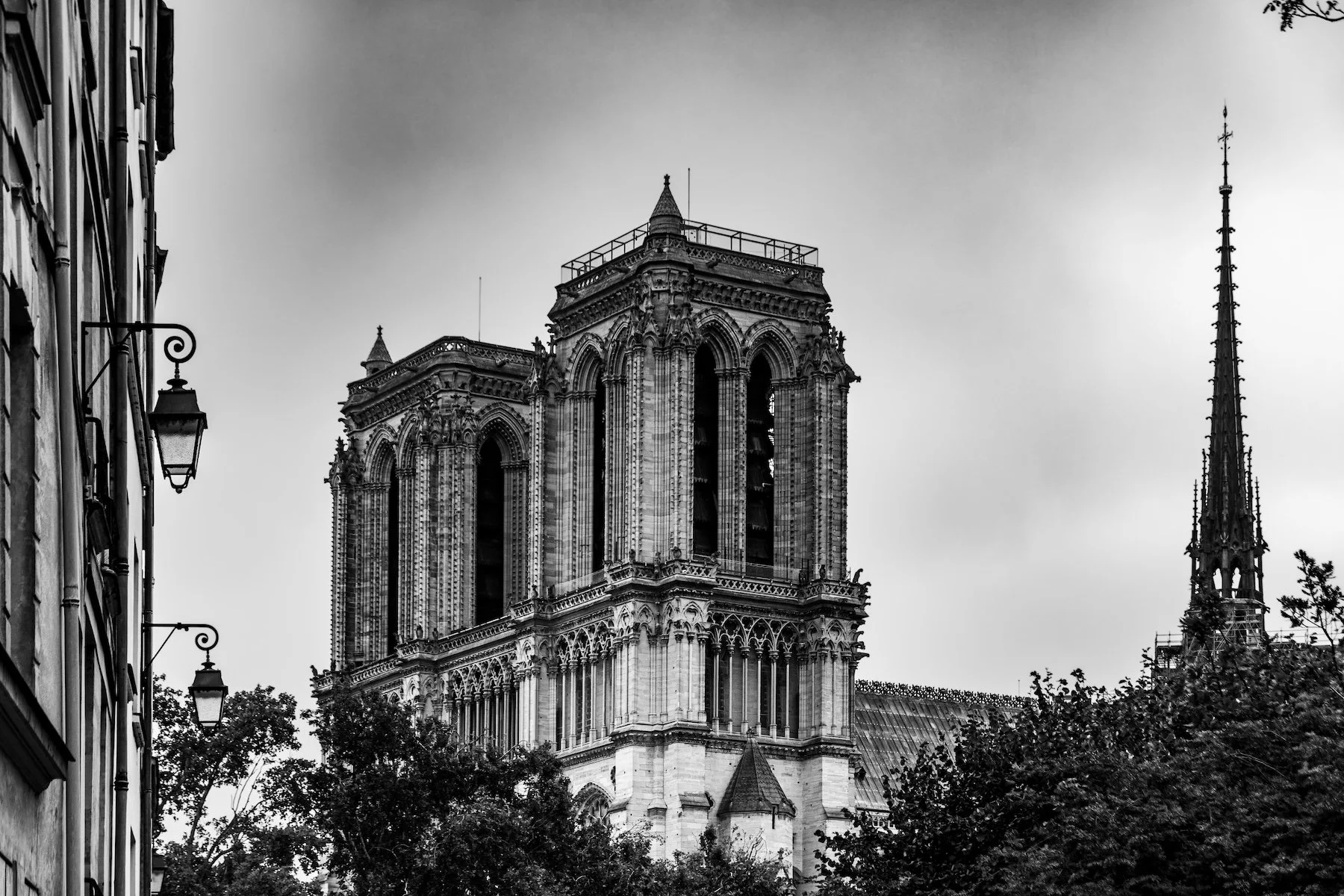
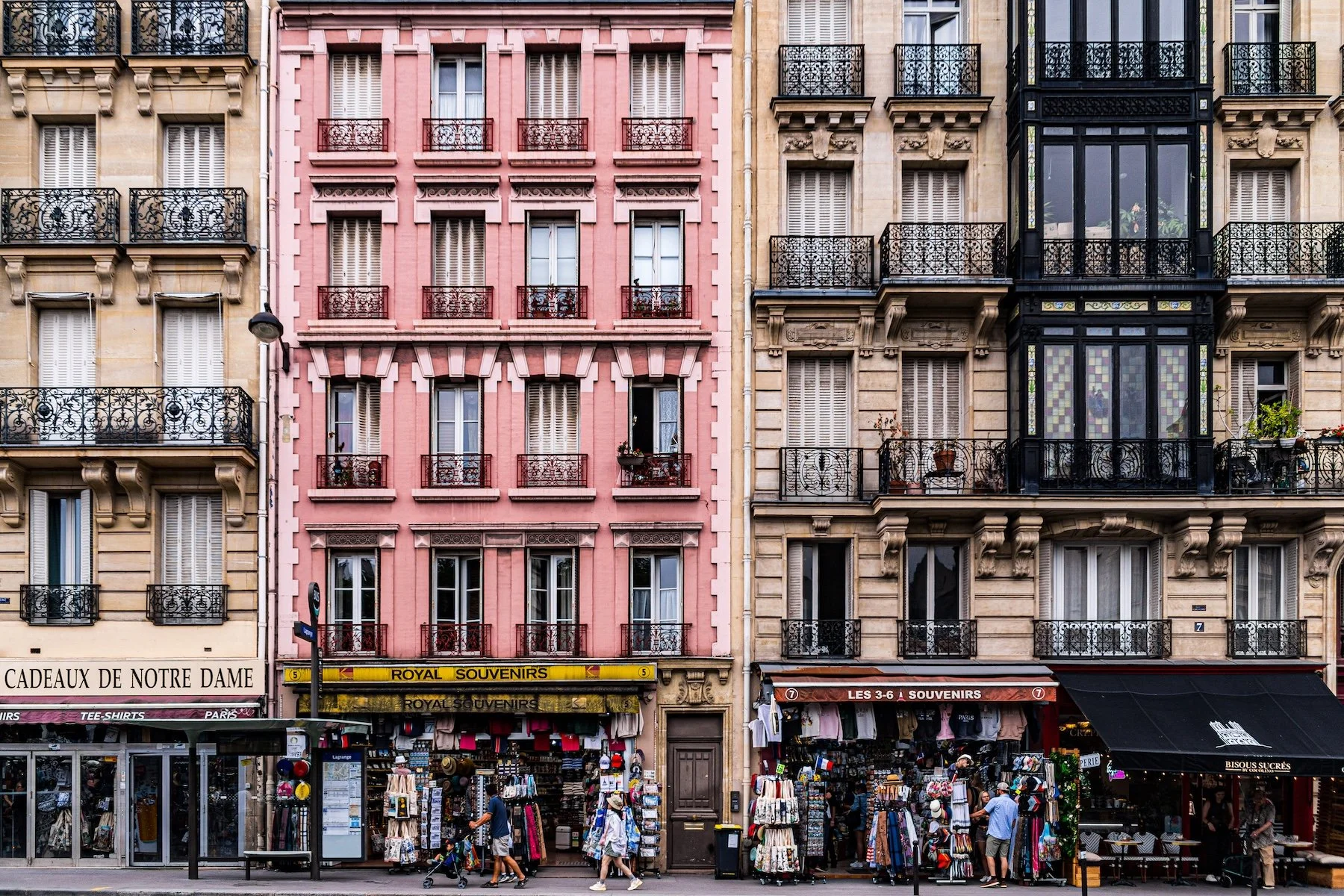
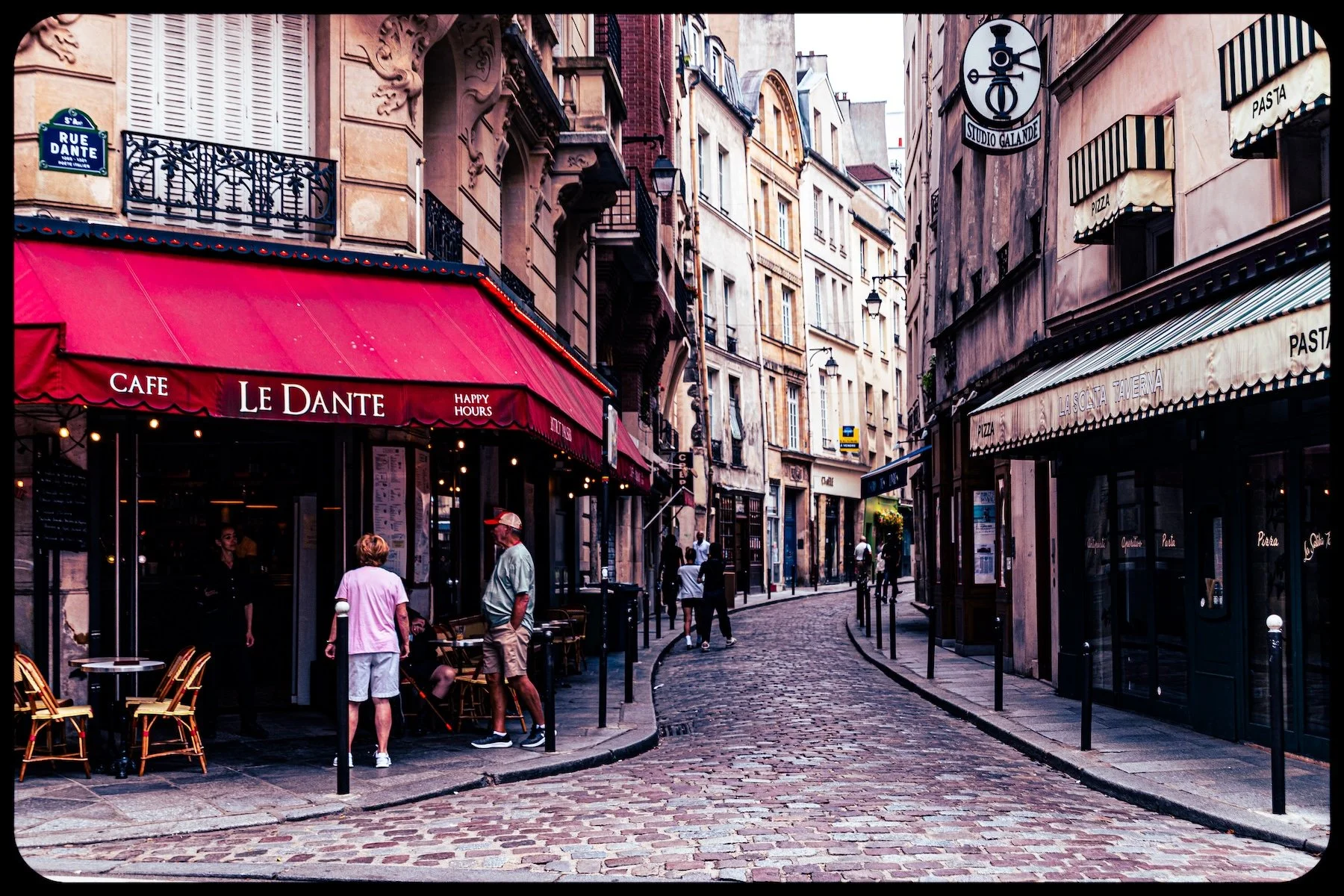
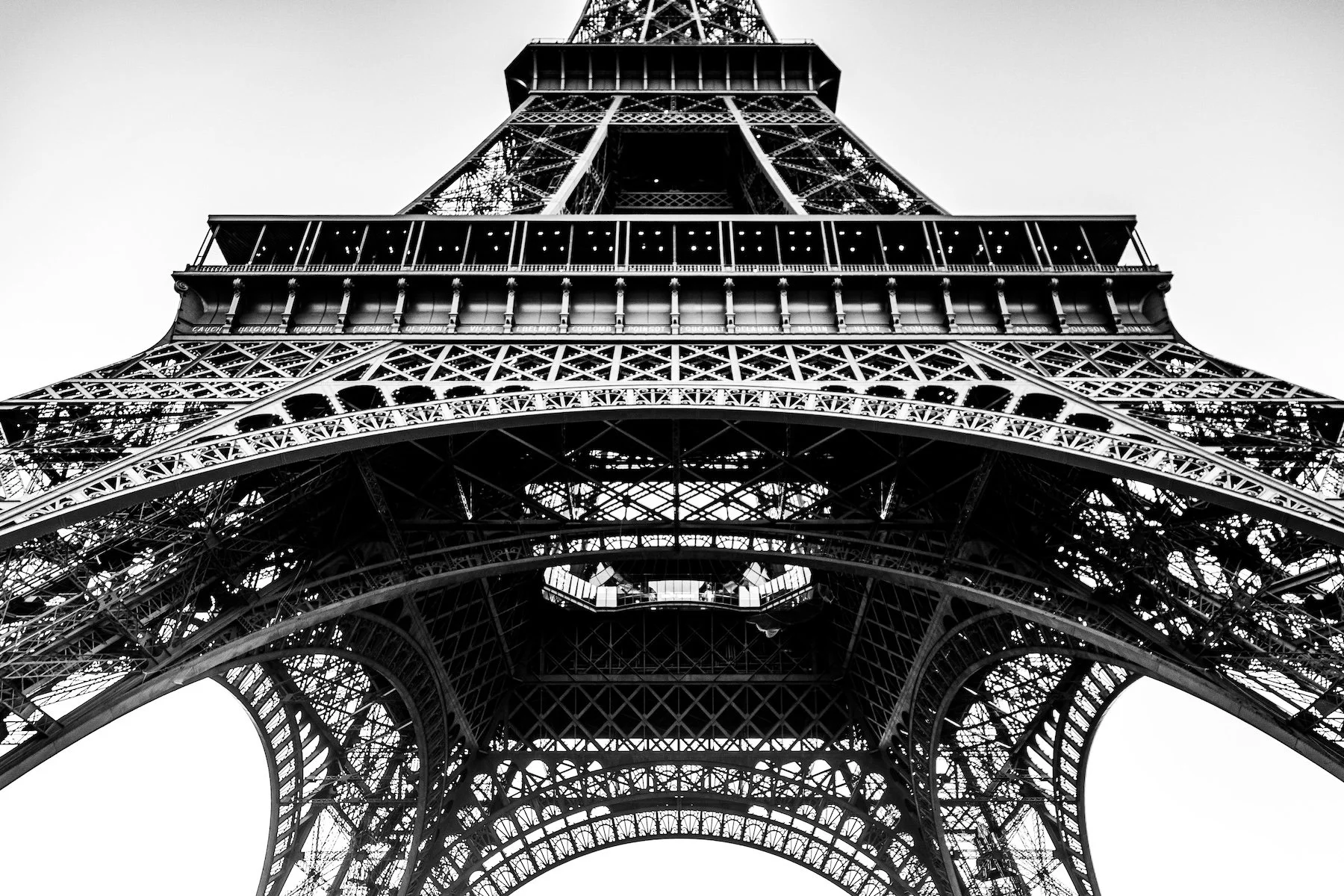
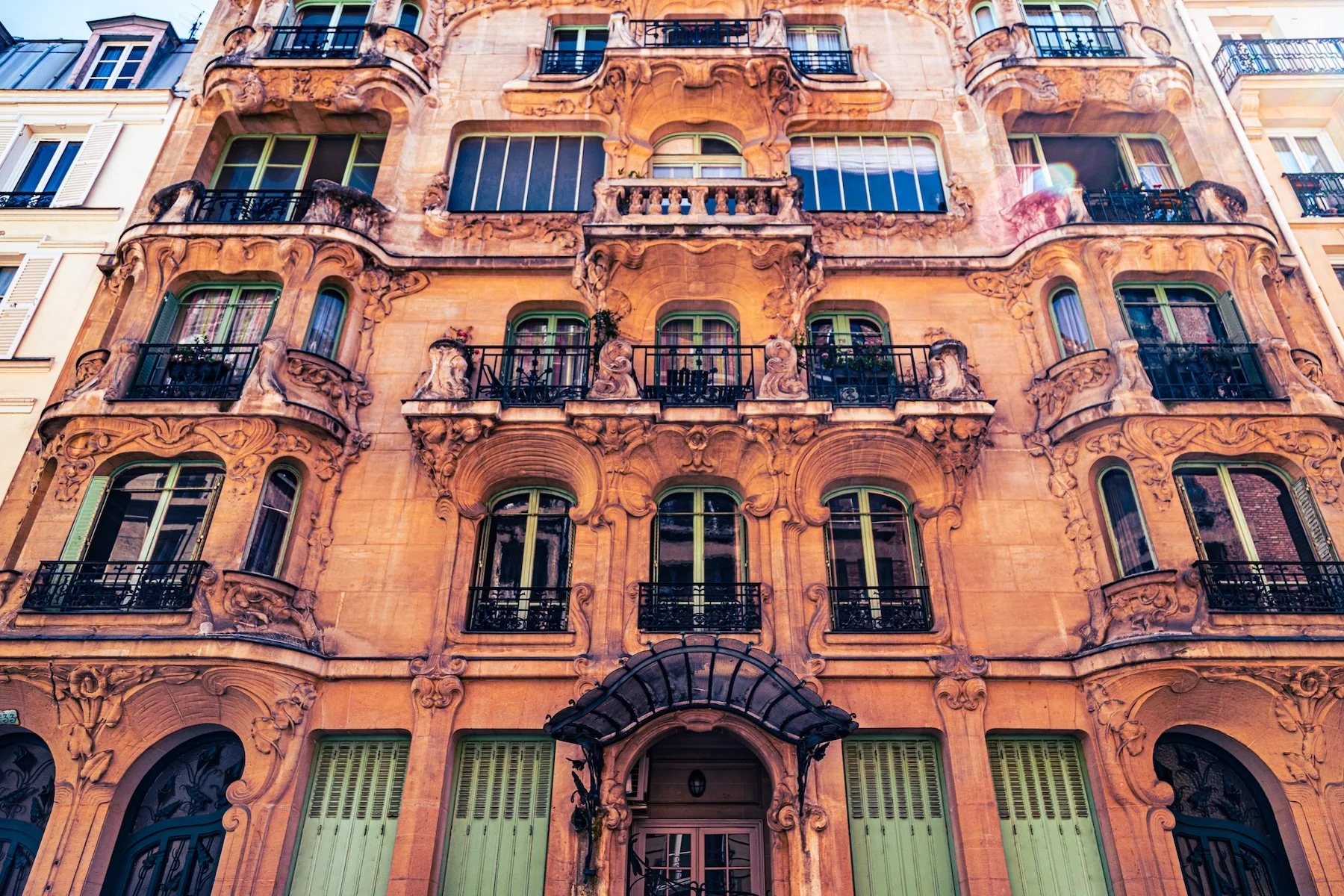
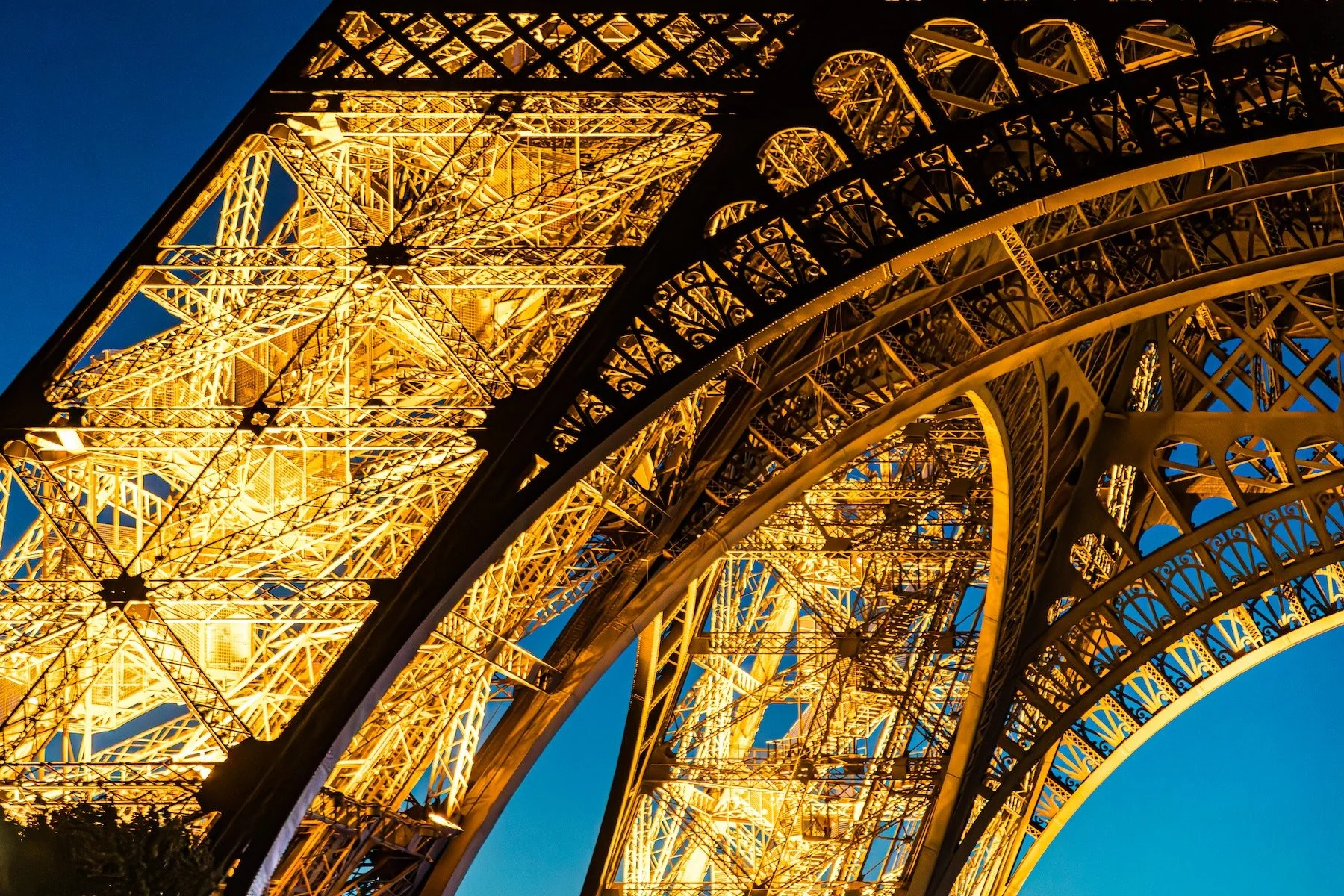
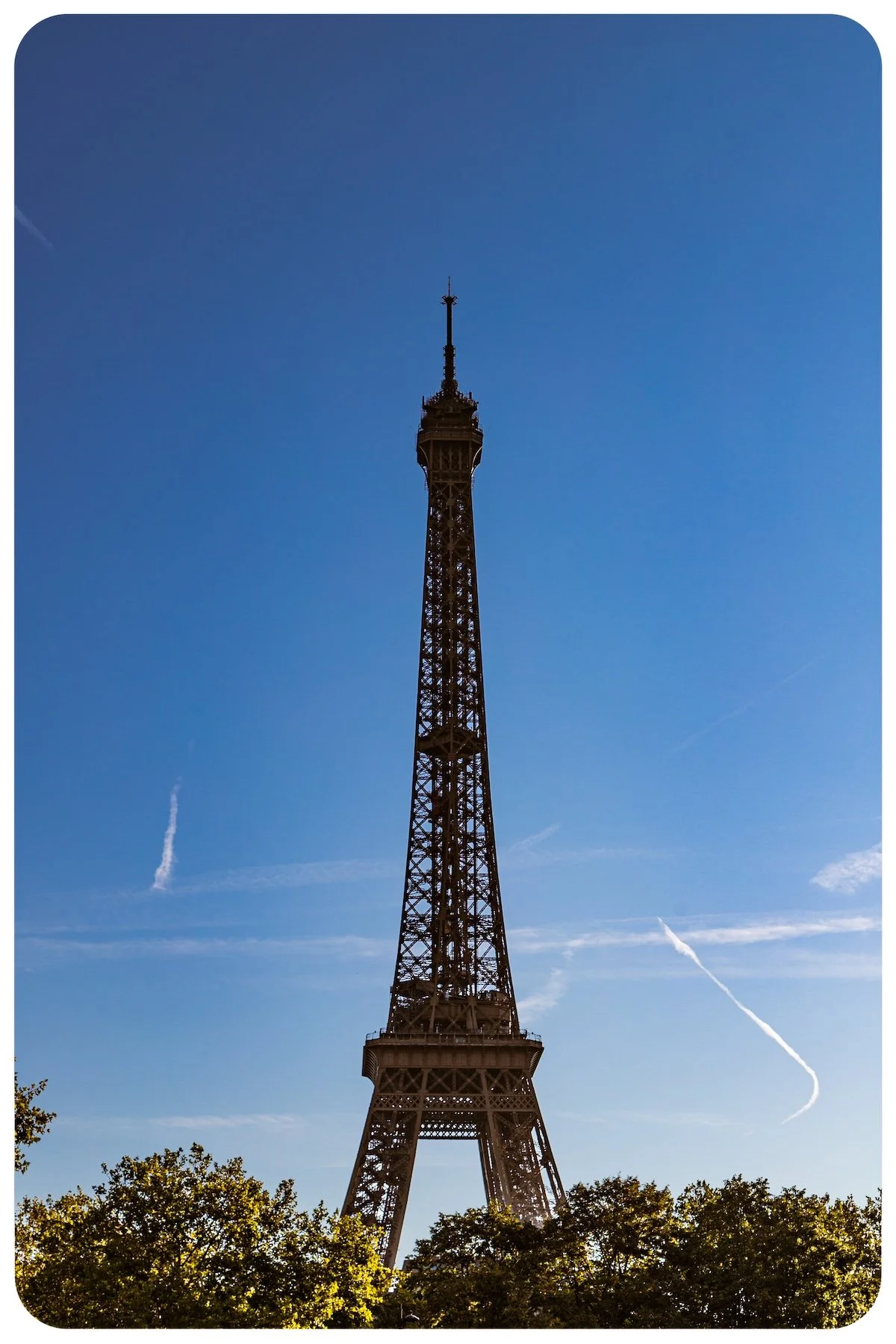
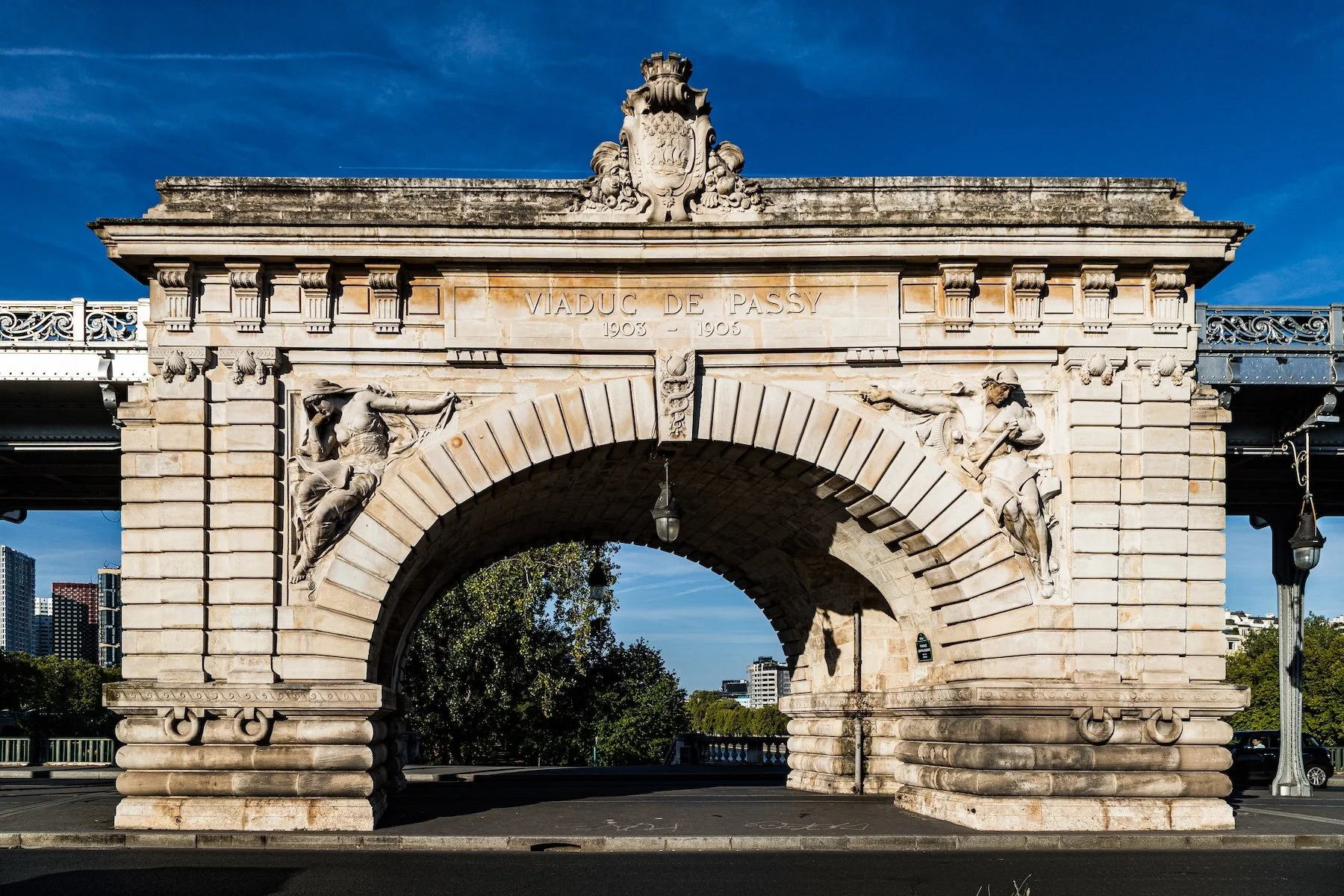
The arrondissements do not share a single visual identity. Instead, they organize Paris into twenty broad visual fields, each gathering its own combination of landmarks, streetscapes, institutions, residential districts, commercial corridors, parks, rail stations, markets, cemeteries, and riverfront edges.
Some arrondissements are defined by monumental scale: royal palaces, ceremonial avenues, government buildings, museums, formal gardens, and internationally recognized landmarks. Others are shaped by hills, canals, rail gateways, apartment-lined boulevards, neighborhood markets, former village streets, industrial remnants, parks, or the quieter rhythms of residential Paris. The arrondissement system gives these varied landscapes a civic frame, allowing the city to be read not as one visual language, but as a sequence of overlapping Parisian atmospheres.
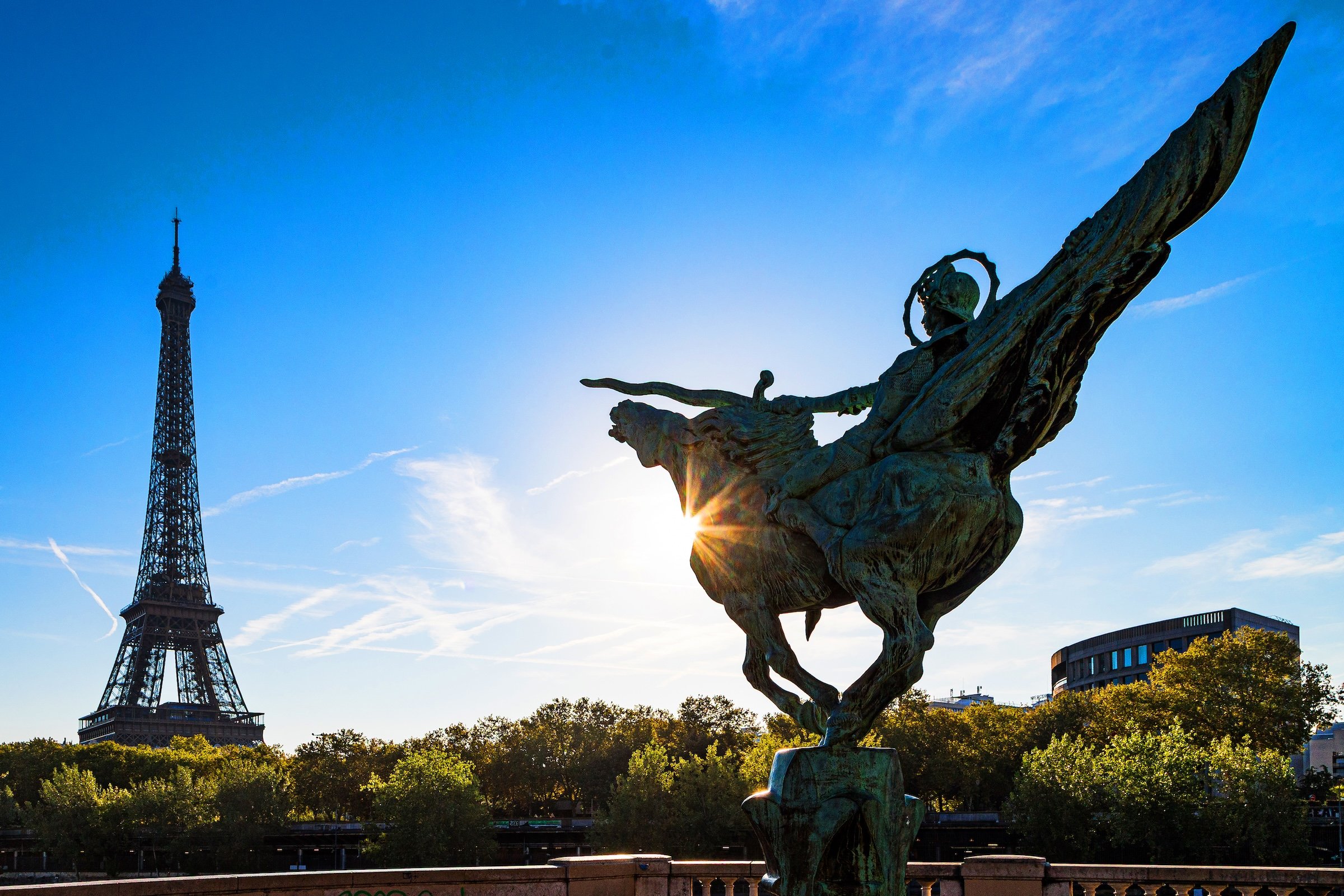
Visual Identity
Through The Lens
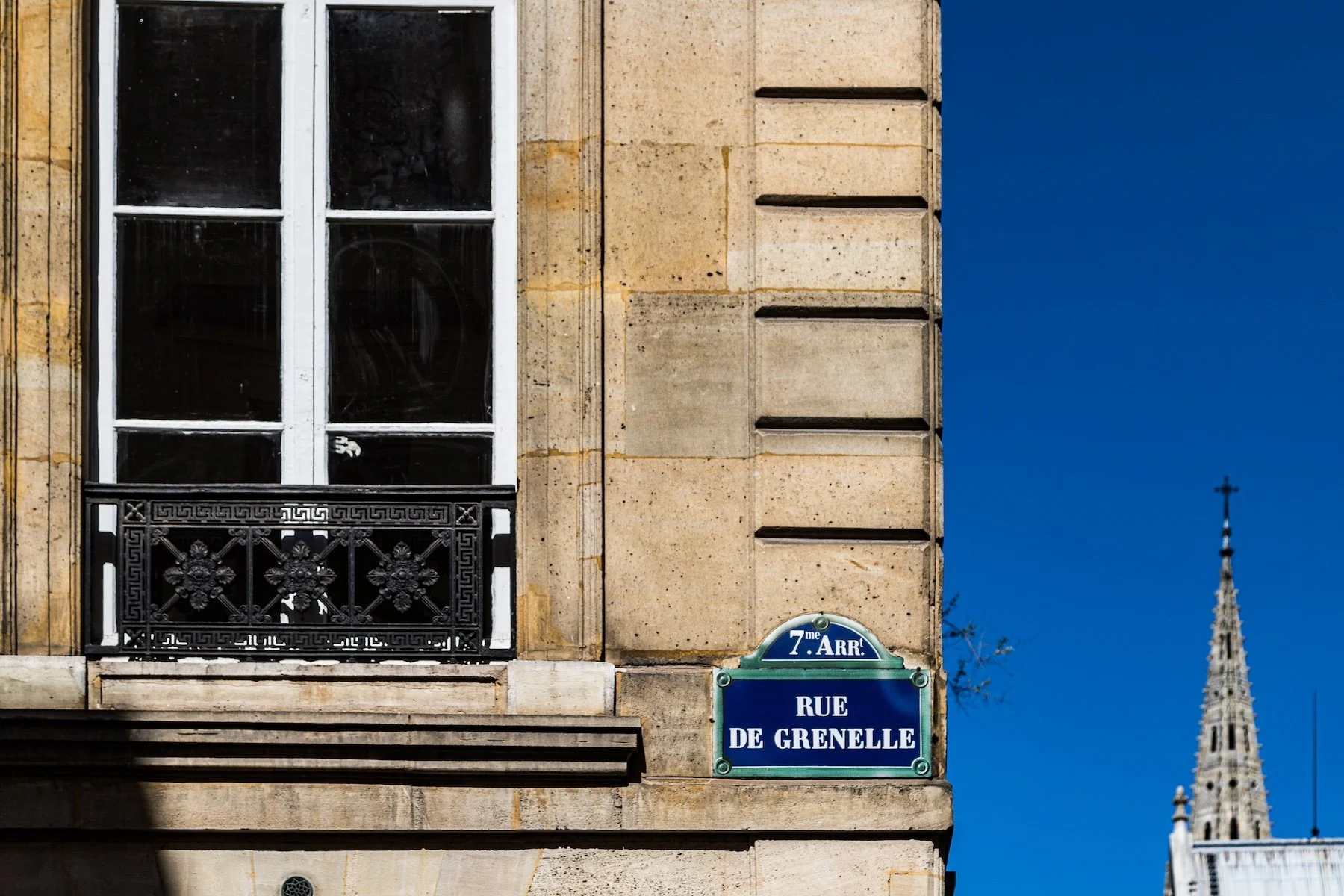
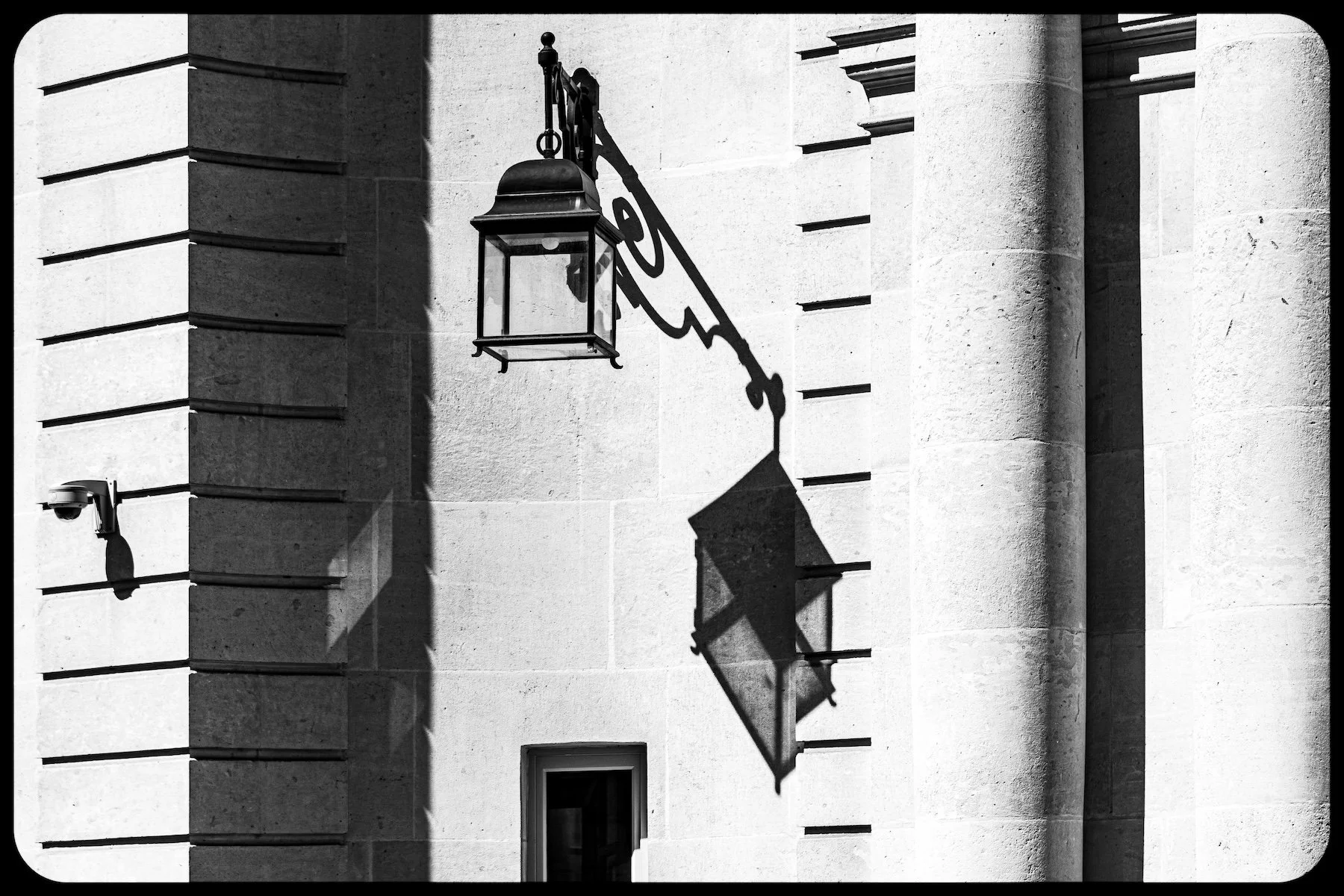
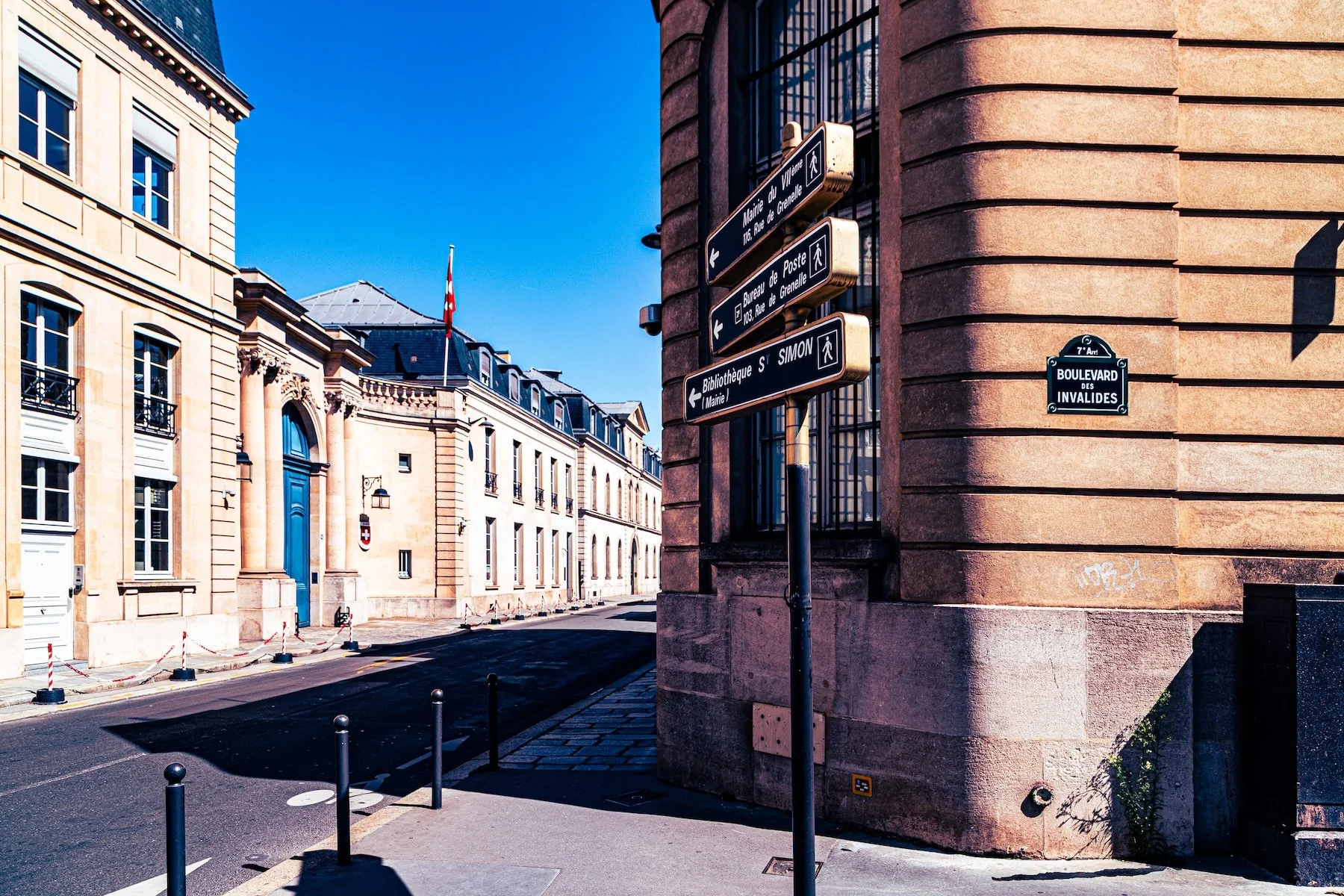
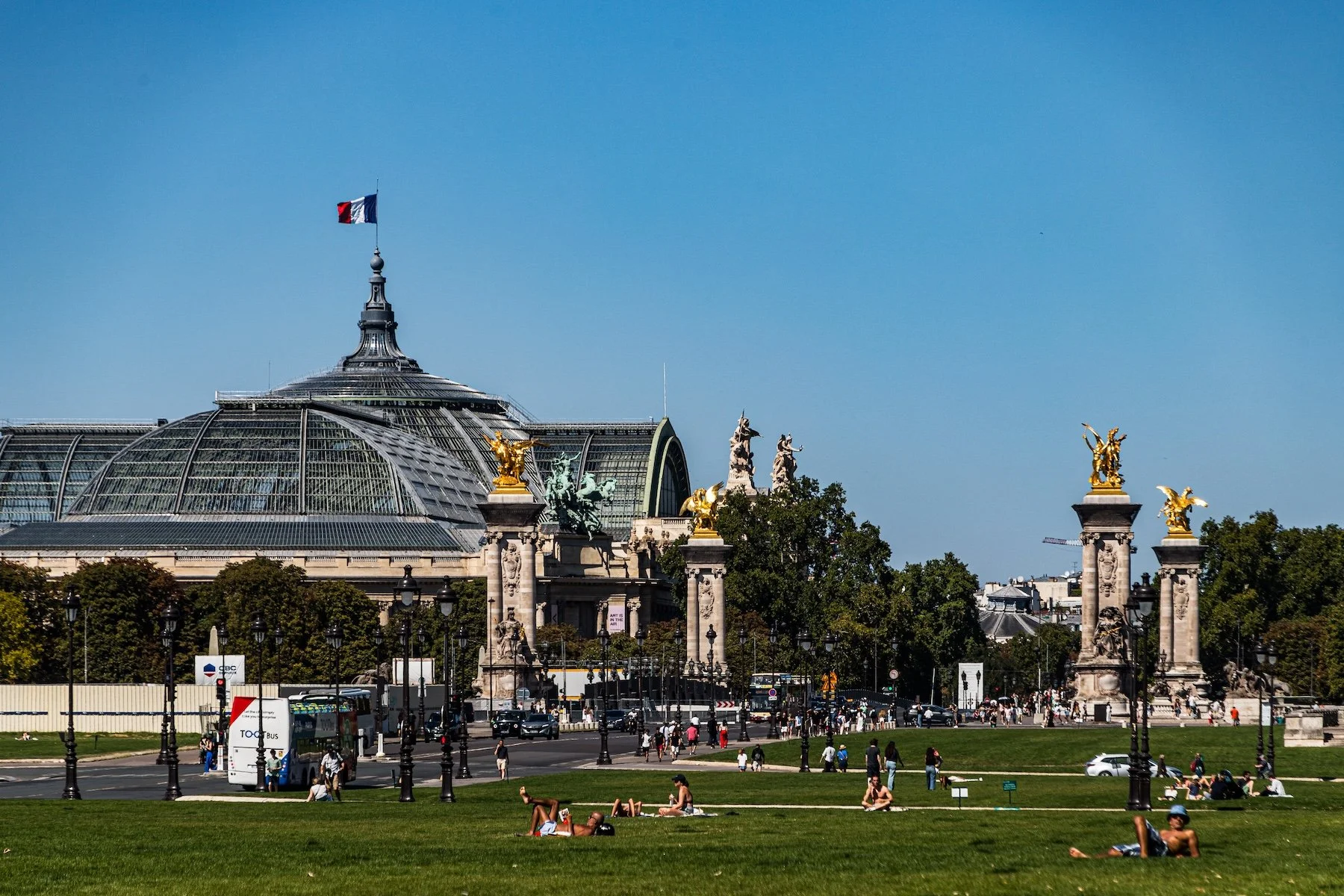
Photographing the arrondissements means moving between the official map and the street-level experience. The camera does not treat each arrondissement as visually uniform. Instead, it looks for the recurring forms, textures, transitions, and contrasts that make each district legible: the geometry of boulevards, the shade of plane trees, the repetition of balconies, the rise of stairways, the curve of canals, the presence of rail stations, the opening of parks, the weight of monuments, and the intimacy of side streets.
On CityNeighborhoods, the arrondissement provides the frame, but the photograph comes from the encounter between map, movement, light, and observation. As the Paris photography is processed, this section will connect each arrondissement more directly to the project’s Photographic Lexicon: the visual strategies, recurring motifs, and compositional patterns that shape how the city is seen through the lens.
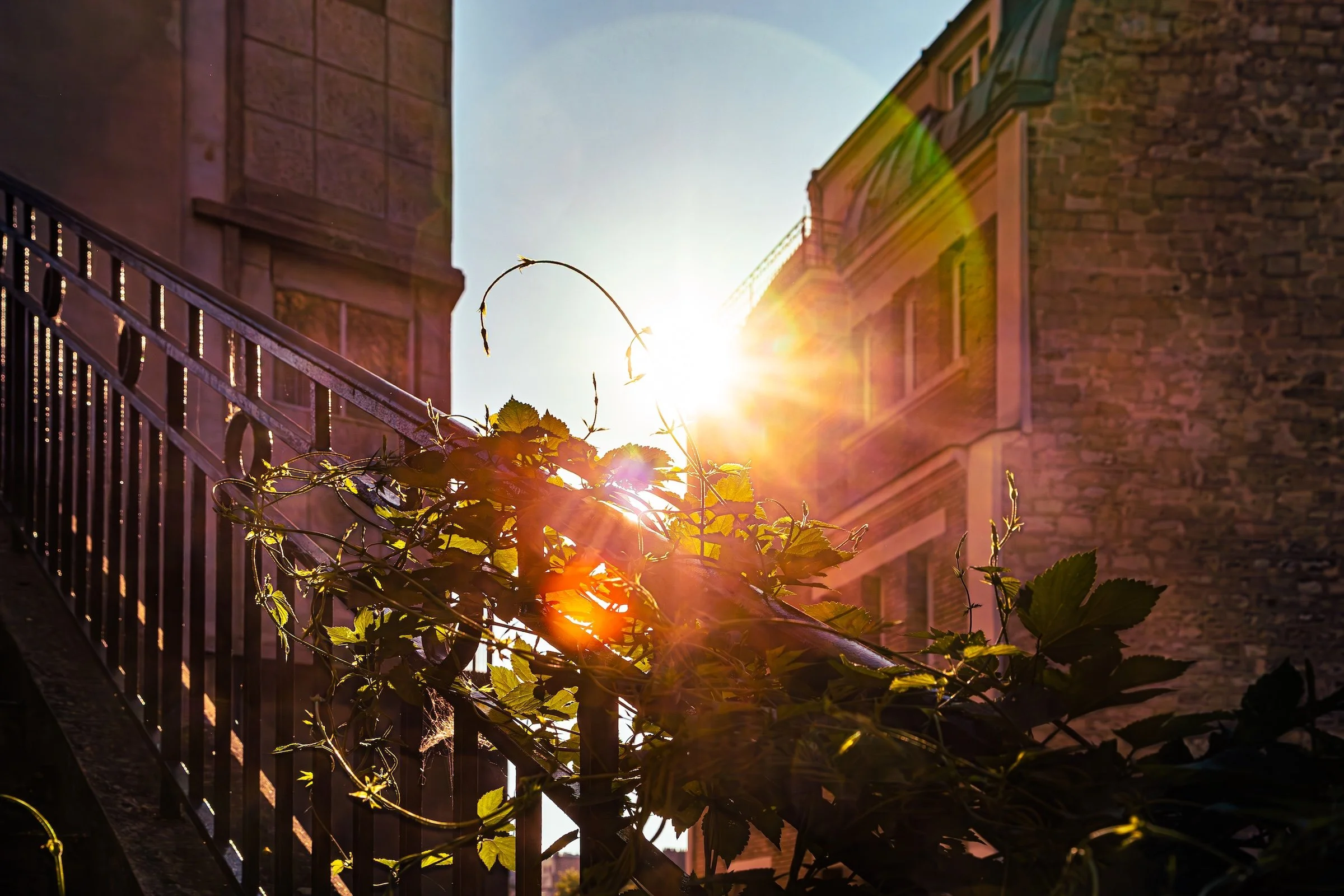
If you visit Paris, these ideas can help inspire your own photography.
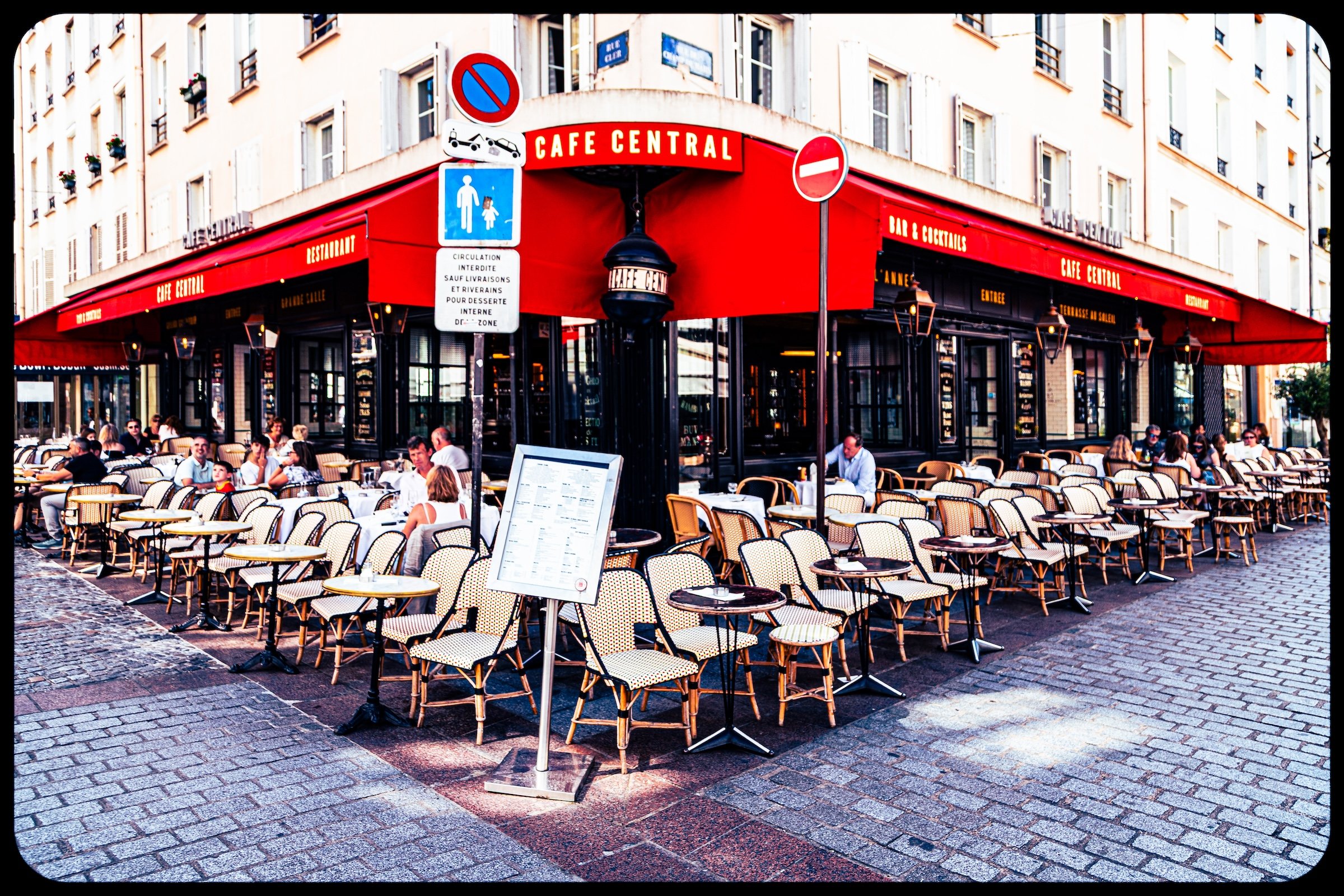
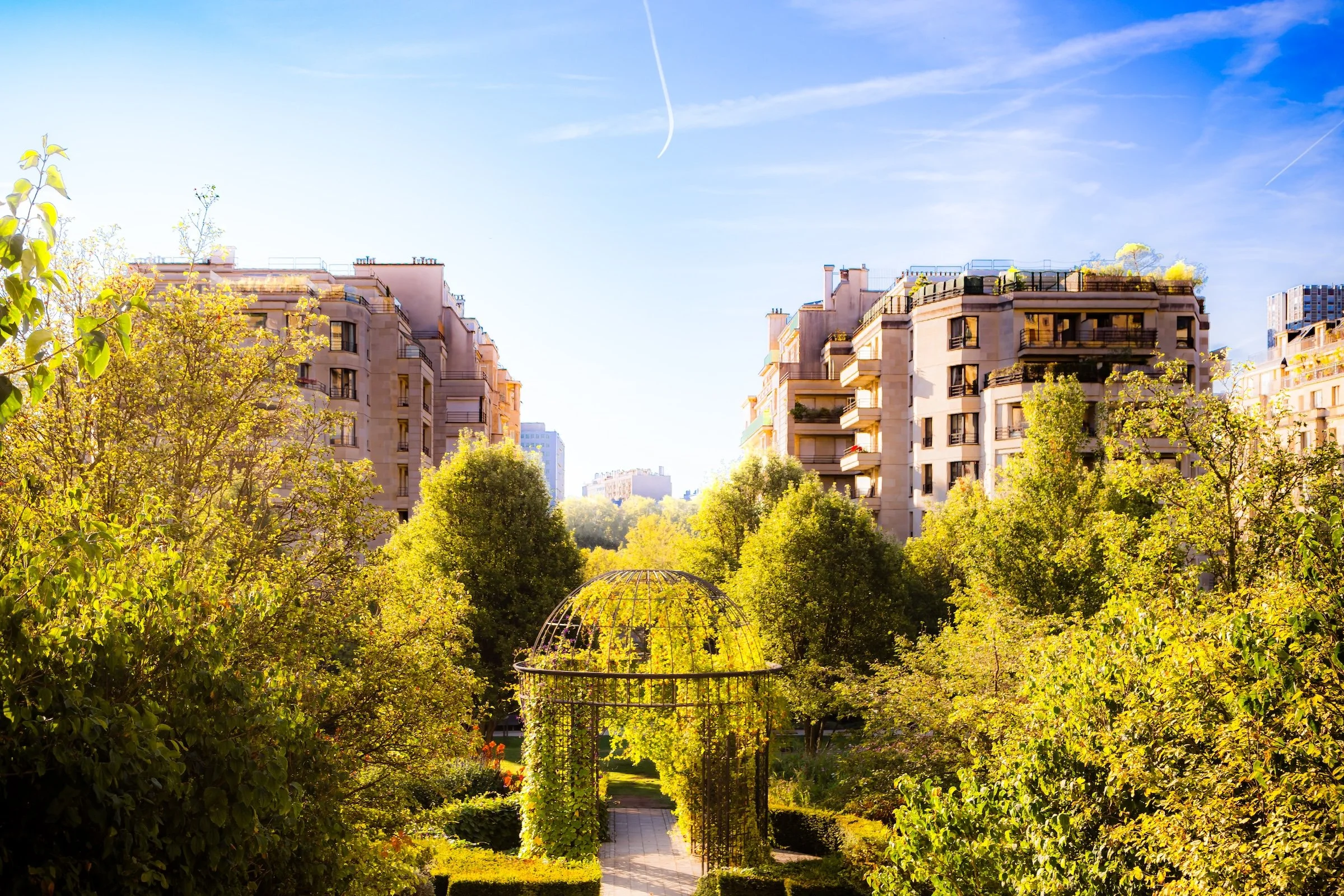
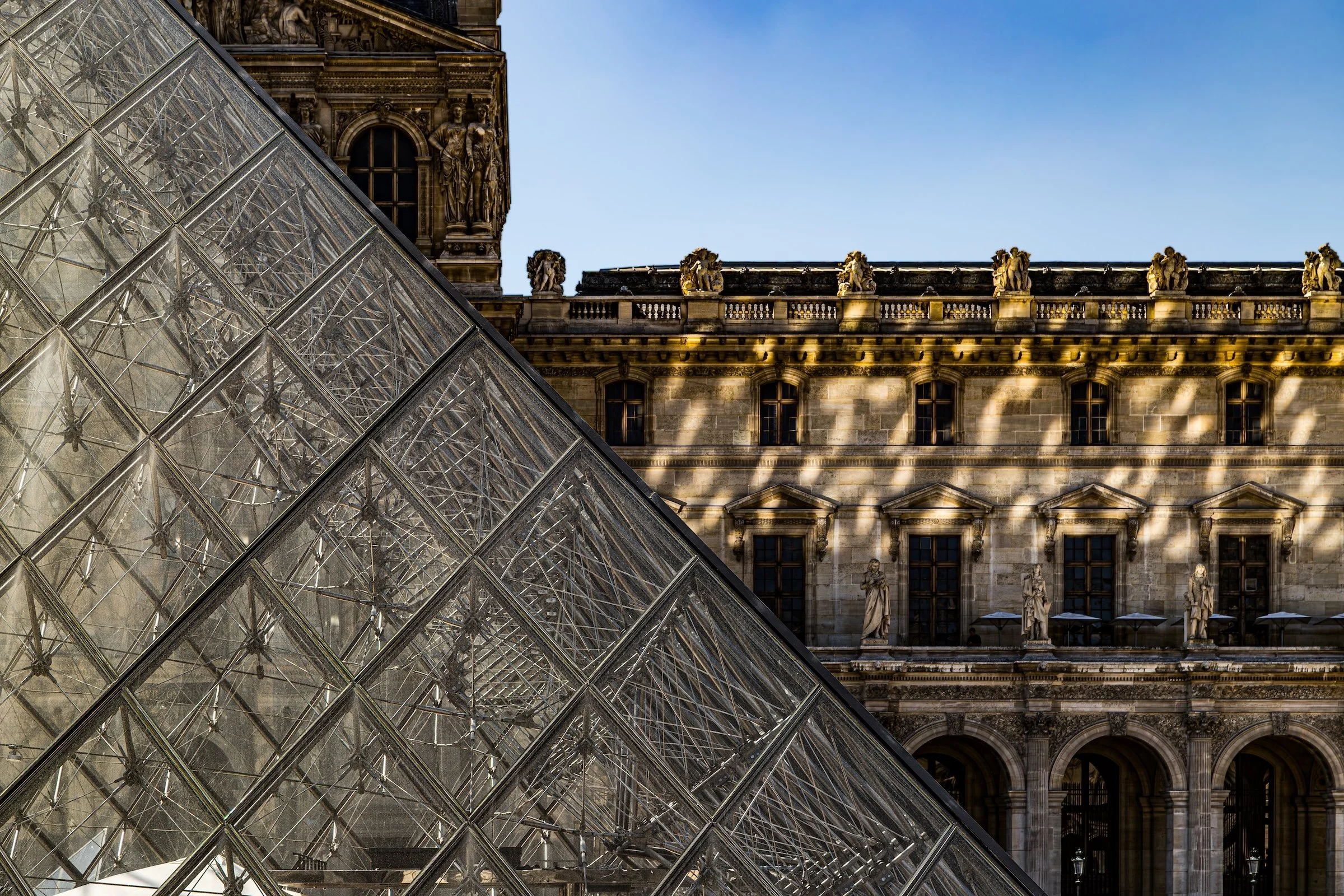
Paris: J’Espere, Je Rêve, Je Vive
Paris Photo Gallery
Paris Field Notes
-
Field Note: August 18, 2025 | 07:58 AM
Conditions: 73°F | Humidity: 72%.
Within the park's interior, the glacial kettle ponds acted as humidity traps, creating a soft, hazy light that filtered through the old-growth oaks. The transition from the park's dense shade to the sun-drenched edges of Oakland Gardens highlighted the day's exceptional "picture-perfect" clarity.
There is a fleeting window in Queens where the humidity of August hasn't yet heavy-set, and the morning sun hits the canopy of Alley Pond Park at a perfect oblique angle. Arriving just before 8:00 AM, I watched the light break through the oaks and tulip trees, casting long, dramatic shadows across the wet grass. It’s in these quiet, golden moments that the park feels less like a city escape and more like the ancient glacial valley it actually is.
Other neighborhoods visited:
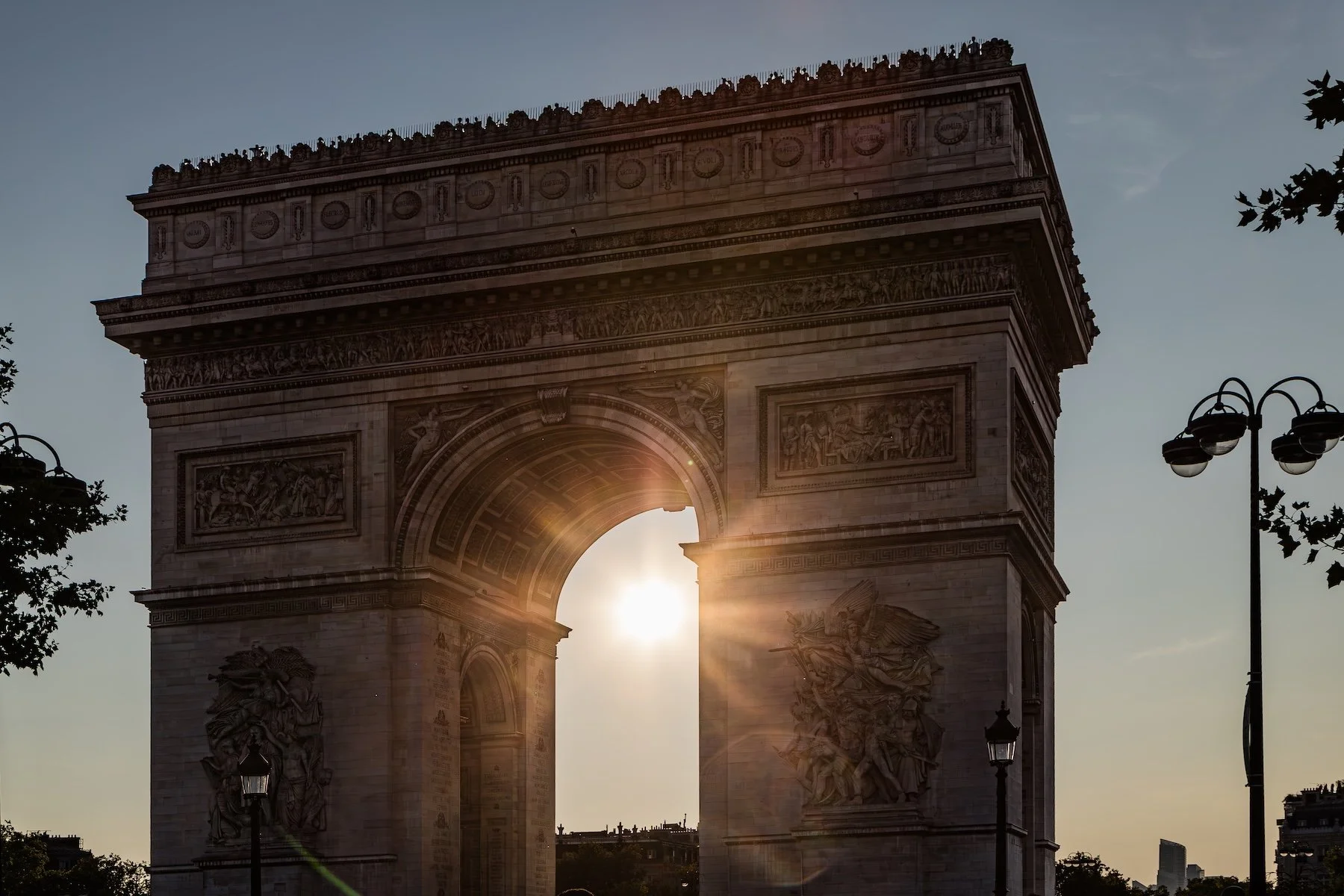
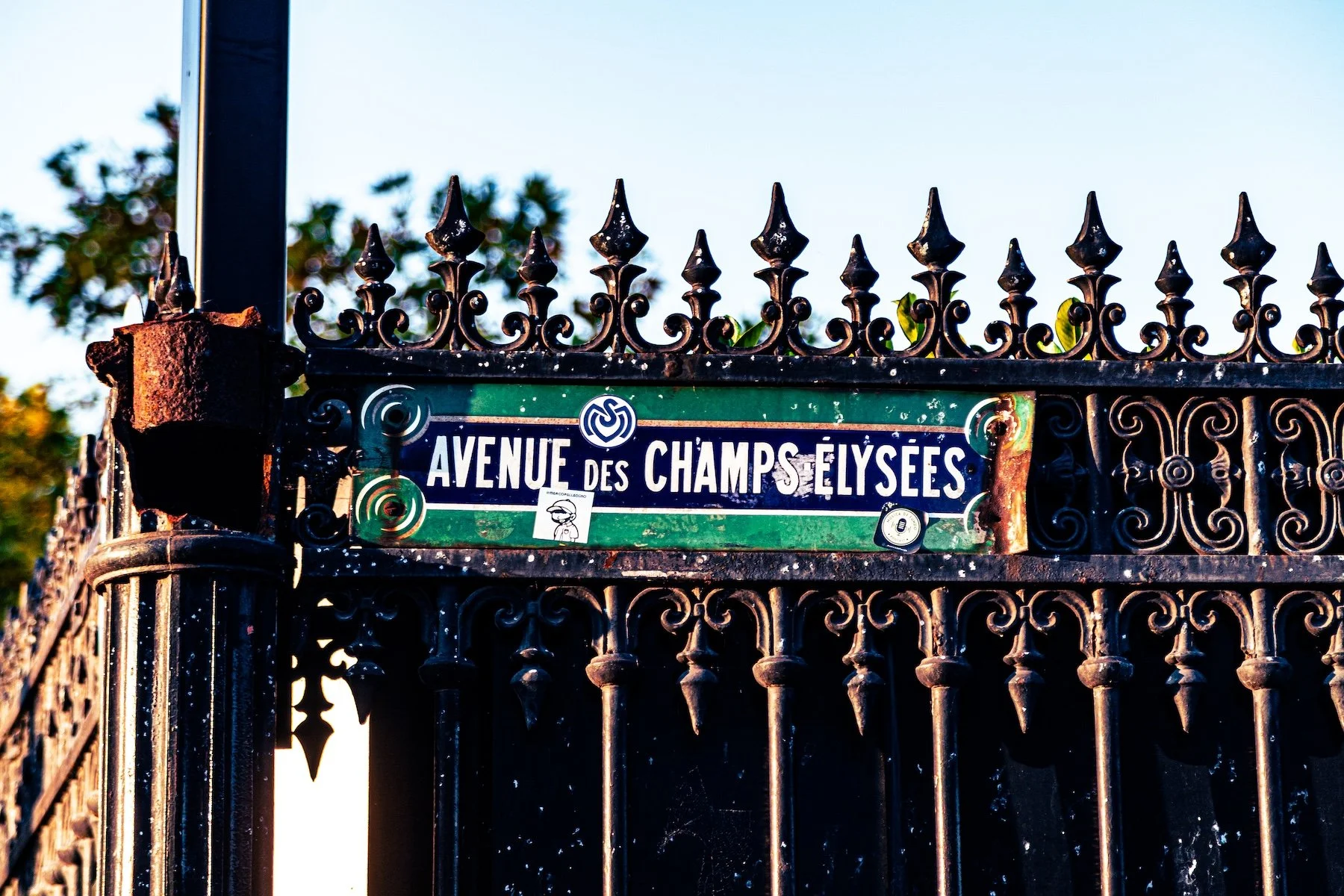
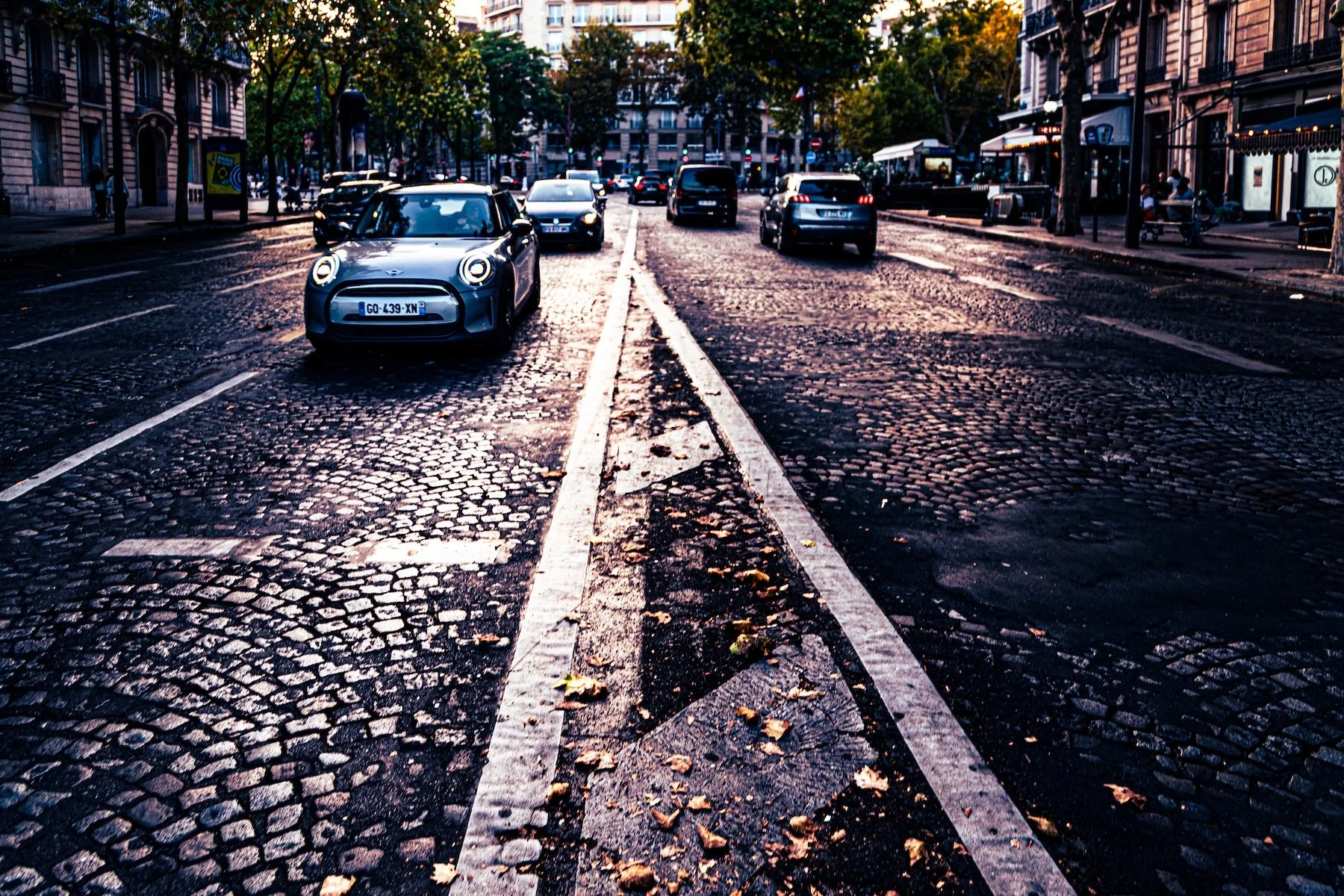
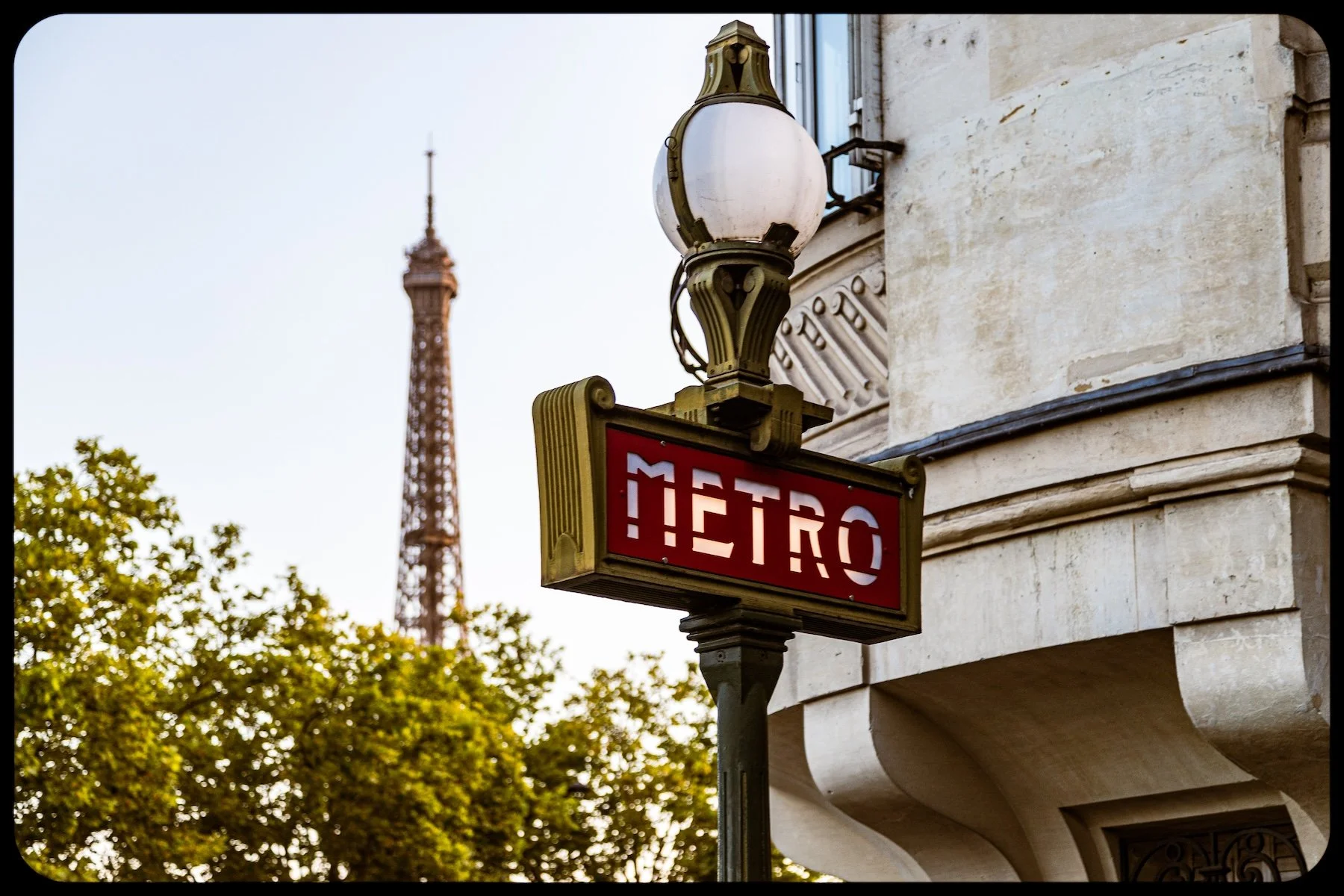
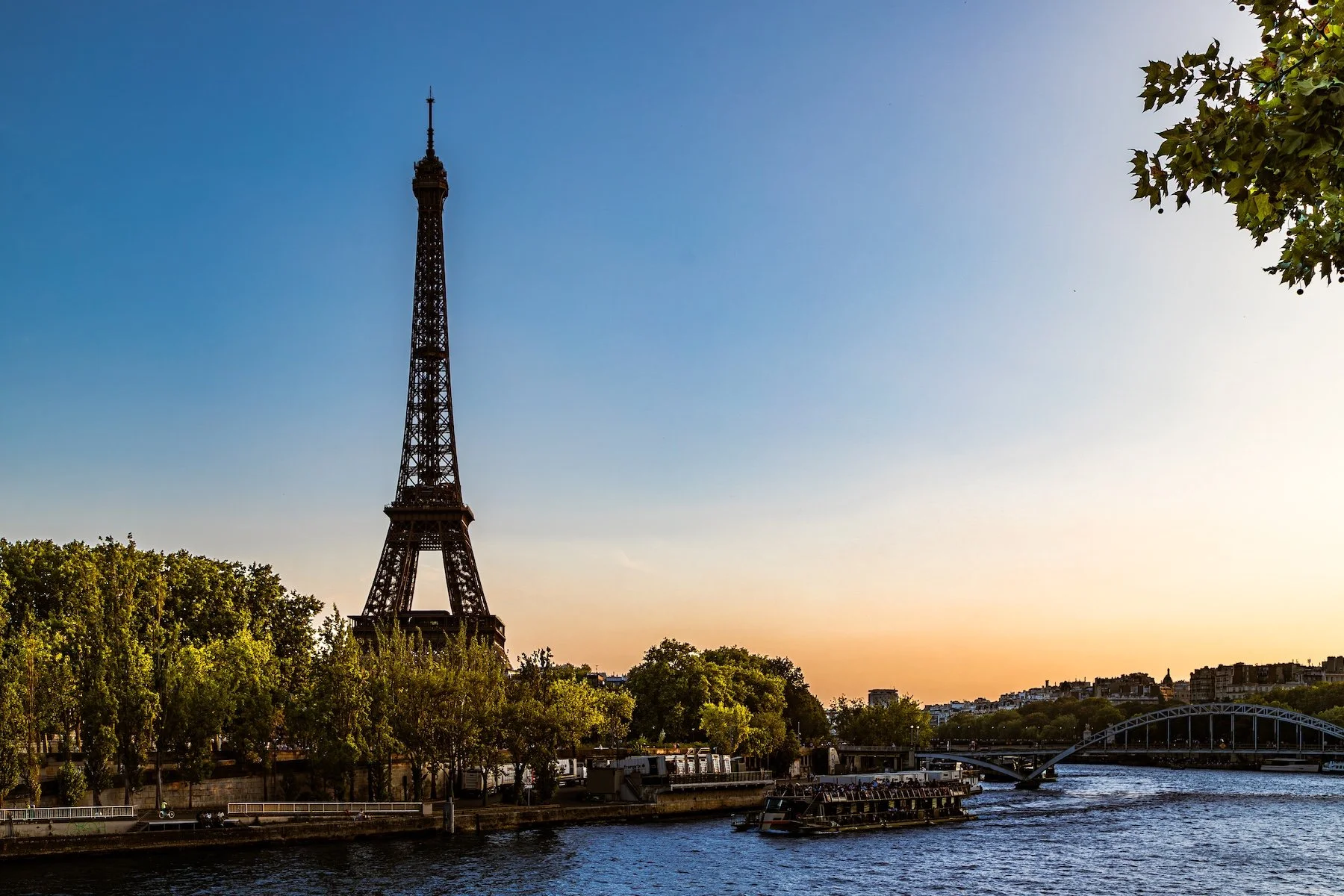
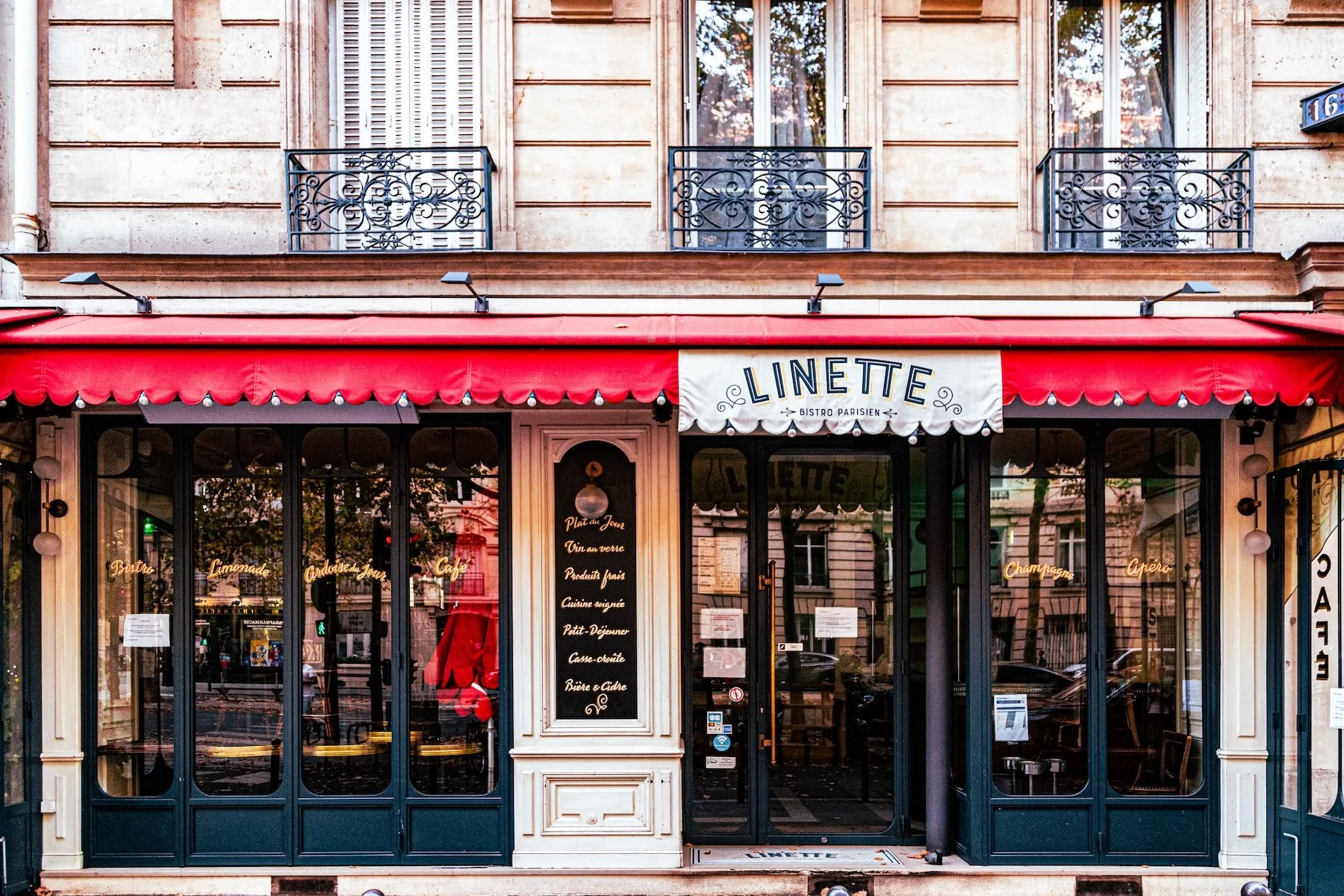
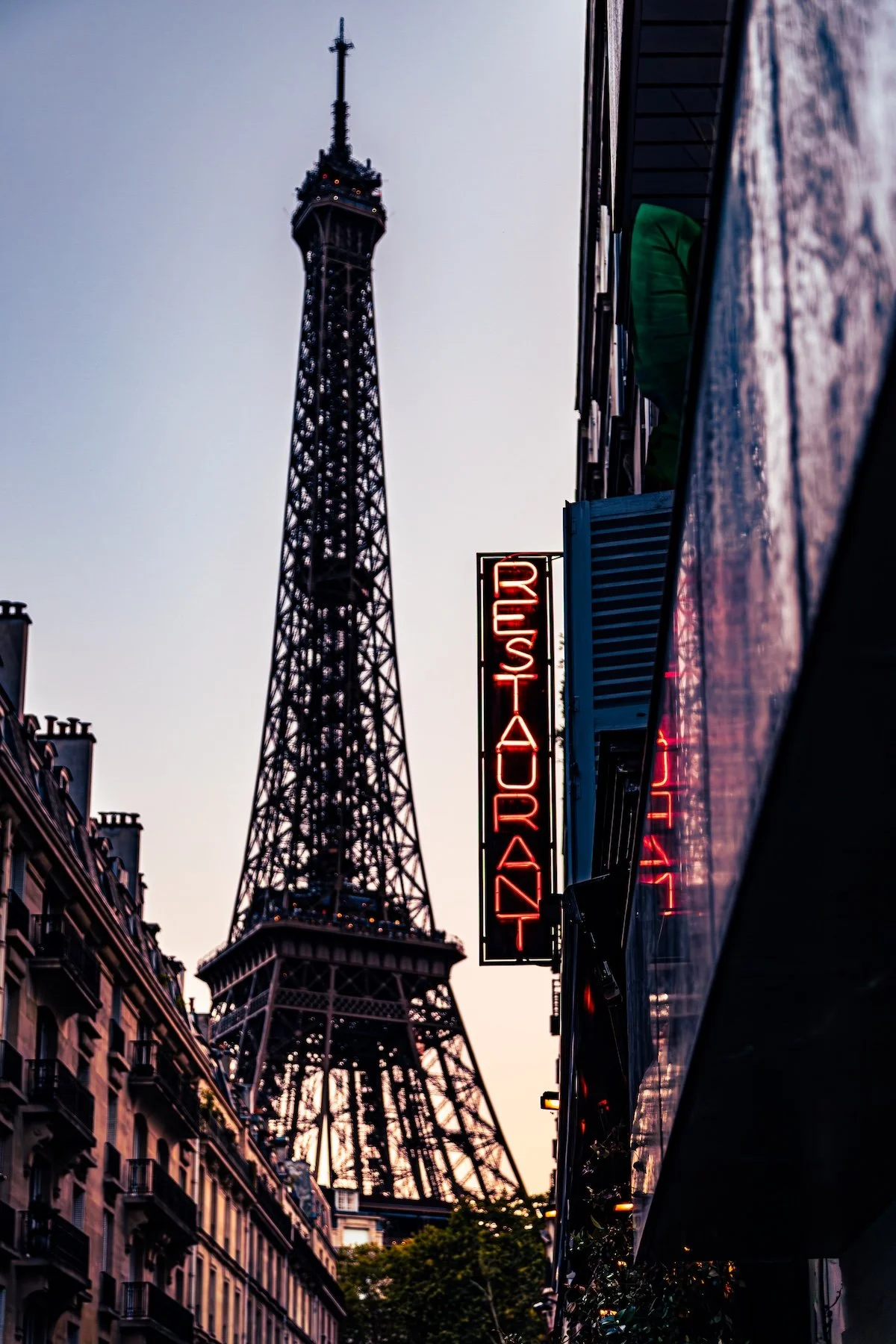
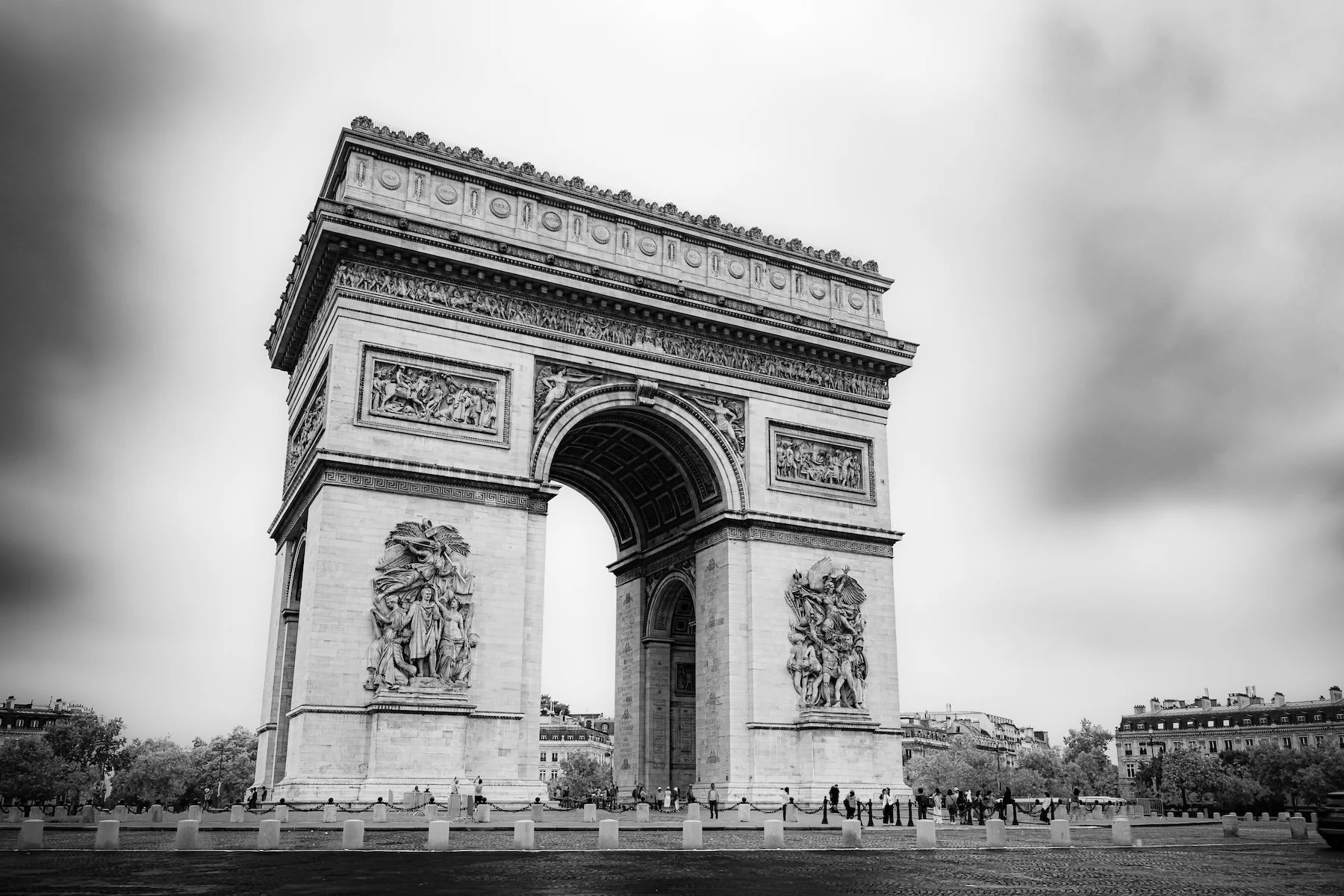
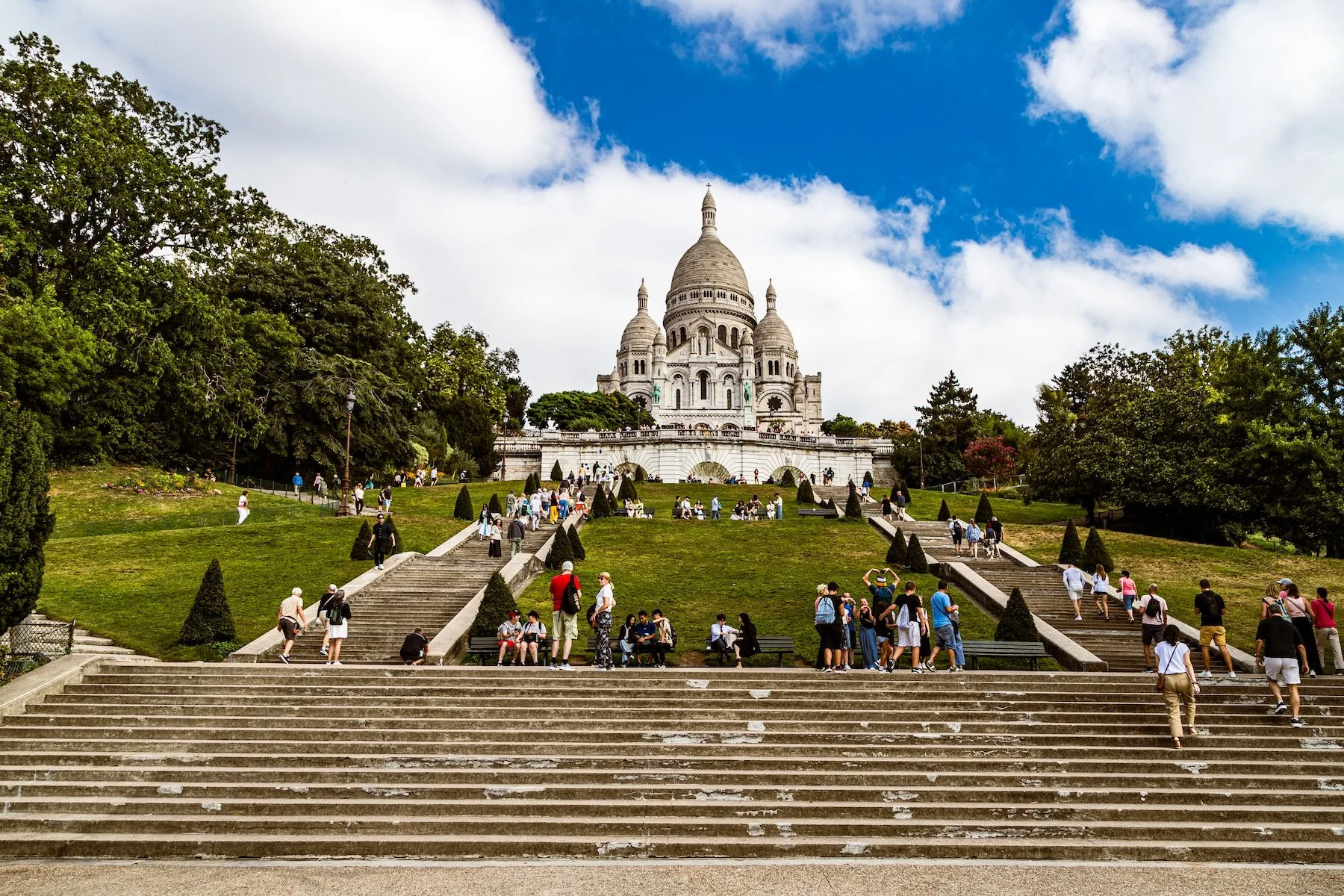
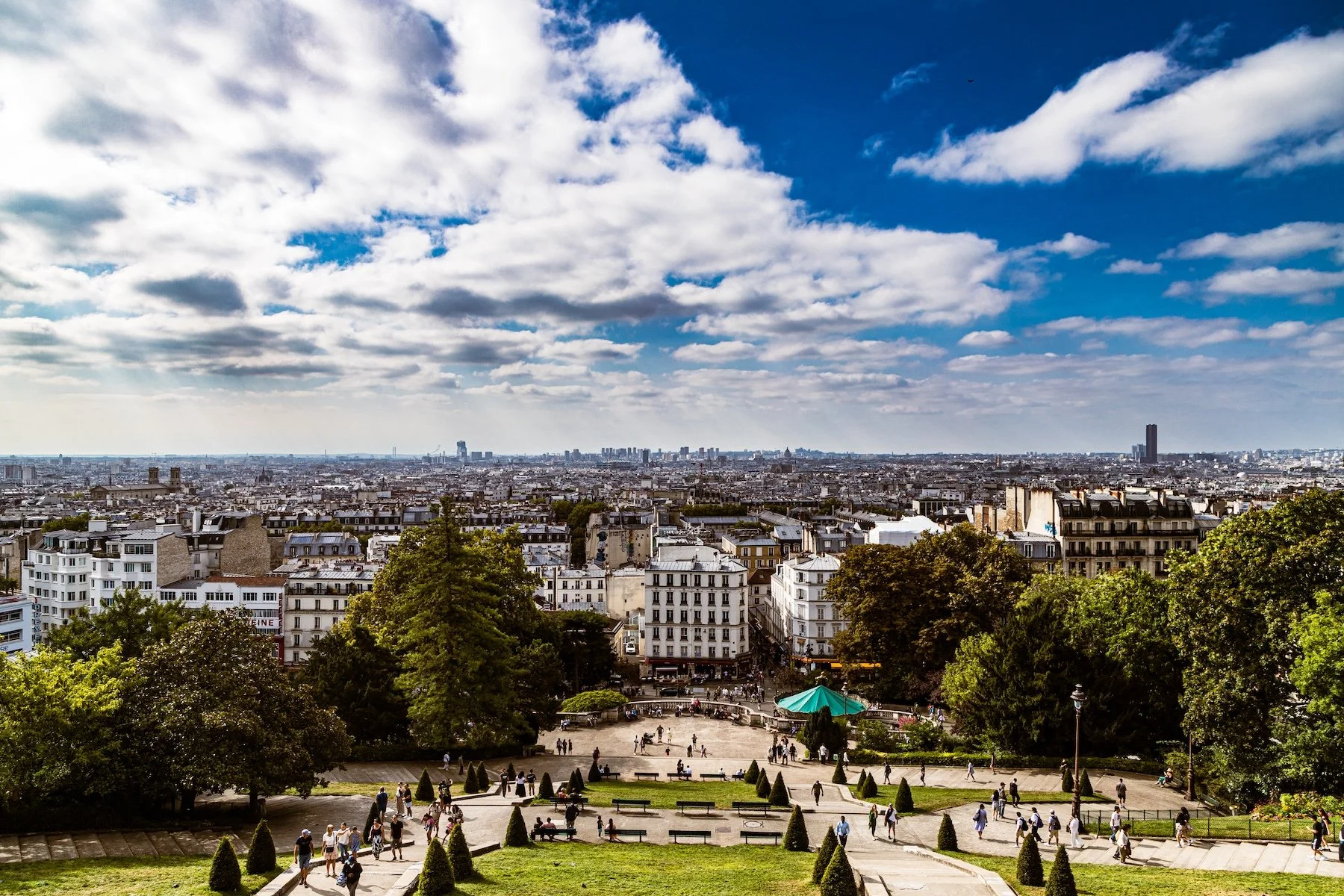
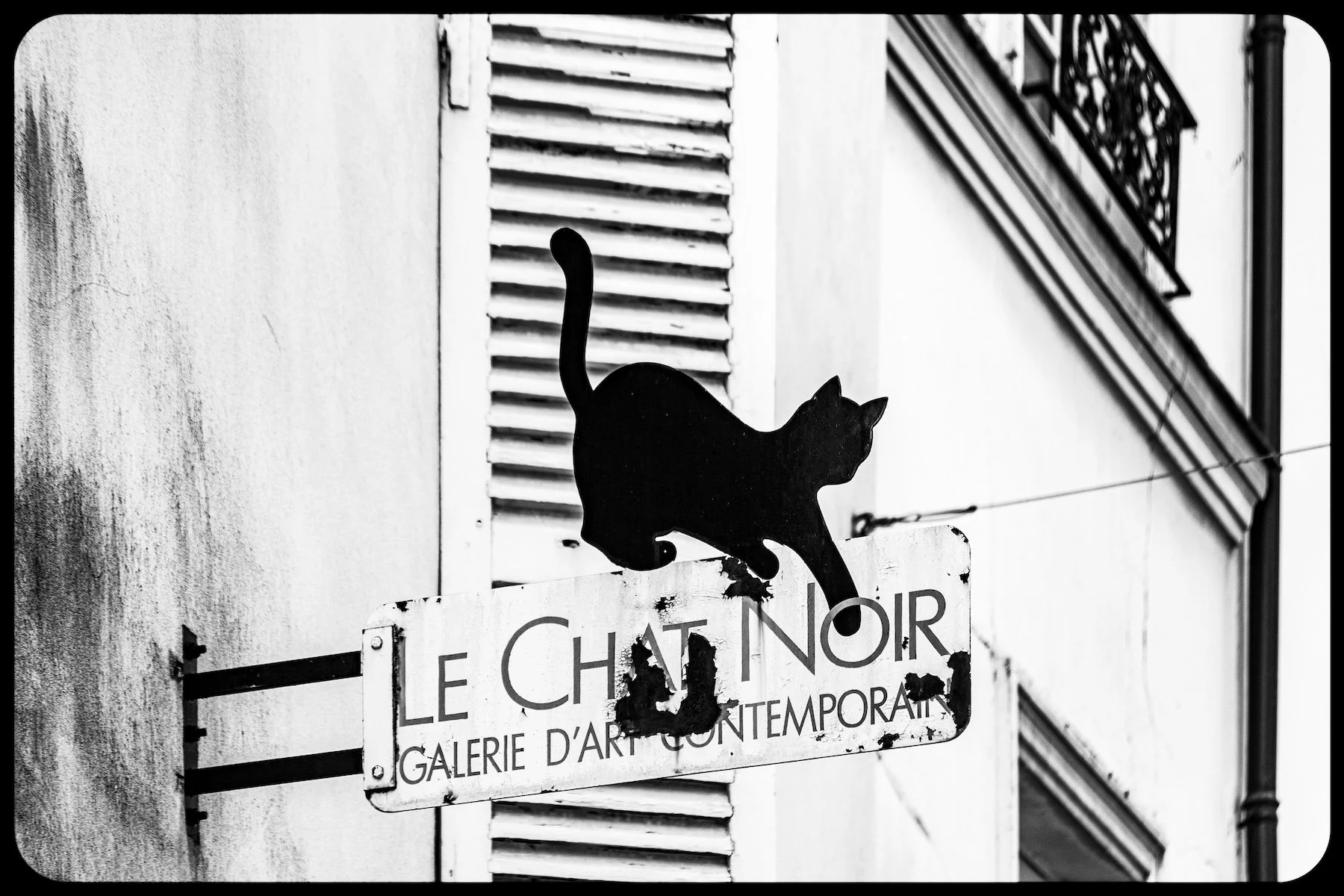
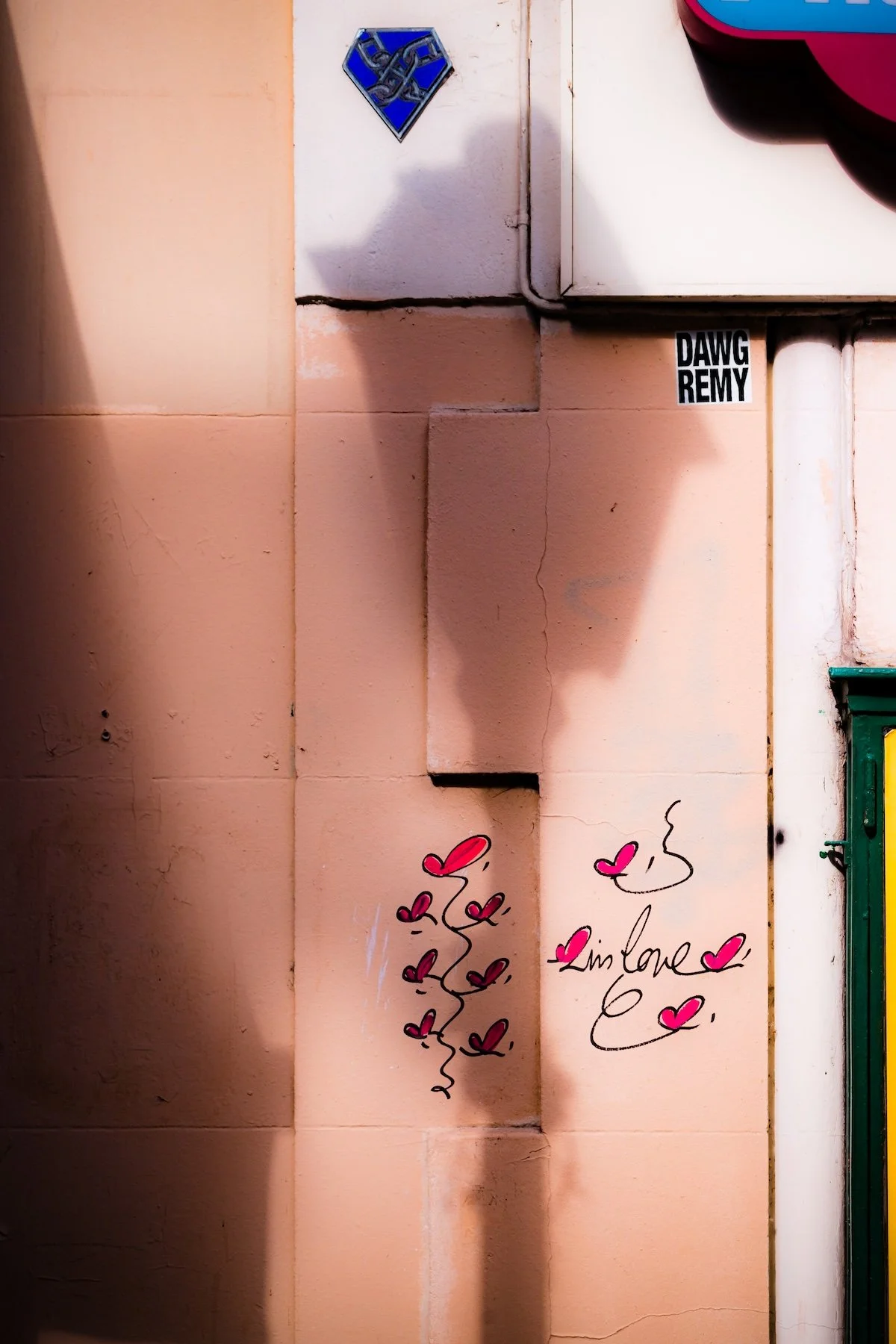
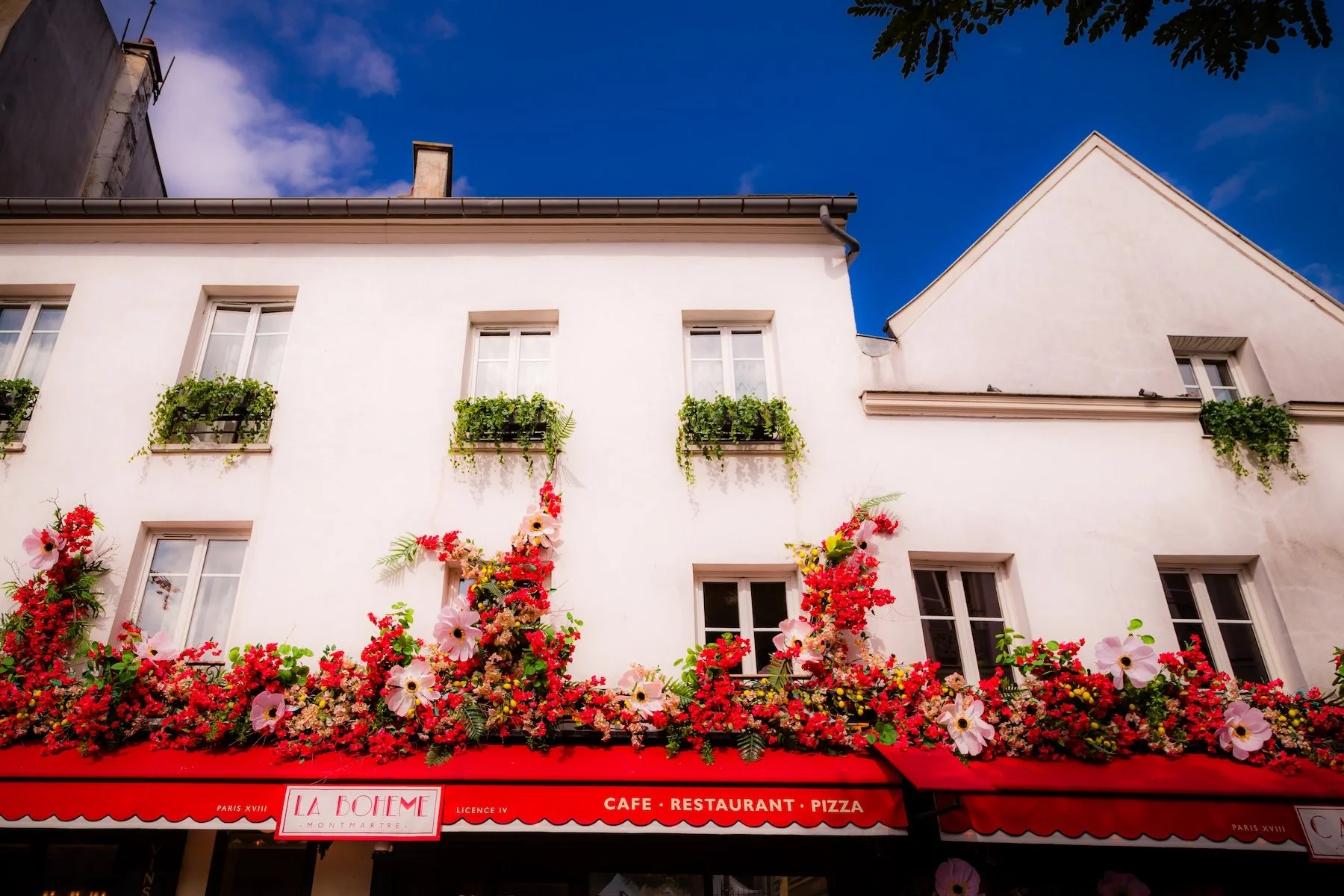
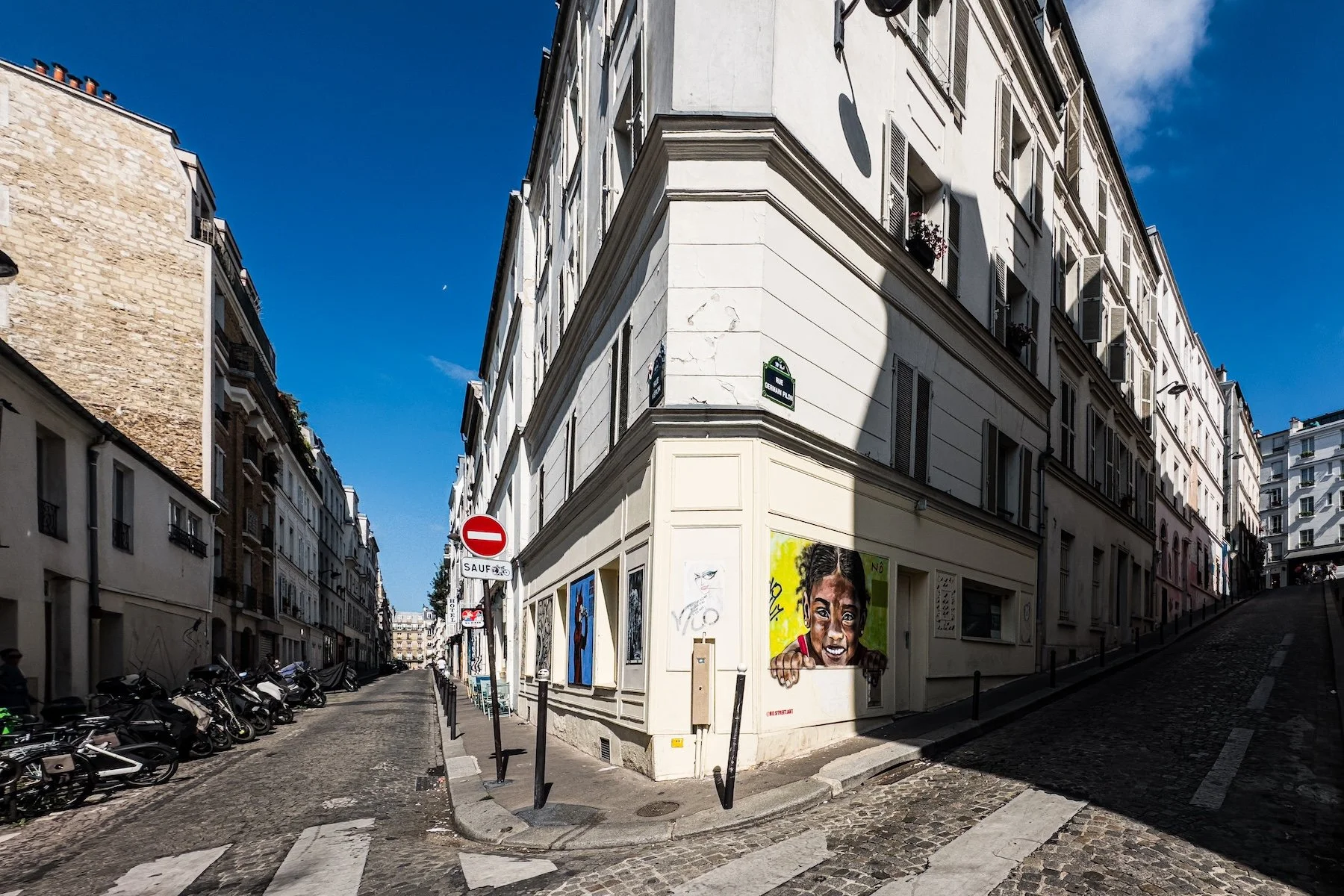
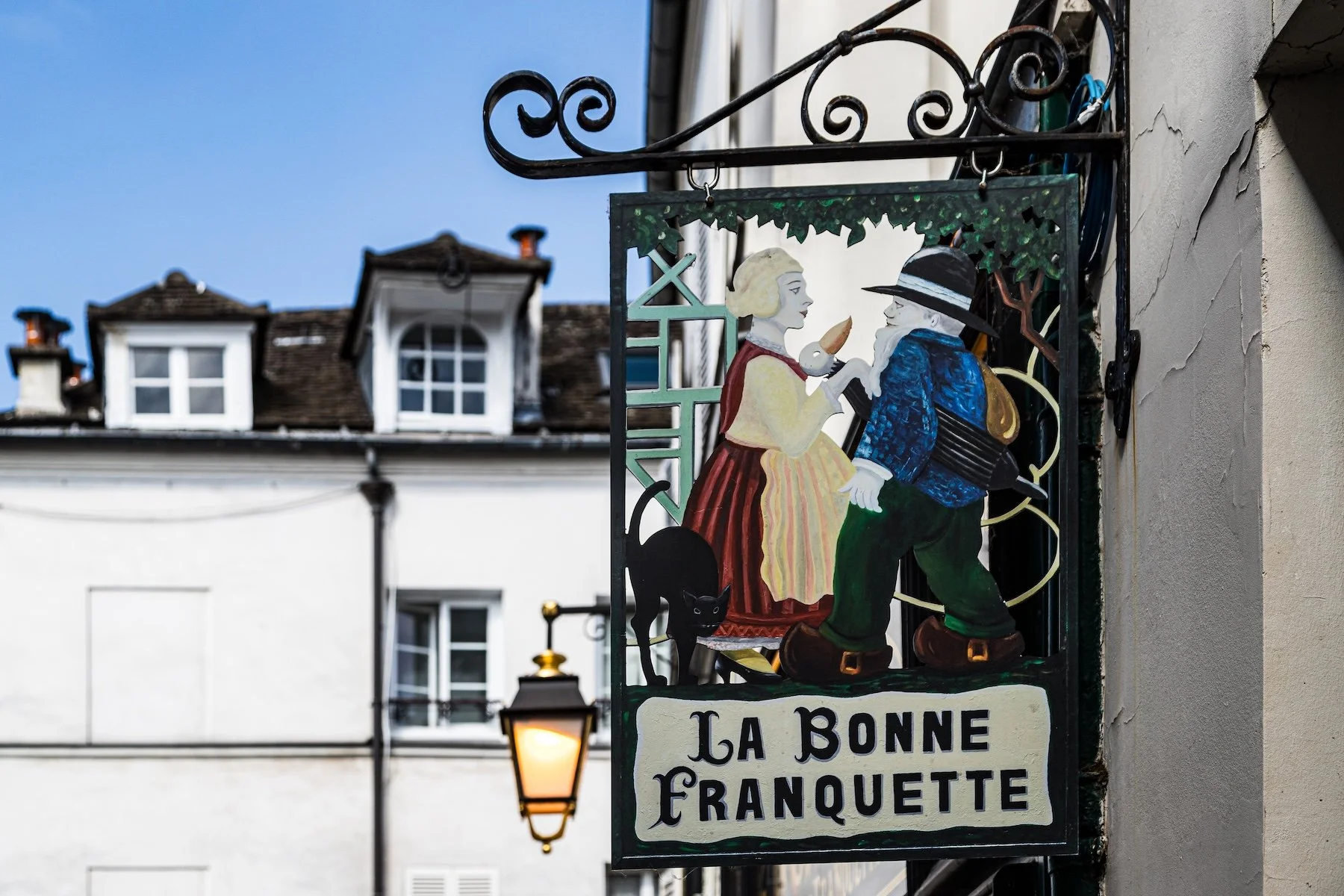
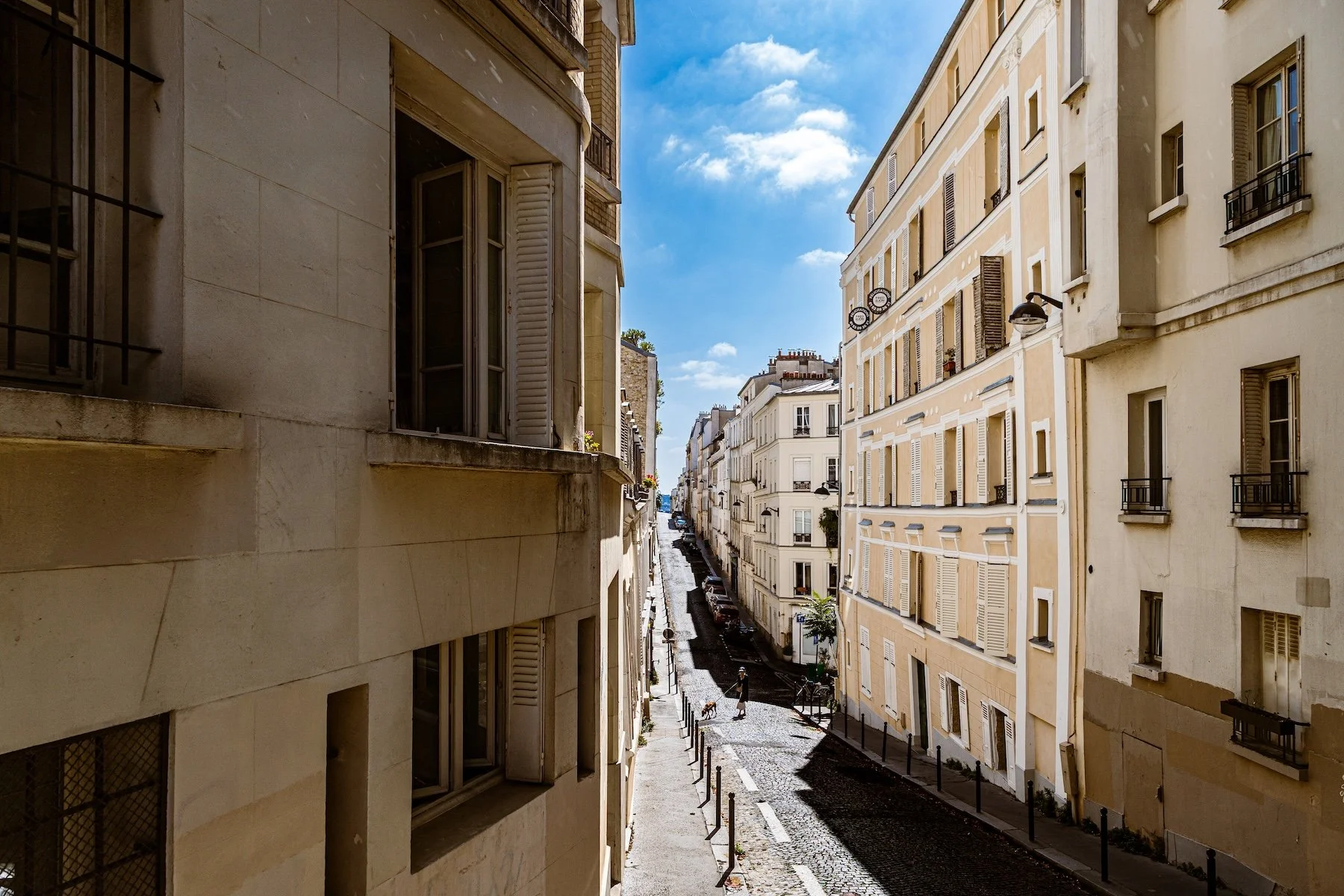
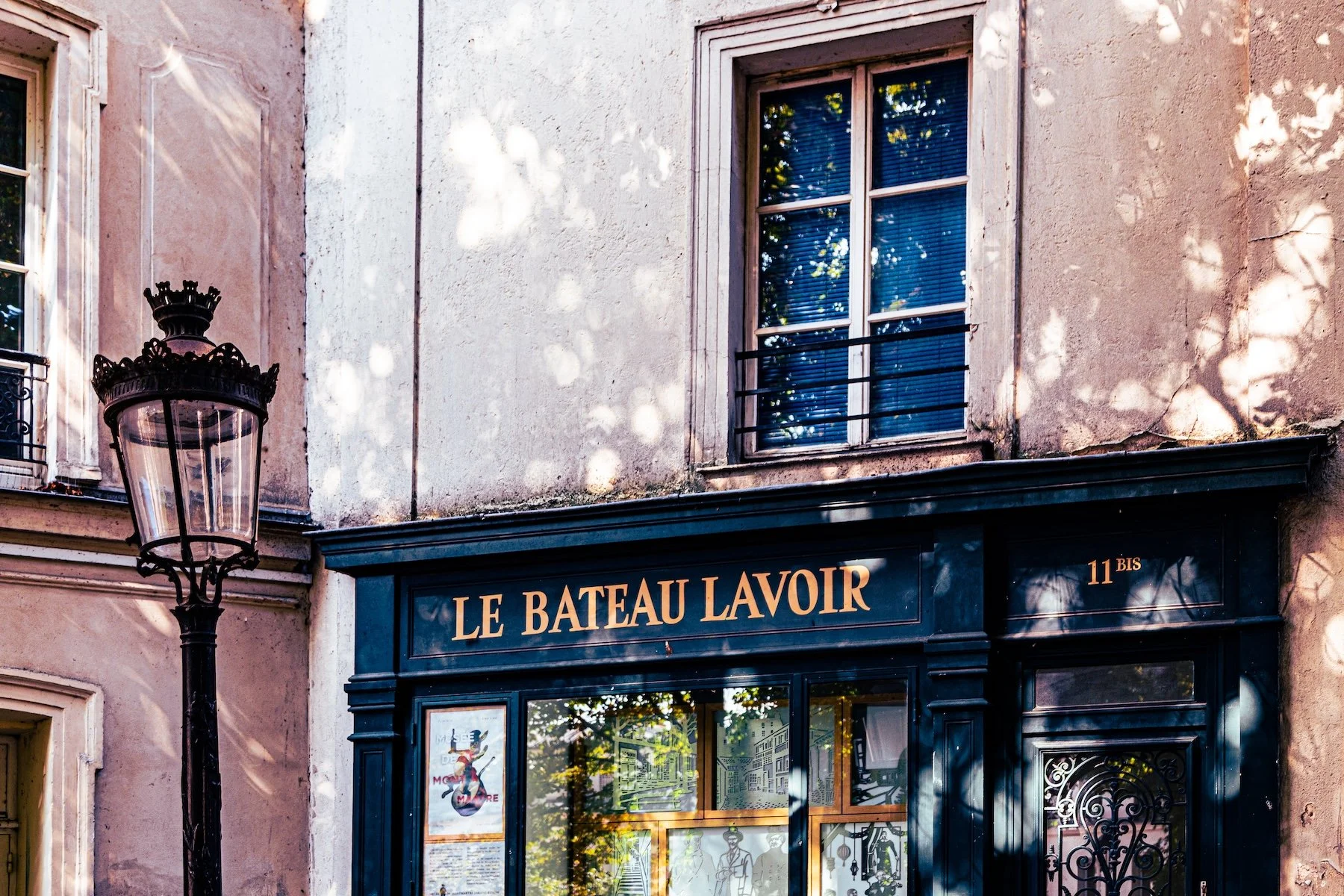
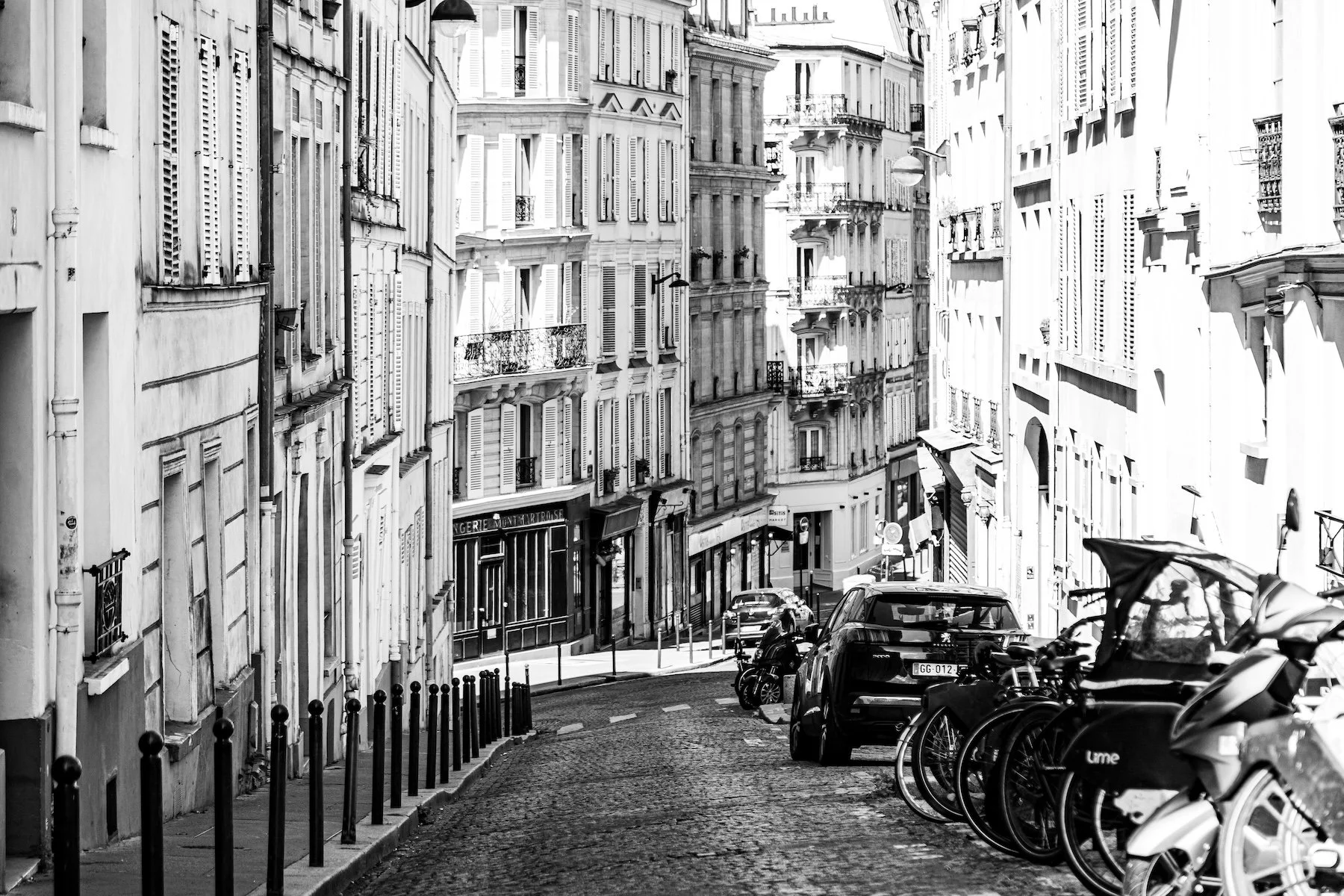
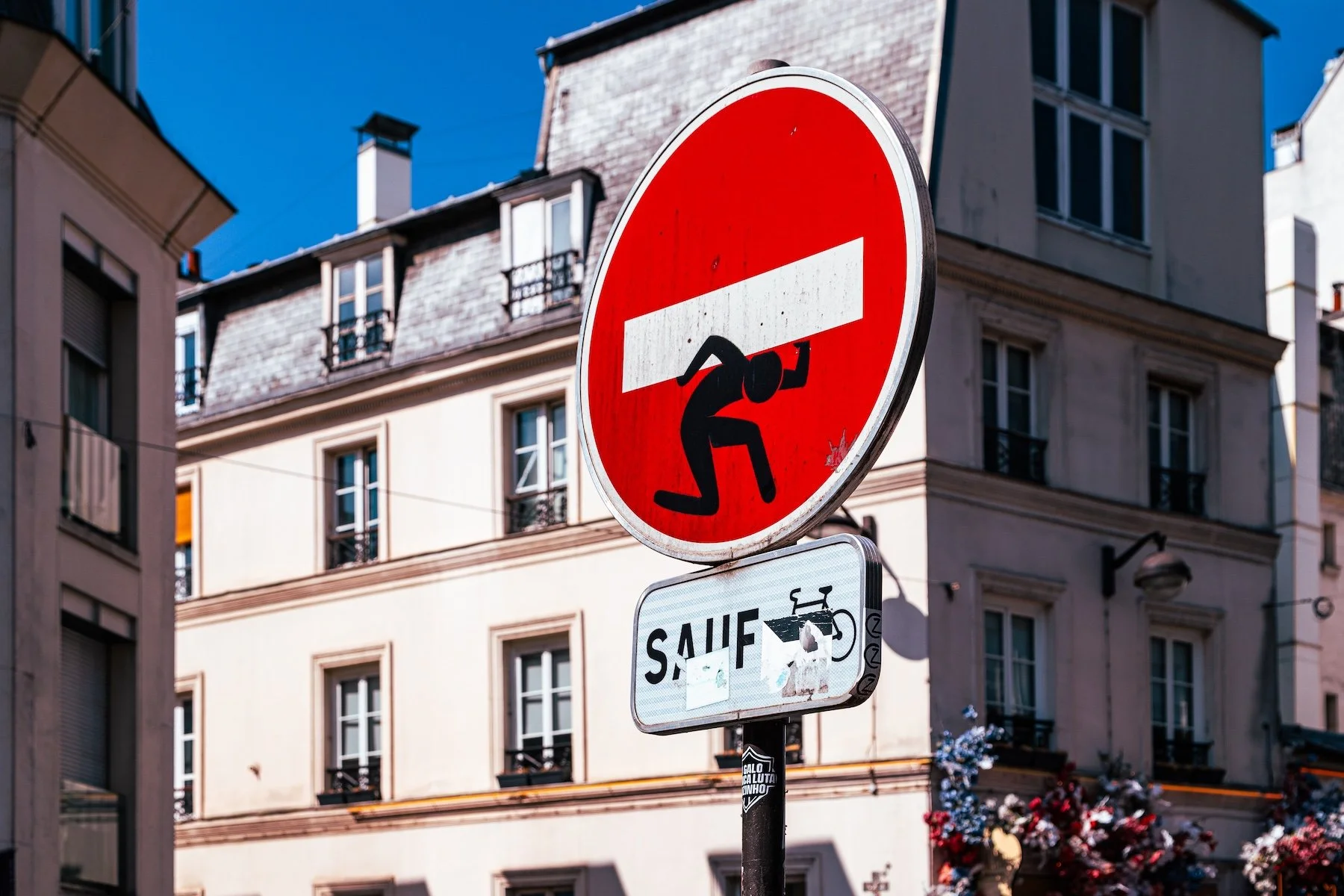
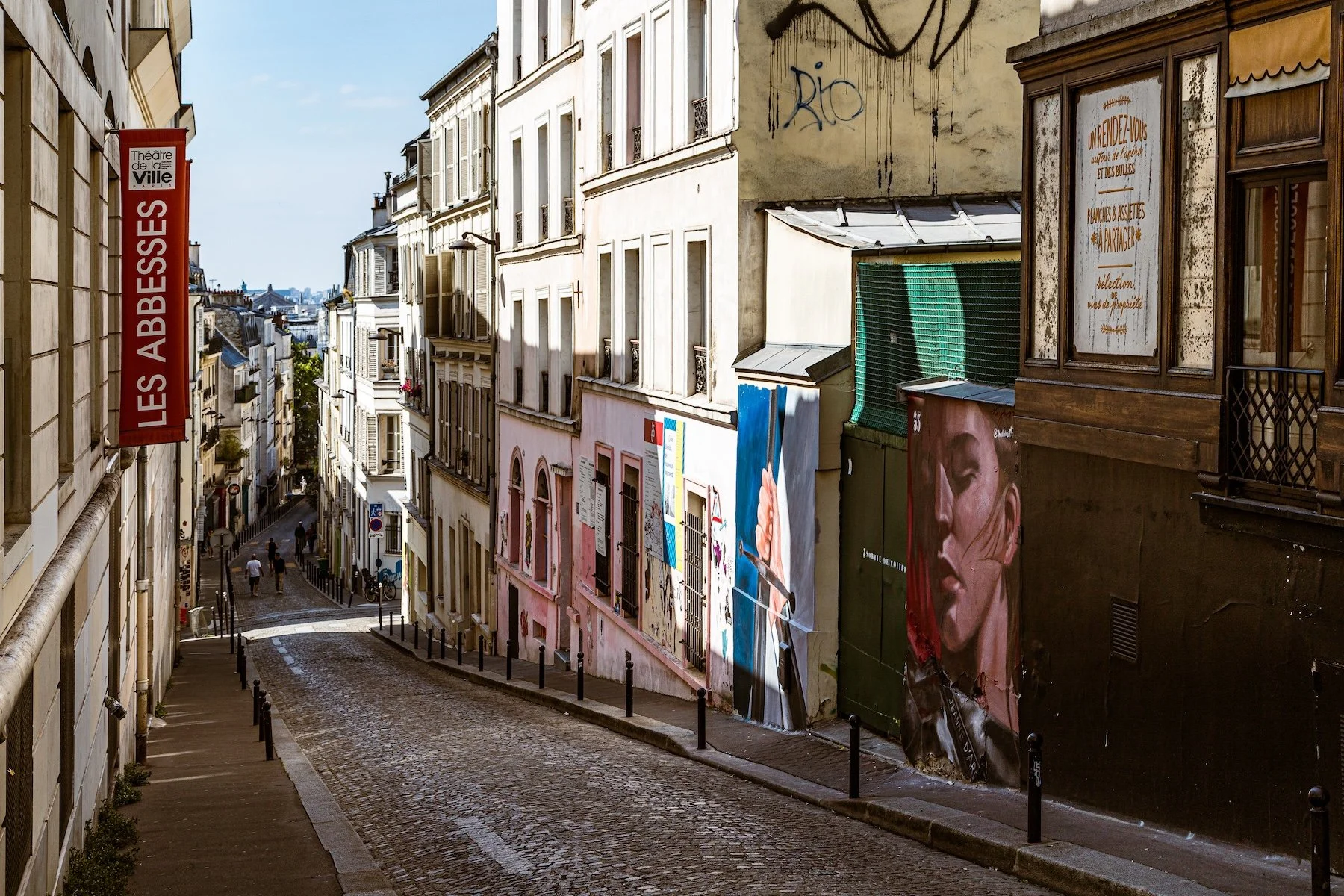
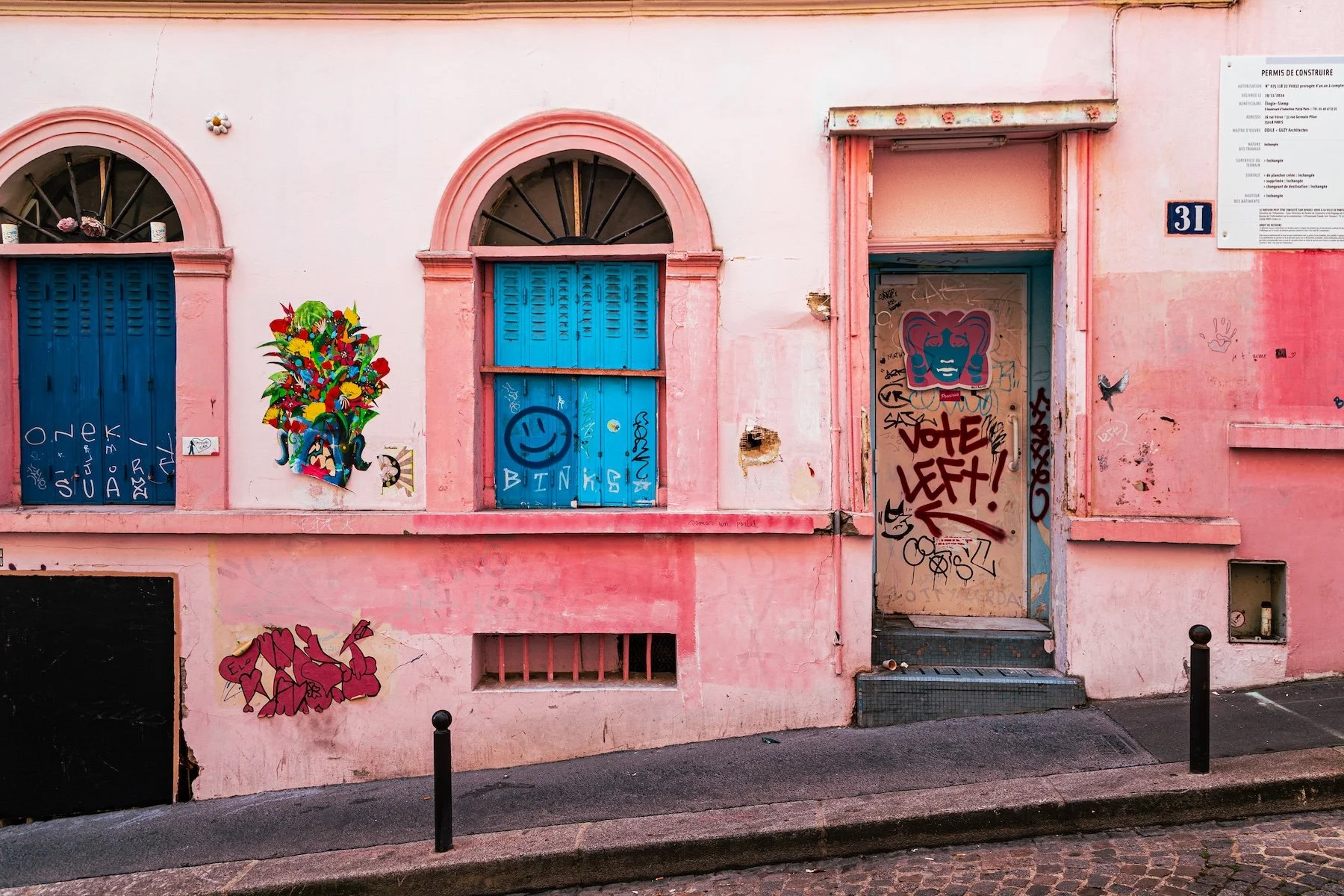

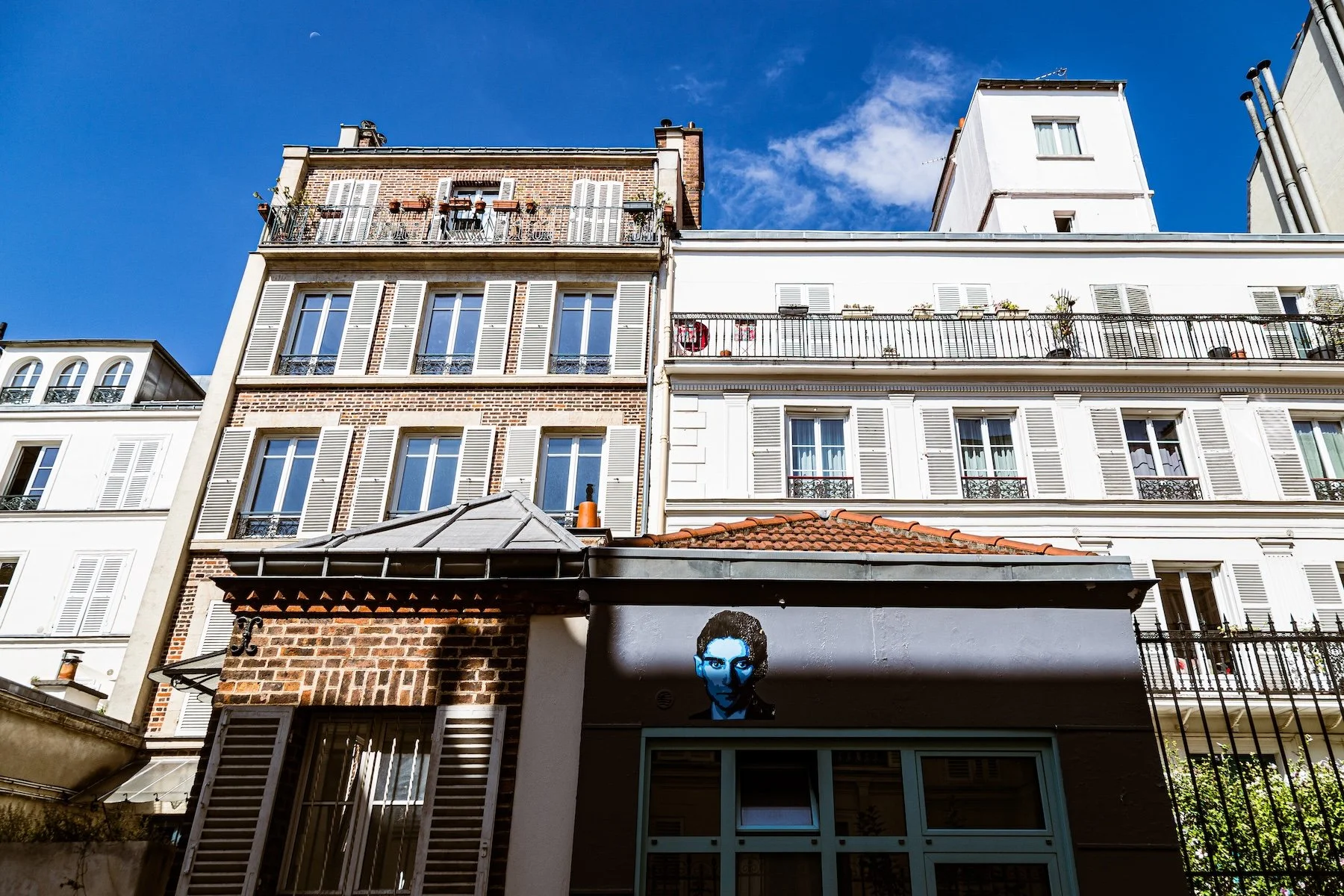
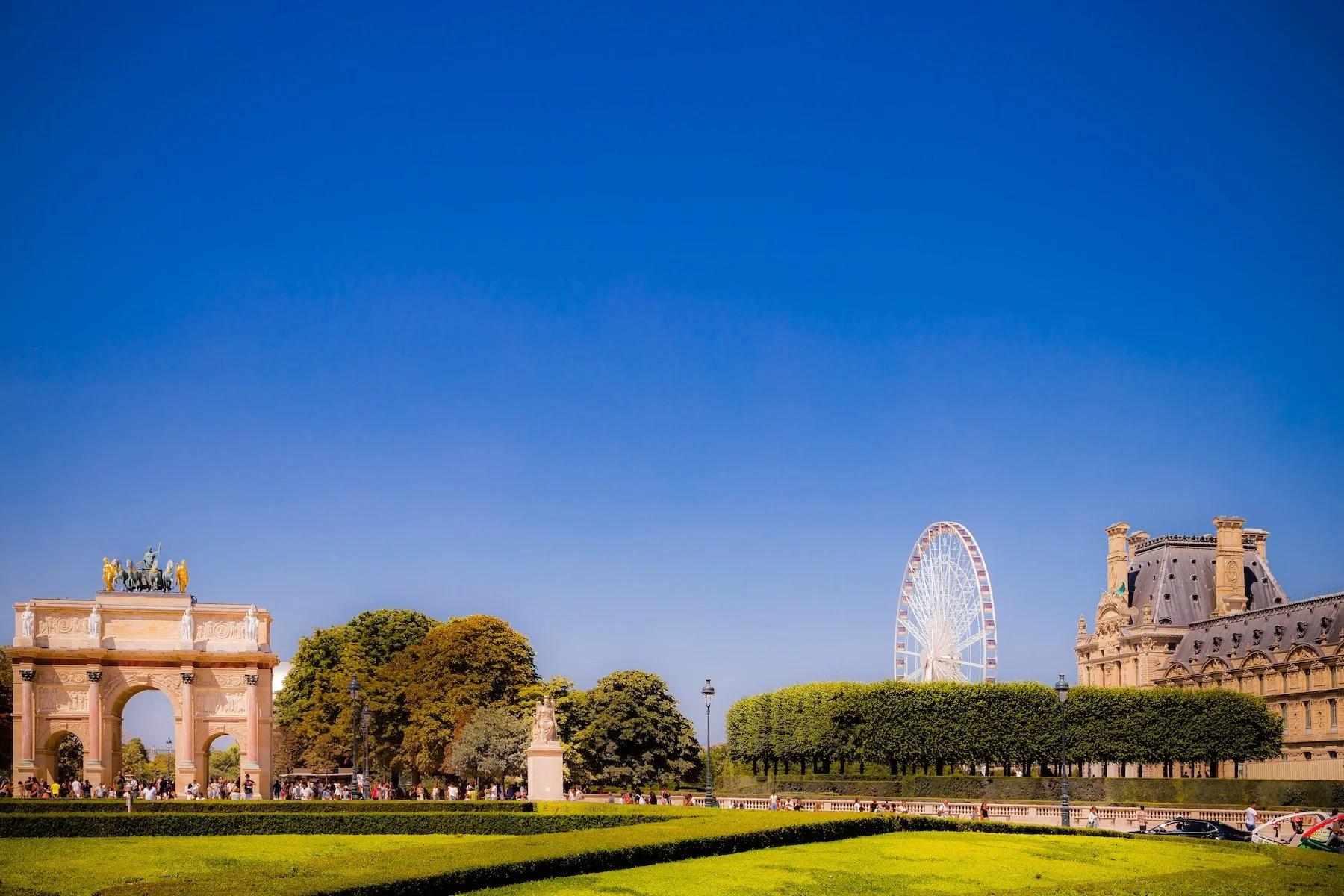
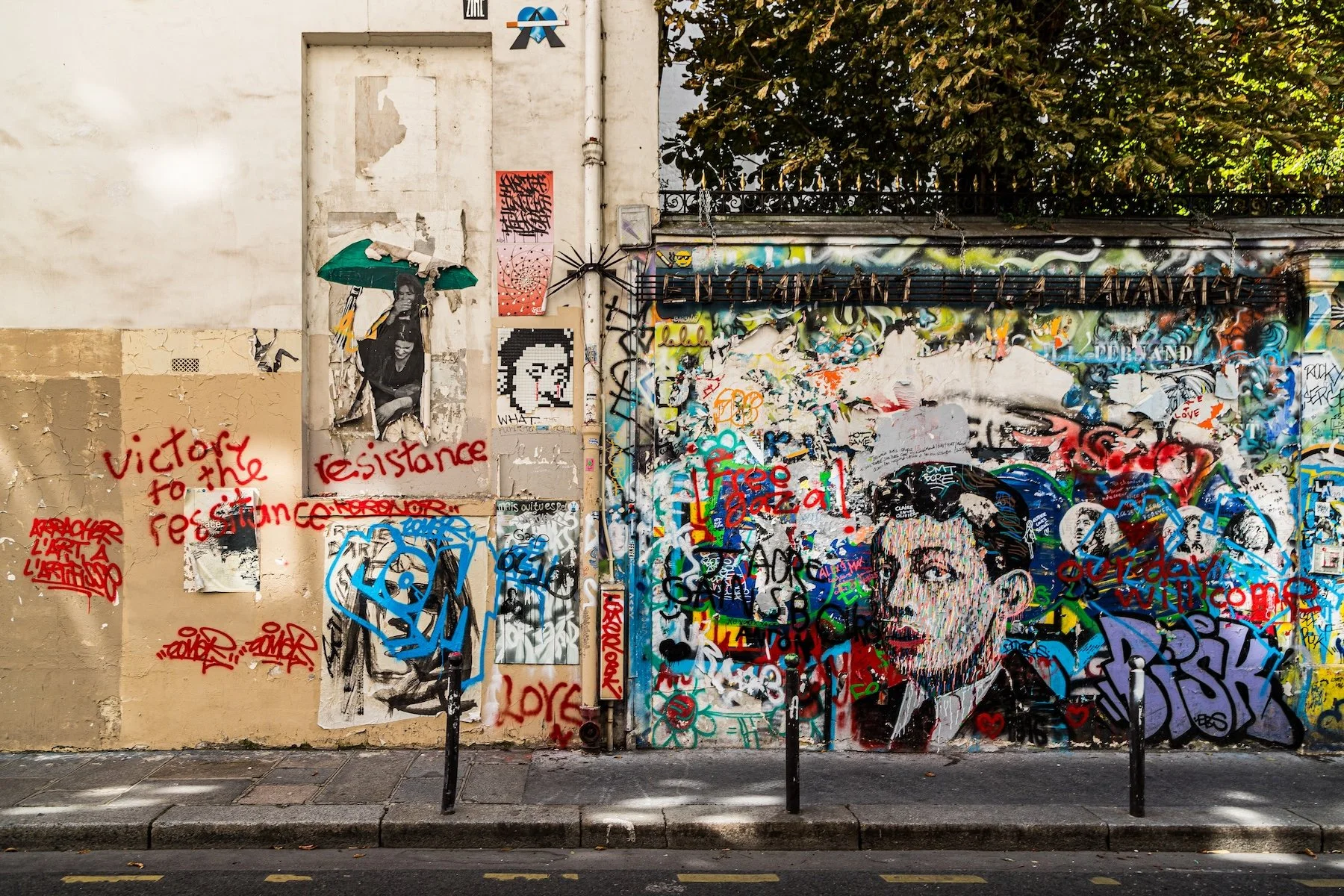
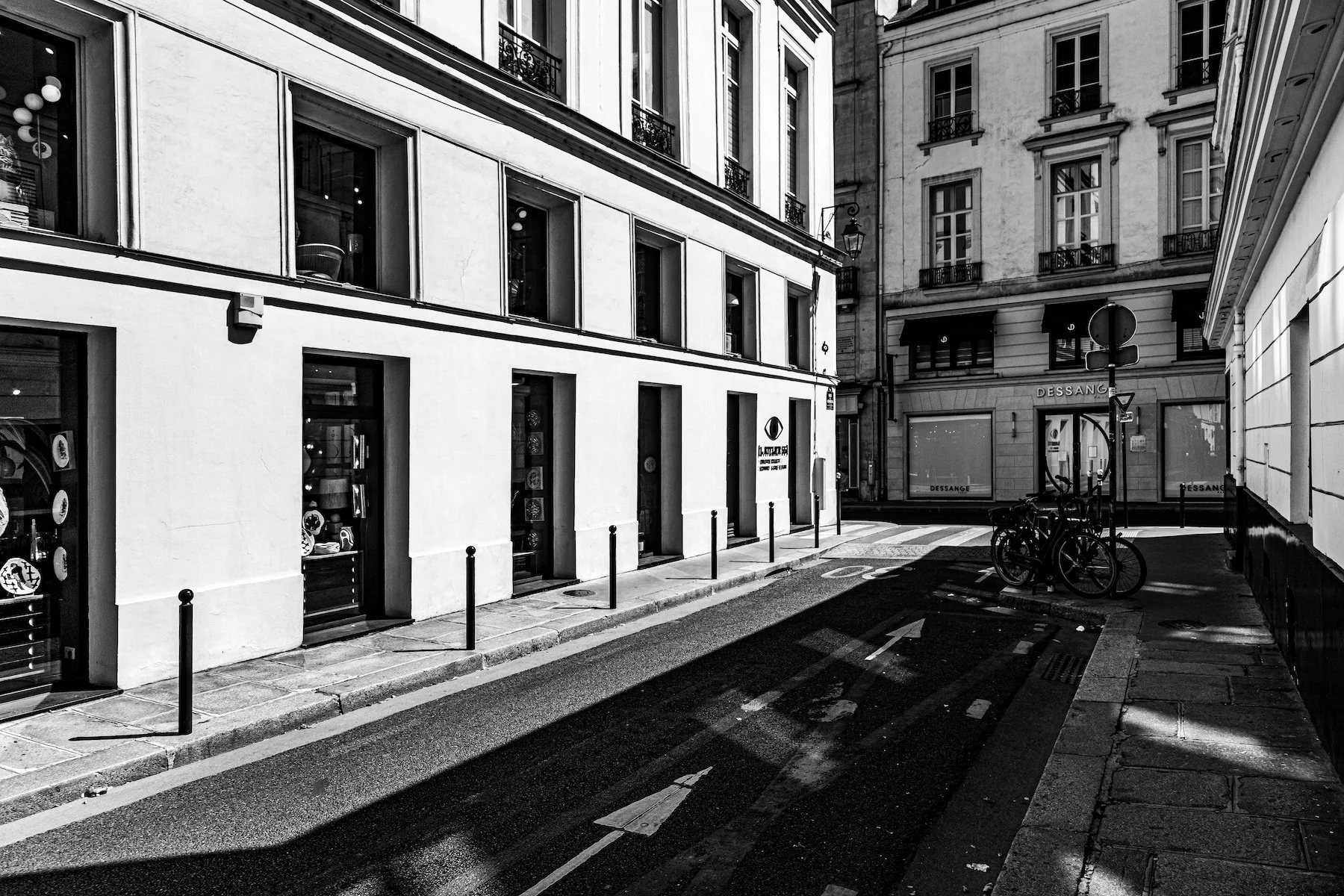
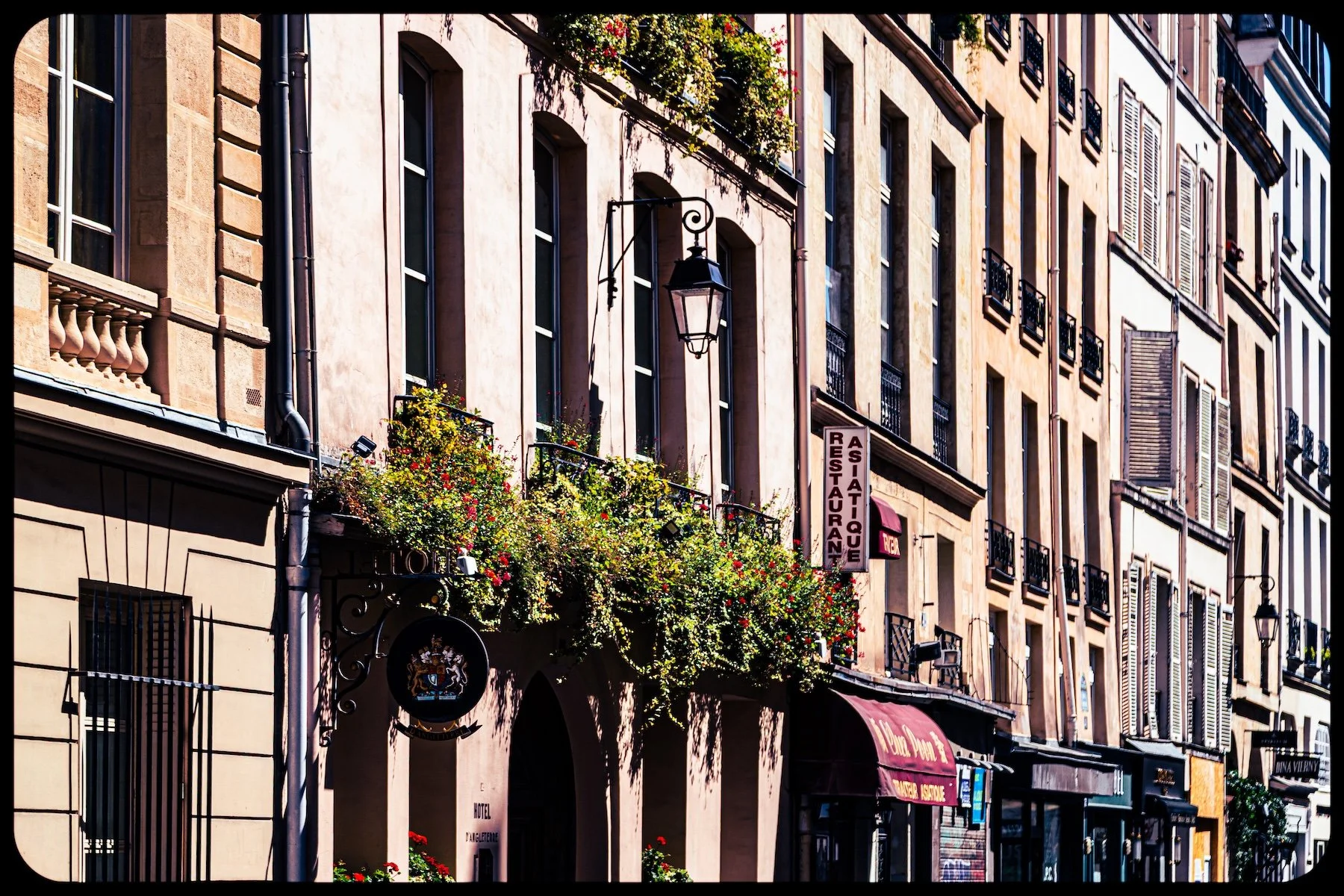
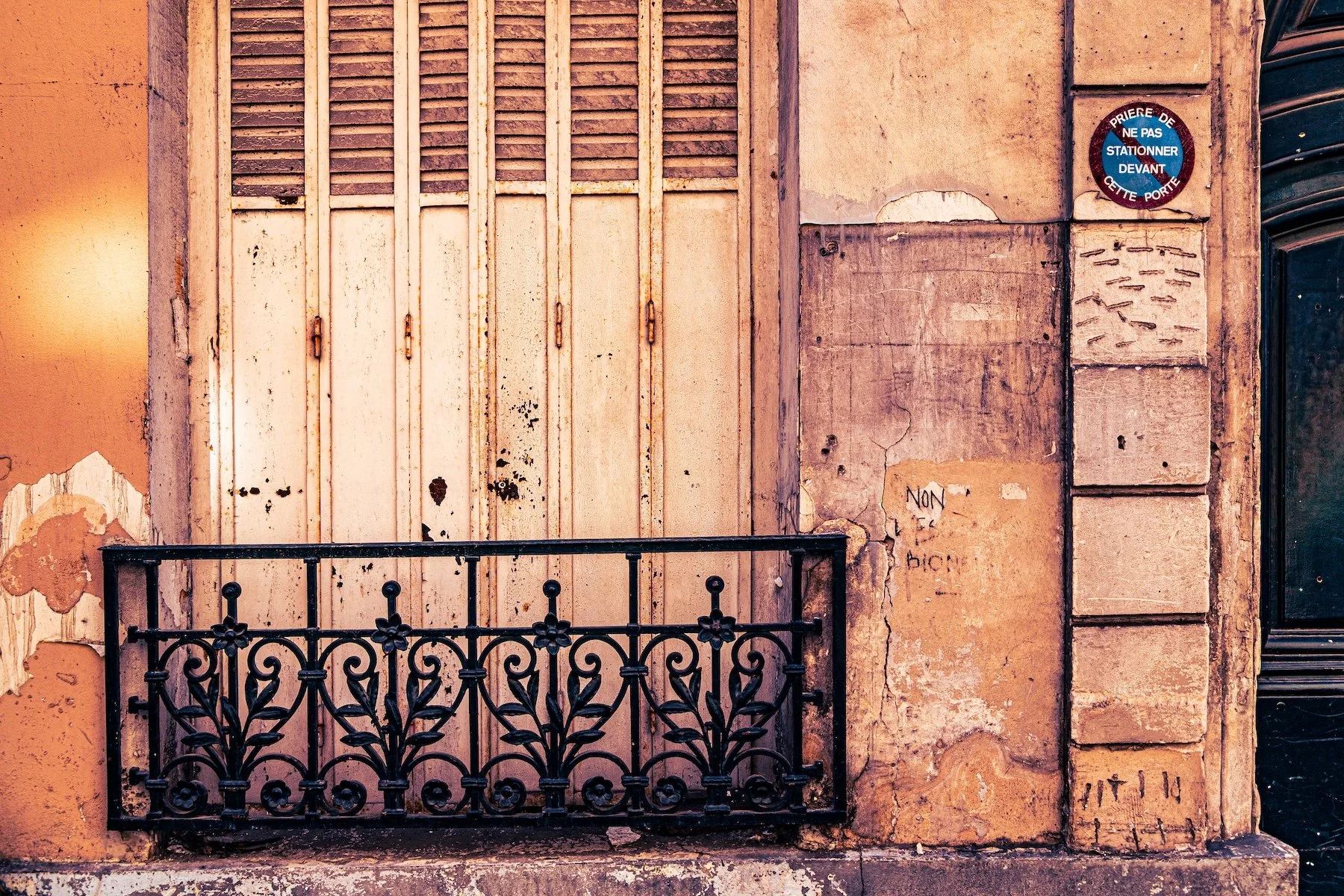
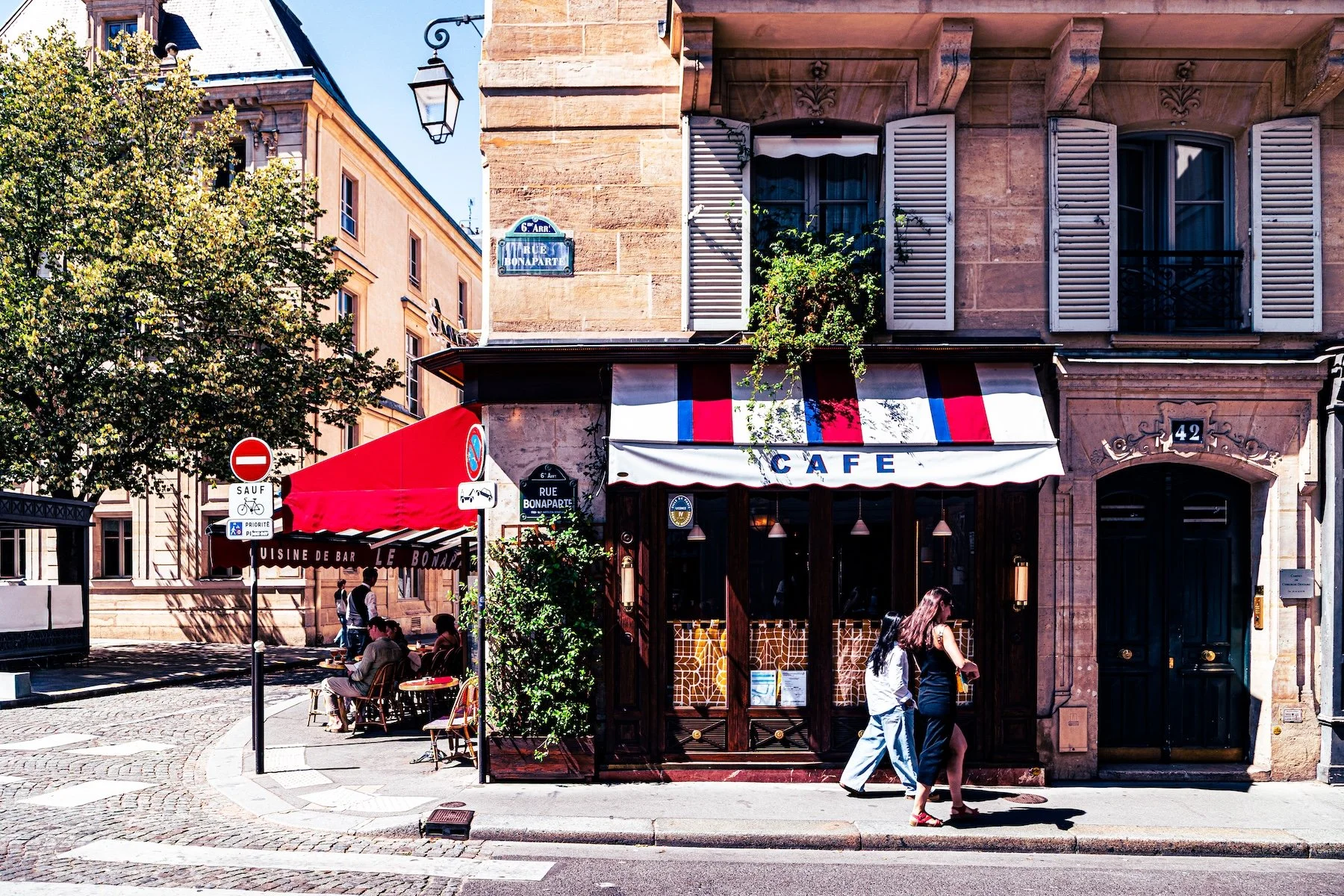
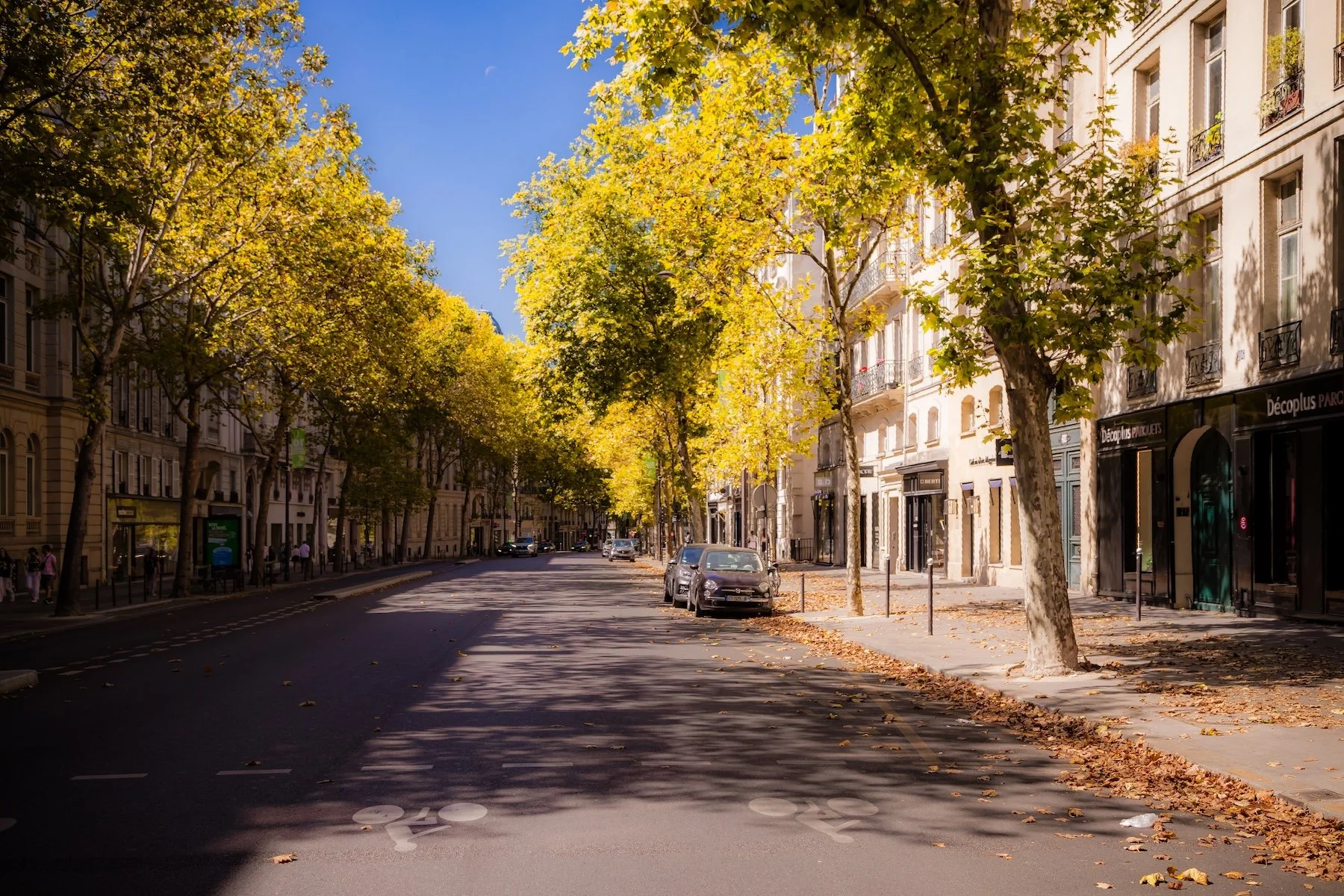
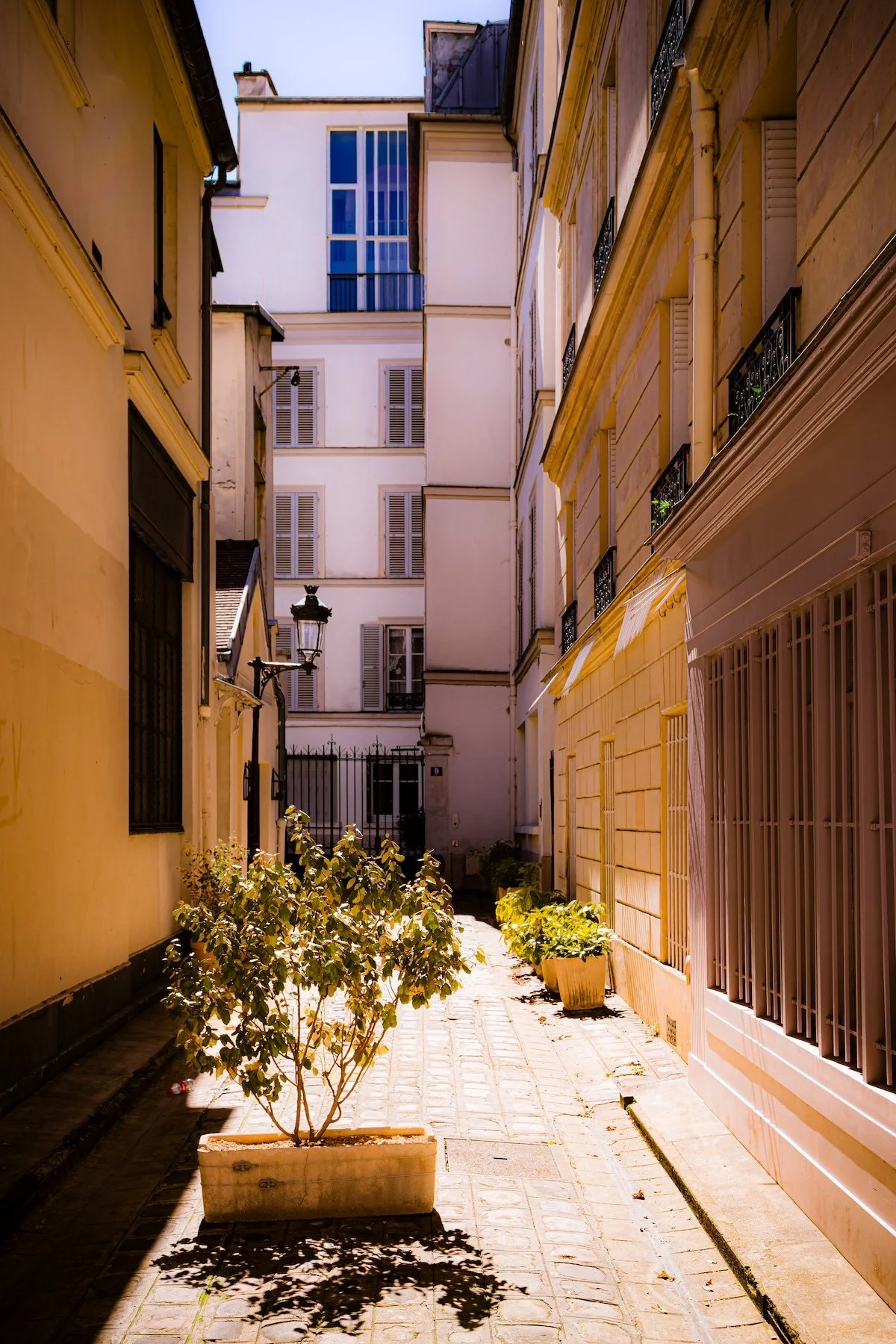
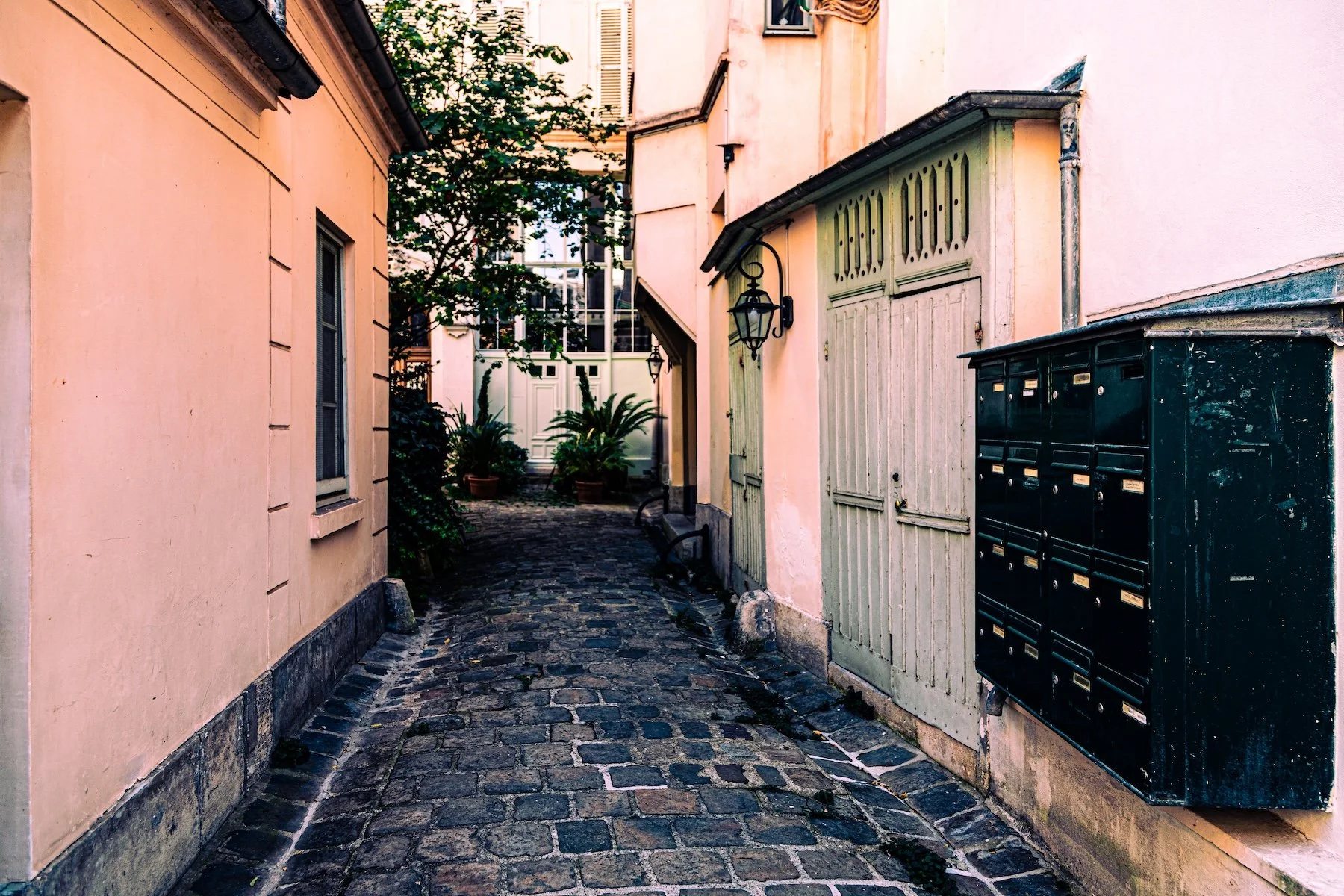
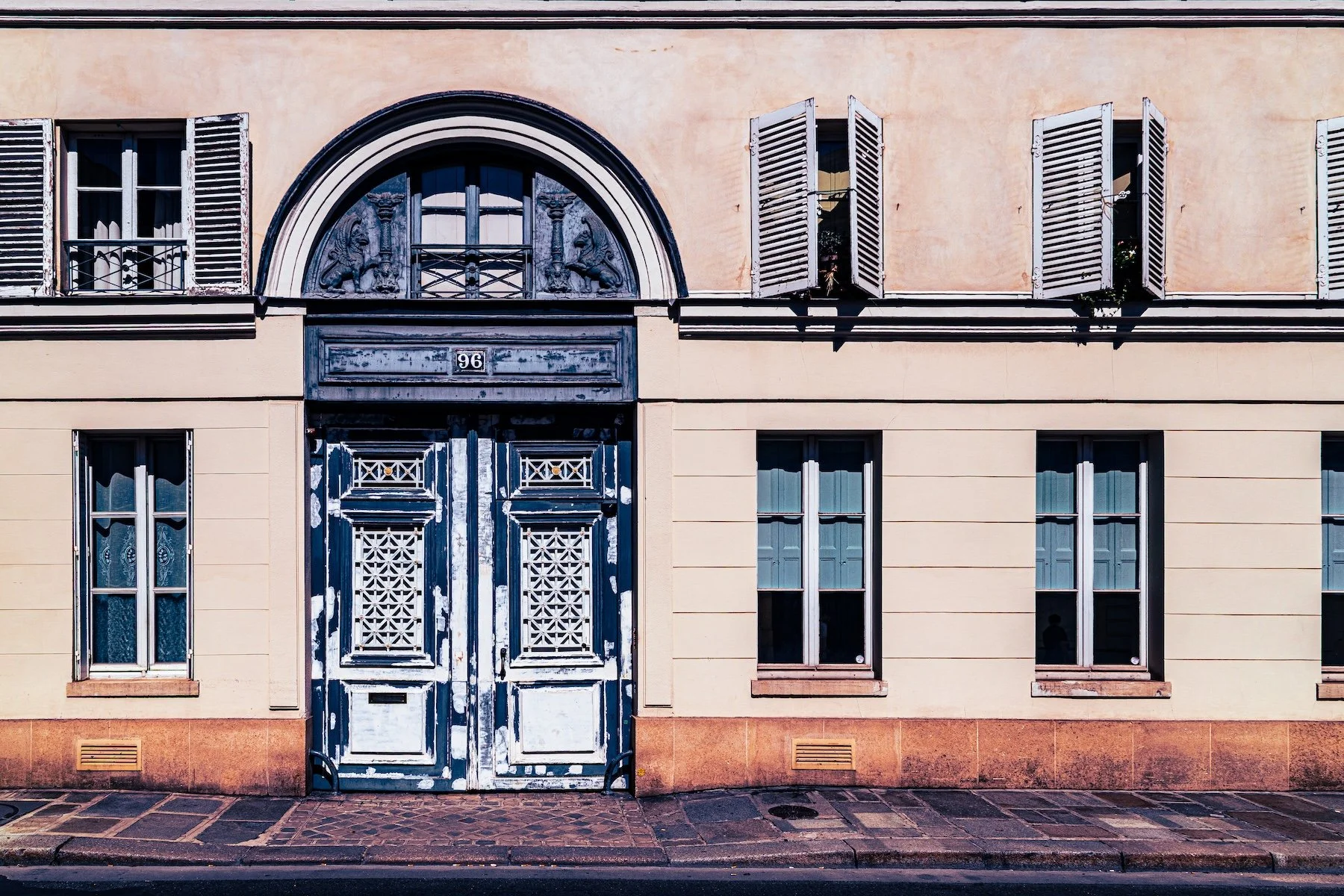
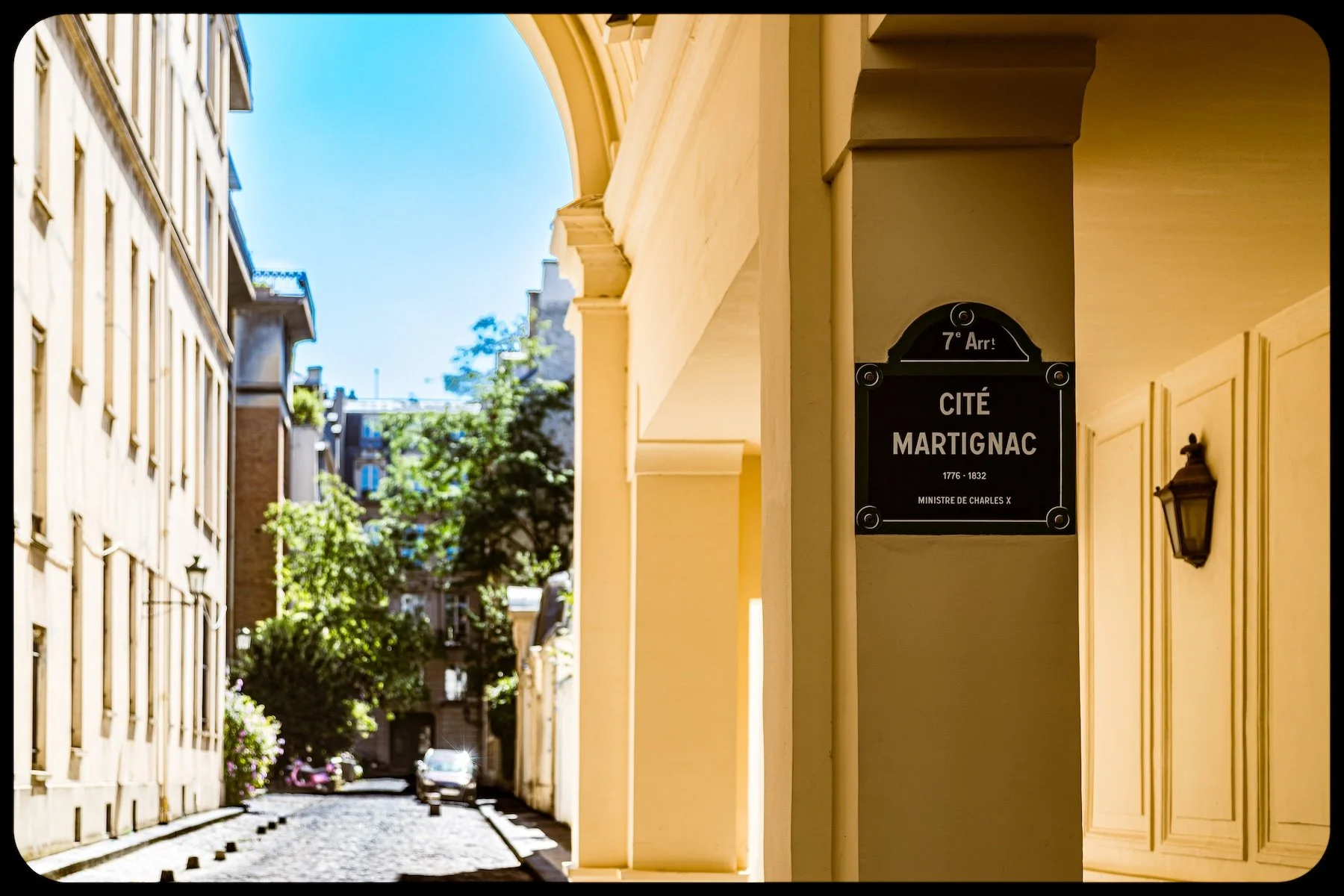
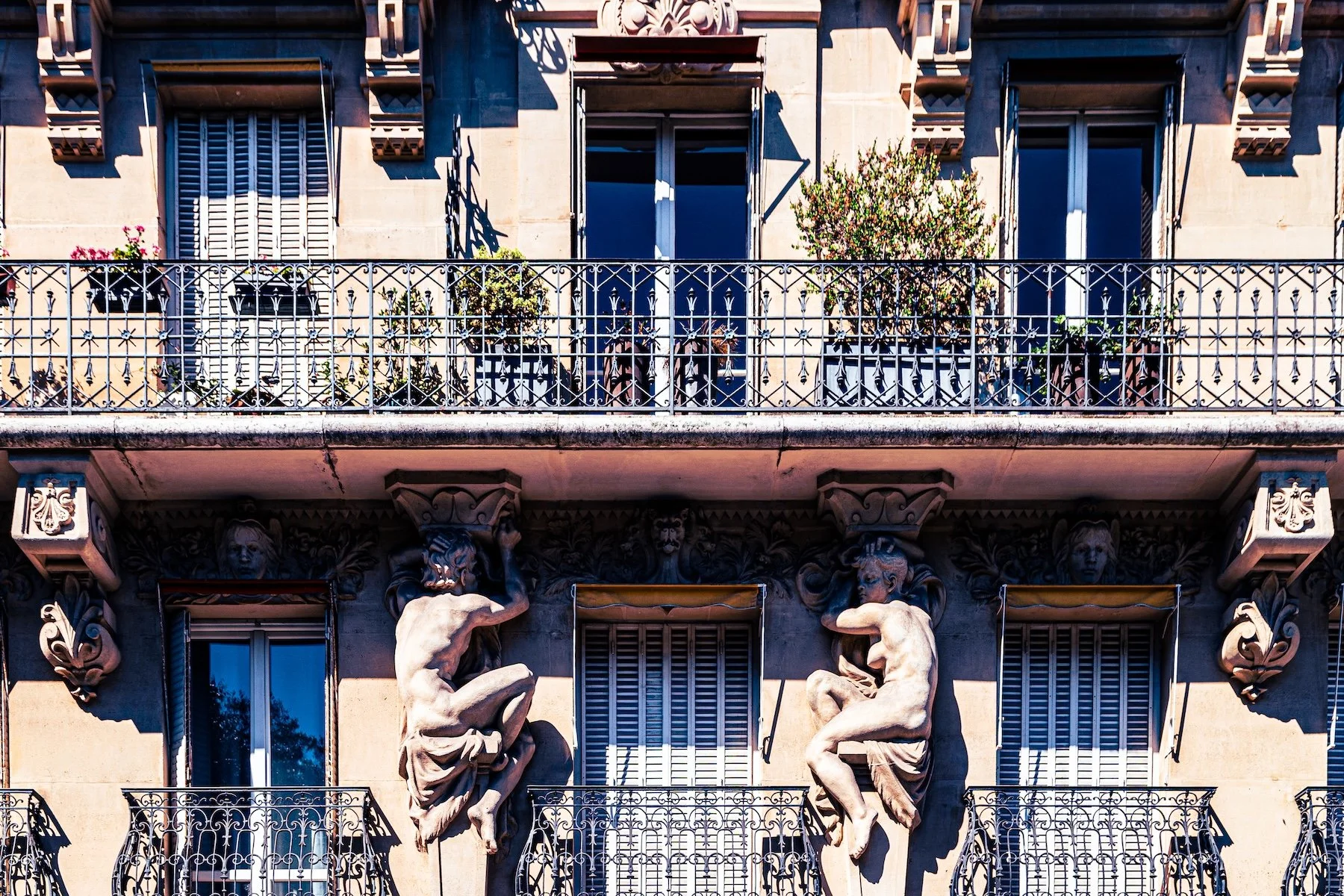
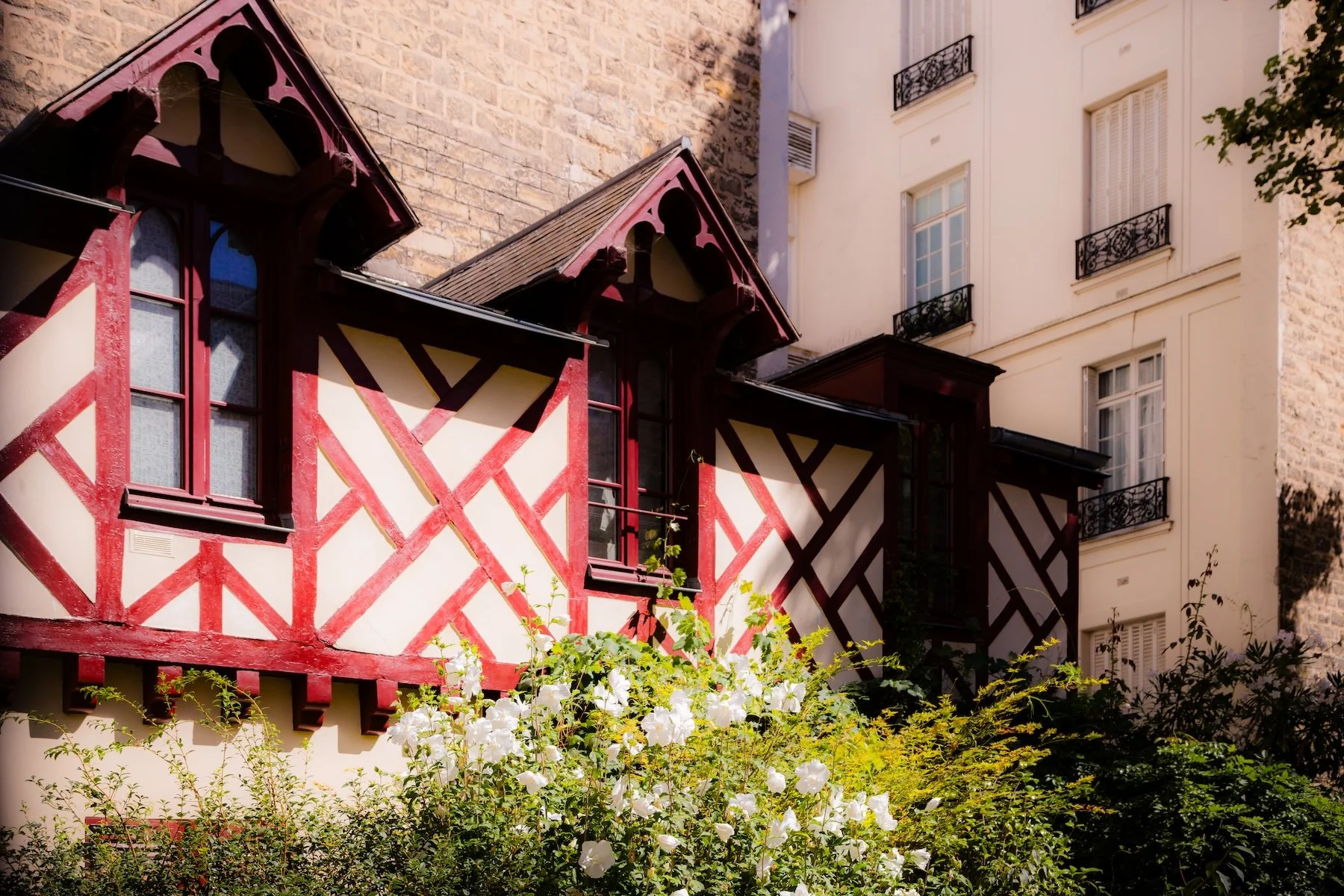
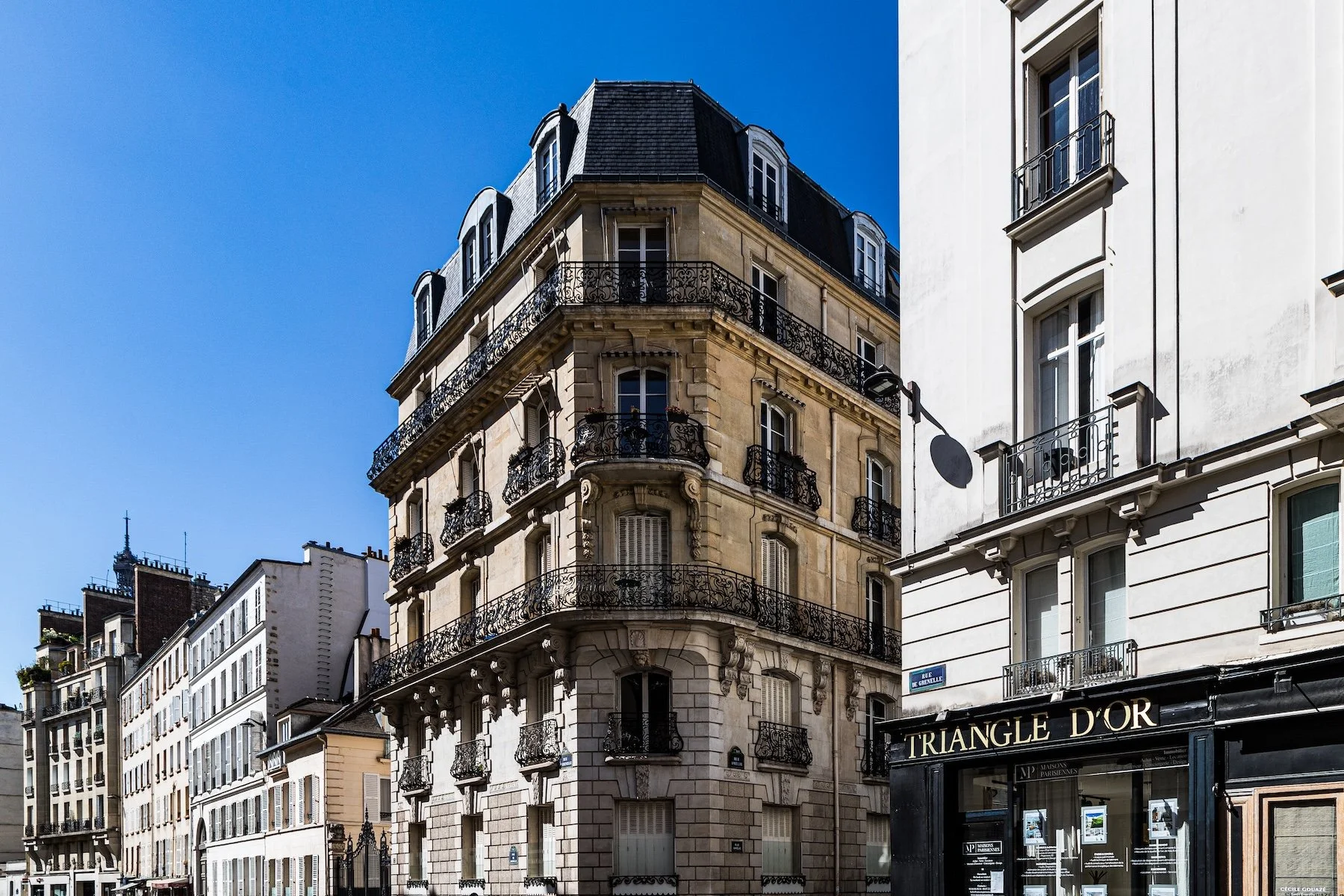
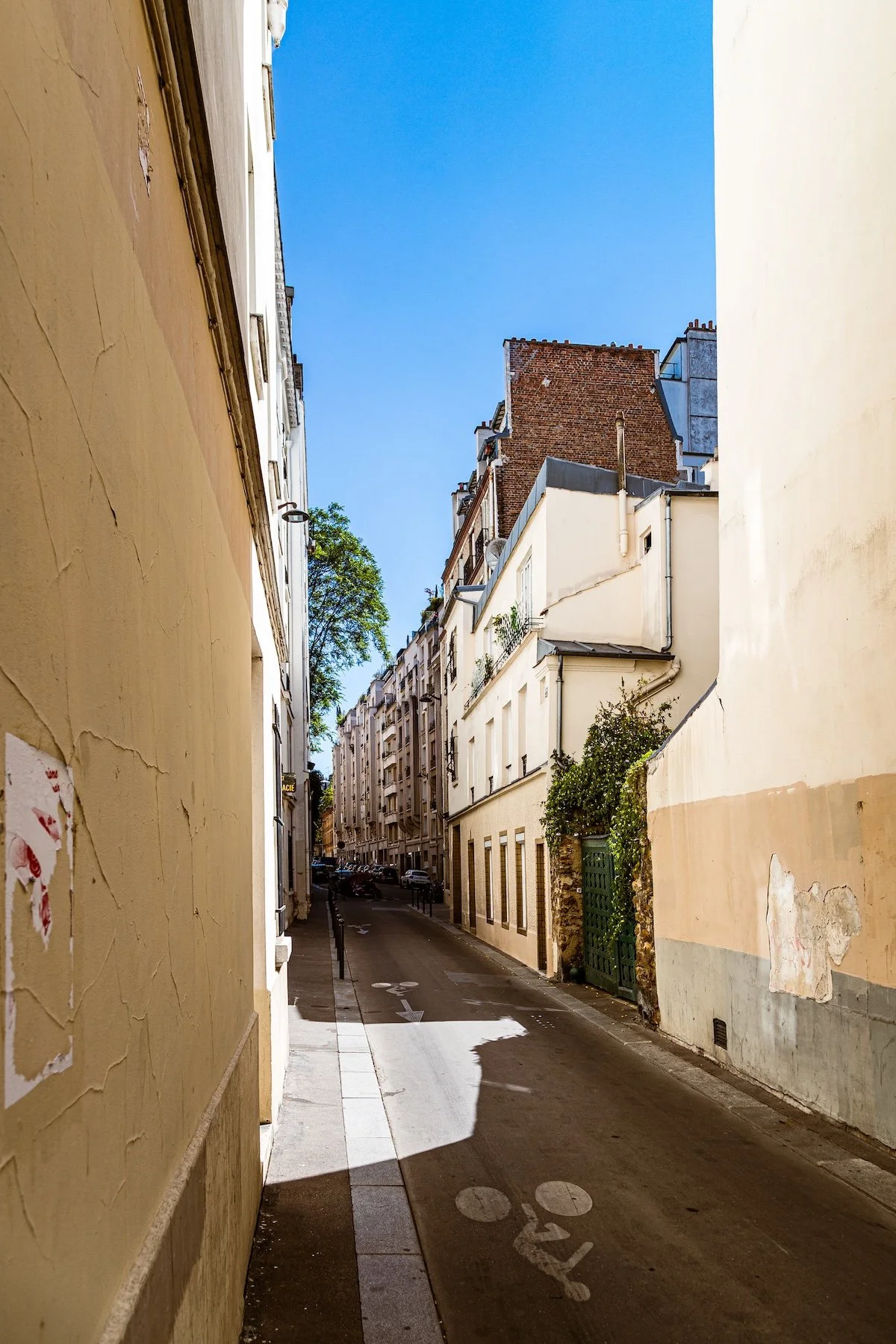
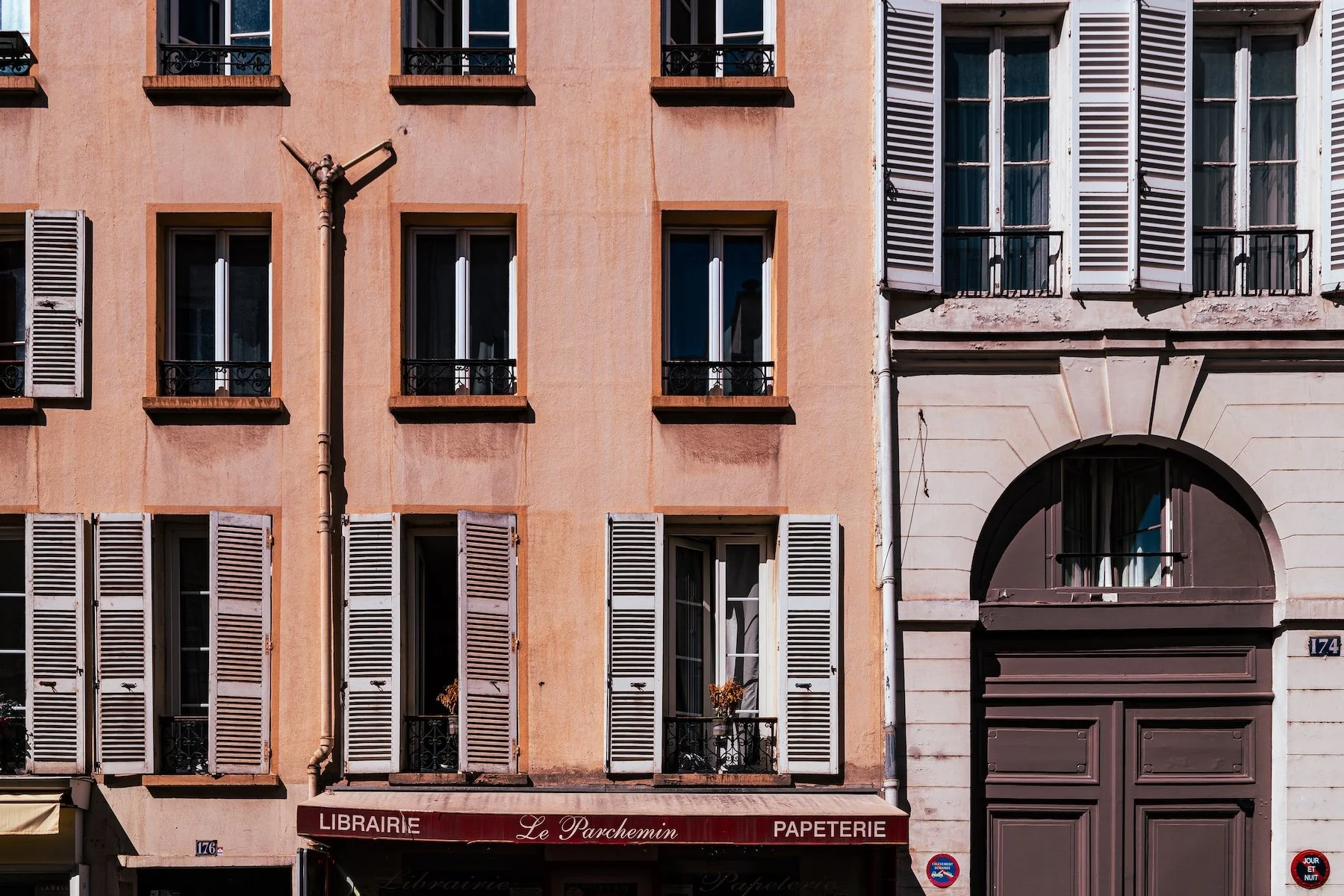
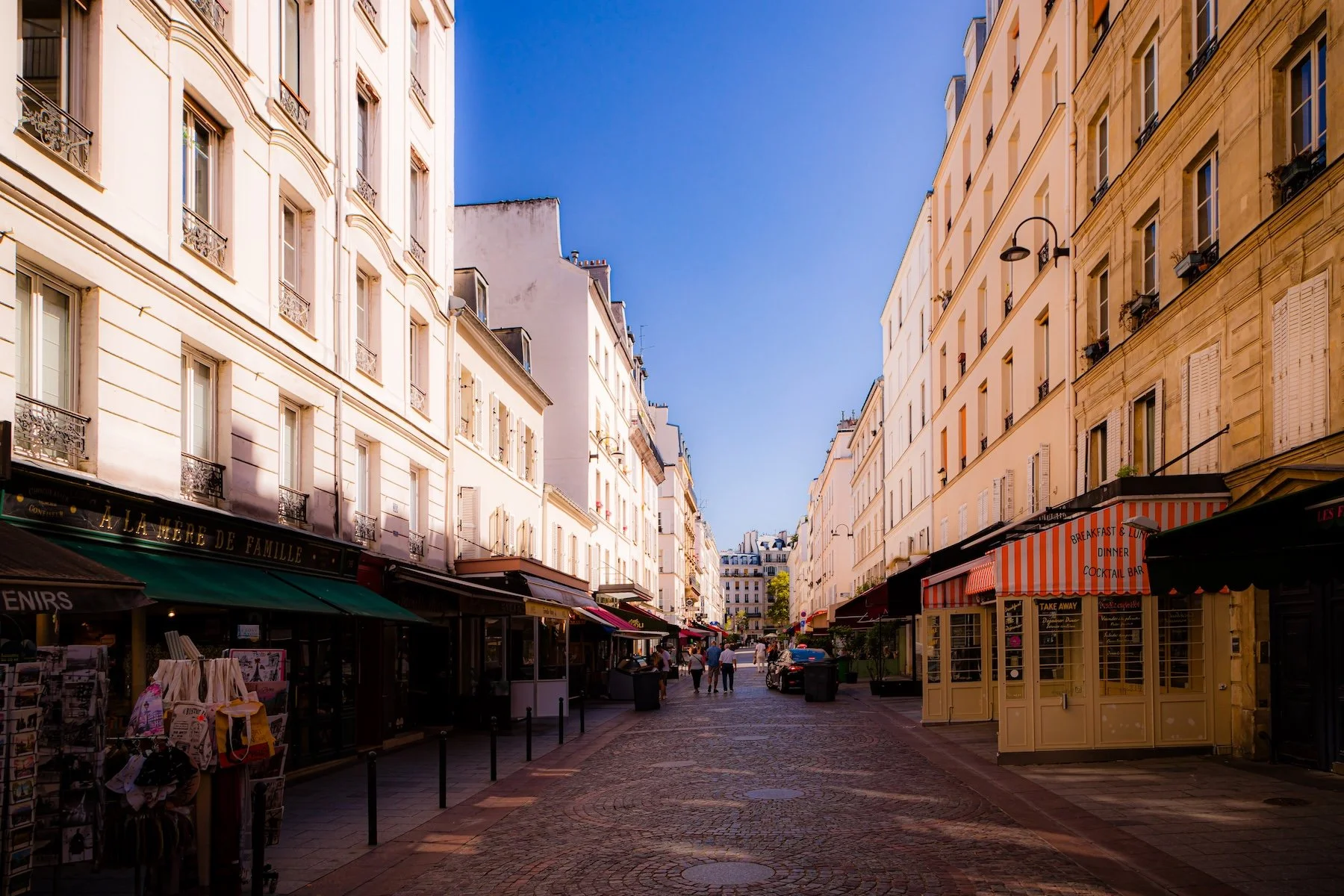
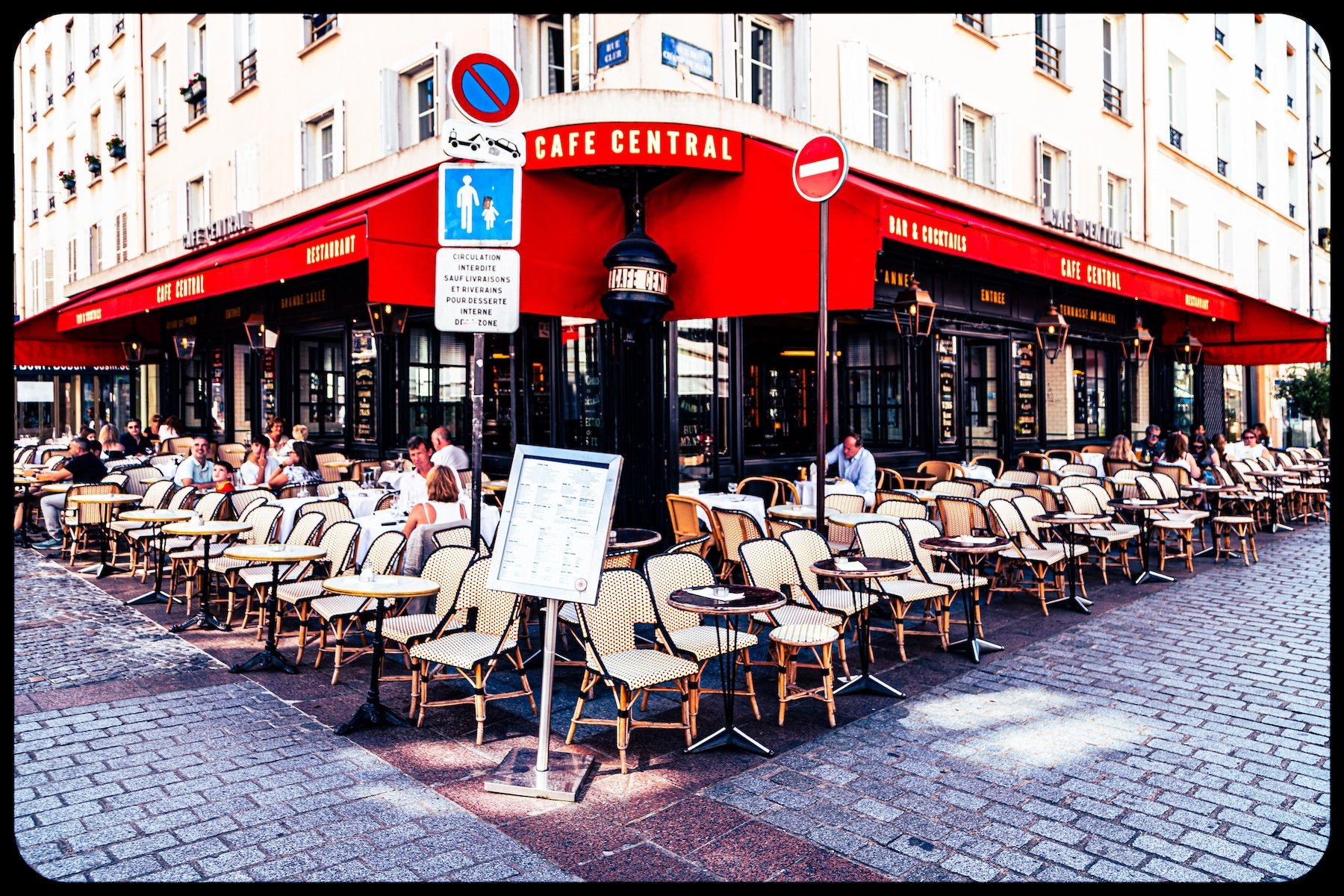
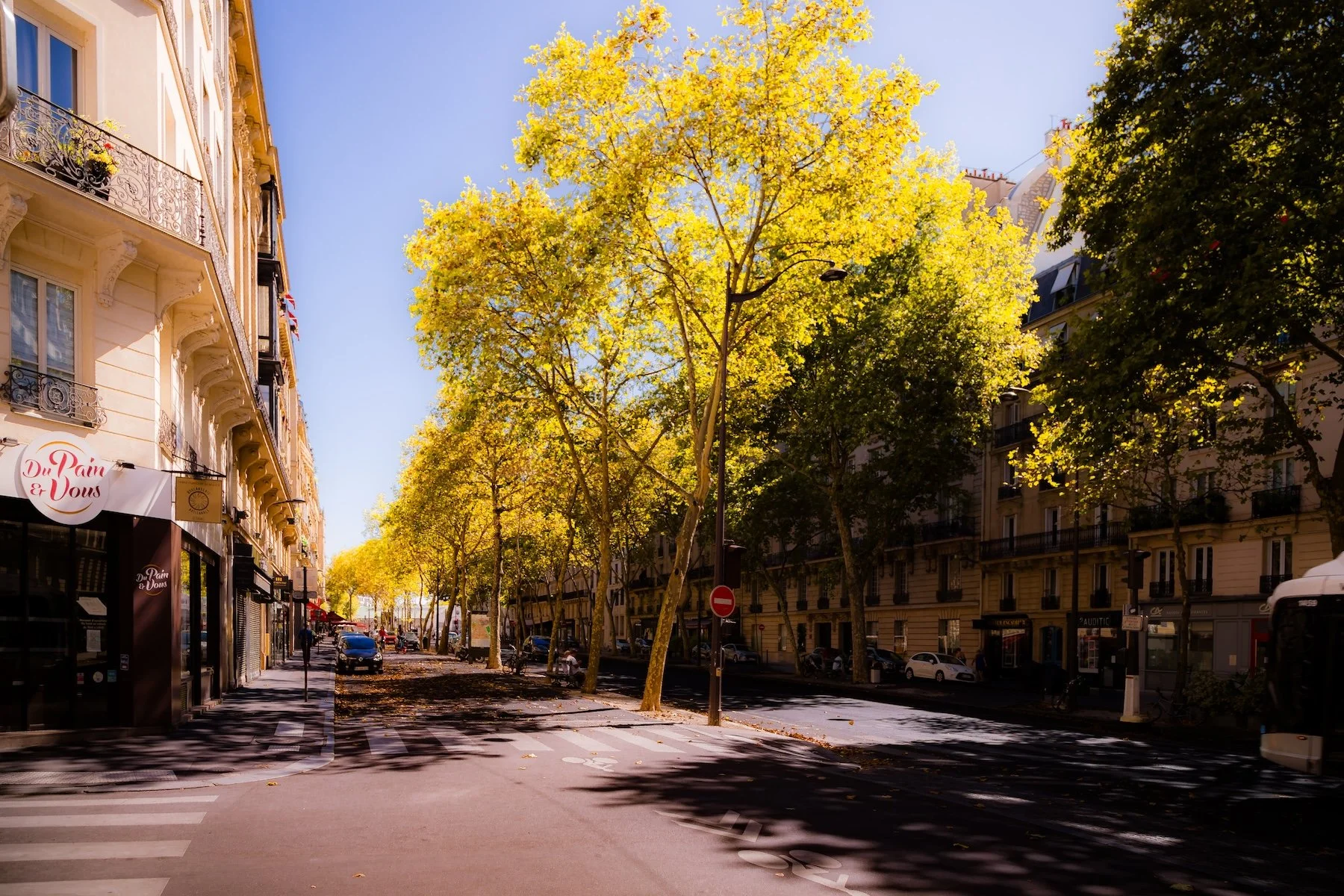


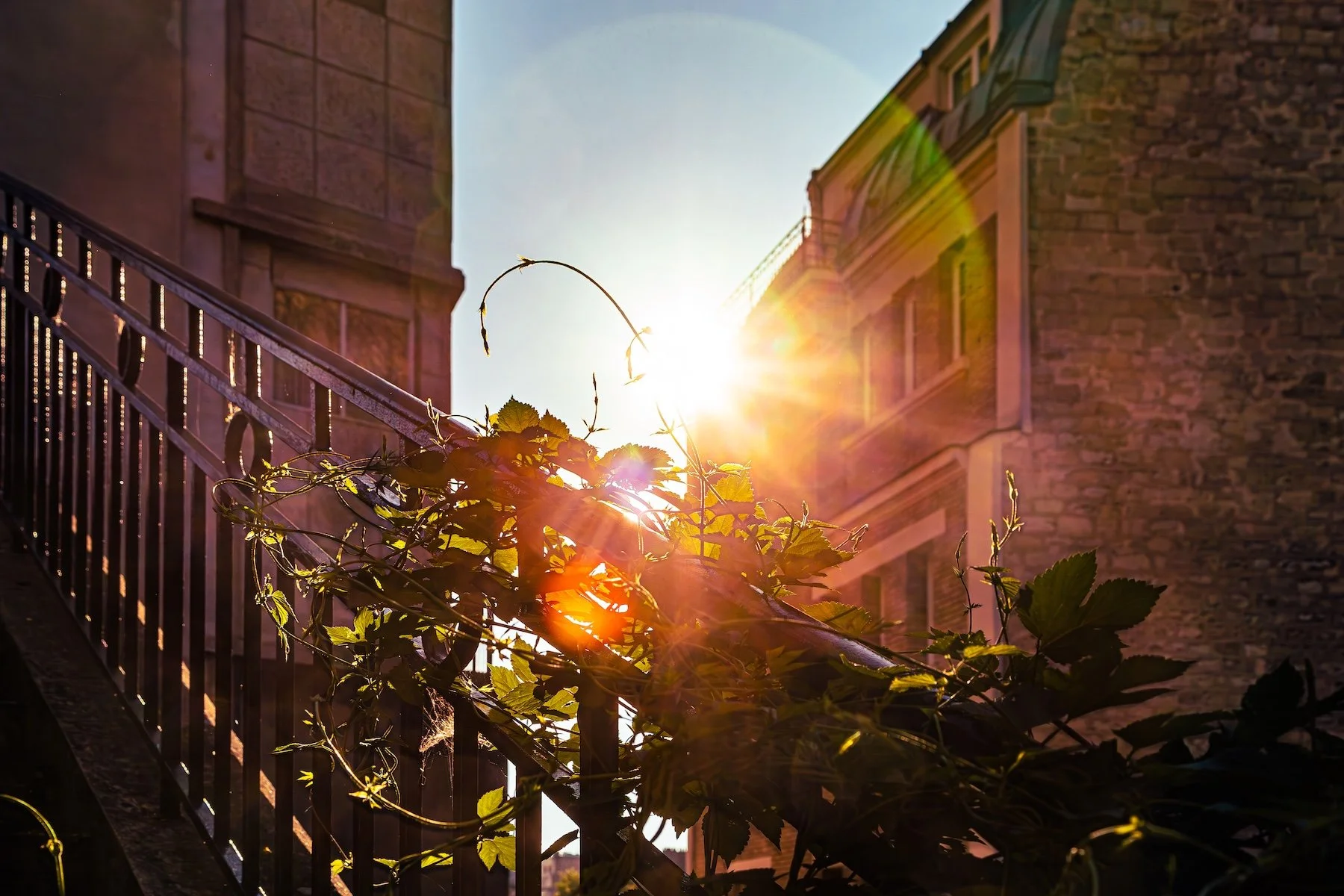
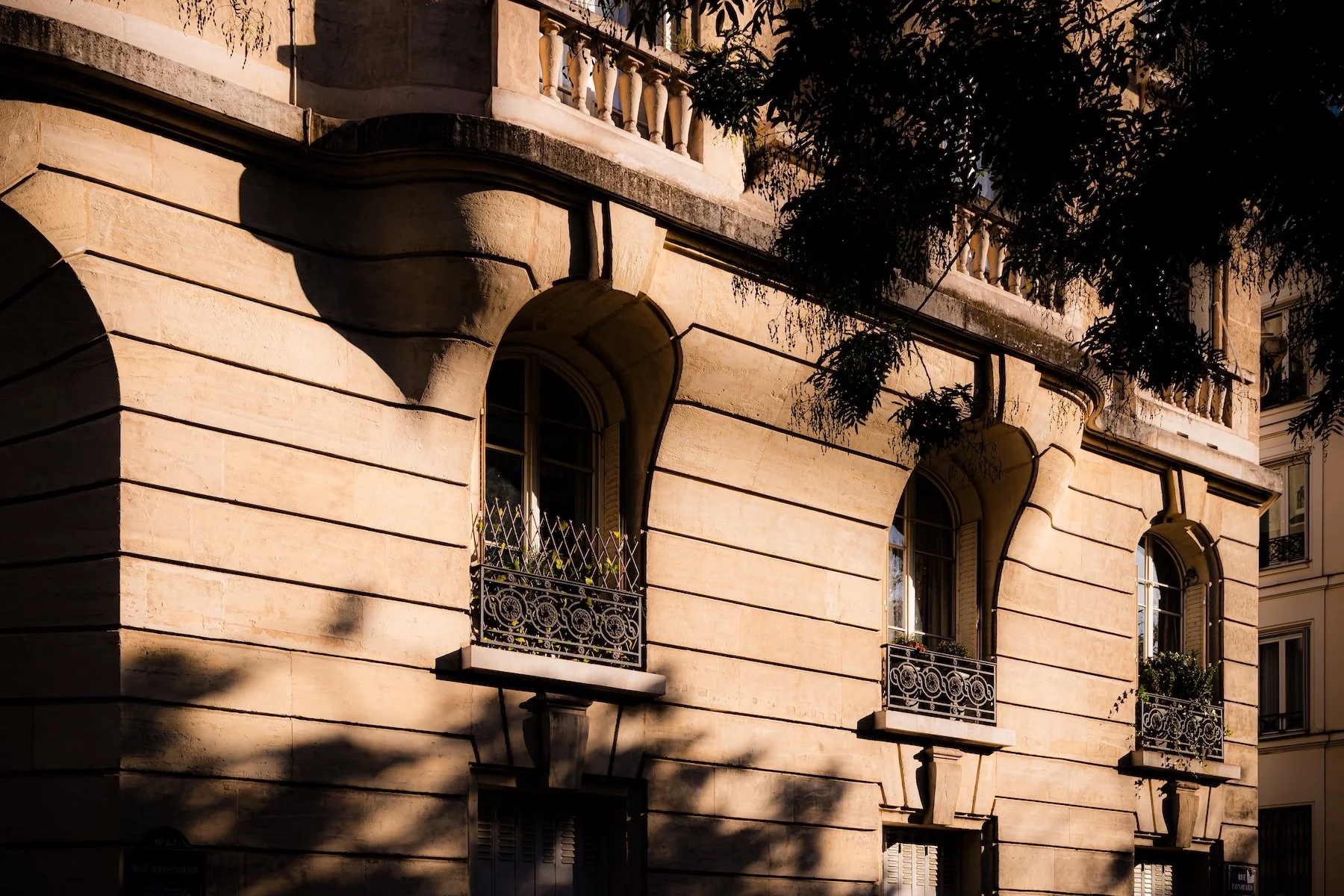
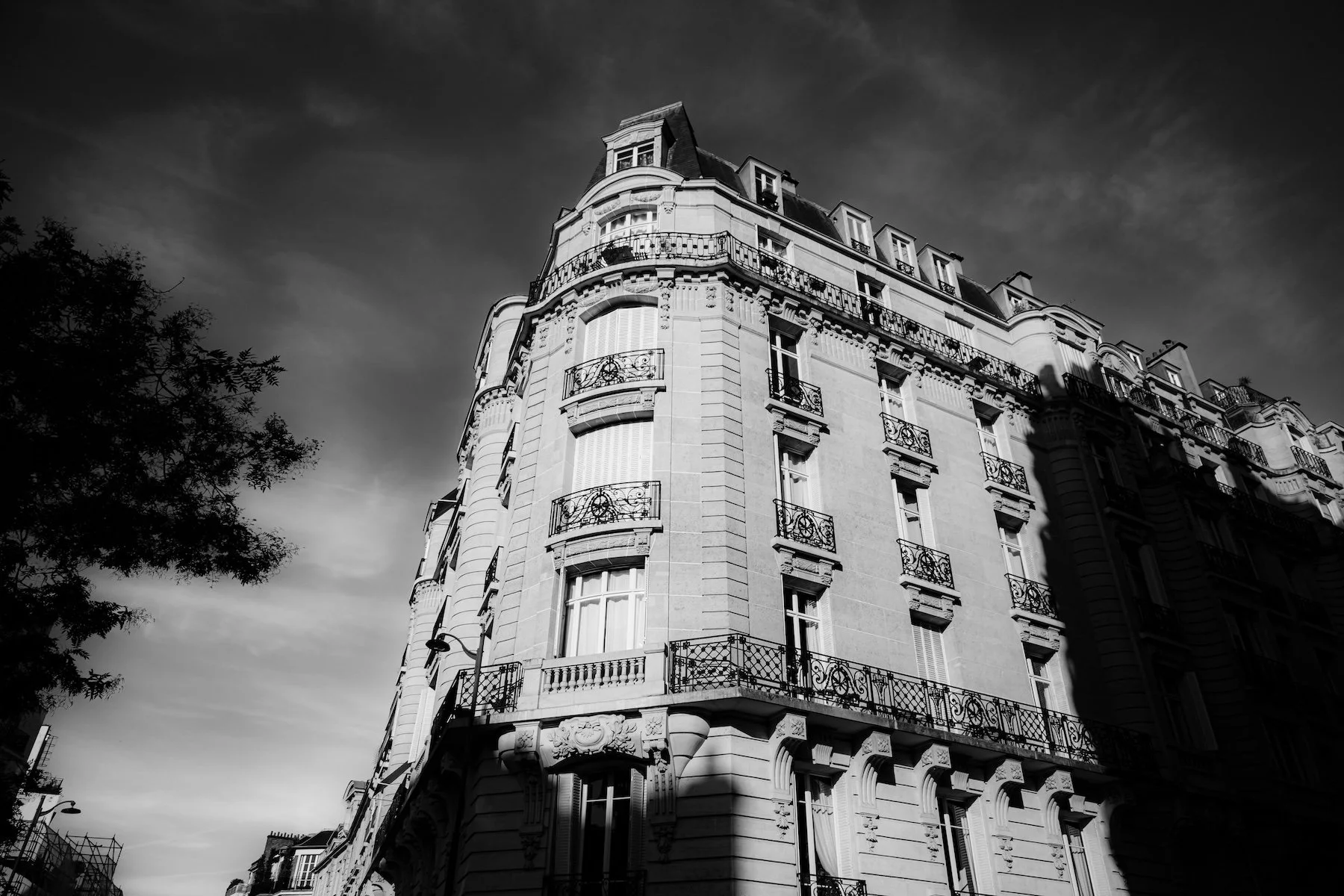
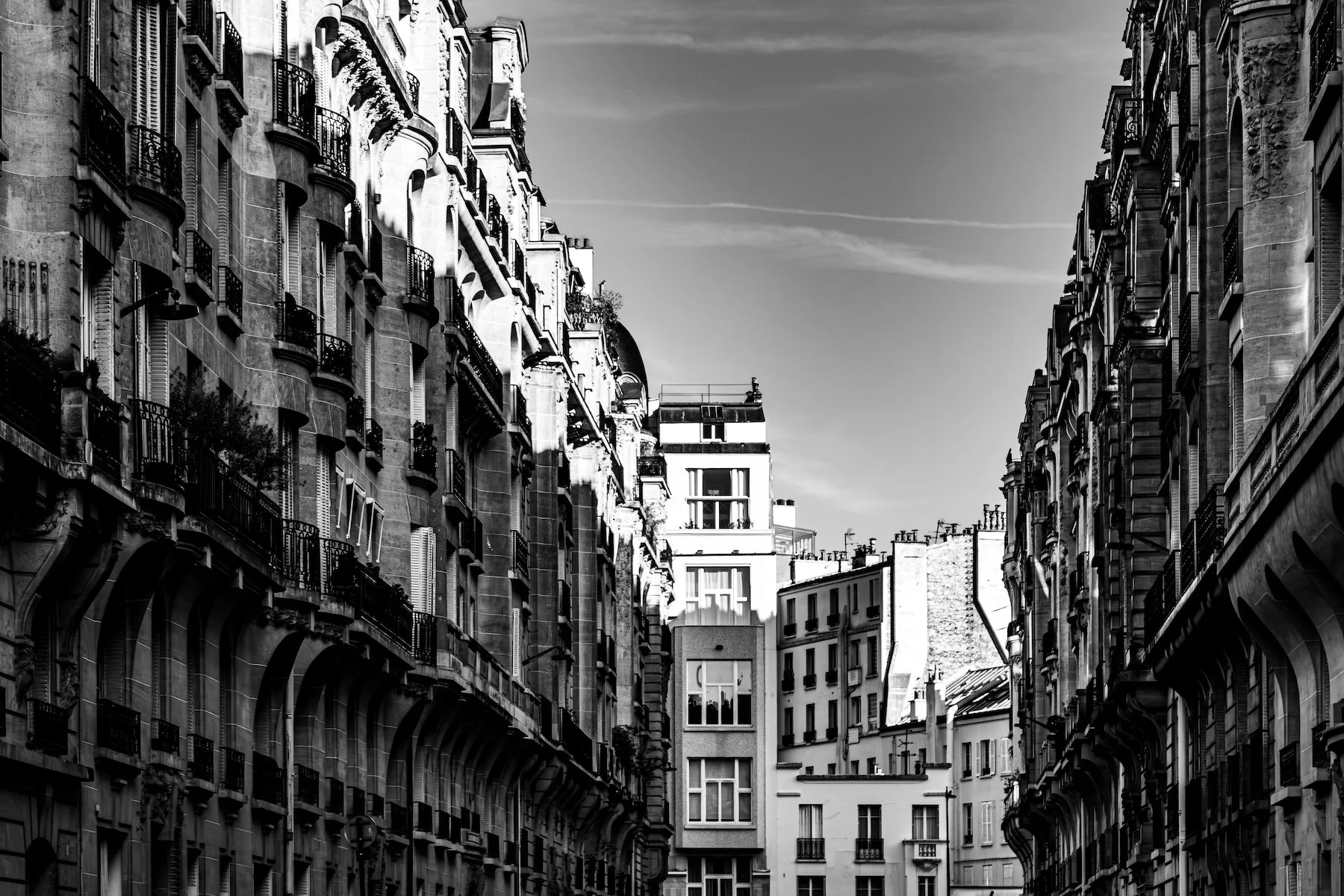
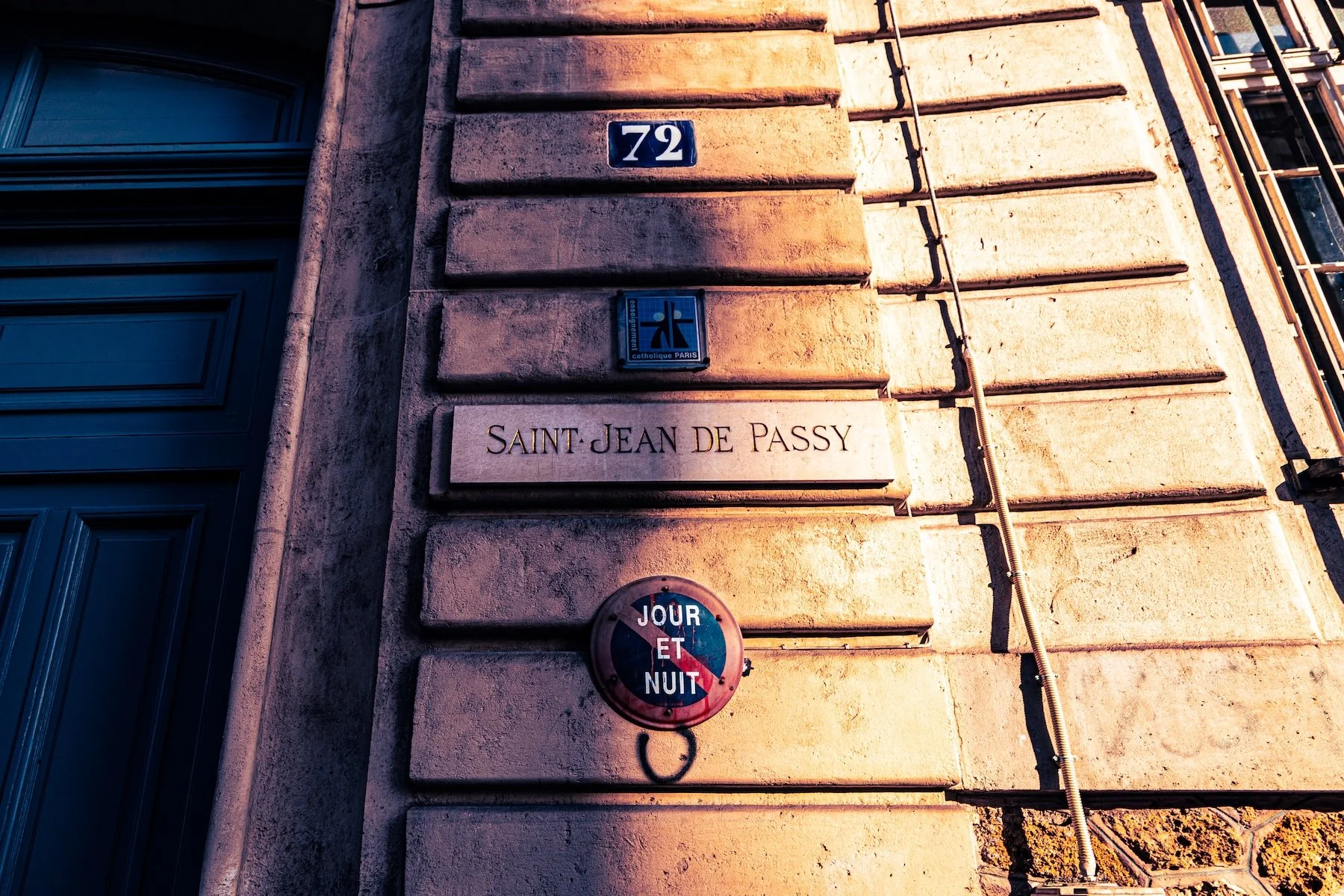
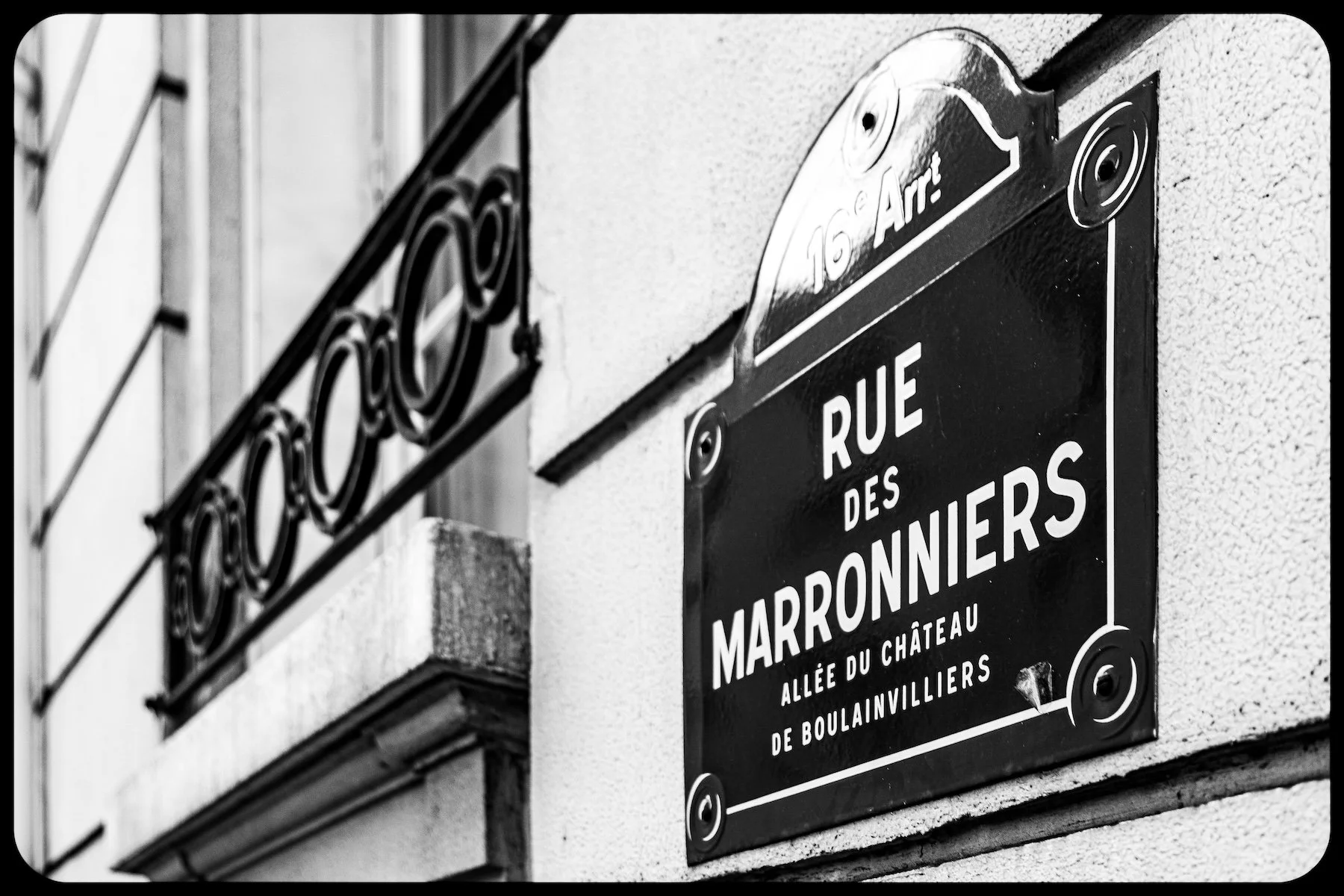
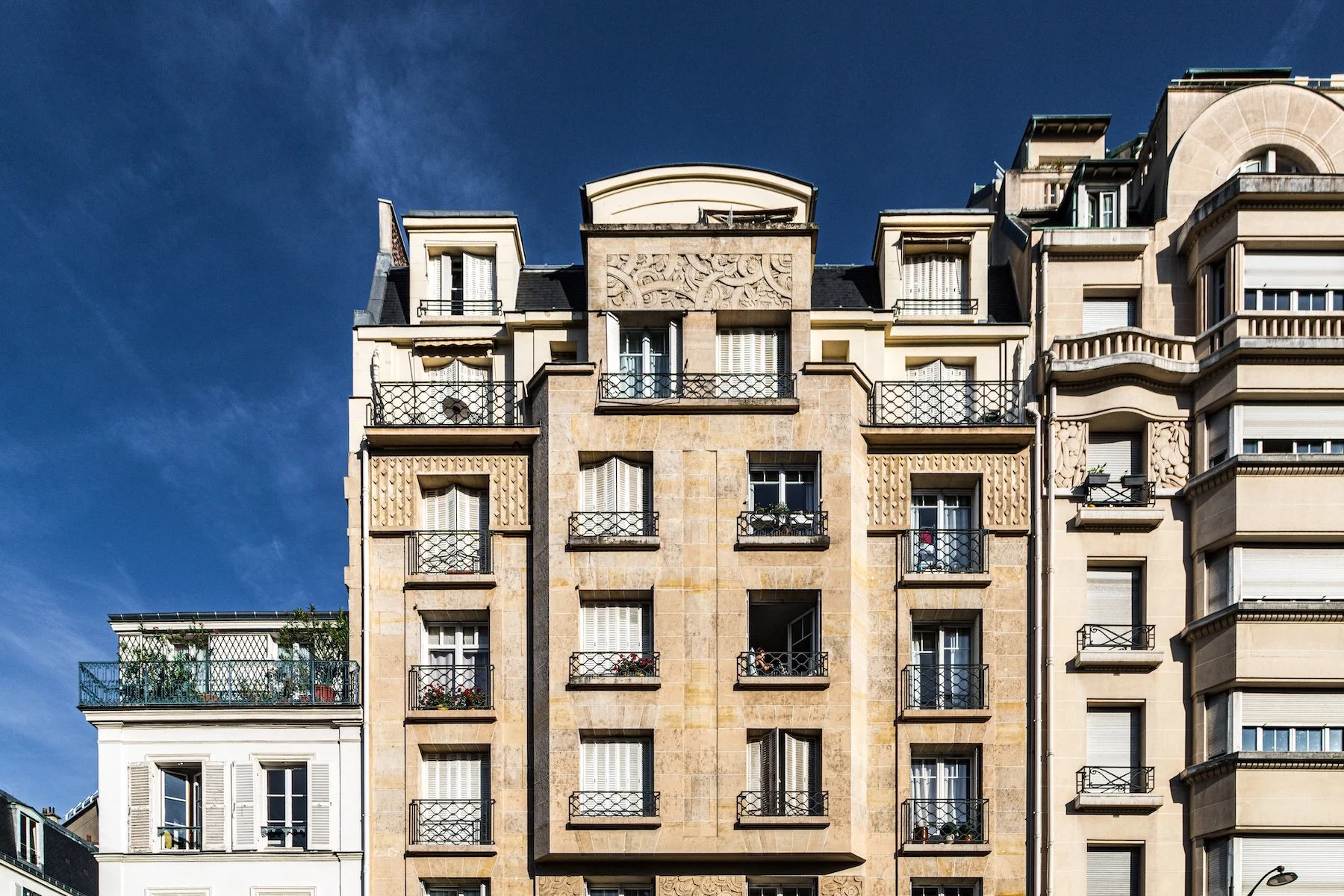
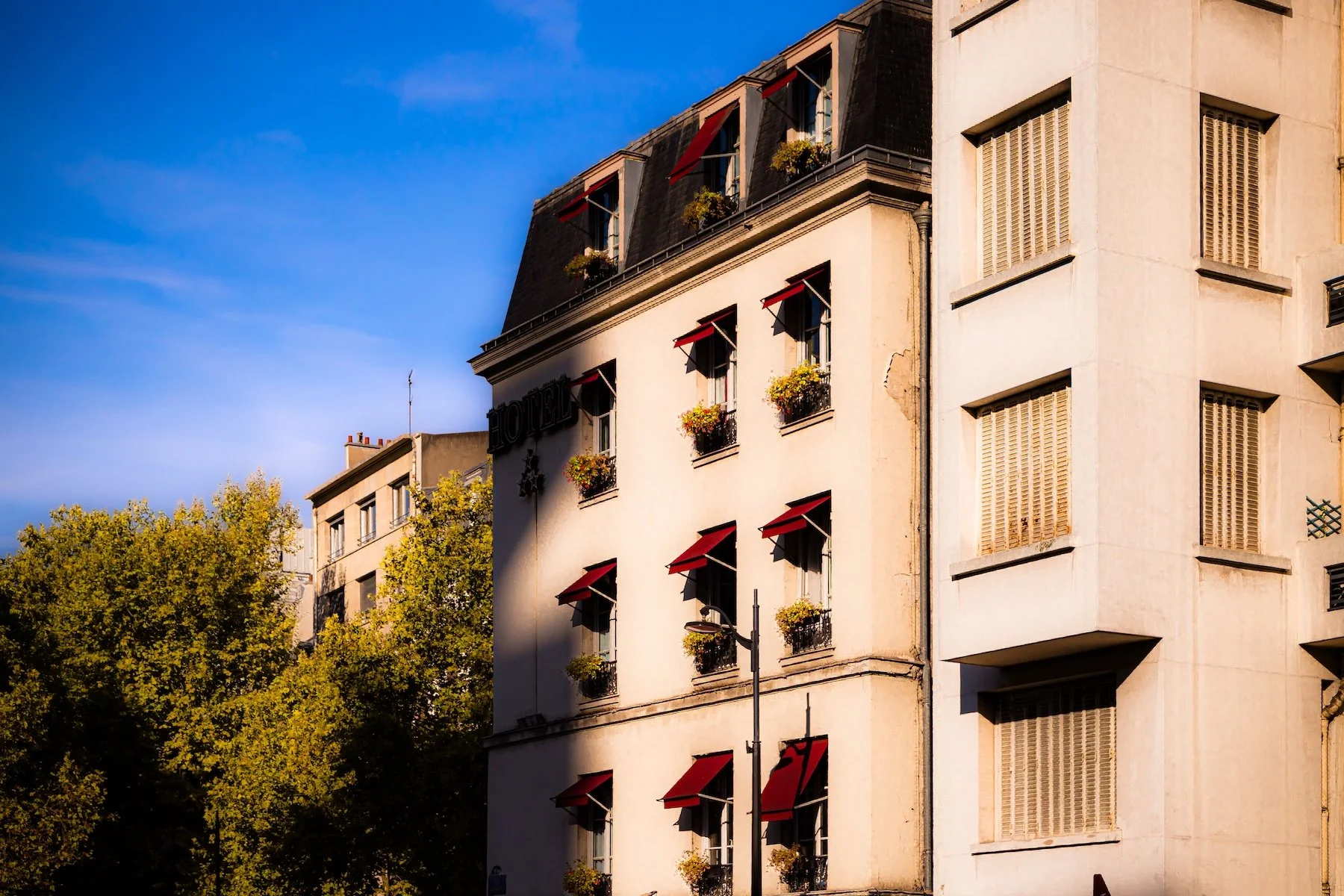
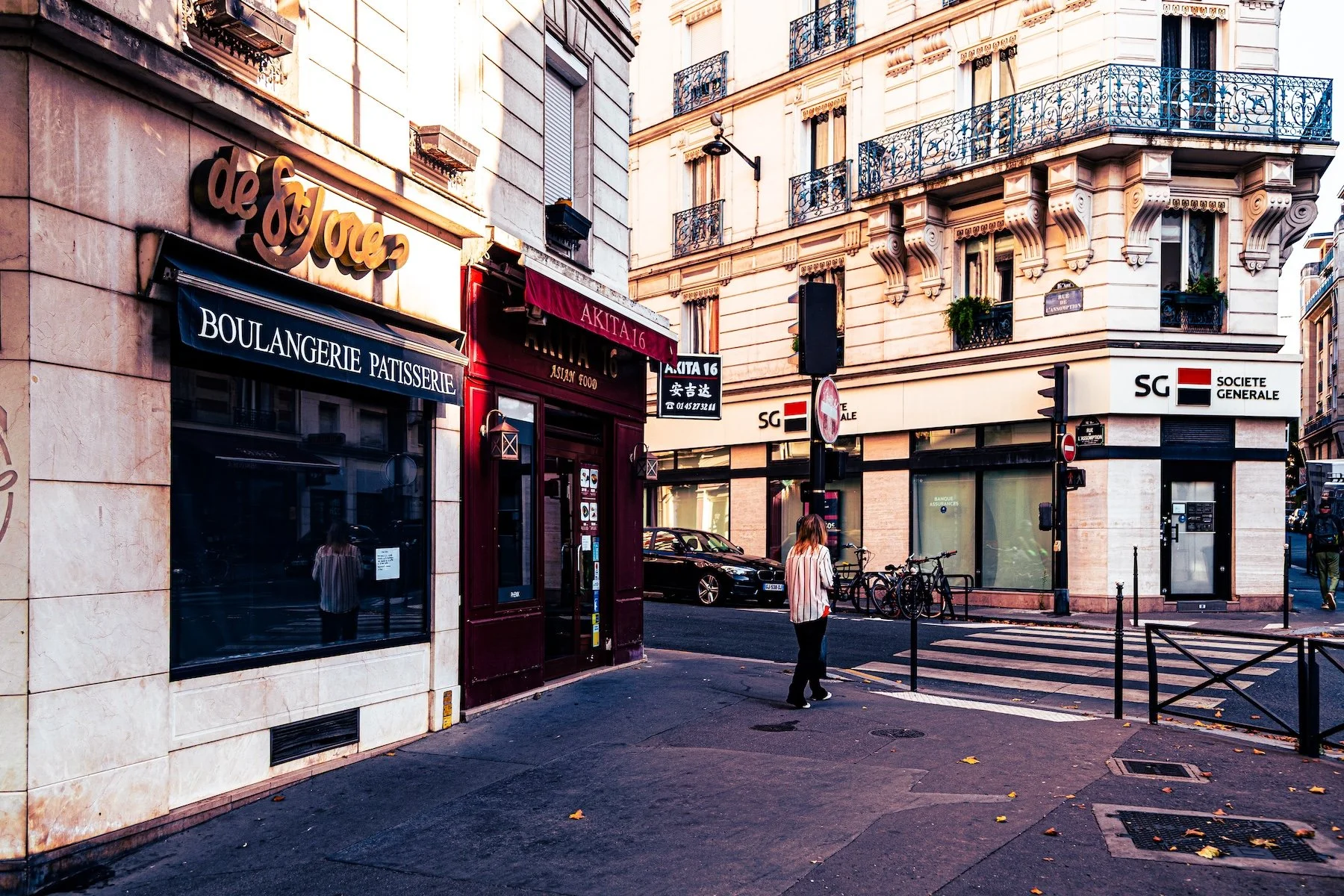

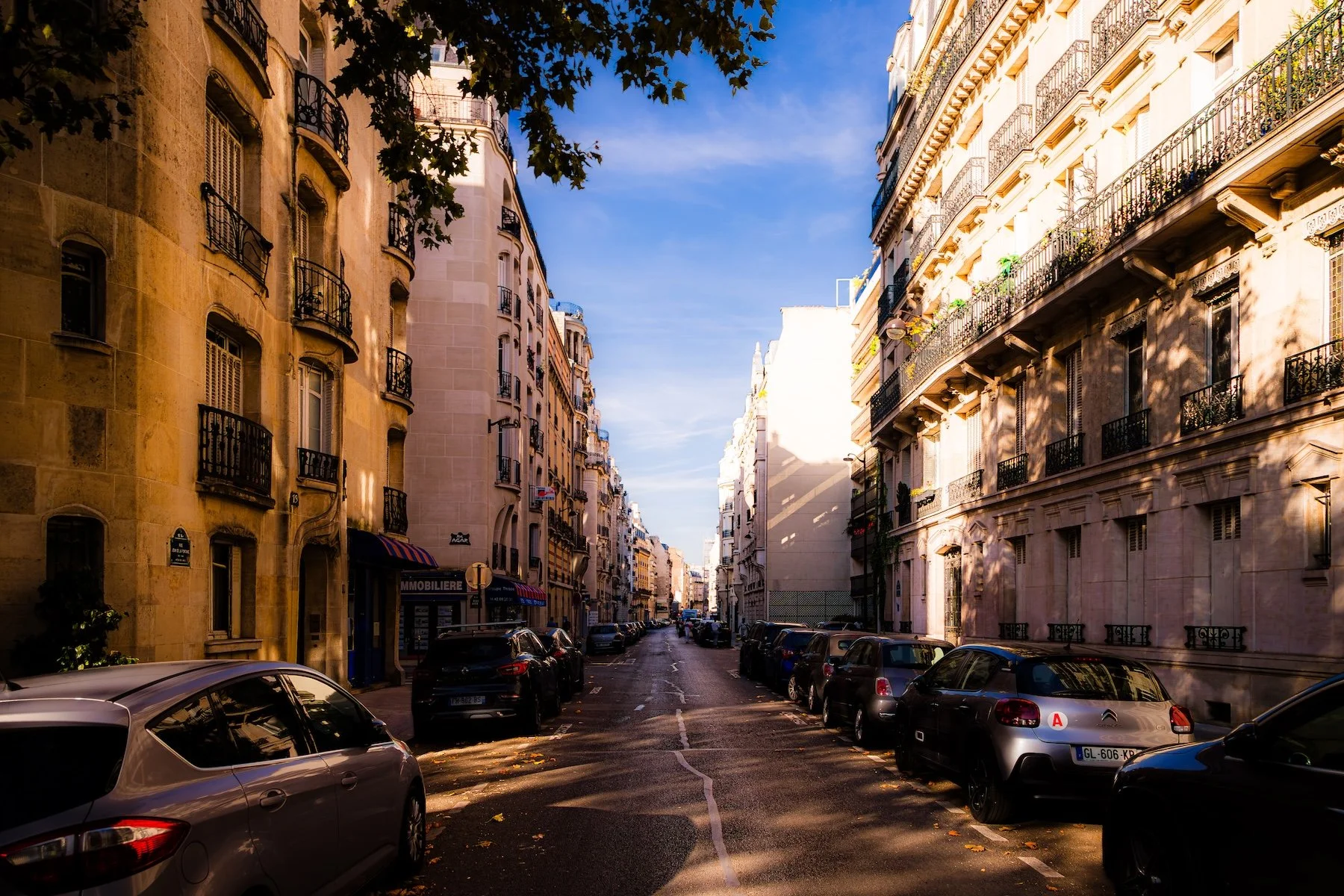
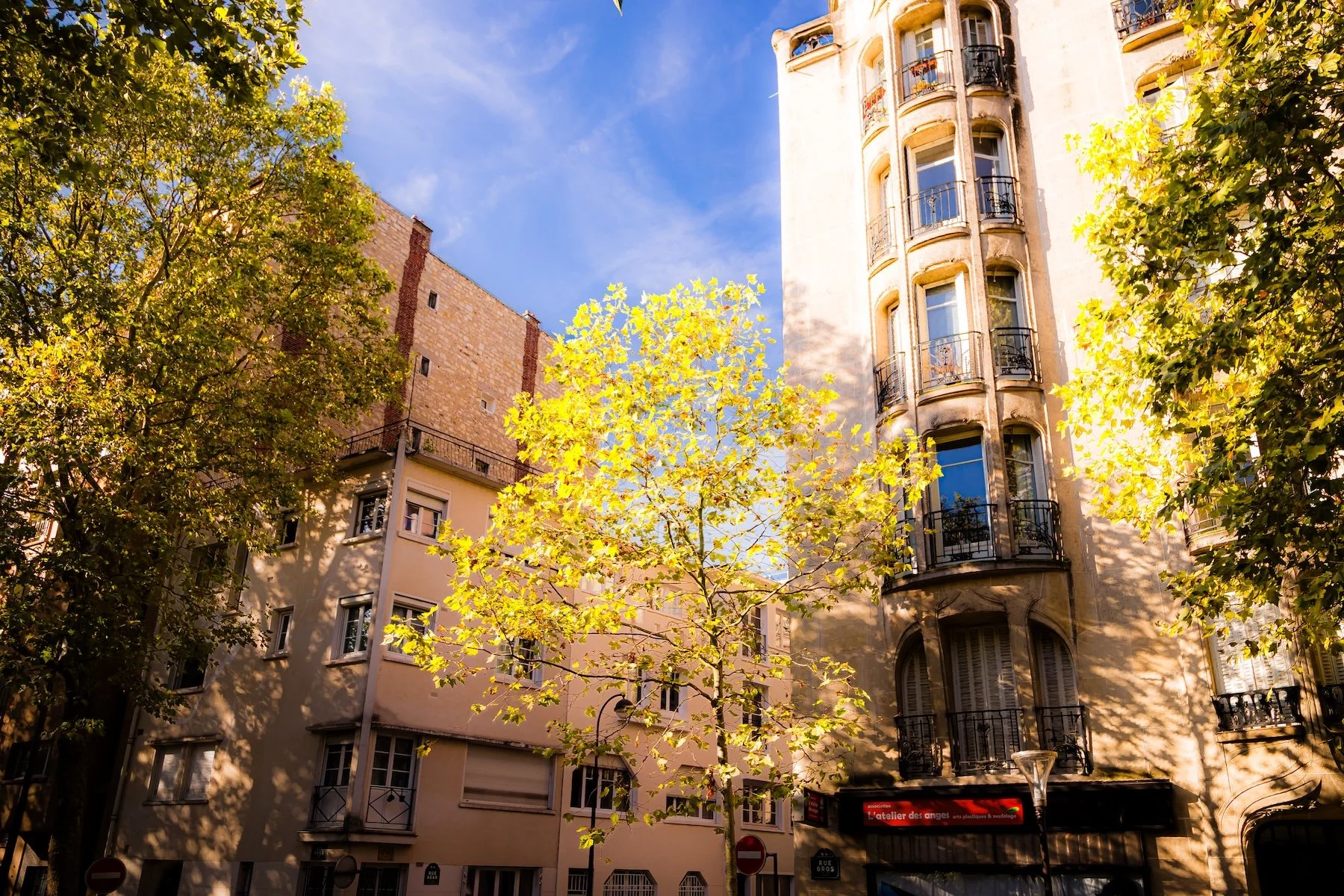
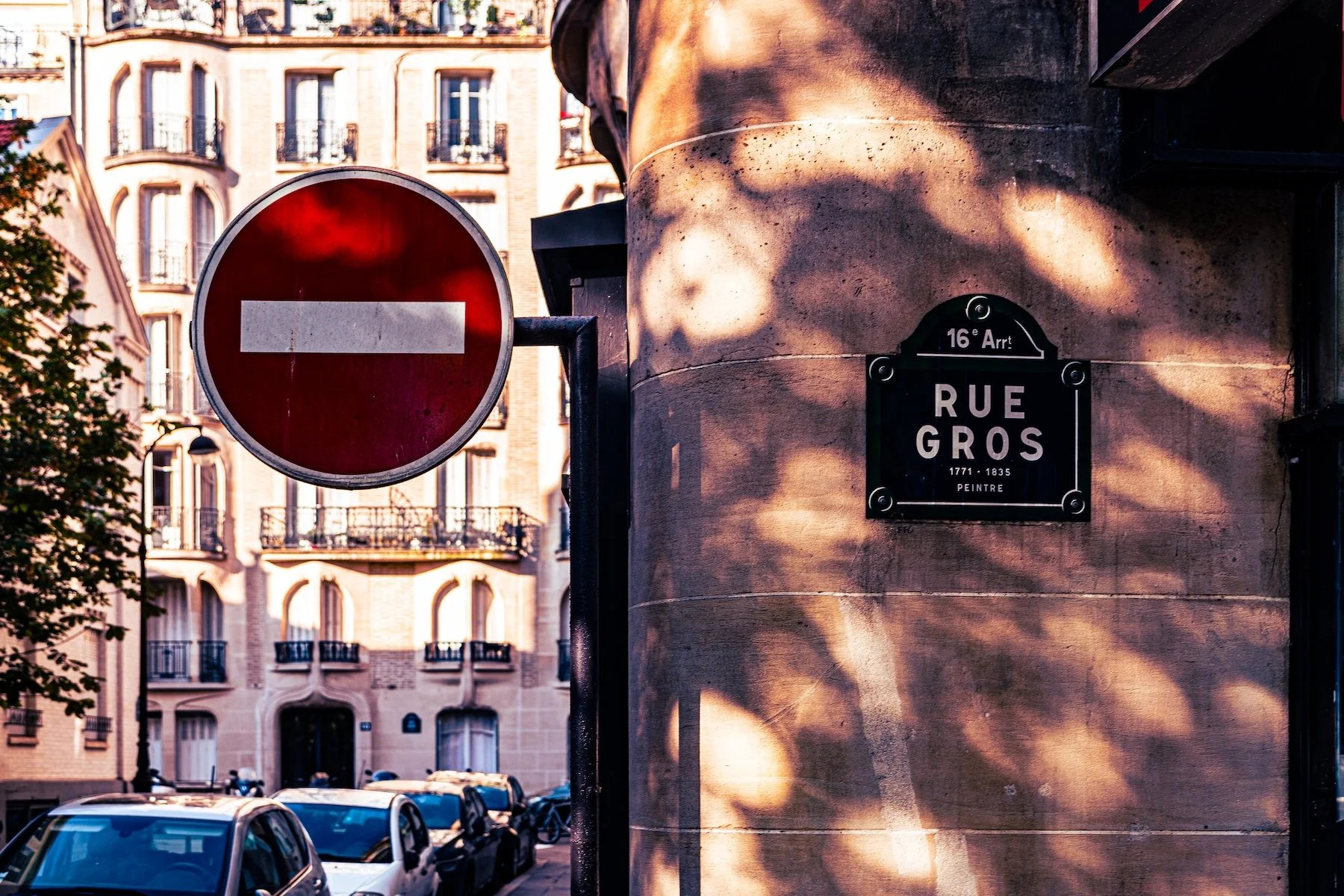
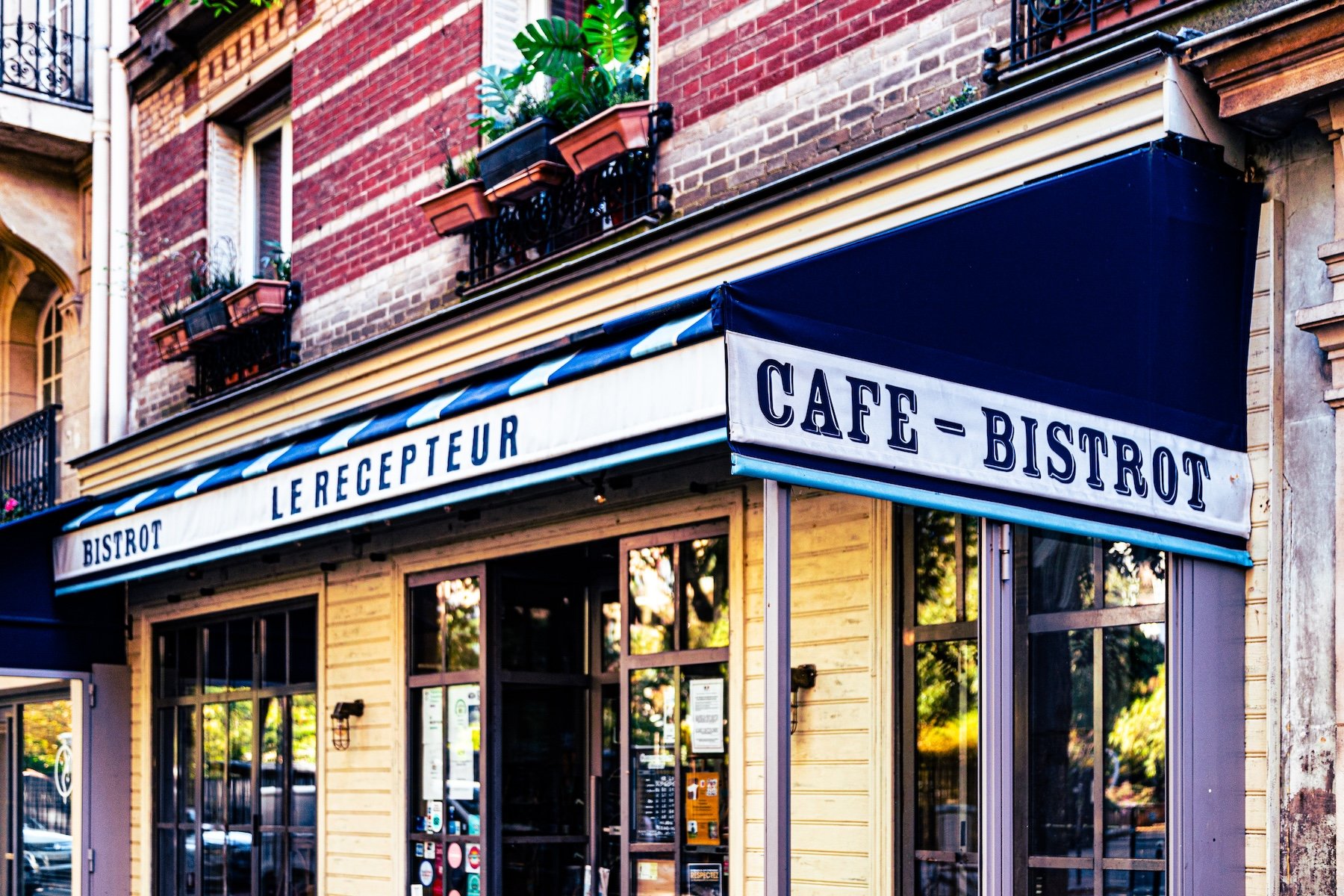
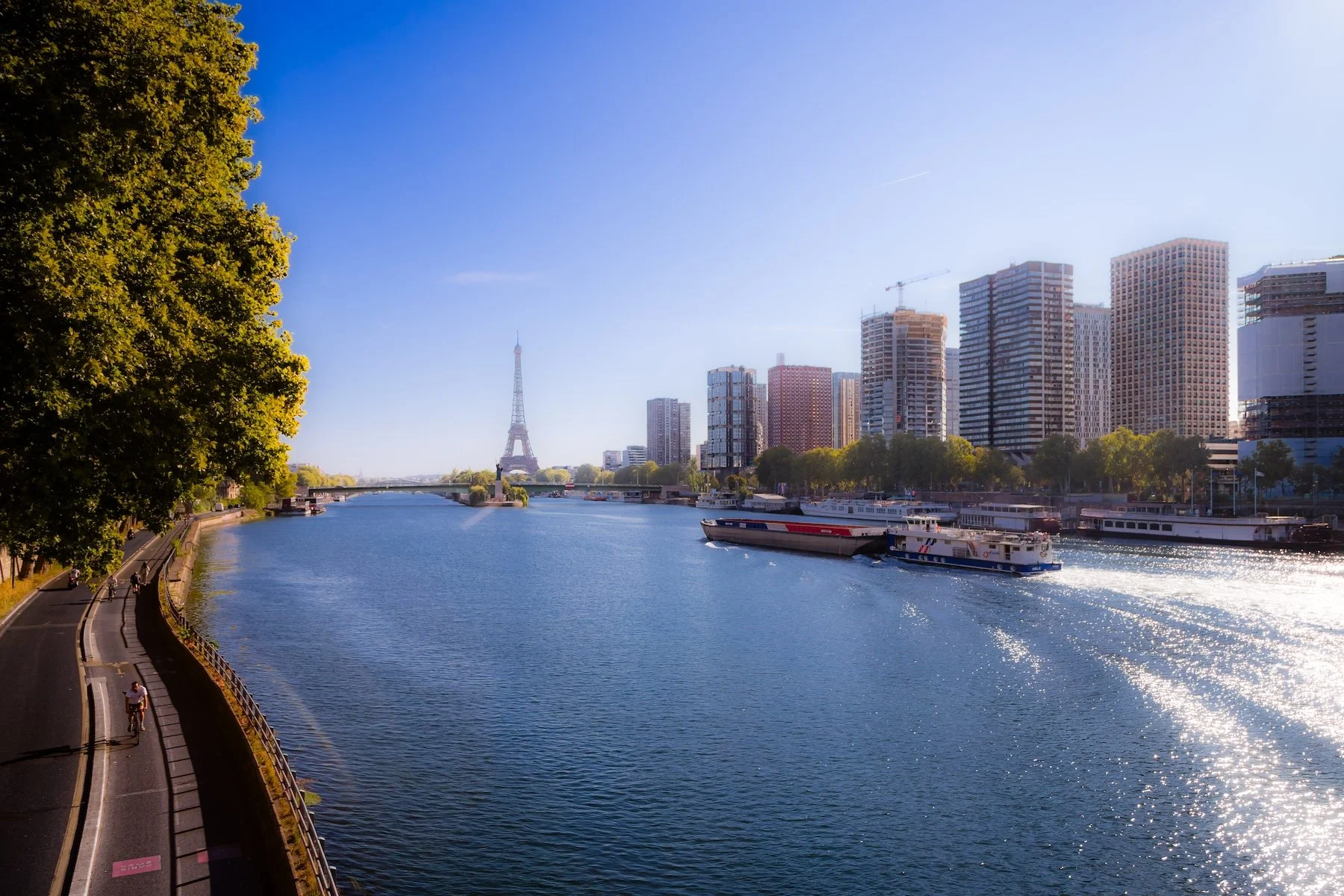
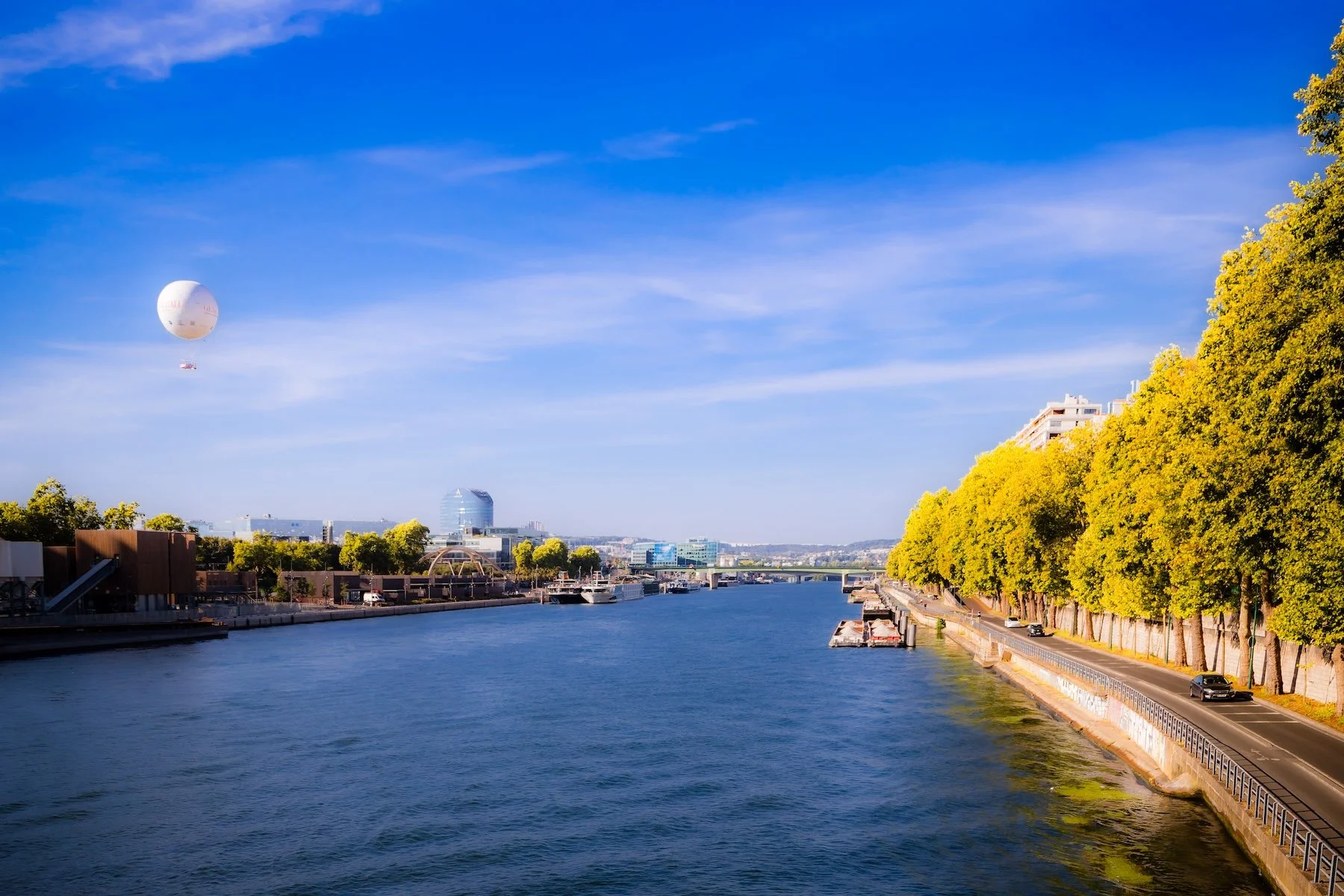
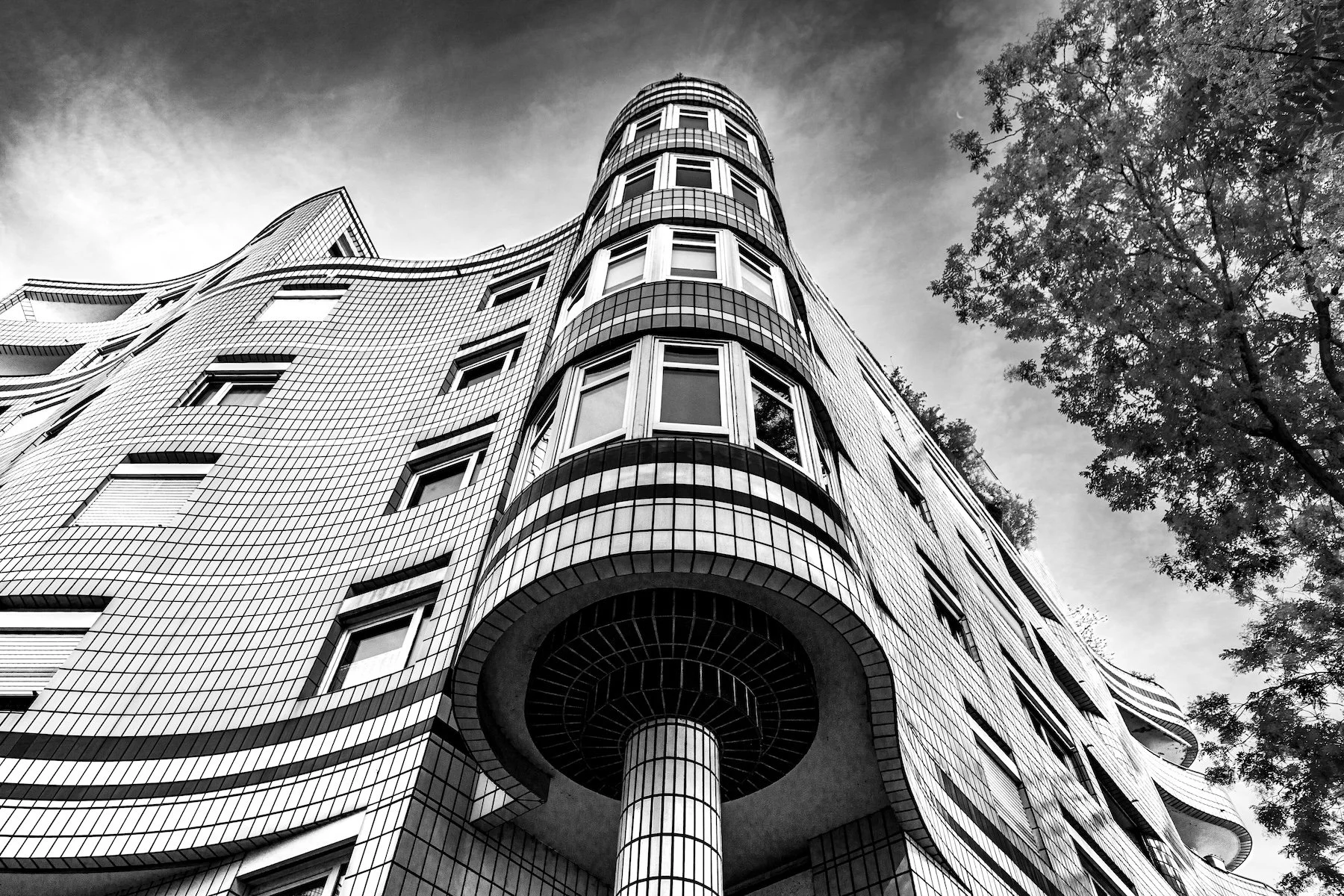
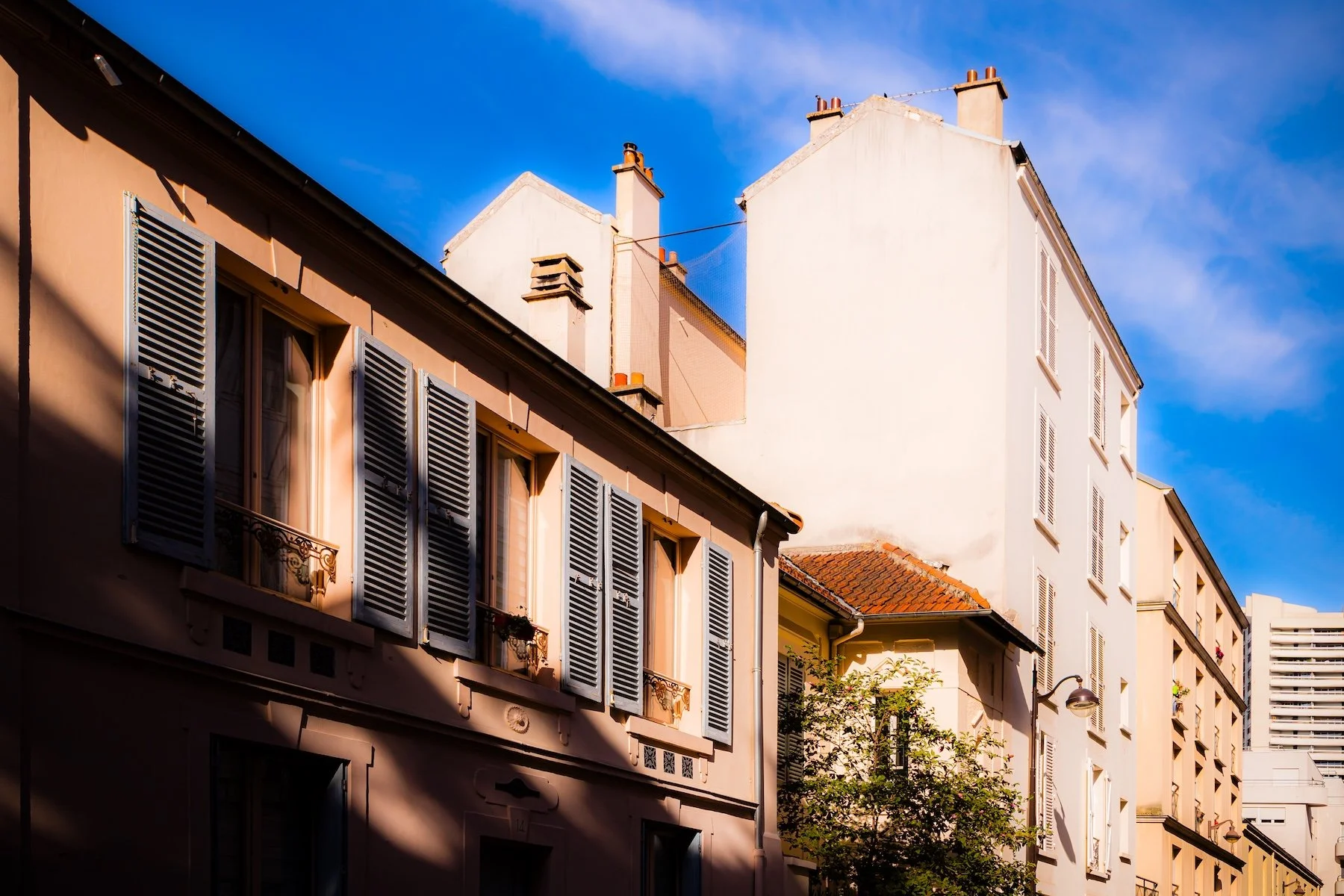
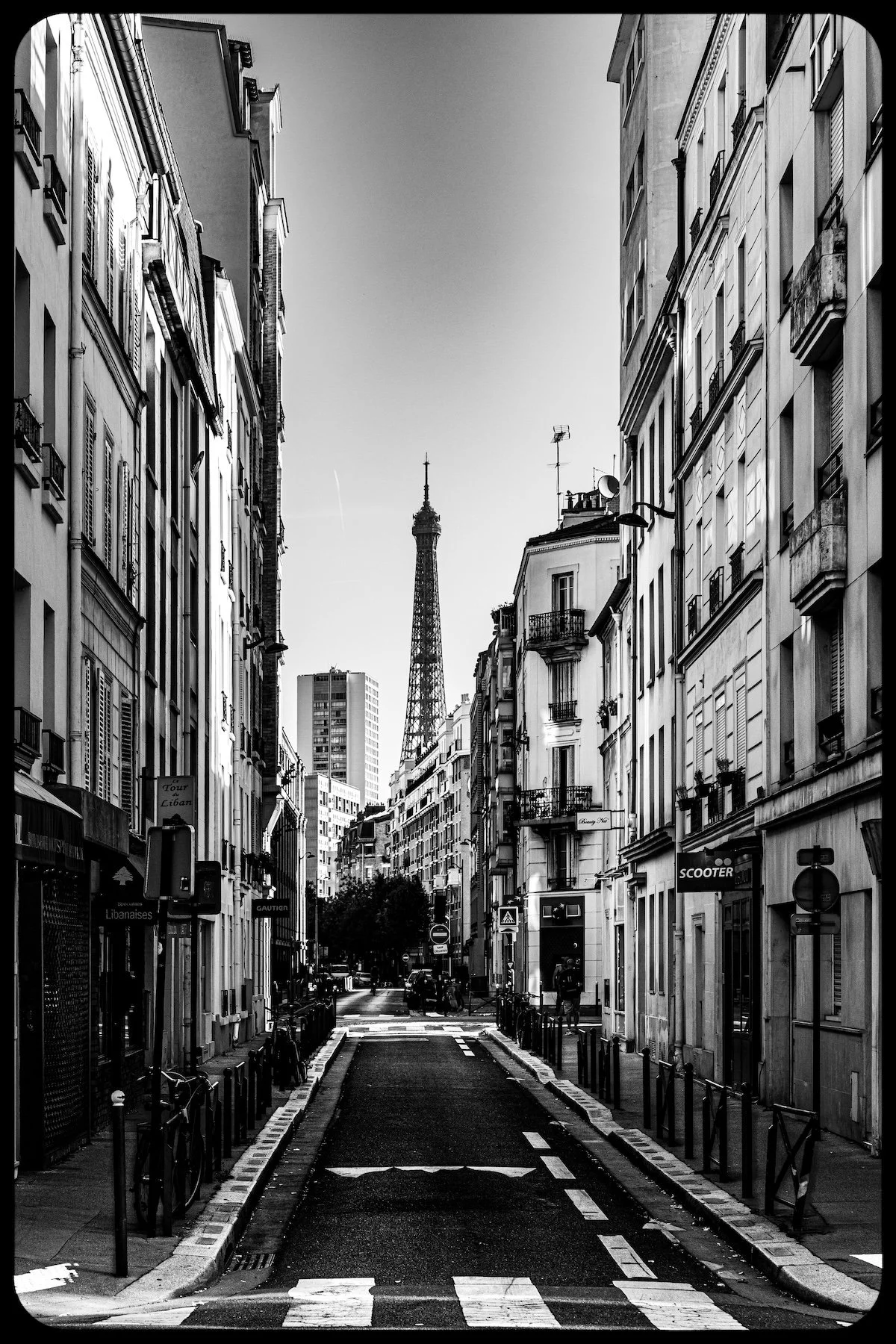
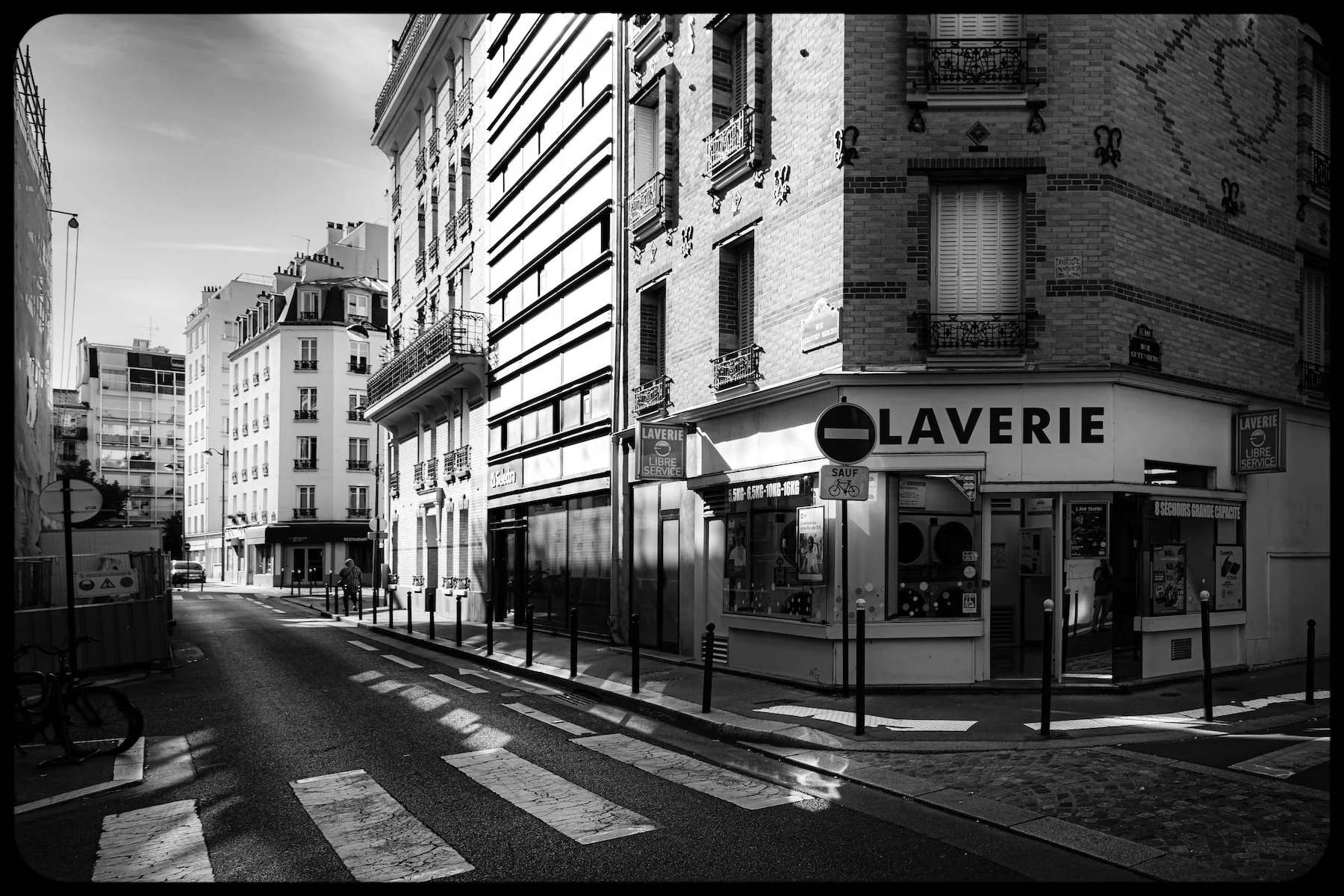
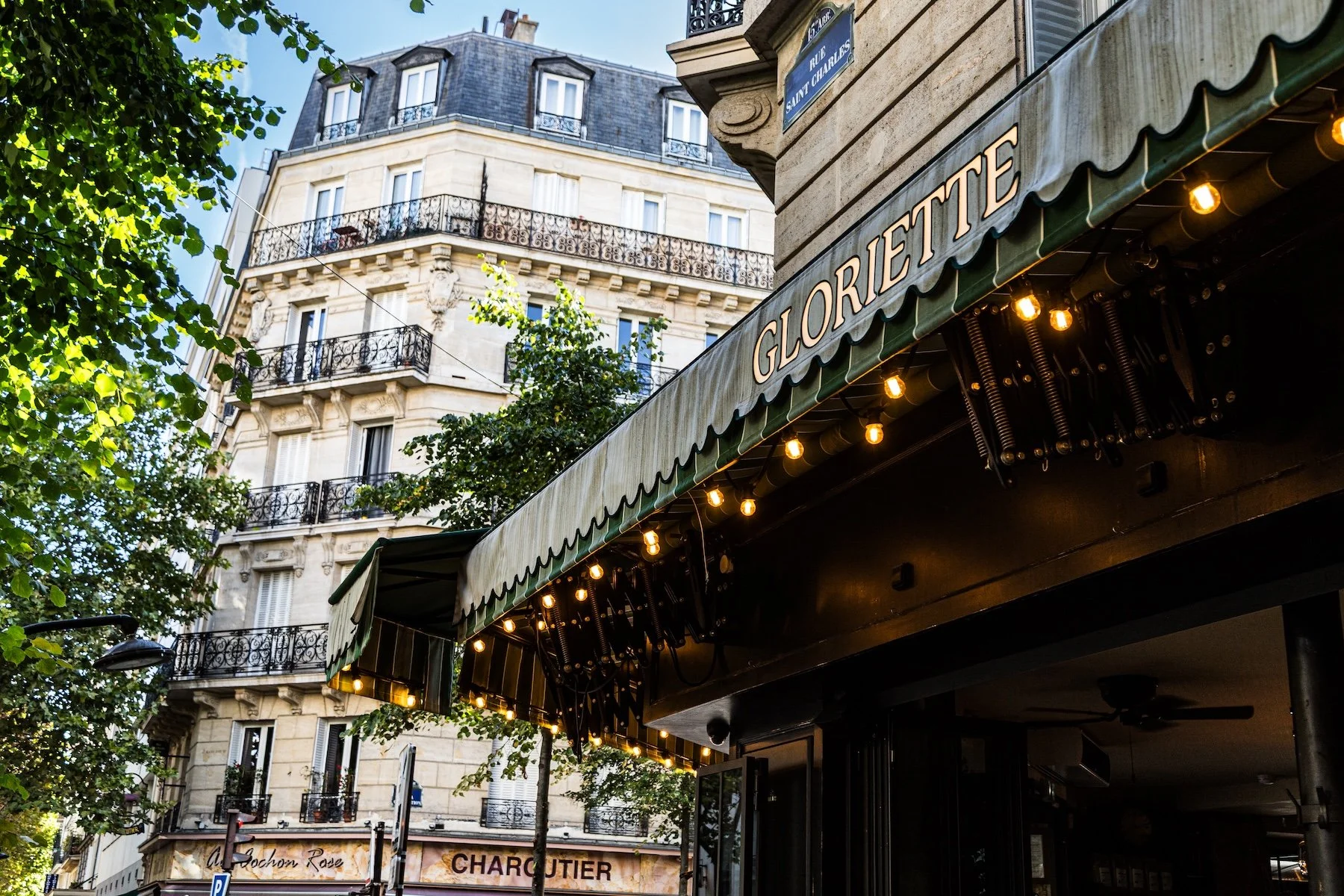
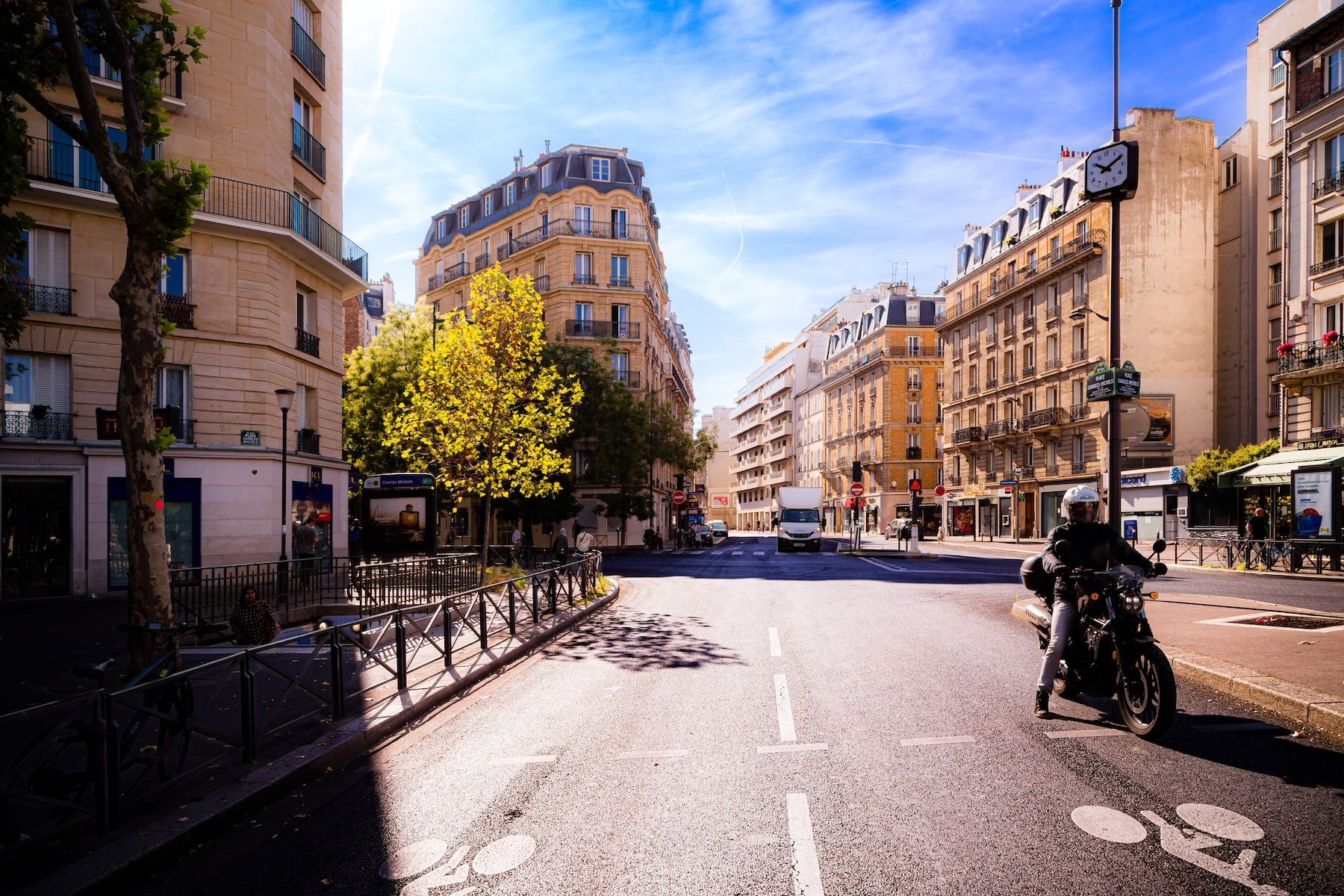
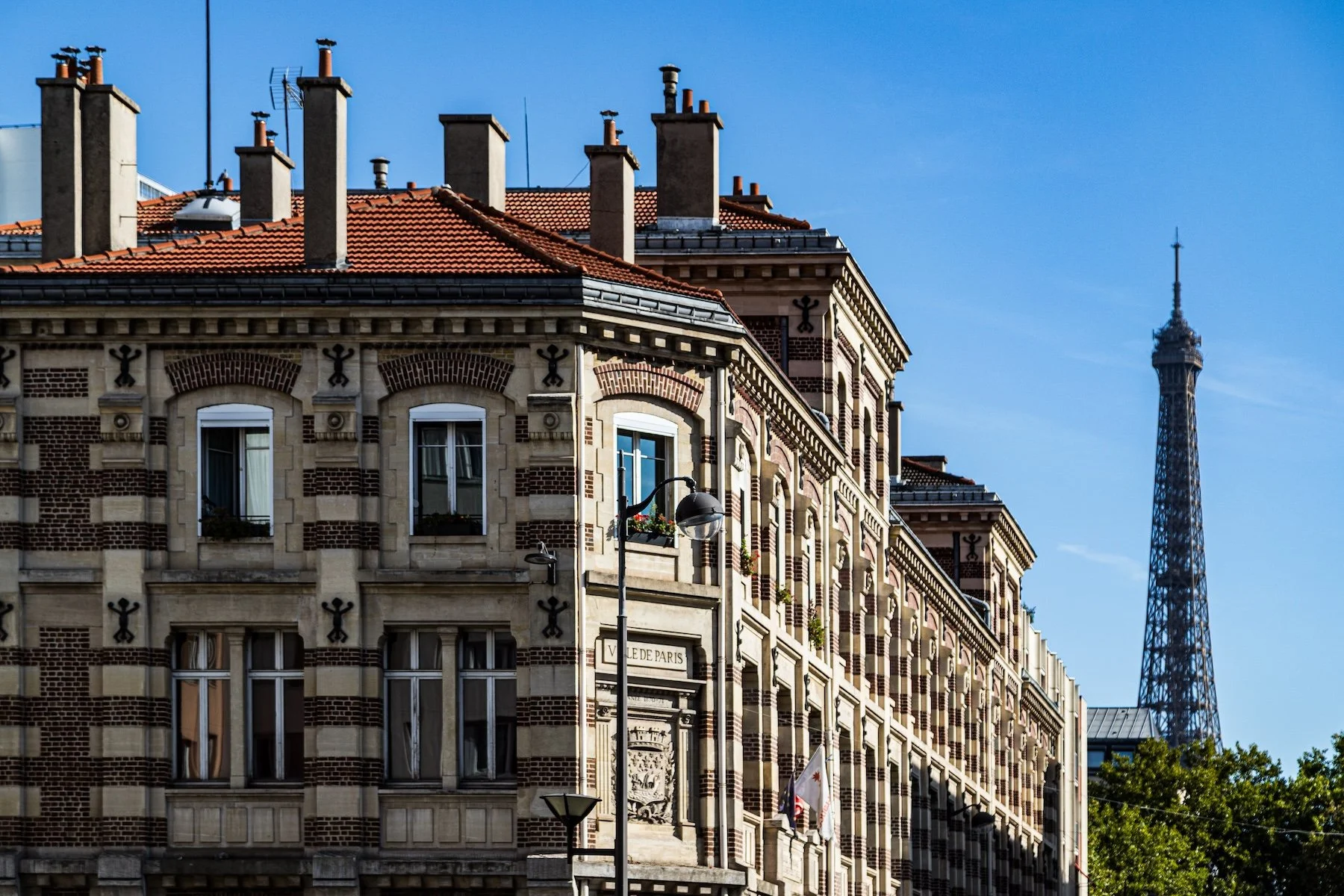
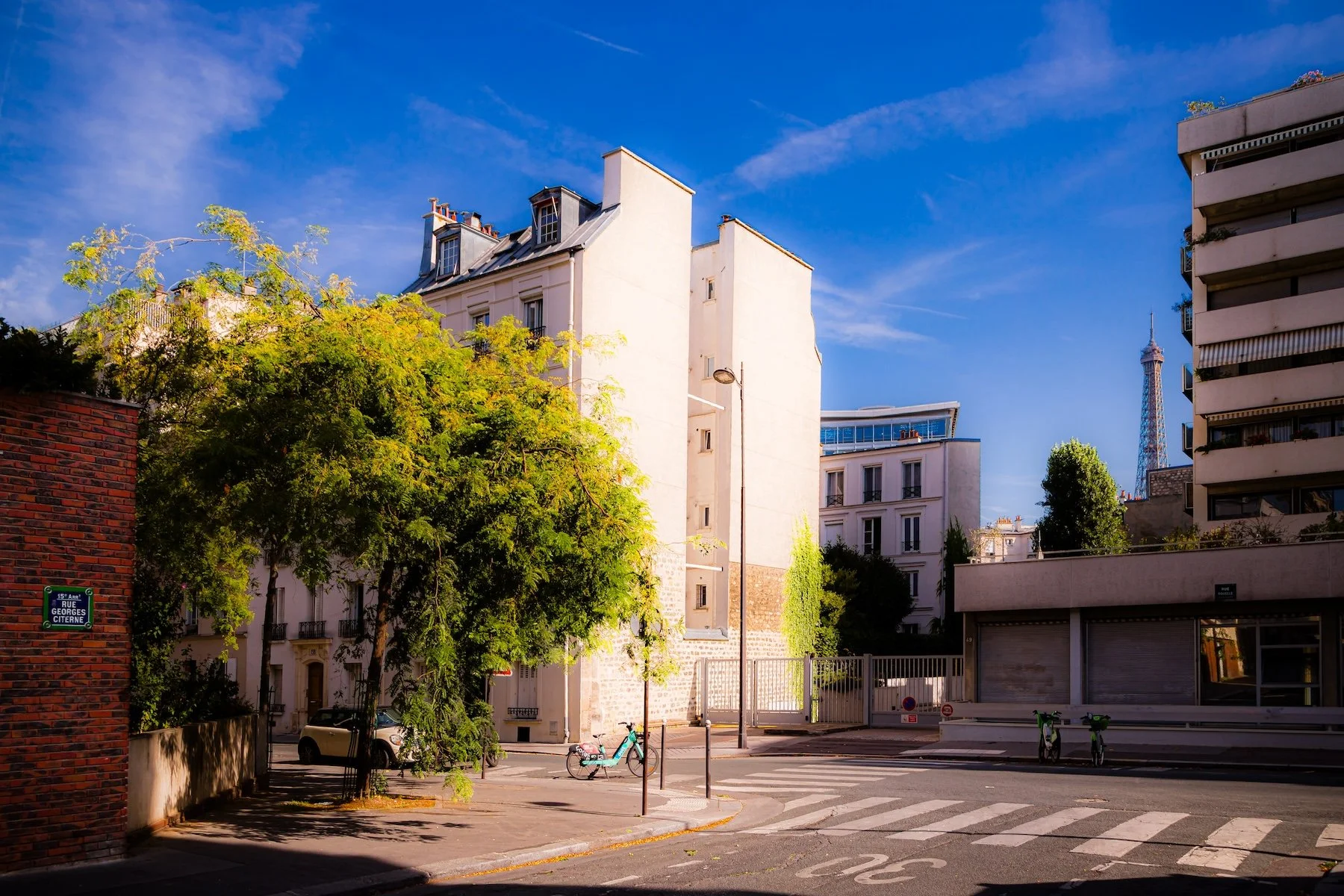
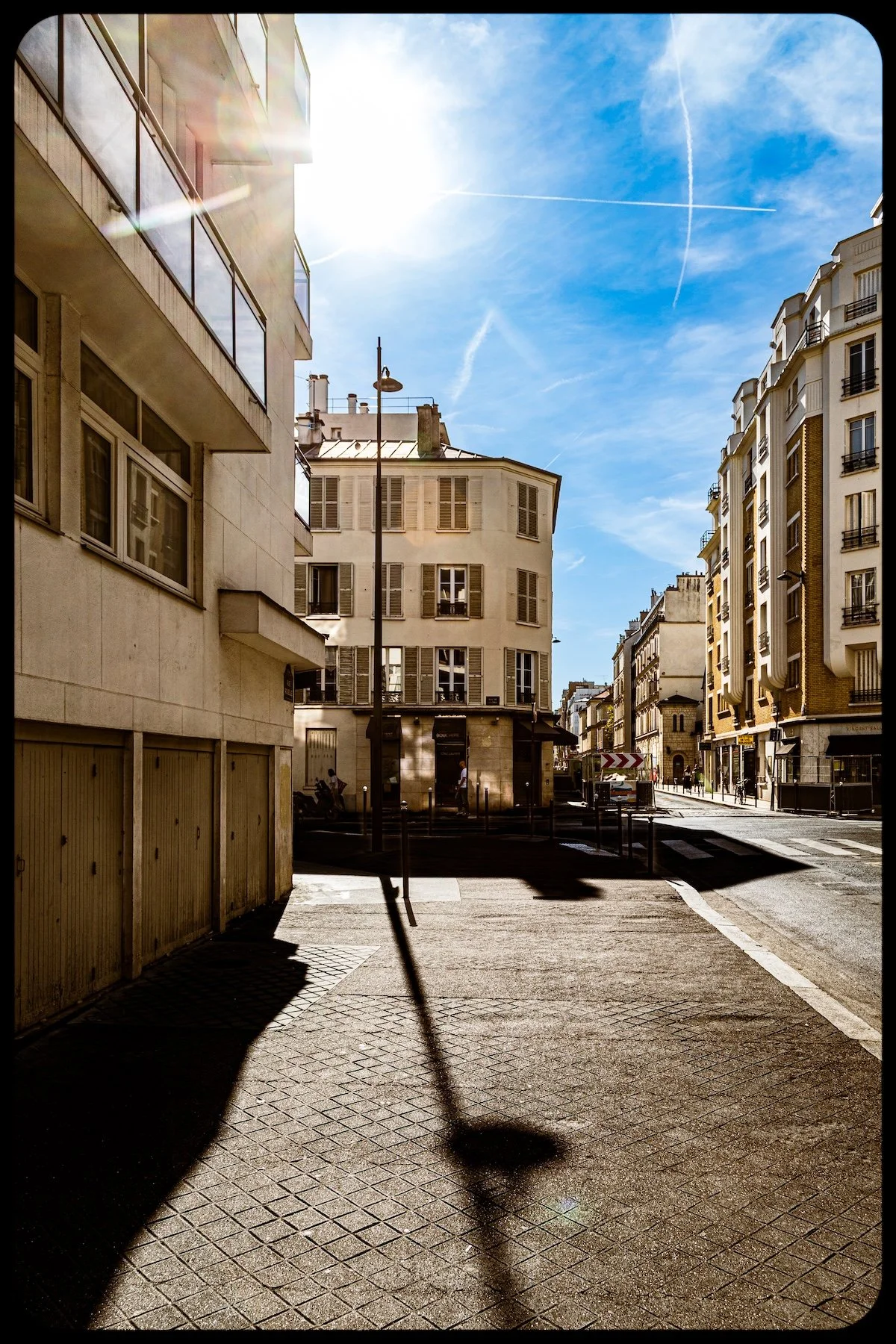
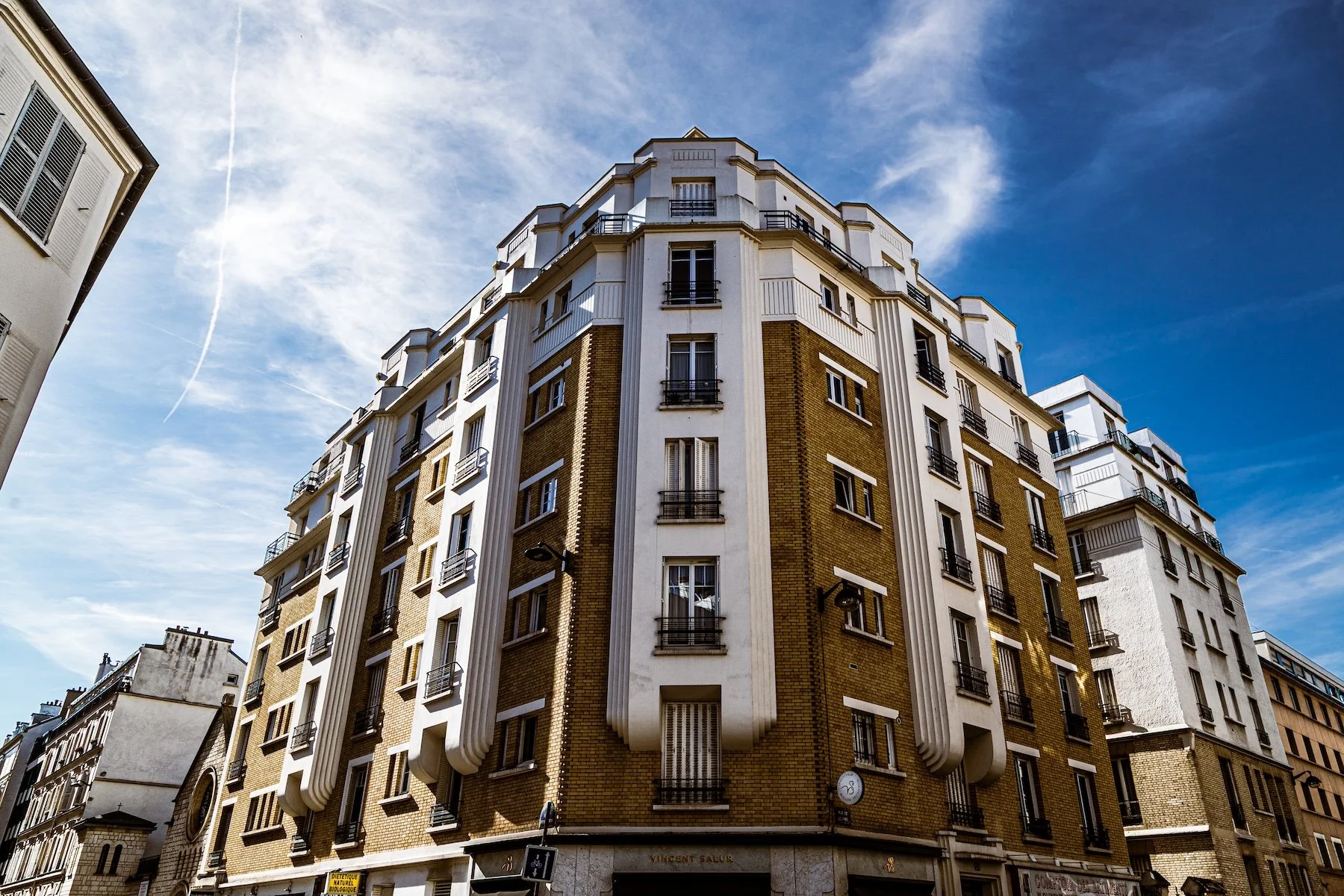
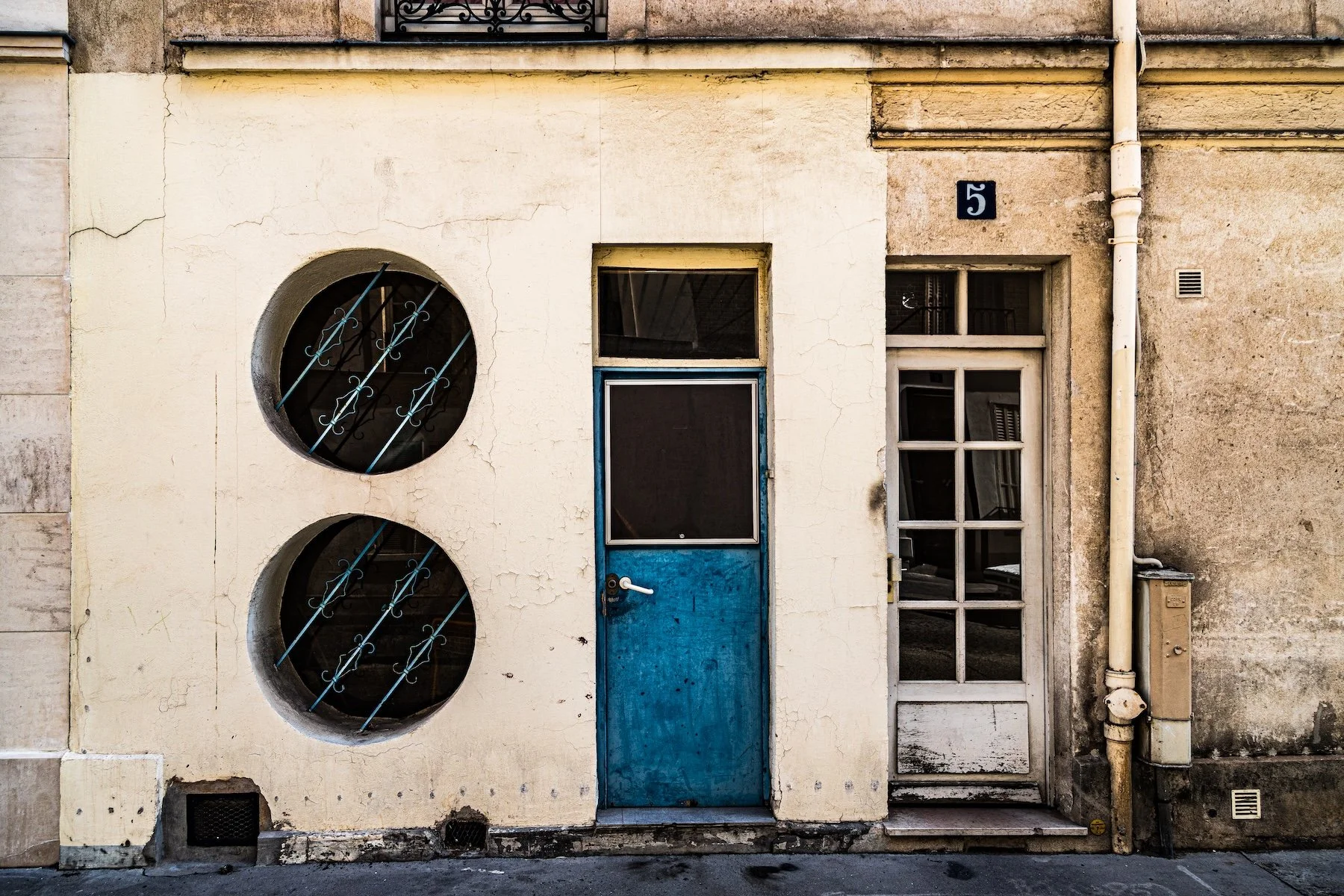
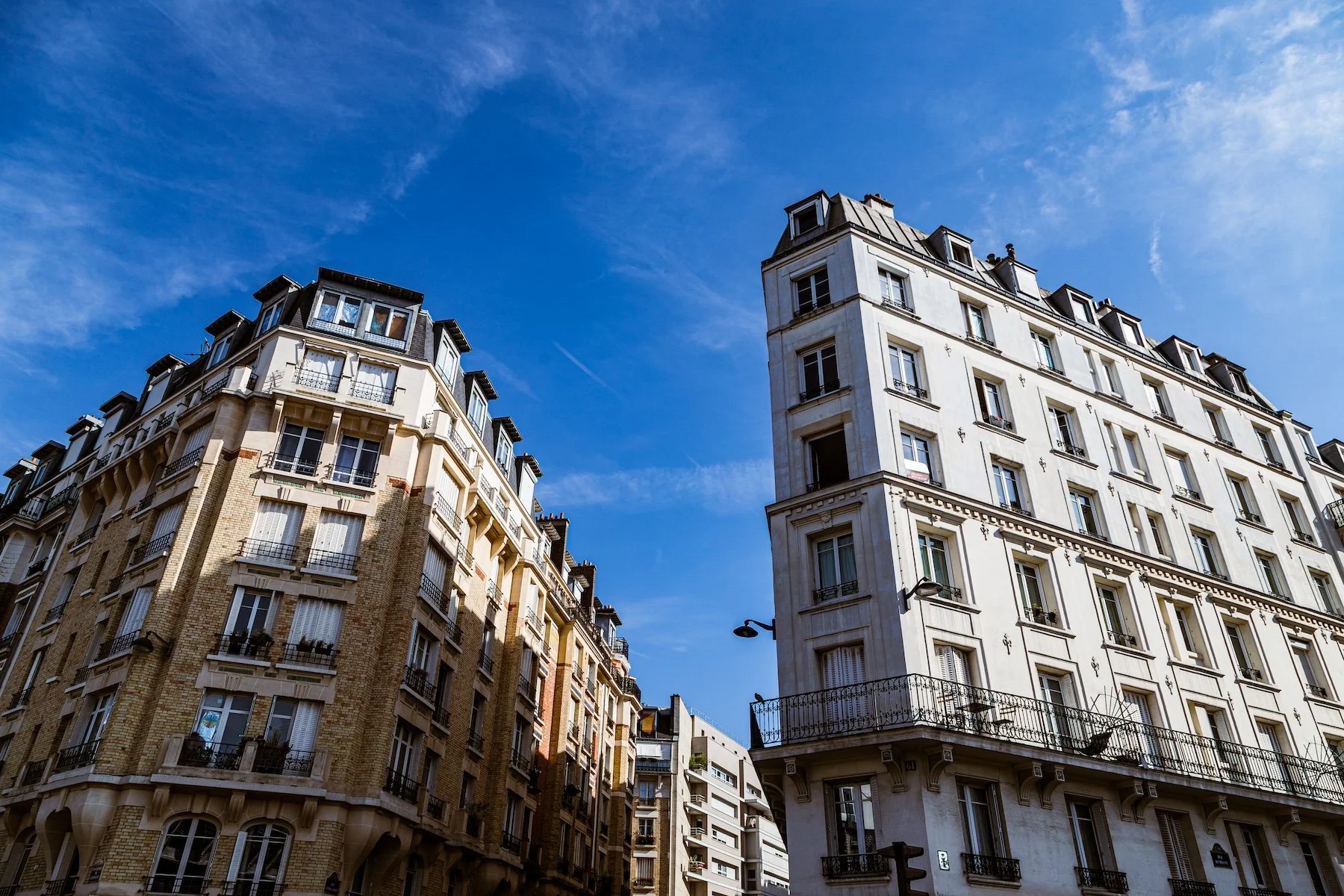
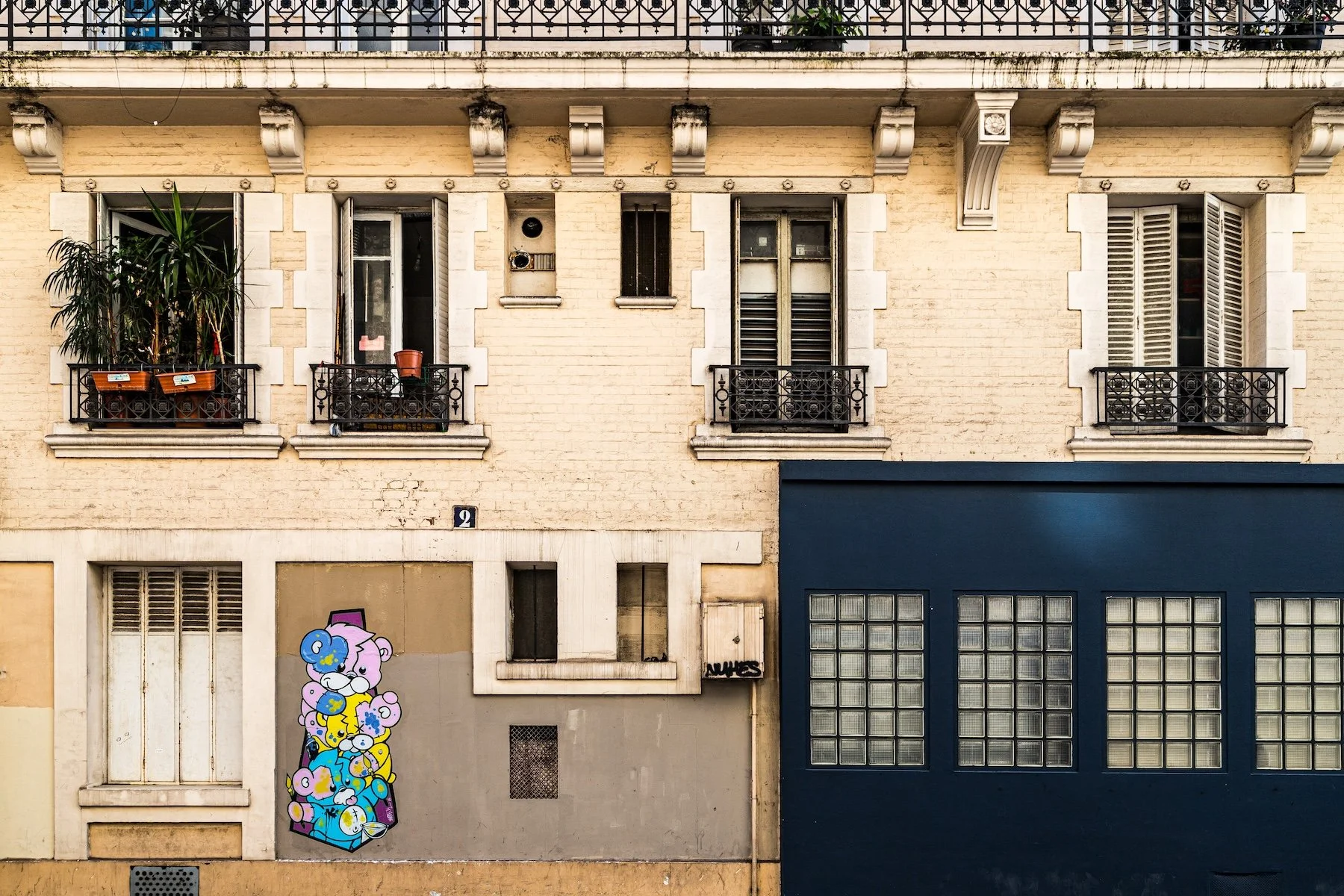
Explore Paris
-

The twenty arrondissements form the civic spiral of Paris, organizing the city into its broad local districts of government, identity, and daily life.
-

Each arrondissement is divided into four official administrative quarters, giving Paris a more precise civic and geographic framework.
-

The conseils de quartier bring participation to street level, giving residents a voice in neighborhood needs, public space, and local civic life.
-

Les Deux Rives trace Paris through the Seine’s two banks, revealing how the Rive Droite and Rive Gauche shaped the city’s civic power, commerce, learning, art, and cultural identity.
-

Cultural neighborhoods reveal the Paris people recognize through history, cafés, architecture, memory, atmosphere, and local belonging.