
MILIEUX CULTURELS
Cultural Neighborhoods
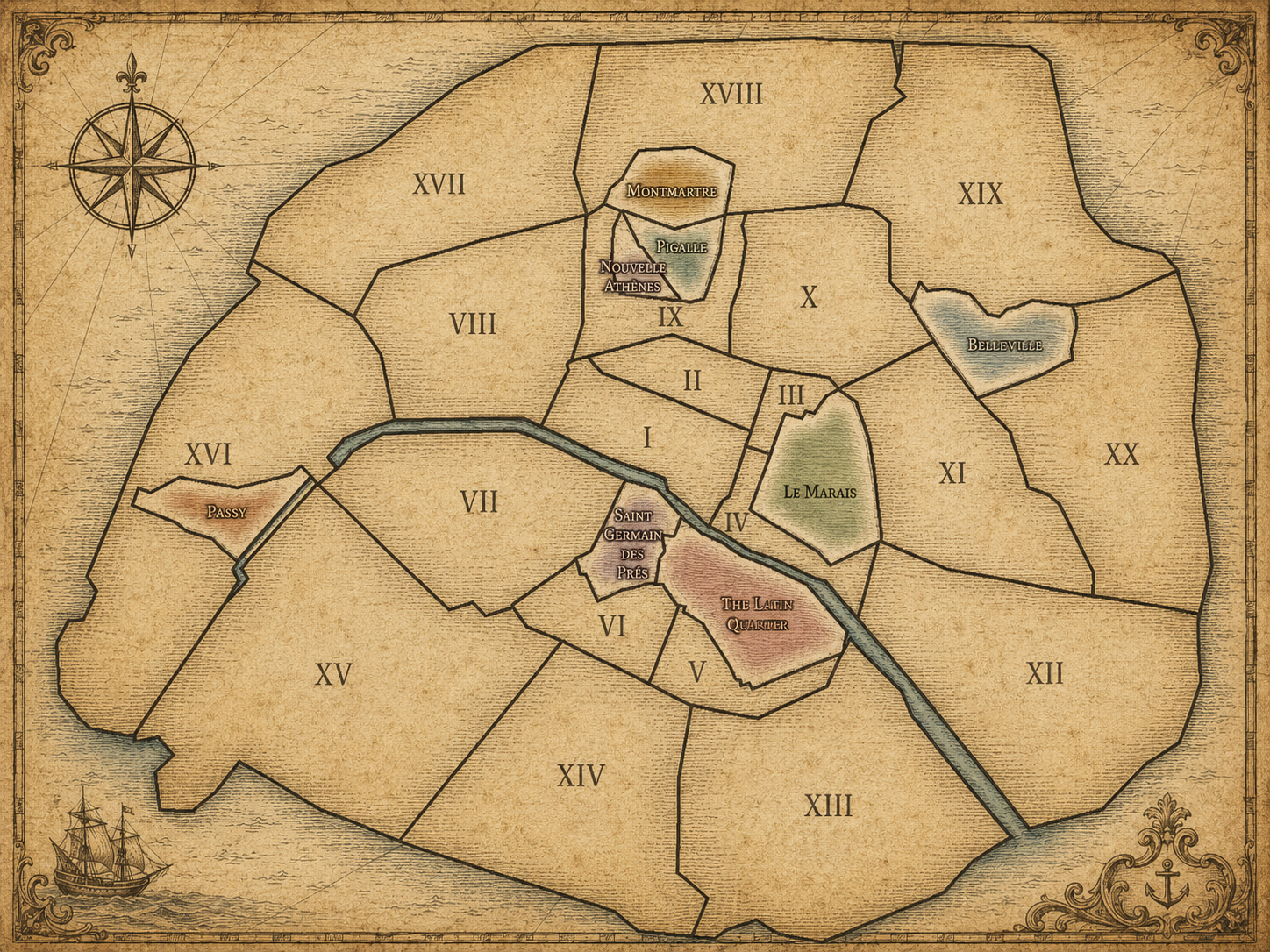
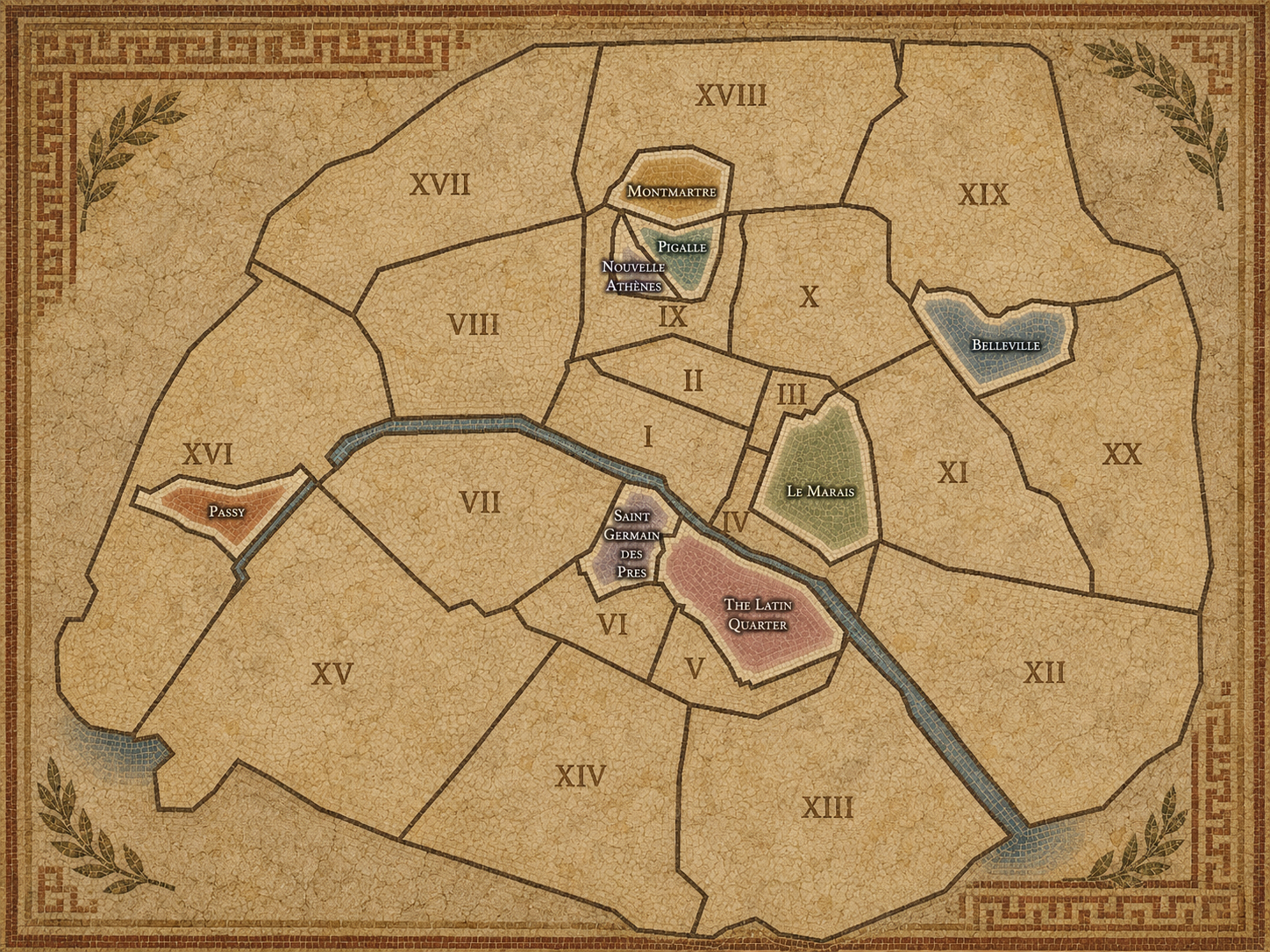
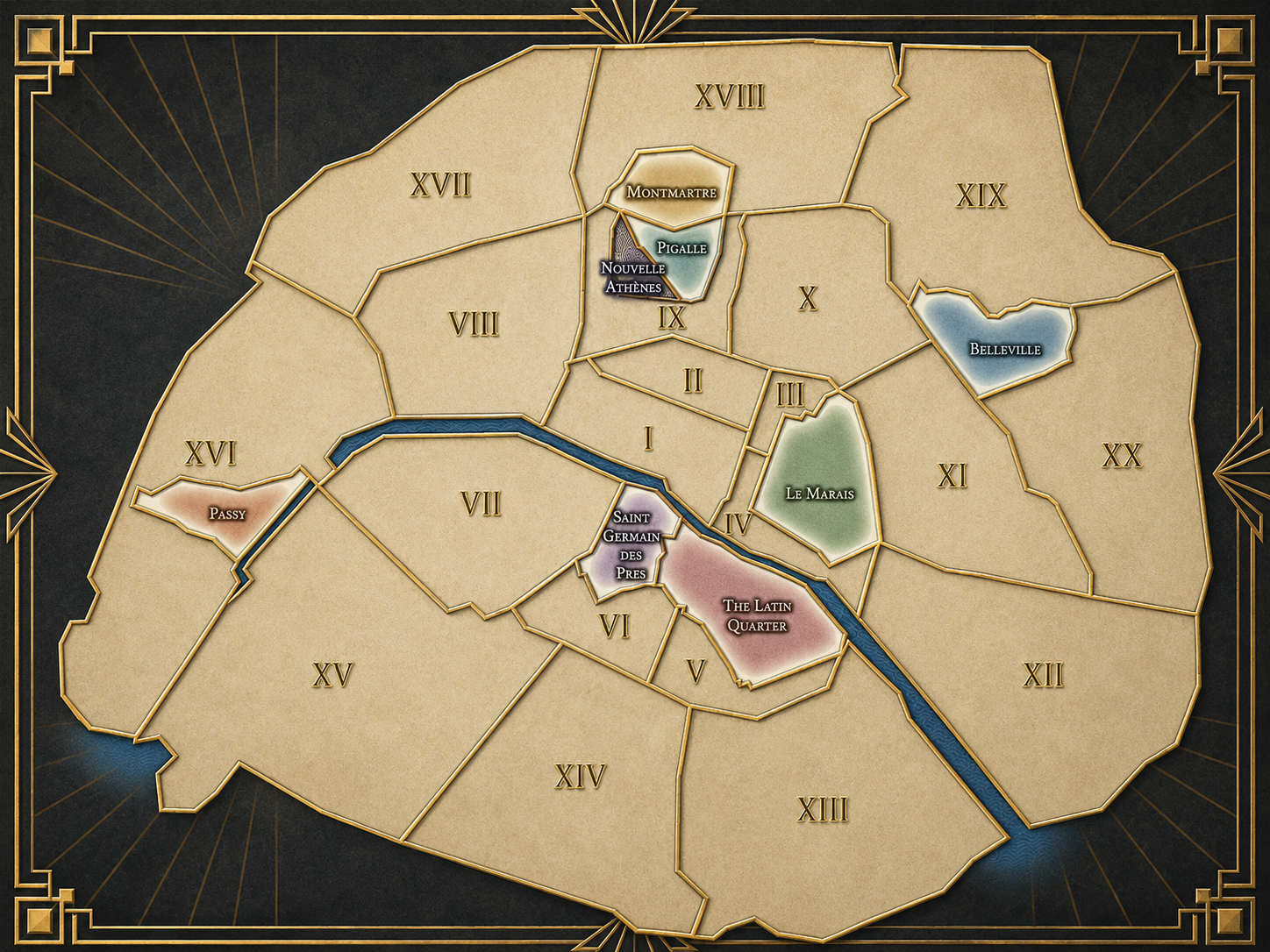
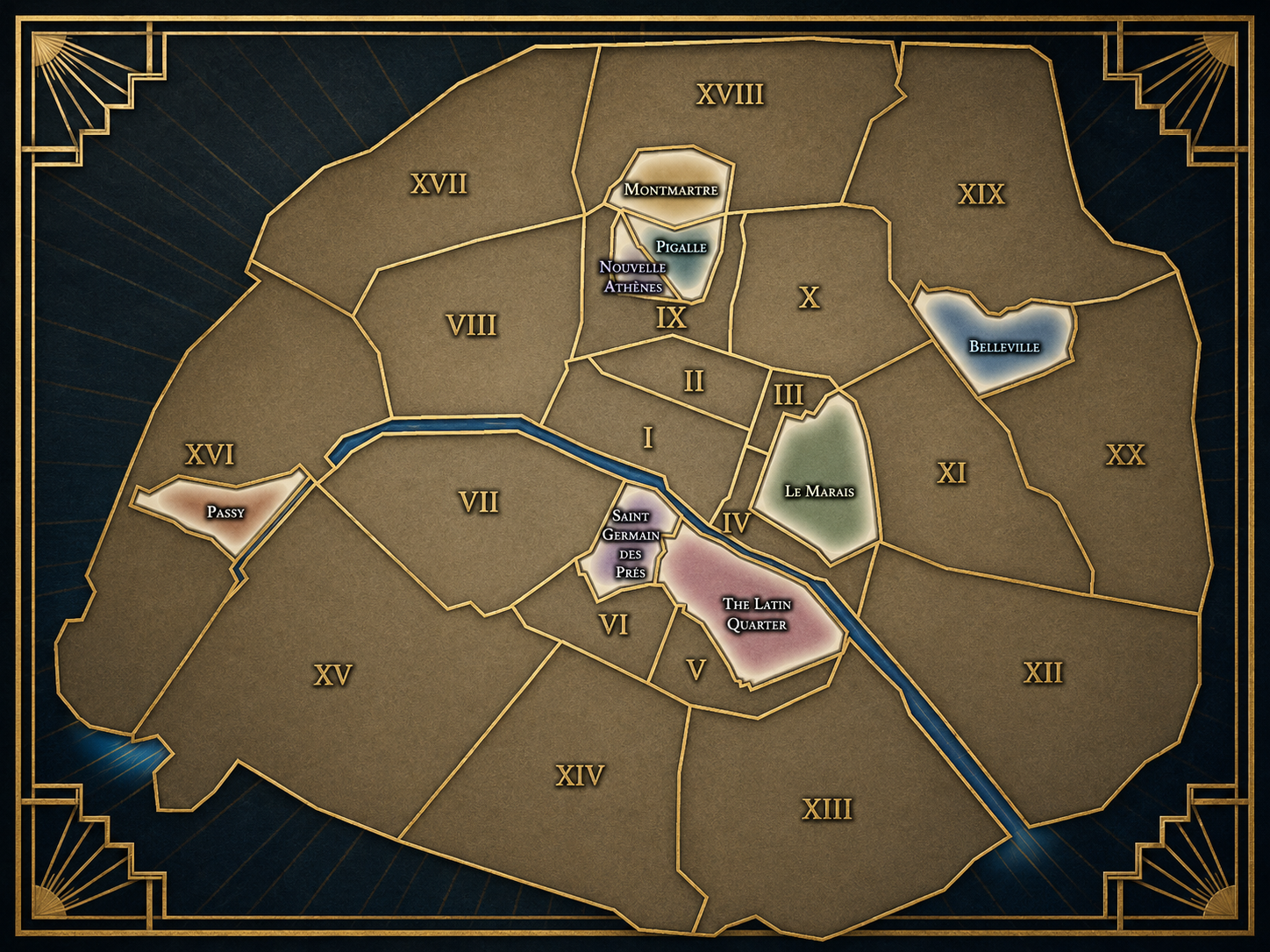
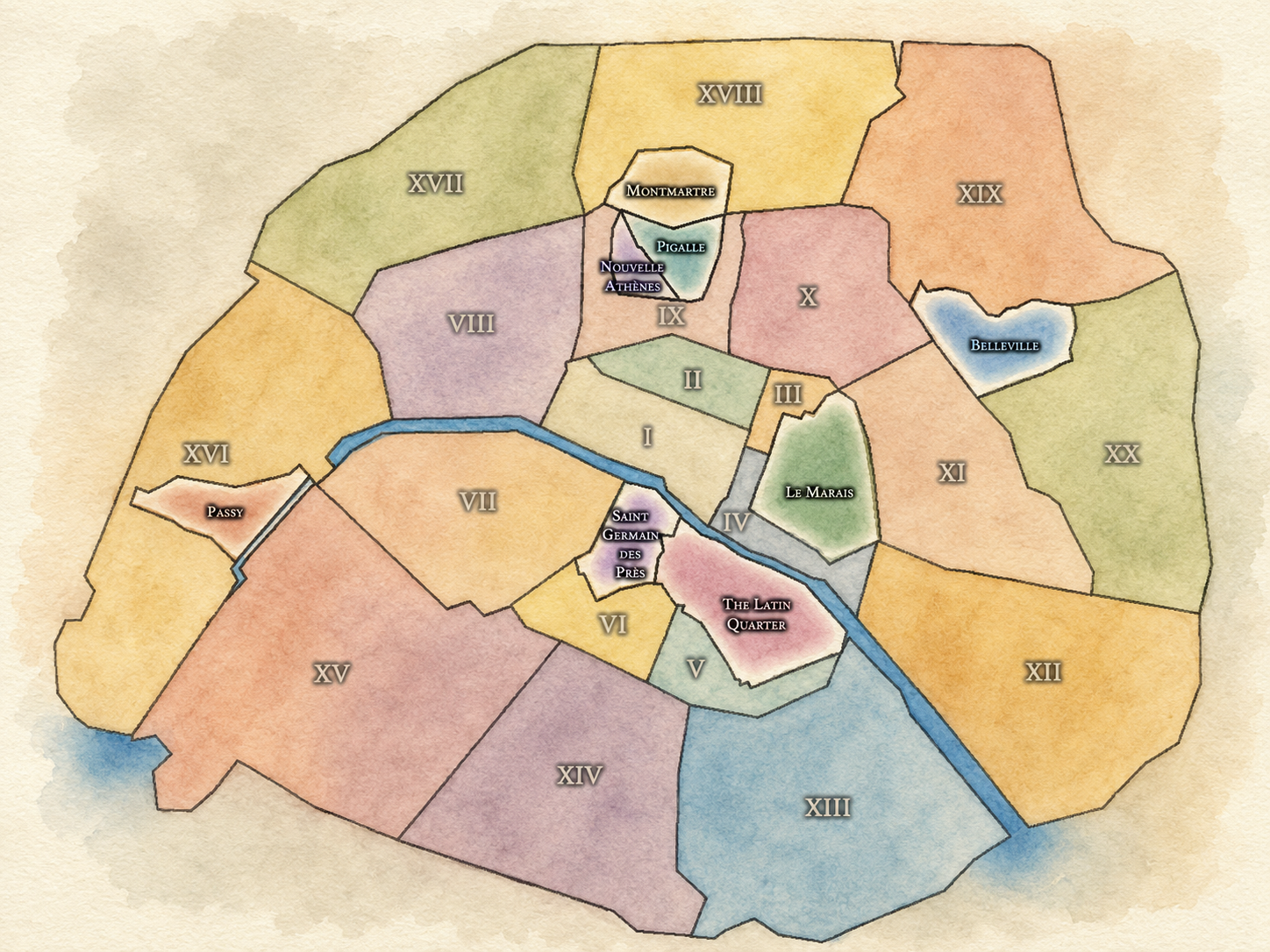
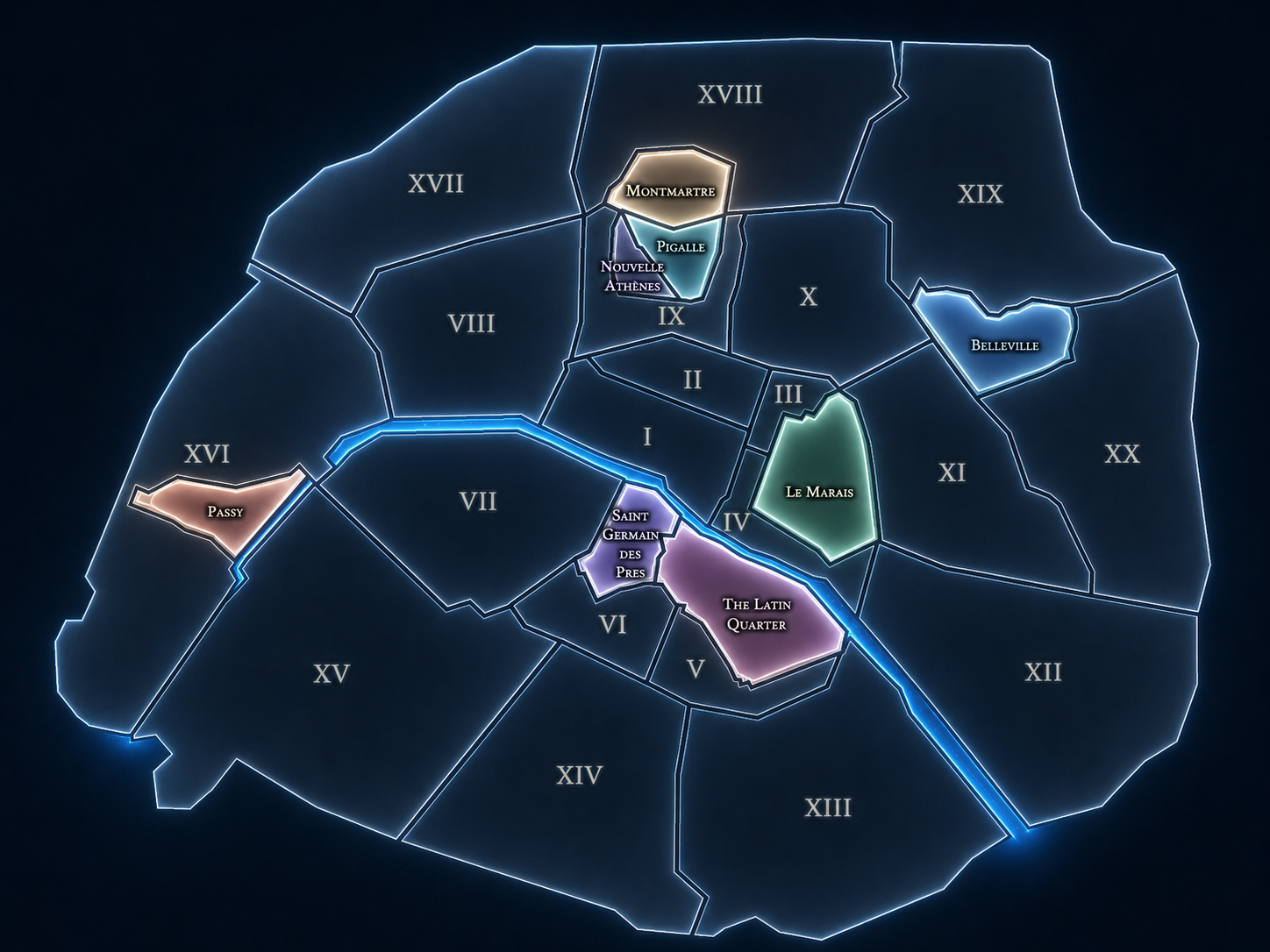
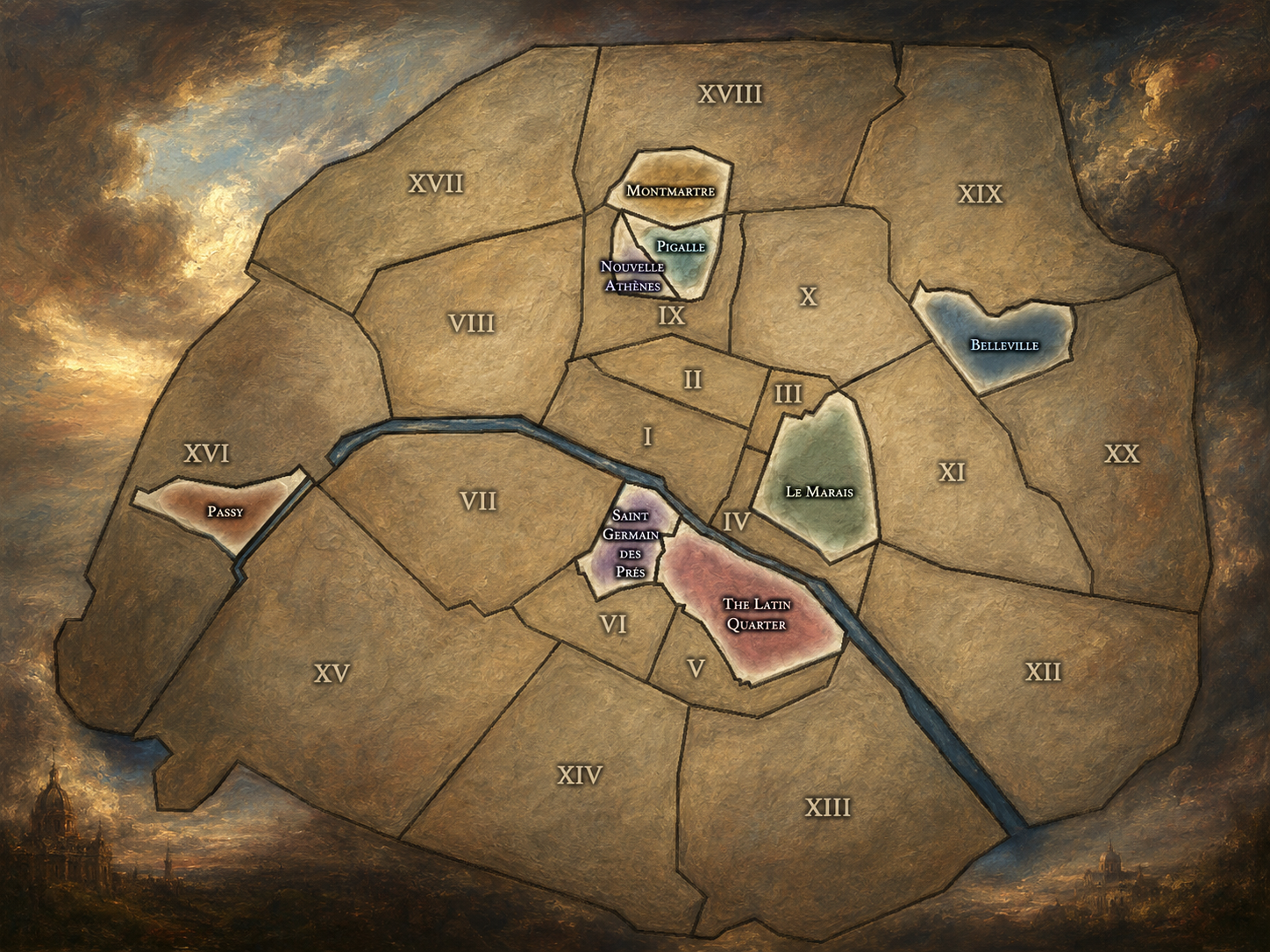
This page presents a growing selection of Paris’s Milieux Culturels. It is not intended as a final or exhaustive list, but as an expanding cultural map built through walking, photography, research, and continued neighborhood study. The Milieux Culturels shown here represent the first entries in this growing cultural atlas of Paris. Many more neighborhoods belong to this layer of the city; they will be added over time as the project continues to walk, photograph, research, and refine Paris’s cultural geographies.
Note: A Cultural Neighborhood not yet listed here should not be understood as absent from Paris’s cultural geography. This section will continue to expand as additional neighborhoods are photographed, researched, and added to the project.
The Map
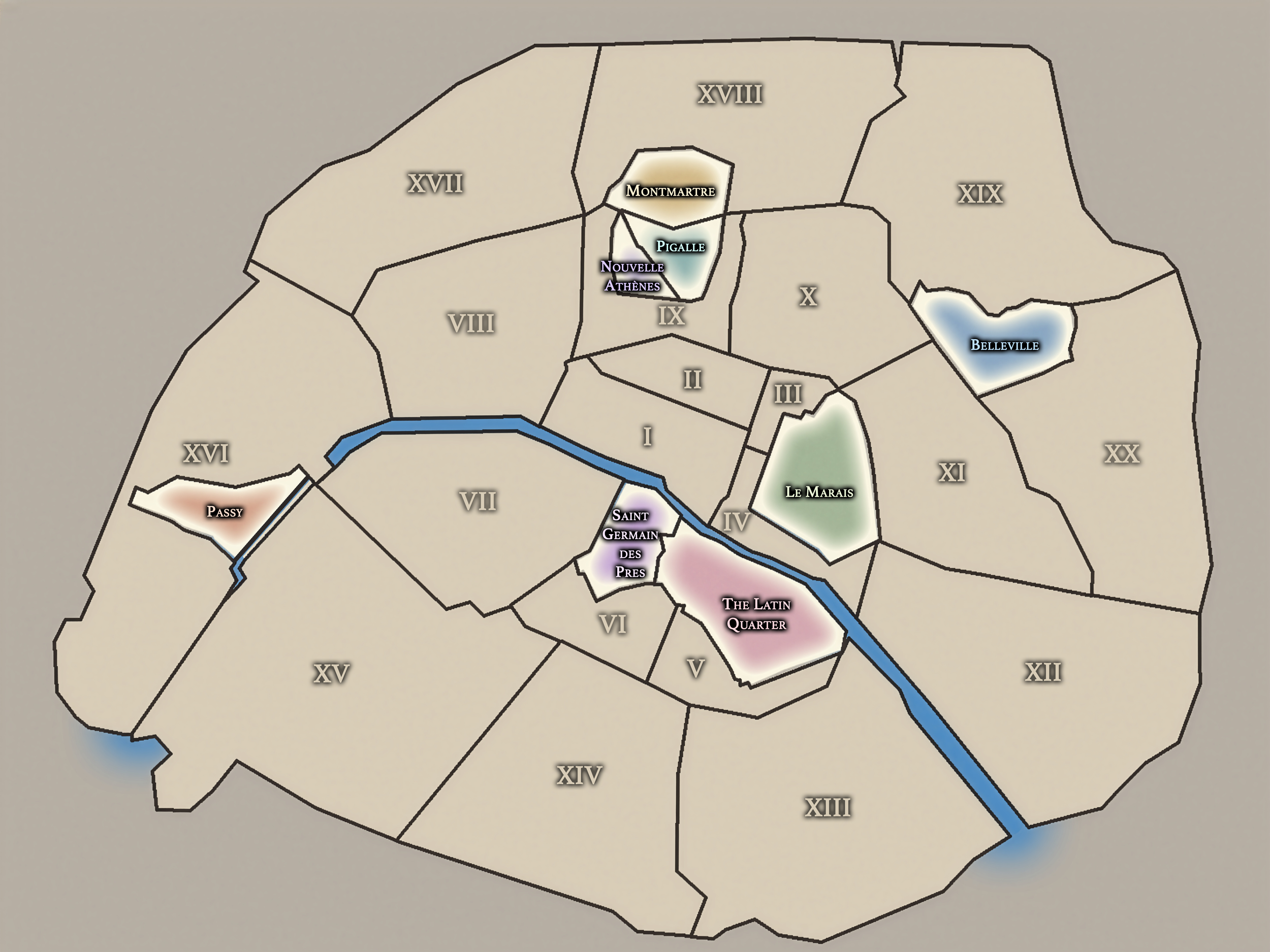
Cultural Boundaries
Paris is not only divided by official lines. Beyond its arrondissements, administrative quarters, and neighborhood councils, the city is also shaped by Cultural Neighborhoods — places whose identities have formed through history, memory, architecture, art, commerce, migration, scholarship, nightlife, and everyday use.
These Milieux Culturels do not always have fixed or universally agreed-upon borders. Some have a clearly recognizable core but softer outer edges. Others overlap with nearby neighborhoods, shift in meaning over time, or depend as much on cultural association as on street-by-street geography. A Cultural Neighborhood may cross arrondissement lines, sit within one administrative quarter, span several, or exist more as a shared Parisian understanding than as a formal civic unit.
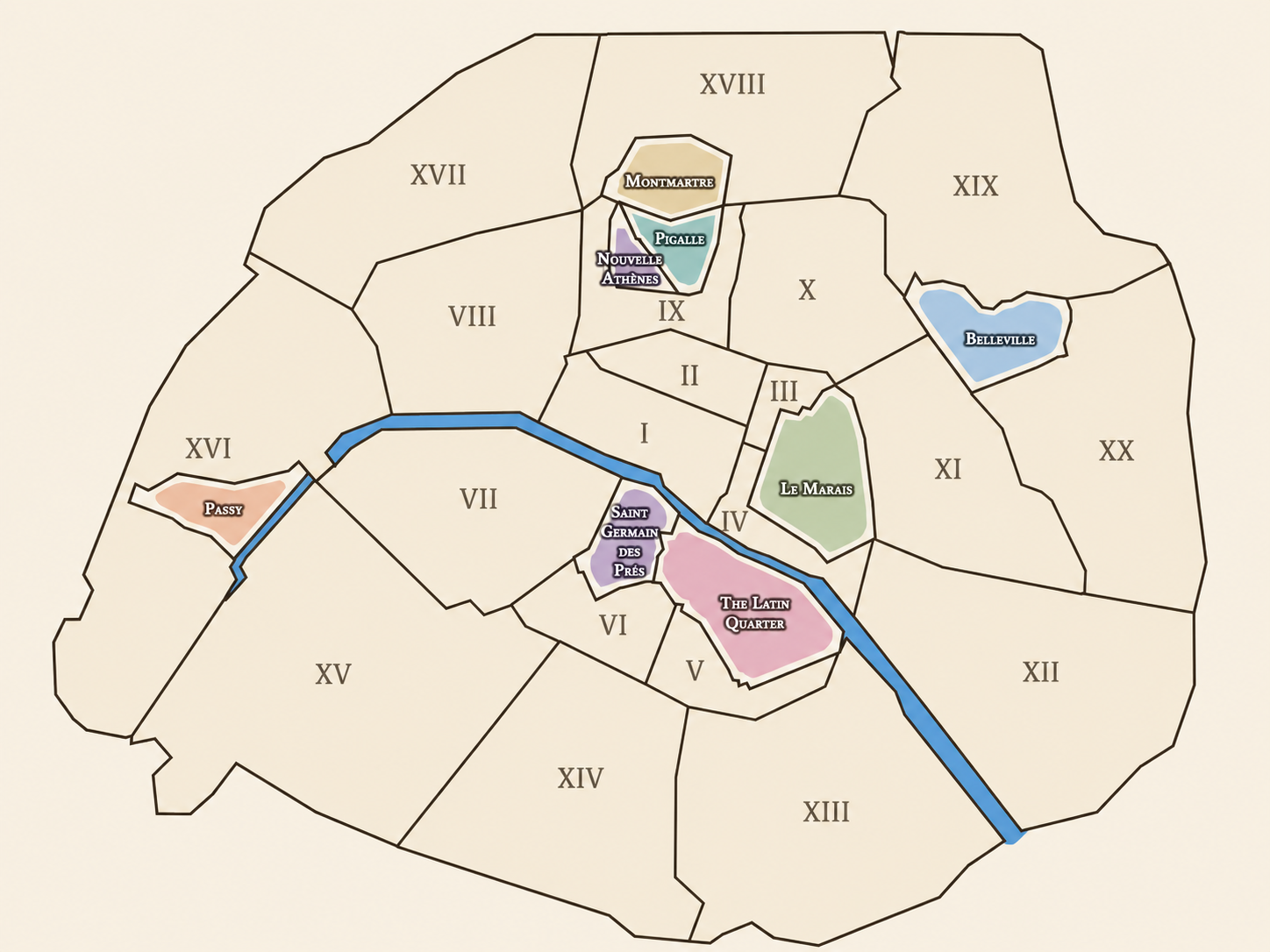
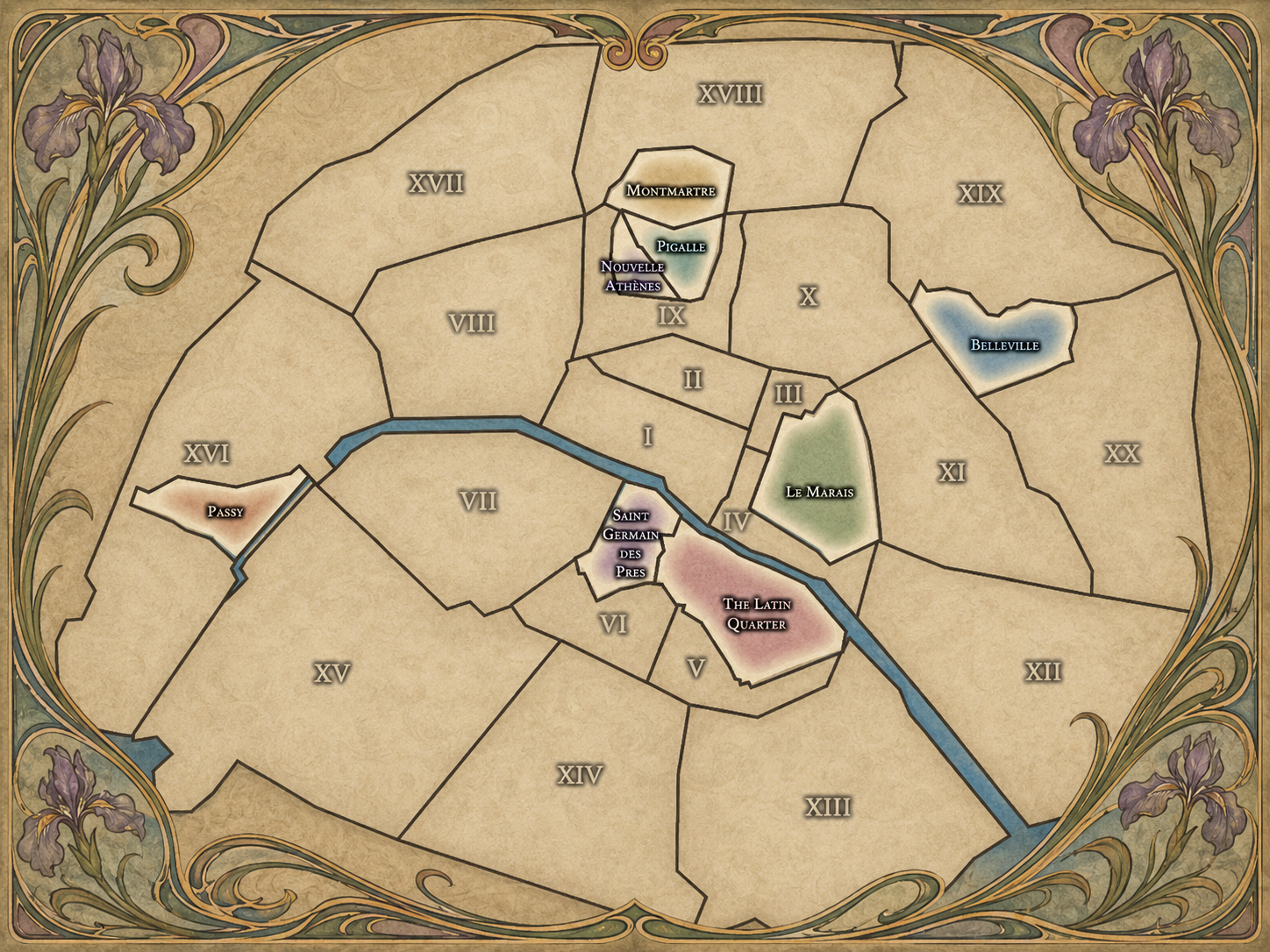
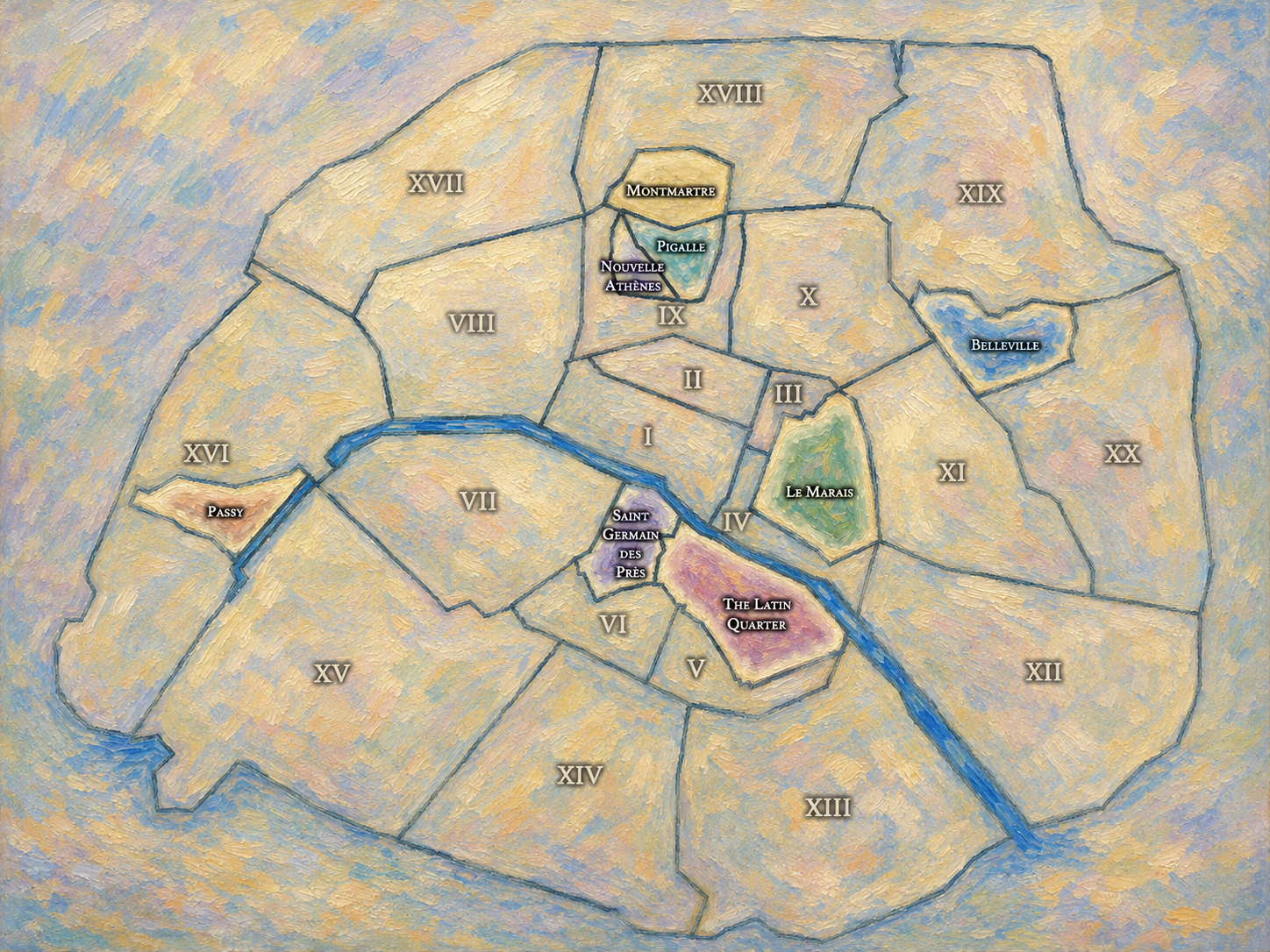
The boundaries shown in this section reflect CityNeighborhoods’ interpretation of these cultural geographies. They are mapped to help locate and compare the neighborhoods, but they should not be read as official municipal divisions. Instead, they offer a way to understand where particular forms of Parisian life have gathered, endured, changed, and become legible as distinct neighborhood worlds.
This page presents a growing selection of Paris’s Cultural Neighborhoods rather than a final or exhaustive list. Additional Milieux Culturels will be added as the project continues to walk, photograph, research, and refine this interpretive layer of the city.
Administrative Quarter Identity
Etymology and Origins
The French phrase Milieux Culturels may be understood as “cultural environments,” “cultural worlds,” or, in the CityNeighborhoods framework, Cultural Neighborhoods. The word milieu suggests more than a location. It evokes a surrounding atmosphere: the social, historical, artistic, commercial, and everyday conditions that give a place its character.
In Paris, many such neighborhoods carry names that long predate their modern image. Some recall former villages, religious institutions, aristocratic estates, marketplaces, hillsides, gates, streets, or vanished landscapes. Others became known through the people and practices associated with them: students, artists, writers, workers, merchants, immigrants, performers, political movements, or particular forms of leisure and urban life.
The Cultural Neighborhoods of Paris therefore emerge from both place and reputation. Their names may refer to geography, but their identities are built through use, memory, and association.
The Cultural Neighborhoods form the most interpretive layer of the CityNeighborhoods Paris project. Unlike arrondissements or administrative quarters, they are not primarily civic units. They are lived and remembered geographies: areas where particular cultural patterns have become strong enough to shape how the city is understood.
A Cultural Neighborhood may be defined by scholarship, as in the Latin Quarter; by literary and café life, as in Saint-Germain-des-Prés; by artistic mythology and village memory, as in Montmartre; by nightlife and performance, as in Pigalle; by layered religious, aristocratic, Jewish, queer, and museum histories, as in Le Marais; or by working-class, immigrant, and radical traditions, as in Belleville.
These identities are rarely simple. Most Cultural Neighborhoods contain several histories at once, and their meanings may change over time. A place once associated with poverty may later become fashionable. A district of aristocratic mansions may also become a center of preservation, minority memory, nightlife, or contemporary style. A neighborhood known globally through myth may still contain ordinary residential life beneath the image.
Cultural Framework
Parisian Identity
The Milieux Culturels reveal Paris as a city of overlapping worlds. They show how the city’s identity cannot be understood only through administrative structure or monumental landmarks. Paris is also made through atmospheres: the student streets of the Left Bank, the theatrical and musical corridors of the Right Bank, the village heights of Montmartre, the layered streets of the Marais, the popular and immigrant geographies of the northeast, and the quieter bourgeois landscapes of the west.
These neighborhoods help explain why Paris is so often experienced as both unified and fragmented. The city has a powerful overall identity, yet each Cultural Neighborhood contributes a different tone, rhythm, and inheritance. Together, they form a map of Parisian meaning: not only where the city is governed, but where it has been imagined, performed, studied, contested, remembered, and lived.
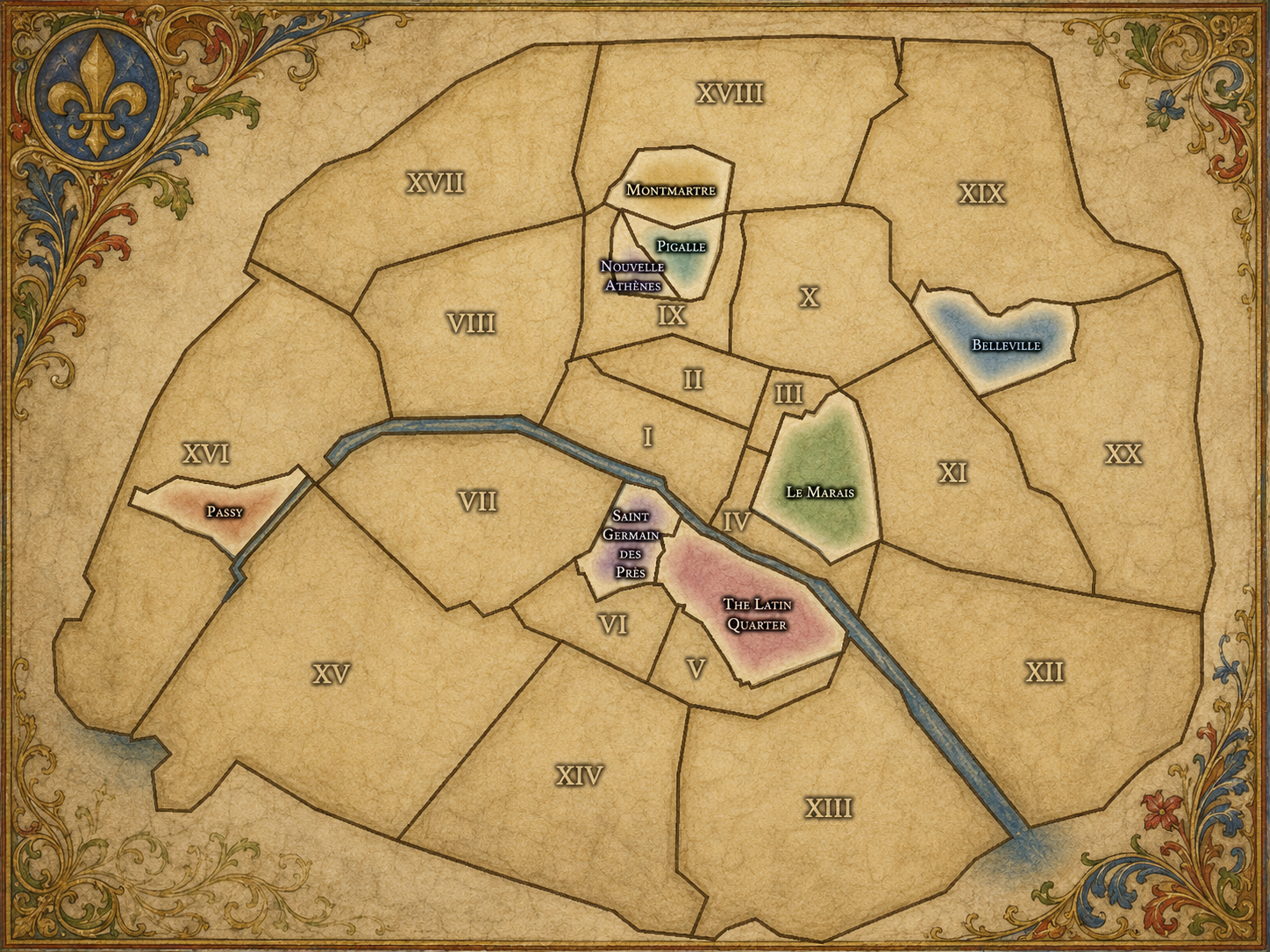
The Cultural Neighborhoods differ from the other layers of the Paris project because they are not bound by the same kind of official authority. Arrondissements organize the city at the broad civic level. Administrative quarters divide it into named municipal districts. Conseils de Quartier bring local participation into the civic structure. The Deux Rives describe the great cultural divide of the Right Bank and Left Bank.
The Milieux Culturels, by contrast, are neighborhood identities shaped from below and across time. They may be recognized through street life, architecture, reputation, institutions, historic memory, or cultural use. Their boundaries are more flexible, but their presence is often strongly felt.
This makes them among the most “neighborhood-like” geographies in the CityNeighborhoods Paris project. They are the places where Paris becomes intimate, particular, and socially legible — where a visitor, resident, walker, student, artist, or photographer can sense that they have entered not merely another district, but another Paris.
Neighborhood Distinction
The History
The origins of Paris’s Cultural Neighborhoods lie in the city’s earliest patterns of settlement, movement, religion, trade, and power. Long before modern administrative divisions, people understood the city through islands, riverbanks, roads, markets, hills, churches, monasteries, gates, villages, and faubourgs. These early geographies created the conditions from which later neighborhood identities would emerge.
Some Cultural Neighborhoods began as distinct settlements or landscapes outside the old city. Others formed around institutions such as churches, schools, aristocratic residences, or commercial corridors. Over time, the growth of Paris absorbed these places into the city while preserving traces of their older identities.
Origins
Medieval / Early Formation
During the medieval period, Paris developed around powerful institutional and social centers. The Île de la Cité remained a core of royal, religious, and judicial authority. The Left Bank became increasingly associated with schools, monasteries, students, and intellectual life. Markets, bridges, parish churches, and craft districts shaped the everyday geography of the Right Bank.
Many later Cultural Neighborhoods can trace part of their identity to this era of formation. The Latin Quarter’s scholarly character, the Marais’s early religious and aristocratic layers, and the enduring importance of river crossings, church foundations, and old routes all reflect medieval patterns that continued to influence Paris long after the city expanded beyond its early walls.
In the early modern period, Paris became more socially and architecturally differentiated. Aristocratic residences, religious houses, commercial streets, theaters, gardens, and new urban developments helped sharpen the identities of particular districts. Neighborhoods began to accumulate reputations based not only on function, but on class, taste, fashion, and cultural association.
The city’s growth also absorbed nearby villages and faubourgs into a larger Parisian orbit. These places often retained a distinct local memory even as they became part of the expanding city. This tension between incorporation and identity remains central to many Cultural Neighborhoods.
Early Modern Paris
18th Century
The 18th century brought new forms of sociability, consumption, performance, and intellectual life to Paris. Cafés, salons, theaters, promenades, print culture, and commercial entertainment helped define the city as a center of public conversation and cultural display. The geography of Paris became increasingly connected to habits of reading, debating, shopping, strolling, seeing, and being seen.
Many Cultural Neighborhoods gained sharper identities through these practices. Some became associated with aristocratic refinement, others with intellectual exchange, theater, popular entertainment, or political ferment. The city’s neighborhoods were not simply places of residence; they were stages for social and cultural life.
The 19th century transformed Paris physically and symbolically. Industrialization, revolution, annexation, railway development, Haussmann’s reconstruction, new boulevards, and the incorporation of surrounding communes altered the map of the city. Older neighborhoods were demolished, reshaped, or reimagined, while newly absorbed areas such as Montmartre, Belleville, Passy, and others entered Paris with strong local identities of their own.
This period was especially important for the formation of modern Cultural Neighborhoods. Bohemian Montmartre, literary and artistic Left Bank districts, bourgeois western Paris, popular northeastern Paris, entertainment corridors, and modern commercial landscapes all became part of the expanding cultural geography of the capital.
19th Century
Early–Mid 20th Century
In the early and mid 20th century, the Cultural Neighborhoods of Paris became increasingly tied to modern art, literature, politics, exile, nightlife, cinema, jazz, photography, and intellectual life. The city’s cafés, studios, theaters, hotels, bookshops, cabarets, and streets became internationally recognized as places where modern culture was made and performed.
At the same time, many neighborhoods experienced social upheaval, war, occupation, displacement, rebuilding, and changing patterns of migration and class. Their identities were not frozen in romantic myth; they were shaped by conflict, survival, reinvention, and everyday continuity.
The late 20th century brought preservation, gentrification, tourism, immigration, cultural reinvention, and new forms of neighborhood politics. Some Cultural Neighborhoods became global symbols of Parisian life, while others were transformed by redevelopment, rising property values, or changing commercial patterns. Historic districts were restored and reinterpreted; formerly working-class areas became centers of artistic or alternative culture; nightlife zones shifted; and immigrant communities reshaped the cultural map of the city.
This period also made the question of neighborhood identity more complicated. As Paris became more global, many Cultural Neighborhoods had to balance memory and reinvention, local life and visitor expectation, preservation and change.
Late 20th Century
21st Century
In the 21st century, the Cultural Neighborhoods of Paris continue to evolve. Some remain strongly connected to long-standing identities, while others are changing through new residents, new businesses, tourism pressures, cultural institutions, urban planning, and shifting patterns of everyday life. Their boundaries may be debated, their meanings revised, and their reputations reshaped.
For CityNeighborhoods, this makes the Milieux Culturels an ongoing project rather than a closed catalog. To map them is not to claim that their identities are fixed forever. It is to study how cultural geography lives: how places inherit meaning, how they change, and how they continue to shape the experience of Paris.
The legacy of the Milieux Culturels is the recognition that Paris is not only a city of monuments, districts, or official divisions. It is a city of cultural worlds. Each neighborhood gathers its own history of people, practices, symbols, and atmospheres, contributing to the larger identity of Paris while retaining a character of its own.
These Cultural Neighborhoods help explain why Paris can feel endlessly layered. One can move only a short distance and enter a different historical memory, social rhythm, architectural language, or cultural inheritance. Together, they form a living map of Parisian identity: precise enough to walk, rich enough to debate, and open enough to keep expanding as the city itself continues to change.
Spirit & Legacy
The Photography
The arrondissements do not share a single visual identity. Instead, they organize Paris into twenty broad visual fields, each gathering its own combination of landmarks, streetscapes, institutions, residential districts, commercial corridors, parks, rail stations, markets, cemeteries, and riverfront edges.
Some arrondissements are defined by monumental scale: royal palaces, ceremonial avenues, government buildings, museums, formal gardens, and internationally recognized landmarks. Others are shaped by hills, canals, rail gateways, apartment-lined boulevards, neighborhood markets, former village streets, industrial remnants, parks, or the quieter rhythms of residential Paris. The arrondissement system gives these varied landscapes a civic frame, allowing the city to be read not as one visual language, but as a sequence of overlapping Parisian atmospheres.
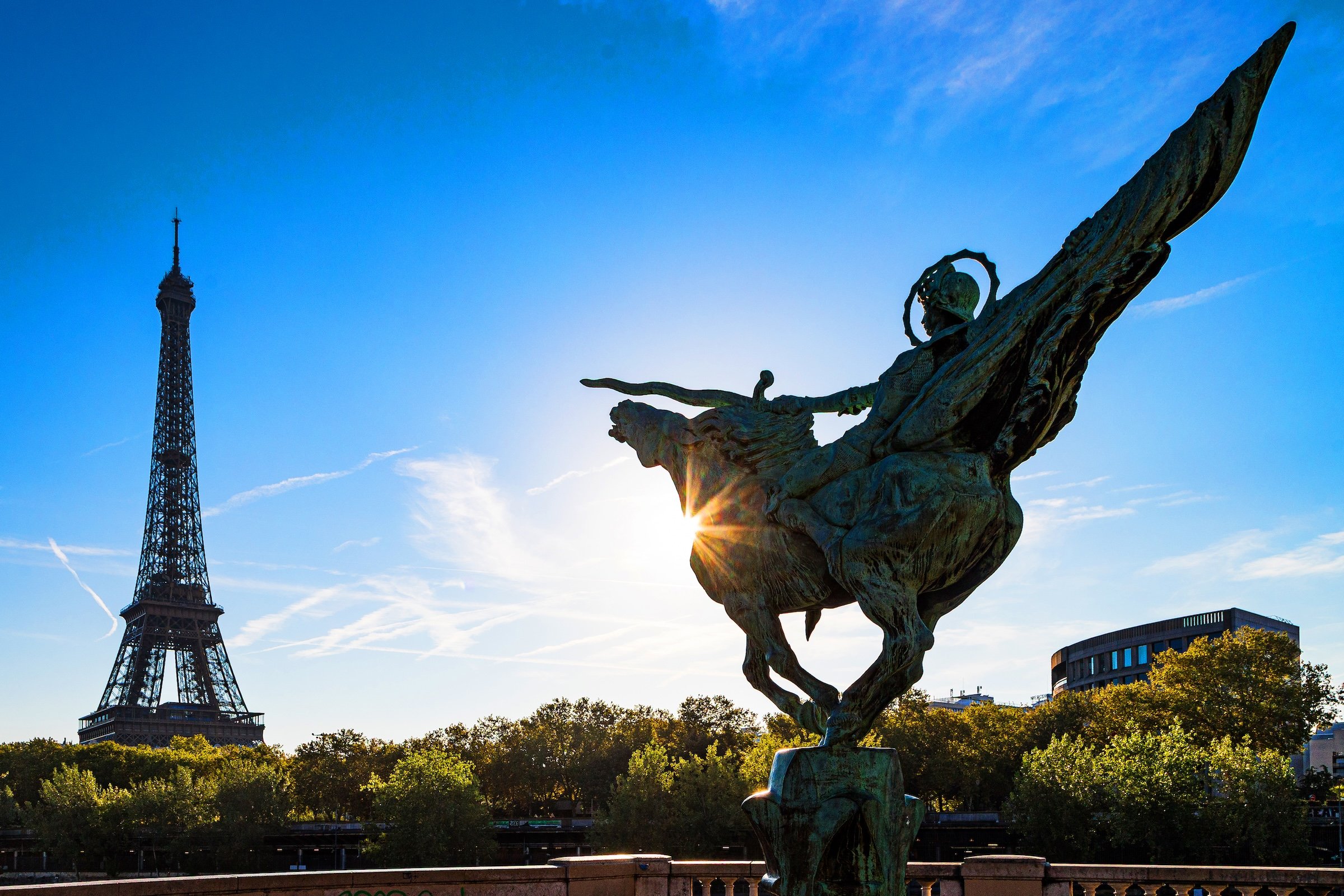
Visual Identity
Through The Lens
Photographing the arrondissements means moving between the official map and the street-level experience. The camera does not treat each arrondissement as visually uniform. Instead, it looks for the recurring forms, textures, transitions, and contrasts that make each district legible: the geometry of boulevards, the shade of plane trees, the repetition of balconies, the rise of stairways, the curve of canals, the presence of rail stations, the opening of parks, the weight of monuments, and the intimacy of side streets.
On CityNeighborhoods, the arrondissement provides the frame, but the photograph comes from the encounter between map, movement, light, and observation. As the Paris photography is processed, this section will connect each arrondissement more directly to the project’s Photographic Lexicon: the visual strategies, recurring motifs, and compositional patterns that shape how the city is seen through the lens.
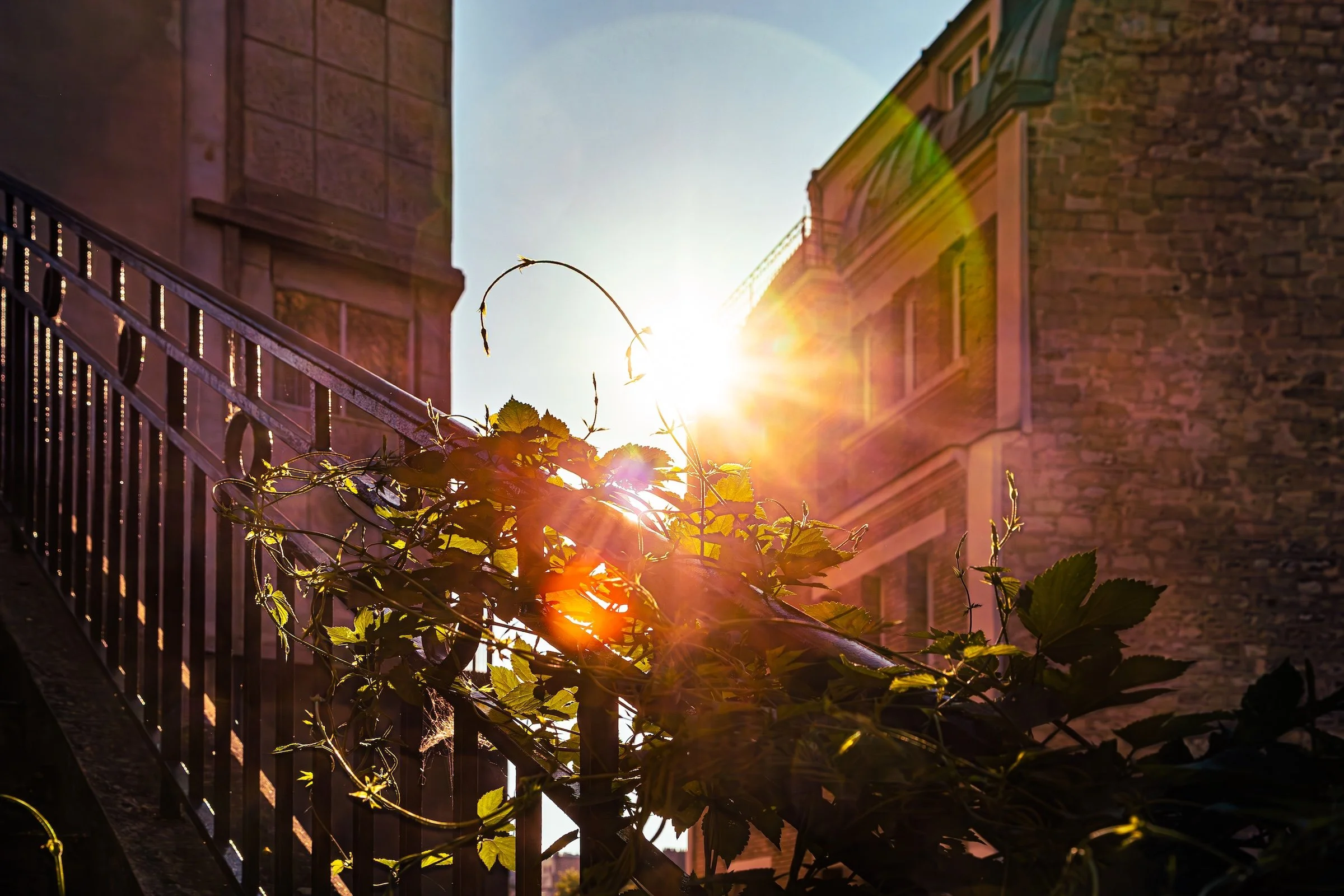
If you visit Paris, these ideas can help inspire your own photography.
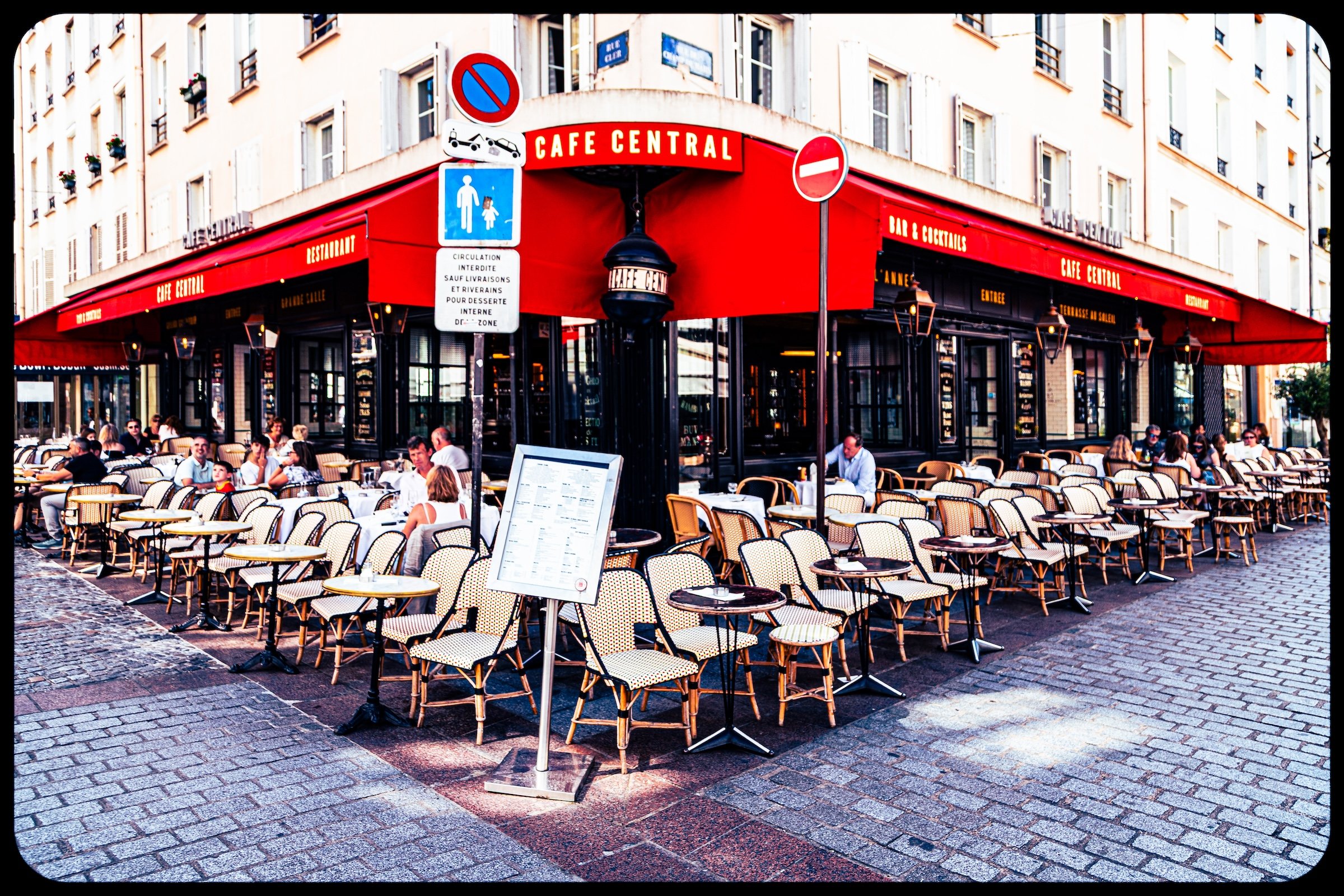
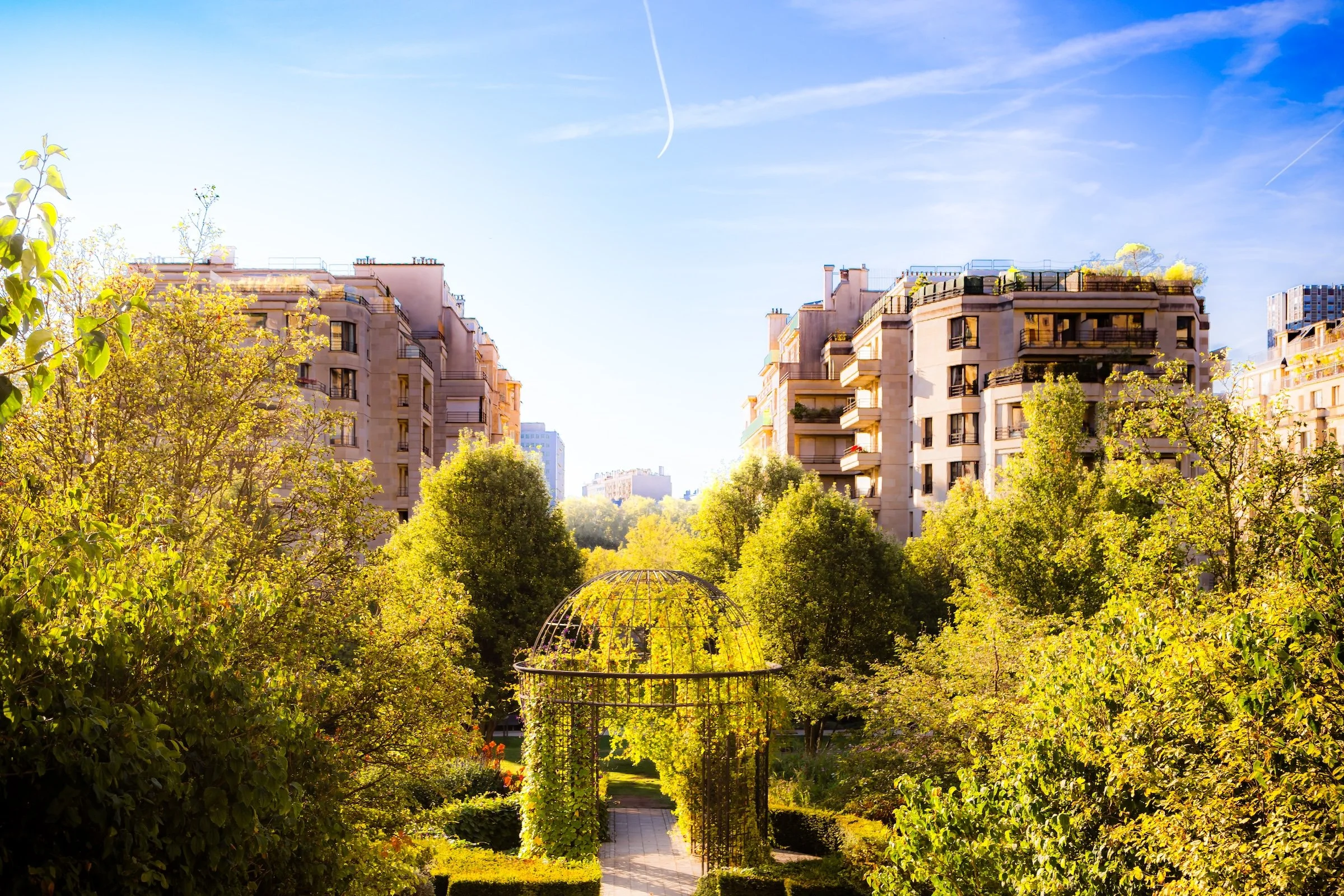
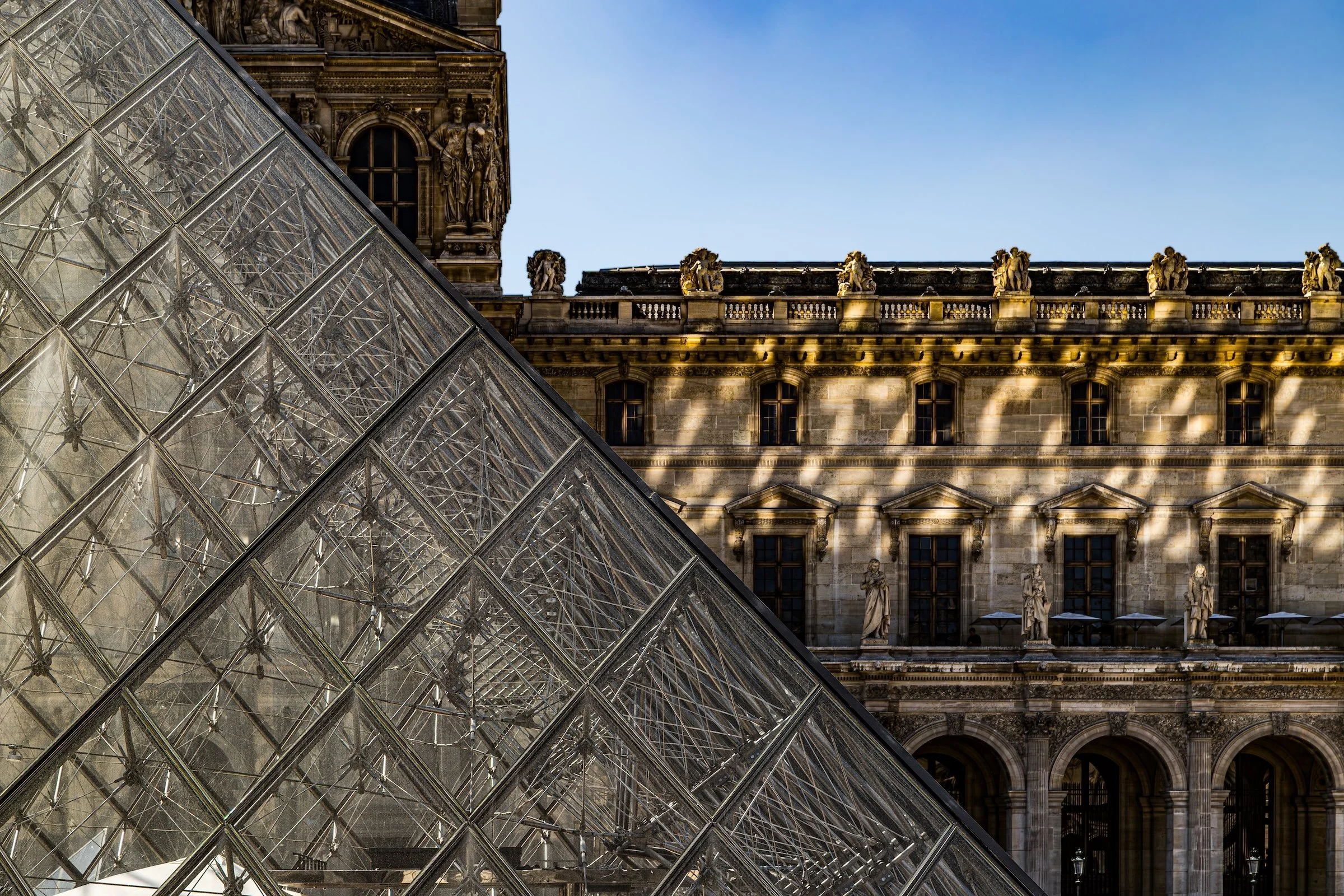
Paris: J’Espere, Je Rêve, Je Vive
Paris Photo Gallery
Paris Field Notes
-
Field Note: August 18, 2025 | 07:58 AM
Conditions: 73°F | Humidity: 72%.
Within the park's interior, the glacial kettle ponds acted as humidity traps, creating a soft, hazy light that filtered through the old-growth oaks. The transition from the park's dense shade to the sun-drenched edges of Oakland Gardens highlighted the day's exceptional "picture-perfect" clarity.
There is a fleeting window in Queens where the humidity of August hasn't yet heavy-set, and the morning sun hits the canopy of Alley Pond Park at a perfect oblique angle. Arriving just before 8:00 AM, I watched the light break through the oaks and tulip trees, casting long, dramatic shadows across the wet grass. It’s in these quiet, golden moments that the park feels less like a city escape and more like the ancient glacial valley it actually is.
Other neighborhoods visited:
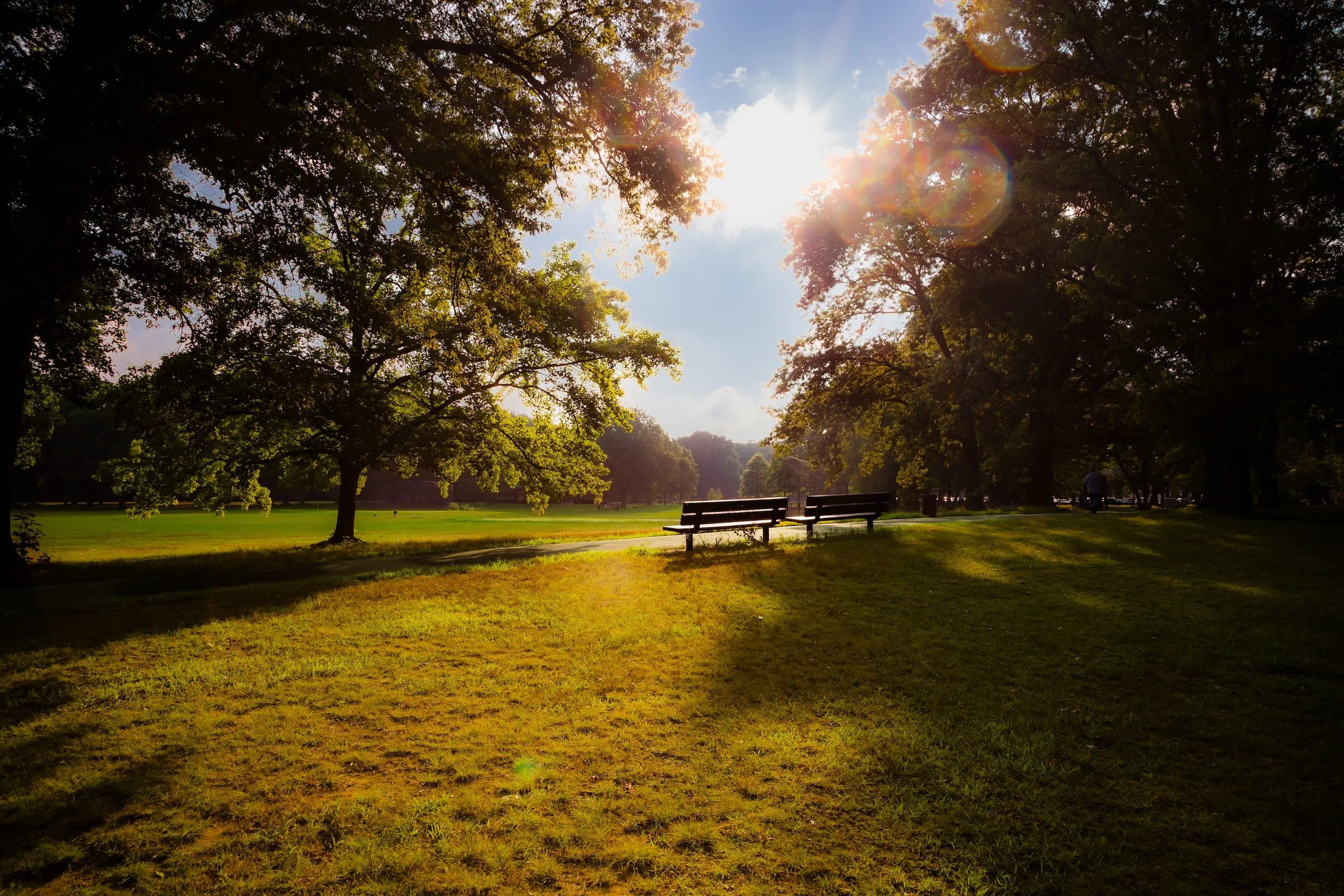
Morning Benches - Click To Purchase Print
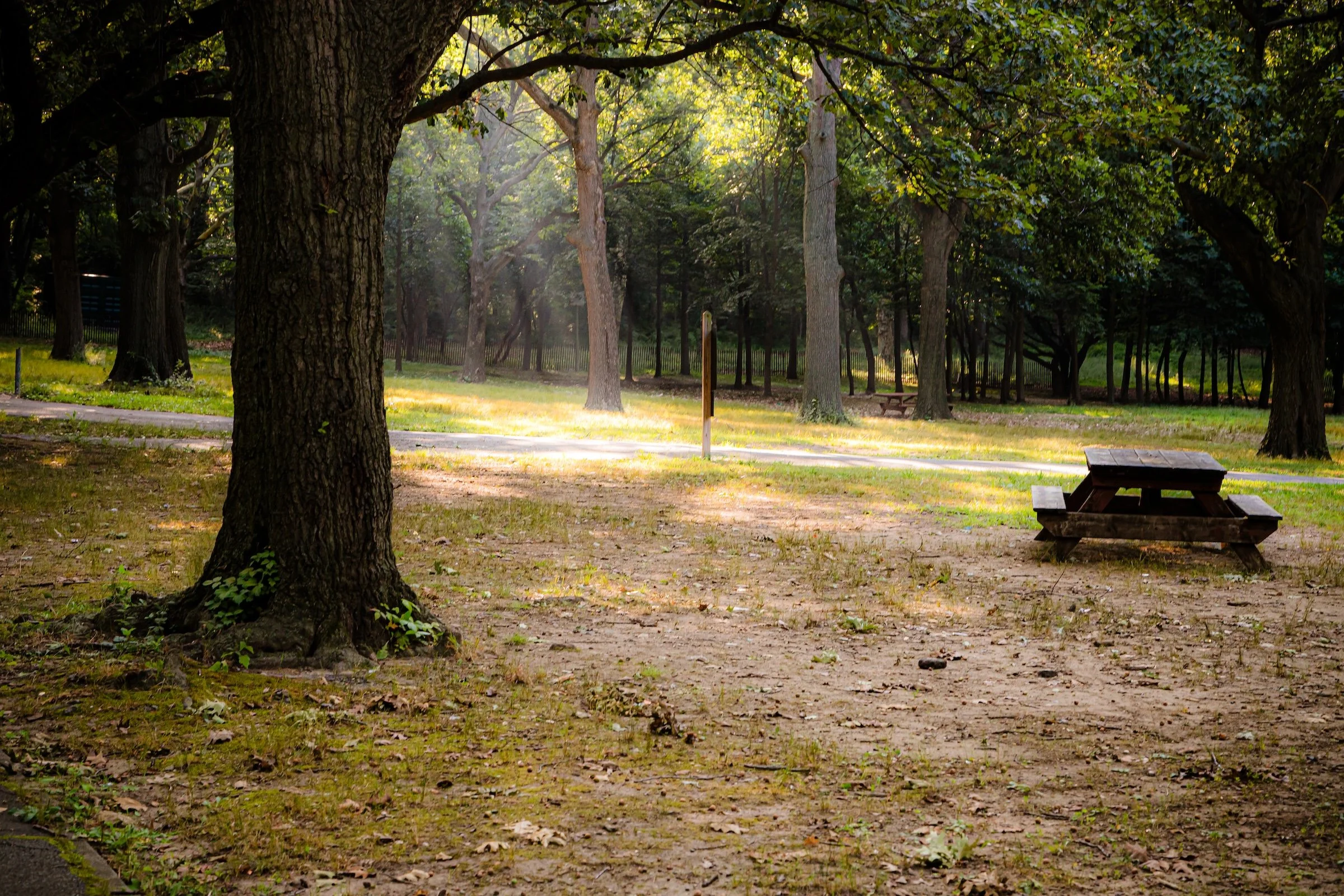
Morning Glade - Click To Purchase Print
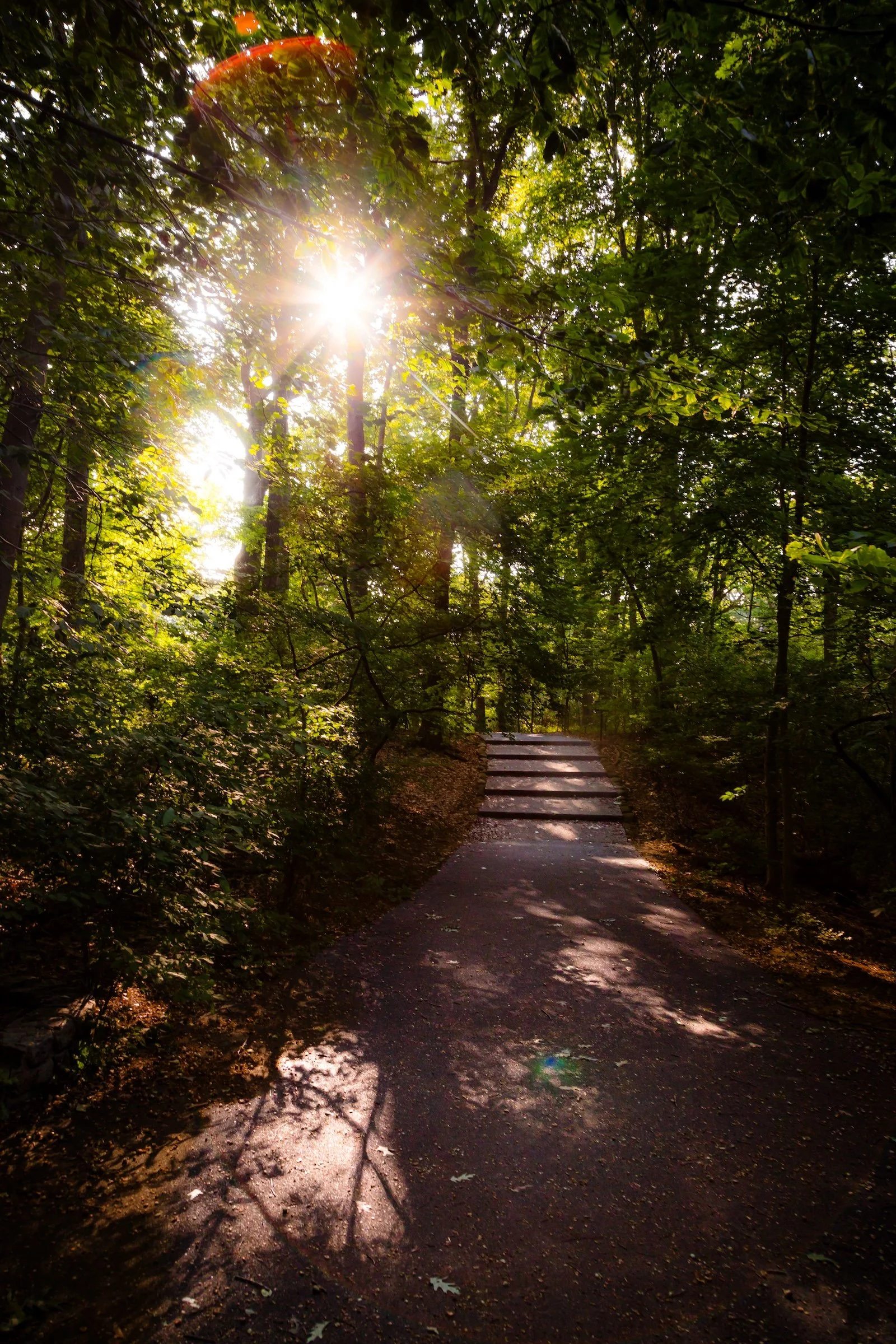
Steps Sunburst - Click To Purchase Print
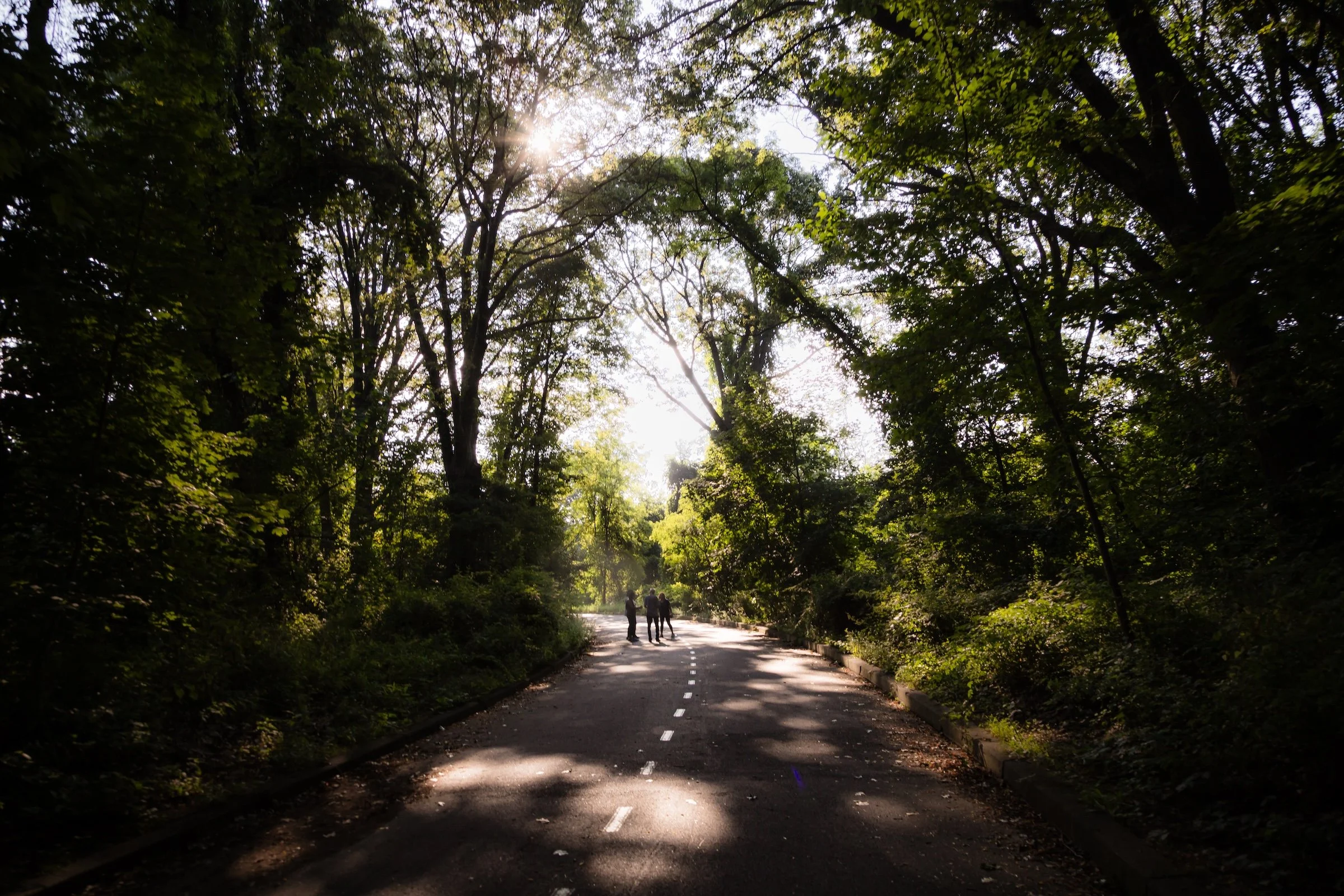
Standing In The Light - Click To Purchase Print
Explore Paris
-

The twenty arrondissements form the civic spiral of Paris, organizing the city into its broad local districts of government, identity, and daily life.
-

Each arrondissement is divided into four official administrative quarters, giving Paris a more precise civic and geographic framework.
-

The conseils de quartier bring participation to street level, giving residents a voice in neighborhood needs, public space, and local civic life.
-

Les Deux Rives trace Paris through the Seine’s two banks, revealing how the Rive Droite and Rive Gauche shaped the city’s civic power, commerce, learning, art, and cultural identity.
-

Cultural neighborhoods reveal the Paris people recognize through history, cafés, architecture, memory, atmosphere, and local belonging.